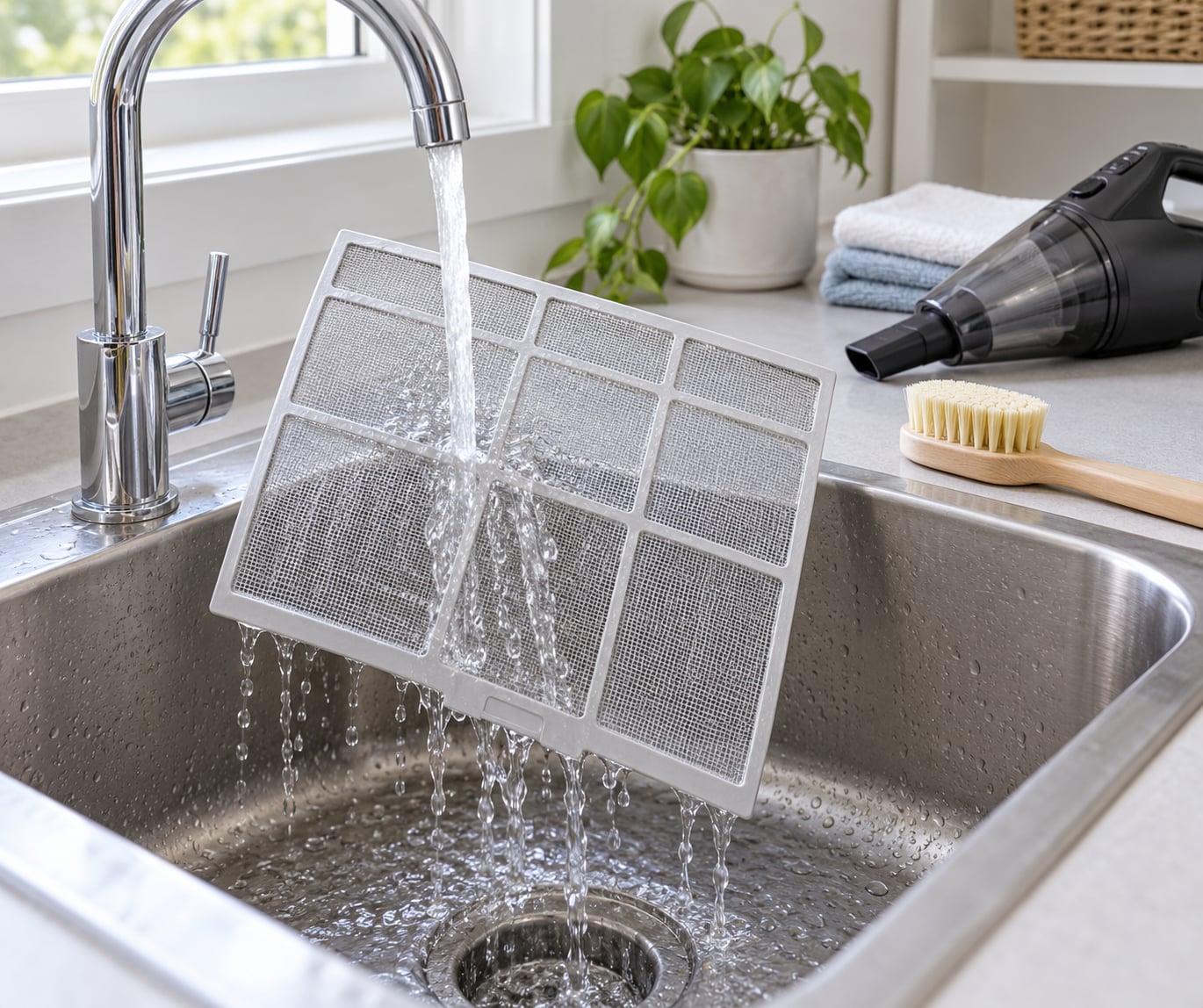
To clean a portable air conditioner filter: unplug the unit, slide the filter out of its housing, vacuum off loose dust, rinse it under lukewarm water with a little mild dish soap and a soft brush, let it air-dry completely in a shaded spot, then slide it back in. Ten minutes of work, no tools you don’t already own.
The filter is the cheapest part of the machine and the one people forget longest. I have cleaned mine every few weeks since I got the unit, and the difference in airflow is obvious the first time. The whole job is simple, and almost every mistake people make with it comes from skipping the manual or using something too hot.
One honest caveat before we start: a clean filter restores airflow. It does not refill a sealed system, and it does not clean condenser fins that have turned grey with dust. If the unit cools badly on a clean filter, the problem is somewhere else.
Table of Contents
- What You Need
- Step-by-Step: How to Clean a Portable Air Conditioner Filter
- Common Mistakes
- How Often Should You Clean It?
- When to Replace the Filter Instead
- Frequently Asked Questions
- Can I wash a portable air conditioner filter?
- Can I put a portable AC filter in the dishwasher?
- How often should I clean a portable air conditioner filter?
- What if my portable air conditioner filter has mold?
- How long does a portable AC filter take to dry?
- What happens if I don’t drain the water from my portable air conditioner?
- Conclusion
What You Need
Gather everything before you pull the unit out from the wall, because you will want both hands free.
- The owner’s manual, to confirm your filter type and whether it is washable
- A vacuum with a soft brush or crevice attachment
- A soft-bristled brush, an old toothbrush works fine
- Mild dish soap, the kind you would use on a kitchen sink
- Lukewarm water, and a bucket or shallow tray to catch the runoff
- A microfiber cloth or soft towel
Leave the dishwasher, bleach, oven cleaner, and aerosol coil cleaner where they are. Full detail on what not to use is below, but the short version is that heat, harsh chemicals, and high-pressure water all damage plastic frames and fine filter media faster than any amount of neglect would.
Step-by-Step: How to Clean a Portable Air Conditioner Filter
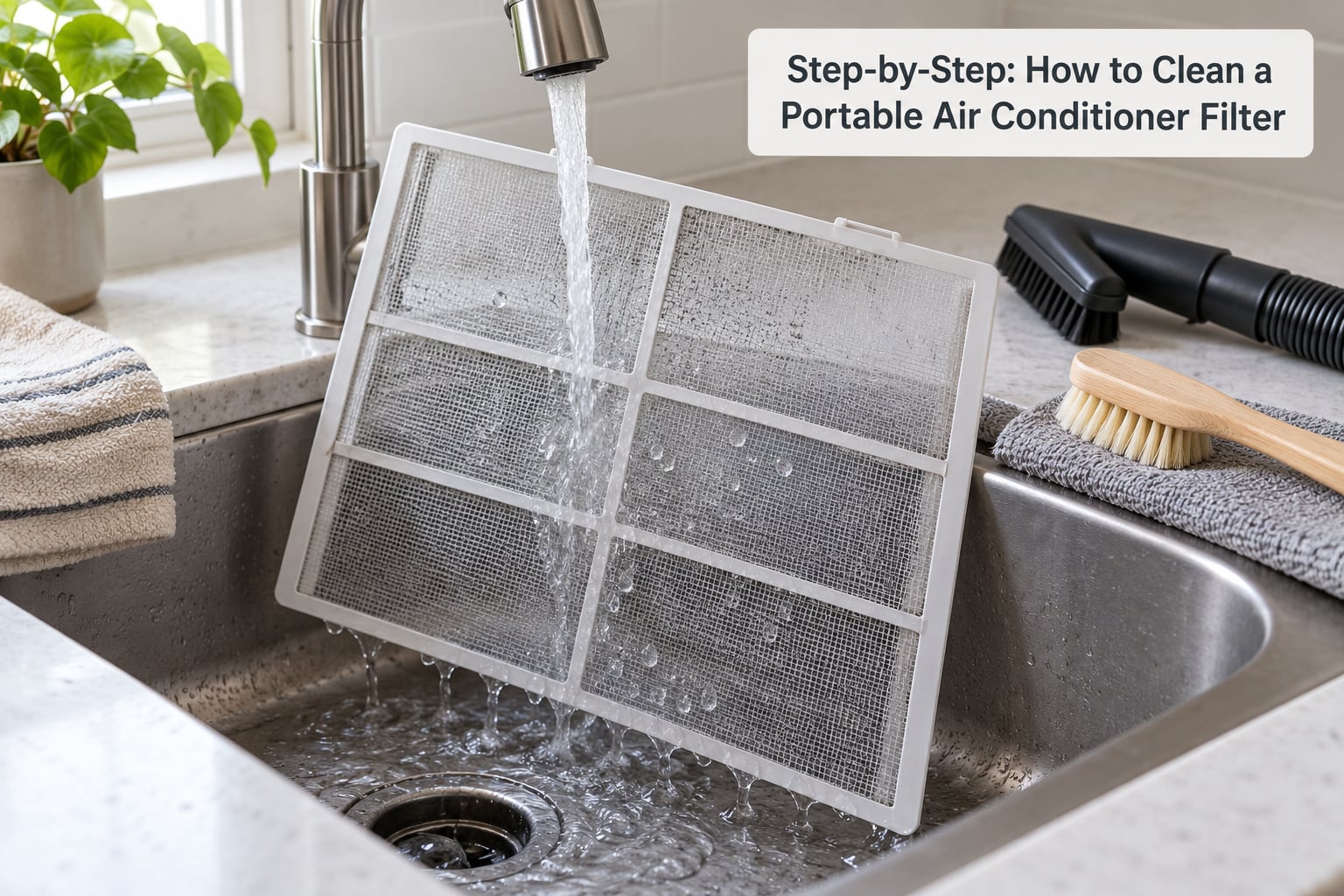
Work on a towel on tile or in the tub if you can. Portable air conditioners leak when you tilt them, and nobody wants to find that water under a hardwood floor.
Step 1: Turn Off and Unplug the Unit
Set the unit to standby or off, then pull the plug from the wall. Unplugging rather than just switching off removes any chance the fan or compressor starts while your hands are inside the housing. If the filter sits behind a control panel that stays powered, this step is not optional.
Wait a minute before you touch anything so the internal electronics settle, and move the unit away from curtains or bedding while you work.
Step 2: Locate and Remove the Filter
Most portable air conditioners have the filter behind the intake grille on the back or the side panel. On many models there are two, one high and one low, and cleaning only the one you happen to see first leaves half the dust behind.
Grip the tabs or handles molded into the frame and slide the filter straight out. Some units release a filter cover panel with a screw or two, and on a few brands the panel is part of the rear intake grille itself. If it flexes or resists, stop and check the manual rather than levering on the plastic.
Step 3: Vacuum Loose Dust and Debris
Hold the filter upright and run the vacuum across both faces with the soft brush attachment, working from the top down. Loose pet hair and dust come off easily here and stay off the coil behind it, which matters more than it sounds.
Skip the step and you are rinsing grit into a finned coil, and that is how people end up with bent fins and a repair bill. The vacuum pass takes two minutes and it is the step people skip when they are in a hurry.
Step 4: Wash the Filter the Way the Manual Says
If the manual allows washing, fill a basin with lukewarm water and a drop or two of mild dish soap. Soak the filter for ten or fifteen minutes to loosen grease and dust that a brush alone will not shift, then scrub it gently with the soft brush along the mesh direction.
Keep the water under 104°F (40°C). That ceiling comes from manufacturer care guidance for portable units, and warm enough to dissolve grease is well below hot enough to warp a plastic frame. Rinse with clean lukewarm water until no suds remain.
For a musty filter, a one-to-one mix of water and white vinegar in the soak is a reasonable deodorizer. Check your manual first, and never use it on a filter the manufacturer marks as non-washable.
Step 5: Air Dry Completely, Then Reinstall
Lay the filter on a towel in a shaded, ventilated room. Direct sun and a heated dryer or hair dryer will warp plastic and set detergent into the mesh. A fan pointed at it speeds things up, and in humid weather overnight is the honest answer.
Before it goes back in, check that the mesh is intact, the frame is square, and the filter slides in without force. Airflow arrows or a molded marker should face the same direction as before. Refit the cover panel, plug the unit back in, and run it on fan-only for ten minutes to pull any residual moisture off the coil.
After the Filter: What to Check While You Are In There
Empty the water tank and the drip tray if the unit has been running. Standing water in a closed tray is the main source of that musty smell people blame on the filter. A quick wipe of the tray with a water and vinegar solution handles it.
Vacuum the condenser fins gently with a soft brush, keeping the nozzle well clear so you do not fold the fins over. That is a vacuum job, not a scrubbing job. And check the exhaust hose is connected and running out the window without a kink, because a restricted hose reduces cooling whether or not the filter is spotless.
Common Mistakes
Nearly every problem I see comes down to the same handful of habits, and each has a simple fix.
- Cleaning a plugged-in unit. Pull the plug from the wall. A switch on the panel is not the same as disconnection.
- Hot water. Lukewarm only, under 104°F (40°C). Hot water warps the frame, and a warped filter will not seal against the housing.
- Bleach and harsh chemicals. These etch plastic and leave residue that keeps attracting dust. Mild dish soap does the same job without the damage.
- The dishwasher. Heat and detergent cycle will warp plastic and melt some filter media. Rinse by hand instead.
- Reinstalling a damp filter. Wet media traps moisture against the coil, which is how mold starts. Wait until it is dry all the way through, not just to the touch.
- Forcing the filter back in. If it does not slide in freely, something is bent or misaligned. Push gently and check the orientation.
- Ignoring the manual. It tells you in one line whether your filter is washable at all, and that one line saves the whole job.
A separate warning, since it comes up constantly: do not bend the condenser or evaporator fins trying to clean them. Compressed air held close can fold them permanently, and a fin comb is a repair for damage, not prevention.
How Often Should You Clean It?
For normal use, every two to four weeks is a reasonable rhythm, and monthly during the hottest stretch of summer is a sensible floor. The truth is that most people run a unit straight through peak season without opening it once.
Shorten the interval when you have pets shedding into the room, when you are running the unit in a workshop or a room with ongoing construction dust, or when someone in the house has allergies. In humid weather, more frequent cleaning also cuts down on odor.
You do not need a calendar. Look at the filter every couple of weeks while you empty the tank. If you can see dust shadowing the mesh, or the unit is louder than it used to be, clean it.
One clarification, because it keeps getting quoted out of context: the three-minute rule belongs to gas furnaces and their heat exchangers. It has nothing to do with portable air conditioner filters.
When to Replace the Filter Instead
Cleaning fixes dust and grease. It does not fix damage. Replace the filter rather than clean it if the mesh is torn or perforated, if the frame is permanently warped or cracked, if the gasket no longer seals, or if mold has eaten into the material and keeps returning after a proper wash.
A filter that will not slide back in without force is a replacement, not a repair job. Persistent mold that survives a detergent soak, or a filter that smells musty the moment it dries, has usually gone too far.
Find the part number in your manual or on the unit’s spec label, and match the dimensions rather than guessing. Disposable filters are cheap and easy to replace, but they are sized to a specific intake opening, and a close-enough match will rattle.
Frequently Asked Questions
Can I wash a portable air conditioner filter?
Most removable filters can, but check your manual first. Plastic mesh and metal washable screens are fine in lukewarm water with mild dish soap and a gentle brush. Foam, electrostatic, and disposable filters are not. If the manual says washable, soak for ten minutes, scrub lightly along the mesh, rinse, and let it dry fully before it goes back in.
Can I put a portable AC filter in the dishwasher?
Usually no. The heat cycle warps plastic frames, detergent residue sticks to fine mesh, and some filter media melt. Dishwasher-safe is also almost never printed on portable air conditioner filters because manufacturers do not test for it. Rinse by hand with lukewarm water and mild soap instead, and air-dry.
How often should I clean a portable air conditioner filter?
Every two to four weeks in regular use, and at least monthly through peak summer. Check more often with pets in the room, in dusty spaces, or if someone has allergies. Visible dust on the mesh, extra noise from the fan, or weak cooling are all reasons to clean now rather than wait for the next scheduled check.
What if my portable air conditioner filter has mold?
Unplug the unit and wear gloves. Take the filter outdoors or into a ventilated space before rinsing so you are not aerosolizing spores. Wash it in lukewarm water with mild detergent, and use a one-to-one water and vinegar soak if the manual permits washing. If mold returns after a proper clean, replace the filter and clean the drip tray too.
How long does a portable AC filter take to dry?
Two to four hours in a shaded, ventilated room on a towel, and overnight in humid weather. A fan pointed at the mesh cuts that down. Skip dryers, hair dryers, and radiators, which warp plastic. If you are in a hurry, it is better to run the unit for a few hours without the filter than to reinstall a damp one against the coil.
What happens if I don’t drain the water from my portable air conditioner?
Condensate sits in the tank and drip tray until it smells, and a tray that overflows can spill water outside the unit. Standing water also encourages mold in the tray, which is a common source of musty odor people blame on the filter. Empty and wipe the tank and tray every few days while the unit is running hard.
Conclusion
Unplug the unit, pull the filter out of its housing, vacuum off the loose dust, wash it in lukewarm water with a drop of mild dish soap, and let it dry all the way through before it goes back in. That is the whole job, and it takes about ten minutes plus drying time.
While you have the unit out, empty the tank and drip tray, since standing water causes more musty odor than most dirty filters do. If the airflow comes back but the cooling still lags, you are looking at coils or refrigerant rather than the filter, and those are different conversations.