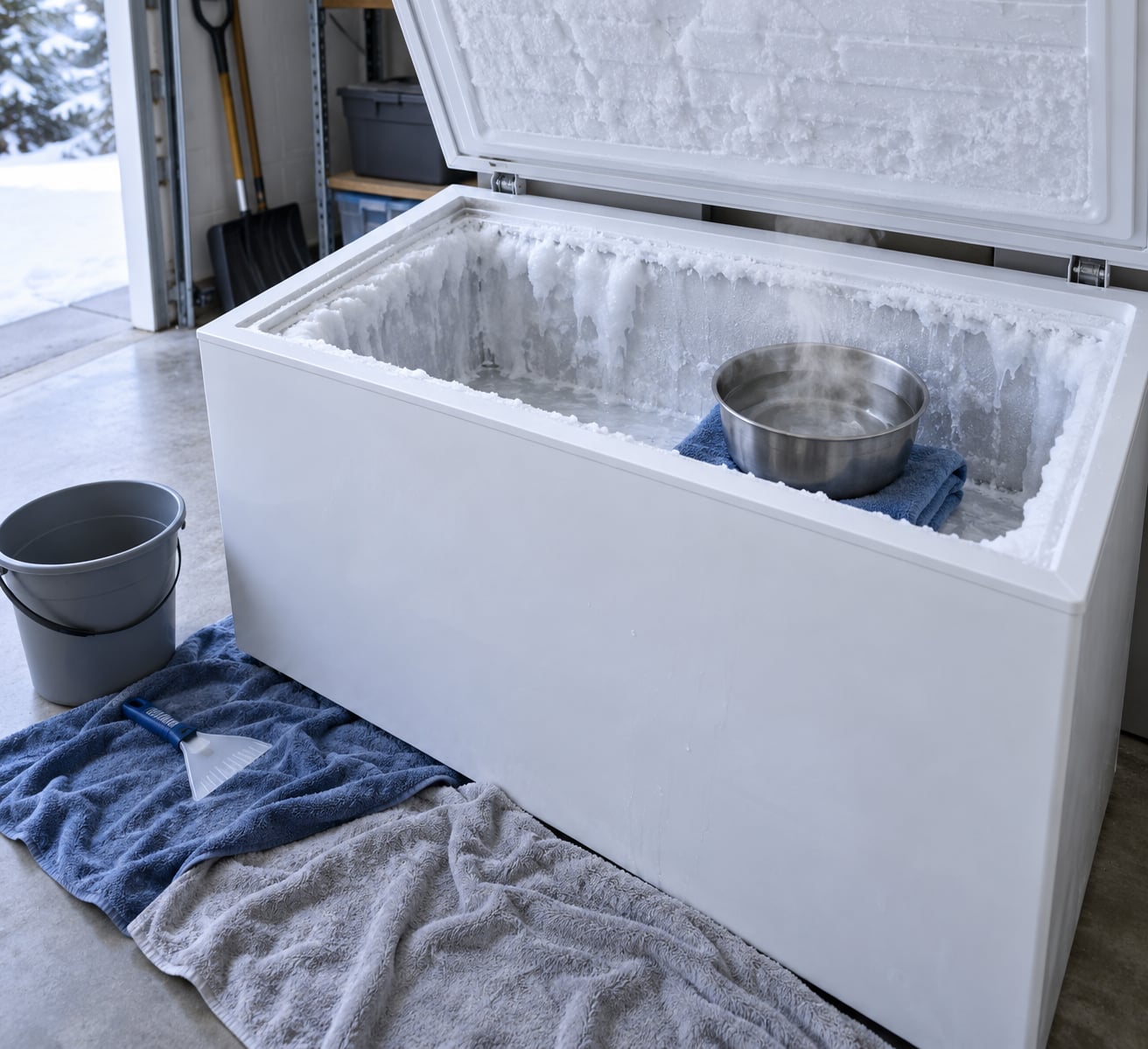
To defrost a chest freezer fast, empty it, unplug it at the wall, then set a bowl of hot water on a folded towel inside with the lid shut for 15 to 20 minutes. The trapped steam loosens the ice in sheets, you lift the pieces out with a plastic or wooden tool, dry the walls completely, and restart the unit. The whole job takes an hour or two for light frost and most of a day when the ice is thick.
That fast method only works safely once the food is out and the power is disconnected. Skip either step and you are dealing with meltwater on a live circuit, not a faster defrost.
Table of Contents
- What You Need
- Step-by-Step: How to Defrost a Chest Freezer Fast
- Common Mistakes
- Quick Tips for Faster Defrosting
- Frequently Asked Questions
- How long does it take to defrost a chest freezer?
- Can I use a hair dryer to defrost a chest freezer?
- What is the fastest safe way to remove a thick layer of ice?
- Should I put boiling water inside the freezer?
- How long can food stay in a cooler during defrosting?
- Can I turn the freezer back on while the inside is still wet?
- Conclusion
What You Need
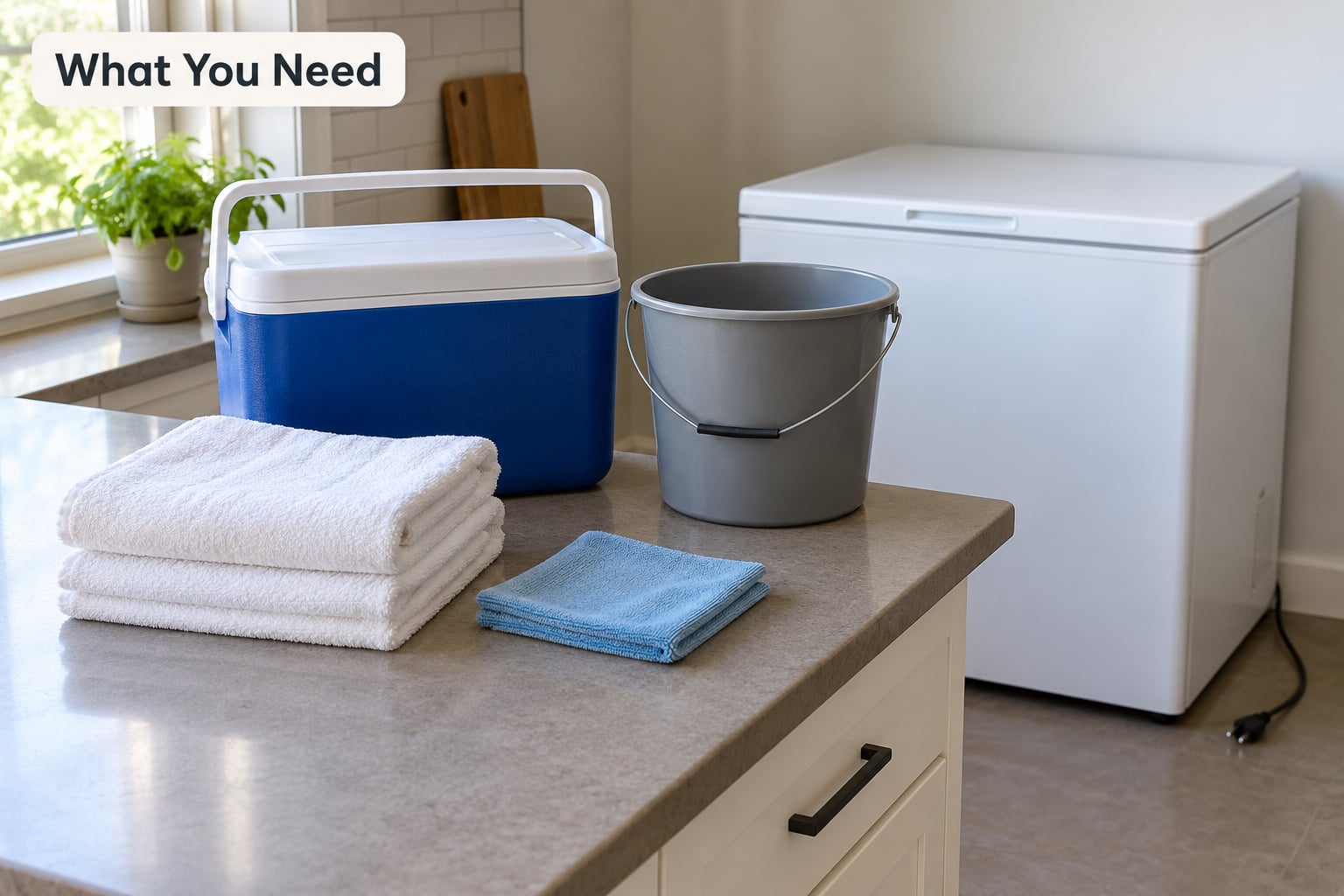
Set everything out before you touch the lid. Scrambling for a bowl while a soaking towel is overflowing is how floors get ruined.
- Old towels or a plastic sheet to line the floor and catch meltwater as it runs under the unit.
- A shallow tray, baking pan or bucket positioned under the drain if the freezer has one.
- Insulated coolers or cool bags with ice packs for the food. A full cooler holds safe temperatures for roughly eight hours.
- A plastic scraper, spatula or wooden spoon for lifting loosened ice.
- A heat-safe bowl or pot that can sit on a towel inside the freezer without tipping.
- Baking soda and warm water for the clean afterwards, plus a soft cloth for drying.
No coolers? A colleague r/AskIreland thread on a shared household freezer described the common fallback: pile the frozen food into buckets, laundry baskets and cardboard boxes lined with bin bags, and move the lot onto the counter. It works, but keep the load small and the time short.
Step-by-Step: How to Defrost a Chest Freezer Fast
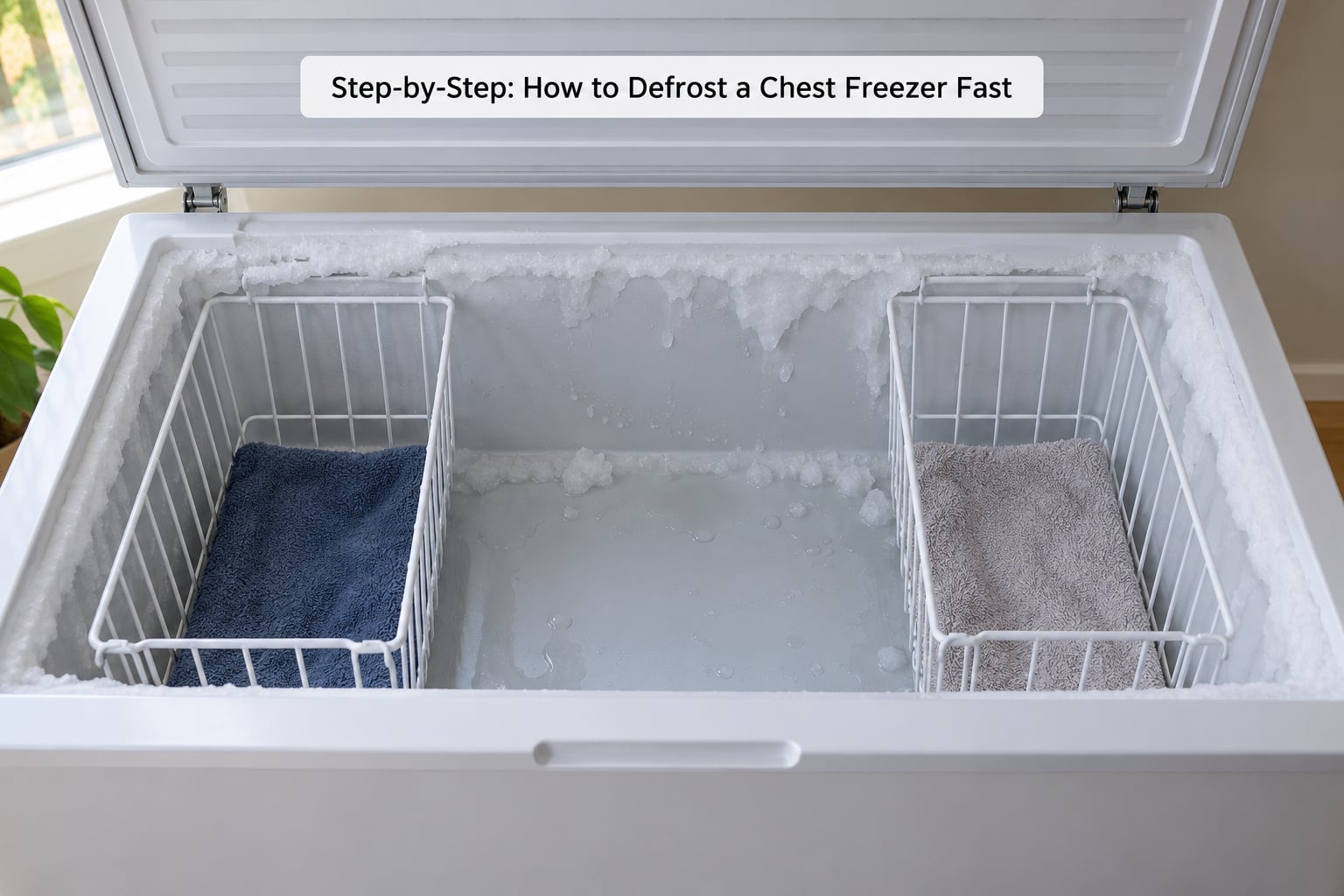
1. Move Food and Unplug the Freezer
Load the coolers with the most perishable items first: meat, poultry, seafood, leftovers, opened dairy. Stack them so cold air still moves between the packages rather than packing them shoulder to shoulder.
Anything that has been sitting above freezing temperature for more than about two hours is a judgement call. Food that still contains ice crystals or sits at 40 °F or below is fine to refreeze. Food that feels warm and has no ice left in it is not.
Then pull the plug from the wall, not just the switch on the front panel. Working inside a plugged-in freezer with meltwater in your hands is the single worst outcome here, and the reason the outlet goes before the lid comes up. Every thread I read on how to defrost a chest freezer fast gives the same order, and the unplug step is the one people skip.
2. Remove Drawers and Open a Fast Defrost Path
Most chest freezers have removable wire or plastic storage baskets. Lift them out according to the owner’s manual and set them on towels. Every basket you remove exposes more wall area to the warm air in the room, and the exposed floor is where the thickest sheet of ice usually sits.
Prop the lid open with a folded towel so you do not have to hold it, and clear anything stored against the walls. Leave the unit in place. A chest freezer carried across a garage floor on its side needs to stand upright for a full day before you switch it back on, which defeats the purpose of defrosting quickly.
3. Drain Meltwater and Loosen Ice Gently
Check the bottom rim inside the freezer for a small drain plug, and underneath for a drain hose. Plug models route meltwater to a pan or a floor drain, so open it and put your bucket or tray underneath. Drain-less models have nowhere for the water to go, which is why towels matter.
Now the fast part. Set the heat-safe bowl of hot water on a folded towel on the freezer floor, close the lid and leave it 15 to 20 minutes. Repeat with fresh hot water if the ice is stubborn. Users on HVAC-Talk also run the exhaust hose of a wet and dry vacuum into the open freezer, because the motor adds a little heat as a side effect. It works; keep the vacuum itself outside the freezer.
Lift the loosened ice out in slabs with the plastic scraper or wooden spoon. Ice that will not move with gentle pressure is not ready yet. Give it another steam cycle instead of levering harder.
Never chip ice with a knife, screwdriver or metal scraper. The plastic liner is thin, and a puncture behind it means refrigerant lines and a repair bill that dwarfs the cost of a slow defrost. Do not use salt either; it works on ice outside a freezer but it corrodes metal and wrecks the finish on food containers.
4. Dry the Freezer Completely
This is the step people rush, and it is the one that causes follow-up problems. Moisture left on the walls or floor refreezes into a fresh, thin layer as soon as the unit cools down, and any water that seeps into the foam insulation under the liner can grow mould that you will smell for years.
Towels first, then airflow. Wipe every surface dry with absorbent cloths, leave the lid propped open for an hour or two with a fan on low pointed inside, and wipe it again. If the unit will sit empty and unplugged for more than a day, leave the lid slightly ajar. Defrosting a chest freezer fast and then switching it back on over damp surfaces is how you end up doing the whole job twice.
5. Restart and Reload Safely
Plug the freezer back in and set the thermostat as you normally would. A chest freezer that feels warm when you first switch it on often has refrigerant that has shifted during the defrost, and it can take a few hours to settle back down.
Before the food goes back in, check the temperature properly. Put a cup of water with a thermometer in it, or leave an ice cube tray inside for two hours. If the water sits at or below 0 °F / -18 °C, the freezer is ready. FDA food-safety guidance treats that as the safe storage point; if it is warmer, wait.
Reload in one session rather than trickling food back over several hours, because every lid opening lets warm moist air in while the unit is still stabilizing.
Common Mistakes
Using a hair dryer or heat gun. Hair dryers and heat guns warp and melt the plastic liner and can damage insulation, and they are a burn and fire risk next to towels. If you want directed heat, use steam from hot water instead. Some forum users run a heat gun and get away with it, but that is a gamble on your liner.
Pouring boiling water straight onto the ice. Boiling water on a folded towel, inside a closed freezer, is the fast method and it is what the top search answer recommends. Poured directly onto ice or onto the liner it can crack or warp the plastic. Keep the water in a container on a towel, and let it cool to very hot rather than outright boiling if your liner is thin or old.
Chipping ice with any metal tool. A knife blade is there to open packaging, not to lever at frozen water. Use plastic or wood, and accept a second steam round instead of a damaged liner.
Refreezing over wet surfaces. Trace every damp patch with a dry cloth and run a fan for an hour. Restarting a wet freezer means the water freezes again before the food is back, which is how the cycle repeats.
Overfilling the coolers. Packed coolers lose cold air fast. Split the load into more, smaller containers, and if the defrost runs long, get the food back into a functioning freezer or a neighbour’s rather than gambling on a cooler holding temperature all day.
Ignoring the owner’s manual. Drain plugs, defrost heaters and drain hoses vary by model, and some frost-free chest freezers need a specific button or cycle held for a set time. The manual tells you which you have.
Quick Tips for Faster Defrosting
Different methods vary a lot in speed and risk. Here is how the common ones compare.
| Method | Typical time | Gear needed | Risk |
|---|---|---|---|
| Hot water bowl with lid shut | 15-20 min per cycle | Bowl, towel | Low |
| Warm water bowl, lid propped | 30-60 min per cycle | Bowl, towel | Very low |
| Hot towel wipe on the ice | Slow, good for the last film | Towel, kettle | Very low |
| Fan on low pointed inside | Adds 30-60 min to the whole job | Fan | Low |
| Wet and dry vacuum exhaust hose | Noticeably faster than passive melting | Wet and dry vac | Low if the vac stays outside |
| Hair dryer or heat gun | Fastest | Heat tool | High, can warp the liner |
| Do nothing, lid open overnight | 4-24 hours | Nothing | Low but slow, floors get wet |
Beyond method choice, the biggest time saver is not having much to melt. Defrost at about 1/4 inch / 6 mm of ice, which on a typical chest freezer means every 6 to 12 months, or every 3 to 4 months if you open the lid daily or run it in a warm garage.
To slow the return of ice, cool food before you put it in, leave room around the walls for air to move, test the door seal with a strip of paper closed in the gasket, and keep lid openings brief. If a frost-free model keeps icing up on a schedule, the drain is probably blocked, and clearing it beats defrosting every year.
Thick ice is also a running cost. The compressor has to pull heat through a layer of frost to keep the food cold, so the unit runs longer for the same result. A chest freezer with several centimetres of ice build-up working harder than it needs to is one reason bills climb in summer.
Frequently Asked Questions
How long does it take to defrost a chest freezer?
With the hot water and steam method, a chest freezer with light frost takes about an hour or two. A 3 cm build-up usually needs 4 to 6 hours of work, spread over several steam cycles. Thick, solid ice can take most of a day once you include cleaning and drying. Freezing cold air in a garage slows everything down, while a warm room speeds it up.
Can I use a hair dryer to defrost a chest freezer?
You can, and plenty of forum users do because it is quick, but it is the method most likely to damage the unit. Hot air from a hair dryer or heat gun can warp the thin plastic liner and damage the insulation underneath, and using one near towels is a burn risk. Steam from a bowl of hot water gives most of the speed without the heat, which is the safer trade.
What is the fastest safe way to remove a thick layer of ice?
Unplug the freezer, put towels down, set a bowl of hot water on a folded towel inside and close the lid for 15 to 20 minutes at a time. The steam loosens ice in sheets, which you lift out with a plastic scraper or wooden spoon. Repeat with fresh hot water rather than forcing stubborn pieces. A fan on low inside speeds the whole job without adding direct heat.
Should I put boiling water inside the freezer?
Hot water in a container on a folded towel, with the lid shut, is the standard fast method. Poured straight onto the ice or onto the walls it can crack or warp the plastic liner, so keep the water in a bowl. If your liner is thin, old or already scratched, use very hot rather than fully boiling water and never leave the container where it can tip when you lift the lid.
How long can food stay in a cooler during defrosting?
A well-packed cooler with frozen gel packs holds safe temperatures for around eight hours, which covers most defrost jobs. Use several smaller coolers rather than one packed full, because packed food loses cold air quickly. Past roughly four hours, top up the ice packs or move the food into another working freezer. Food that has gone fully warm with no ice crystals left in it should not be refrozen.
Can I turn the freezer back on while the inside is still wet?
No. Any water left on the walls or floor freezes as the unit cools, and meltwater that seeps under the liner into the foam insulation can grow mould you will notice long after the defrost. Dry every surface with towels, leave the lid propped open with a fan on low for an hour or two, wipe again, then reconnect the power and confirm the temperature is back at 0 u0026deg;F before reloading.
Conclusion
Empty the chest freezer and unplug it at the wall before anything else. After that the job is simple: open the drain if it has one, steam the ice loose with hot water in a bowl on a towel, lift the slabs out with plastic or wood, and work from the walls inward.
Meltwater control and a completely dry interior are what separate a quick defrost from a wet one. Once every surface is dry, reconnect the power, wait until the temperature is back at 0 °F / -18 °C, and reload in one go.
How to defrost a chest freezer fast comes down to preparation, not force. The steam does the work in fifteen-minute bursts, and a plastic scraper does the rest, so the liner comes out of it exactly as it went in.