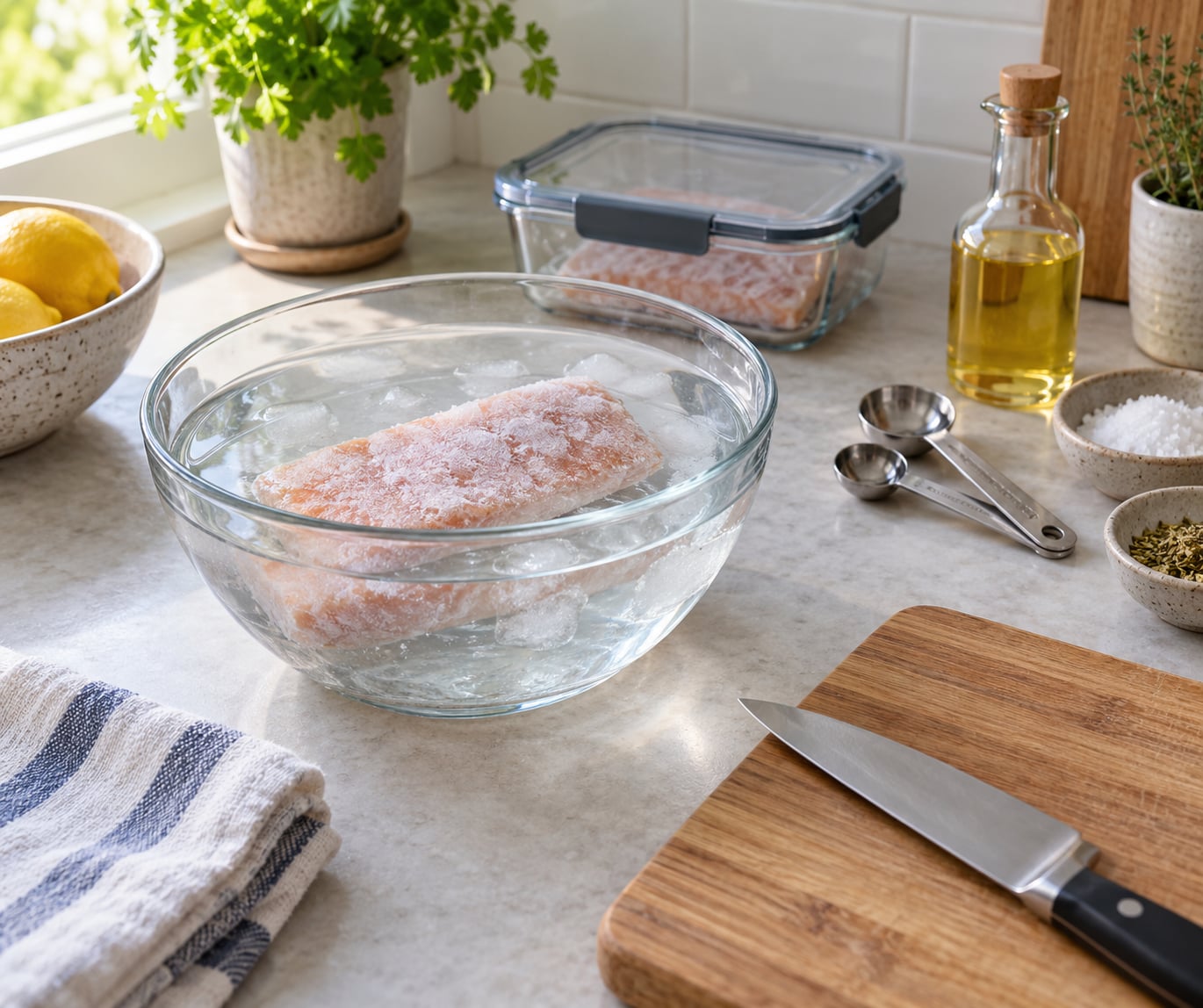
You cannot reverse freezer burn, but you can get rid of freezer burn taste in two ways: trim away the dry, discolored layers and cook or season what is left so the stale flavor disappears under moisture, salt, acid and aromatics. Most mildly burned food is salvageable in about 20 minutes of prep plus normal cooking time.
The stale, cardboard-like taste people describe is not rot. It is the flavor of dehydrated surface tissue, and no amount of sauce makes it taste like food that was frozen yesterday. What works is removing what the freezer dried out, then giving the remaining moisture something to hold onto.
Some items are not worth the effort. A bag of freezer-burned chicken nuggets, a freezer-burned tub of ice cream with a freezer-burned smell, or a bag of fries that arrived pale and dry in the store were ruined before you got them. Everything else usually has a path back to an edible meal.
Updated October 2026.
Table of Contents
- What You Need
- How to Get Rid of Freezer Burn Taste in Frozen Food
- Common Mistakes
- Frequently Asked Questions
- Can I get rid of freezer burn taste by cooking the food?
- How do you make freezer-burned meat taste good again?
- Does freezer burn mean food is spoiled?
- How do I fix freezer-burned ice cream or other frozen desserts?
- Should I thaw freezer-burned food in the refrigerator or in cold water?
- What foods are most difficult to save after freezer burn?
- Start With the Trim
What You Need
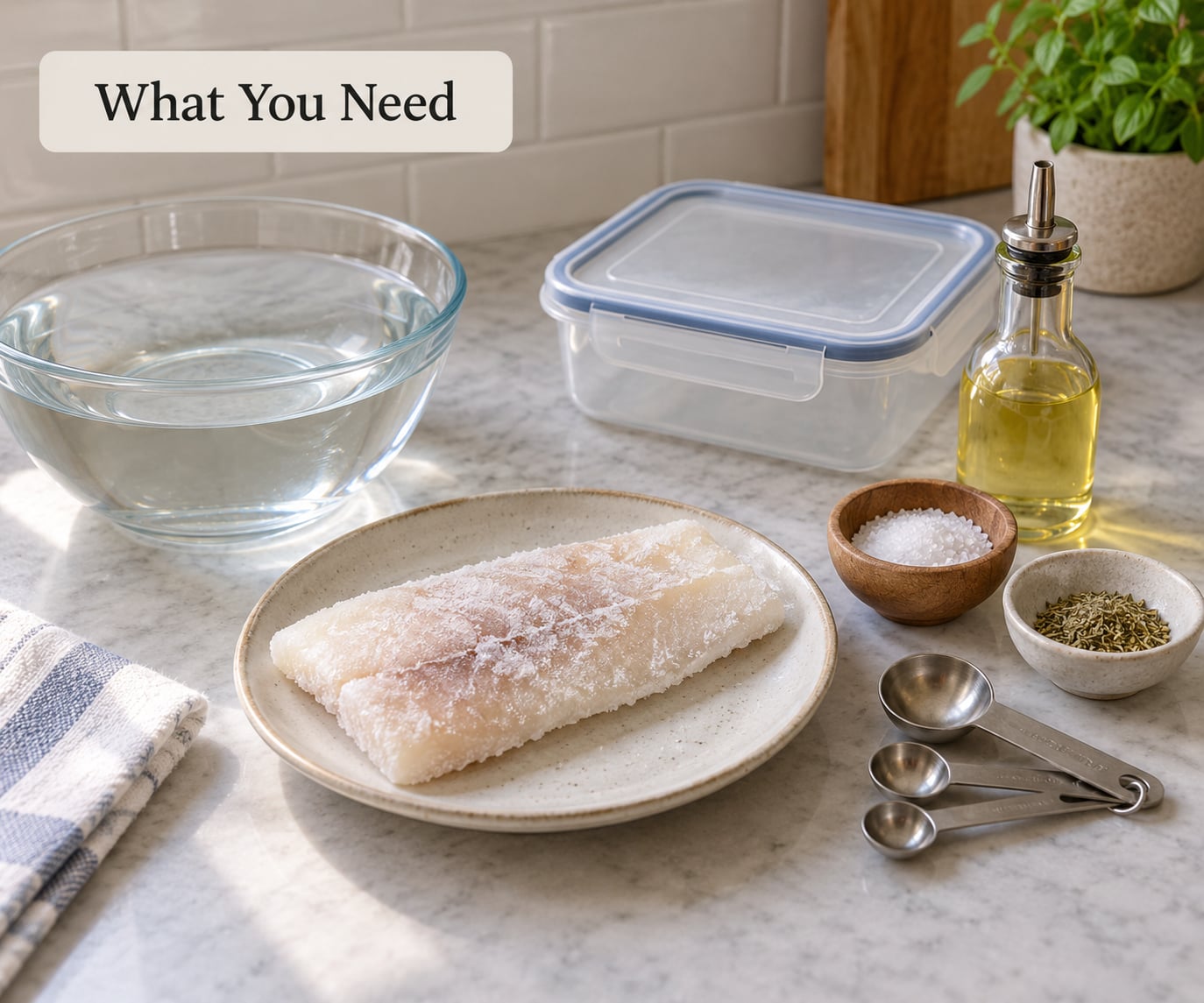
Almost nothing. If you already own a bowl, a knife and a salt shaker, you can fix most freezer-burned food today.
- A bowl or container large enough to hold the food under cool water for thawing or soaking.
- Cool water — not warm, not hot. Warm water cooks the outside of the food before the center thaws.
- A sharp knife and a cutting board for trimming dry layers off meat, fish and vegetables.
- Salt, either table salt or coarse salt, for a brine or a quick seasoning layer. This is the single most useful item on the list.
- An acid — lemon juice, lime, vinegar or a spoonful of pickle brine.
- A neutral oil such as canola, grapeseed or sunflower, for coating fries, vegetables and bread.
- Aromatics — garlic, onion, dried herbs, smoked paprika, broth, soy sauce or tomato paste.
- Broth, stock or water for moist-heat cooking, which is the fix for dry cuts of meat.
- Optional: a food dehydrator or a low oven, a vacuum sealer for prevention, and parchment or a silicone mat for refrying.
The dish towel matters more than people think. Patting food dry before you season it concentrates the seasoning on the surface, and a wet surface dilutes salt and turns bread soggy instead of crisp.
How to Get Rid of Freezer Burn Taste in Frozen Food
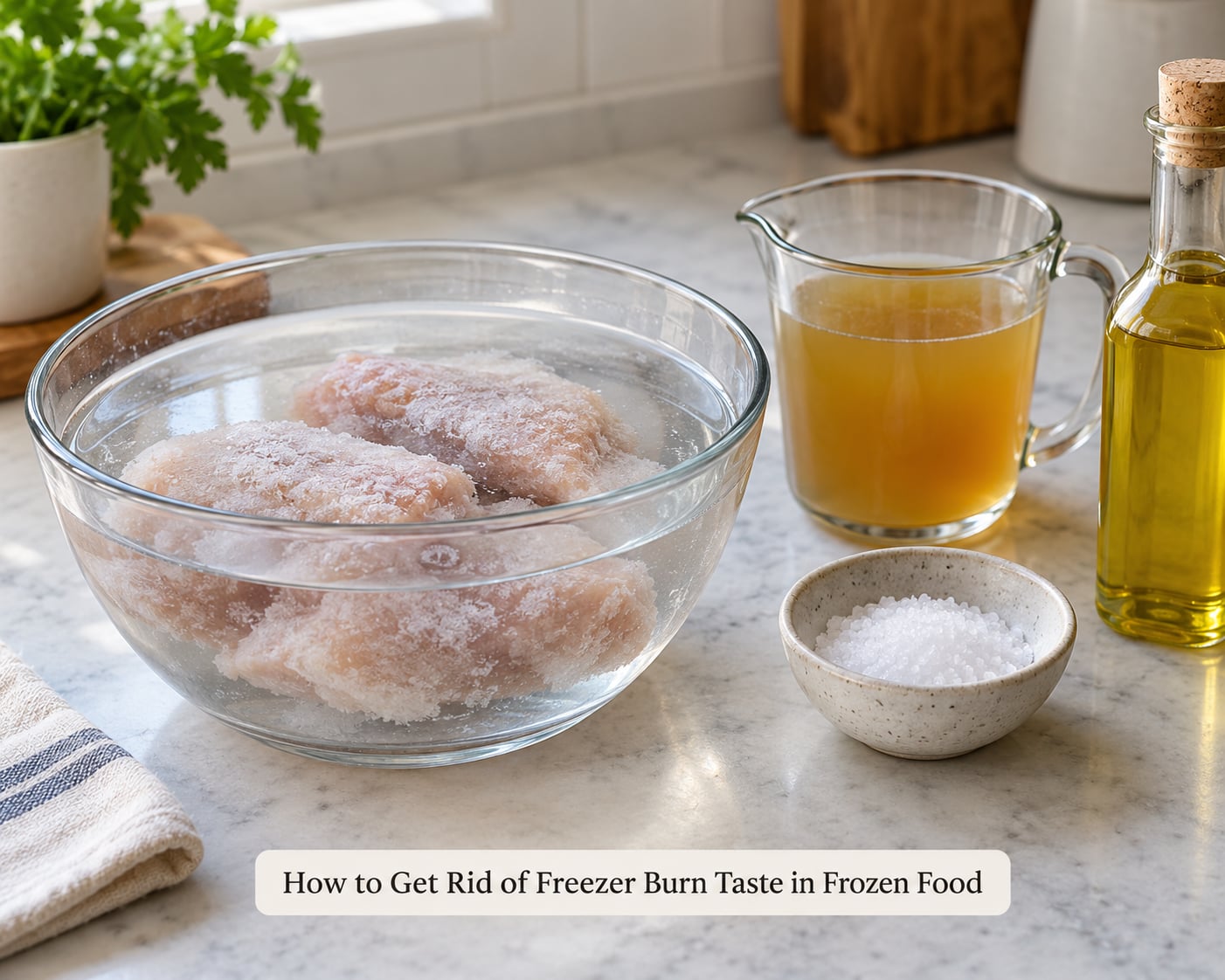
Work in this order. Thawing, trimming, soaking, seasoning and cooking each fix a different part of the problem, and skipping ahead usually wastes the food.
1. Thaw it in cold water, not on the counter
Put the sealed food in cool water and change the water every 30 minutes. A pound of meat or a bag of frozen vegetables loosens in roughly 30 to 60 minutes this way, far faster than the refrigerator and with less surface exposure to warm air.
Never thaw on the counter. The outer layer sits in the food-safe danger zone for hours while the center is still solid, which is a bacterial risk that no amount of seasoning will undo. Once food has been thawed and sat warm, cooking it does not make it safe again.
Keep food at 0°F (minus 18°C) or below. A freezer that hovers warmer than that cycles more often, and each cycle draws more moisture out of everything inside.
2. Trim the freezer-burned layer
Cut away the dry, gray, white or leathery outer surface. Most guides, and the ones search engines quote most often, say to trim up to a quarter inch deep — enough to remove the papery shell without cutting into good meat underneath.
For meat, fish and poultry, cut perpendicular to the surface so you can see the color of the interior. If the dry layer extends more than a quarter inch, or the flesh underneath is still dry and dull, the piece has lost enough moisture that slow cooking is the better call.
People who post on cooking forums report that rinsing ice crystals off frozen food under cool running water knocks out most of the off-taste before the food even thaws. That works best on fruit, vegetables and any surface you can see. Do not do it to raw poultry running into a sink where it might splash onto other food — thaw those in a container instead.
3. Soak or brine it
Soaking puts water back into cells that lost it, and salt pushes a little extra water into the food while seasoning it from the inside. Use about a quarter cup of salt per gallon of water for a brine, and leave thin items 30 minutes and thick roasts up to 4 hours in the refrigerator.
For a lighter touch, a 30-minute soak in salted water — about a tablespoon of salt per quart — does the same job for vegetables, fish and small cuts.
One bushcraft forum remedy keeps surfacing in search results, and it works: blanch the food for three to five minutes in salted boiling water, drain, then repeat in fresh salted water. Two rounds are usually enough to pull out a stale, papery note from older meat.
Marinating serves the same function with flavor instead of salt alone. Thirty minutes is the floor for thin items; overnight in the refrigerator is better for anything thick. Discard the marinade unless you boil it first, because it has been sitting at room-adjacent temperature with raw protein in it.
4. Cook it with moisture or aromatics
Moist heat is the most reliable way to get rid of freezer burn taste in a dry cut. Braises, stews, soups, curries and slow-cooked dishes put the food back in a wet environment and give strong flavor something to sit on top of.
Loosen a dry pot roast with a cup of broth, a splash of wine and aromatics, then braise it at 300°F (150°C) for two to three hours. The result is not the same as a roast that never froze, but it is a good dinner.
Cook poultry to an internal temperature of 165°F (74°C) and ground meat to 160°F (71°C). Whole cuts of beef, pork, lamb and fish need 145°F (63°C) with a three-minute rest. A probe thermometer in the thickest part is the only way to know.
A low oven or dehydrator reverses the damage in the other direction. Drying food concentrates flavor rather than adding it, so it only helps on things that were mildly burned to begin with. Use the lowest oven setting you have, around 170°F (77°C), with the door cracked.
5. Fix it per food type
Different foods need different moves, and one fix often fails another. This is the short version of what works best for each.
| Food type | Best fix | Expected result |
|---|---|---|
| Beef, pork, lamb roasts | Trim, then braise in broth at 300°F (150°C) | Tender enough to eat, with a rounder flavor |
| Ground beef | Crumble cold into a hot pan and brown hard | Good, since browning builds new flavor anyway |
| Chicken and poultry | Trim, brine 2 hours, grill or roast hard | Juicier than expected for the effort |
| Fish fillets | Rinse ice crystals, quick soak in lemon water, cook fast | Clean flavor if the burn was shallow |
| Vegetables | Blanch 3 minutes, then sauté with oil and salt | Close to fresh |
| Fruit | Blend into smoothies, sauces or pies | Undetectable in a mixed dish |
| Bread and pizza | Rehydrate in milk and egg, then French toast | Soft, sweet, very usable |
| Ice cream | Scrape the icy top, rest 10 minutes, serve with salt | Fine unless the whole tub smells burnt |
| Fries and snacks | Refry at 375°F (190°C) for 10 to 15 minutes | Crisp, with added seasoning |
Vegetables are the easiest save because blanching is the original cooking step everyone already knows, just restarted. Fruit is nearly unsalvageable on its own but disappears into smoothies, sauces and baked goods without a trace.
Bread and pizza have their own move. Soak stale slices in milk and egg for a few minutes, then cook them as French toast, or tear them into crumbs and toast them in butter for a topping. Freezer-burned pizza dough gets the same treatment and comes out chewy rather than cardboard.
Ice cream is the one people get wrong. Scrape off the icy, frosted top layer and let the rest sit at room temperature for ten minutes before scooping, and a shallow burn is completely fine. Forum advice is to press wax paper or another flat barrier directly onto the surface, which cuts off the air that caused the layer in the first place.
For frozen fries, a light coating of oil before baking helps more than any seasoning. People who cook these regularly season after cooking, not before, so the salt stays on the crisp surface instead of dissolving into the oil.
How to Get Rid of Freezer Burn Taste Before Serving
Taste before you serve and adjust once. You are looking for salt, acid, fat and aroma in that order, and one adjustment at a time tells you which one was missing.
- Salt first. A pinch of flaky salt on a dry surface sticks and draws out the papery quality more than any sauce.
- Acid next. A squeeze of lemon, a splash of vinegar or a spoon of pickle brine sharpens a flat, dull taste immediately.
- Fat third. Butter, olive oil or cream carry flavor into dry food and soften the leathery texture.
- Aromatics last. Garlic, smoked paprika, soy sauce, tomato paste or fresh herbs bury the background note.
- Sweetness for fruit and bread. A spoon of honey or sugar on a tart, freezer-burned berry does what nothing else will.
If a dish tastes freezer-burned no matter what you add, stop. That flatness usually means the food thawed and warmed somewhere along the way, and the fix is to stop and check for spoilage instead of seasoning it harder.
A freezer that tastes burnt is a separate problem. A smell from the appliance itself, or one bad item flavoring everything around it, means unplugging the unit, cleaning out the frost and deodorizing with baking soda. That has nothing to do with trimming food.
Common Mistakes
Tasting food repeatedly at room temperature puts it in the danger zone three separate times instead of once. Taste one small piece, then decide.
Soaking foods that turn soggy is a real risk. Bread, pastry and anything already waterlogged should be revived with a low oven or a dehydrator rather than a bowl of water.
Using heavy seasoning as the first and only response tends to make a freezer-burned piece taste salty and stale at once. Seasoning works as the finishing step after the food has been rehydrated and trimmed.
Trying to fix food that thawed on the counter wastes the effort. Cooking kills many bacteria but not all of them, and the flavor problem is already solved for you — nobody wants well-seasoned spoiled food.
Freezing and thawing twice makes the damage roughly double. Every cycle pushes out more water than the last, and forum users who tried it describe a dramatic drop in texture that no marinade could rescue.
Keeping food in a jar half full of headspace guarantees freezer burn. Press the air out of freezer bags with your hands, leave only an inch at the top for expansion, and double wrap solid items so a puncture in one layer does not expose the food.
Label and date everything. A bag you can identify at a glance gets eaten while it is still good, which is the cheapest way to avoid salvaging it in the first place.
Frequently Asked Questions
Can I get rid of freezer burn taste by cooking the food?
Cooking helps more than almost anything else, especially moist-heat methods like braising, stewing or soup. Heat and liquid put moisture back into the tissue and carry strong flavors over the stale ones. It will not reverse the damage, so trim first, then cook the food in something flavorful rather than plain.
How do you make freezer-burned meat taste good again?
Trim off the dry outer layer first, up to about a quarter inch deep. Then pick the method to match the cut: brine for two hours for chicken, marinate at least 30 minutes for steaks or chops, and braise roasts in broth at 300°F for two to three hours. Browning ground beef hard in a hot pan works because the new flavor replaces what was lost.
Does freezer burn mean food is spoiled?
No. Freezer burn is moisture loss, not bacterial growth, so it changes flavor and texture rather than safety. The USDA Food Safety and Inspection Service treats frozen food held continuously at 0°F as safe until thawed. Discard it for smell, slime, unusual color or any time it has been warmer than the refrigerator for more than two hours.
How do I fix freezer-burned ice cream or other frozen desserts?
Scrape off the icy, frosted top layer and let the rest sit at room temperature for ten minutes before scooping, which softens it enough to taste properly. Press wax paper or a flat lid straight onto the surface afterward so air cannot reach it again. If the smell has transferred to the whole container, it will not come back and the tub needs to go.
Should I thaw freezer-burned food in the refrigerator or in cold water?
Cold water is faster and works well for food you are cooking the same day. Seal the food, submerge it in cool water and change the water every 30 minutes. The refrigerator is safer for overnight thawing and is the better choice for large cuts, fish and anything you plan to refreeze. Never thaw on the counter at room temperature.
What foods are most difficult to save after freezer burn?
Delicate high-moisture items with no fat are the hardest: plain fish fillets, berries, lettuce greens and skinless chicken breast. Dense, fatty and heavily seasoned foods survive best, because there is less exposed surface and stronger flavors to hide behind. Frozen prepared snacks such as nuggets are usually not worth rescuing, since the breading itself holds almost no moisture.
Start With the Trim
If you do one thing tonight, thaw the worst piece in cold water and cut off the dry layer. That single step decides whether the food is worth cooking or worth composting, and it takes ten minutes.
The next time you freeze anything, press the air out of the bag, leave an inch of headspace, and label it with the date. Prevention is the only version of this problem that actually goes away.