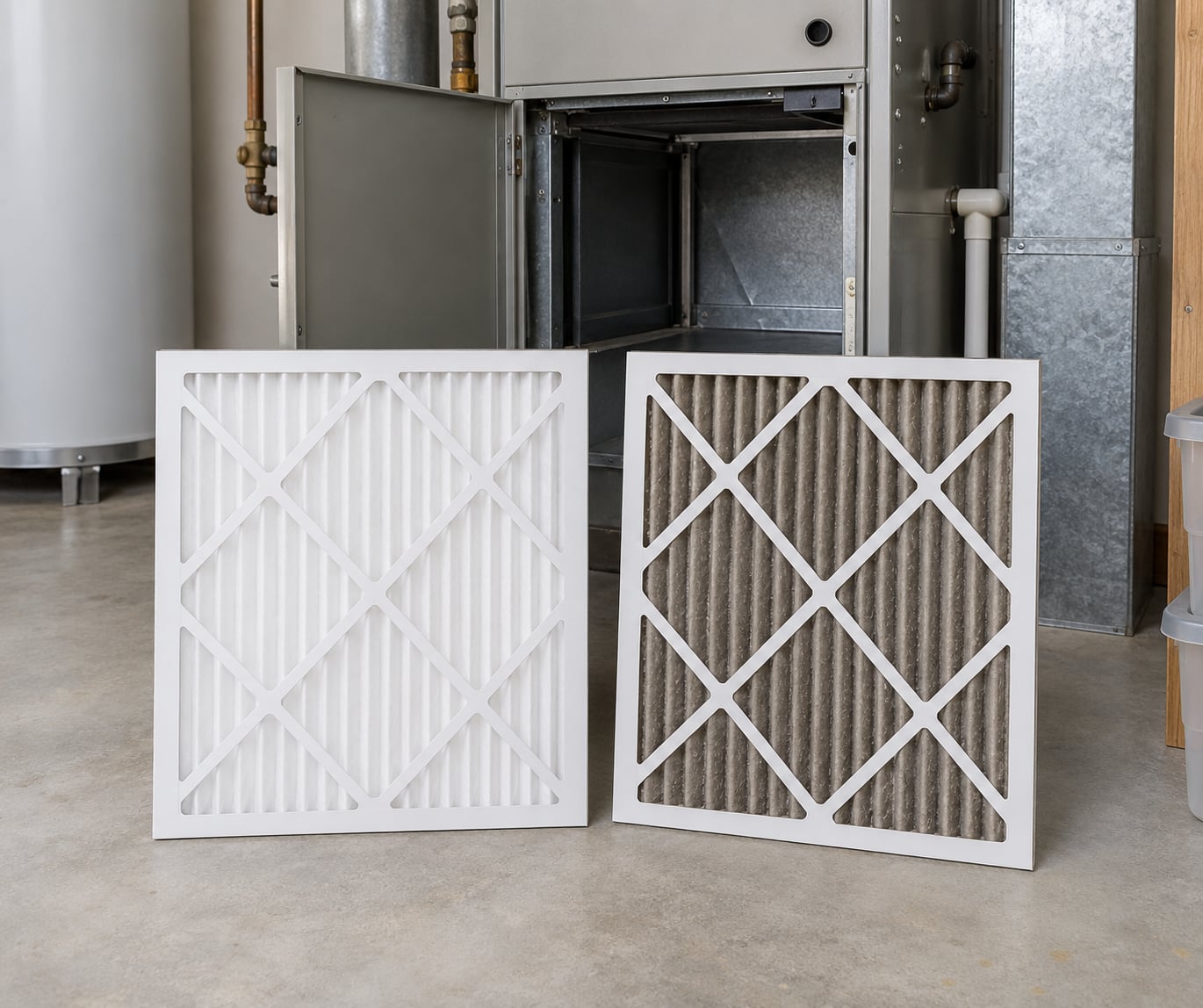
Most 1-inch disposable filters need changing every 30 to 90 days. Pleated and deeper media filters usually last 60 to 180 days, and washable filters should be cleaned about every three months. Airflow, filter condition and manufacturer guidance decide the real interval.
That answer is the one most households need, and it is also the one most likely to be wrong for your specific system. The interval printed on a filter box is a general guideline, not a measurement of your home.
This guide covers how filter depth and MERV rating change the schedule, how to spot a filter that is past due, and how to swap one safely. It also covers the two errors that cost homeowners the most: leaving a loaded filter in far too long, and throwing away a clean one every three weeks for no reason.
Table of Contents
- How Often Should You Change an HVAC Filter by Type and Size
- What Factors Determine the Replacement Schedule?
- 1-Inch, Pleated, and Washable Filter Schedules
- Signs Your HVAC Filter Needs Changing Sooner
- How to Change an HVAC Filter Safely
- Choosing the Right Replacement Filter
- Frequently Asked Questions
- Should I change my HVAC filter every month during winter or summer?
- Can I reuse a pleated HVAC filter instead of replacing it?
- How do I find the correct HVAC filter size if nothing is marked?
- Does a dirty-looking HVAC filter always cause low airflow?
- Is a higher MERV filter always better for my furnace?
- Can I change an HVAC filter while the system is running?
- Conclusion
How Often Should You Change an HVAC Filter by Type and Size
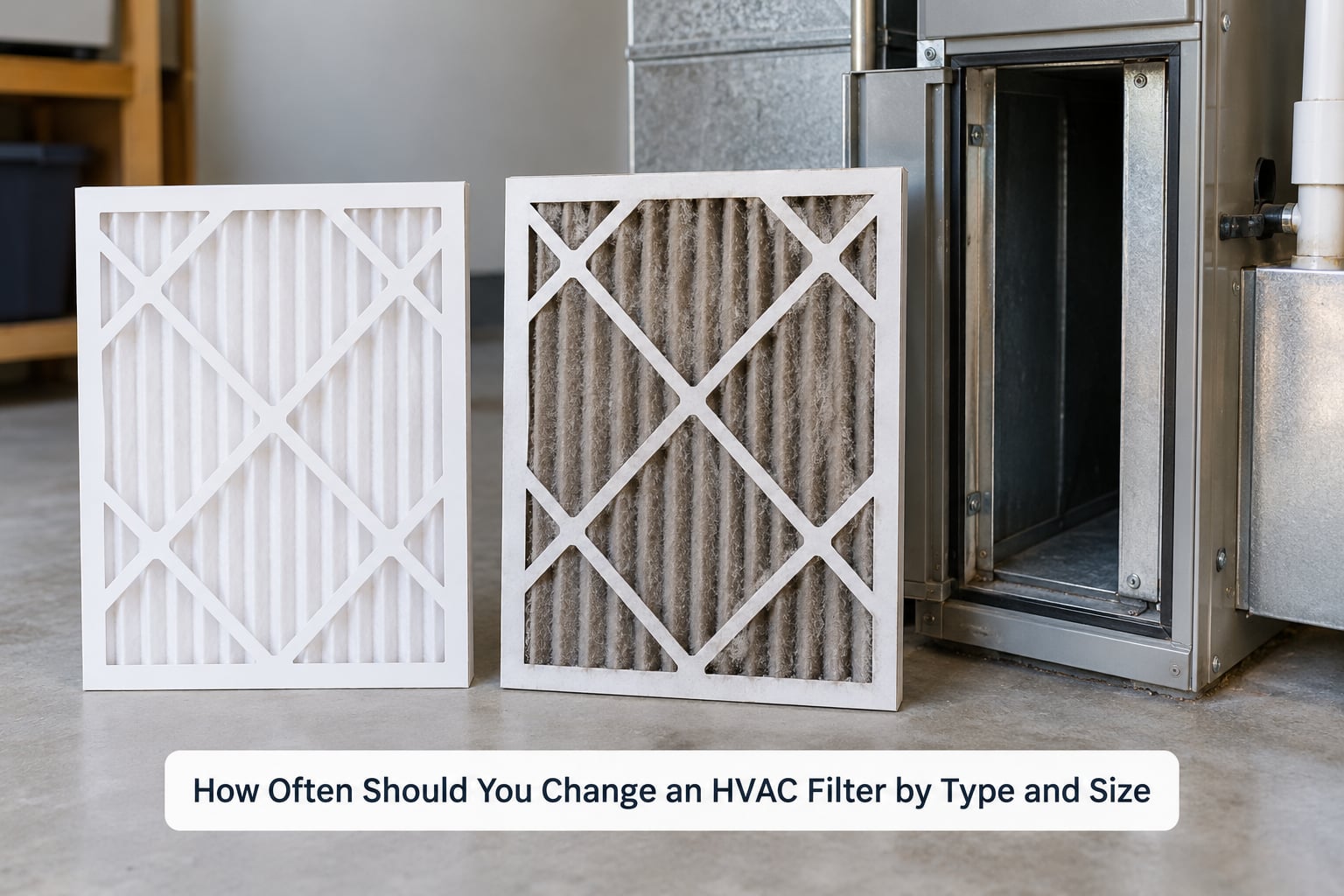
The honest answer to how often should you change an HVAC filter depends on how much media you have and how dirty your air is. Thicker filters carry more surface area, so they clog more slowly.
| Filter thickness | Typical service life | Change it when |
|---|---|---|
| 1 inch (fiberglass or thin pleated) | 30 to 90 days | Light stops passing through, or monthly at the start |
| 2 to 3 inches | 60 to 180 days | Visible gray loading at the return grille |
| 4 inches (deep pleated) | 3 to 9 months | Airflow sounds weak at any vent |
| 5 to 6 inches (media cabinet) | 6 to 12 months | Filter lies flat, sags or bows in the rack |
| Washable (metal mesh or foam) | Clean about every 3 months | Any buildup on the mesh, following manufacturer instructions |
MERV rating narrows the range further. Higher numbers capture smaller particles, which means more surface area is doing the work and more pressure the filter creates.
| MERV rating | Typical particle capture | Typical service life |
|---|---|---|
| MERV 1 to 5 | Coarse dust and lint | 30 to 60 days |
| MERV 6 to 8 | Pollen and mold spores | 45 to 90 days |
| MERV 9 to 12 | Fine dust, dander, some smoke | 60 to 120 days |
| MERV 13 to 16 | Fine smoke and aerosol particles | 90 to 180 days |
| MERV 17 and above | Very fine particles | Often 6 to 12 months, on systems designed for it |
Those ranges are starting points. A MERV 8 filter in a small home with one cat can load faster than a MERV 13 in a low-use house.
What Factors Determine the Replacement Schedule?
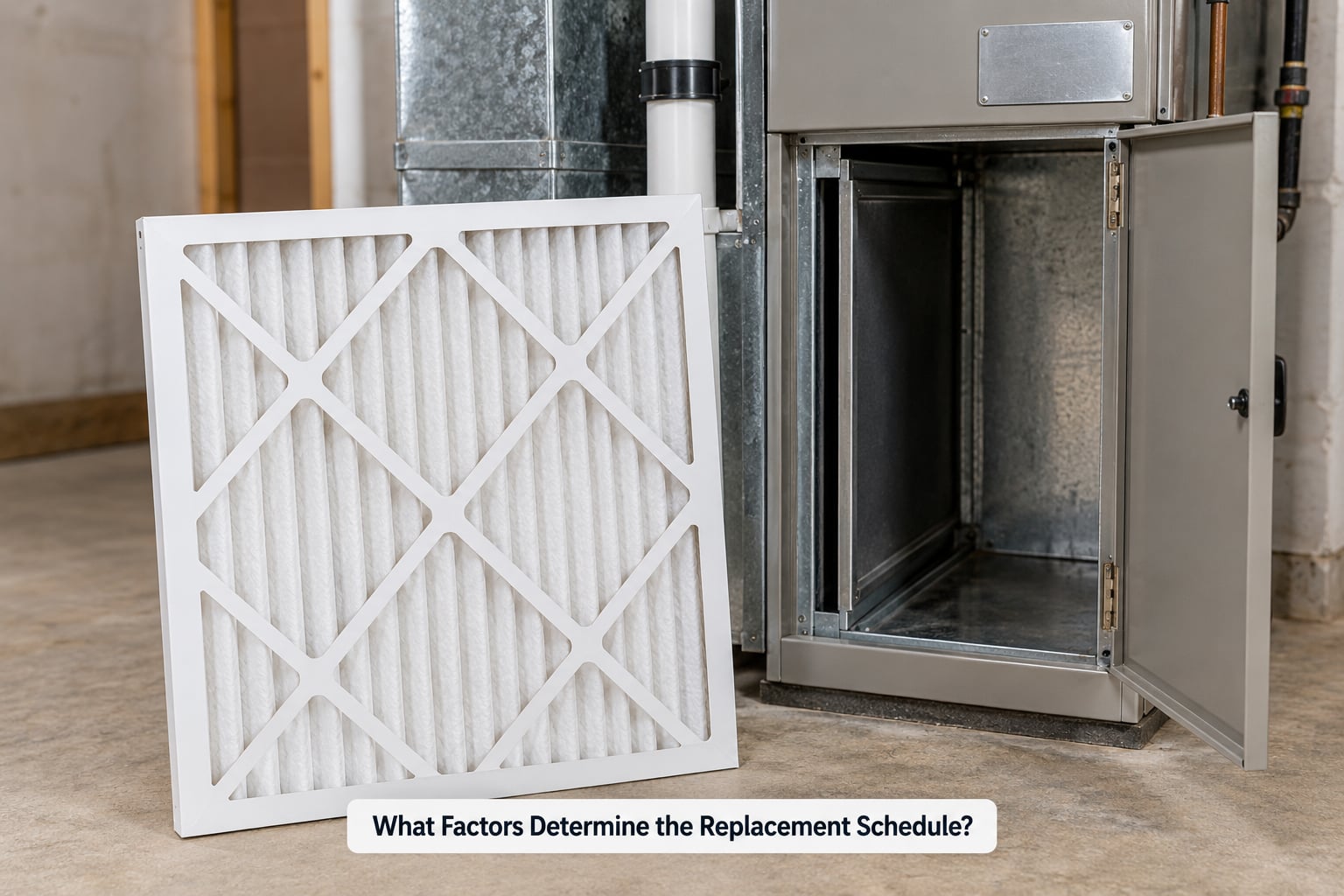
Every interval you read, including the ones in the tables above, assumes a normal home with normal runtime. Change any of the variables below and the schedule moves.
How often should you change an HVAC filter with pets, smoke, or renovation dust?
- Pets. One pet often pushes a 1-inch filter toward the short end of its range. Two or more, particularly shedding dogs or cats, can mean a monthly swap in a high-use season.
- Allergies or asthma in the house. People who react to dust and dander notice the difference between a lightly loaded filter and a loaded one.
- Indoor smoking, wood burning or heavy candle use. Fine smoke particles load media faster than dust of any kind.
- Wildfire smoke or poor outdoor air days. Keep windows shut, run the system on fan, and check the filter every few weeks while the event lasts.
- Renovation or new construction. Drywall dust is light and travels everywhere. Seal off the work area if you can and change filters on a short schedule.
- High runtime. A cooling system running near continuously in July moves far more air than a winter furnace that fires intermittently.
Those all push the interval shorter. The opposite conditions push it longer: a vacation home that runs only when occupied, no indoor combustion sources, a deep pleated filter, and a filter that still looks clean at inspection time.
Check the manual and the equipment label before trusting a generic timeline
Your owner’s manual and the data plate on the furnace or air handler are more reliable than any chart on the internet, including this one. Manufacturers publish a recommended change interval for the filter they designed the cabinet around.
Look for the plate on the side of the furnace cabinet or air handler and write down the model number. The manual usually gives both the interval and the maximum MERV rating that cabinet is designed to accept.
Filter manufacturers work the same way. The change interval printed on a pleated filter box is based on how much pressure that filter adds at a design airflow, not on a calendar. That is why a properly sized 4-inch filter can honestly be described as a 90-day filter while a 1-inch one is a 30-day filter.
If your system has a filter reminder light or a filter pressure gauge, use it. A gauge is better than a light because it measures restriction instead of counting months.
1-Inch, Pleated, and Washable Filter Schedules
Filter format matters more than most people expect. Media depth and surface area decide how quickly the filter restricts airflow, and a thin filter restricts fast.
| Filter type | Typical MERV | Service life | Notes |
|---|---|---|---|
| Fiberglass, 1 inch | MERV 1 to 5 | 30 days is common | Cheapest and least restrictive; often sold in large packs |
| Pleated, 1 inch | MERV 5 to 8 | 60 to 90 days | More surface area than fiberglass in the same slot |
| Deep pleated, 4 inches | MERV 8 to 13 | 3 to 6 months | Needs a rack or channel cabinet, not a slim slot |
| Media, 5 to 6 inches | MERV 11 to 16 | 6 to 12 months | Large surface area; can sit folded or bowed, so replace rather than refold |
| Washable mesh or foam | Varies | Clean about every 3 months | Only wash it if the manufacturer of that specific unit says so |
Flat 1-inch filters get restrictive the soonest because they carry the least media. Every extra inch of depth multiplies the surface area and stretches the interval.
Washable filters get their own rules. Rinse them in the direction of the airflow arrows, let them dry completely before reinstalling, and never put a wet filter back in the cabinet. Water left in a filter panel can grow mold and freeze on a cold coil.
One caution about ratings: compatibility follows the filter rating your system was designed around, not the age of the furnace. A newer system may take MERV 13 comfortably. An older unit with a small cabinet and a tired blower may not, no matter how new the equipment looks.
Signs Your HVAC Filter Needs Changing Sooner
Appearance alone is unreliable. Filter color varies by manufacturer and by lighting, which is why a green filter can be loaded and a gray one nearly clean. Look for a combination of signals instead.
- Little or no light through the media. Hold it up to a window or lamp. If you see almost nothing, it is done.
- Gray fuzz or dust built up on the pleats or mesh. Pet hair and lint are easy to spot even when fine dust is not.
- Collapsed or bent pleats. A filter that has bowed or creased has lost effective surface area and should be replaced, not straightened.
- Muffled or whistling air at the return grille. A whistling return usually means a loaded filter.
- Weaker airflow at supply vents. Rooms that used to blow hard now deliver a breeze.
- Odors that return after a cleaning. A persistent dusty smell is what trapped debris and microbial growth on a wet coil can smell like.
- Short cycling or a coil that keeps freezing. Reduced airflow over the coil can bring on both, and this one needs attention fast.
Compare the removed filter against a fresh one from the same box. The color, thickness of the dust mat and smell of the old one tell you more than either filter tells you alone.
For an objective answer, technicians read static pressure, the resistance the blower works against, with a manometer across the filter. Too high a reading means replace it and check the fit. Any reading above the range your equipment manual specifies means the filter, the cabinet fit or the ductwork needs attention. There is no single number that is correct for every home, which is why the manual beats guesswork.
How to Change an HVAC Filter Safely
This is a ten-minute job on most systems. The whole risk in it comes from moving something heavy or working near live wiring, so read the location first.
- Confirm the system and the size. The replacement has to match the slot. Check the cabinet marking, the equipment manual or the filter you are pulling out.
- Turn the system off. Set the thermostat to off. If you are comfortable opening the outdoor disconnect or the breaker panel, switch the system off there too.
- Find the cabinet. It is usually beside the furnace or air handler, often in a basement, closet or utility room, behind a removable return grille filter or a panel door.
- Note the airflow direction before removing the old filter. Arrows on the filter frame point toward the blower. Photograph or mark the slot.
- Slide the old filter straight out. Lift it clear without tugging on wires, tubing or the cabinet rails.
- Look inside the cabinet. Wipe out dust with a damp cloth on the empty cabinet surfaces. Leave electronics, motors and wiring alone.
- Slide the new filter in with the arrows pointing toward the blower. A filter installed backwards can carry dust straight into the ductwork.
- Close the panel, restore power and run the system. Listen at a return vent. If airflow is noticeably stronger than before, the swap did its job.
Some filters sit behind the return grille, others sit in a slide channel, and large media filters mount on a rack or in a cabinet door. The principle is the same in all three: airflow arrows point toward the blower.
Do not open electrical panels, touch the furnace burners, adjust the blower or start dismantling ductwork. Call a technician for anything beyond the filter and its cabinet. Get help if a system keeps tripping its high-limit switch, keeps short cycling, blows noticeably weak air with a brand new filter, or shows a frozen coil.
Choosing the Right Replacement Filter
Nominal sizing confuses almost everyone at the hardware store. Nominal size is a rounded approximation; actual size is the number that matters.
One example that trips people up: a filter labeled 16x20x1 actually measures about 15-7/8 by 19-3/4 by 7/8 inches. Labels round up for a reason that has nothing to do with your cabinet. Measure the actual frame or the slot opening if you want a truly tight fit.
A quick way to check your size: pull out the old filter and measure the frame, or measure the cabinet opening. The filter cabinet itself is usually stamped with the size it accepts, sometimes in the form of a rough rectangle outline you lay the filter on top of.
Then match the rating to the system class rather than to the dirt you think you have.
- Standard residential systems designed for 1-inch media usually cap out around MERV 8 to 13. Check your manual.
- A 4-inch or media cabinet with a proper rack and a strong blower can often take MERV 13 to 16.
- Homes with a dedicated filtration system or a designed high-static cabinet may be rated higher still.
Higher MERV is not automatically better for the equipment. A denser filter holds onto fine particles and also holds onto the pressure. Install one your system was not sized for and you get a blower working harder, higher energy use, and in cold weather a coil that is more prone to freezing. Install a filter that is too small and the same thing happens, because a gap around the edges lets air bypass it while the media still resists.
Two habits to avoid. Do not wash or vacuum a disposable filter, because both damage the media and shake loose captured dust back into the air. Do not run the system with no filter at all, even for a day, because the coil and blower need that screen to stay clean. If you need to run it filterless for a short stretch after a repair, keep the system off where you can and get the filter fitted as soon as possible.
Frequently Asked Questions
Should I change my HVAC filter every month during winter or summer?
Check monthly in peak season, but only replace it when it is actually loaded. A thin 1-inch filter in a home that runs constantly may need a monthly swap, while a deep pleated filter in the same house can last several months. Look at the filter, hold it up to the light, and compare airflow at a vent. Peak runtime is a reason to inspect more often, not a rule to replace on a schedule.
Can I reuse a pleated HVAC filter instead of replacing it?
Usually not. Cleaning a pleated filter by rinsing, vacuuming or shaking it can break the fibers and tear the pleats, and it removes only some of what was captured. Once a disposable pleated filter is loaded, replace it. The exception is a filter whose manufacturer specifically labels it as washable or cleanable, and even then follow that unit’s own cleaning and drying instructions.
How do I find the correct HVAC filter size if nothing is marked?
Pull out the old filter and measure the frame, or measure the opening of the cabinet slot including its frame and channel width. Many cabinets have the correct size stamped in the metal or shown as a filter-shaped outline. If the measurement falls between two common sizes, buy the smaller one so it slides in without being forced, and check the equipment manual for the listed filter size.
Does a dirty-looking HVAC filter always cause low airflow?
No. Color is a poor indicator, since media color varies by brand and lighting. A gray filter can be clean and a green one can be loaded. Better signals are airflow at the supply vents, the sound of the return grille, whether light passes through the media, and a pressure reading across the filter. Replace based on those, not on how the frame looks.
Is a higher MERV filter always better for my furnace?
No. Higher MERV media captures finer particles but also adds resistance, which means a harder-working blower and more pressure across the coil. A filter rated above what your cabinet and blower were designed for can reduce airflow and contribute to a frozen coil or a tripped limit switch. Check the manual for the maximum rating your system accepts and stay at or below it.
Can I change an HVAC filter while the system is running?
You can, and many people do it during a cooling season without noticing anything unusual. Turning the system off first is safer, though, because you avoid pulling a loaded filter away from a running blower and you will not have to work around moving parts. Set the thermostat to off and switch the system off at its disconnect or breaker if you are comfortable doing so.
Conclusion
Start with the manufacturer’s schedule for your specific equipment, since that beats any generic timeline. Then look at the filter once a month, hold it up to the light, and replace it when it is loaded or when airflow at your vents feels weak.
Match the size to the cabinet and the MERV rating to what your system was designed for, and take the arrows seriously when you install it. If airflow stays poor with a fresh filter, stop changing filters and call an HVAC professional, because the problem is upstream in the ducts, the blower or the coil rather than in the filter slot.