Grinding your own burger meat at home takes about 20 minutes of active work per pound or two, and the whole job comes down to three things: keep the meat and the grinder cold, cut it into 1-inch cubes, and run it through a coarse plate, then a fine plate. That setup is what separates a juicy, loosely packed patty from a dense, pasty one.
The payoff is control. Store-bought ground beef gives you no say over which cuts go in the blend or how much fat ends up in the box, and a good chuck roast is often the same price per pound as the pre-ground version anyway. If you already own a stand mixer, a hand crank, or even a food processor, you can start tonight.
Table of Contents
- What You Need to Grind Your Own Burger Meat at Home
- Manual grinder or electric grinder?
- Which meat to buy
- Sanitizing and storing
- Step-by-Step: How to Grind Your Own Burger Meat at Home
- 1. Chill the meat and prepare the grinder
- 2. Choose the grind size and make the first pass
- 3. Grind a second pass for a uniform texture
- 4. Form patties without overworking the meat
- 5. Cook and store the ground meat safely
- Common Mistakes When Grinding Burger Meat at Home
- Frequently Asked Questions
- Do I need to freeze burger meat before grinding it?
- How cold should the meat be before putting it through a grinder?
- What grinder plate should I use for juicy hamburgers?
- Should I season burger meat before or after grinding?
- How long can homemade ground beef stay in the refrigerator?
- What internal temperature should homemade burger patties reach?
- Conclusion
What You Need to Grind Your Own Burger Meat at Home
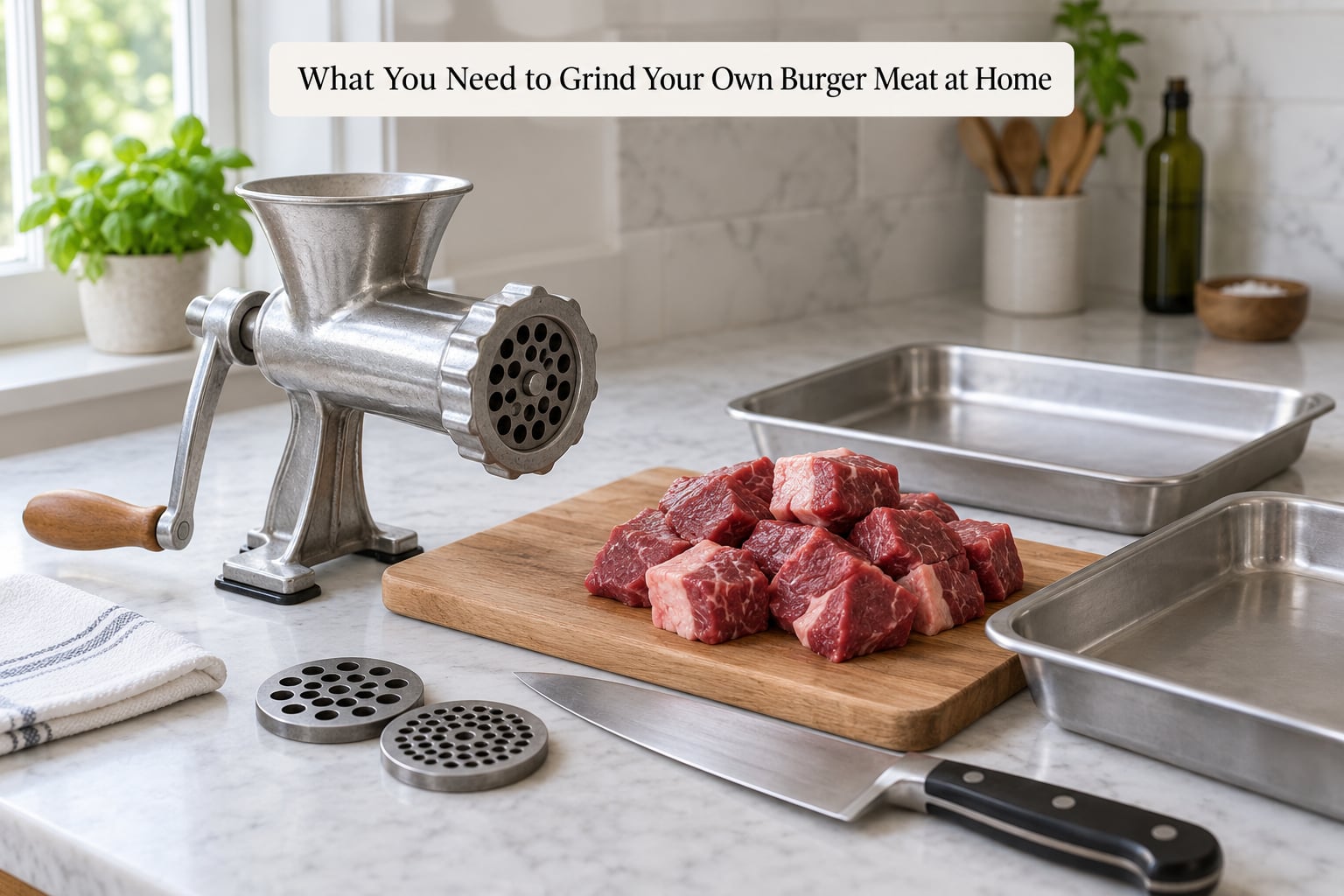
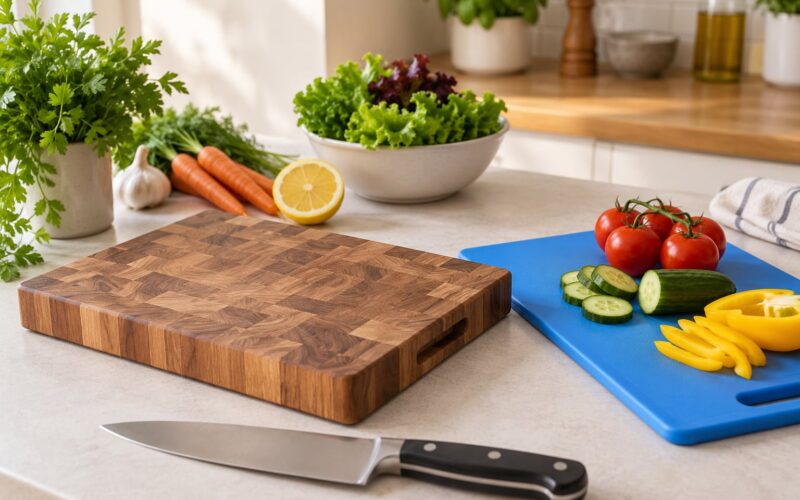
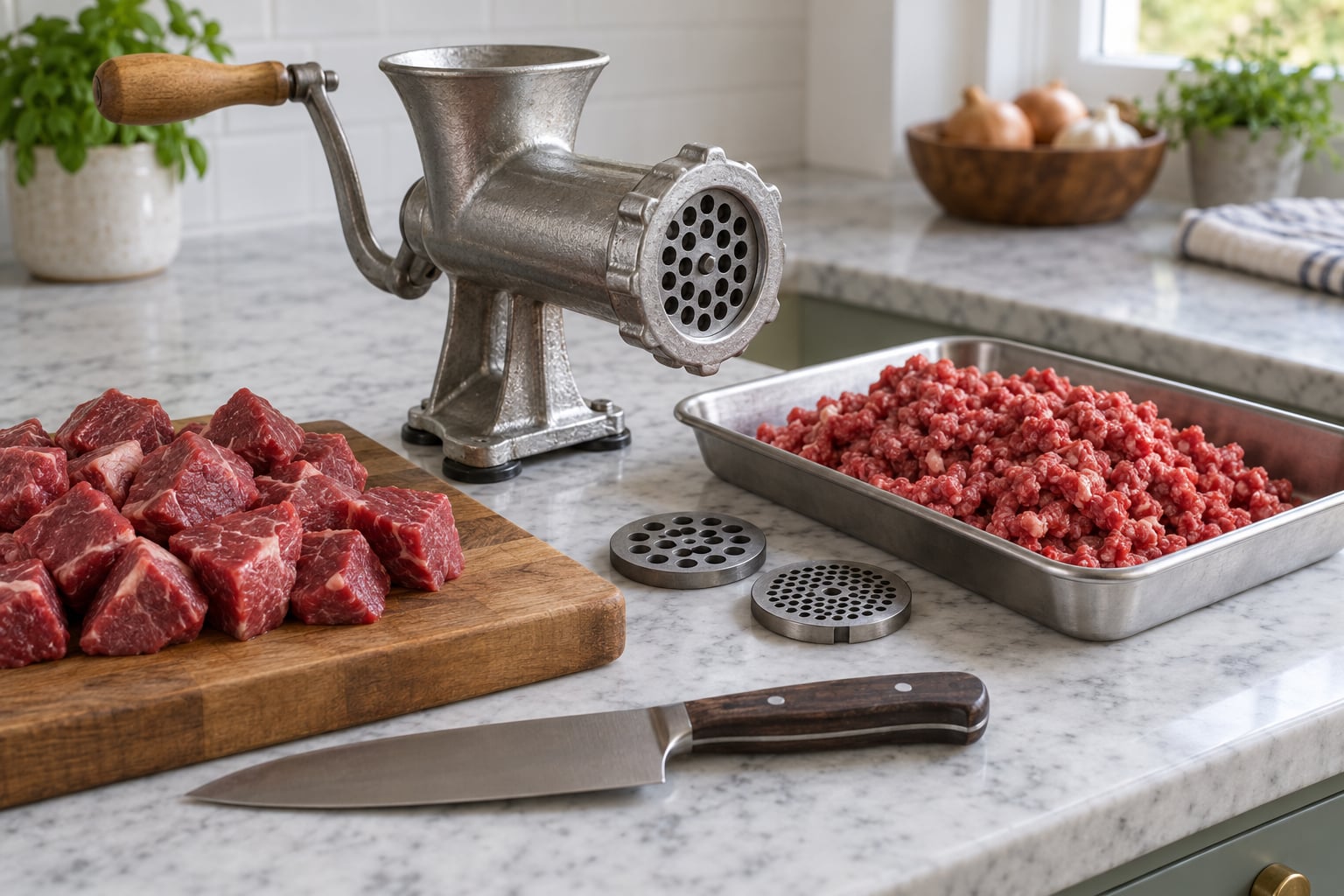
The non-negotiable list is short: a meat grinder with a coarse plate and a fine plate, a sharp boning knife, a cutting board, paper towels, chilled beef, and a clean tray to catch the output. A food pusher is worth having, because you should never put a hand near the auger while the machine is running.
Manual grinder or electric grinder?
A manual hand crank grinder is slower, roughly five minutes per pound, and it gives you the most control because you decide how fast the meat feeds. An electric tabletop grinder or a stand mixer attachment moves faster and handles larger batches, which matters if you are grinding five pounds or more in one sitting.
Whichever you pick, the plates matter more than the motor. A coarse plate with roughly 1/4-inch holes leaves visible fat and lean particles, which is what you want for thick pub-style patties. A fine plate around 1/8 inch gives a smoother, denser grind that smears flatter, which suits smash burgers and sausage casings. Buy a grinder that accepts both plates.
Which meat to buy
Chuck roast is the workhorse: it carries enough fat and connective tissue to stay juicy. Brisket adds beefy flavor, sirloin and top round add leanness without turning dry, and a little short rib or pork shoulder softens the blend and adds moisture.
Start at an 80/20 ratio, meaning 80 percent lean to 20 percent fat, and adjust from there. Go leaner for a light grill burger, and fatter for burgers cooked well-done, since extra fat keeps a drier patty moist. Trim silverskin and cartilage before cubing, because tough bits cause the same jams as oversized fat.
Sanitizing and storing
Wash every grinder part that touches raw meat in hot soapy water before you assemble it, including the body, auger, knife, plates, and the pan underneath. Run a few slices of white bread through the grinder after the last batch to push residual meat out of the head before you take it apart.
Keep ground beef refrigerated at or below 40°F and use it within one to two days, or freeze it flat in airtight bags for four to six months. Portion it into the sizes you actually cook, because a two-pound brick in the freezer is a commitment you will regret in February.
Step-by-Step: How to Grind Your Own Burger Meat at Home
1. Chill the meat and prepare the grinder
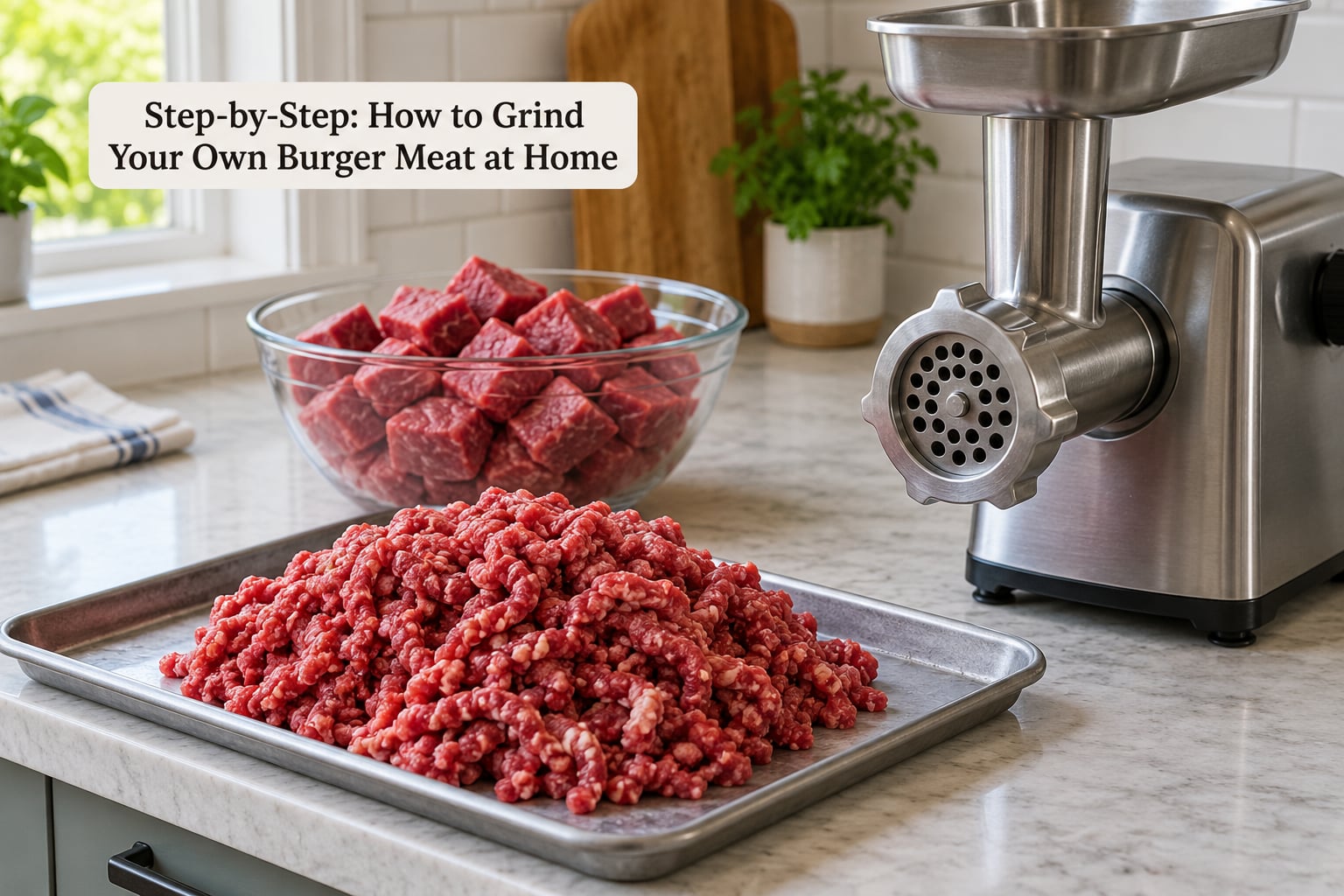
Put the cubed meat in the refrigerator for 15 to 30 minutes so it is firm but not frozen. Cold fat stays in solid pieces instead of smearing into a paste when it hits the plate. Cut the meat into cubes roughly one inch on a side, and dice any large chunks of fat smaller than the gap between the auger spirals.
Assemble the grinder cold, threading the body, knife, and plate onto the auger with the fat side of the knife facing forward. Run a couple of empty inches with the plate removed to check that the auger turns freely, then fit the plate and put a bowl under the output.
2. Choose the grind size and make the first pass
Start with the coarse plate, around 1/4 inch. Feed the cubes into the hopper one at a time with the pusher, using steady light pressure. Pushing hard is what throws ground beef across the counter, and it strains the motor for no benefit.
You will know the grind is working when the meat comes out as distinct loose strands of lean and fat rather than one uniform pink mass. If it emerges dense and homogeneous, stop and get the meat colder.
3. Grind a second pass for a uniform texture
Spread the first grind on a cold tray, chill it briefly, then run it through the fine plate. Hand-mixing the first pass before the second one redistributes the meat so the blend stays even instead of turning into streaks of fat and lean.
One extra pass gives you a consistent particle size, which is why burgers taste better. Two passes is plenty. Push it to three and the fat gets pulverized into the lean, and that is exactly how you end up with a dense, mealy patty that shrank to a puck on the grill.
4. Form patties without overworking the meat
Handle the ground beef as little as possible. Weigh each patty on a kitchen scale at the same weight, roughly a quarter pound each, and shape them loosely with a light touch, about a quarter inch thicker in the center. A packed patty tightens up while cooking and cooks unevenly across the grill.
Keep raw meat, your hands, and the bowl away from anything you plan to eat raw. If you want to season ahead, mix a little salt into the blend and let it rest for about 15 minutes so the salt dissolves, then hold the patties loosely covered until cooking.
5. Cook and store the ground meat safely
Cook patties to an internal temperature of 160°F and use an instant-read thermometer in the thickest part, not near the bone or the edge. Because patties vary in thickness, check two or three of them rather than trusting one, and remember that ground meat should show no pink at all when sliced.
Refrigerate cooked meat within two hours and eat it in three to four days. Cooked patties reheat fine in a skillet or oven, though they will never be quite as juicy as the first time.
Common Mistakes When Grinding Burger Meat at Home
Grinding meat that is too warm. Warm fat turns mealy, smears through the plate, and produces a greasy mess on the counter instead of a clean grind. Chill longer next time, and work in small batches of a pound or two so the pile on the tray does not warm up while you queue the rest.
Output that is loose and stringy, or pasty and dense. Loose stringy grind means the meat was too warm or too large. Pasty, homogeneous output with no visible fat and lean separation means you over-ground it. Stop after two passes and check for particle separation before adding another.
The grinder clogs mid-batch. Four causes account for nearly every jam: a dull blade, a plate that is misaligned or installed backwards, a chunk of fat or meat wider than the auger gap, or a head packed full of meat. Take it apart, check the blade edge, confirm the plate sits flat, and dice the problem chunk smaller.
Water from thawing meat. Meat sitting in a puddle turns to glue around the auger. Pat the cubes dry with paper towels before they go near the hopper.
Patties of different sizes cooking unevenly. A six-ounce patty and a four-ounce patty cannot finish together on the same grill. Weigh them, and press a shallow thumbprint into the center so they stay flat and rise evenly.
Overworking the meat while forming patties. The more you press and knead, the tighter the protein matrix gets and the drier the patty. Shape, set down, move on.
Two habits cover most of the rest. Freeze the grinder parts for a few minutes before a big batch, and never reach into the hopper to clear a jam while the machine is powered.
Frequently Asked Questions
Do I need to freeze burger meat before grinding it?
No. Chilling in the refrigerator for 15 to 30 minutes is the standard step, and freezing is not needed for most home grinds. A brief chill in the freezer, around 15 minutes, also works if you want firmer fat. What you want to avoid is rock-hard frozen meat, because it will not feed through the hopper cleanly and tends to cause jams.
How cold should the meat be before putting it through a grinder?
Firm but not frozen, about refrigerator temperature. If you press a finger into a cube and it leaves a dent without cracking, it is ready. Some home cooks firm the meat in the freezer for 15 minutes first, which works well, but a hard-frozen cube will not feed through the hopper cleanly and often causes a jam.
What grinder plate should I use for juicy hamburgers?
Use a coarse plate, roughly 1/4-inch holes, for the first pass and a fine plate, roughly 1/8 inch, for the second. The coarse pass keeps visible fat and lean particles, which is what gives you a juicy burger. Juiciness comes mostly from fat content, so aim for an 80/20 blend rather than expecting the plate to do the work on its own.
Should I season burger meat before or after grinding?
Season lightly before grinding and finish at the table. If you salt the blend, give it about 15 minutes to rest so the salt dissolves rather than sitting on the surface. Avoid adding salt in the bowl right before forming patties, because undissolved salt pulls moisture out and the patties turn dry and crumbly.
How long can homemade ground beef stay in the refrigerator?
One to two days at 40°F or below, and that is the limit for raw ground beef. Freeze it flat in airtight portions for four to six months if you will not use it in that window, and label the bag with the date and the blend ratio so you know what is inside. Cooked ground beef keeps three to four days refrigerated.
What internal temperature should homemade burger patties reach?
Ground beef should reach 160°F internally, and you should verify it with an instant-read thermometer in the thickest part of the patty. Because home-ground patties vary in thickness, check two or three rather than one. If you like burgers with a pink center, use a blend that is safe for that doneness and take the temperature reading seriously.
Conclusion
Chill the meat, cube it to one inch, and run a coarse pass followed by a fine one, then form the patties loosely and cook them to 160°F. That is the whole method, and the difference it makes to the texture is immediate. Make one small batch first, get a feel for the plate, and adjust the blend from there.