If cast iron feels sticky right after seasoning, the oil never finished turning into seasoning. Too much oil, or heat that was too low or too brief, leaves a tacky film you can rub off with your thumb, and that film traps food instead of repelling it.
The fix takes about ten minutes on the stovetop, or roughly an hour in the oven at 450-500°F. Your pan is not ruined. Cast iron is one of the most forgiving things in a kitchen, and a sticky finish is a surface problem, not a metal problem.
Table of Contents
- What You Need
- Why Is My Cast Iron Sticky After Seasoning? Step-by-Step Fix
- Why Is My Cast Iron Sticky After Seasoning? Check the Surface
- Why Is My Cast Iron Sticky After Seasoning? Clean the Pan
- Why Is My Cast Iron Sticky After Seasoning? Re-Season Correctly
- Oil Choices and How They Behave
- Common Mistakes
- When to Strip and Start Over
- Can You Still Cook With a Sticky Pan?
- How to Prevent Sticky Seasoning in the Future
- Frequently Asked Questions
- Can I remove sticky seasoning without stripping my cast iron?
- Why does cast iron feel sticky even when it looks seasoned?
- How do I know if cast iron seasoning is actually polymerized?
- What oil should I use to re-season cast iron?
- Will vinegar remove sticky seasoning from cast iron?
- Can I use sticky cast iron right after re-seasoning it?
- Conclusion
What You Need
Nothing here is specialized gear. Gather what you already have before you start, because the job goes fastest when the pan is cool and everything is within arm’s reach.
- A cast iron pan cool enough to handle barehanded
- Warm water and a small amount of mild dish soap
- A stiff nylon brush, a scraper, or coarse salt and a paper towel for stubborn film
- Clean paper towels for wiping the oil coat
- A thin layer of seasoning oil such as avocado, canola, grapeseed or vegetable oil
- An oven, or a gas or induction burner if you would rather not use the oven
A chain mail scrubber works too, and a piece of fine steel wool on bare metal. Hold both until you know you need them, since they take seasoning off along with the residue.
Why Is My Cast Iron Sticky After Seasoning? Step-by-Step Fix
Seasoning is oil heated past the point where it breaks down and polymerizes, bonding into a hard, glassy, plastic-like layer on the iron. Sticky seasoning means that reaction never finished. There are two root causes, and you rarely have only one of them.
- Too much oil. A thick coat cannot fully polymerize. The surface cures first and traps wet oil underneath, which stays gummy and eventually flakes.
- Not enough heat, or not long enough. Oil that never reaches its polymerization point stays raw and tacky no matter how long you wait.
- Seasoning a cold pan. Oil poured onto cold iron pools in the casting texture and sits thick in the low spots.
- High-tack oils. Flaxseed oil cures fast but goes tacky if the coat is even slightly heavy. Avocado oil is thin and forgiving by comparison.
- A dirty or sugary surface. Sugar and burnt food under the oil carbonize and gum the seasoning to the pan.
- The pan sat right-side up in the oven. Oil runs to the bottom and pools there instead of draining away.
Here is the same information mapped to what you can see. Start at the row that matches your pan, and stop at the first fix that works.
| What you see | What is actually happening | What to do |
|---|---|---|
| Tacky all over, dull and gummy | Thick unpolymerized oil film | Wipe with a paper towel, then stovetop burn-off |
| Sticky only while the pan is warm, smooth when cold | Surface grease from the last cook | Wipe with a paper towel while warm, no re-seasoning needed |
| Shiny spots, sometimes a faint spiderweb | Oil pooled in patches and cured unevenly | Light scrub, thin coat, one oven bake at 500°F |
| Black, hard crust that will not wipe off | Burnt carbon or sugar, not seasoning | Boil water in the pan to lift it, then re-season |
| Peeling flakes in the cooking surface | Flaking seasoning, a different problem entirely | Do not scrub. Cook fatty food, then re-season lightly |
| Food sticks even when the pan looks clean | Thin spots or a carbon layer on the bottom | Strip only the cooking surface and re-season |
Why Is My Cast Iron Sticky After Seasoning? Check the Surface
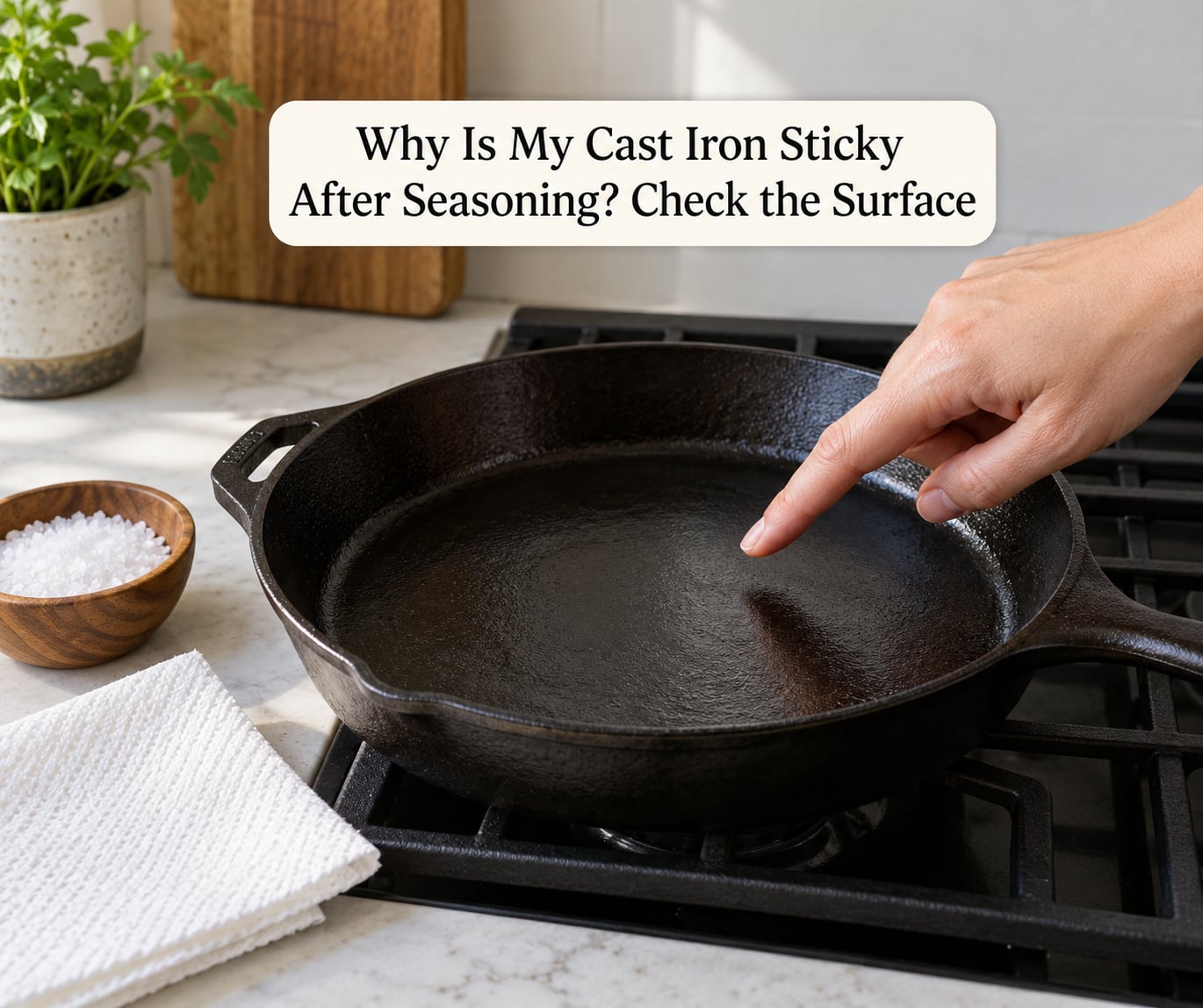
Run a clean finger across the cooking surface while the pan is completely cool. Tacky oil smears and leaves a greasy film on your fingertip. Polymerized seasoning feels smooth and dry, closer to the surface of a new paperback than to a thumbprint.
Black crust is different. It does not smear, it chips, and it usually came from burnt food or sugar rather than from oil. Flaking seasoning is different again: it lifts in thin sheets at the edges of the cooking surface and means the layer underneath is sound but too thick or bonded loosely.
The hot test tells you a lot too. If the pan feels slippery only when it is warm and dry and smooth once it cools, you have grease from cooking, not a failed seasoning. Wipe it and carry on.
Why Is My Cast Iron Sticky After Seasoning? Clean the Pan
Let the pan cool to a temperature you can handle. Then run hot water over the cooking surface with a small amount of mild dish soap and work it with a stiff brush or a scraper.
Soap does not damage cast iron seasoning. The old rule against it comes from the days when people soaked pans in water overnight, and rust is the only thing prolonged soaking causes. A minute of soapy water and immediate drying is fine.
For stubborn oil film, coarse salt and a paper towel scrub the residue off without touching bare metal. Skip steel wool and chain mail scrubbers at this stage, because you are trying to remove oil, not seasoning.
Rinse and dry the pan on the stovetop over low heat until it stops steaming, then give it another five minutes. Seasoning applied to a damp pan steams instead of polymerizing, and that is the second most common reason a fresh coat goes tacky. A fully dry, faintly warm pan is what you want next.
Why Is My Cast Iron Sticky After Seasoning? Re-Season Correctly
Put a very thin layer of oil on the cooking surface. On a 12 inch skillet, a tablespoon is already generous. Wipe it with a clean paper towel until the pan looks dry, then wipe it a second time against the other side of the towel. What you want is the faintest sheen, not a visible film.
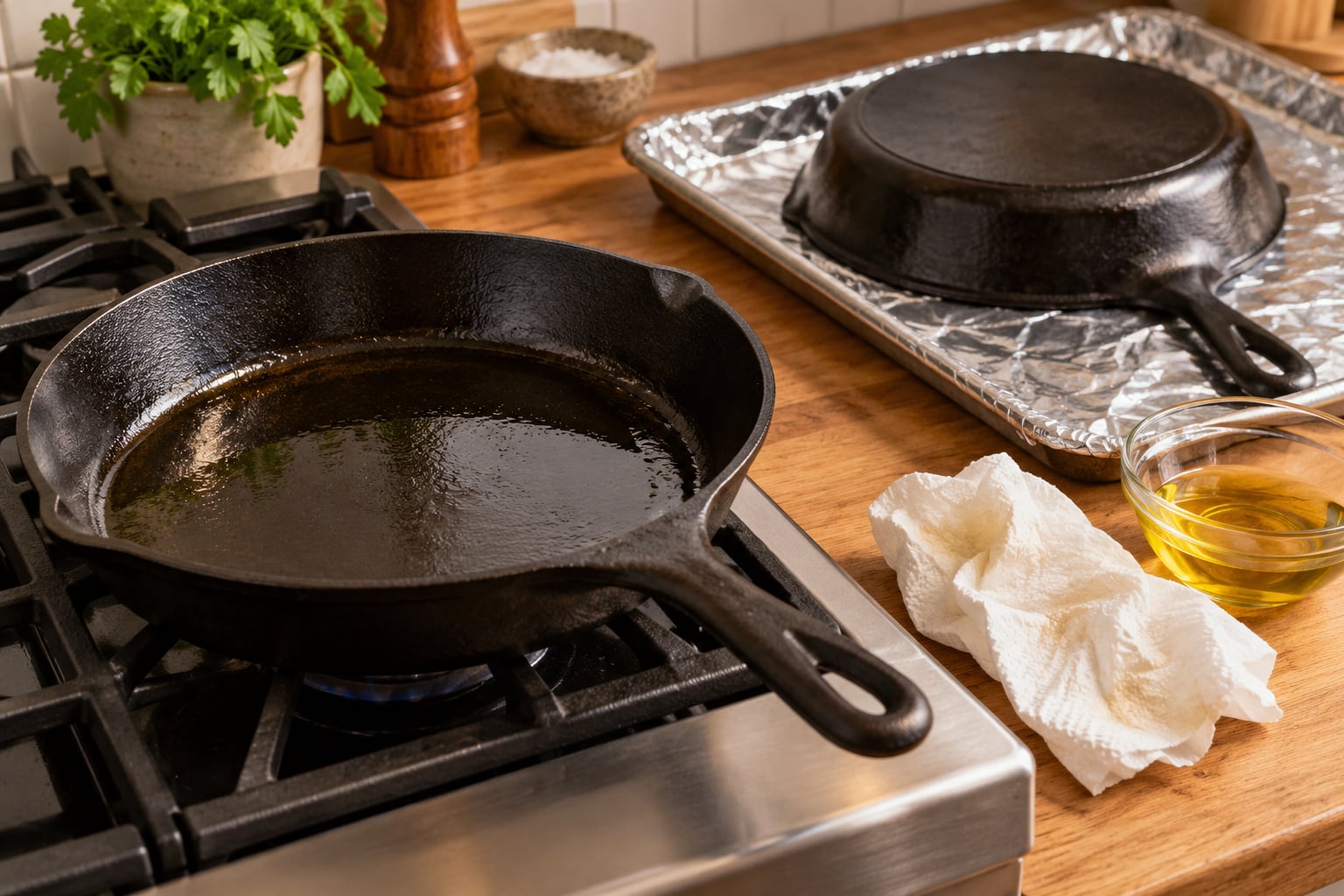
Heat matters more than anything else. Most people who keep ending up with sticky pans are baking on the oven’s low setting or pulling the pan out too early. Heat the empty pan on the stovetop over medium-high until a drop of water skates across it and evaporates in a couple of seconds, then add the oil and wipe it in.
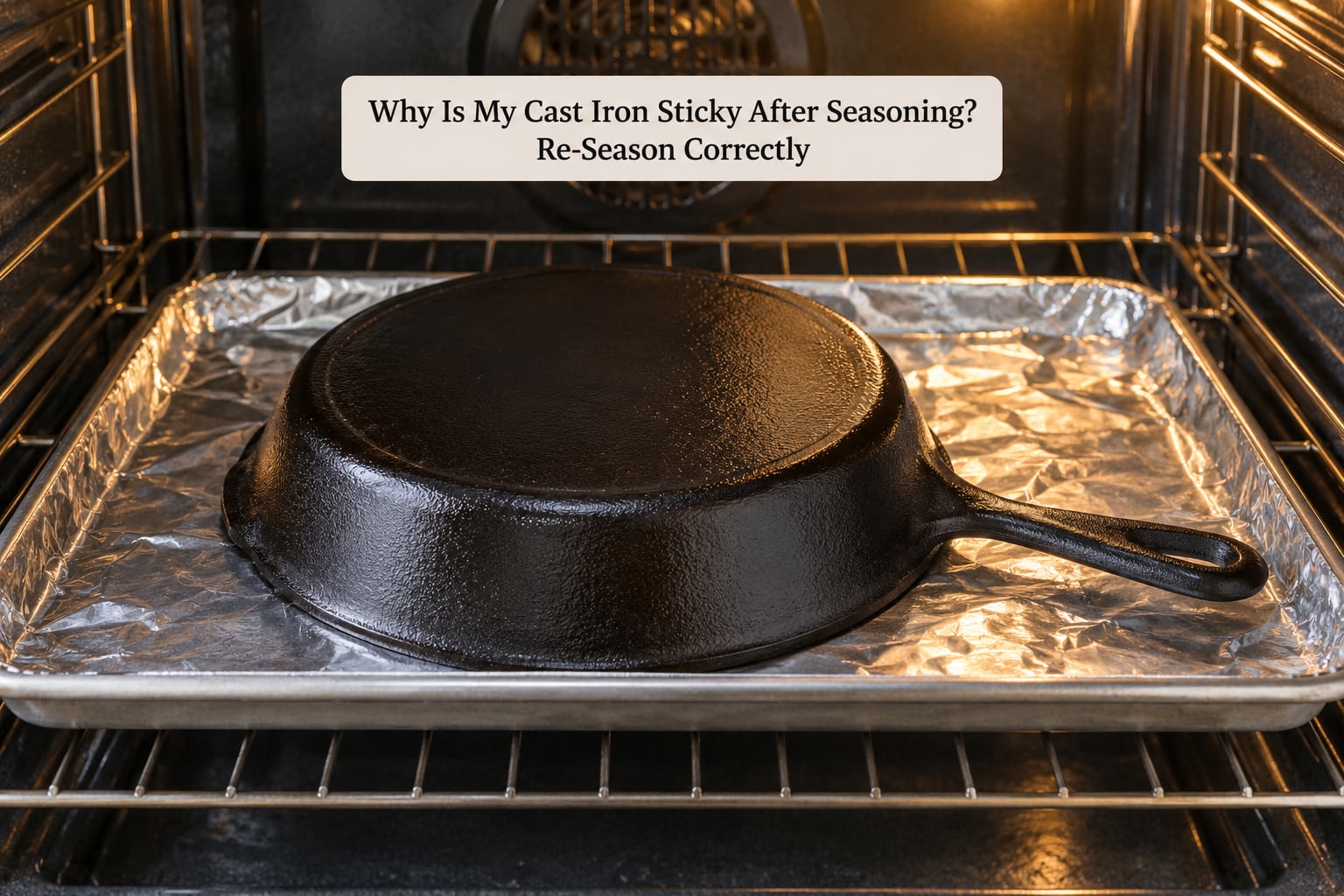
For the oven method, set it to 450-500°F. Place the pan upside down on a center rack with a sheet of foil or a baking sheet underneath to catch drips, and let it sit for one hour. Turn the oven off and let the pan cool completely inside the oven, since pulling it out hot traps oil as steam and leaves the film uncured.
When the pan is cool again, the surface should feel dry and smooth. That is the standard to aim for. The correction owners settle on most often for this exact problem is the same one: sticky means excess oil, and the fix is 450-500°F for one hour.
There is a shorter path that skips the oven entirely. Once the pan is wiped clean and dry, set it on the stovetop over medium-high and leave it there for several minutes until the tacky film smokes, browns and stops. More heat turns stickiness into seasoning, which is the simplest version of the rule seasoned-pan owners repeat. Burn off the sticky layer, wipe it, and thin-coat once more.
Oil Choices and How They Behave
Any thin cooking oil with a high smoke point cures reliably: avocado, canola, grapeseed, vegetable, sunflower. Flaxseed oil polymerizes fastest of all and gives the smoothest surface, but it goes tacky fast if the coat is heavy, so use less than you think and heat it properly.
Olive oil works, but its fatty acid profile leaves a tackier result that many people dislike. Butter and coconut oil are poor choices for seasoning because they burn long before they cure. Whichever oil you pick, the thin-coat and full-heat rules matter more than the bottle.
Common Mistakes
- Pouring oil and wiping once. Wipe twice, or until the pan looks dry. Most excess oil leaves the surface on the second pass.
- Baking on the oven’s low setting. Below about 450°F the oil does not polymerize. Use 450-500°F, or use the stovetop.
- Seasoning a cold pan. Warm the empty pan first, then add the oil and spread it thin across hot iron.
- Pulling the pan out of the oven hot. Cool it inside the oven with the door closed so the oil sets rather than steams.
- Rinsing the pan after seasoning. A freshly seasoned pan goes straight back on the burner.
- Treating a tacky film like seasoning. An oily film rubs off; cured seasoning does not. That test decides whether you need another coat at all.
When to Strip and Start Over
Stripping is the last step, not the first. It costs you a cured layer and takes an hour of oven time, and routine stickiness does not need it. Work up the ladder instead: wipe, stovetop burn-off, then oven re-season.
Stripping the pan down to bare metal is justified in a few situations only. Persistent rust across the cooking surface, burnt-on carbon that will not lift with a boil or a salt scrub, sticky patches that survive a full bake at 500°F, and a finish that peels in thick sheets all call for it.
To strip, scrub with coarse salt and oil, or with steel wool on bare metal, then wash, dry, and bake a fresh thin coat at 500°F. A really damaged pan or one with a crack or warp is a different story entirely, and neither a strip nor a re-seasoning will fix iron that is bent or split.
Can You Still Cook With a Sticky Pan?
Yes. A sticky oil film is not a safety problem and it will not make you sick. It is unsatisfying and it catches food, but nothing about it is dangerous, so there is no reason to throw the pan away over it.
You can also cook on it while you sort the finish out, with one caveat: wipe off the loose oil first. A thin film of excess oil on a hot pan is simply the start of the next layer of seasoning. Some owners simply cook with the sticky pan for a few weeks, since fatty foods and repeated heating cure a tacky surface on their own.
How to Prevent Sticky Seasoning in the Future
- Cook with a small amount of oil and scrape the excess off after every use.
- Clean while the pan is warm, not scorching hot, so the seasoning does not bake into the burnt food you are trying to remove.
- Dry on the stovetop over low heat, then wipe with a paper towel so no water sits in the casting.
- Store the pan uncovered, or with the lid ajar, in a dry cabinet so trapped moisture cannot reach the metal.
- When re-seasoning, apply less oil than feels right and wipe until the pan looks dry.
- Use 500°F for the final bake when you want the fastest, hardest cure.
Frequently Asked Questions
Can I remove sticky seasoning without stripping my cast iron?
Yes, in almost every case. Wipe the pan with a clean paper towel, heat it on the stovetop until the tacky layer smokes and browns, then wipe it and do a thin coat at 450-500u0026deg;F for one hour. Stripping is only needed for rust, burnt carbon that will not lift, or a finish that peels in sheets.
Why does cast iron feel sticky even when it looks seasoned?
Because a thick oil coat cures only on the surface. The top layer polymerizes first and traps raw oil underneath, so the pan looks dark and seasoned from a distance but feels gummy under a fingertip. A smeared, greasy film means unfinished oil. A hard layer that chips means flaking seasoning, which needs a different fix entirely.
How do I know if cast iron seasoning is actually polymerized?
Run a clean finger across the cool cooking surface. Cured seasoning feels smooth and dry and leaves nothing on your fingertip, closer to the surface of a paperback than to a thumbprint. Uncured oil smears and feels greasy. If your finger comes away with a film, the pan needs another heat cycle, not more oil.
What oil should I use to re-season cast iron?
Any thin, high-smoke-point cooking oil works reliably: avocado, canola, grapeseed, sunflower or plain vegetable oil. Flaxseed oil cures fastest and gives the smoothest surface, but it turns tacky quickly if the coat is heavy. Olive oil leaves a stickier result, and butter or coconut oil burn before they cure.
Will vinegar remove sticky seasoning from cast iron?
Vinegar is not the right tool. It strips seasoning chemically and leaves the bare iron exposed to moisture, which invites rust, and it does nothing to the sticky oil film anyway. A hot soapy wash, a salt scrub, or a stovetop burn-off removes gummy oil and keeps the seasoning you already have.
Can I use sticky cast iron right after re-seasoning it?
Yes. Once the pan is cool, wipe away any oil that has not soaked in and start cooking. A sticky oil film is not a safety problem, it is just an unfinished layer. Keep cooking with it and the surface usually cures on its own, especially with fatty foods, while you add thin coats as needed.
Conclusion
Start with the cheapest reversible fix: wipe the pan down with a clean paper towel, give it a few minutes of stovetop heat to burn off the tacky film, wipe it again, then apply the thinnest coat you can stand and bake it at 450-500°F for one hour with the pan upside down. Let it cool inside the oven.
A properly cured seasoning feels dry and smooth, never tacky, and you should not need to strip anything to get there. Reserve a full strip for rust, burnt carbon, or peeling finish, and otherwise keep cooking on it, because regular use is what keeps cast iron in good shape.