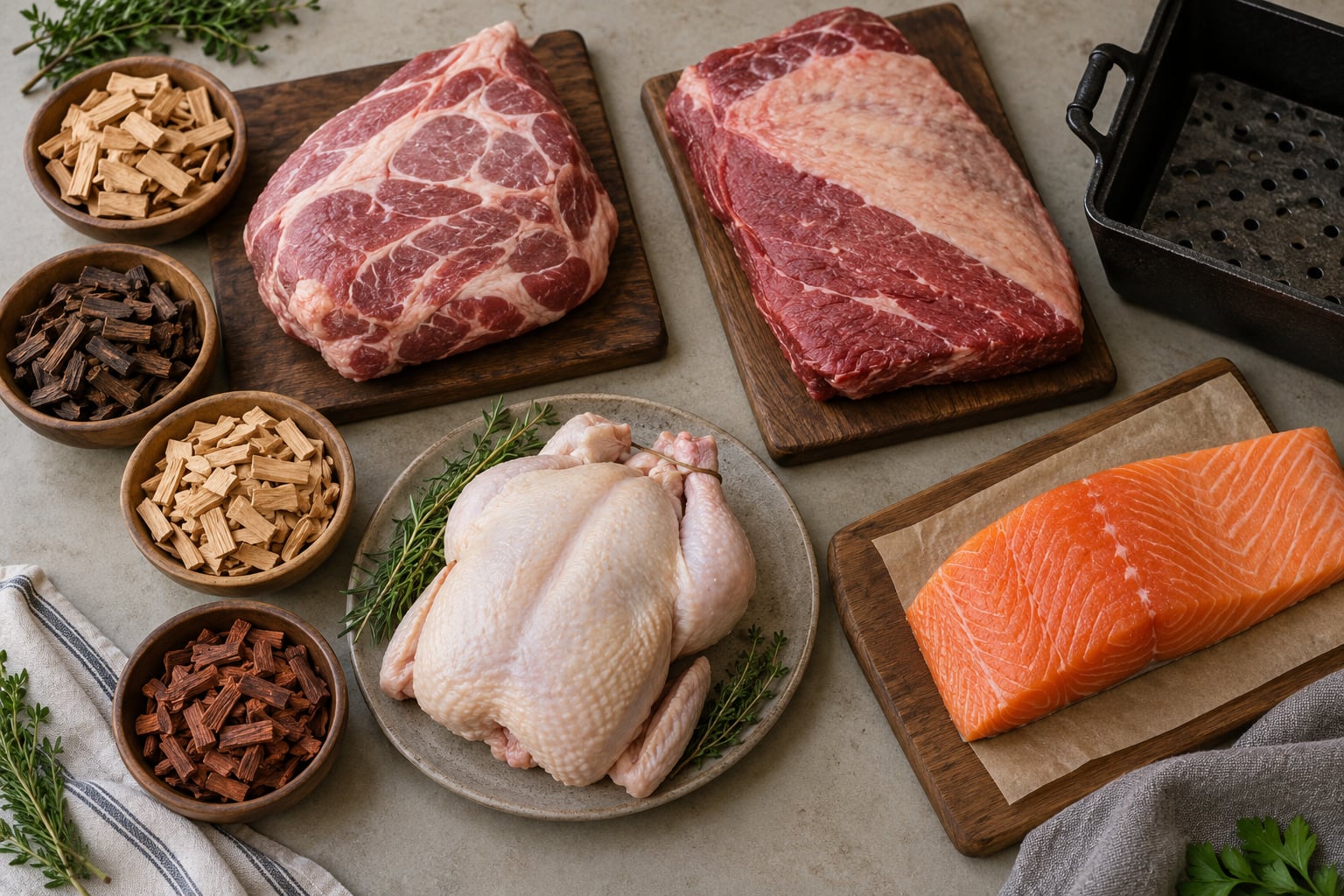
What wood chips to use for smoking different meats comes down to matching smoke strength to the meat: oak for all-round cooking, hickory for pork, a restrained amount of mesquite for beef, apple or cherry for poultry, and alder for fish. The wrong wood overwhelms a delicate cut, and the right one quietly supports it.
Most people get burned by the same two mistakes, though. They fill the chip tray in one go, then they park the meat in thick white smoke for hours. Smoke flavor is about restraint and airflow, not volume.
I have cooked on electric boxes, a charcoal offset and a kamado long enough to know that a single cup of chips added at the right moment beats a bucket dumped in at the start. The species matters, but so does when it burns.
Table of Contents
- What Wood Chips to Use for Smoking Different Meats at a Glance
- How to Choose Wood Chips for Smoking Meat
- What to look for inside the bag
- Woods you should never smoke meat over
- Which Wood Flavor Works Best for Each Meat?
- Pork shoulder, ribs and belly
- Beef brisket, ribs and roasts
- Lamb
- Chicken and turkey
- Sausage and bacon
- Salmon, shrimp and firm fish
- Venison and sausage links
- Mild, Sweet, Smoky, and Bold Wood Choices
- Mild and sweet
- Balanced and smoky
- Bold and aggressive
- Specialty woods
- How Much Wood Chips Do You Need?
- By smoker type
- Should You Soak Wood Chips Before Smoking Meat?
- How to Use Wood Chips Without Making Meat Bitter
- Warning signs to watch for
- Fixes that work
- Wood Chips for Smoking Different Meats: Practical Tips
- Frequently Asked Questions
- What are the best wood chips for smoking pork shoulder?
- Are oak or hickory chips better for brisket, and can I use them on a gas smoker?
- What wood chips are least bitter for smoking chicken and turkey?
- Can I mix fruitwood chips with hickory or oak?
- How do I stop wood chips from making smoked meat taste bitter?
- What internal temperature should I smoke each type of meat to?
What Wood Chips to Use for Smoking Different Meats at a Glance
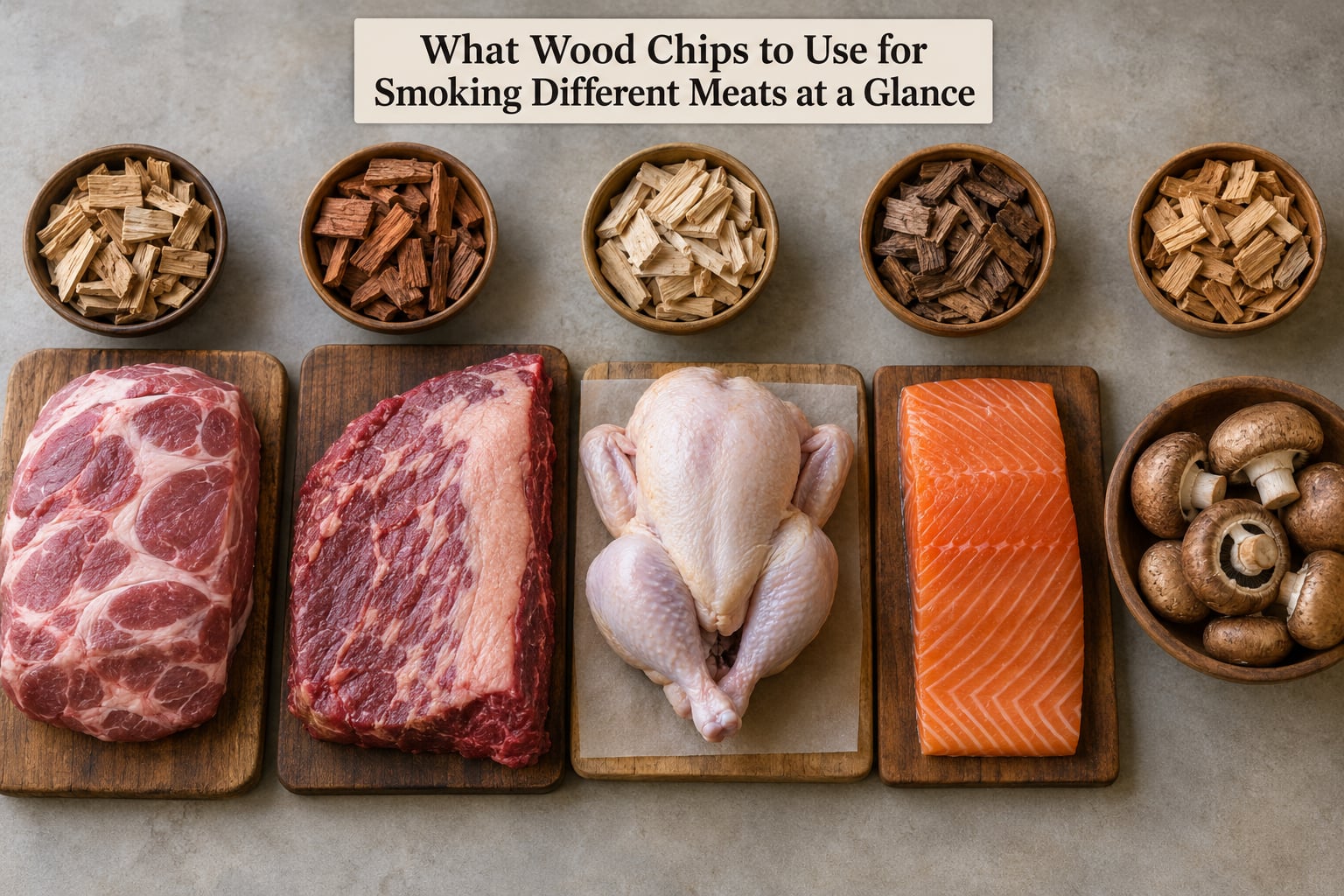
Use this as your starting point, then adjust by taste. Mild woods such as apple, alder and maple suit delicate meats, medium woods like oak and hickory handle pork and beef, and strong woods such as mesquite belong on beef in small amounts.
| Meat or food | Best wood chips | What the wood adds | Best setup |
|---|---|---|---|
| Pork shoulder, pulled pork | Hickory, with cherry or apple to soften it | Deep savory smoke that stands up to a fatty cut | Offset or electric smoker, low and slow |
| Pork ribs | Cherry, hickory or oak | Sweetness on spare ribs, backbone on baby backs | Anything that holds 225 to 275 F |
| Pork belly | Apple, cherry or pecan | Sweet, mellow smoke over crisp skin | Charcoal grill, kamado or offset |
| Beef brisket | Oak or post oak, pecan, a little hickory or cherry | Woodsy background that lets the beef and rub lead | Offset or kamado, 12 hours or more |
| Beef ribs | Hickory or mesquite in small amounts | Bolder smoke that matches the richness | Offset or charcoal grill |
| Beef roasts and tenderloin | Oak, cherry or pecan | Clean medium smoke, easy on the fat | Roasting pan over coals or offset |
| Lamb | Rosemary, olive or cherry | Herbaceous or sweet smoke that suits the gaminess | Charcoal grill or kamado |
| Whole chicken | Apple, cherry, pecan or alder | Very light smoke, mostly for color | Charcoal grill, kamado or rotisserie |
| Turkey | Pecan with apple, or cherry | Nuts and sweetness, holiday-style flavor | Charcoal grill or smoker |
| Sausage and bacon | Apple, cherry, maple or hickory | Sweet smoke works, hickory adds a background note | Smoker at 225 to 250 F |
| Salmon | Alder, apple or oak in small amounts | Clean, delicate smoke with no resin | Cold smoker, kamado or grill with a wood box |
| Shrimp and firm fish | Alder, apple or cherry | Quick, light smoke that does not dry the flesh | Grill box, short cook |
| Mushrooms and vegetables | Apple, alder or cherry | Sweet smoke, keeps vegetables from tasting grassy | Grill or smoker, short cook |
One note on smoke strength. I think of it as a four-stop scale rather than mild or strong: mild (apple, alder, maple), medium (cherry, pecan, oak), strong (hickory, strong oak), and very strong (mesquite, and cedar, which you should not use on food). Every row in that table sits inside its own scale stop.
A practical rule that has never let me down: pick the wood whose strength matches the fat and muscle in the cut, then use one wood at a time until you have the flavor dialed in. Blending is a second step, not a first one.
How to Choose Wood Chips for Smoking Meat
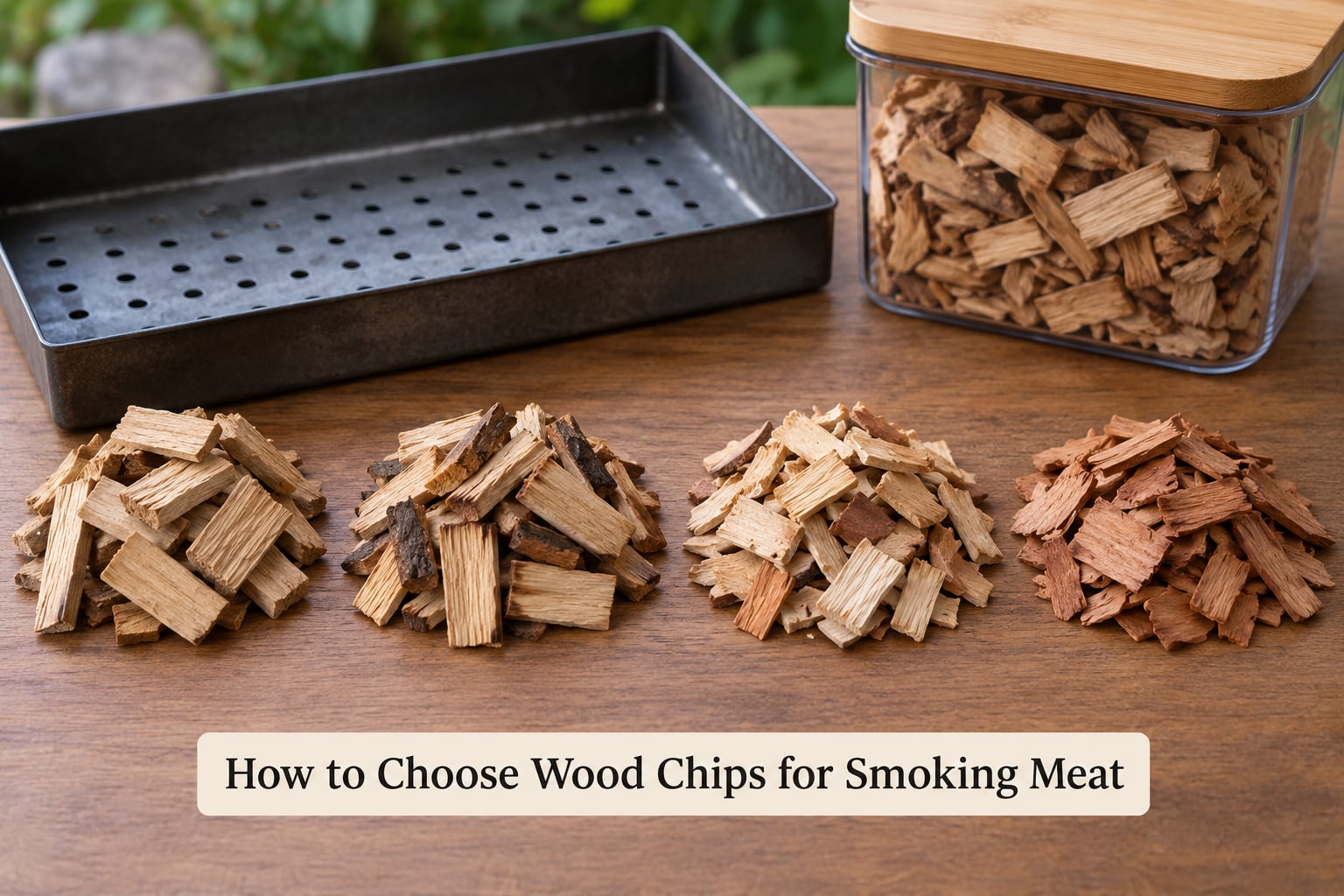
Chips are not chunks, and neither is a pellet. They burn at different rates and suit different smokers, so buying the wrong format is the most common reason people think they dislike wood smoke.
| Format | Burn time per handful | Works best in | What it is for |
|---|---|---|---|
| Chips | 20 to 40 minutes | Electric box, gas smoker, kamado, chip box on a grill | Flavor on short and medium cooks |
| Chips in a foil pouch | 60 to 90 minutes | Gas smoker | One packet covering most of a short cook |
| Chunks | 45 to 90 minutes | Offset, charcoal grill, kamado | Flavor plus some heat on long cooks |
| Pellets | 2 to 4 hours | Pellet grill or pellet smoker | Fuel and flavor in one system |
| Logs and splits | 2 to 4 hours | Offset, open fire | Heat and smoke for long cooks |
Most home pellet appliances do not burn loose chips well, so if you own a pellet grill, put chips in a small cast iron box or a foil pan on the grate rather than in the hopper. Check your manual before assuming.
What to look for inside the bag
- Single species. A bag labeled hickory should be hickory. Blends are fine if they say so, but a mislabeled bag is hard to troubleshoot later.
- No filler. Wood chips are just chipped hardwood. Anything listed as sawdust, bark fines or a filler is a sign to buy a different bag.
- Dry and dusty-free. Chips should be loose and brittle. Heavy dust means the wood was ground rather than chipped, and it smothers airflow in the tray.
- Seasoned. Properly dried wood lights quickly and burns clean. Wet or green wood smolders, produces white smoke, and leaves a bitter creosote film in the smoker.
- Clean scent. Open the bag. If it smells musty, sour or rotten, skip it.
Woods you should never smoke meat over
Pine, fir, spruce and true cedar are softwoods full of resin, and resin smoke will coat your food and your smoker in something bitter and unhealthy. Never use cedar planks sold for salmon, which are aromatic cedar, not alder. Skip lumber from the hardware store, anything painted, stained or pressure-treated, and any wood with mold, rot or a chemical smell.
Which Wood Flavor Works Best for Each Meat?
The single best variable is the fat. Fatty cuts take strong wood, lean cuts take mild wood, and the crossover point is where most mistakes happen. Smoke flavor from chips sits on the surface, so it also matters how long the cook runs. A four-hour cook drinks much more smoke than a one-hour cook with the same wood.
Pork shoulder, ribs and belly
Hickory is the traditional answer for a pork shoulder and it earns that reputation. It has a strong, savory, almost bacon-like note that stands up to a fatty cut without turning acrid, provided you use it in moderation. Mixing about three parts hickory to one part cherry or apple is a common upgrade, and the fruitwood keeps the finish from getting harsh on a long cook.
For pork ribs, cherry is usually the better pick. It adds sweetness and a darker color without the weight of hickory, which matters on spare ribs that you are eating through the smoke. Baby backs take oak or hickory happily because they are smaller and pick up smoke faster.
Pork belly wants something gentle. Apple, cherry or pecan over a charcoal grill will give you sweet smoke and crisp skin, and strong wood here is how you end up with a chewy, acrid first bite.
Beef brisket, ribs and roasts
Oak is the workhorse for brisket, and post oak is what most Central Texas cooks reach for. It gives a woodsy background with no sweetness, which lets the beef, the rub and the bark do the talking. Pecan works well too, with a slightly nuttier note, and a small share of cherry deepens the color of the bark without adding obvious sweetness.
Is mesquite good for brisket? It is good, in the way that a strong drink is good. Mesquite is the strongest common hardwood and it will dominate a brisket if you use more than a handful across a twelve-hour cook. Texas pitmasters treat it like seasoning rather than a base, and that is the right way to think about it.
Beef ribs are richer than brisket and take bolder wood, so hickory or a modest amount of mesquite is fair game there. For a beef tenderloin or a plain roast, stay lighter: cherry or pecan, used sparingly.
Lamb
Lamb has enough character on its own, so the sweet and herbal woods work better than the smoky ones. Cherry and apple are the safe choices, and fresh rosemary or olive wood, if you can find it, gives a European-style smoke that works well on leg of lamb and rack of lamb.
Chicken and turkey
The mildest chips on the list belong here. Apple is the classic, cherry is slightly richer, pecan gives a nutty note that people reach for on a Thanksgiving turkey, and alder is the standard for anything you want to keep tasting like chicken. Smoke is really about color on poultry, so it is easy to overshoot.
A whole bird on a rotisserie over an open charcoal fire will pick up more smoke from the dripped fat hitting the coals than you want from chips. Many cooks skip chips entirely and just let the fat do the work.
Sausage and bacon
Apple, cherry and maple are the classic sweet pairings, and hickory adds a background note that works well on breakfast sausage and thick-cut bacon. Hold back on mesquite, which is far too assertive for cured pork.
Salmon, shrimp and firm fish
Alder is the answer for salmon because it is mild, resin-free and widely available where salmon is cooked. Apple works too, and a light hand with oak or cherry adds a little more body to a thick fillet. For cold smoking, where the fish sits in cool smoke for hours, use fewer chips than you think you need and keep the airflow generous.
Shrimp and firm white fish are a short cook, so a handful of alder or apple in a grill box is plenty. Delicate fish should never see hickory or mesquite.
Venison and sausage links
Venison is lean and can be gamey, which means it tolerates more smoke than you expect. Cherry and oak are the standard choices for a roast or a sausage made from it, and a small amount of hickory keeps the smoke from feeling thin.
Mild, Sweet, Smoky, and Bold Wood Choices
Grouping woods by how they taste is easier than memorizing a long species list. Once you know the four groups, you can pick something for almost anything.
Mild and sweet
Apple, alder, maple, cherry and peach sit at the low end. They add aroma and a hint of color without pushing back, which makes them right for poultry, fish, vegetables, pork belly and sausages. Alder is the Pacific Northwest default for good reason: it grows along the coast, it burns clean, and it has no resin.
Balanced and smoky
Oak, cherry, pecan and hickory make up the middle of the scale. Oak and post oak are the most versatile and the safest place to start. Pecan is nuttier and sweeter than oak, and hickory is the strongest of the four, closer to a cured-meat note than a smoky one. If you only ever buy two bags, oak and hickory will cover nearly everything.
Bold and aggressive
Mesquite sits alone at the top, with very strong hardwood used sparingly in the same category. Mesquite is why so many beginners say smoked meat tastes like an ashtray. It has real place in Texas-style beef and in small amounts in a blend, but it is a bad choice for a first cook with a full chip tray.
Specialty woods
Grape, olive, peach, cherry blends and bourbon barrel wood all have fans. Grape is mild and slightly nutty, olive is fragrant and Mediterranean, and barrel wood adds a faint sweetness. These are worth a try once you have the basics down, and they are rarely as consistent across brands as oak or hickory.
How Much Wood Chips Do You Need?
For chips, the most useful rule I know is roughly one cup per hour, front-loaded over the first three to four hours, then only as needed. That comes straight from experienced cooks on SmokingMeatForums, where one longtime poster advises adding no more than a chunk or a cup of chips at a time for the first four hours. On a twelve-hour brisket you will not need much after hour four anyway.
The amount depends on the length of the cook far more than on the size of the meat. A two-pound pork tenderloin might take three or four handfuls across its whole cook, while a full brisket can absorb smoke for twelve hours and still taste clean.
By smoker type
- Electric smoker with a chip box: fill the box roughly halfway, let the smoker reach temperature, then top it up a handful at a time every 45 to 60 minutes as the chips burn down.
- Gas smoker: a foil pouch with holes punched in it, set on the burner, burns for one to two hours. One pouch covers a typical chicken or a rack of ribs.
- Charcoal grill or offset: chips go in a smoker box or a foil pan set on the coals. A small handful every 45 minutes is plenty; do not bury the meat in wood.
- Kamado: a golf-ball sized handful on top of the lava stones, replaced as it burns down. Kamados hold heat well, so less wood goes further.
More wood is not automatically better. Overloading the smoker starves the fire of oxygen, the smoke turns white and thick, and the meat picks up a bitter, chemical edge before it ever develops a crust.
It also helps to separate flavor from heat. Chips on top of a bed of charcoal or wood give you smoke without asking chips to be a fuel source, and that separation is what lets you adjust the flavor without losing temperature control.
Should You Soak Wood Chips Before Smoking Meat?
No. Dry chips ignite faster, burn cleaner and produce far less creosote, and a bowl of water under the chips is not a substitute for good airflow. This is the most persistent disagreement in smoking circles, so here is the reasoning.
Advice to soak chips overnight comes up constantly in beginner threads on Reddit, and it keeps being repeated because it sounds logical. Water cannot soak into a chip fast enough to make a meaningful difference before it hits the fire, but it does slow ignition down. Wet wood smolders instead of burning, and smoldering is exactly what creates the thick white smoke, the blackened surface and the acrid creosote taste that people are trying to avoid.
The opposite trick works better for humidity: keep a shallow pan of water in the smoker and keep the vents open. You get moisture in the cooking chamber without slowing your chips down.
There is one narrow case for moisture. In a cold smoker or an outdoor setup in freezing weather, a brief soak of ten or fifteen minutes helps the chips smolder at the low, steady temperature such a smoker needs. Overnight soaking in a hot smoker helps nothing.
How to Use Wood Chips Without Making Meat Bitter
Bitter or ashtray flavor is always one of two problems: too much wood, or smoke from a fire that is not burning cleanly. Fix the fire first and most of the flavor problems disappear with it.
Warning signs to watch for
- Thick white or gray smoke rolling out of the chimney instead of a thin blue haze.
- A blackened, acrid-looking crust rather than a deep mahogany bark.
- Your fingers, the smoker walls or the meat itself smell like a campfire or an ashtray.
- A sharp, chemical flavor on the first bite, especially on lean meat.
- White or grey ash on the meat surface after a long smoke.
Fixes that work
- Add less and later. A handful every 45 minutes beats a full tray at the start. Hold back for the first 30 minutes if you want to be careful.
- Open the vents. Good airflow is what turns white smoke into clean smoke. A partly closed intake on an offset is the number one cause of bitterness.
- Switch to a milder wood. If you are cooking chicken, salmon or pork belly on hickory or mesquite, that is the fix right there.
- Use a drip pan. A pan with a shallow layer of water under the meat catches dripping fat, which is a major source of heavy, greasy smoke flavor.
- Switch to chunks for long cooks. On a brisket, chunks burn slower and give you time to adjust. Chips in a small box give you finer control over short cooks.
- Blend instead of replacing. Three parts oak to one part mesquite dilutes the aggressive wood without losing the flavor you were after.
If a practice cut comes out tasting like an ashtray, the usual cause is three or four wood chunks added in the first hour on a short cook, which is the exact scenario people describe over and over on smoking forums. The meat is not the problem. The fuel schedule is.
Finally, temperature still outranks flavor. Follow USDA minimum internal temperatures regardless of the wood you use: 165 F for poultry, 160 F for ground meat, and 145 F with a rest for whole cuts of beef, pork, lamb and fish. Wood changes the flavor, never the safety rules.
Wood Chips for Smoking Different Meats: Practical Tips
A few habits cover almost every case, and they matter more than any specific bag of chips.
- Choose one dominant wood and use it for the whole cook until you are happy with the result.
- Add a second wood sparingly once the first is dialed in, usually no more than a quarter of the mix.
- Keep chips dry and add them in small amounts, never a full tray.
- Test a small, cheap cut before committing your best brisket to an unfamiliar wood.
- Watch the smoke, not the recipe. Thin blue haze is the target, and it changes as the fire settles.
- Let the meat stay in front of the flavor. If you cannot taste the cut underneath, you have gone too far.
Start this weekend with oak, then try the same cut on hickory and apple. After three cooks you will know your own preference better than any chart can tell you.
Frequently Asked Questions
What are the best wood chips for smoking pork shoulder?
Hickory is the classic choice for a pork shoulder because its strong savory smoke stands up to a fatty cut. Many cooks soften it by blending roughly three parts hickory to one part cherry or apple. Add chips in small handfuls rather than a full tray, and hold back for the first half hour so the fire can settle into thin blue smoke.
Are oak or hickory chips better for brisket, and can I use them on a gas smoker?
Both work on brisket. Oak is more versatile and neutral, which lets the beef and rub lead, while hickory adds a stronger background note that suits the fat. Yes, you can use either on a gas smoker, where a foil pouch with holes punched in it burns for one to two hours and gives cleaner smoke than loose chips.
What wood chips are least bitter for smoking chicken and turkey?
Apple is the mildest common choice, followed by cherry, alder and pecan. These woods add aroma and color with very little harshness, which is what you want on poultry. Avoid mesquite and heavy hickory, and remember that smoke on chicken is mostly cosmetic, so less is nearly always better.
Can I mix fruitwood chips with hickory or oak?
Yes, and blending is standard practice. Common ratios are three parts hickory to one part cherry or apple for pork, three parts oak to one part cherry for brisket, and two parts apple to one part pecan for turkey. Start with a single wood until you like the flavor, then introduce a second at no more than about a quarter of the mix.
How do I stop wood chips from making smoked meat taste bitter?
Bitterness almost always means too much wood or a smoldering fire. Add chips in small handfuls every 45 minutes instead of a full tray, keep the vents open so smoke stays thin and blue, and put a drip pan with a little water under the meat to catch fat. Switching to a milder wood fixes it instantly on chicken, fish and pork belly.
What internal temperature should I smoke each type of meat to?
Follow USDA minimum internal temperatures no matter which wood you use: 165 F for poultry, 160 F for ground meat, and 145 F with a three minute rest for whole cuts of beef, pork, lamb, venison and fish. Smoke changes flavor only. Many cooks pull large cuts several degrees below the target and let carryover heat finish the job.
Wood flavor is a seasoning, not a cooking method. Pick the strength that matches the cut, add chips slowly and keep the smoke thin, and the meat will taste like itself with a layer of smoke on top instead of like a fire.