Smoking vs grilling comes down to heat placement, temperature and time. Grilling puts food over direct high heat, usually 400 to 600°F, for minutes at a time to char and caramelize the surface. Smoking uses indirect heat in a closed chamber at roughly 225 to 275°F, feeding the meat wood smoke for hours.
Most home cooks own a grill first, then eventually buy a smoker and wonder whether one replaces the other. It does not. Grilling is a fast, high-heat finish built for tender food. Smoking is a slow, low-heat process built for large cuts and for a flavor you can smell from across the yard.
This guide compares both methods on flavor, heat, equipment, cook time, cleanup and safety, so you can pick the right one for whatever is in the cooler. Most cooks end up owning both, because they solve different problems.
Table of Contents
- Smoking vs Grilling at a Glance
- Flavor and Aroma: How Each Cooking Method Works
- Smoking vs Grilling Flavor: How the Methods Differ
- Heat, Cooking Process, and Equipment
- Which Foods Taste Better Smoked or Grilled?
- Cooking Time, Convenience, and Cleanup
- Food Safety and Doneness
- Which Should You Choose?
- Frequently Asked Questions
- Is grilling healthier than smoking?
- Can a gas grill be used as a smoker?
- Does smoked meat need to be cooked longer than grilled meat?
- Can you grill vegetables on a smoker?
- What is the easiest way to add smoke flavor without buying a smoker?
- Conclusion
Smoking vs Grilling at a Glance
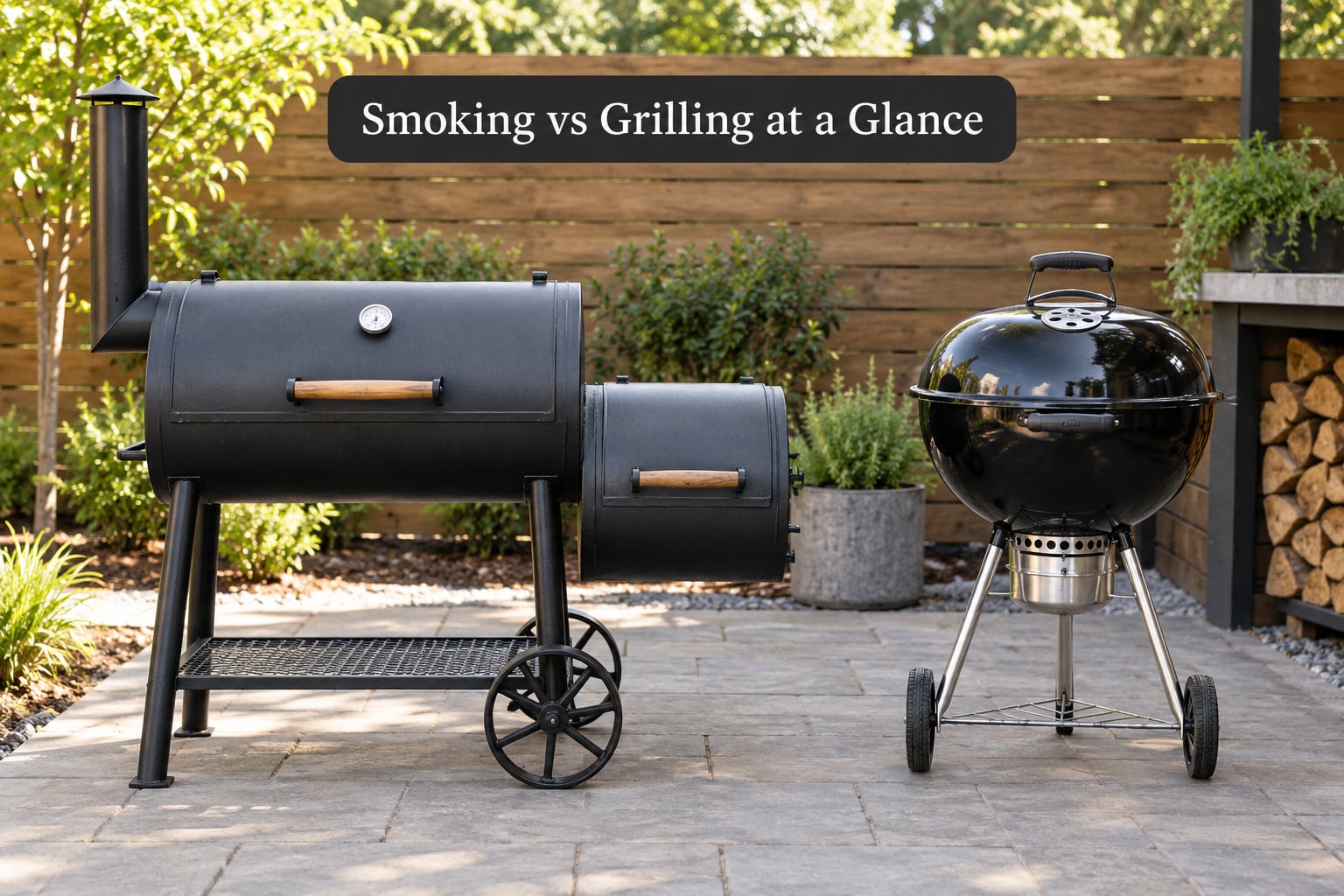
| Criterion | Grilling | Smoking |
|---|---|---|
| Heat placement | Direct radiant heat from coals or flame, under the food | Indirect convected heat in a closed chamber, firebox to the side |
| Temperature | 400 to 600°F typical range | 225 to 275°F typical range |
| Cook time | Minutes for most items | Hours, occasionally most of a day |
| Flavor source | Char, browning and caramelization on the surface | Wood smoke plus bark formed over a long cook |
| Smoke control | Limited, and unwanted on many cuts | Central to the method, adjusted with wood and airflow |
| Foods it suits | Steaks, burgers, chops, sausages, seafood, most vegetables | Brisket, pork shoulder, ribs, whole birds, fatty cuts, firm vegetables |
| Attention | Mostly hands-on, especially at the start | Low and slow, often unattended between checks |
| Fuel use | Short burn, easily 20 to 45 minutes | Hours of charcoal or a steady pellet draw |
| Cleanup | Grate, ash tray, drip pans | Firebox, grease catcher, chamber walls, wood storage |
| Learning curve | Low, and forgiving | Moderate, mostly about managing temperature and fuel |
If you only take one row from that table, take the heat placement row. Direct heat versus indirect heat explains nearly every other difference in the list, including flavor, cook time and how much attention the food needs.
Flavor and Aroma: How Each Cooking Method Works
Grilled flavor comes from the surface. High heat drives the Maillard reaction, a browning reaction between amino acids and sugars that produces hundreds of aroma compounds, plus caramelization of the natural sugars in the meat or marinade. That is why a grilled steak smells like a steak and not like a cookout in general. The char you see is the visible part of it, and it is also the part most likely to be bitter.
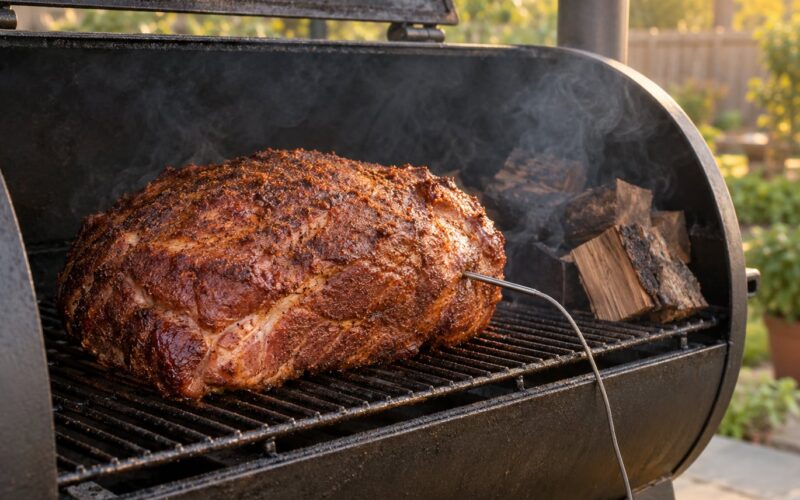
Smoked flavor comes from somewhere else entirely. Wood does not burn cleanly, so it gives off smoke particles that carry into the meat and coat the surface, and that smoke hangs in the closed chamber for hours. Over time it penetrates the outer layer of the meat, where it meets rendered fat and forms a dark, peppery shell called the bark.
Smoking vs Grilling Flavor: How the Methods Differ
The clearest way to see the difference is to put the same category of food side by side. A grilled burger is seared outside and plain inside, with a smoky edge that comes from drippings hitting coals. A smoked brisket has that same savory sear, but the interior is seasoned all the way through with smoke and peppery bark because the smoke had eight hours to move inward.
Grilled vegetables get char and caramelized sweetness. Smoked vegetables, like corn or butternut squash, get a deeper, woodier note that sits underneath the sweetness instead of competing with it.
Sauces and rubs behave differently too. A glaze added late in a grill cook caramelizes fast against direct heat, which works well with thin, sweet coatings. On a long smoke, the same sauce has hours to set, so it tends to go tacky and dark long before the meat is done. Most pitmasters add sauce in the final stretch for exactly that reason.
One more thing worth clearing up: the smoke ring. You will see talk of a pink ring under the bark on smoked meat, and a lot of it is marketing. The color comes from myoglobin and nitric oxide reacting in the first hours of the cook, and it fades as the meat cooks further, so it is not a doneness signal. Judge doneness with a thermometer, not with color.
Heat, Cooking Process, and Equipment
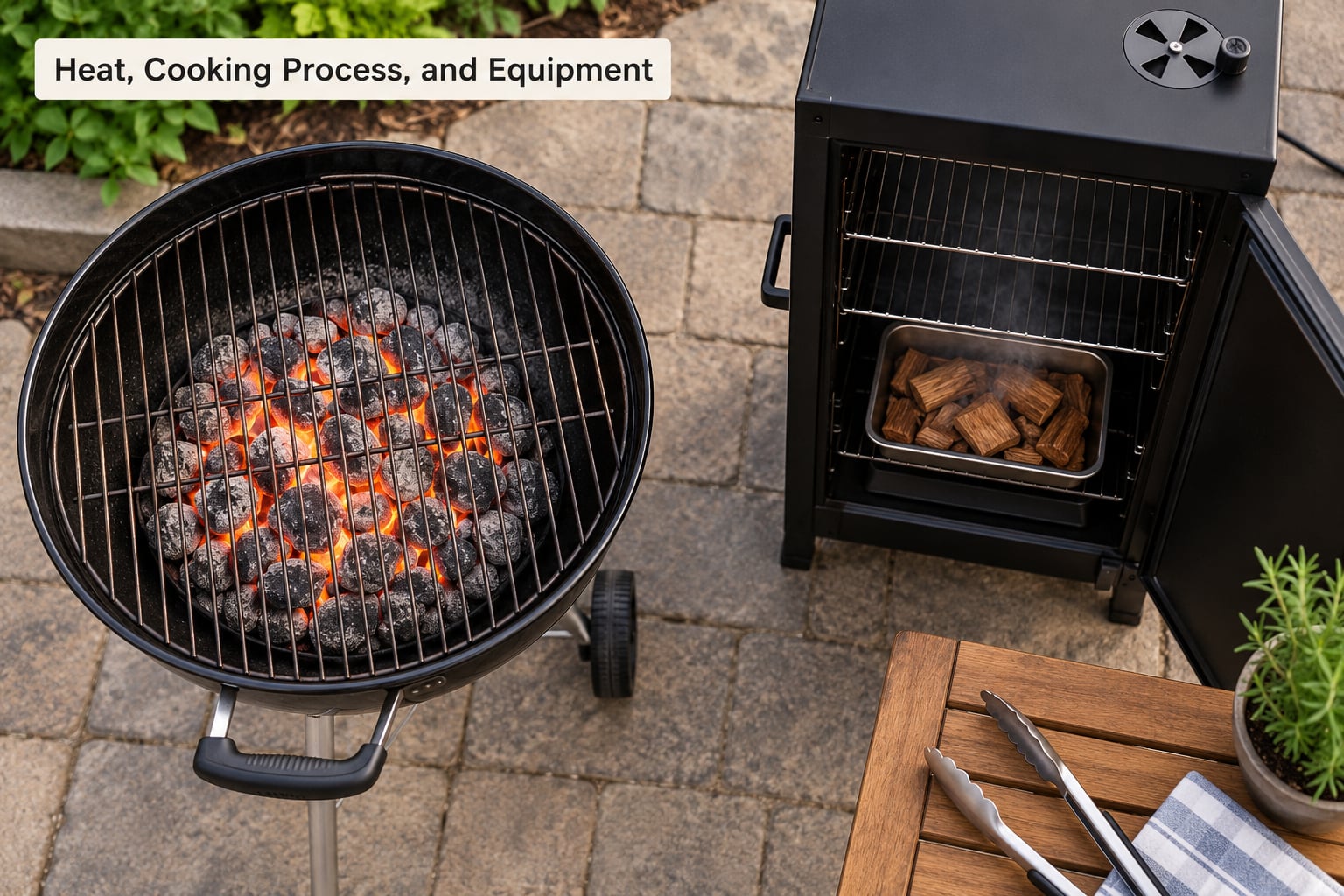
A grill puts the fire under the food. That is the whole idea. Radiant heat travels straight up and strikes the surface of whatever is on the grate, which is exactly what you want for a fast sear and for the Maillard reaction. Grills also lose heat fast every time you open the lid, so they need a strong, bright fire built up before cooking starts.
A smoker puts the fire to the side or below, sealed away from the food. Heat moves by convection around the chamber, so the food cooks evenly from all sides at a much lower temperature, and smoke wraps around it instead of blasting past it. A smoker loses very little heat when opened, which is why you can leave one alone for an hour without changing the cooking.
A grill is not automatically a smoker, and a smoker is not automatically a grill. The equipment has to be configured for the job.
The six setups most home cooks run into:
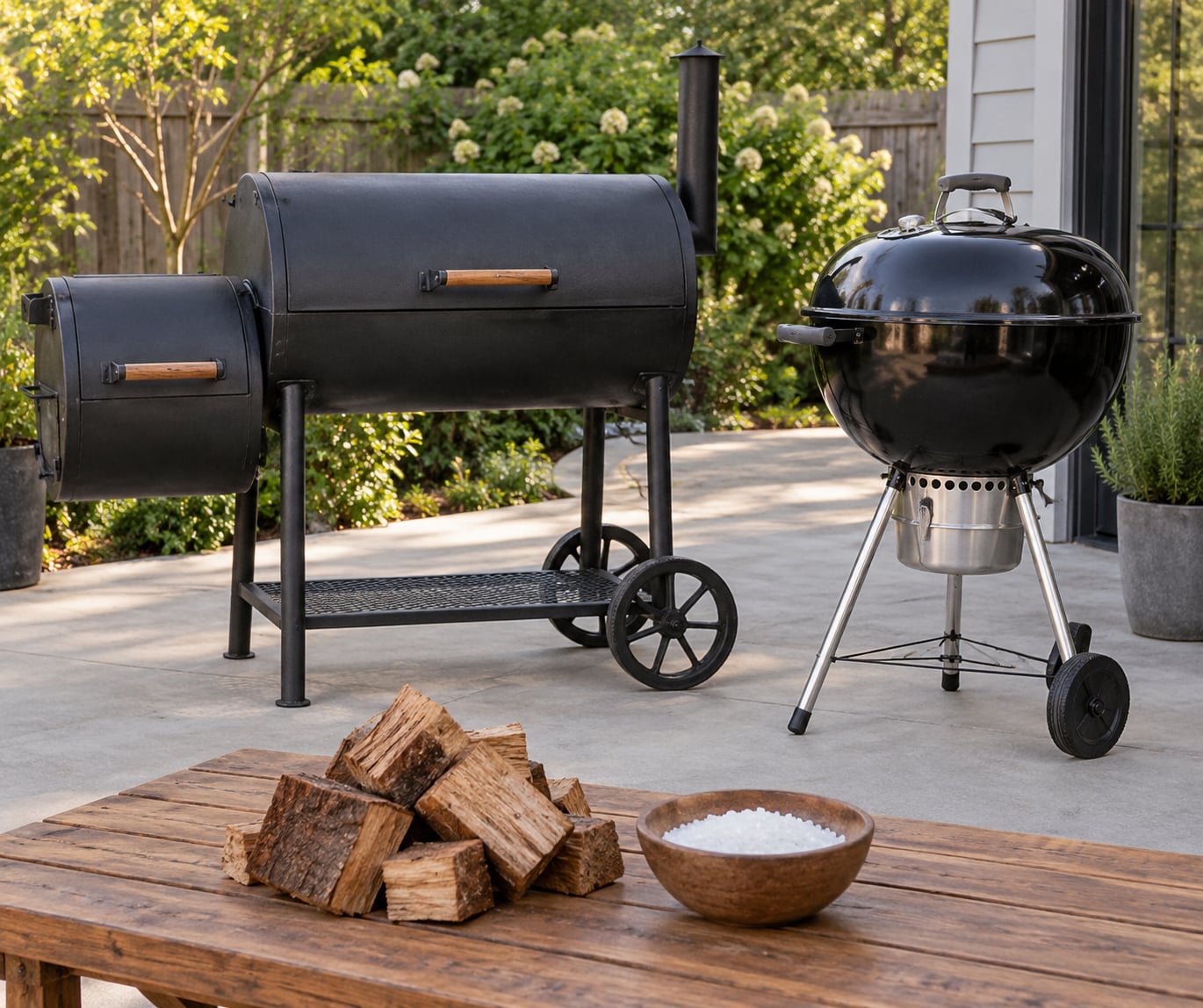
- Charcoal kettle grill. The cheapest way to do both. Its round shape and vented lid make a two-zone fire easy, and a heavy cast iron grate holds heat better than anything in its price range.
- Gas grill. Fast to light and easy to control, but low smoke output because gas burns clean. It can still produce genuine smoke flavor if you add wood and set up an indirect zone.
- Offset smoker. A firebox offset from the cooking chamber. Excellent flavor and capacity, but it is a real project to manage fuel and airflow for hours.
- Pellet smoker or pellet grill. The most hands-off option. Set a temperature and it holds it, which is why many beginners land here, though pellet units need auger and controller upkeep and they flare if the grease renders too fast.
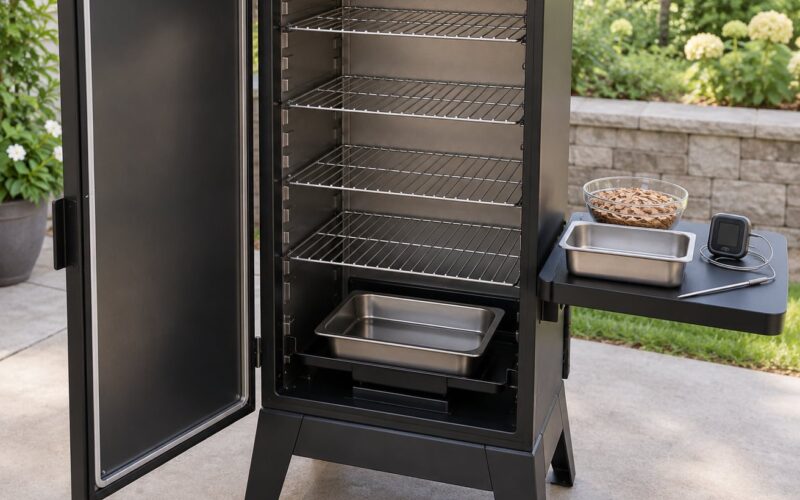
- Electric smoker. Basically a heated oven with a wood chip tray. No flame, no smoke ring drama, very consistent, and limited to a narrow temperature band.
- Kamado. Thick ceramic walls that hold heat and let you sear and then drop to smoking temperatures, so one cooker genuinely covers both methods.
You can convert a plain grill into a smoker with a two-zone fire, and this is the single most useful technique on this page. Bank your coals to one side of the grill, let that side burn down to clean coals, and leave the other side bare. Put a pan of water over the bare side to catch drips and add humidity. Lay the food over the indirect side, close the lid, and add a small handful of unsoaked wood chunks or soaked chips on the hot coals. Keep the vents adjusted to hold your target temperature. Expect the smoke flavor to be lighter and the bark thinner than a dedicated offset smoker produces, but it is real smoke flavor and it costs nothing beyond a bag of wood.
The same logic works in reverse for anyone who wants to grill with a cheap setup. You do not need a hardware store smoker to do either method well. A basic kettle with a decent thermometer holds its temperature and smokes competently, and the expensive machines are paying for convenience, capacity and insulation rather than a fundamentally different result.
Which Foods Taste Better Smoked or Grilled?
Match the method to the cut, not to your equipment.
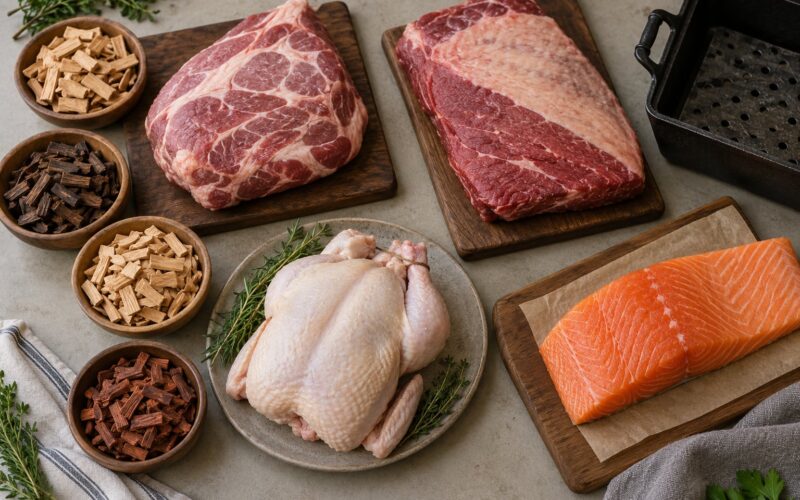
- Brisket, pork shoulder, ribs. Smoke, without much debate. These are large, fatty, collagen-heavy cuts that need hours of low heat to become tender, and the smoke flavor is the point.
- Steaks and burgers. Grill. Direct high heat builds a crust fast, and a smoked steak usually tastes like a warm steak rather than a steak.
- Thin chops, hot dogs, Italian sausage. Grill. Their flavor comes from browning and from the grill marks, and long smoke would dry them out.
- Pork chops. Either. A thick bone-in chop is a fine grill cook, and the same chop smoked with a dry rub is a different, equally good dish. Choose based on the time you have.
- Chicken thighs and drumsticks. Smoke for flavor, grill for crisp skin. Thighs and drumsticks take smoke beautifully; if skin crispness is your priority, finish over direct heat at the end.
- Whole birds. Smoke for a holiday bird, grill for a weeknight one. A whole chicken needs a few hours to cook through evenly, which the smoker handles without much fuss.
- Seafood. Smoked salmon, trout and shank are classic smoker jobs because the gentle heat cures them through. Thicker fish fillets and shrimp do fine on the grill.
- Vegetables. Most vegetables are better grilled for speed and char. Smoke the ones that benefit from a long, dry heat: corn, whole onions, portobello caps, butternut squash halves.
- Cheese and nuts. Smoke adds depth to aged cheddar or pecan halves with a short cook on a smoker.
The pattern to remember: tough and large goes to the smoker, thin and quick goes to the grill.
Cooking Time, Convenience, and Cleanup
Grilling is an active cook. You light, preheat, clean the grate, oil it, cook each item, and watch it. A steak might take four minutes a side and a burger assembly line might fill a dozen in half an hour. The whole thing burns through fuel quickly, usually well under an hour.
Smoking is a slow cook with a short burst of work at the beginning and end. Most of the hours in between are unattended, which sounds appealing until you realize a full brisket can run past twelve hours depending on weight. People plan around that by cooking overnight or starting after breakfast on a weekend.
Both methods reward a good thermometer more than they reward anything else. A two-probe thermometer lets you track the chamber and the meat at the same time, and it takes the guessing out of a long cook in a way that no amount of experience fully replaces.
Holding deserves a note too. Grilled food waits well in a warm oven for a short stretch before you slice it. Smoked food is more forgiving, because it often rests wrapped for an hour or more before serving without losing anything.
Cleanup separates the two more than most guides admit. A grill is grate, ash tray and a bucket for the drippings. A smoker means firebox, ash, grease catcher, chamber walls, plus wherever you stacked the wood, so it takes longer and makes more mess. Wind is also a bigger factor: a charcoal setup in the wrong spot loses temperature in cold weather, and a smoker’s thin metal chamber reacts faster to gusts than a heavy kettle does.
Food Safety and Doneness
Color is not doneness. A steak can look brown on the outside and be cool in the middle, and chicken can look finished long before it is safe. Use a calibrated instant-read or leave-in thermometer and check the thickest part, away from bone and fat.
USDA minimum internal temperatures:
- Poultry, ground poultry and leftovers: 165°F (74°C)
- Ground meats, including sausage and beef or pork patties: 160°F (71°C)
- Whole cuts of beef, pork, lamb and veal, plus fish and shellfish: 145°F (63°C), with a three minute rest
Those are minimums, not targets. Most cooks pull large cuts several degrees below the final number and let carryover cooking carry them the rest of the way during the rest.
Smoke does not remove the risk. Meat sitting in the 40°F to 140°F danger zone for many hours is just as unsafe at 225°F as it would be on a warm counter, so keep the chamber where it belongs and check the internal temperature rather than the clock or the bark.
Handle raw and cooked food separately. Keep raw meat below or apart from produce and cooked items, use a separate cutting board if you can, and do not return cooked food to a plate that held raw meat. Wash hands and sanitize surfaces between steps, and be careful with marinades: the marinade is raw, so either boil it before using it as a basting sauce or use a fresh portion.
Which Should You Choose?
Grill when you have tender food and about half an hour: steaks, burgers, chops, sausages, shrimp, most vegetables, or a quick chicken breast on a weeknight.
Smoke when you have a large or fatty cut and a free afternoon: brisket, pulled pork, ribs, a whole bird, smoked fish, or corn and squash. The extra hours buy tenderness and smoke flavor that grilling cannot produce.
Grill when the occasion is a fast cookout and the guests are waiting. Smoke when the meal is the event and people are happy to wait for it.
Buy a smoker if you cook fatty cuts regularly and want to learn one new skill. Keep a grill regardless, because there is always a burger to make. If you want one appliance instead of two, a kamado or a gas grill with a smoker box covers both methods, and any charcoal grill with a two-zone fire and a chunk of wood does too.
Frequently Asked Questions
Is grilling healthier than smoking?
Neither method is automatically healthier, and the cooking temperature matters more than the method name. High heat and heavy charring produce heterocyclic amines and polycyclic aromatic hydrocarbons, both of which are linked to higher cancer risk in animal studies, so avoiding blackened sections matters in either method. Smoking for many hours can also over-render fat and leave the meat drier. Trim visible fat, cook to the USDA minimums, and pull meat before it blackens.
Can a gas grill be used as a smoker?
Yes, and it is one of the most common beginner upgrades. Burn one burner on high and let it stabilize, keep the other burner off, and cook on the side opposite the lit burner with the lid closed. Add a smoker box or a foil pan of wood on the lit side. You will get a milder smoke flavor than a charcoal offset, but it is real smoke flavor, not just a warm lid.
Does smoked meat need to be cooked longer than grilled meat?
Enormously longer. A steak that takes four minutes per side on a grill can run many hours in a smoker at 225u0026deg;F to 275u0026deg;F, and large fatty cuts often take half a day. The extra time is what converts tough collagen into gelatin and renders the fat. Plan your start time in reverse from serving, but still cook to temperature rather than to the clock.
Can you grill vegetables on a smoker?
You can, and for many vegetables it works better than grilling. Corn, onions, portobello caps and halved squash do well over low heat because they dry out and caramelize slowly without scorching. Thinner vegetables such as zucchini and peppers are better over direct heat, since long smoking leaves them limp. Set them over the indirect side with a little oil and salt and check them toward the end of the cook.
What is the easiest way to add smoke flavor without buying a smoker?
Use your grill as a smoker with a two-zone fire. Bank the coals to one side, let that side burn down to clean coals, put a water pan on the empty side, and lay the food over the indirect side with the lid closed. Add a small handful of wood chunks or chips. A foil smoker box, a cast iron pan with holes, or even a foil tray sitting on the coals all work.
Conclusion
That is the whole answer to smoking vs grilling: direct heat, high temperature and minutes for grilling, against indirect heat, low temperature and hours for smoking. Grilling builds char and caramelization on tender food. Smoking builds smoke flavor, bark and tenderness in large cuts.
Choose based on the food first, then the flavor you want, then the time you have, then the equipment you own. Start with a good thermometer, keep raw and cooked food separate, and let the temperature decide when dinner is ready rather than the clock.