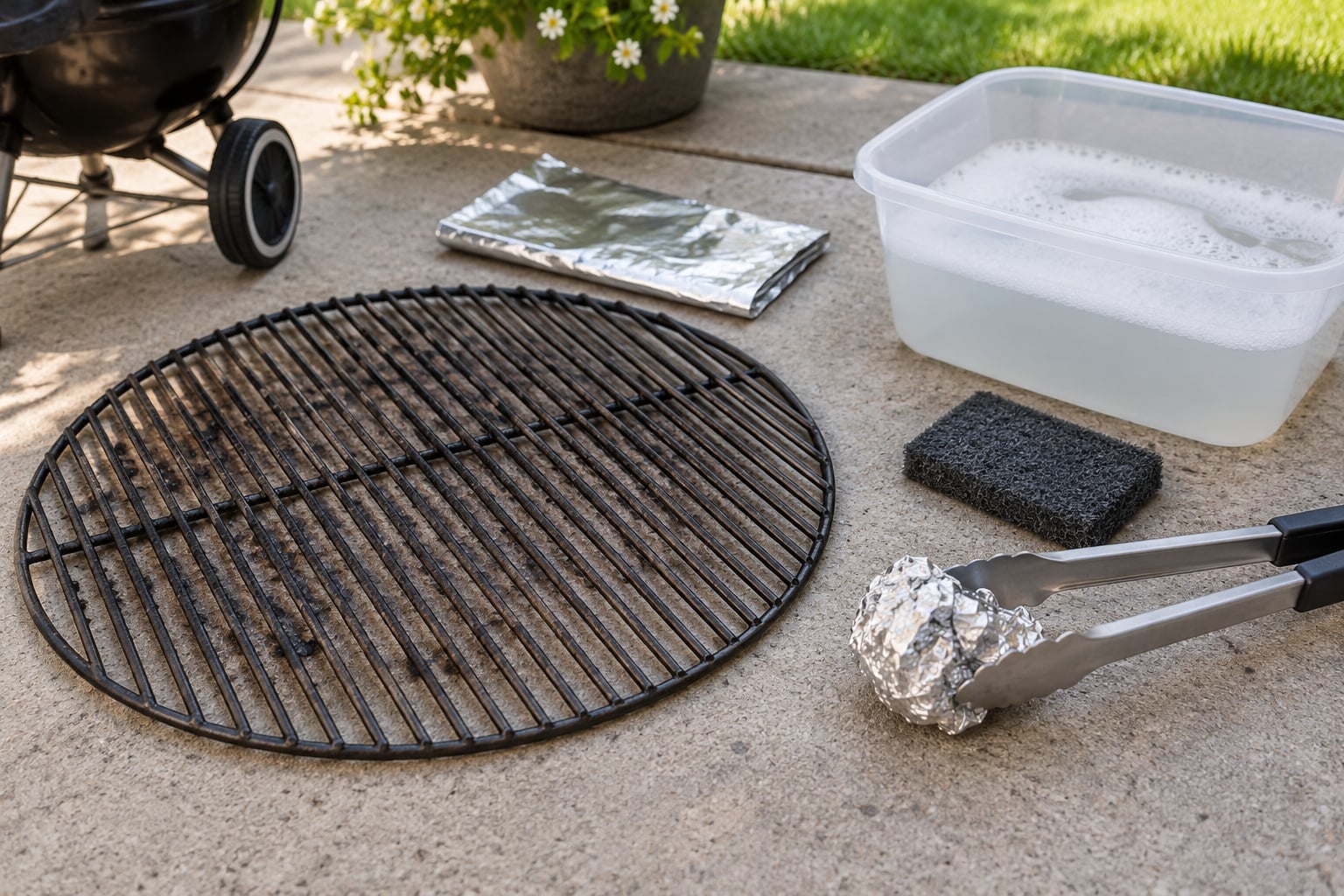
You can clean a grill grate without a brush by using heat and a mild abrasive instead of bristles: crumple heavy-duty aluminum foil into a firm ball, grip it with tongs, and scrub a warm grate until the carbon lifts. For cooled, removable grates, a baking soda and dish soap paste with warm water loosens baked-on grease before a nonabrasive pad finishes the job.
The whole thing takes about ten minutes for a grate that has been cleaned recently, and closer to an hour for one that has been ignored since last summer. None of the methods below need a specialty tool or a chemical cleaner.
Before anything else, turn off the burners, close the lid, and let the grate cool until it is comfortable to hold with bare hands. Scrubbing a grate that is still glowing is how people burn fingers, and it is also why most “the foil ball didn’t work” complaints happen: too much heat, too little patience, or a foil ball that was too loose.
Table of Contents
- What You Need to Clean a Grill Grate Without a Brush
- Step-by-Step: How to Clean a Grill Grate Without a Brush
- How to Scrub a Grill Grate Without a Wire Brush
- Using the Foil-and-Dish-Soap Method for Stubborn Grease
- How to Clean a Fixed Grate Without Removing It
- Common Mistakes When Cleaning a Grill Grate Without a Brush
- Frequently Asked Questions
- Can I clean my grill grate with aluminum foil instead of a brush?
- Can I wash a grill grate with dish soap?
- Does vinegar remove grease from a grill grate?
- How do I remove rust from a grill grate without a wire brush?
- What is the safest way to clean a porcelain-coated grill grate?
- Can I use a vacuum to clean my grill grate?
- Conclusion
What You Need to Clean a Grill Grate Without a Brush
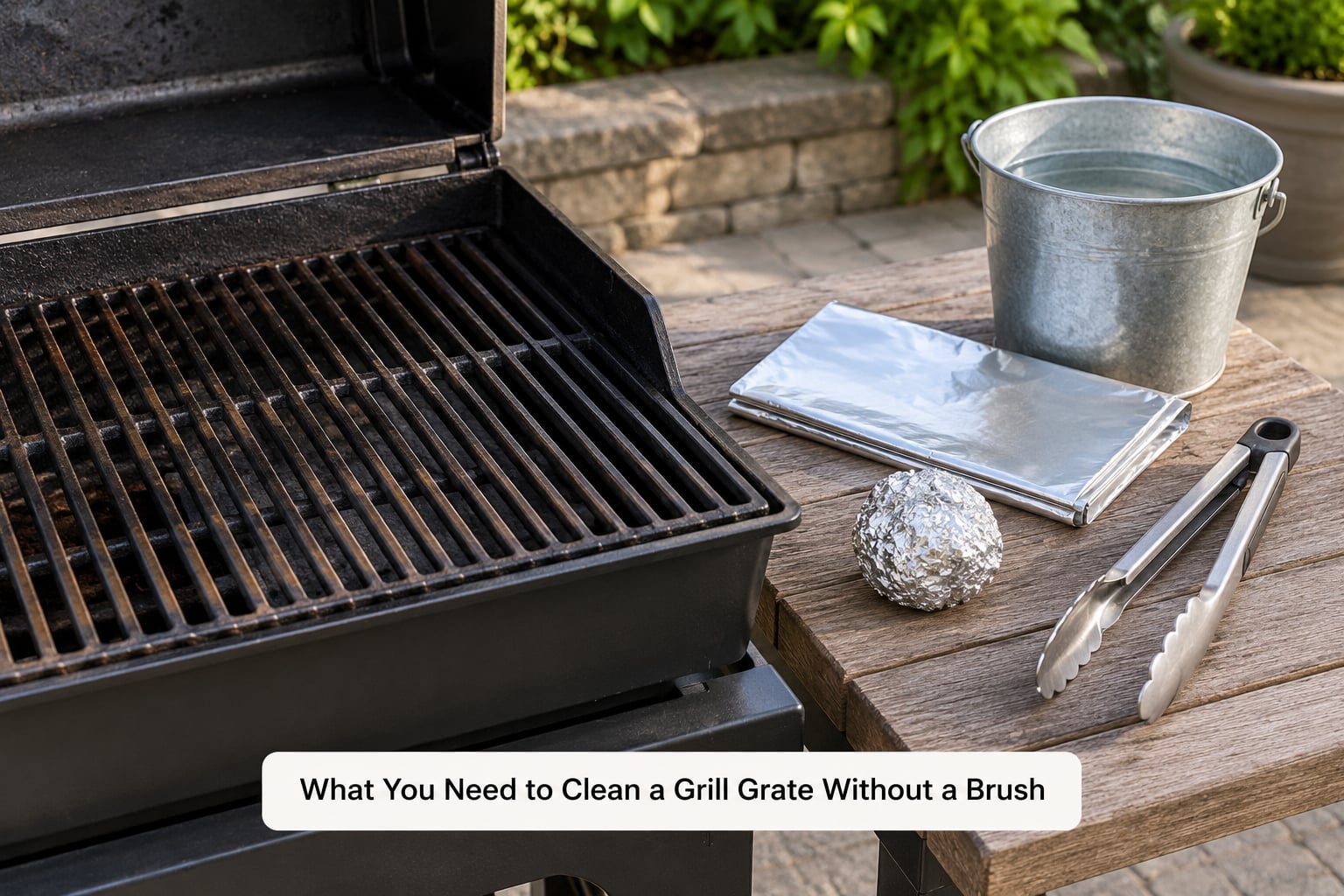
Most of the supply list is already in your kitchen drawer. The one thing worth buying is a roll of heavy-duty foil, because standard grocery-store foil tears apart the first time you squeeze it into a ball.
- Heavy-duty aluminum foil for the foil-ball scrubber. Thin foil shreds and leaves shreds behind.
- A pair of long tongs to hold the ball and to lift the grate out of the firebox.
- Baking soda and dish soap for the cold-paste method, plus warm water in a bucket or basin.
- A nonabrasive pad or nylon bristle brush for the final pass on porcelain and enamel grates.
- A sturdy plastic tub or the grill’s own grease tray if the grate is fixed in place.
- A damp cloth for wiping down the bars before they dry.
- A shop vacuum only if your grill manual allows it, and only once everything is completely cool.
On the question of wire brushes: bristle brushes do work, and most do not shed on every stroke. But the thin wires do break off, stick in the bars, cling to food, and occasionally end up swallowed. If you already own a good stainless or bristle-free brush, there is no emergency. If you are trying to avoid the problem entirely, everything below does the same job with pantry items.
Step-by-Step: How to Clean a Grill Grate Without a Brush
Every method below follows the same order. Learn it once and you can mix methods depending on how dirty the grate is.
- Kill the heat. Close the lid and turn every burner and the charcoal chimney off. Let the grate cool until you can hold a hand a few inches above it without flinching.
- Loosen the grease first. A soak, a steam pan, or a warm soak does more work than any amount of scrubbing. Do this before you touch the bars with anything.
- Scrub with the right tool for the material. Foil ball or wood scraper on stainless and cast iron. A nonabrasive pad on porcelain and enamel.
- Wipe or rinse, then dry completely. Water sitting on cast iron for hours is how rust starts. Dry the grate before you put it back.
- Oil and put it back. A very light coat of high-smoke-point oil on cast or bare steel, nothing at all on porcelain.
How to Scrub a Grill Grate Without a Wire Brush
This is the method for a grate that has been used a few times this season. The heat does the loosening and the foil does the abrading.
- Set the grate on a hot grill and preheat for ten to fifteen minutes, or scrub the bars during the last stretch of a cook.
- Tear a square of heavy-duty foil roughly the size of your palm and crush it into a tight ball, squeezing with the tongs so it holds its shape.
- Hold the ball with the tongs and press it into the bars, moving along the length of each bar rather than side to side.
- Flip to a fresh side when the ball starts to flatten and slide instead of bite, and keep moving. You are looking for bare metal flashing through the carbon.
- Wipe the bars with a damp cloth once they cool enough to touch.
What foil actually does is mechanical: the crushed edges dig into carbonized grease and shear it off. It does not dissolve anything. A foil ball moved over a cool, greasy grate mostly smears the grease into a thinner film, which is why forum users describe it as unsatisfying on its own. Heat is the variable that matters, and a genuinely hot grate is the difference between a real clean and a wiped one.
Skip the foil on porcelain-coated and enameled grates. The sharp aluminum edges will scratch the coating, and a scratch is where future rust starts. Use a nylon pad there instead.
Using the Foil-and-Dish-Soap Method for Stubborn Grease
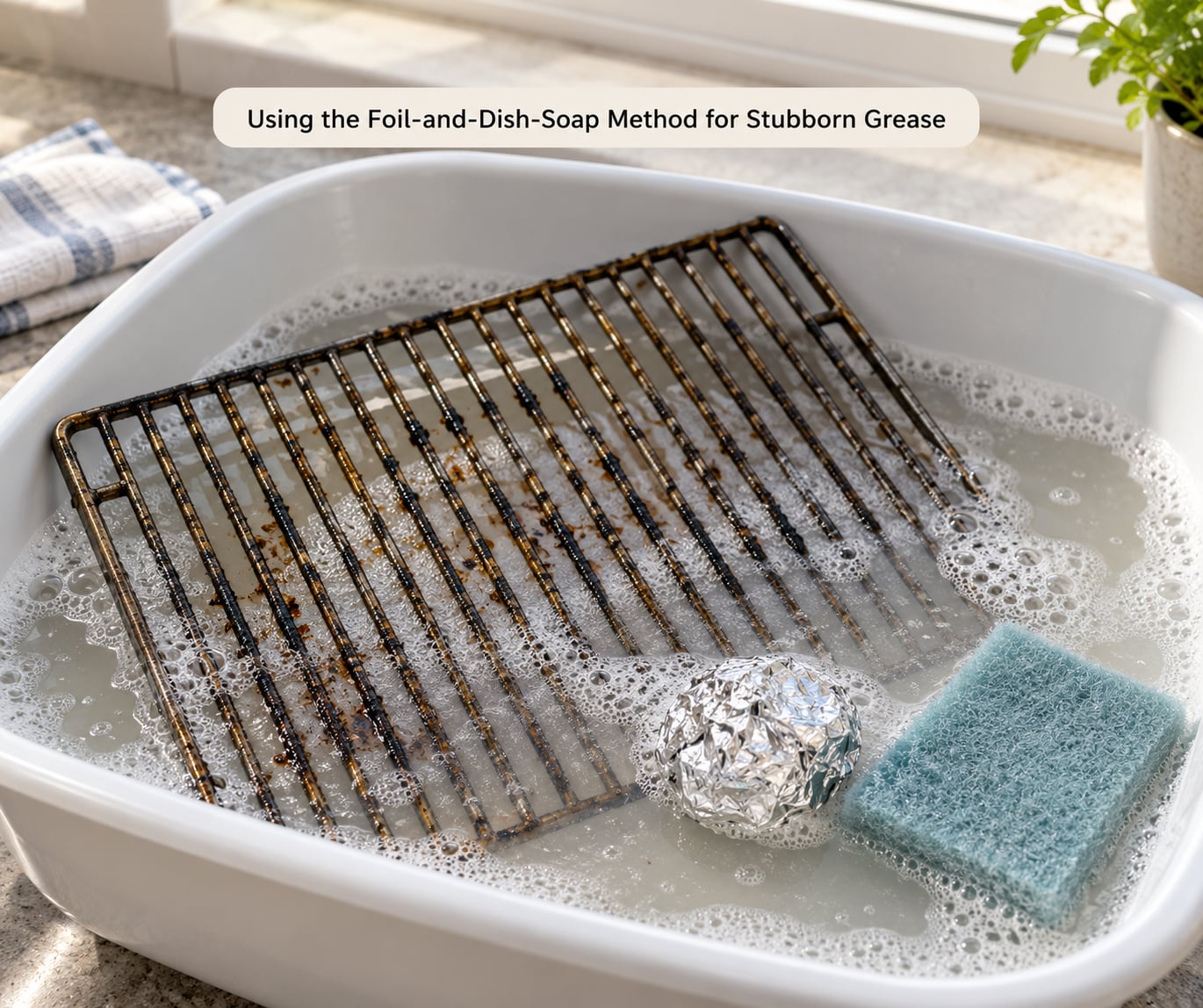
This is the one to use at the start of the season, or when the last cook was months ago. It works on a cold grate because the soap and warmth do the loosening that heat does in the fast method.
- Take the grate out of the firebox once it is fully cool. Cast iron grates are heavy, so lift them with two hands and support the ends.
- Set it in a sturdy tub, a plastic bin, or a clean sink. Do not force a grate into a basin that is too small, because the rim bends the bars.
- Pour in enough very warm water to cover the grate, then add a squirt of dish soap and a couple of tablespoons of baking soda. Make a paste of about one cup of baking soda with a quarter cup of water and spread it thickly over the bars if the grease is thick.
- Let it sit for 20 to 30 minutes. Longer is fine for bare steel and stainless.
- Scrub with the foil ball or a nonabrasive pad, working along the bars.
- Rinse with a hose or the sink sprayer, then dry fully, preferably standing in the sun for an hour or wiping every bar with a dry cloth.
Cast iron needs one adjustment: keep the soak short and dry it fast. A few hours of standing water will strip seasoning and start orange rust within days. Never leave a cast iron grate soaking overnight unless your grill manual specifically allows it, and never put cast iron in a dishwasher.
For an overnight treatment that works on stainless or enamel but is too aggressive for bare cast iron, seal the grate in a plastic garbage bag with a cup of white vinegar and a cup of hot water, then let it sit eight to twelve hours outside the grill. Rinse, dry, and oil bare steel. This is also the standard fix for a rusty stainless grate.
How to Clean a Fixed Grate Without Removing It
Many built-in and older grates are welded or screwed in place. You can still do a proper job, you just work inside the firebox.
- Turn off every burner and close the lid. Let the firebox and grate cool completely, which takes longer than you expect because the lid traps heat.
- Slide a tray or a wide piece of cardboard under the grate to catch debris, or place a tub beneath the firebox opening.
- Sprinkle baking soda over the warm-then-cool grate, dampen it with water, and let the paste sit 20 to 30 minutes.
- Scrub with the foil ball held in tongs, bar by bar. On porcelain, use a nylon pad instead.
- Wipe every bar with a damp cloth and, if you used a paste, wipe a second time with a clean damp cloth to remove the soda film.
- Vacuum the debris out once the firebox is at room temperature and only if your grill manual allows a vacuum near the firebox. Skip it entirely on any grill with a grease channel or ash catcher you cannot reach.
If the grate sits over a grease channel, a drip pan, or a grease drain, that trapped grease is what smokes on the next cook. Pour hot water down the channel after the grill is cool and wipe it out before you close the lid for the season.
Common Mistakes When Cleaning a Grill Grate Without a Brush
Most failed brush-free cleanups come down to one of these five things. Each has a simple fix.
Scrubbing a grate that is too hot. You will blister your hand, and the grease vaporizes before it can be lifted. Fix: cool until you can hold a hand a few inches above the bars comfortably. Warm is right, glowing is not.
Leaving soap or moisture on cast iron. That combination is the fastest route to a rusty grate. Fix: rinse fully, dry every bar, then run the grill for five minutes with the lid open to flash off the last moisture.
Using steel wool or an SOS pad on a coated grate. Those are designed to strip metal, and they will take the porcelain or enamel with them. Fix: nonabrasive nylon pad, a wooden spatula edge, or a foil ball used gently.
Forcing a removable grate into a basin that is too small. The rim bends the bars and you get a grate that sits crooked forever. Fix: use a large tub, or clean the grate over a lawn hose or the driveway.
Relighting before everything is dry. Steam coming off a wet grate carries grease particles into the air with it. Fix: let the grate sit 30 minutes, or heat it with the lid open for five minutes.
Two things to avoid entirely: bleach and aerosol grill cleaners on a cooking surface, and any petroleum-based cleaner. Neither belongs near food, and both are hard to fully rinse out of the bars.
Maintenance is what keeps the deep clean rare. After every cook, with the lid open, scrape the bars with a wooden spatula and wipe on grease with a paper towel while the grate is still warm. Once a month, run the grill at full heat for ten minutes to burn off crumbs. A light coat of high-smoke-point oil on bare steel after every deep clean is all the seasoning protection cast iron needs.
Frequently Asked Questions
Can I clean my grill grate with aluminum foil instead of a brush?
Yes, and for most people it is the whole job. Crumple heavy-duty foil into a tight ball, hold it with tongs, and scrub a warm-to-hot grate along the length of the bars. Heat loosens the carbonized grease and the foil’s sharp crushed edges shear it away. It works on stainless and cast iron, but not on porcelain or enamel, where the metal will scratch the coating.
Can I wash a grill grate with dish soap?
Yes, on a cool or warm grate that has been removed from the grill. Warm water plus a squirt of dish soap and a baking soda paste handles baked-on grease on stainless steel and most enamel. Keep the soak to 20 or 30 minutes and dry the grate completely before reinstalling it. Avoid long soaks on bare cast iron, which can strip seasoning and start rust.
Does vinegar remove grease from a grill grate?
Vinegar works best as a soak rather than a scrub. For a removable stainless or enamel grate, seal it in a plastic bag with about a cup of white vinegar and a cup of hot water and let it sit eight to twelve hours. The acid loosens carbonized grease and, on rust, the same soak is the gentlest fix available. Rinse, dry fully, and oil bare steel afterward. Do not mix vinegar with bleach.
How do I remove rust from a grill grate without a wire brush?
Bury the grate in a dry salt or coarse ash mix for an hour, then scrub the rust off with a foil ball held in tongs and wipe with a damp cloth. For heavier rust, use the vinegar and hot water bag soak described above for eight to twelve hours. Once the metal is bare and bright, dry it thoroughly and coat it with a thin layer of high-smoke-point oil to stop the rust from returning.
What is the safest way to clean a porcelain-coated grill grate?
Cool the grill fully, then use a nylon bristle brush or a soft nonabrasive pad with warm water and a little dish soap. Baking soda paste works well here because it lifts grease without scratching. Avoid foil, steel wool, SOS pads, metal scrapers, and any wire brush, all of which can chip the coating and open a path for rust. Never relight the grill until the grate is dry.
Can I use a vacuum to clean my grill grate?
Only when the firebox is at room temperature, and only if your grill manual allows it. A shop vacuum is fine for dry crumbs and ash on grates without a grease channel, but many manufacturers warn against vacuuming near burners, drip pans, and grease drains. Never run a vacuum while the grill is warm, since hot ash and grease dust can damage the motor or smear into a greasy film on the bars.
Conclusion
Start every session the same way: burners off, lid closed, grate cooled until you can hold your hand near it. From there, use the foil ball and a hot grate for routine cleaning after every cook or two, and switch to the baking soda and dish soap paste with warm water when the grate comes off and needs a real deep clean, whatever the season.
Match the tool to the material, nonabrasive on porcelain and enamel, and skip the overnight soak on bare cast iron unless your grill manual says it is fine. Then dry every bar before the grate goes back in, and wipe the grease off while the grate is still warm so the next cleanup stays a ten-minute job instead of a Saturday.