The safest way to switch dog food without upset stomach is to take 7 to 10 days, starting at 25% of the new food and raising that share every couple of days. Spread the same daily portion across both foods instead of adding extra, and hold at each ratio long enough for your dog’s stool to stay normal before you move on.
Dry kibble usually needs the longer end of that window, 14 days, and so does any dog with a history of stomach trouble. If a switch is forced, by a recall or a food you can no longer buy, nobody is doing this calmly on a schedule. You switch fast and manage the fallout with your veterinarian.
Table of Contents
- What You Need
- Step-by-Step
- How to switch dog food without upset stomach
- Days 1-2: Keep the New Food to 25%
- Days 3-4: Increase the New Food to 50%
- Days 5-6: Make the New Food 75%
- Day 7 and Beyond: Feed 100% of the New Food
- Common Mistakes
- Frequently Asked Questions
- How long should I switch my dog’s food?
- What should I do if my dog gets diarrhea while changing food?
- Can I switch puppy food the same way?
- Should I stop giving treats during the transition?
- How do I know when my dog has adjusted to the new food?
- When should I call a veterinarian during a food change?
- Start Slow and Let Your Dog Set the Pace
What You Need
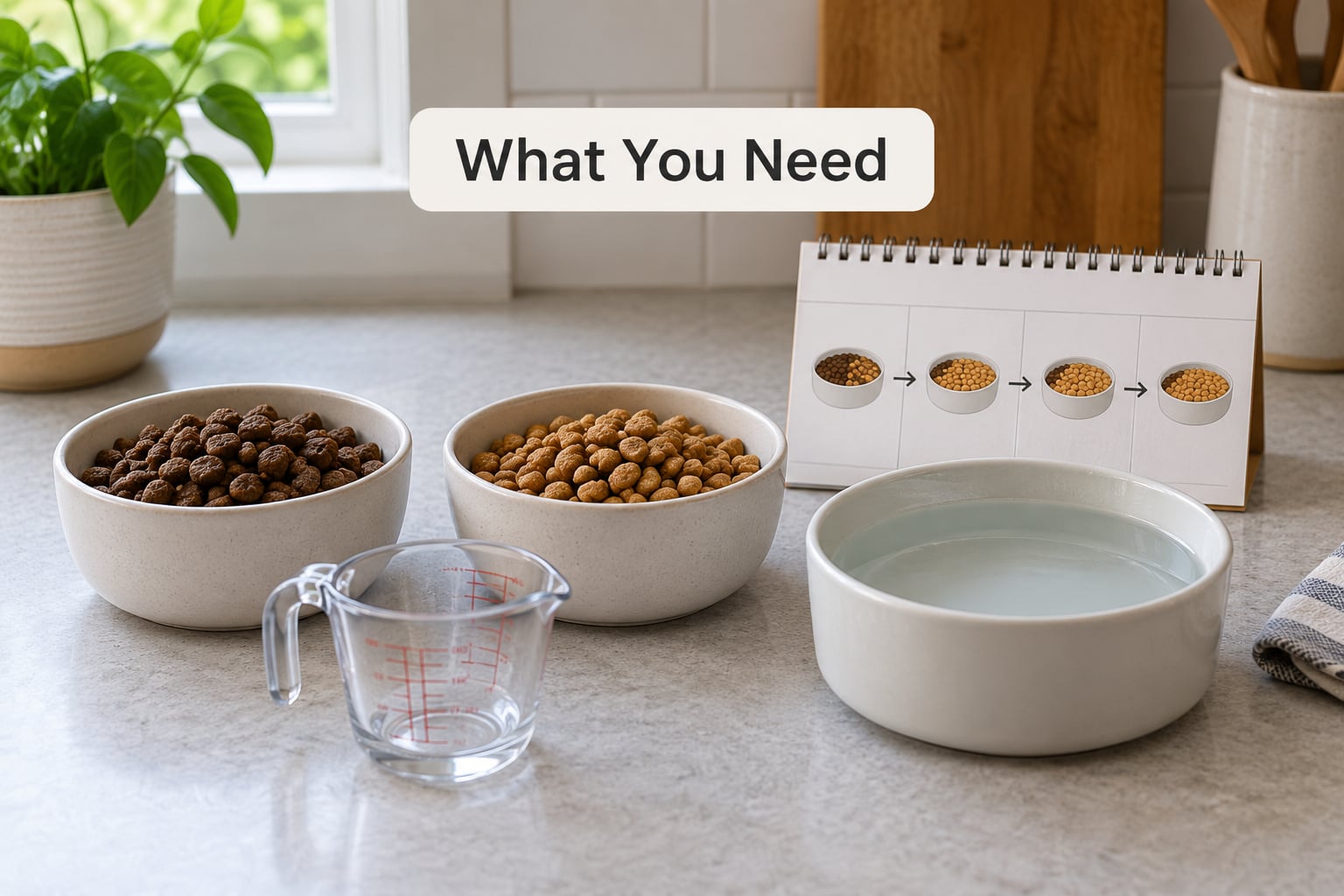
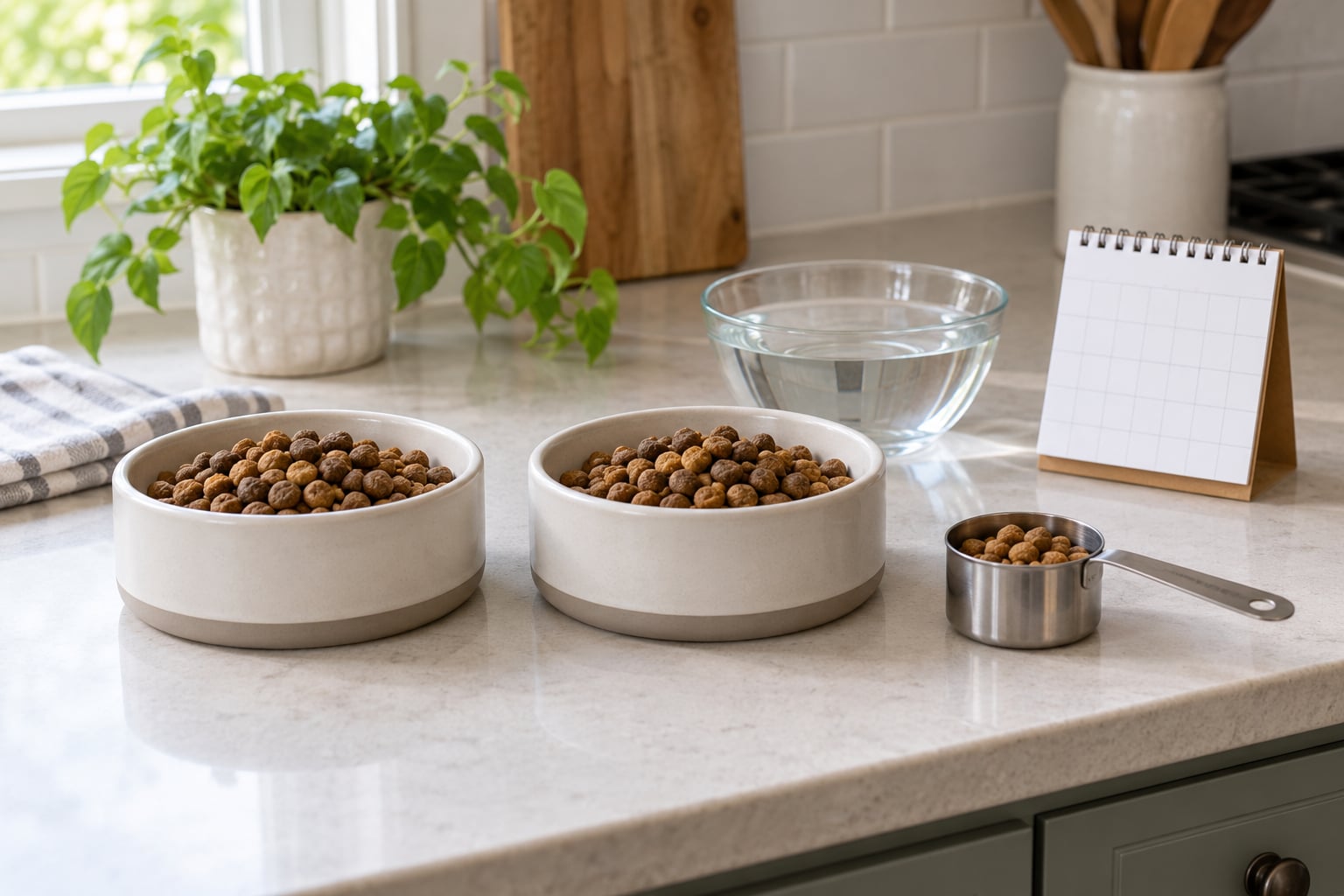
You need less than most people expect. Grab the current food, the new food, a measuring cup or kitchen scale, and a bowl of fresh water that stays out all day.
A written schedule matters more than you would think. One page on the fridge that everyone who feeds the dog can see prevents the single most common failure, two people using different ratios on the same day.
Also keep a rough log for three or four days: stool consistency, appetite, any vomiting, and how long it took to eat. Owners who track it catch a problem on day 3 instead of day 7, and a three-line log is also the most useful thing you can describe to your vet later.
Before day one, read the new food’s ingredient list and feeding instructions. Note the calorie density per cup, because two foods with different fat percentages will not produce the same result at the same volume, and check that the new food is labeled complete and balanced for your dog’s life stage.
Know what normal looks like for your dog before anything changes. Most dogs stool once or twice a day, formed and easy to pick up. If yours already has a loose stool pattern or a diagnosed sensitivity, that is your baseline and you compare against it, not against an imaginary picture-book dog.
Buy the new food in a bag small enough to finish inside the schedule. A five-kilogram sack that will sit open for three months is a slower transition than the calendar says, because the fats oxidize once the bag is opened.
Step-by-Step
How to switch dog food without upset stomach
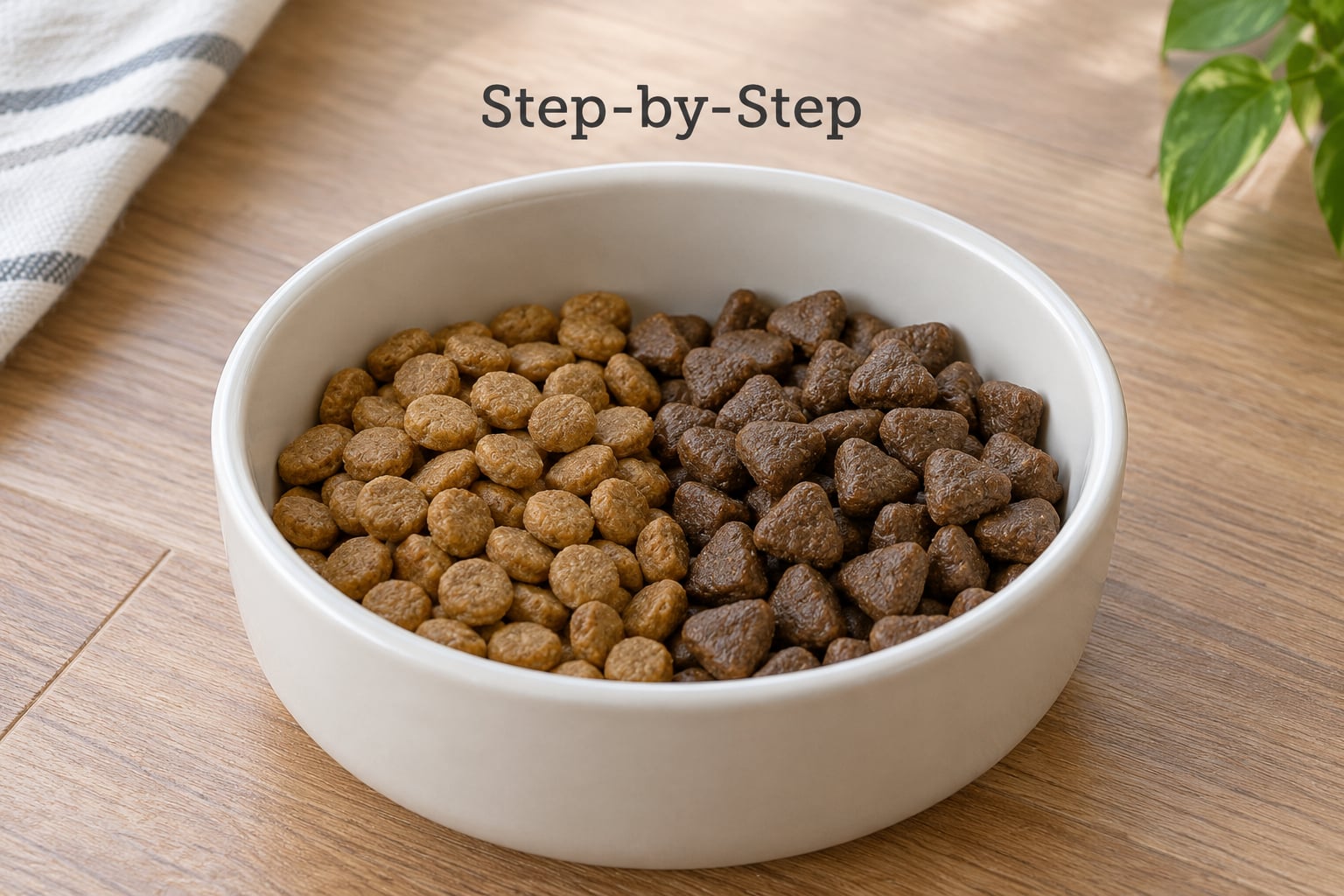
Transition over 7 to 10 days, beginning with mostly the current food at 75% old and 25% new, reducing the old food slowly until you reach 100% new. If digestive symptoms appear at any ratio, pause at that ratio for two or three more days or step back down to the last one that was comfortable before continuing.
The ratio matters less than the pace. Moving slowly enough that the dog never shows symptoms is the whole method, and a dog who eats happily at 25% should stay there until that is boringly routine.
Why the slow version works: a dog’s gut holds a population of bacteria and enzymes tuned to the food it has been eating for weeks or months. A brand new recipe changes the substrate those bacteria ferment, and the ones that fit the old food decline while the ones that fit the new food are still catching up. That imbalance is what turns into gas, loose stool, and vomiting. A week of mixed meals lets the population shift before it has to do all the work at once.
| Days | Current food | New food | How it should look |
|---|---|---|---|
| 1-2 | 75% | 25% | Stool normal or slightly softer |
| 3-4 | 50% | 50% | Same appetite, same energy |
| 5-6 | 25% | 75% | No gas, no vomiting |
| 7 onward | 0% | 100% | Stable stool on the new food |
Days 1-2: Keep the New Food to 25%
Combine roughly three quarters of the usual daily amount of the current food with one quarter of the new food. Total calories stay where they were, so you are changing ingredients and nothing else.
Stir the two foods together rather than layering them, because most dogs eat the part they like first and leave the rest. Normal here means formed stool, a clean bowl, and no change in energy over the following day.
Days 3-4: Increase the New Food to 50%
Move to an even mix only if days 1 and 2 were uneventful. If the stool softened at 25% and then firmed up, go ahead; if it never firmed up, stay at 25% for another two days.
Watch for loose stool, gas, and a dog who approaches the bowl then walks away. Small piles of kibble left beside the bowl usually means the dog is sorting, which you handle by mixing more thoroughly or by adding a spoonful of warm wet food as a binder.
Days 5-6: Make the New Food 75%
Shift to mostly the new food without changing the total amount your dog eats. This is where calorie density bites: a richer food at the same cup volume can mean more calories, and the fix is to follow the new label’s daily serving guide rather than copying the old portion size.
If the new food is lower in calories, you may need slightly more volume to keep the dog at the same weight. A weekly weigh-in and a glance at the waist give you the answer without any math.
Day 7 and Beyond: Feed 100% of the New Food
On day 7, feed only the new food at its recommended serving size and keep everything else identical, including meal times and treat amounts. Keep watching stool for another three to five days, since a reaction often shows up a day or two after the diet finishes changing rather than on the day itself.
For a dog with a sensitive stomach, stretch the same schedule across 14 days: four days at each ratio instead of two. For wet to dry or dry to wet switches, plan on the long end too, 10 to 14 days, since moisture and texture change how the gut handles the meal as well as the ingredients do.
Common Mistakes
Switching all at once. The fastest way to cause diarrhea. One bag, no mixing, and the gut bacteria that have been tuned to weeks of one food get overwhelmed overnight. Forum threads describe the result plainly: vomiting on the floor within hours, and owners who did not know whether to push forward or go back.
Changing food and portions in the same week. If you double the food and swap the recipe at once, you have no idea which change caused the loose stool. Move portions first, then start the food schedule a week later.
Ignoring how different the two foods are. Two bags labeled for adult dogs can differ sharply in fat, fibre, and protein source, and that gap is what upsets digestion. A high-fat food introduced suddenly is a common trigger, so check the guaranteed analysis on both bags before you start.
Adding treats and toppers during the transition. Training treats, dental chews, table scraps, and flavored supplements all count as food changes. Keep them constant for the whole transition and change them afterwards, one at a time. A probiotic pill can wait too, since starting one mid-transition adds a variable you cannot isolate later.
Pushing forward through vomiting or diarrhea. This is the mistake behind most bad experiences. The fix is to step back: return to the previous ratio or the previous food, hold the dog there until stool is normal for two full days, then restart one step lower.
Not telling everyone who feeds the dog. Household members, dog walkers, sitters, and boarding staff quietly undo the schedule if they are not told. Message the sitter with the exact percentages for the week and tell the walker to skip table food.
Switching between wet and dry food is its own case. Mix a little of the wet food in as a binder for the first half of the transition, and add warm water to the kibble portion so the pieces soften.
Sorting kibble is the other classic problem. A dog who picks out the old pieces and leaves the new ones is not really transitioning, and the schedule quietly resets every meal. Mixing more thoroughly helps, and so does a wet-food base: a spoonful of the new food’s wet equivalent stirred through the kibble makes the whole bowl a single thing to eat.
A dog on a prescription or therapeutic diet is a different case. Those formulas are matched to a medical condition, and your veterinarian should set the pace and often wants the switch done inside a week. Do not run a two-week schedule on a diet change that was prescribed, and do not change the food at all without asking first.
Plain pumpkin is the remedy owners reach for most, and a small spoon of it in the meal does firm up loose stool for many dogs. Treat it as a change to the diet, keep the amount small and consistent, and ask your veterinarian before adding it, especially to a dog with diabetes or a chronic condition.
Frequently Asked Questions
How long should I switch my dog’s food?
Seven to 10 days covers most adult dogs on a straightforward brand or formula change. Plan on the full 14 days for dry kibble, for dogs with a sensitive stomach, and for any switch between wet and dry formats. Puppies and seniors tend to do better slowly as well. If your dog shows loose stool at any ratio, stay at that ratio for extra days rather than pushing on.
What should I do if my dog gets diarrhea while changing food?
Stop increasing the new food and step back to the ratio the dog was on before the stool changed, or return to the previous food entirely. Keep total food intake normal and water available at all times, since dehydration is the bigger risk with loose stool. Hold that ratio until stool is formed for two full days, then move forward one step. Call your veterinarian if it does not settle.
Can I switch puppy food the same way?
The same ratios work, but spread them over 14 days rather than seven, and expect puppies to be fussier because they are also growing and teething. A slight softening of stool for a day or two is common and usually resolves without treatment. Keep feeding frequency and portion size steady during the change, and check with your veterinarian first for a very young or small-breed puppy.
Should I stop giving treats during the transition?
No need to stop treats, but keep them exactly the same as before the switch, in the same amounts. Treats, chews, toppers, and flavored supplements are all food changes that count, and changing them at the same time makes it impossible to tell what caused a problem. Switch treats later, one item at a time, and keep that day’s treats under about ten percent of total calories.
How do I know when my dog has adjusted to the new food?
You are looking for three things holding steady for several days: formed stool every day or two, normal appetite with a clean bowl, and the same energy levels you are used to. Reaching 100% new food is only half of it, because reactions often appear one to two days after the switch finishes. Keep the same food and treat routine for a week before judging the result.
When should I call a veterinarian during a food change?
Call your veterinarian if diarrhea lasts more than a day or two, if you see blood or a black tarry stool, if your dog vomits repeatedly, or if they refuse food and water. Also call for noticeable lethargy, belly pain, or a puppy that seems weak or flat. A dog that stops eating for more than 24 hours warrants a same-day call. Bring your ratio log with you, it speeds things up.
Start Slow and Let Your Dog Set the Pace
The one thing worth remembering from all of this: how to switch dog food without upset stomach comes down to patience, not the perfect ratio. Begin at 25% new food on day one, keep the total daily amount and all treats identical, and only move up when the last few days were completely uneventful.
If something goes sideways, step back rather than pushing forward. A transition that takes twelve days is a success. Call your veterinarian for blood in the stool, repeated vomiting, lethargy, belly pain, or a dog who will not eat, and bring your log with you.
Last reviewed in 2026 for accuracy against current veterinary guidance on dietary transitions.