To prevent frozen pipes in a garage, you either keep the water moving, keep it warm, or take it out of the pipe entirely. Most garages need the third option plus insulation, because an unheated attached garage can sit 15 to 20 degrees colder than the rooms above it.
Water freezes at 32°F, and that is the number most people search for. The catch is that an exposed copper or PEX line in a garage loses heat fast enough to drop below 32°F while the air around it still reads in the forties, which is why a garage pipe can freeze on a night the forecast never called freezing. An hour of prevention in autumn costs a few dollars in materials; a burst line in February means drywall, framing, a water heater, and whatever you had stored down there.
The steps below run in the order I would do them: find the vulnerable pipes, insulate and seal them, hold steady heat safely, drain the lines you do not need, and know exactly what to do the night something does freeze. Budget most of an afternoon for the first three and save a rainy Saturday for the drain-and-shutoff step if you have outdoor hose bibs or a washing machine tap in the garage.
Table of Contents
- What You Need to Prevent Frozen Pipes in a Garage
- Five Wins You Can Make in Under an Hour
- Step-by-Step
- How to Prevent Frozen Pipes in a Garage
- Insulate Pipes and Seal the Garage
- Maintain Safe Heat During Cold Weather
- Heat Tape Safety Rules
- Drain Unused Garage Water Lines
- Know When to Act During a Cold Snap
- Common Mistakes
- Frequently Asked Questions
- At what temperature do garage pipes freeze?
- Will heat tape prevent pipes from freezing in a garage?
- Can I shut off the water in my garage to stop pipes freezing?
- Is it okay to leave heat tape plugged in all winter?
- Will frozen pipes thaw on their own?
- Does homeowners insurance cover frozen pipes?
What You Need to Prevent Frozen Pipes in a Garage
You do not need much, and none of it is specialized. A tube of foam sleeve, a can of expanding foam or caulk, and a roll of garage door weatherstripping handle most garages with copper or PEX runs.
- Split foam pipe insulation in 1/2 inch or larger, sized for the pipe. Larger sleeves over smaller pipes are fine, but a snug fit matters less than full coverage along the run.
- Fiberglass insulation with a vapor barrier facing outward for long wall or ceiling runs where foam sleeves are awkward.
- Self-regulating heat cable that is UL listed, with a built-in thermostat, if a run sits near an exterior wall or a garage door and gets hit by wind.
- Expanding foam sealant, silicone caulk, and self-adhesive weatherstripping for gaps around pipe penetrations, the threshold, and the garage door jambs.
- Insulated covers for hose bibs and backflow preventers, plus a small screw-on drain valve if any line is a candidate for winterizing.
- A garden hose and an air compressor with a blow-out nozzle if you intend to drain lines that run through a wall cavity or under a slab.
- A flashlight, an adjustable wrench, and your plumber’s number. More than one frozen pipe call starts with the homeowner not knowing where the shutoff is.
What you should not buy is a cheap unrated heating tape sold as a garden or plumbing accessory. The electrical category is where this job can turn dangerous, and the guide covers it in detail further down.
Five Wins You Can Make in Under an Hour
- Keep the garage door shut. An open door is the single largest source of cold air in the space.
- Set the home thermostat to at least 55°F when you are away for more than a few days.
- Wrap every exposed supply line in foam sleeve, tape the seams tight.
- Disconnect and drain outdoor hoses, then cover each hose bib.
- Locate the garage shutoff and the home’s main shutoff, and note where they are.
Step-by-Step
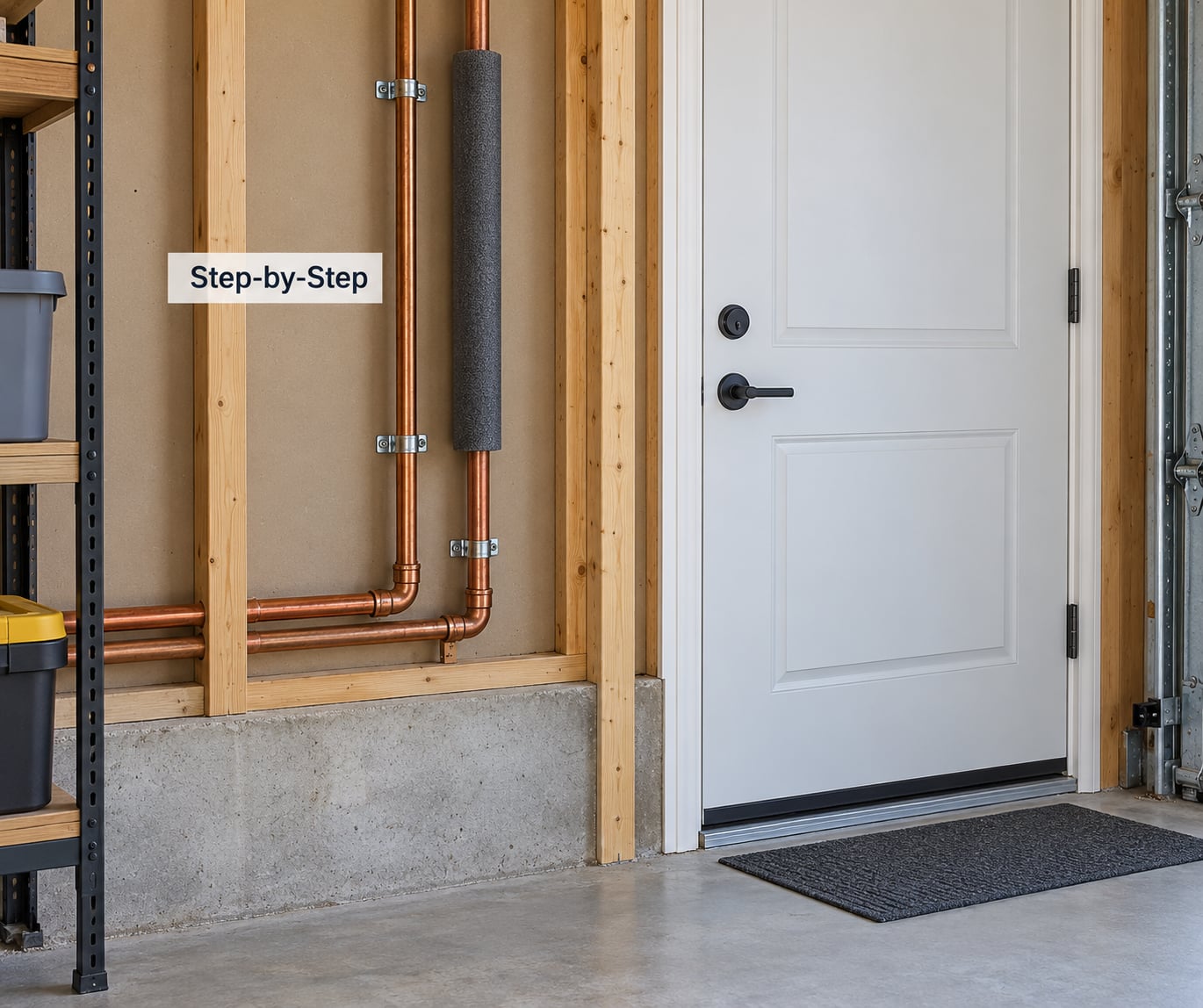
How to Prevent Frozen Pipes in a Garage
Start by finding every water line that lives in the garage. Walk the walls and ceiling and trace the pipe from the water heater or the main shutoff. Typical targets are the garage utility sink, a washing machine tap, a hose bib, a floor drain, and any supply line that runs along an exterior wall or directly beneath a bathroom, laundry, or kitchen above.
Pipes buried in a garage ceiling cavity or under a slab are the ones homeowners forget, and a bathroom or laundry directly above an unheated garage is the most common repeat failure I hear about. If you cannot see the pipe, assume it exists and treat it as a risk.
Then find where cold air gets in. A garage door that does not seal, a gap where a hose or wire enters through the wall, a missing outlet cover, and the space under the door are all worth more attention than another layer of insulation. Plugging gaps around pipe penetrations with expanding foam or caulk is cheap and stops moving air from wrapping around the pipe.
Finally, take a phone photo of the garage plumbing before winter. Write on the photo where the shutoffs are and which direction the handles turn. When a pipe is gushing at 11pm, nobody wants to be guessing which valve to reach for.
Insulate Pipes and Seal the Garage
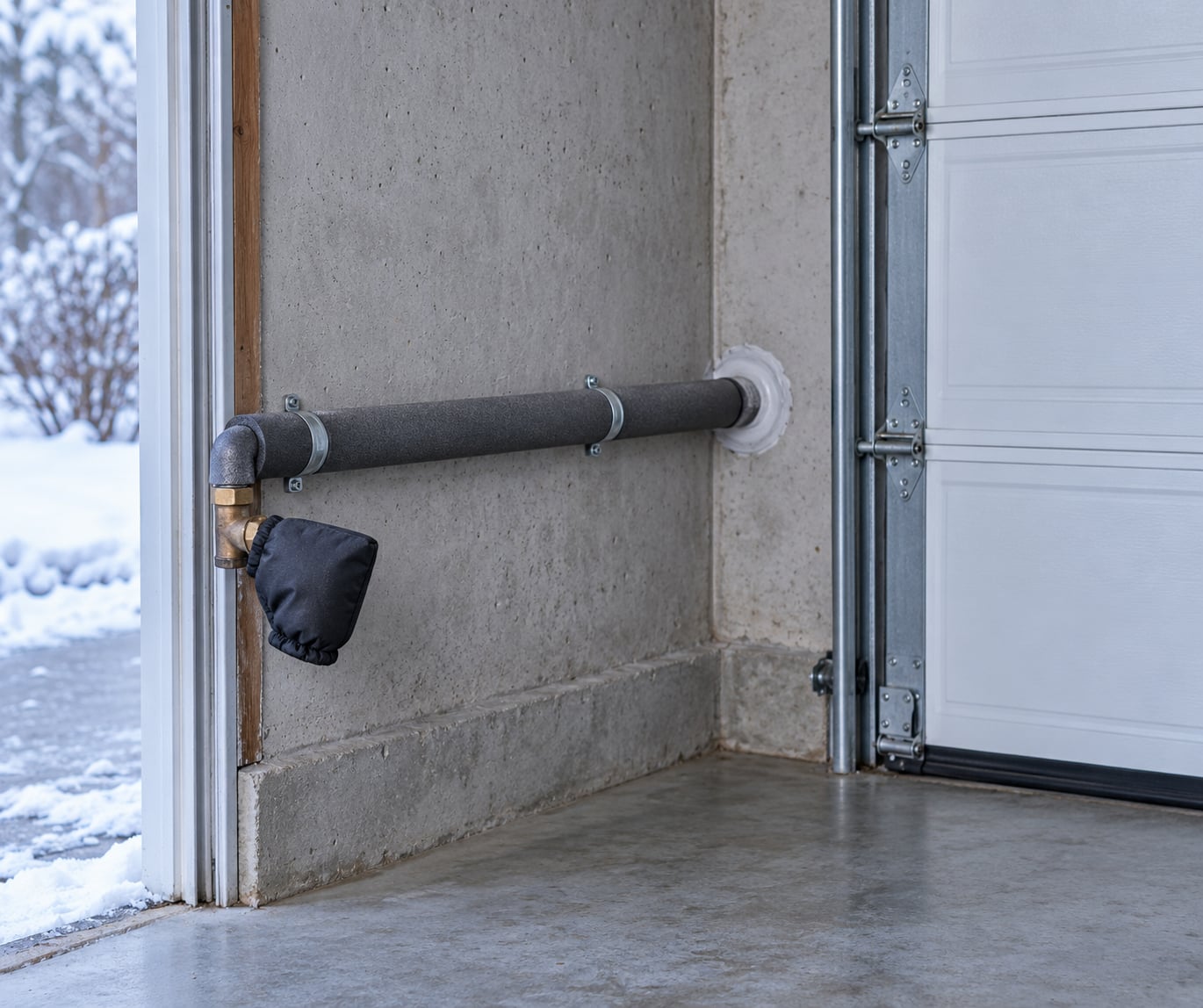
Insulation slows heat loss, and it works best when it is continuous along the whole cold run. Split foam sleeves are the default for good reason: cheap, no tools, and a decent resistance to a slow overnight freeze.
Four options cover nearly every garage, and they are not equal jobs:
- Split foam sleeve. Best for short and medium copper or PEX runs, garage sinks, and hose bibs. Easy to install, cut with a knife, tape the seam.
- Rubber elastomeric insulation. Best for long cold runs where durability and a cleanout path matter. Easy to moderate, needs sharp cutting.
- Fiberglass with a vapor barrier. Best for wall and ceiling cavities and long overhead runs. Moderate difficulty, and it needs a respirator and gloves.
- Newspaper and tape. A last-resort cover for a line you cannot sleeve. Easy, ugly, and short-term.
Wrap the pipe itself or the cavity on the warm side of the framing. Plumbing supply houses are split on this, and the safer version is to insulate the wall cavity rather than bury a pipe inside insulation where any condensation stays trapped against the metal.
Pay attention to the far end of a cold run. The first two feet off a water heater often get skipped, and so does the last foot before a hose bib. A line is only as warm as its coldest uncovered section.
Sealing matters as much as insulation. Add weatherstripping along the top and sides of the garage door, check the threshold, and seal every hole where a pipe, wire, or hose enters the wall. Do not block furnace or water heater vents or combustion air, and keep appliance clearances intact.
For a backflow preventer, an insulated cover is the easy route. A DIY insulated wood box works too, built with a 1-foot air gap on all sides and a removable lid so you can reach the valves.
Maintain Safe Heat During Cold Weather
The goal is not a warm garage. It is a garage where the pipes stay above freezing, which usually means holding the air near the pipes above freezing rather than heating the whole space to a comfortable temperature.
The safest ways to do that are passive. Keep the garage door closed, keep it sealed, and keep the home thermostat at 55°F or higher when you are away. Homeowners on r/homeowners say the same thing over and over: moving water is the most reliable protection there is, which is why a slow drip during a hard freeze buys real margin.
Two cautions on garage heat. First, never run an unvented propane or kerosene heater in an attached garage, and stay away from any improvised burning setup. Carbon monoxide moves into living space through the smallest cracks, and it has no smell you can count on. Second, do not use a halogen work lamp pressed directly against a pipe or insulation as a permanent fix. One Garage Journal owner did get a lamp clamped near a pipe to stop freezing, but that is a last-night emergency trick with a dry materials fire hanging off it, not a plan for the middle of winter.
If you want dependable active heat, the options rank like this:
- UL listed, self-regulating heat cable with a built-in thermostat is the most targeted option and the least expensive to run.
- A thermostat controlled electric baseboard heater protects the whole space and works well in a workshop, at the cost of a dedicated circuit.
- A garage-rated infrared bulb heater puts radiant heat where you aim it and is designed for damp, dusty spaces.
- Radiant floor heating mats raise the floor temperature and keep the air above it slightly warmer, which helps pipes running low or in a floor cavity.
- A portable fan-type heater heats air quickly and does nothing for a pipe in a wall cavity.
Heat Tape Safety Rules
Use only heat cable that is UL listed and rated for the application, with a built-in thermostat so it cycles instead of baking the pipe. Plug it into a GFCI protected outlet, and never energize it beyond the manufacturer’s limit, commonly around 150°F at the pipe surface. Do not wrap insulation tightly over unrated tape; heat tape is meant to transfer heat into the pipe, so a snug insulation sleeve can trap heat and dry out the cable jacket.
Self-regulating cable is the safer type, and it is fine to leave energized continuously on a cold-weather circuit. Plain two-wire or non-thermostat heat cable is a different story, and should be switched off when you no longer need it. If the power goes out, the tape protects nothing until the power returns, which is the argument for insulation as your first layer and the main shutoff as your last.
Drain Unused Garage Water Lines
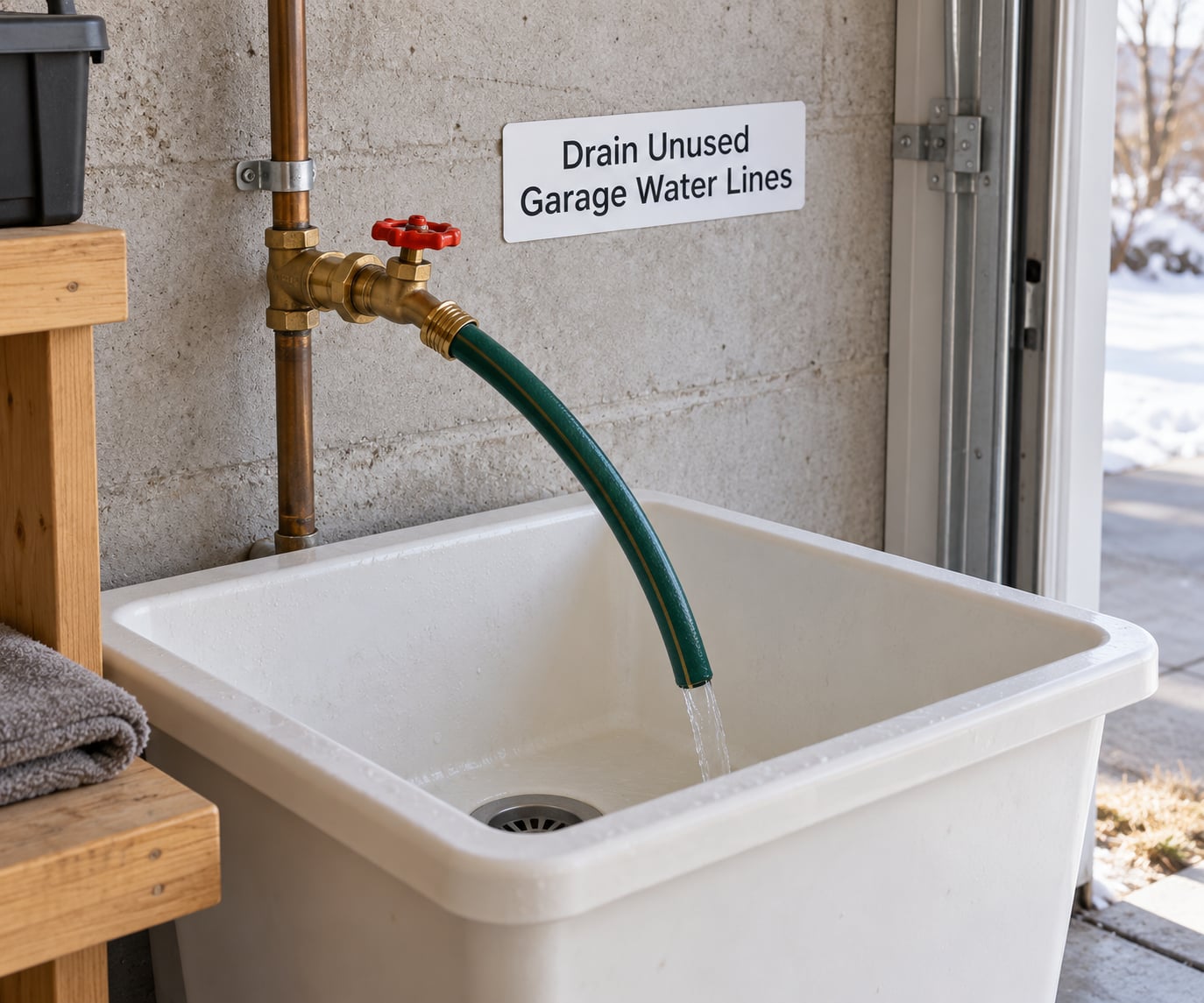
Draining is for lines that serve nothing during the winter. An outdoor hose bib on a wall with no interior fixtures behind it, a pool or irrigation line, a half-built bathroom, or a washing machine and sink you shut off at the breaker are all candidates. A supply line that stays in use through winter, including the pipe feeding the house from a garage, should not be drained.
When draining fits, the sequence matters:
- Turn off the supply feeding the branch, or the home’s main shutoff valve if you are unsure which valve it is.
- Open a faucet or fixture on that branch so air can move through as the water leaves.
- Connect a hose at the low point of the run and route it outside or into a drain.
- Open the drain valve on the branch and let it run clear. For lines that run through a wall cavity or under a slab, blow the branch out with an air compressor through the drain valve while the faucet stays open.
- Leave every faucet on the branch open, and leave each hose bib dripping or open a fraction so a negative pressure does not pull water back in.
- Disconnect the hose, close the drain valve, and record the date in a note somewhere you will find it in the spring.
Never put automotive antifreeze in a water line, and never put water in a line you intend to freeze solid. Both make the spring reconnection worse.
Know When to Act During a Cold Snap
Watch for reduced flow, water that runs slower than usual or only a trickle, frost or white bloom on the outside of the pipe, an odd chemical smell from a drain as ice seals off, and gurgling when you open a faucet. A frozen pipe does not always burst at first, but every freeze-thaw cycle weakens it.
Some frozen lines thaw on their own once the temperature climbs. If a pipe is still frozen and you want to speed it up, open cabinet doors, apply a warm damp cloth, and gently warm the section with a hair dryer on a cool setting. Do not use a torch or an open flame near fiberglass insulation, painted surfaces, or anything else in a garage that can burn.
If a pipe has already burst, stop the water first. Close the garage branch valve if there is one; if there is not, close the home’s main shutoff valve, which is usually on a basement wall, in a utility closet, or in a crawl space near where the water service enters. Open a faucet to relieve pressure, then shut off power to the affected area if water is near anything electrical. Call a plumber for anything you cannot dry out the same day.
Document what you find before cleaning up. Take photos of the break, the water spread and the affected materials, keep receipts for emergency service and drying equipment, and save the weather records. Coverage for a sudden pipe freeze varies by policy and by how well the home was maintained, and an insurer will ask whether the heat was running and whether you had taken reasonable steps.
Common Mistakes
A few mistakes come up again and again, and each one has a simple correction.
Leaving the gaps around pipe penetrations open. Insulating a pipe and then blowing cold air around it all night largely cancels the insulation. Seal every hole where a pipe enters a wall, and add weatherstripping on the door jambs.
Using a combustion heater in an attached garage. An unvented propane or kerosene heater can send carbon monoxide into the living space above. Use only electric heat rated for garages, with a garage-rated space heater or baseboard on a dedicated circuit.
Wrapping heat tape too tight under insulation. If the tape is rated and thermostatically controlled, insulation around the pipe works fine. If the tape is unrated, or you are not sure, do not cover it.
Forgetting the outdoor hose bibs. Hose bibs are the most common freeze point in the whole system and they see the most cold. Disconnect hoses, cover or insulate each bib, and close the interior stop valve if there is one.
Assuming an unheated garage is safe because the house is warm. A 55°F house setting does nothing for a garage pipe. Heat moves through the floor and the framing, and the garage floor is often the coldest surface in the building.
Covering only the easy middle of a run. The first two feet after the shutoff and the last foot before an exterior wall are where freeze damage starts. Check the ends.
Three reminders worth keeping on the fridge. The garage door stays closed all winter, not just when it is raining. The shutoff locations live in your phone, not in your head. And a slow drip on the line most exposed to wind buys more freeze margin than any single product you can buy.
Frequently Asked Questions
At what temperature do garage pipes freeze?
Water freezes at 32°F, and an exposed pipe in an unheated garage can drop below that while the surrounding air still reads in the forties. Cold wind at a garage door or an exterior wall pulls heat out of the metal far faster than still air does. Treat any night when the garage drops near the upper thirties as a risk, and protect pipes before the first real cold snap rather than during it.
Will heat tape prevent pipes from freezing in a garage?
Yes, if it is the right type and installed correctly. Use UL listed self-regulating cable with a built-in thermostat, run it on a GFCI protected outlet, and keep it within the manufacturer’s temperature limit, commonly 150°F at the pipe surface. Heat tape protects the pipe it touches, so runs inside a wall cavity or floor need help you cannot see.
Can I shut off the water in my garage to stop pipes freezing?
Yes, for lines you do not need through winter. Close the branch valve, open a fixture on that branch, drain it, and leave faucets open so air can move and water cannot be drawn back in. Do not drain the line that supplies the house. Shutting off and draining is the only method that still works during a power outage.
Is it okay to leave heat tape plugged in all winter?
Self-regulating cable with a built-in thermostat is designed for continuous cold-weather use, so leaving it energized through the season is normal. Plain two-wire cable or anything without a thermostat should be switched off when it is no longer needed. Whatever the type, run it on a GFCI protected outlet and inspect it before each winter.
Will frozen pipes thaw on their own?
Often they will once the temperature rises, which is why a freeze often turns into a burst during the next warm spell. To speed it up, open the surrounding cabinet doors and apply a warm damp cloth, or use a hair dryer on a cool setting. Never use a torch or open flame in a garage, and check the pipe for splits once it is thawed.
Does homeowners insurance cover frozen pipes?
Most policies cover a sudden pipe freeze, but coverage for the resulting water damage is conditional and varies. Insurers want evidence that the home was reasonably maintained, that heat was left on when you were away, and that the damage was reported promptly. Photograph the break and any spread of water, keep receipts, and ask your agent about your specific policy wording before you need it.
Do the first two things this week: close the garage door for good and wrap every exposed supply line you can see. Then set a calendar reminder a few weeks before your first freeze to seal penetrations, cover the hose bibs, and drain what you will not use. That is how to prevent frozen pipes in a garage without spending a weekend of a cold Saturday doing damage control.