If your dog turns away from the bowl, the fix is usually easier than it sounds. Change the water, change the bowl, move it somewhere quiet, and put real moisture into meals. Nine steps covers it, and most dogs respond within a few days.
Most dogs are not being difficult. They are responding to taste, temperature, bowl shape, and location, and any of those can be changed. This guide covers what to try, how to check whether it worked, and the point where a change in drinking stops being a household problem and becomes a veterinary one.
Table of Contents
- What You Need
- How to Make a Dog Drink More Water Step by Step
- 1. Check for warning signs before changing your dog’s routine
- 2. Add moisture to your dog’s meals
- 3. How to make a dog drink more water with wet food
- 4. Place fresh water where your dog already spends time
- 5. Try a different bowl or water format
- 6. Refresh water often and keep it appealing
- 7. Link drinking to familiar routines
- 8. Track intake and urine habits for a few days
- 9. Reassess and contact your vet if the change continues
- Common Mistakes
- Safe Tips for Supporting Your Dog’s Hydration
- Frequently Asked Questions
- Why is my dog suddenly drinking more water?
- How much water should a dog drink each day?
- Is adding water to kibble safe for dogs?
- Should I give my dog a flavored water or electrolyte drink?
- How can I tell if my dog is dehydrated?
- When should I call a vet about my dog’s water intake?
- What to Do First
What You Need
Nothing here is complicated, and none of it needs a prescription. Gather the basics before you start changing things so you can change one item at a time and actually notice what your dog thinks of it.
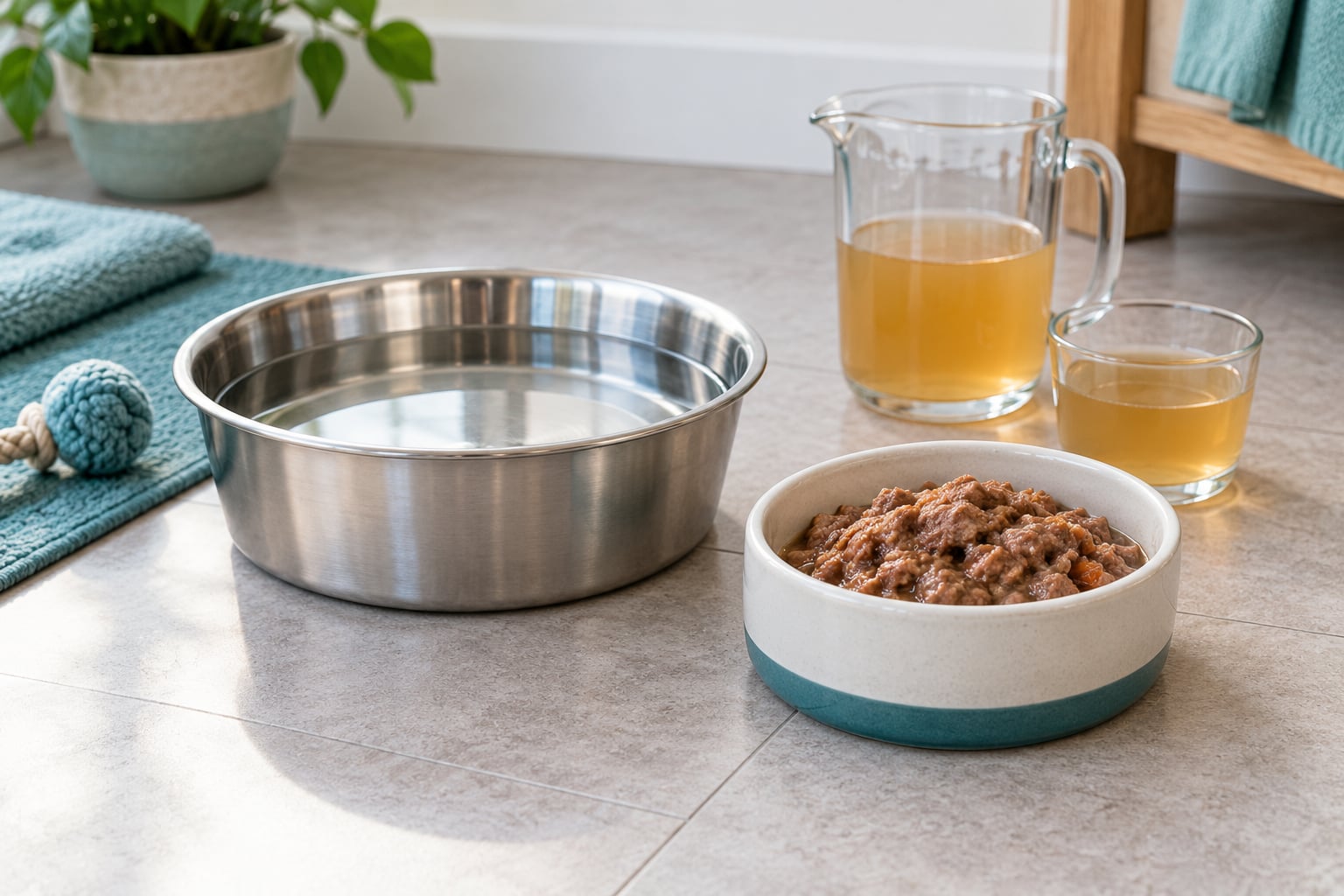
- A complete and balanced wet food, or a wet-food topper your vet already approves for your dog’s diet.
- Low-sodium chicken broth, or the water from a can of plain tuna packed in water with no added salt.
- Fresh cool water and a wide, heavy bowl in stainless steel or ceramic. Wide matters, because whiskers touching the sides make many dogs drink less.
- A kitchen scale or measuring cup, so you can log actual intake instead of guessing.
- Current veterinary guidance for your dog’s age, weight, health conditions, diet, and any medications, especially if your dog is on kidney, heart, or liver support.
Keep your dog’s current food, bowls, and schedule steady for the first few days if you can. You want to change one thing at a time, or you will not know what worked.
How to Make a Dog Drink More Water Step by Step
1. Check for warning signs before changing your dog’s routine
Before you swap bowls, look at your dog. Drinking more than usual alongside very pale or dry gums, lethargy, vomiting, diarrhea, dry nose, sunken eyes, or less urine than normal is a signal, not a behavior problem.
Call your vet the same day if your dog cannot keep water down, has not urinated since morning, seems weak or disoriented, or will not eat. Do not try to fix those with a different bowl.
The other side of the coin matters too. A dog that suddenly empties the bowl several times a day and is asking for more may have polydipsia, which can be linked to diabetes, kidney disease, or a urinary tract infection. Never restrict water to test that theory. If intake jumps, book an appointment and mention the change.
2. Add moisture to your dog’s meals
The easiest water a dog will drink is the water in the food bowl. A tablespoon or two of warm water mixed into kibble softens it and adds volume without changing the recipe.
Introduce it gradually over a few meals, especially for a dog with a sensitive stomach. Skip seasoned broth, bouillon cubes, onion, garlic, and anything salty enough that you would not eat it yourself.
Owners on pet forums often ask whether the broth and wet food they add still counts toward the daily total. It does. Moisture from food, broth, tuna water, and ice all count.
3. How to make a dog drink more water with wet food
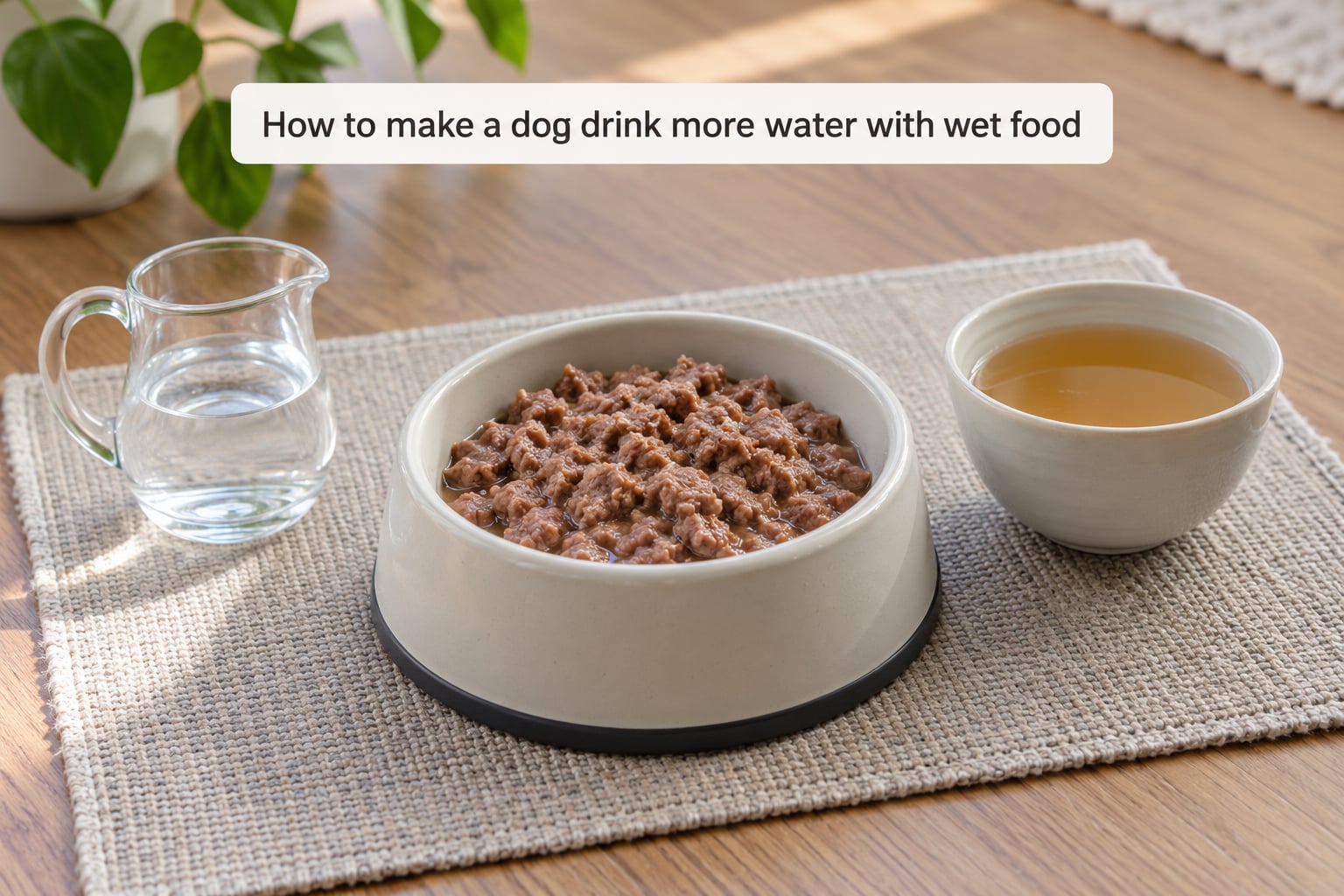
Wet food is the strongest single change you can make, because a full meal can carry 70 to 80 percent water. Many owners see intake jump within a day or two of switching.
Use a complete and balanced wet food, served at the same time each day so the routine feels normal. Serve a portion, then watch what happens over the next hour or so: does your dog finish the meal, drink from the bowl, and settle normally afterward?
If your dog eats wet food happily but still seems thirsty, add a small amount of water to the meal. Keep portions balanced so the extra water does not replace the nutrition your dog needs.
4. Place fresh water where your dog already spends time
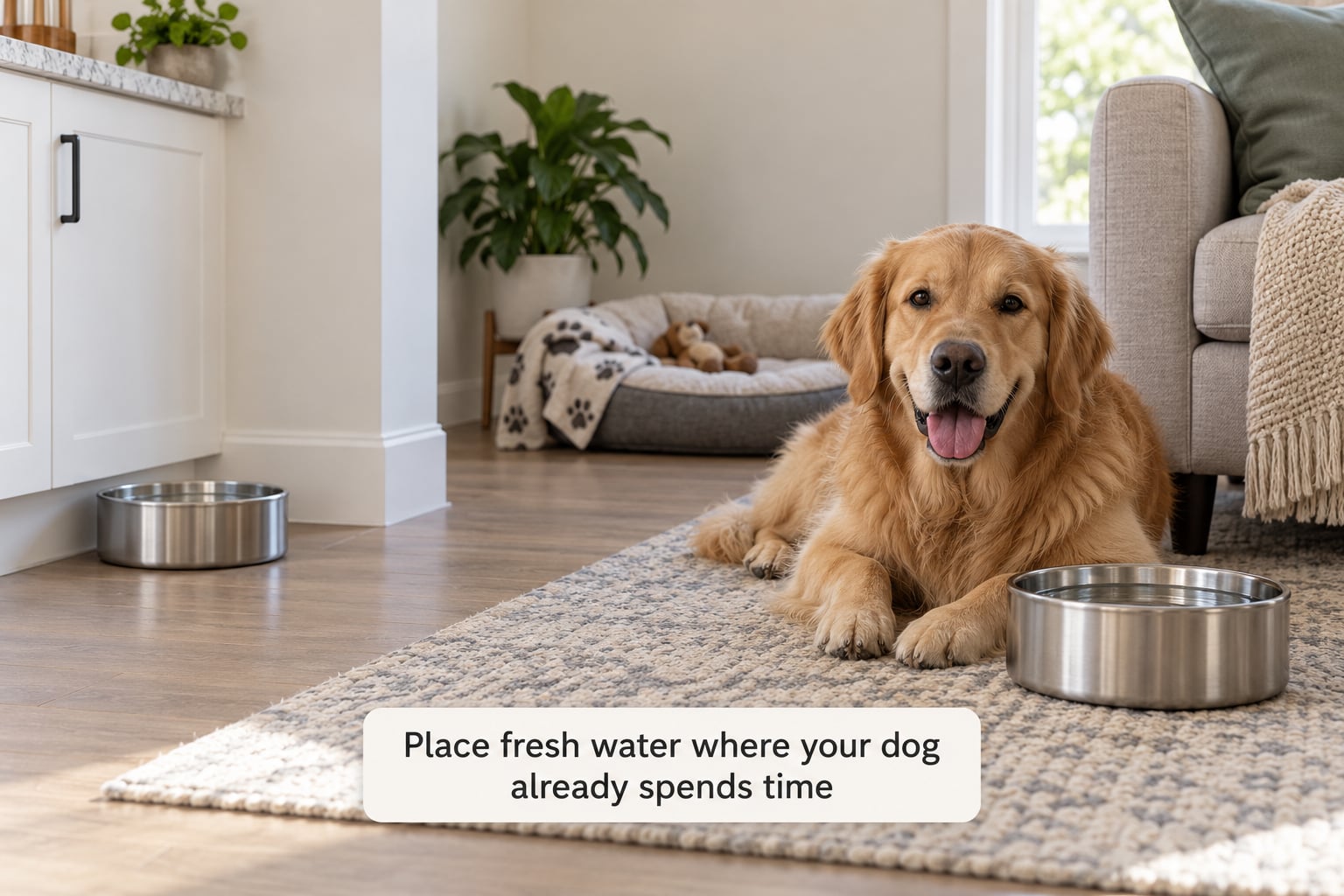
Dogs drink where they feel safe. Put a bowl near where your dog already lies, sits, or naps, not tucked in a busy corner near the washing machine or the back door.
More than one bowl helps. In a house with two dogs, or a dog that spends part of the day outside, two or three stations mean drinking never requires a journey or a confrontation.
Test placement by watching, not by asking. If the bowl is full and untouched at the end of the day, move it. A spot that never gets used is data.
5. Try a different bowl or water format
Preferences vary dog by dog, so treat this as an experiment rather than a rule. A wide, shallow bowl that sits flat on the floor suits whisker-sensitive dogs better than a narrow one. Stainless steel and ceramic avoid the scent plastic holds onto.
Running water is the other common thread. Owners on Reddit forums often report dogs who ignore a bowl but happily drink from a garden tap, a hose, or a puddle. A pet fountain tests that theory without you having to leave the house running.
Give any change at least a couple of days. Dogs form opinions fast and unlearn them slowly.
6. Refresh water often and keep it appealing
Wash bowls daily with dish soap and rinse well. Change the water at least once a day, and twice a day in warm conditions or after a walk in the heat.
Some dogs avoid water that smells of chlorine. If yours does, filtered water in the same bowl often solves it on its own. Skip ice cubes for most dogs, since cold water is not more appealing to everyone.
Keep the bowl away from cleaning sprays, litter boxes, and food waste. A faint smell from the next room can be enough.
7. Link drinking to familiar routines
Timing beats reminders. Put water out when your dog wakes, right before a walk, immediately after one, and with meals. Dogs respond to routines rather than to instructions.
Do not repeat a drink command at the bowl. Owners on dog training forums describe dogs that stop drinking once drinking becomes a task with a cue attached to it.
Offer water during quiet play sessions too. In heat, small amounts every 15 to 20 minutes during a long outing do more good than one big bowl at the end.
8. Track intake and urine habits for a few days
This is where most guides stop, and it is the part that actually tells you whether your changes worked. Weigh the bowl with water in it, then weigh it again when you change the water. The difference is intake over that stretch, in ounces.
Keep a simple 24-hour log: bowl refills, wet food servings, how often the dog urinates, appetite, energy, stool, and any vomiting. Compare it to what your dog’s normal week looks like rather than to a number on a chart.
Photo records help too. A photo of the bowl at the same time each day makes changes easier to spot than memory does.
9. Reassess and contact your vet if the change continues
Modest routine changes often take several days to show up in a log. Give it a week, then look at your numbers.
Call your vet if thirst drops further, gums stay dry or tacky, the skin tent test still shows a delay, or appetite and energy change alongside drinking. Persistent increased thirst, reduced drinking, or dehydration signs need an examination.
Ask for the weight and body condition score while you are there. A few pounds changes the water target quickly.
Common Mistakes
Most of these come from good intentions. Each one has a straightforward fix.
- Forcing water with a syringe or a squeeze bottle. Water forced into the mouth can be inhaled into the lungs. Syringe feeding belongs to a veterinarian who has examined the dog and shown you how.
- Using human electrolyte or sports drinks. Many are high in sugar and sodium and are not formulated for dogs. Ask your vet first.
- Adding salt, bouillon cubes, or a flavored drink to make water interesting. The salt load is hard on kidneys, and some seasonings are toxic.
- Giving human medication. Ibuprofen, acetaminophen, and similar drugs are dangerous for dogs. There is no safe human dose to reason about here.
- Switching food overnight. Sudden changes cause stomach upset, which makes hydration worse. Move over a week or more.
- Using a dry nose as a hydration test. A dry nose means very little on its own. Gum color and skin elasticity tell you more.
- Writing off heat exposure or illness. A dog that pants heavily after exercise has lost water through saliva, and panting alone does not replace it.
- Removing bowls to stop the mess. Fewer bowls means less water. Wide bowls and a mat solve mess better.
Safe Tips for Supporting Your Dog’s Hydration
Warm weather. Carry water on walks, offer it before and after, and give small amounts often rather than one long drink. Watch for heavy panting, drooling, weakness, and confusion, and move to shade and air conditioning immediately.
Puppies. Offer water by moistening your finger and letting them lick it, and pour a little over food. Puppy food is moist, so count that toward the total too.
Kibble-fed dogs. Dry food leaves the dog to drink everything from a bowl, which is exactly what some dogs will not do. Adding water to kibble or moving part of the diet to wet food bridges the gap.
Senior dogs. Thirst drive often drops with age. Add moisture to meals, put bowls where they already spend time, and watch for reduced urination or confusion.
Multiple dogs. One shared bowl is a negotiation. Two stations remove the reason not to drink.
Travel, boating, and the beach. Bring your dog’s usual bowl so the water smells familiar, keep rest stops frequent, and never let a dog drink seawater or stagnant pond water. Saltwater causes vomiting and diarrhea, which make dehydration worse.
Anxious or noise-sensitive dogs. A fountain covers sound, because moving water hides the noise of the house. A second bowl in a different room gives an exit route.
Frequently Asked Questions
Why is my dog suddenly drinking more water?
A sudden jump in thirst can come from heat, exercise, a diet change, or stress, but it can also point to diabetes, kidney disease, Cushing’s disease, or a urinary tract infection. Watch for very pale or tacky gums, more urine than usual, weight change, or appetite changes. Never restrict water to see whether it changes. Book a vet appointment and describe the change in drinking, urination, and eating.
How much water should a dog drink each day?
A healthy adult dog generally needs about 1 ounce of water per pound of body weight per day, which is roughly 50 to 60 milliliters per kilogram. That is a baseline, not a target to hit. Dogs exercising, living in hot weather, or eating dry kibble need more, while dogs on wet food get much of their fluid from the meal. Check the label on the food for what it provides.
Is adding water to kibble safe for dogs?
Yes, for most dogs. A tablespoon or two of warm water mixed into kibble softens it and adds moisture without changing the food’s balance. Introduce it over a few meals rather than all at once so the stomach can adjust. Dogs on prescription or renal diets should follow your vet’s instructions instead, since water content changes how those diets are meant to work.
Should I give my dog a flavored water or electrolyte drink?
Plain low-sodium chicken broth or the water from canned tuna packed in no salt are both safe ways to make water more interesting, and a splash of either in the food works well. Human electrolyte drinks and sports drinks are usually too sugary or salty, and anything sweetened with xylitol is dangerous. Ask your vet before giving any prepared electrolyte product.
How can I tell if my dog is dehydrated?
Gum color is the quickest check: healthy gums are pink and moist, while dehydration often shows pale, white, or tacky gums. Pinch the skin gently at the back of the neck and lift it. If it snaps back within a second, that is a good sign. You may also notice sunken eyes, lethargy, reduced urination, or a nose that is dry and crusty. Any of these warrant a vet call.
When should I call a vet about my dog’s water intake?
Call the same day if your dog cannot keep water down, has not urinated since morning, seems weak, disoriented, or unusually lethargic, or is refusing food as well as water. For changes that are less urgent but persistent, such as drinking noticeably more or less than usual for more than a day or two, book an appointment rather than waiting. Cats and small dogs can dehydrate faster than large adults.
What to Do First
Start by establishing a baseline. Weigh the water bowl, note how often your dog urinates today, and look at the gums. That snapshot is what you will compare against later, and it takes two minutes.
Then make three changes this week. Put fresh cool water in a wide bowl somewhere quiet, add moisture to one meal a day, and offer water before and after walks.
Log intake and urine habits for the next few days. If the numbers move in the right direction and your dog seems normal, keep going. If drinking or eating changes sharply in either direction, or you see dry gums, sunken eyes, or weakness, call your vet the same day rather than adjusting another bowl. Learning how to make a dog drink more water is useful; knowing when to stop tweaking and get a dog examined is more useful.