Last updated October 2026.
Most people asking how often should you replace cat litter want a single number, so here it is: scoop clumps and solid waste out daily, then expect a full dump, wash and refill roughly every two to four weeks with clumping clay litter, or every one to two weeks with non-clumping litter.
That range only holds if the scooping actually happens. Litter type, the number of cats sharing the box, how large the box is and how much your particular cat pees all move the schedule in one direction or the other, and the size of your apartment moves it more than most people expect.
Below is the full routine broken into the three separate jobs people tend to blur together, a table of intervals by litter type, the signs that tell you the litter is spent before the calendar says so, and a no-mess way to do the change.
Table of Contents
- How Often Should You Replace Cat Litter? A Simple Guide
- Scooping and Full Replacement Are Different Tasks
- Scooping: the daily job
- Topping up: the weekly job
- Full replacement: the two-to-four-week job
- How Litter Type Changes the Schedule
- How often should you replace cat litter by type?
- Clumping clay
- Non-clumping clay and pellets
- Silica crystal and plant-based litters
- Signs That Cat Litter Needs Replacing
- What you can smell
- What you can see
- What your cat does
- How Many Cats, Box Size, and Habits Affect Timing
- How to Change Cat Litter Without Making a Mess
- Which cleaners are safe
- Common Litter-Replacement Mistakes
- Overfilling the box
- Switching litter types in one go
- Relying on scented litter to cover odor
- Only topping up forever
- Cleaning with the wrong products
- Ignoring the box itself
- Frequently Asked Questions
- Can you mix old and new cat litter?
- What happens if you don’t replace cat litter?
- Do cats get upset when you change their litter?
- Is it okay to scoop the litter box every other day?
- What kills ammonia smell in a litter box?
- Is the smell of ammonia toxic to cats?
- Conclusion
How Often Should You Replace Cat Litter? A Simple Guide
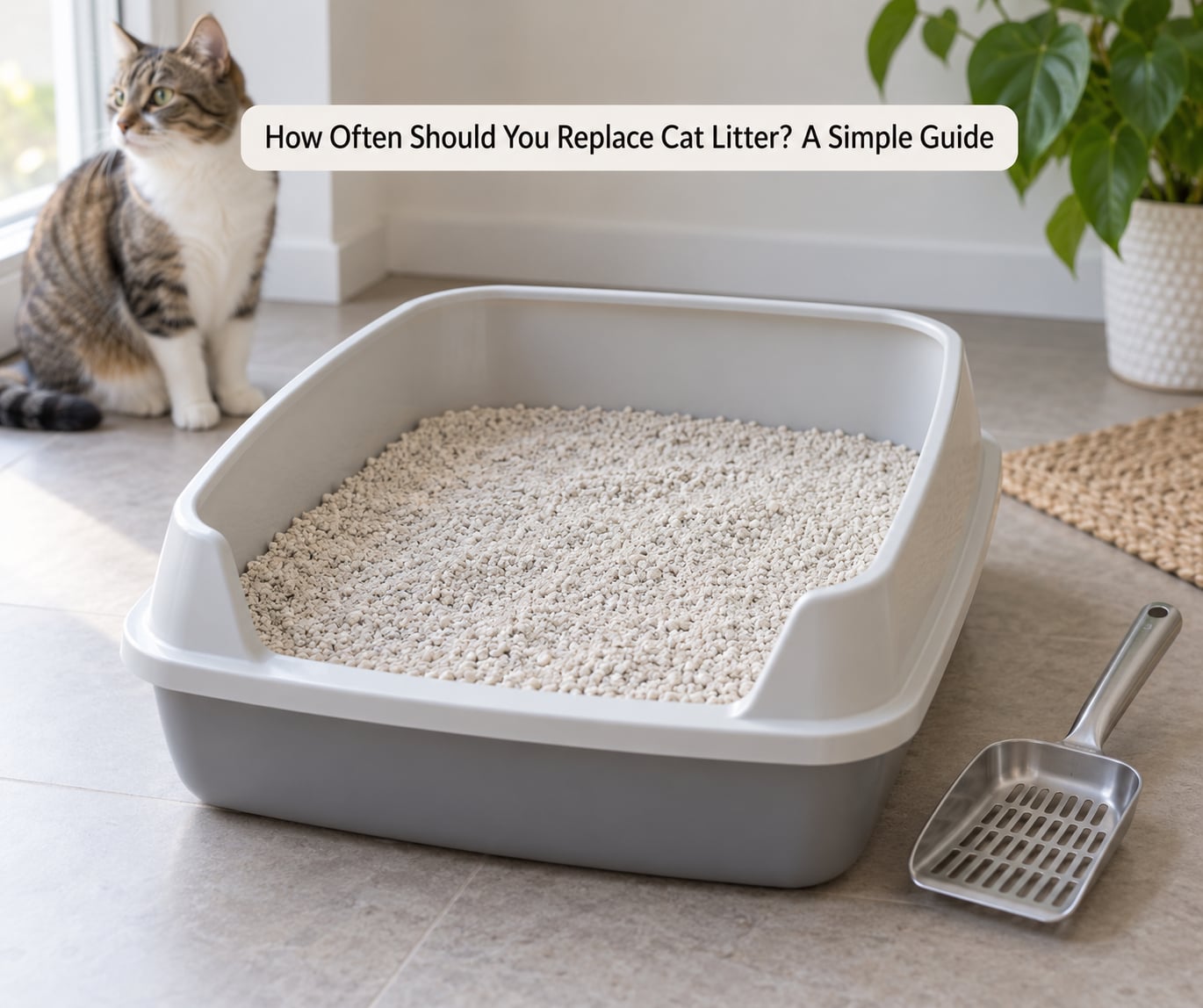
The quick answer, in five lines:
- Scoop clumps and feces once a day, ideally twice in a multi-cat home.
- Top up with fresh litter whenever the surface drops below the depth your cat is used to.
- Fully replace clumping clay litter every two to four weeks.
- Fully replace non-clumping or pellet litter every one to two weeks, sooner if more than one cat uses the box.
- Replace early, whatever the schedule says, the moment you hit the signs listed further down.
You will also see weekly and monthly advice quoted just as confidently. Both are right, just not about the same task: weekly usually means dumping the litter and washing the tray, monthly usually means how long a bag of clumping litter lasts before the whole box is emptied. Owners on cat forums describe the same split, with most scooping every two or three days, topping up, and doing a full change about once a month.
Manufacturers print an interval on the bag, often something like 21 days, and that is a reasonable starting point for a single-cat household on clumping clay. Treat it as a prompt to look at the box, not a rule to obey past the point where the box is dirty or smells.
Scooping and Full Replacement Are Different Tasks
Almost all the confusion around this question comes from using one word, change, for three separate jobs. Once they are pulled apart, the schedule makes sense on its own.
Scooping: the daily job
Scooping means removing urine clumps and solid waste while leaving the clean litter behind. It is the single thing that keeps a box usable between full replacements, and it is not optional.
Clumps that sit for days dry out, crumble, and get pressed into the base of the tray, where liquid keeps soaking into the litter underneath. That soaked layer is the reason a box can re-smell within a day or two of a partial clean. Every-other-day scooping is the absolute floor for a single indoor cat, and it works best if you also skim the surface for loose litter and droppings.
Topping up: the weekly job
Topping up means adding a few inches of fresh litter on top and mixing it through. Do this when the depth drops enough that your cat starts kicking litter out of the box or perching on the rim, which usually happens within a week or two of a full change.
A handy test is to move your hand through the litter. If your knuckles are dragging on the bottom of the tray, it needs more. Most clumping clay boxes are comfortable at two to four inches, and non-clumping litter at one and a half to three inches.
Full replacement: the two-to-four-week job
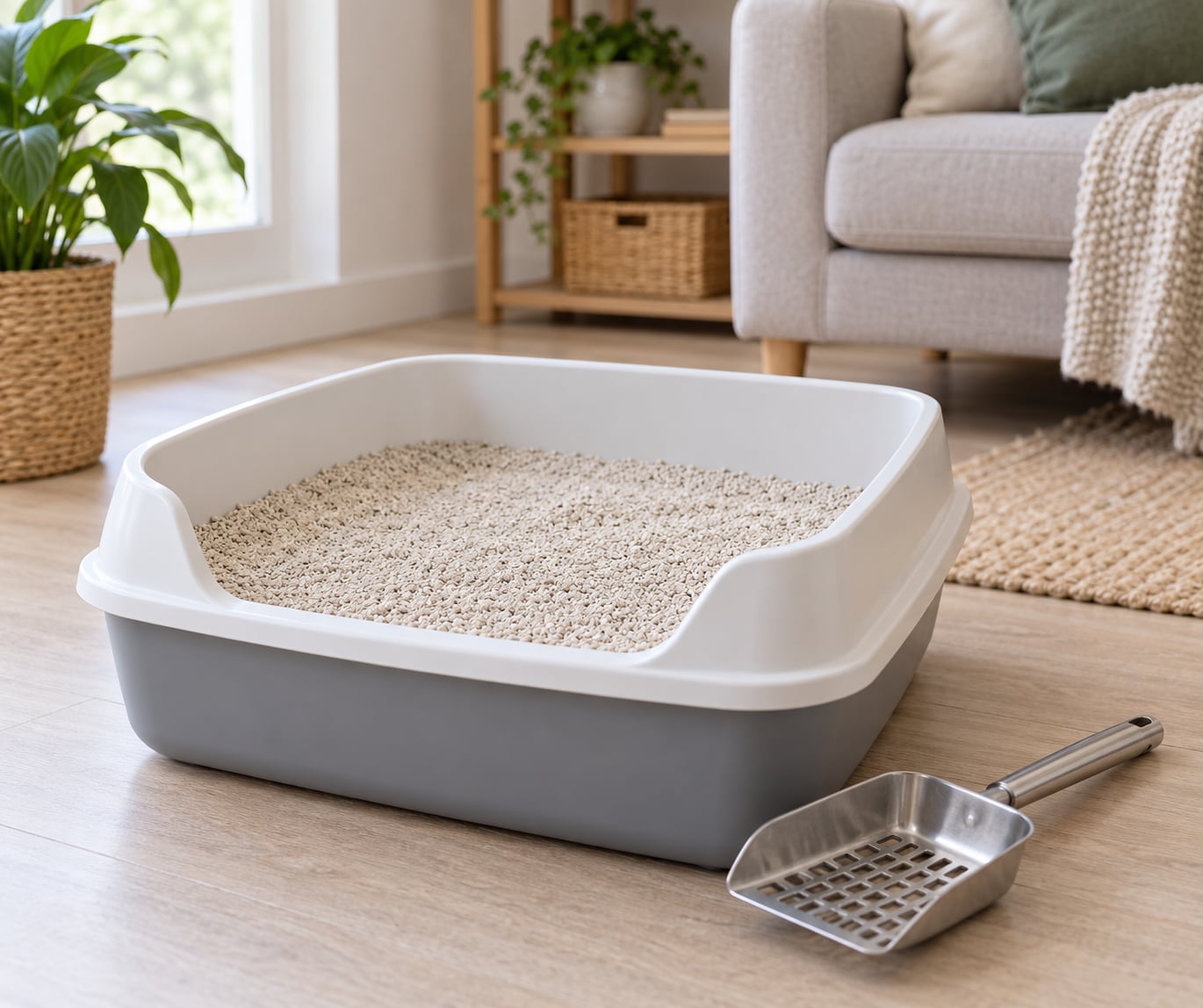
A full replacement is the whole cycle: bag and bin the old litter, wash or rinse the tray, let it dry, and refill. This is the only step that removes the saturated base layer that scooping can no longer reach.
Unscooped litter is not a situation to leave indefinitely. A box can go a long time without a full change if you scoop every day, but a box that is never scooped needs the full replacement much sooner, because urine keeps breaking down in the tray.
How Litter Type Changes the Schedule
Litter type matters more than any other variable, because it decides whether urine leaves the box with the clump or stays in it.
How often should you replace cat litter by type?
| Litter type | Full replacement interval | Top-up interval | Minimum depth |
|---|---|---|---|
| Clumping clay (sodium bentonite) | Every 2 to 4 weeks | Weekly | 2 to 4 inches |
| Non-clumping clay | Every 1 to 2 weeks | Twice weekly | 1.5 to 3 inches |
| Wood or paper pellets | Every 1 to 2 weeks | Twice weekly | 2 to 3 inches |
| Silica gel crystal | Every 2 to 4 weeks, plus a weekly sift | As crystal is lost, usually every 1 to 2 weeks | Follow the box fill line, usually 1.5 to 2 inches |
| Plant-based or corn-based | Every 2 to 3 weeks | Weekly | 2 to 3 inches |
Clumping clay
Clumping clay is the reason most multi-cat households can get away with a monthly change. The bentonite binds urine into hard clumps you lift out whole, so the surrounding litter stays relatively dry. Scoop daily and a full change every two to four weeks works well for one cat.
Non-clumping clay and pellets
Non-clumping litter does not form removable clumps. Urine spreads through the whole bed, and the tray saturates far faster than most owners expect, often within a couple of days. Owners report soaked litter at one and a half to two days, so plan on a full change every one to two weeks and a top-up twice a week.
Wood and paper pellets behave similarly, except pellets can be sifted and reused, which stretches the material considerably. A generous sift every few days keeps the tray usable for two to three weeks before a full change.
Silica crystal and plant-based litters
Silica gel crystal absorbs urine into the crystals themselves rather than forming clumps, so nothing can be scooped. You sift out solid waste, and replace the crystals once they stop absorbing, usually every two to four weeks in a single-cat home. A cat that dislikes digging often prefers crystal, which is worth keeping in mind if clumping litter keeps ending up on the kitchen floor.
Plant-based and corn-based litters clump but tend to be lighter and dustier, and they break down into fine particles that can compact. Plan on two to three weeks, and keep an eye on dust, since compacted litter at the base of the tray is what causes the ammonia smell most owners complain about.
Whichever type you use, the label on the bag and your cat’s actual behavior outweigh any table, including this one. A cat that uses the box diligently and a large covered box can stretch the interval; a cat that soils the box edge or has larger stools will shorten it fast.
Signs That Cat Litter Needs Replacing
Smell is the last sign to show up, not the first. By the time you notice ammonia from the doorway, the litter has usually been saturated for a while. Here is what to check instead, in the order that catches problems earliest.
What you can smell
A sharp, acrid smell in the tray or, worse, in the room with the door shut. That is ammonia from urine breaking down rather than a scented-litter cover-up. Also worth noting: ammonia does not remove urine odor, it is part of what creates it, so an ammonia-based cleaner makes the problem worse rather than solving it.
What you can see
- A damp, darkened layer at the bottom of the tray that stays wet after you scoop the top.
- Hardened, glued-together litter that has to be broken up rather than scooped.
- A visible film of fine dust on the surface after you pour fresh litter in.
- More litter tracked outside the box than usual, often meaning the cat is kicking out at a dirty base.
- Litter that has faded or yellowed where urine has been pooling.
- Residue or damp paw prints around the rim and outside the box.
What your cat does
Sitting beside the box rather than in it, or perching on the edge with its back feet outside. Circling without going in is another one. Cats that avoid a box they once used are usually telling you the box is dirty, the litter changed in a way they dislike, or the location has become stressful.
Important caveat: box avoidance is not automatically a litter problem. It can also be stress, a new cat in the home, a moved box, or illness, and urinary problems in particular need a veterinarian rather than a fresh bag of litter. Persistent avoidance, straining, or accidents outside the box mean a vet call, not a cleaning schedule change.
How Many Cats, Box Size, and Habits Affect Timing
Two cats in one box produce roughly twice the waste, and the box is bigger than it needs to be for either of them alone. These are the adjustments that change the numbers most often in real homes.
| Household | Scoop frequency | Full replacement, clumping clay |
|---|---|---|
| One cat, large covered box, scooped daily | Once or twice daily | Every 3 to 4 weeks |
| One cat, small open tray | Twice daily | Every 2 weeks |
| Two to three cats | Twice daily | Every 1 to 2 weeks |
| Four or more cats | Two to three times daily | Every 7 to 10 days, more often if litter is not clumping well |
Box count follows the cats plus one rule: one more box than you have cats, spread out rather than lined up together. A rarely used second box in a home with one cat can genuinely sit untouched for a month without smelling, which is another reason multi-cat households should not try to run a single shared box on a monthly schedule.
Litter depth changes how fast a box saturates, too. Too little litter and clumps break apart, urine reaches the tray, and the base stays wet even after scooping. Too much and your cat may perch instead of sitting, which puts urine on the tray floor and ruins the base faster.
Individual habits matter as well. A cat on a urinary or kidney diet may produce more urine than expected, and kittens and senior cats can be less consistent. All of them shorten the interval. In a small apartment where the box shares a room with your bed, treat every interval in this guide as the maximum rather than the target.
Owners of automatic self-cleaning boxes fall into two camps. The diligent ones empty the waste drawer every day or two and deep clean monthly. The rest let the drawer fill for a week, and the drum then sits on damp, compacted litter. The mechanism does the rotating, not the cleaning.
How to Change Cat Litter Without Making a Mess
The full change takes about ten minutes and is much easier if you do it the same way every time.
- Clear the area. Put the box in the bath or shower, or lay down an old towel or sheet, and have a heavy-duty bag or a scoop-and-bag tool ready.
- Remove the litter. Scoop out clumps and feces first, then lift the remaining litter out in two or three loads rather than one. Never flush clumps or litter down a toilet.
- Wash the tray. Rinse with hot water and scrub with a mild, unscented dish soap. Rinse thoroughly and let the tray dry completely, which matters more for plastic or resin boxes that trap moisture.
- Deodorize the base. A thin layer of baking soda on the clean tray absorbs odor without the fumes of a chemical deodorizer. Leave it there; it disappears under the fresh litter.
- Refill to the right depth. Two to four inches for clumping clay, one and a half to three inches for non-clumping, pellets per the bag.
- Put the box back where it was. A quiet, accessible spot, ideally with two escape routes, and away from loud appliances. Moving the box during cleaning is a common reason cats start avoiding it.
Which cleaners are safe
Mild unscented dish soap and hot water are the consensus choice, and they work. A rinse with a diluted enzymatic cleaner made for pet messes also helps on stubborn urine scale.
Avoid ammonia, bleach, and any essential-oil or citrus-based product inside the box. Ammonia is a respiratory irritant for cats and adds to the very smell you are trying to remove. Bleach leaves a residue cats dislike, and never mix bleach with ammonia or with acidic cleaners, because the combination gives off toxic gas. Plug-in air fresheners and heavy scent are worth avoiding too, since many cats simply refuse a box that smells like a candle.
Common Litter-Replacement Mistakes
Overfilling the box
More litter feels cleaner but is not. Overfilled litter gets kicked out, tracked around the room, and the clumps break before they can be lifted, so more ends up soaked. Keep it within the depth range above.
Switching litter types in one go
Changing brand or type overnight is the single most common reason a cat stops using the box right after you cleaned it. The fix is a gradual transition: mix the new litter in with the old and increase the new portion over seven to ten days, or keep the old box and the old litter in place alongside the new one so the cat has a choice.
Relying on scented litter to cover odor
Perfume does not remove urine odor and can mask it while the base keeps souring. Unscented, low-dust litter plus daily scooping and baking soda handles the smell at the source. If your cat is sensitive to smells, unscented is also simply easier for them to accept.
Only topping up forever
Adding fresh litter on top of a saturated base hides the problem for a week and then makes it worse, because the wet layer underneath reodorsises. If a scoop of the litter under the surface comes up damp, skip the top-up and do the full change.
Cleaning with the wrong products
Strong bleach, ammonia, and fragranced cleaners are the common mistakes. Use warm water and a mild unscented soap, and never combine a bleach cleaner with an ammonia or vinegar product.
Ignoring the box itself
Litter maintenance and box condition are different jobs. A scratched, cracked or plastic-lined tray that holds moisture will reodourise within days of a perfect litter change. Boxes generally last one to two years, and a permanently damp base is usually a sign to replace the tray rather than keep scrubbing it.
Frequently Asked Questions
Can you mix old and new cat litter?
You can, but only for a short transition and only with litter of the same type. Mixing old and new lets you avoid dumping the whole tray, yet clumps and soaked base litter do not disappear, so it is not a way to extend the life of a dirty box by weeks. For a genuine change of type, replace the litter completely and transition over seven to ten days instead.
What happens if you don’t replace cat litter?
Urine left in litter keeps breaking down into ammonia, which drives cats away from the box and into the house. The base layer becomes saturated and compacted, so scooping stops working, dust increases, and odor spreads into the room. Cats that soil outside the box often do it after a full change they do not like, or because the box was too dirty to begin with. It is a solvable hygiene problem, not a training problem.
Do cats get upset when you change their litter?
Some do, especially right after a full change. Cats rely on scent, so a box that has been washed and refilled with a different litter can read as unfamiliar. Transition gradually by mixing new litter into the old over seven to ten days, keep the box in the same spot, and make sure the depth matches what your cat is used to. Adding a second box while the old box is still stocked gives you a fallback.
Is it okay to scoop the litter box every other day?
Every other day is the bare minimum and works for one healthy adult cat using clumping litter in a large covered box. It does not work well for non-clumping litter, which saturates within a day or two, or for multi-cat homes, where odor usually appears first. If you can only manage every other day, a self-cleaning box or a second smaller box in a separate room will help more than anything you add to the litter itself.
What kills ammonia smell in a litter box?
Removing the source is the only reliable fix, and the source is urine sitting in litter. Scoop clumps and solid waste daily, keep the litter deep enough to absorb properly, and do a full dump and wash every two to four weeks with clumping clay. A thin layer of baking soda under the litter helps with residual odor. Avoid ammonia-based cleaners, which add to the smell, and skip heavy fragrance, which only covers it.
Is the smell of ammonia toxic to cats?
Urine contains ammonia, and it breaks down into ammonia gas as it sits, so a neglected box raises the level in the room. Normal daily use of a clean box does not pose a risk. A box left full of urine-soaked litter is unpleasant to be around for you and unhealthy for the cat, and cats are known to avoid a box that smells strongly of ammonia. Persistent urinary straining or accidents outside the box need a veterinarian, not a cleaning schedule.
Conclusion
Start with the habit, not the date: scoop clumps and solid waste every day, top up as the depth drops, and then fully replace the litter every two to four weeks with clumping clay or one to two weeks with anything else. Change it sooner whenever you notice a damp base, dust, heavy tracking or a sharp ammonia smell, because those signals always arrive before the calendar tells you.
If your cat has started avoiding the box, straining, or having accidents outside it, book a vet visit. That is a health question, not a litter question, and litter changes will not solve it.