Keeping a dog cool in hot weather comes down to three things: constant access to cool water, shade or air conditioning, and getting exercise and walks done in the coolest hours of the day. Everything else is a bonus. Dogs cannot sweat the way we do, so they shed heat almost entirely by panting, and that system works best when the air is moving and the water is there.
Most heatstroke cases happen in a parked car, on hot pavement, or in an unventilated room, and they can develop in minutes rather than hours. This guide walks through what to set up before a hot day, the six steps that do the most work, and the warning signs that mean you should stop what you are doing and call a veterinarian.
Table of Contents
- What You Need
- Step-by-Step: How to Keep a Dog Cool in Hot Weather
- 1. Check the temperature and your dog’s risk
- 2. Provide cool water and shade throughout the day
- 3. Change the timing and intensity of exercise
- 4. Use cooling surfaces, wet towels, or water safely
- 5. Prevent overheating during car travel and confinement
- 6. Watch for overheating and heatstroke
- Common Mistakes
- Mistake: Giving a hot dog ice water or an ice bath
- Mistake: Assuming panting alone is normal
- Mistake: Leaving the dog outside for unlimited shade time
- Quick tips for a hotter day
- Frequently Asked Questions
- Do dogs like fans blowing on them?
- Can I give my dog ice cubes?
- How do I keep a dog cool overnight in a house without air conditioning?
- Should I shave my double-coated dog in summer?
- How much water should a dog drink on a hot day?
- What is the 3-3-3 rule for dogs?
- Conclusion
What You Need
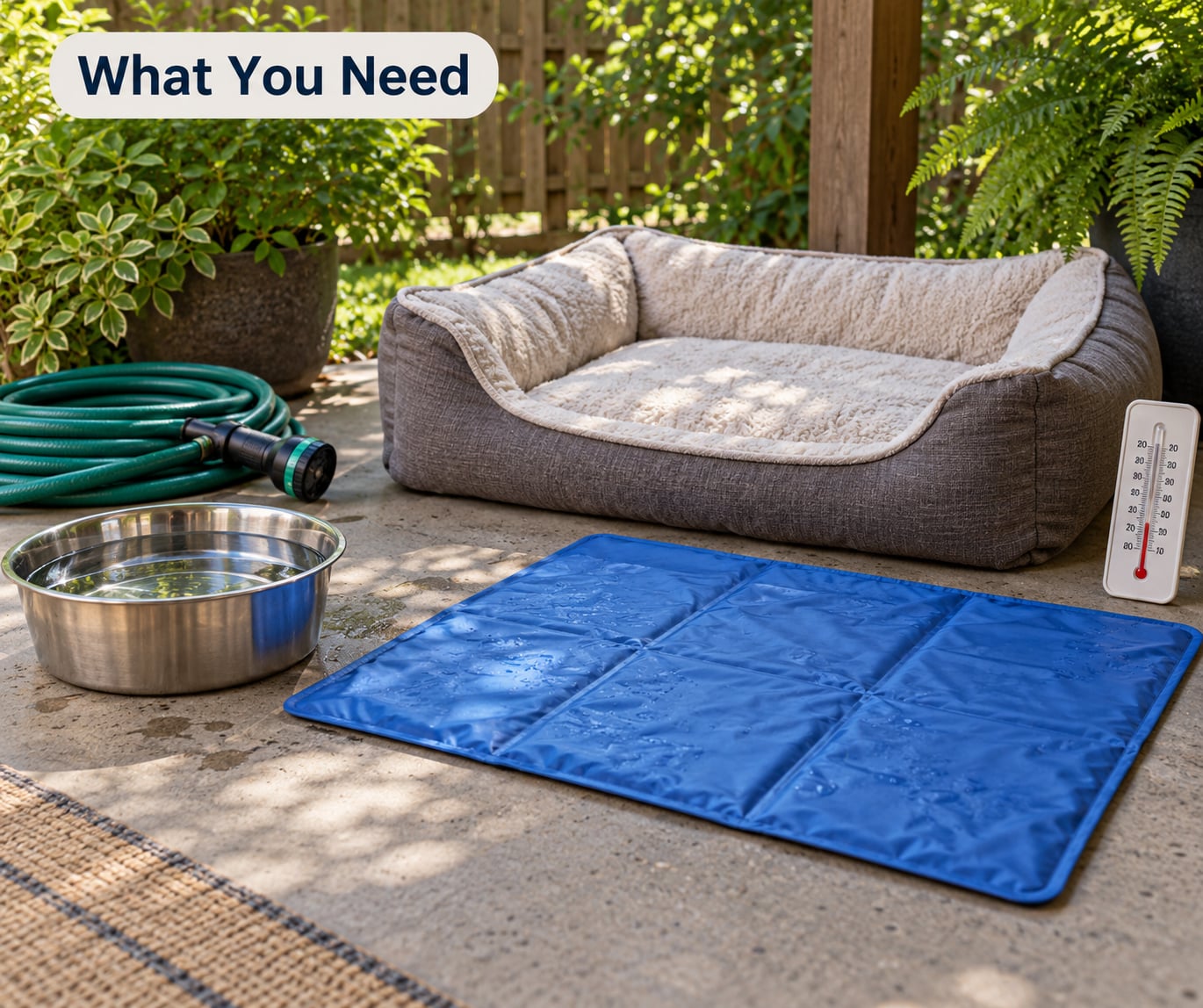
Set all of this up before the first hot day, not during it. Scrambling for a bowl when your dog is already drooling is how people end up improvising badly.
- Fresh drinking water, in more than one place. Two or more stable bowls, one indoors and one outdoors, plus a collapsible bowl and a portable water bottle for walks. Bowls need to be heavy enough not to tip and placed where the dog does not have to cross hot ground to reach them.
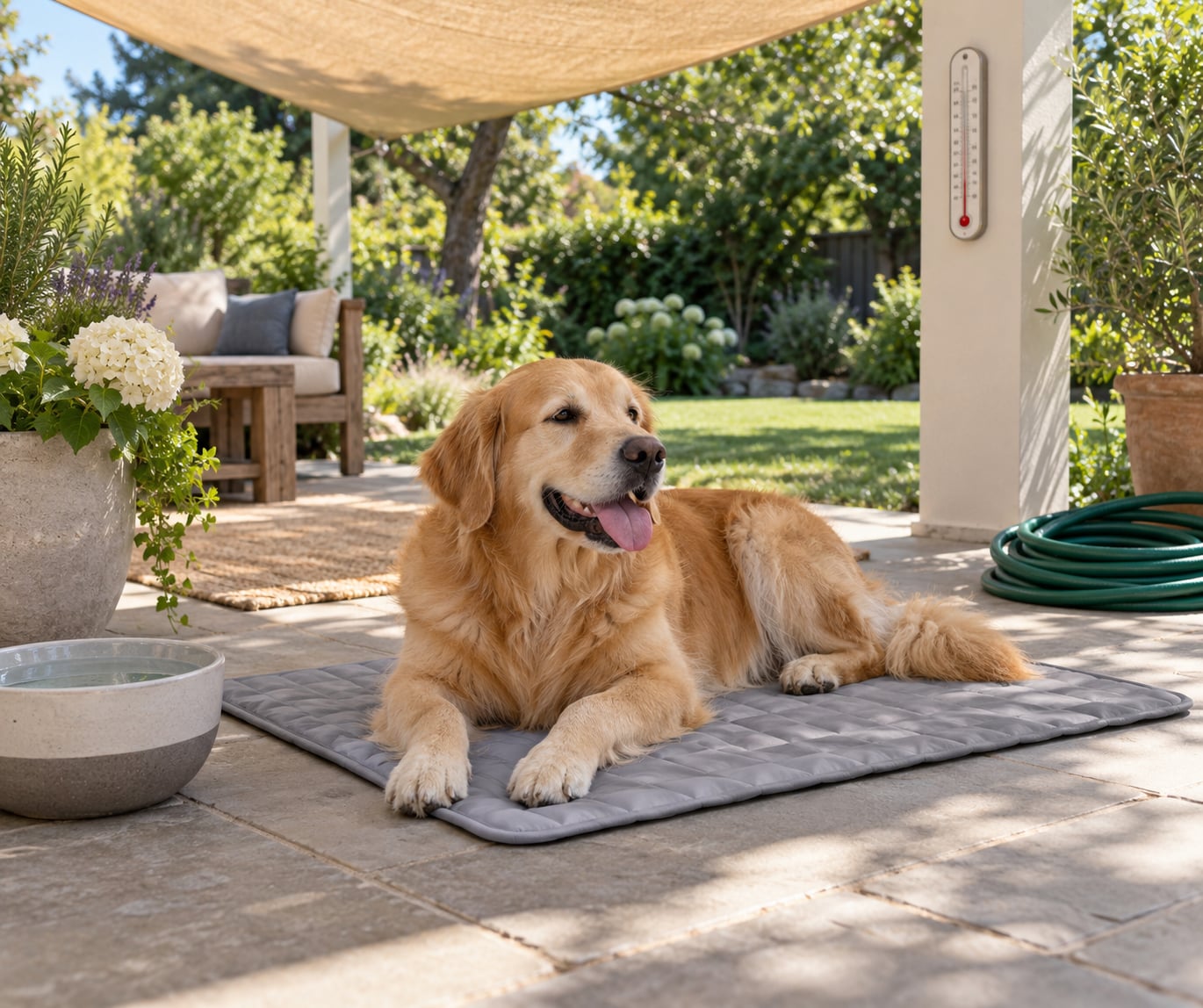
- Shade that blocks the sun, not just a dark object. A canopy, an umbrella, a patio cover, or an indoor room with air conditioning. Shade over concrete or asphalt is not enough on its own, because that surface radiates heat back up.
- A cool indoor area for the hottest part of the day. Midday is not a time for the backyard. The coolest room in the house, with a fan running and curtains closed, is where your dog should be between roughly 10am and 4pm.
- A thermometer. An outdoor thermometer tells you the air temperature. Pair it with a heat index reading, because humidity is what turns a warm day into a dangerous one.
- Towels and a source of cool water. A hose, a mister, or a spray bottle for wetting the dog down and for cooling surfaces. Towels are useful laid flat for your dog to lie on.
- One cooling surface. A pressure-activated cooling mat, a gel mat, or a raised cot that lifts your dog off a hot floor. You do not need a full catalogue of gear; one works.
- A brush for double-coated breeds. Regular brushing removes dead undercoat so air can move through the coat and reach the skin.
Use cooling mats, vests, and booties exactly as their instructions say. A vest that is still damp when you get home can make things worse, not better.
Step-by-Step: How to Keep a Dog Cool in Hot Weather
1. Check the temperature and your dog’s risk
The air temperature alone does not tell you whether it is safe. Humidity is the number most people skip, and it matters enormously, because panting cools a dog by evaporating moisture from the tongue, airways, and skin. When humidity is high, that moisture cannot evaporate, and the dog keeps panting without actually getting cooler.
Then look at the dog rather than at the thermometer. Puppies and senior dogs have a harder time regulating temperature, as do flat-faced breeds such as pugs, bulldogs, and Frenchies, whose airways are already narrowed. Overweight dogs, dogs with heart or respiratory conditions, and thick double-coated breeds such as huskies and malamutes are also higher risk. Dogs on medication can be less able to cope with heat as well.
Give yourself a simple go or no-go rule rather than a single temperature cutoff. Use caution above 75°F air temperature, and treat anything above 80°F as a stay-inside day unless your dog is healthy, young, and used to heat. On humid days, drop that threshold. There is no air temperature that is safe for every dog, so the moment conditions turn unsafe, the dog goes indoors.
2. Provide cool water and shade throughout the day
Keep water available at all times and refresh it often, because water sitting in a warm bowl goes lukewarm fast. A rough daily guide is about one ounce of water per pound of body weight, and a hot day pushes that up. Placing a second bowl in a shaded spot outdoors encourages your dog to drink more, not less.
Shade should cover the whole resting area, not just part of it, and it should be ventilated. Watch where you put it: concrete, stone, and blacktop absorb heat during the day and radiate it for hours, so a dog bed placed on a concrete patio in the afternoon can be hotter than the open shade next to it. Grass, soil, and raised cots stay cooler.
You can tell this is working when your dog chooses the shaded spot on its own, drinks regularly, and is not lying pressed flat against the floor.
3. Change the timing and intensity of exercise
Walk early in the morning or well after sunset, and keep the hottest window, roughly 10am to 4pm, free of strenuous activity. Be careful about the evening, though. Pavement and air both stay dangerously hot for hours after the sun drops, and husky owners on r/DogAdvice describe 35°C days at 70 percent humidity as survival exercise rather than a normal walk.
Test the ground before your dog does. Press the back of your hand down on the pavement and hold it for five seconds. If you cannot keep it there, your dog cannot stand on it. Asphalt in full sun can be far hotter than the air reading on your thermometer, and that is what burns paw pads.
Short and gentle beats long and enthusiastic. Break every 10 to 20 minutes, carry water, and swap the long evening walk for indoor enrichment on a sniffer mat, a stuffed food toy, or a lick mat when the ground and air are both still hot. Skip artificial turf too, which can get as hot as asphalt. Booties help some dogs on short pavement crossings, but they need to fit well and the dog has to be used to them.
4. Use cooling surfaces, wet towels, or water safely
A pressure-activated cooling mat is the simplest upgrade: your dog lies down, the mat reacts to the weight, and it cools for a few hours. A damp towel works too, laid flat on the ground or over a mat for your dog to lie on top of. A towel draped over the dog itself is a different story, and a common mistake, because the trapped warm air against the skin can slow the cooling down rather than speed it up.
For wetting your dog down, use cool, potable tap water, never ice-cold. Soak the belly, the chest, the groin, the armpits, and the paw pads, where blood flow is heaviest. Watch the response as you go, and stop if the dog starts shivering or becomes agitated, since shivering generates heat and means you have gone too cold too fast.
Water play is the most enjoyed cooling method there is. A kiddie pool, a shallow storage tote, a sprinkler, or a fine hose mist all work. A plastic kiddie pool left in the sun for days grows algae that can make a dog ill, so empty and scrub it after every use. At open water, keep your dog leashed or in a life vest, and watch currents and blue-green algae, which are more dangerous than the heat itself.
5. Prevent overheating during car travel and confinement
Never leave a dog in a parked vehicle, and there is no version of this that is safe. Not for two minutes, not with a window cracked, not in the shade, not with a bowl of water on the seat. A parked car can rise roughly 20°F in ten minutes, and the interior can become lethal long before it feels unbearable from outside.
For travel itself, start the air conditioning before you leave and keep the cabin cool, and carry water with a bowl in the trunk. Put the dog in the cabin with you, never in a closed trunk, a cargo hold, or a pickup bed. Do not leave a collar or harness on a dog in the car unattended, and never crate a dog in a vehicle you are leaving behind.
Crates are fine indoors, in a room that is already cool. A dog confined in a hot room cannot move to a better spot, so the crate needs a shaded, ventilated location with water, not a corner of a warm room.
6. Watch for overheating and heatstroke
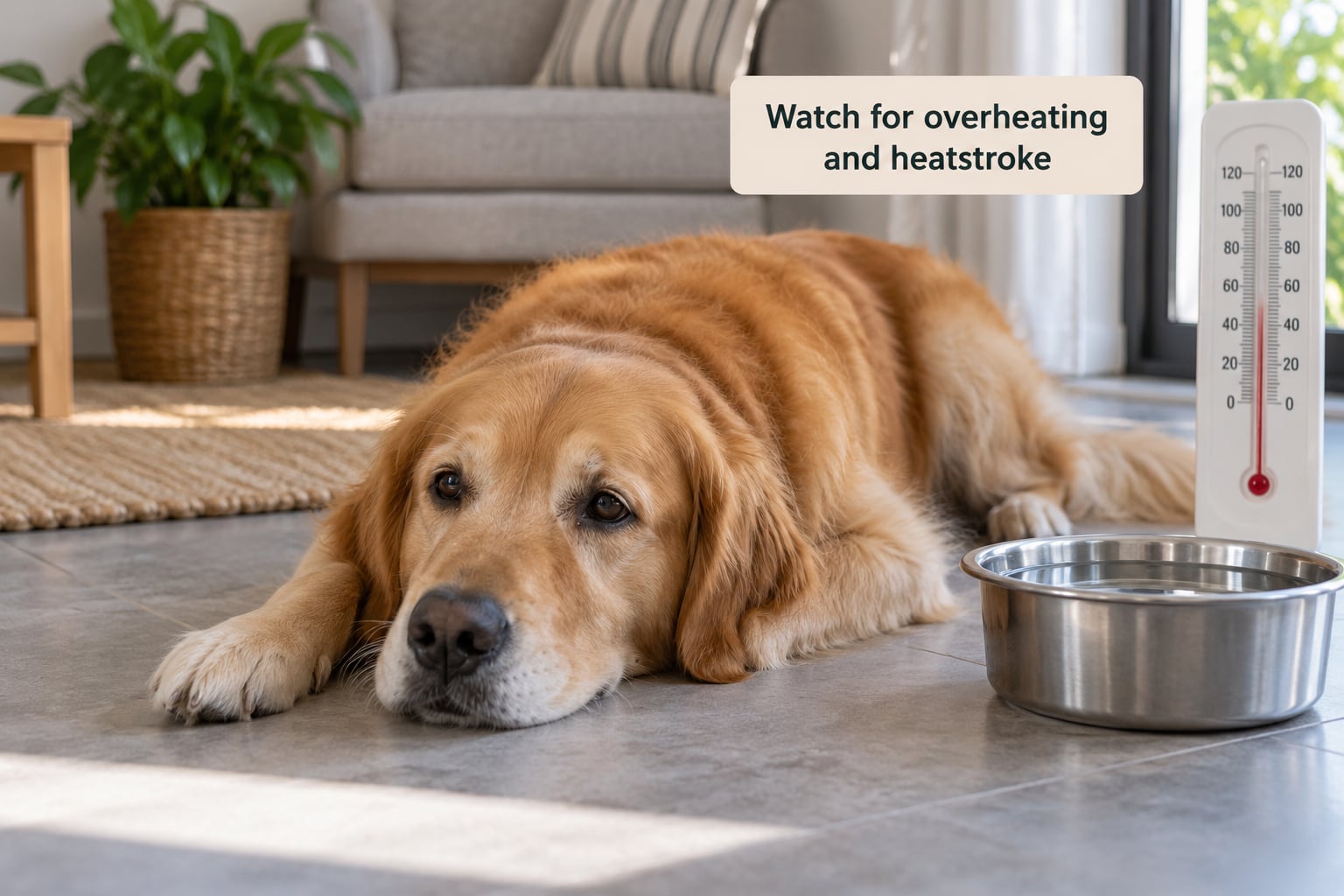
Watch the dog, not the situation. A tiring, hot dog looks perfectly normal right up until it collapses, and puppies in particular will keep playing until they are in trouble.
Early signs of overheating include heavy panting that does not settle within a few minutes of rest, excessive drooling, bright red or unusually pale gums, and fast breathing. Later signs are weakness, lethargy, confusion or disorientation, vomiting, stumbling, and collapse. Panting that comes with weakness, vomiting, or gum colour changes is not normal post-exercise panting and needs urgent attention. If your dog is showing vomiting, confusion, or collapse, call a veterinarian immediately rather than watching for another fifteen minutes.
If you suspect heatstroke while you are on the way to the clinic, move the dog into shade, wet it with cool tap water focusing on the belly, groin, armpits, and paw pads, and keep air moving. Offer small amounts of water only if the dog is alert and swallowing. Do not give any human medication, do not force food or water into a confused or vomiting dog, and do not delay treatment while you look for home remedies or online advice. Heatstroke is an emergency, and every veterinarian will tell you the same thing.
Common Mistakes
Mistake: Giving a hot dog ice water or an ice bath
Extremely cold water and ice can make a hot dog shiver, and shivering generates heat, so the cooling backfires. Use cool, potable tap water, work gradually, and start arranging a vet call at the same time if your dog seems overheated. Ice cubes in the drinking bowl are a separate question, answered in the FAQ below.
Mistake: Assuming panting alone is normal
Dogs pant to cool themselves, so some panting is ordinary, particularly after play or in mild heat. The distinction is what happens next: ordinary panting eases within a few minutes of rest, with normal gums, clear eyes, and steady energy.
Worsening panting that comes with drooling, bright red or pale gums, weakness, vomiting, or confusion means the dog is failing to cool itself. Treat that as an emergency, not as a dog being dramatic.
Mistake: Leaving the dog outside for unlimited shade time
Shade is not shelter. Shaded ground still reaches a temperature high enough to cook paw pads, especially where it is concrete, stone, or blacktop, and a dog cannot be left unattended without water, ventilation, monitoring, and a plan to bring it inside immediately. If you need shade for more than a few minutes with someone watching, bring the dog in.
Quick tips for a hotter day
- Carry water on every outing. A portable bottle with a bowl in the lid solves the problem of your dog watching other dogs drink.
- Layer your cooling by temperature. Owners on r/DogAdvice typically start with a wet bandana, move to a cooling vest as the day heats up, and keep a bottle in hand regardless.
- Favor indoor enrichment over a guilt walk. A sniffer mat, a stuffed Kong, or a lick mat burns mental energy without heat exposure, and it solves the guilt of skipping the walk.
- Cool the house before your dog comes in. Close the curtains, run fans, and open windows early in the morning and again after sunset to move the hot air out.
- Brush double-coated dogs, never shave them. A dense undercoat insulates against heat as well as cold, and shaving it leaves skin exposed to sunburn and heat gain. Owners of huskies and malamutes consistently advise against shaving.
- Follow your vet’s plan. Any dog with heart, respiratory, or skin conditions, or on medication, should have a hot-weather plan written down with your veterinarian before the first warm day.
Frequently Asked Questions
Do dogs like fans blowing on them?
Most dogs settle right in front of a fan, and moving air helps them cool down by carrying away moisture from the tongue and skin. The catch is humidity: a fan is very effective on a dry day and much less effective when the air is already damp, because the moisture cannot evaporate. Pair it with shade, cool water, and closed curtains, and never rely on a fan alone in a closed room.
Can I give my dog ice cubes?
A few ice cubes in the water bowl are fine for most dogs, and many love them. What to avoid is forcing a hot, overheated dog to drink ice water, or an ice bath, because the cold can trigger shivering and the shivering produces heat. Cool tap water, offered freely in small amounts, is the safer choice while you arrange veterinary help.
How do I keep a dog cool overnight in a house without air conditioning?
Give the dog the coolest room in the house, on the lowest floor, away from west-facing windows. Keep a fan running on the dog, close curtains by day to trap the cool night air in, and open them again once the outside temperature drops below the inside. Use a cooling mat or damp towel on the floor, keep water bowls on the floor, and trim or brush the coat so air reaches the skin.
Should I shave my double-coated dog in summer?
No, and this is one of the most persistent and damaging summer mistakes. A double coat insulates against heat as much as against cold, so removing it exposes the skin to sunlight and can increase heat gain and the risk of sunburn. Brush regularly to remove dead undercoat instead, and trim only as much as a professional groomer recommends for the breed. Ask your veterinarian before any clipping.
How much water should a dog drink on a hot day?
A common starting point is about one ounce of water per pound of body weight per day, and hot weather raises that. Watch the signs of dehydration instead of counting: dry gums, sunken eyes, thick sticky urine, unusual lethargy, and skin that does not spring back when gently lifted. Provide several bowls, refresh them often, and contact your veterinarian if you suspect dehydration.
What is the 3-3-3 rule for dogs?
The 3-3-3 rule is a general life-stage guideline, not a heat rule. It suggests three years as a young adult, three years as a fully mature adult, and three years or more as a senior, though size and breed shift those numbers considerably. It is useful context for knowing when a dog counts as older and more heat-sensitive, but for cooling advice, follow your veterinarian’s guidance for your individual dog.
Conclusion
Start with the three things that always work: fresh cool water within reach, real shade or an air-conditioned room, and no strenuous activity between 10am and 4pm. Check the pavement with the back of your hand for five seconds, use cool water rather than ice, and never leave a dog in a parked car or in an unattended crate in a warm room.
Keep cooling gear simple, brush double-coated dogs instead of shaving them, and watch for the signs that go past ordinary panting. If your dog is drooling heavily, has red or pale gums, seems weak or confused, is vomiting, or collapses, move them into shade, begin gentle cooling with cool tap water, and call a veterinarian immediately.