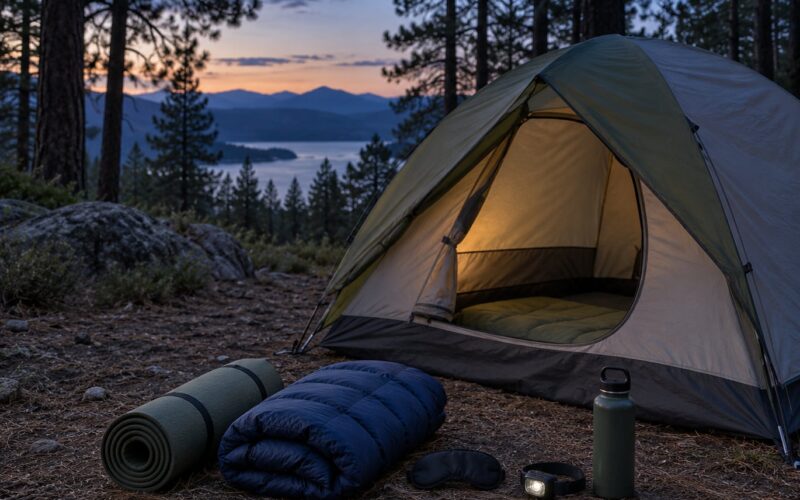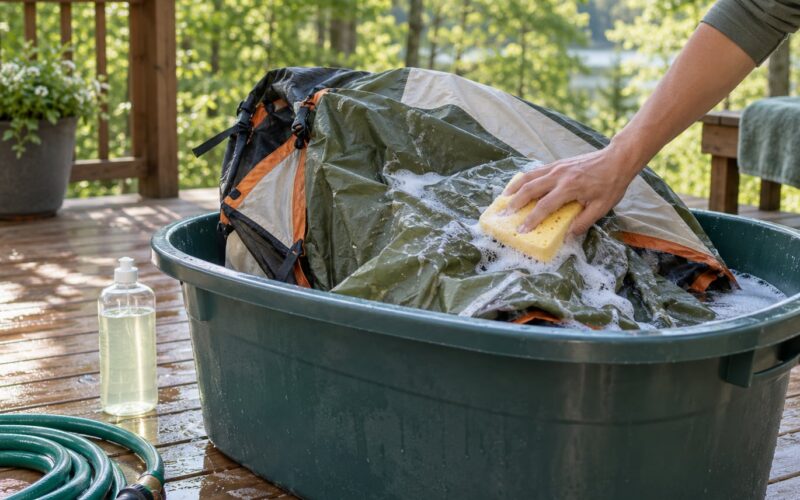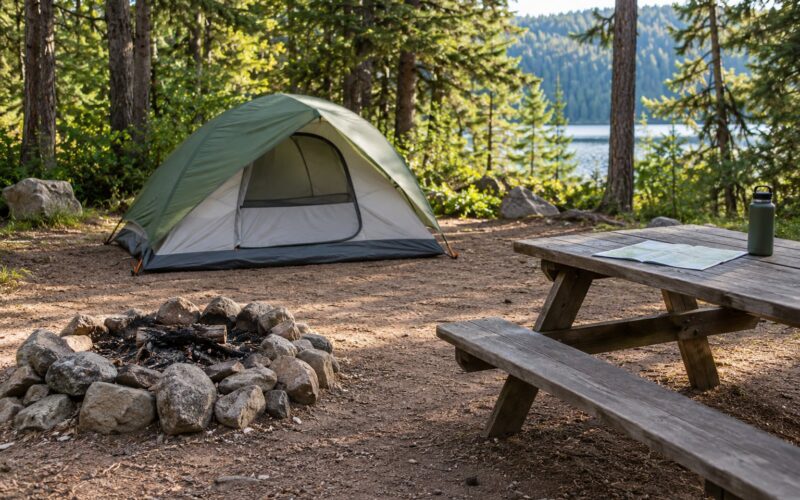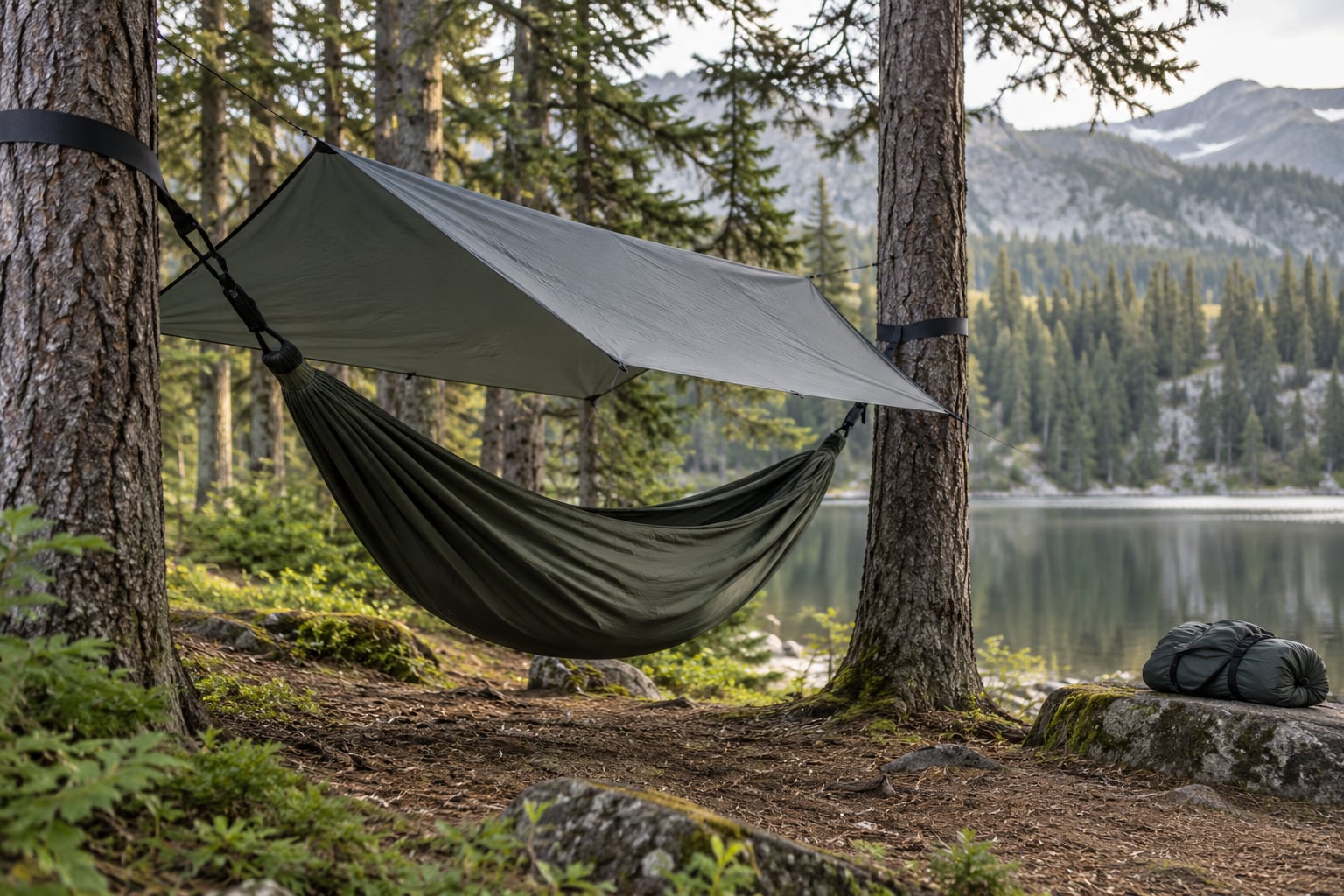
Neither shelter wins every trip. A hammock is the better pick for solo campers in mild or warm weather who move through wooded backcountry and want a lighter, faster setup. A tent is the better pick for cold nights, groups, gear-heavy trips, privacy, and any campsite without two healthy trees about 10 to 15 feet apart.
Most people get the wrong answer because they compare a bare hammock against a complete tent. A hammock alone is a piece of fabric. The shelter is the hammock plus tree straps, a tarp or rain fly, a bug net, and a sleeping system underneath, and once you add those, the weight and cost gap mostly disappears.
This guide breaks down the differences that actually decide it, and it is written for 2026 gear lists rather than a marketing page. Read to the end and you will know which shelter suits the trip you are planning.
Table of Contents
- Hammock Camping vs Tent Camping at a Glance
- Comfort and Sleep Quality
- How to lie in a hammock
- Is a full night in a hammock realistic?
- Weight, Space, and Packability
- Rain, Wind, Insects, and Weather Protection
- Rain
- Wind
- Insects
- Privacy, Usable Space, and Campsite Flexibility
- Setup, Skill Level, and Camping Conditions
- Which Should You Choose?
- Choose a hammock when…
- Choose a tent when…
- Consider both when…
- Frequently Asked Questions
- Which is better for camping, a tent or a hammock?
- What are the downsides of hammock camping?
- Is it warmer to sleep in a tent or hammock?
- Can I use a hammock in cold weather?
- What is better for backpacking, a hammock or a tent?
- Should beginners choose a hammock or a tent?
- Conclusion: Start With Your Trip, Not the Shelter Name
Hammock Camping vs Tent Camping at a Glance
Here is the short version: a hammock trades ground comfort, warmth, and usable space for low weight, fast setup, and freedom from uneven terrain. A tent does the opposite. Everything below the table is just the detail behind those two sentences.
| Criterion | Hammock camping | Tent camping |
|---|---|---|
| Shelter type | Suspended fabric bed with an overhead tarp | Enclosable body with a floor, poles, and a rainfly |
| Comfort | Pressure relief at the hips, but a curved, moving surface | Flat, predictable floor, but pressure points on a pad |
| Total system weight | Hammock, straps, tarp, net, quilt or pad | Tent, footprint or groundsheet, stakes, pad |
| Cold weather | Poor without an underquilt, because of the air below | Better, since the floor breaks ground contact |
| Rain and wind | Depends entirely on tarp skill and ridgeline quality | Integrated fly, sealed seams, vestibules |
| Insects | Full net needed, and the net must not touch your skin | Mesh walls and a screened door |
| Floor space | None, you sleep above the ground | Gear storage and room to sit, change, and cook under cover |
| Privacy | Very limited, an open sling in the woods | Full enclosure you can zip shut |
| Setup | Wrap straps, hang, tension, pitch the tarp | Stake out, assemble poles, clip the fly |
| Ventilation | Excellent, air moves on every side | Depends on mesh panels and fly vents |
| Best for | Solo campers, mild and warm nights, long trails | Families, couples, cold weather, car camping |
| Main drawback | Nothing to hang it from, and cold air from below | Weight, bulk, and needing flat dry ground |
Choose a hammock if you are solo, camping in mild or warm weather, backpacking through forest, and willing to practice hanging and insulation before a long trip. Choose a tent if you are camping with a partner or family, expecting cold nights, carrying lots of gear, or heading anywhere without dependable trees.
Comfort and Sleep Quality
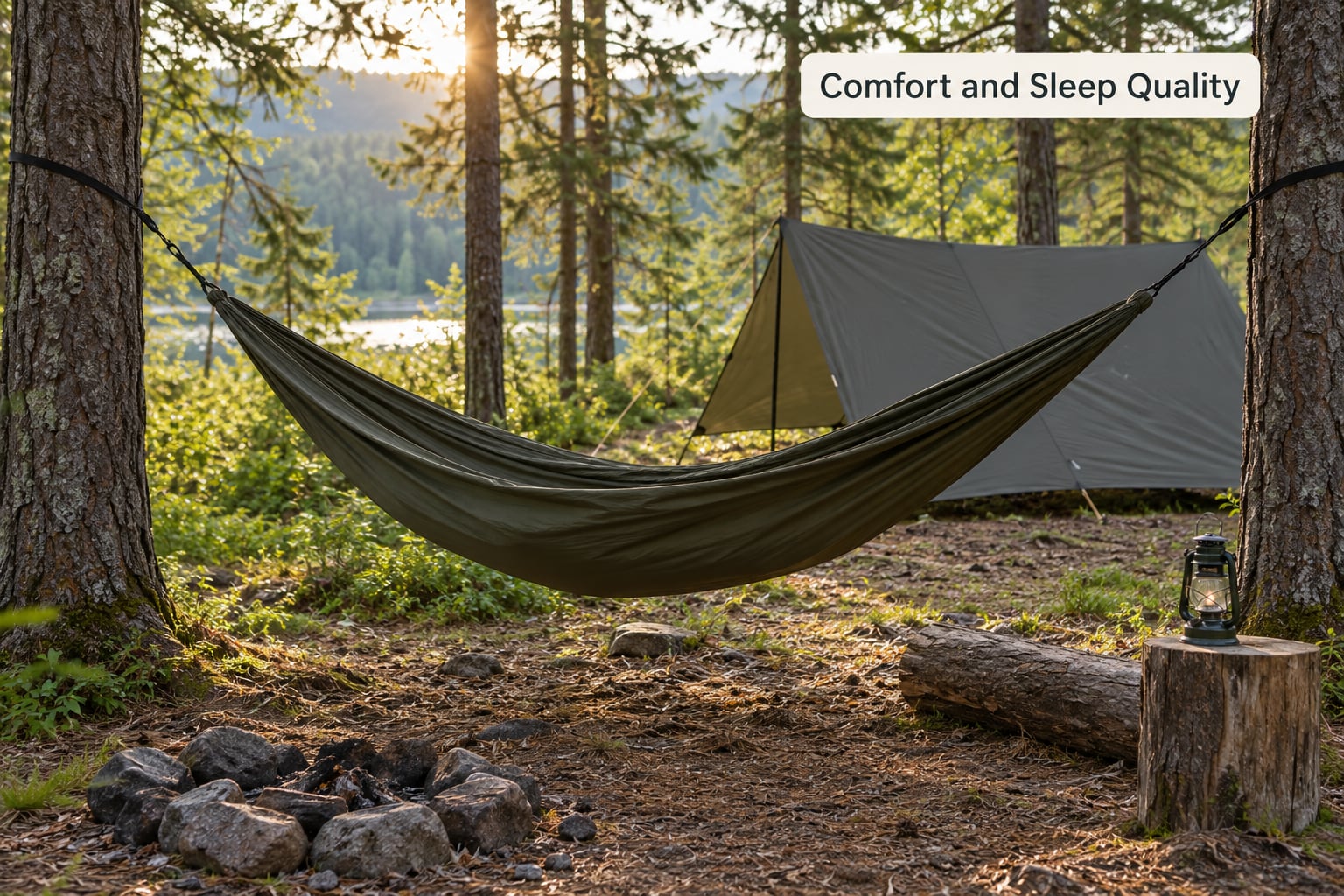
A hammock takes pressure off your hips and lower back, which is exactly why side sleepers and people with hip issues often say it is the first sleep aid that works for them. The catch is that the surface curves around you and moves when you move.
How to lie in a hammock
Lie diagonally, with your head toward one end, rather than straight across the middle. The diagonal lets the fabric wrap you and share your weight along its length, which is what makes a hammock feel flat. Lying straight across the end-to-end span puts you in the deepest point of the curve, and that is where hip pressure and shoulder pinching show up.
Two camps of campers form here. Stomach sleepers get back hyperextension in a hammock, because the curve pushes your spine upward with nothing underneath to resist it. Side sleepers do best, especially with a pad wide enough to keep your knees and elbows from digging into the edge.
Is a full night in a hammock realistic?
Yes, for most people who get the angle right. The common early surprise is waking up stiff, not from the hammock itself but from spending eight hours folded into the same position. Raising the suspension until the hammock sits at roughly a 30-degree angle at each anchor takes tension out of the fabric and flattens the bed noticeably.
There is a second group that simply cannot adapt to the sway. Forum reports on trail communities mention some campers finding the movement uncomfortable or nauseating, and no amount of gear fixes that. If you already know you dislike motion, do not plan to outlast it.
Tents invert the comfort question. A pad on flat ground gives a consistent, level surface, which is better for stomach sleepers and for anyone who moves around a lot. It also means pressure points at the hips, which is the exact complaint hammock campers use to justify switching.
Weight, Space, and Packability
Hammock setups are usually lighter than a three-season tent, but only when you leave out the parts you actually need. This is where most weight claims go wrong.
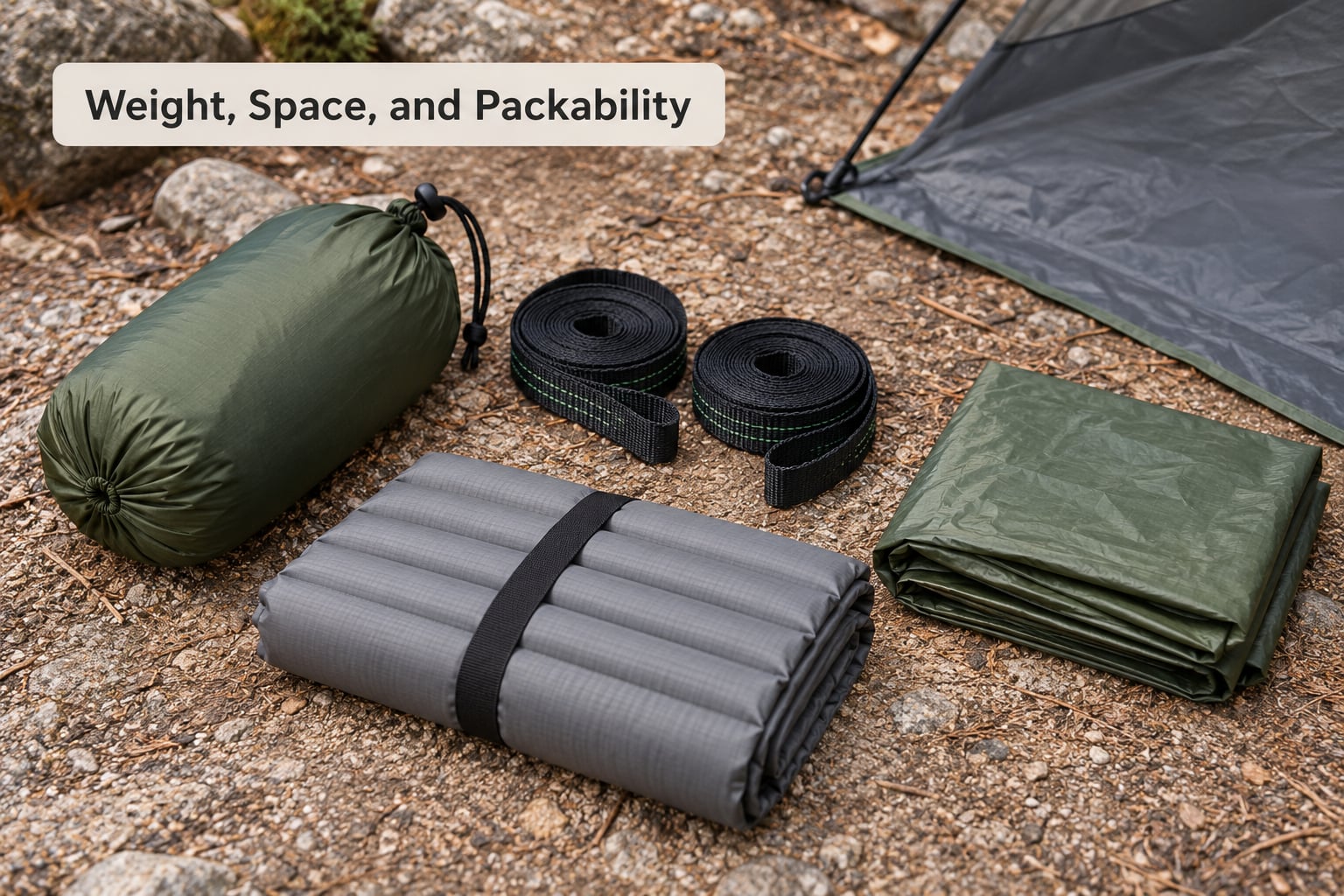
A backpacking hammock on its own weighs less than a third of most two-person tents. Add wide webbing tree straps, a tarp with a ridgeline, a bug net, and an underquilt or insulated pad for cool nights, and the difference narrows sharply. A complete hammock system and a complete lightweight tent often land within a pound of each other, and in warm weather the hammock still wins on the narrow straps and the small packed tarp.
What a tent bundles in one item, a hammock spreads across five. That has a real cost: more things to organize, more things to lose, and more failure points. A forgotten ridgeline line or a missing strap turns a five-minute setup into a frustrating one.
Packed volume tells a similar story. Tent poles and body panels hold their shape and block a compartment; straps and a packed tarp stuff into gaps. On a long trip where pack volume matters more than ounces, that difference is worth more than the last few hundred grams.
A tent also gives you floor space that a hammock has no version of. Wet boots, a pack, a stove, and a wet quilt can all live inside a tent. In a hammock, everything you own stays in your pack or on the ground under a tarp, exposed to dew, mud, and animals.
Rain, Wind, Insects, and Weather Protection
Weather performance is a property of the whole shelter system, not of the hammock or the tent in isolation. A hammock with a badly pitched tarp loses to a decent tent in a storm. A tent with a torn seam loses to a good tarp in a drizzle.
Rain
A tent rainfly attaches to the body, so runoff has a defined path away from you. A hammock tarp is a separate ridgeline stretched overhead, and water that hits it runs down the side, not onto the sleeper, provided the ridgeline is high and pitched taut enough to shed.
The reported failure is almost always the same: wind driving rain under the tarp edge from the side, where there is no wall to stop it. Light drizzle is rarely a problem. An exposed ridgeline with a tarp in a squall is a different story, and campers on trail forums report tarp failures in exactly that situation.
Wind
A pitched tarp is a sail with a hammock underneath it. In strong wind it billows, and a hammock that is already moving adds a slow, rolling response. A low-profile tent with a taut fly and multiple stake points resists wind better, and in the windiest weather, below treeline and out of the open, a tent is the honest choice.
Insects
Both approaches need a physical barrier, but they build it differently. A tent uses mesh walls and a zipped door that stays closed all night. A hammock needs a full net that cinches closed around the ridgeline, and the critical detail is that the net must hang clear of your skin, or mosquitoes find the gaps anyway.
Ticks and ants are another difference. A hammock keeps you off the ground entirely, which is genuinely useful in tick country. Ants, on the other hand, are a well-known hammock problem precisely because you are hanging at their level, and a net does nothing about them.
Privacy, Usable Space, and Campsite Flexibility
Privacy and usable space are the two dimensions where a tent wins without much argument. A zippered tent gives you a room with walls, so you can change clothes, sit upright, keep a toddler contained, and leave wet gear out of the rain overnight.
A hammock gives you a bed, not a room. You can sit up with your back against a tree or a pack, and you can leave your boots and stove on the ground without worrying about the tent floor, but that is about where your body goes, not about shelter.
Campsite flexibility runs the other way. A hammock ignores the ground entirely, so roots, boulders, slopes, mud, and a rock right under your shoulder stop being problems. That is a real advantage in the backcountry, where the flat dry pitch you want is often the one spot everyone else already took.
A hammock is also picky in a way a tent is not. You need two living trees spaced roughly 10 to 15 feet apart, thick enough to attach to, and free of damage along the trunk. Deserts, beaches, burned-over forest, exposed ridgelines, and anything above the tree line simply do not work. A tent will pitch on almost anything with a few flat meters and some ground that will take a stake.
Setup, Skill Level, and Camping Conditions
Setting up a hammock takes practice, and the difference shows up in the first few trips. Wrapping a wide strap around a tree, clipping the other end to a carabiner, and then tensioning the far end is a technique you learn by doing, not by reading.
Two habits make it quick and safe. First, use straps at least 1.5 inches wide and wrap them around living trunks above eye level, leaving the wrap visible so nobody walks into a cable. Second, get the hammock up before you unpack anything, then add the tarp on its ridgeline, then the net, then get into it.
A tent asks for a different kind of competence: reading the site, choosing stake angles, pitching in wind, and sealing seams you did not seal yourself. It is more steps, but the failure modes are gentler. A badly pitched tent is cold and annoying. A badly hung hammock is a trip in an emergency room.
For a first trip, practice the hammock at home. Hang one in a yard or a park for a few nights before you rely on it in the backcountry. Beginners usually get a better first experience from a tent, because the shelter does more of the protecting while you learn the rest of the system. Car campers and families should start there too, for the space and privacy reasons above.
Which Should You Choose?
Pick the shelter that matches your trip rather than your gear aspirations. These are the cases where each one clearly wins.
Choose a hammock when…
You are solo and backpacking through forested trails on mild or warm nights. It also makes sense if you are tired of pitching a tent on muddy or uneven ground, or you are chasing pack weight and will carry a tarp, a net, and insulation properly. A hammock is a strong choice for thru-hikers who repeat the same campsites, and for anyone whose hips hurt on a sleeping pad all night.
Choose a tent when…
You are expecting cold or wet nights, or camping above freezing without a full underquilt and top quilt system. Tents win for couples and families, for anyone carrying camera gear, climbing gear, or kids’ things, and for first-time campers. They also suit car camping, where packed weight does not matter but space and weather protection do, and for desert, beach, alpine, and open terrain where there is nothing to hang from.
Consider both when…
Some campers run a hybrid: a tarp, a light groundsheet, and a hammock in shoulder season, switching to a rented or purchased tent for the coldest stretches. One long-distance hiker writing about a season on the Appalachian Trail proposed carrying a tent for the first weeks and moving to a hammock for the warmer months, which is a sound way to learn both systems without betting a whole trip on one.
Buying the tent is the lower-risk entry point. It works in more places, handles more weather, and the hammock can always be added later, once you know how you sleep.
Frequently Asked Questions
Which is better for camping, a tent or a hammock?
A tent is better for most campers, because it works in any terrain, keeps you warmer, shelters a group, and protects your gear. A hammock is better for solo campers on mild or warm nights who want less weight, faster setup, and freedom from rough ground. Choose based on your campsite, your expected low temperature, and whether you are sleeping alone.
What are the downsides of hammock camping?
The main drawbacks are cold air pooling underneath you, total dependence on suitable trees, almost no interior space, limited privacy, and a learning curve for hanging and tarp pitch. Rain can blow in from the sides in wind, and some people find the sway physically uncomfortable. A complete system also costs more than the hammock alone, because straps, tarp, net, and underquilt are all extra.
Is it warmer to sleep in a tent or hammock?
A tent is warmer. Its floor and enclosed body separate you from the ground, while a hammock hangs you in open air with nothing blocking the cold sink below you. A sleeping bag compresses under your body, so you lose heat downward even in a warm bag. In cold weather, hammock campers add an underquilt and a top quilt specifically to close that gap.
Can I use a hammock in cold weather?
Yes, but only with a complete cold-weather sleep system, which means an underquilt, a top quilt, and a matching insulated pad rather than a standard one. Campers who froze overnight in a hammock were typically missing the underquilt, not the sleeping bag. Below freezing, a tent is the safer default, and above the tree line a hammock is not an option at all.
What is better for backpacking, a hammock or a tent?
For solo backpacking in warm or mild weather, a hammock system usually weighs less and packs smaller, mainly because straps and a tarp roll down tight. Once you add a tarp, a bug net, and cold-weather insulation, a complete hammock setup lands close to a lightweight three-season tent in weight. If the trip is cold, wet, or shared, take the tent.
Should beginners choose a hammock or a tent?
Start with a tent. It is more forgiving, protects you from weather while you are still learning, and works on the kind of campsites beginners usually end up at. If you are drawn to the hammock, practice it at home or in a park for a few nights first, and only move your main shelter over once hanging, tarp pitch, and insulation are second nature.
Conclusion: Start With Your Trip, Not the Shelter Name
Choose a tent if you are sharing space, expecting cold or wet nights, or camping where trees are scarce. Choose a hammock if you are solo, walking in forest, and sleeping in mild weather with a proper underquilt and tarp in your pack.
Before buying anything, write down your expected low temperature, who is sleeping with you, and what your campsites actually look like. Then price and weigh the complete system, not the shelter alone, and make the call from there.