How to care for a softball bat in cold weather comes down to three habits: keep water out of the barrel, keep the bat away from big temperature swings, and never move a bat straight from a freezing car into a heated room. Winter is when composite barrels crack, grips go stiff and end caps start rattling, and most of that damage begins with moisture that froze while the bat sat in a shed or a car overnight. The routine below takes about 20 minutes for the first clean and five minutes a session after that.
Table of Contents
- What You Need
- Step-by-Step: How to Care for a Softball Bat in Cold Weather
- 1. Inspect the bat before bringing it inside
- 2. Clean dirt and moisture from the bat
- 3. Dry the bat completely
- 4. Store the bat somewhere stable, not just somewhere cold
- 5. Check the bat again before you use it in cold conditions
- Common Mistakes
- Frequently Asked Questions
- Should I store my softball bat in the garage over the winter?
- Can I bring my bat inside right after hitting in the cold?
- Do wood and metal bats need different cold-weather care?
- Why does condensation form on my bat when I bring it inside?
- When should a cold-damaged bat be replaced instead of repaired?
- Conclusion: Start With a Dry Bat
What You Need
You do not need any specialty equipment for this. Everything on this list is either already in the house or costs less than a replacement bat would.
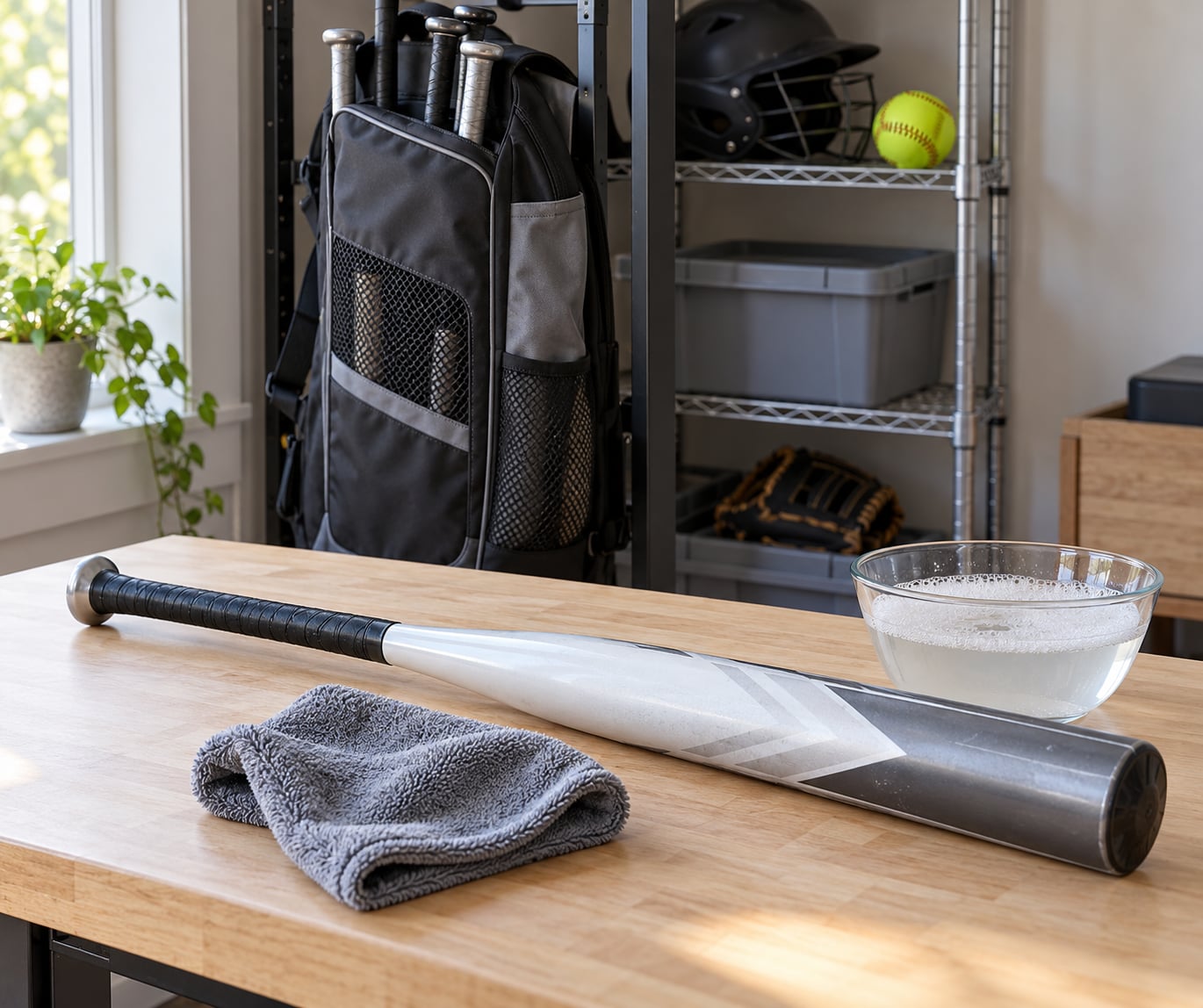
- A soft lint-free cloth. A clean microfiber towel or a soft cotton t-shirt works. Avoid anything scratchy, because grit dragged across a barrel under pressure is how you grind a scratch into the finish.
- A small bowl of lukewarm water with one drop of mild dish soap. Lukewarm, not hot. The soap is for stubborn field dirt only, and you use it far less often than you think.
- A soft toothbrush or a bottle brush. For the knob, the grip holes and the seam where the handle meets the barrel. This is the part people skip and then wonder why the bat still feels gritty.
- A ventilated bat bag or a wall-mounted bat rack. A padded mesh or nylon bag is fine. A hard sealed plastic case traps whatever moisture is still in the bat, which defeats the whole point.
- A dry indoor spot with steady temperature. A bedroom closet shelf or a corner of a heated basement works. An unheated garage, a shed, an attic and an overnight car park do not.
- A flashlight. Bright light across the barrel at a shallow angle makes hairline cracks and seam splits pop out in a way overhead lighting never will.
- A hygrometer, if you are fussy. A cheap one tells you whether your closet is drifting toward the 60 percent-plus humidity that grows mold on grip tape and corrodes the knob hardware.
- The manufacturer’s care and warranty terms. Find them before winter, not after something breaks. Most of them state a temperature floor for use, and that number is the one you should be working from rather than a number you heard at practice.
Time and difficulty: the first pass takes about 20 minutes per bat. After that, the pre-session check is two minutes and the post-session wipe is another three. If you coach, you can do a whole team in a hallway in ten minutes.
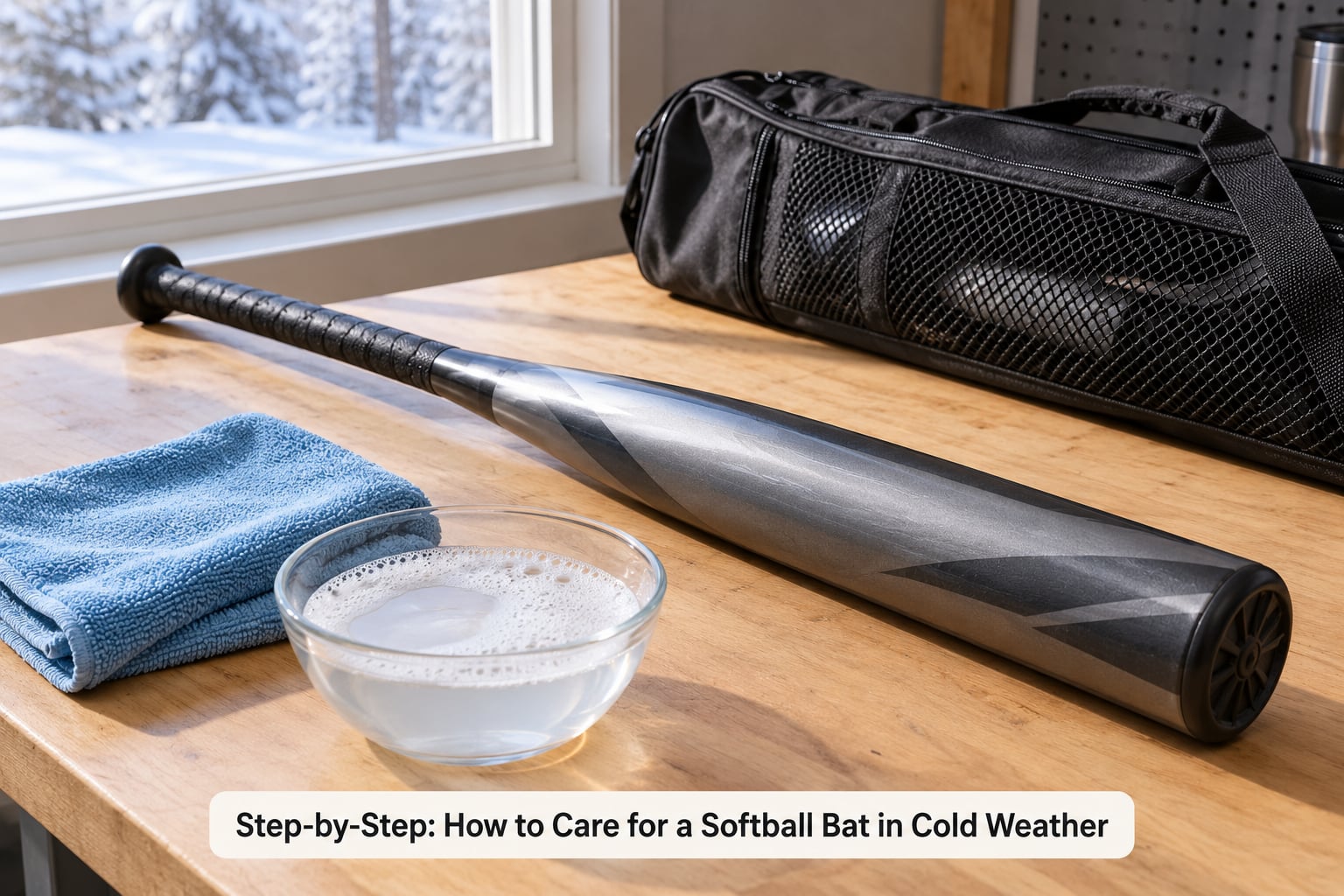
Step-by-Step: How to Care for a Softball Bat in Cold Weather
Work through these in order. Inspecting before you clean matters, because dirt hides the exact cracks and loose ends you are looking for, and drying before you store matters because a sealed bag traps whatever is left.
1. Inspect the bat before bringing it inside
Look at the bat before the temperature changes expose what is already wrong. Cold makes composite barrels brittle and makes aluminum barrels less forgiving, so a hairline crack that survived the fall can open up the morning you bring the bat into a warm garage.
Run your thumb slowly down the full length of the barrel. Your fingers will catch a crack or a raised seam long before your eyes will. Then check four specific spots.
- The barrel surface. Look for hairline cracks, a long split running along a seam, dents that catch a fingernail, and any area where the finish looks dull or scuffed compared with the rest.
- The end cap. Press it firmly and listen. A rattle means the end cap or the internal plug has loosened, and a rattle you feel through the barrel under a hard hit is a rattle that gets worse.
- The knob and handle. Check the knob for cracks and check whether the handle has any play or creak where it enters the barrel.
- The grip and the label. Peel back a corner of the grip tape. If the adhesive underneath is soft, tacky or has mold spotting, that tape has to come off and get replaced rather than re-wrapped.
A bat in good shape feels smooth and continuous under the thumb, rings when you tap the barrel, and has a grip that is tacky but not sticky. If it does none of those three things, keep using it outdoors and find out why before you rely on it for a game.
2. Clean dirt and moisture from the bat
Wipe the barrel and handle with a cloth that is damp, not wet. Most of the time that alone removes dried mud, chalk dust and grass stains. Use the soapy water only when a damp cloth leaves a visible film behind, and use it on the cloth rather than pouring it anywhere near the bat.
There are three hard limits here. Never soak the bat or run a hose on it, because water sitting inside the grip holes or behind a vented end cap has no way to dry out and starts the exact damage you are trying to prevent. Never use alcohol, bleach, degreaser or any harsh cleaner, because those attack the resin finish and the grip adhesive. Never put the barrel in a sink.
Wipe the handle separately with a clean damp section of cloth, then use the toothbrush on the knob and the top of the grip. Work the cloth with the grain of the finish rather than in circles, which is how you leave swirl marks.
You will know it worked when the cloth comes away without leaving grit on your fingertips and the barrel holds no water beads for more than a second. If it beads, keep wiping; beading means moisture sitting on the surface where it can soak in during a freeze.
3. Dry the bat completely
Air-dry the bat at room temperature, out of the airflow, with the barrel lying horizontally on a rack or across two chairs so the handle does not rest on a wet spot. A composite bat that was only damp needs a couple of hours. A wood bat or anything that got rained on should sit overnight. Push a dry cloth into the grip holes and across the end cap seam, then check that cloth again before you call it done.
Keep the bat away from radiators, a fireplace, a hair dryer, a heat lamp, a clothes dryer and a car heater. Concentrated heat applied to a cold bat is the fastest way to split a composite end cap or warp an aluminum barrel, and the damage shows up weeks later when you wonder what caused it.
The test is simple. The barrel should feel the same temperature as the room, and a dry cloth pressed firmly into the grip holes should come back dry. A bat that still feels cool near the end cap has water in it somewhere, and the end cap is the last place to dry because the wall behind it is thick.
4. Store the bat somewhere stable, not just somewhere cold
How to care for a softball bat in cold weather for four months is really a storage-location problem. Dry bat, ventilated bag, steady indoor temperature, moderate humidity, off the floor and away from outside walls. Put the bat in the bag only when it is bone dry, and loosen the drawstring rather than cinching it tight so the bat can breathe.
Where you store it changes the outcome more than anything else in this guide:
- Bedroom closet or heated basement corner: the best option. Steady temperature, low humidity swings, no frost cycles.
- Heated garage: acceptable if the temperature holds steady. Watch for swings between a cold car and a warm garage door opening, which cycles the bat daily.
- Unheated garage: risky. Bats here see freeze-thaw cycles that most bat warranties were never written to cover.
- Shed: the worst spot on this list, because of both temperature swing and damp. If this is your only option, put the bat in a sealed-but-vented bag, raise it off the floor, and at least keep it out of direct floor contact where condensation collects.
- Car overnight: no. Even if the car is parked in the driveway, a bat that goes from freezing to cabin heat every morning is running an experiment you cannot control.
- Car during a four-hour drive: better than overnight, but take the bat in with you if you can. The end cap and the grip take the longest to shift back to temperature.
If you travel to tournaments with the bat, the rule is the same: never leave it in the vehicle overnight, and never transition it from a cold trunk into a warm indoor room in under an hour. Give it time.
5. Check the bat again before you use it in cold conditions
Let the bat come to room temperature before you swing at anything. Bat manufacturers and retailers commonly suggest a few hours for a bat to fully equilibrate, and cold barrels feel dead even when nothing is wrong with them. Skipping the acclimation also means you are swinging a bat that is stiffer than the ball you are hitting, which is the pairing that does damage.
Before the first swing of a session:
- Press the end cap and confirm no rattle.
- Run your thumb down the barrel again, especially if the bat spent time in a car or shed.
- Check that the certification label, whether BBCOR, USSSA or NFHS, is still fully legible and firmly attached.
- Feel the grip. Cold hands plus a dried-out grip is how a bat comes out of your hands mid-swing, so replace tacky-but-useless tape before practice rather than after.
- Wear batting gloves and loosen your grip a quarter turn from where you set it in warm weather, because cold leather tightens.
- Warm up your hands, wrists, shoulders and hips. Hitting a hard ball with a cold body is an injury risk that has nothing to do with the bat.
And watch the balls, not just the bat. Softballs harden in cold air, and a cold softball transfers noticeably more energy into the barrel than a warm one. If you are practicing outdoors in winter, let the balls sit in the bag until they come up to the temperature of the air before you start feeding them.
Common Mistakes
Almost every cold-weather bat I have seen ruined was ruined by one of these. Each has a simple fix.
- Leaving the bat in the car overnight. The fix is to bring it in with you, every time, even if that means carrying it into a restaurant. Freeze-thaw cycles do more damage than any single cold day.
- Putting a damp bat into a sealed bag. The bag then holds the moisture against the barrel for weeks. Fix: dry first, bag second, and loosen the closure.
- Using heat to dry the bat faster. Hair dryers, heat lamps and radiators concentrate heat on one spot of a cold bat. Fix: room temperature and airflow, and accept the wait.
- Tightening or loosening hardware yourself. Replacing an end cap, turning a handle bolt or tightening a knob is manufacturer work. Fix: photograph the problem and contact the maker, because an unauthorized repair is usually not covered.
- Ignoring a crack, a rattle or a dead sound. Players normalize the small warning signs for months. Fix: run the thumb check at every session and stop using the bat the moment you find one.
- Rolling or shaving the bat. These modifications are illegal in sanctioned play, they destroy the barrel walls, and they void the warranty. Nothing about cold weather makes them less of an idea.
- Using your game bat for cage work. Dimple and cage balls are hard enough to chew a composite barrel, and cold makes them worse. Fix: keep a cheap single-wall or multi-wall alloy bat as a designated beater bat, and keep the -9 game bat indoors.
- Playing fast pitch or slow pitch in the cold with a bat you cannot replace. Fix: play the game bat in the season and use the beater bat for winter work. Nobody has ever regretted the beater bat.
Seasonal care, roughly: clean and fully dry every bat before it goes into storage in the fall, run a quick grip and end-cap check every few weeks through the winter, and give stored bats a full inspection plus a fresh end-cap check before the first spring practice. If a bat is new to you or recently purchased, break it in indoors first, on a regulation ball, over a couple of weeks rather than starting with a full cage session. Rotate the bat a quarter turn between sessions so wear spreads across the barrel instead of concentrating on one spot.
Frequently Asked Questions
Should I store my softball bat in the garage over the winter?
Only if the garage is heated and the temperature stays steady. An unheated garage means freeze-thaw cycles that can split a composite end cap or dent an alloy barrel, and most bat warranties assume storage somewhere temperature-stable. A bedroom closet or heated basement corner is better. If the garage is your only option, dry the bat completely, keep it in a ventilated bag raised off the floor, and check it every few weeks for cracks or a loose end cap.
Can I bring my bat inside right after hitting in the cold?
Give it time instead. A bat that goes from freezing to warm indoor air picks up condensation, the same way a cold glass of water does, and that water sits against the barrel finish and the end cap seam. Let the bat warm gradually at room temperature, ideally for an hour or two before it gets near a heater or a warm hand, and wipe it down once it has reached room temperature.
Do wood and metal bats need different cold-weather care?
Yes, mostly because they fail differently. Wood bats dry out and can crack along the grain, so they want slow room-temperature drying, a light coat of bat oil or conditioner on the barrel and handle, and storage away from any heat source. Alloy and composite bats cannot be oiled and should stay completely dry, with composite being the more temperature-sensitive of the two. Wood bats are rare in softball but common in slow pitch wood leagues and adult rec leagues.
Why does condensation form on my bat when I bring it inside?
Because warm indoor air holds a lot of water vapor, and that vapor turns back into liquid water on any surface colder than the surrounding air. A bat that sat in a freezing car or shed is the coldest thing in the room, so it collects condensation the moment the door opens. Wipe the barrel and the end cap seam dry with a towel, let the bat warm at room temperature, and only bag it once nothing is beading on the surface.
When should a cold-damaged bat be replaced instead of repaired?
Replace it when you find a crack that runs along the barrel wall, a split at the seam, a rattle you can feel through the barrel on a hard hit, or a deep dent that changes how the ball leaves the bat. A dull sound alone can be normal for a bat that has simply broken in. Contact the manufacturer first, because a bat still under warranty can often be replaced or repaired at no cost, and photo the damage before you do anything else with it.
Conclusion: Start With a Dry Bat
If you do one thing, dry the bat. Get it inside, wipe the barrel and grip holes, give it a few hours at room temperature, and only then put it in a ventilated bag on a closet shelf. From there, keep it away from freezing cars, damp sheds and concentrated heat, check the barrel and end cap before every session, and keep your game bat indoors while a cheap alloy beater bat takes the cold-weather hits.
Cold weather does not kill bats on its own. The damage comes from moisture freezing inside the bat, from temperature swings cycling the barrel, and from cold-hardened balls hitting a bat that was never given time to acclimate. Manage those three and your bat will be ready to go when the fields open up in the spring.