You can improve bat speed at home with six drills that take about 20 minutes, need nothing more than a bat, a few soft balls and a safe patch of open space, and work for baseball and softball hitters of any age. Bat speed is simply how fast the barrel travels through the strike zone at contact, and roughly one mph of added bat speed produces about 1.2 mph more exit velocity. This guide lays out the six-drill routine in order, how to measure progress without a radar gun, and the mistakes that quietly slow a swing down.
Nobody wakes up one morning with a faster swing by accident. It comes from doing short, repeatable movements in the right order often enough that the body learns them, which is exactly why a home routine works better than an occasional long practice.
Table of Contents
- What You Need
- How to Improve Bat Speed With Drills at Home
- Step-by-Step Home Bat-Speed Routine
- 1. Warm Up With Controlled Swings
- 2. Use a Speed-Ladder Bat-Speed Drill
- 3. Practice Rotational Wall Swings
- 4. Build Timing With a Two-Contact Drill
- 5. Add a Short Front-Toss Speed Set
- 6. Test and Record Your Progress
- Common Mistakes
- Frequently Asked Questions
- How long does it take to improve bat speed at home?
- How can I measure bat speed at home without a radar gun?
- What equipment do I need for bat speed drills at home?
- How many bat speed drills per week should a young player do?
- When should a hitter stop drilling and get professional help?
- Conclusion
What You Need
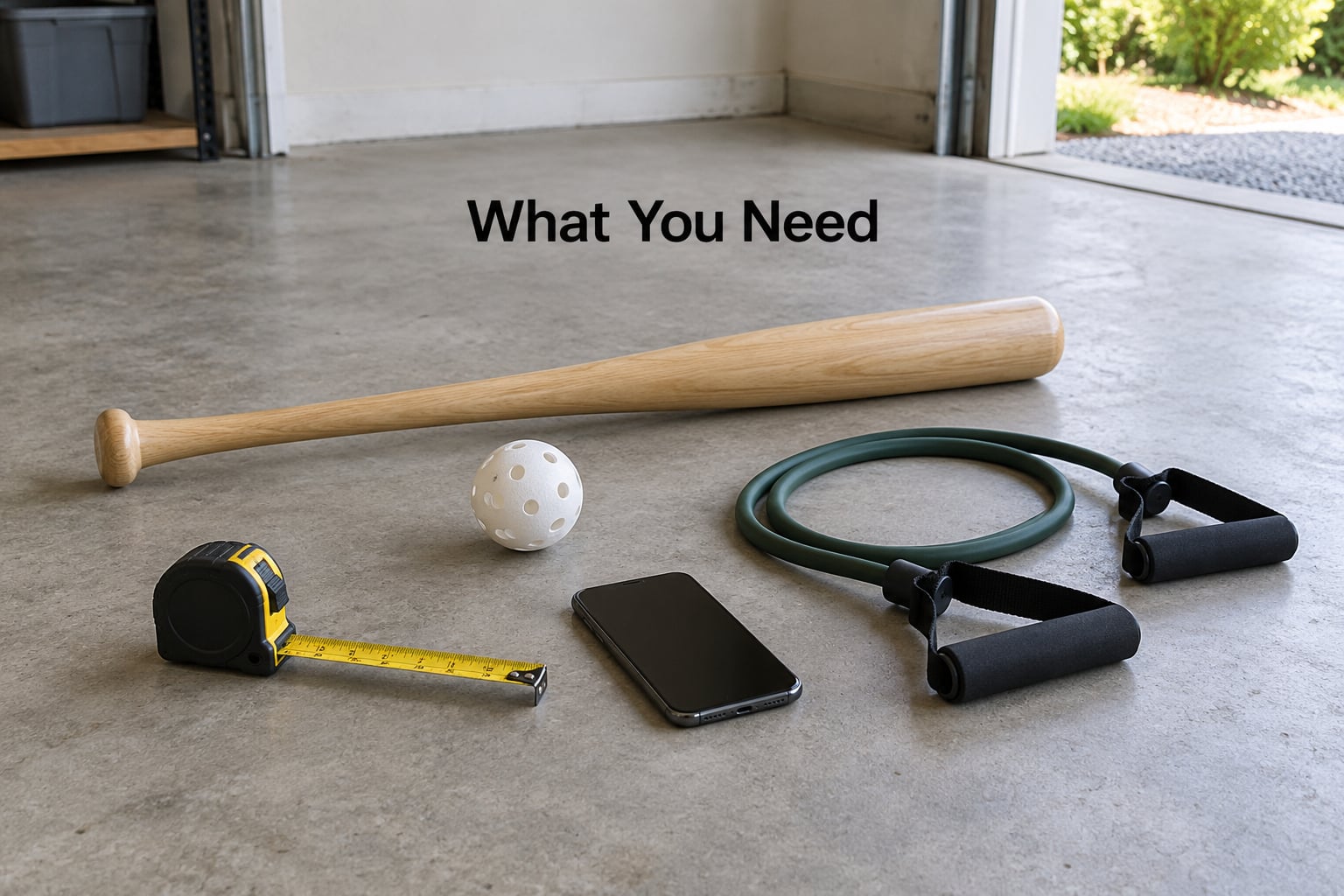
You do not need a cage, a weight room or a partner with a good arm. A short list covers the whole routine.
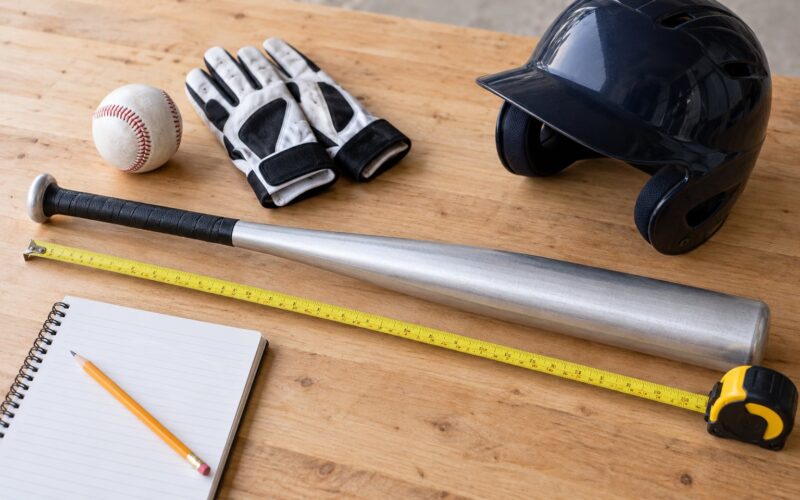
- A bat you already own. The same bat you swing in games is the one to train with, because a different barrel changes how the swing feels.
- Two or three soft practice balls. Foam or cloth-covered balls are safer indoors and kinder to walls than a hard regulation ball.
- An open space with clearance. A driveway, garage or yard works. Swing toward open air, not at a window, a parked car or anything a younger sibling might walk past.
- A wall, fence or open hitting lane. This gives you a rebound target and something to measure against.
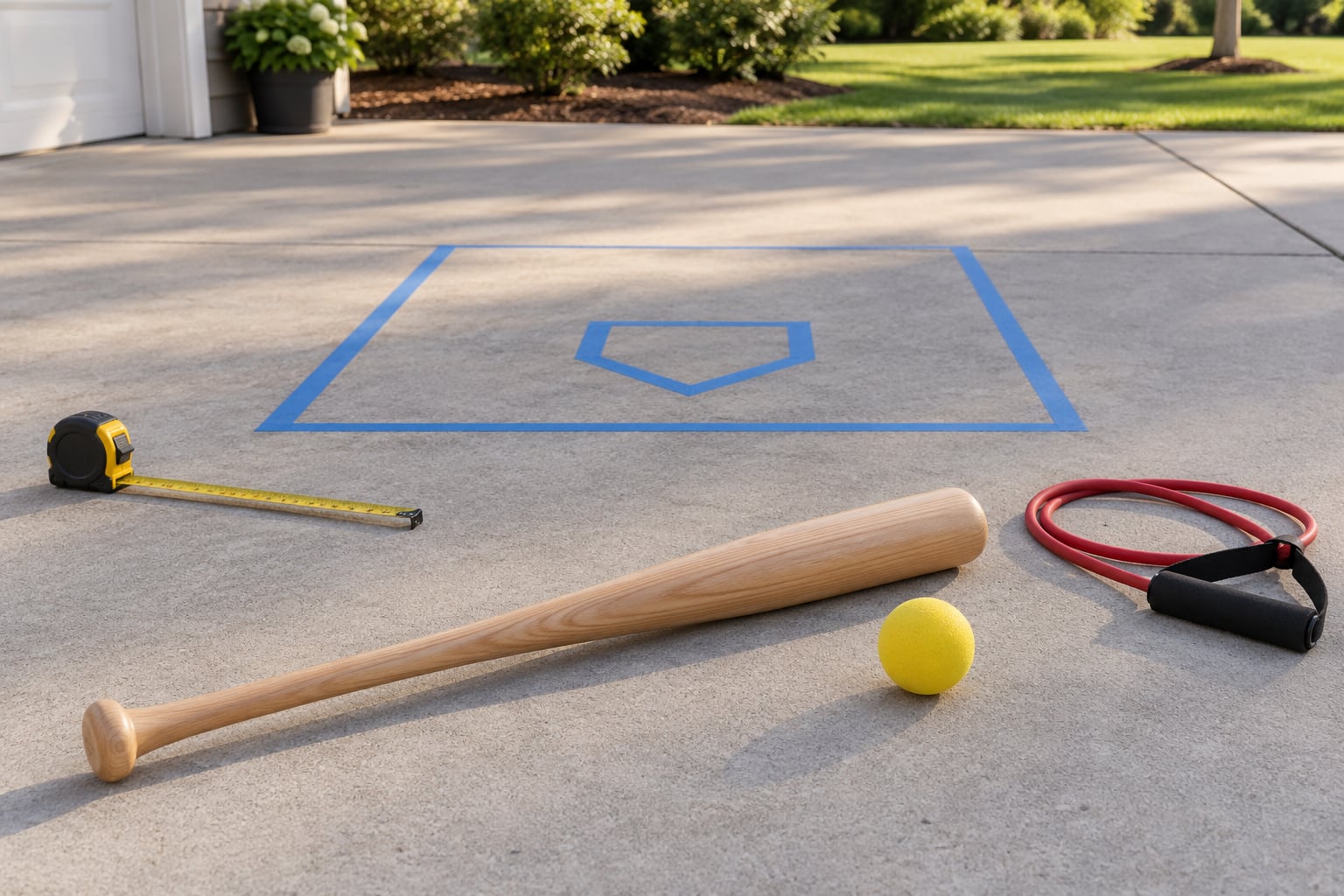
- A measuring tape. Tape marks the starting line and hitting area so every session looks identical.
- A resistance band with a handle, or a light PVC pipe section. Both do the job of a lighter bat and cost almost nothing.
- A phone on a tripod or propped up securely. Video is the cheapest honest way to track progress at home.
If you truly have nothing but a bat, you can still run four of the six steps: warm-up, speed ladder, rotation work and the self-toss timing drill. The remaining two need a partner or a rebound surface.
How to Improve Bat Speed With Drills at Home
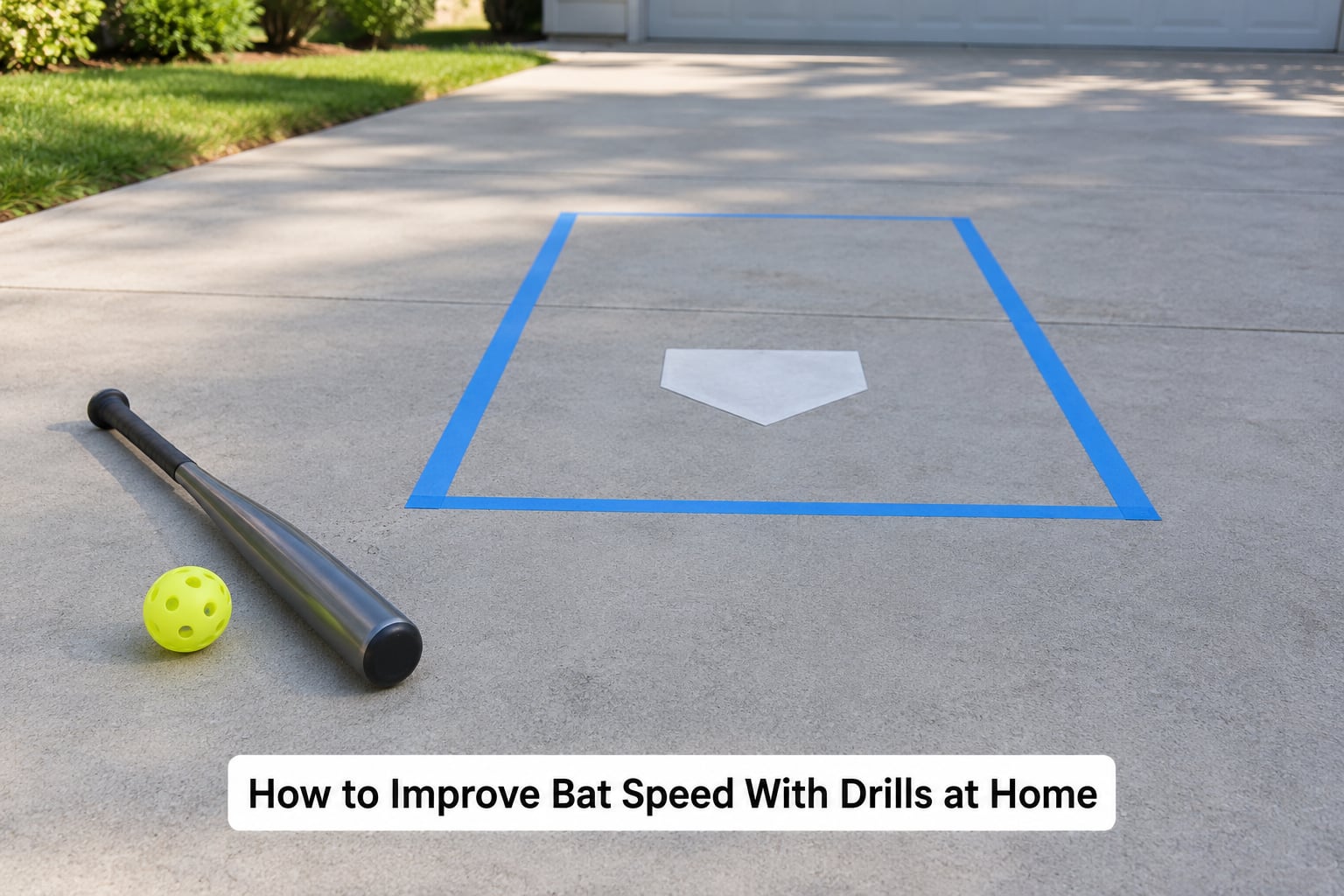
The method is simple: warm up slowly, train fast in short sets, mix lighter and heavier bats, and finish by testing the same swing the same way every time. Order matters more than any single drill.
A typical session runs 20 to 25 minutes. Do the warm-up, take two or three sets from each remaining drill, and stop while the swings still look good. Bat speed work is a nervous-system skill, and quality drops fast once technique breaks down.
Run the routine two or three times a week with a day or two between sessions. That spacing is what coaches recommend for young players, and it is the main reason home programs work better than daily grinding. Your body needs the recovery to actually adapt.
Where you sit on the scale matters for motivation. Published coaching benchmarks put major league bat speed in the 66 to 78 mph range, college around 61 to 73, high school roughly 57 to 71, and youth hitters near 40 to 56.
| Level of play | Approximate bat speed | What home training can move |
|---|---|---|
| Major league | 66-78 mph | Specialized sensors and coaches |
| College | 61-73 mph | Loadouts, strength work, video review |
| High school | 57-71 mph | Ball-weight contrast and rotation work |
| Youth (12 and under) | 40-56 mph | Most home routines live here |
Treat those numbers as context, not a scorecard. What matters over a training block is that your own swing is quicker than it was eight weeks ago, using the same bat and the same test.
Step-by-Step Home Bat-Speed Routine
Each step below has a purpose and a way to tell it worked. Move through them slowly the first few sessions. Stop immediately if you feel pain, dizziness or sharp discomfort anywhere, and get a qualified coach to correct anything that looks wrong rather than guessing at a fix.
1. Warm Up With Controlled Swings
Spend two minutes on shadow swings with no ball, then short half-speed swings at a soft ball held or dropped in front of you. Raise the speed in three steps rather than jumping straight to full effort.
You know it worked when your last rep is faster than your first but the swing still finishes in the same spot and you keep your balance through the finish. Warm-up quality is the whole point, not a formality to skip. Muscles that have not fired in order will not fire in order under speed later.
2. Use a Speed-Ladder Bat-Speed Drill
Mark three resting positions on the ground with tape, spaced about a foot apart, and take three swings from each one. Start at the back position, where the swing has the most room to accelerate, and walk forward as reps get cleaner.
Each set is five to eight hard swings followed by full rest. Quality reps matter more than volume here, which is why chasing maximum force on every repetition is a mistake: a swing that grinds and off-balances itself teaches the wrong pattern. Stop each rep on a controlled finish, then step back before the next one.
The tell for a good set is that swing three looks like swing one in speed and shape. If rep eight is a weak chop, you went too far.
3. Practice Rotational Wall Swings
Use a light PVC pipe section or a bat lighter than your game bat. Stand a few feet from a wall or open area and make short, deliberate swings that start from the ground up: legs load, hips lead, torso follows, shoulders come last, and the hands turn the barrel over.
The finish should be balanced. You can step away from the swing and still be standing square, which tells you the rotation carried the bat rather than the arms flinging it.
Common errors show up fast here. If the barrel casts behind you and over the head, your hands are rolling too early, so slow down and shorten the swing. If your front foot shuffles past your back foot, you are striding into the swing instead of rotating through it. Community coaches on r/BaseballCoaching and r/Homeplate consistently recommend working both a lighter and a heavier bat so the middle swing gets stronger, and the lighter implement is the one that fixes sequencing.
4. Build Timing With a Two-Contact Drill
This one works alone or with a partner. Self-toss the ball up, contact it on the way down, let it land, then contact it a second time before it stops. A partner version has them toss two balls in sequence at the same rhythm.
Keep the spacing generous, about twice your normal swing length, and use a foam ball if you are indoors. Stop the drill the moment you miss and cannot recover the ball cleanly, since chasing a loose ball is how a session turns into a trip to the emergency room.
Rhythm is the point. You are training the hands to fire on the same timing twice in a row, and one coach on r/Homeplate described scoring wiffle ball games by where the ball stops as a way to make this repeatable work fun for kids. Track how many second contacts you get out of ten. That number is your timing score.
5. Add a Short Front-Toss Speed Set
With a partner, have them toss from close range and slightly inside so your hands have to turn the barrel over quickly. Without a partner, toss the ball against a wall and hit the rebound. Ten quality contacts is plenty.
Grip firm but not squeezed, swing compact, and keep your head still through contact. The back foot should turn rather than the front foot reaching. If you lunge at the toss, you will outrun your own rotation and the bat will slow down.
Coaches on r/Homeplate point to inside-pitch front tosses as one of the few drills that directly trains quick hands, since you cannot see the ball early and must trust your timing.
6. Test and Record Your Progress
Once every two weeks, run a test that cannot change from session to session: same bat, same spot on the tape, same number of swings, same toss height or wall distance, same camera angle. Ten swings is enough to see a trend.
Film from the side at hip height so the barrel path shows. Watch the video for three things: how long the hands take to start, whether the barrel stays inside the ball, and whether the finish stays balanced. Those proxies tell you far more than trying to eyeball mph.
Do not present these as laboratory measurements. A home test is a direction of travel, and it is only honest if the setup never changes.
Common Mistakes
Swinging with the arms only. If your hips and legs are standing still, the barrel has to travel faster to reach contact, which is exactly backwards. Fix: slow the swing down to half speed and film it. Watch for the hips starting before the hands.
Chasing raw power every rep. Maximum-effort swings from the first repetition produce mechanics that fall apart by rep five. Fix: cap sets at five to eight swings, rest fully, and stop the set when the reps stop looking like the first one.
Using an unsafe ball or space. A regulation ball in a garage is a dented wall waiting to happen, and a swing that lands on a neighbour’s fence stops a program before it starts. Fix: foam or cloth balls indoors, and aim at open air rather than obstacles.
Changing the test setup every time. A new bat, a new camera angle or a different swing count makes two videos impossible to compare. Fix: write your setup on a sticky note and repeat it exactly.
Skipping the warm-up to save time. The two minutes of slow swings are what let the rest of the session be fast. Fix: never start a set with cold muscles, even on a ten-minute session.
Ignoring pain. Forearm soreness that lasts into the next morning, or a shoulder that aches during the swing, is information. Fix: rest, and if it persists, have a doctor look at it. Coaches in the community forums repeatedly flag shoulder and elbow problems in young hitters doing too many weighted swings too often.
Frequently Asked Questions
How long does it take to improve bat speed at home?
Most young hitters see a noticeable difference in swing feel within four to six weeks of consistent home work, and larger gains take two to three months. Progress depends on age, training age and how much the player already rotates well. Judge it by your own baseline video rather than anyone else’s number.
How can I measure bat speed at home without a radar gun?
Use the same ten-swing video test every two weeks: same bat, same taped spot, same camera angle, same swing count. Compare the clips for hand speed, barrel path and whether the finish stays balanced. Apps that estimate swing speed from video work as a rough trend tracker, but they are not laboratory measurements.
What equipment do I need for bat speed drills at home?
A bat, two or three soft or foam practice balls, about ten feet of open space, a measuring tape and a phone on a tripod. A resistance band with a handle or a light PVC pipe section adds an underload implement for rotation work. Skip the rest. Coach-supplied weighted bats are optional, not required.
How many bat speed drills per week should a young player do?
Two or three sessions a week, twenty minutes each, with a rest day between. That spacing lets the nervous system adapt and reduces the overuse risk that comes from daily swinging. Coaches on r/BaseballCoaching generally warn against heavy daily swing volume for players under twelve, and lighter, more frequent work is the safer default.
When should a hitter stop drilling and get professional help?
Stop immediately for pain, dizziness, or a shoulder or elbow that hurts during the swing. Persistent soreness the next morning means rest, and medical review if it does not settle. Also get a qualified coach involved if your rotation looks inconsistent after several weeks, since video and a second pair of eyes catch sequencing problems far faster than self-correction.
Conclusion
Start with the two-minute warm-up, then run the six drills in order, twenty minutes, two or three times a week. Track one consistent measure every other week and keep the setup identical, because that record is what tells you whether the work is landing.
When someone asks how to improve bat speed with drills at home, the honest answer is that the drills matter less than the repetition and the rest around it. Technique and safety come first, and raw power follows.