To maintain a fishing reel, rinse it in fresh water after every trip, brush salt and grit off the spool and housing, oil the handle, bail arm and line roller once or twice a season, and give the internals a deep clean with fresh grease about once a year. The whole routine takes about 20 minutes per trip and an hour for the annual service.
Most reel problems trace back to three things: salt left behind, dry metal rubbing on metal, and oil in the wrong place. Address those and a reel that feels fine today keeps working years later.
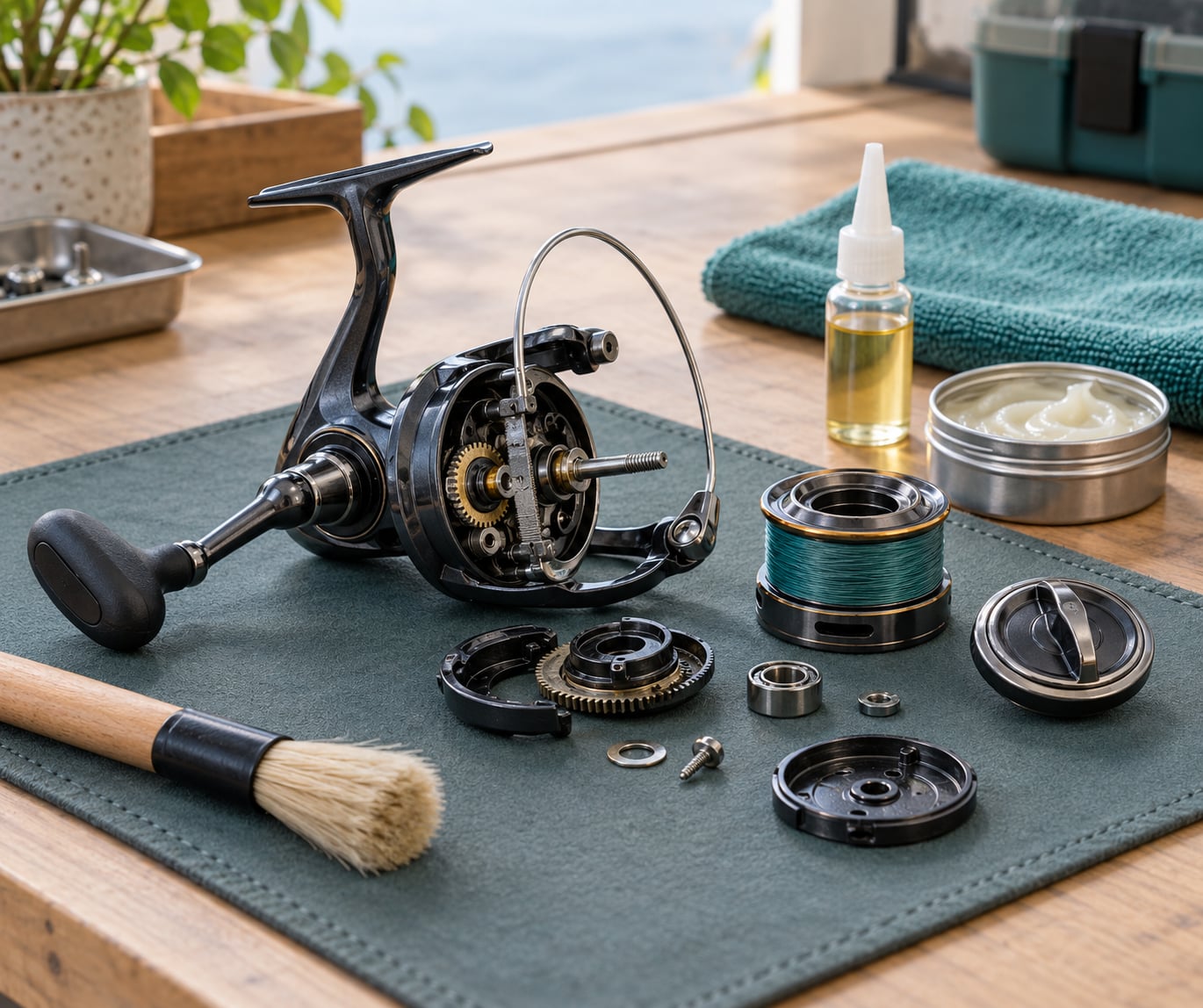
And yes, you can take a reel apart. Anglers fear this step more than any other, but the parts go back in the order they came out, and the right screwdriver does most of the work. If the idea still bothers you, steps 1 through 4 below clean a reel completely without opening the housing.
Table of Contents
- What You Need
- Step-by-Step
- How to Maintain a Fishing Reel Step 1: Check the Reel Before Cleaning
- How to Maintain a Fishing Reel Step 2: Remove the Line and Open the Housing
- How to Maintain a Fishing Reel Step 3: Brush Away Dirt and Salt
- How to Maintain a Fishing Reel Step 4: Clean the Spool, Drag, and Gears
- How to Maintain a Fishing Reel Step 5: Lubricate Moving Parts Correctly
- How to Maintain a Fishing Reel Step 6: Reassemble and Set the Drag
- How to Maintain a Fishing Reel Step 7: Test the Reel Under Light Load
- How to Maintain a Fishing Reel Step 8: Store It Properly After Fishing
- Common Mistakes
- Frequently Asked Questions
- How often should I maintain a fishing reel?
- What type of oil or grease should I use on a fishing reel?
- Can I use WD-40 to maintain a fishing reel?
- How do I know when a fishing reel needs new bearings?
- Should I remove all fishing line before cleaning a reel?
- How do I stop a fishing reel from rusting?
- Conclusion
What You Need
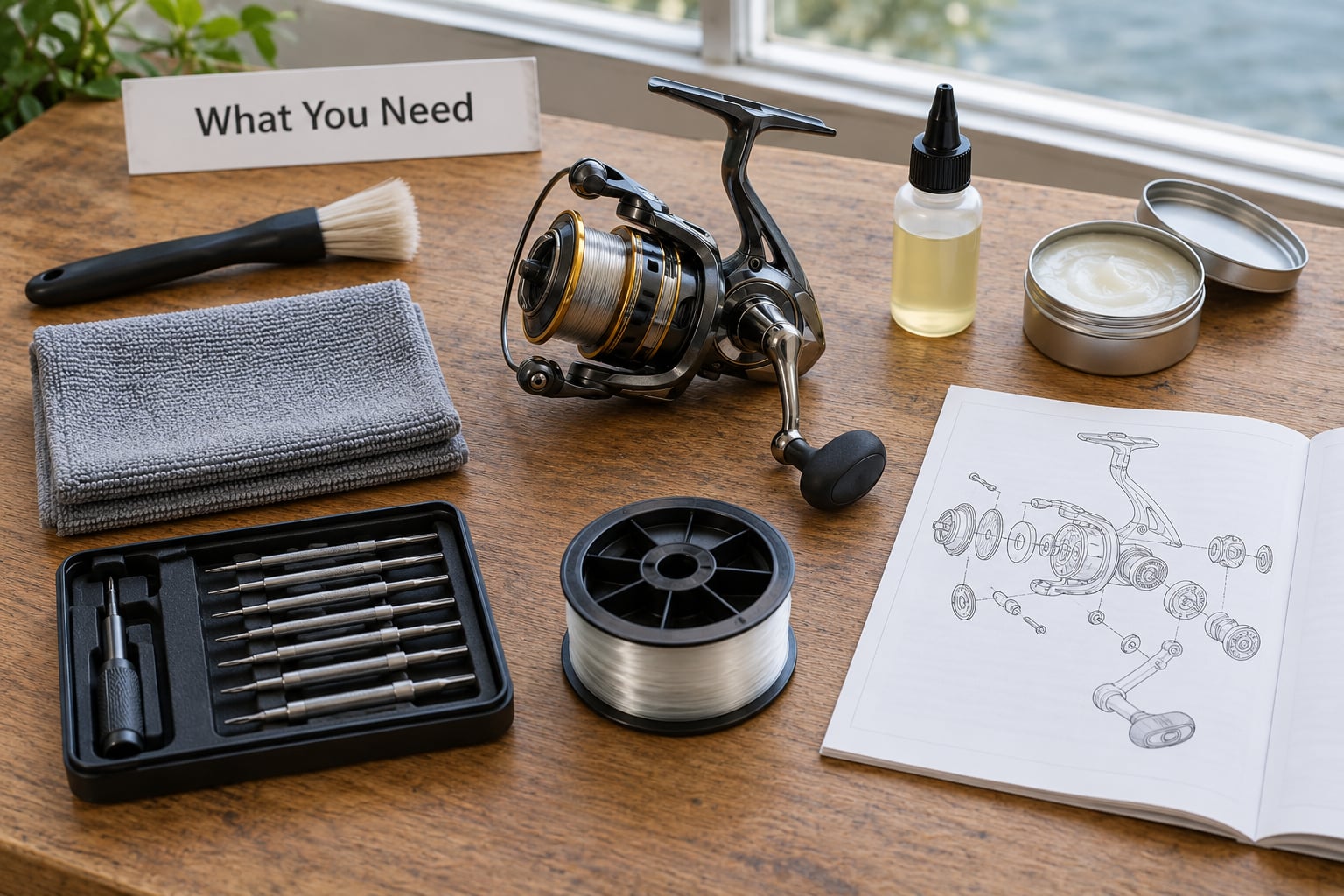
A soft-bristled toothbrush or a dedicated reel brush loosens caked salt without scratching the finish. A microfiber cloth dries and polishes without leaving lint on the spool.
Reel oil is a thin, penetrating oil for bearings and shafts. Synthetic reel grease is thicker and belongs on gear teeth and on the threads of drag and spool caps. Both are worth keeping in the tackle box.
A precision screwdriver set matters more than most people expect. The screws holding a side plate or a spool nut are small and often slotted, so a mismatched bit will strip the head and turn a 20-minute job into a parts hunt.
A small magnetic parts tray or a clean cup keeps screws, washers and springs together while you work. A pair of nylon pliers comes in handy for bent bail wires and crimps on the spool.
A bottle of 90% isopropyl alcohol or a dedicated degreaser flushes old grease out of gear teeth and around shafts. A can of corrosion inhibitor sprayed onto a cloth, never directly onto the reel, protects the finish between trips.
Finally, fresh fishing line in the size and type you actually use. Worn line abrades guides and drags, which makes an otherwise healthy reel feel rough.
Step-by-Step
Work on a towel, in good light, with the manufacturer’s manual nearby. It is the authority on lubricant type and placement for your specific model, and it takes two minutes to find.
How to Maintain a Fishing Reel Step 1: Check the Reel Before Cleaning
Before touching a rag, turn the handle and listen. A healthy reel makes a quiet, even whir with no gritty rattle, the spool spins freely under the bail, and the drag purrs when you pull line against it.
Also run a finger along every rod guide looking for nicks, check that the bail wire springs back straight, and confirm the handle knobs and reel foot are tight. What you find here decides your next move: dirt means cleaning, noise that does not improve after oiling means a service kit or a professional job.
How to Maintain a Fishing Reel Step 2: Remove the Line and Open the Housing
Strip the line off by running it under tension through the guide or by hand-winding it onto an empty spool. Release all drag tension before anything else, because a compressed washer set holds water against itself and causes drag chatter later.
For the exterior routine, you do not need to open anything. For the deep clean, remove the side plate or spool nut according to the manual, lay every screw in the tray in the order it came off, and photograph the mechanism before you touch it.
How to Maintain a Fishing Reel Step 3: Brush Away Dirt and Salt
With the housing open or closed, use the soft brush to lift dried salt, sand and plant matter off the spool, rotor, bail arm and foot. Wipe with a barely damp microfiber cloth, working around the drag cap and the underside of the spool where salt crystals hide.
Rinse with a low-pressure stream of fresh water or a gentle spray of warm soapy water, then towel dry. Never use a high-pressure hose, and never submerge a reel with a drag and bearings in place, because water gets driven straight into the mechanism. Compressed air is fine for blowing dust off a housing but can force grit deeper into the works, so keep it short and light.
How to Maintain a Fishing Reel Step 4: Clean the Spool, Drag, and Gears
Dab isopropyl alcohol on a cloth and wipe the spool lip, line guide roller and exposed screw heads. Clean the line roller with a soft brush if line has built up around it, since a grooved roller is a prime cause of line twist and premature wear.
Remove the drag cap to wipe salt film off the underside of the spool on spinning reels, and check that the drag washers are dry and lightly coated only with the grease the maker recommends. Do not change drag feel during a clean. Turning the drag star half a turn to “test” it defeats the whole point of doing the work dry.
Do not soak sealed or hybrid bearings in carb cleaner or paint thinner. Those solvents are forum favourites and they will attack the seals and destroy a bearing faster than dirt ever would. Use a dedicated degreaser applied sparingly, or flush with alcohol and move on.
How to Maintain a Fishing Reel Step 5: Lubricate Moving Parts Correctly
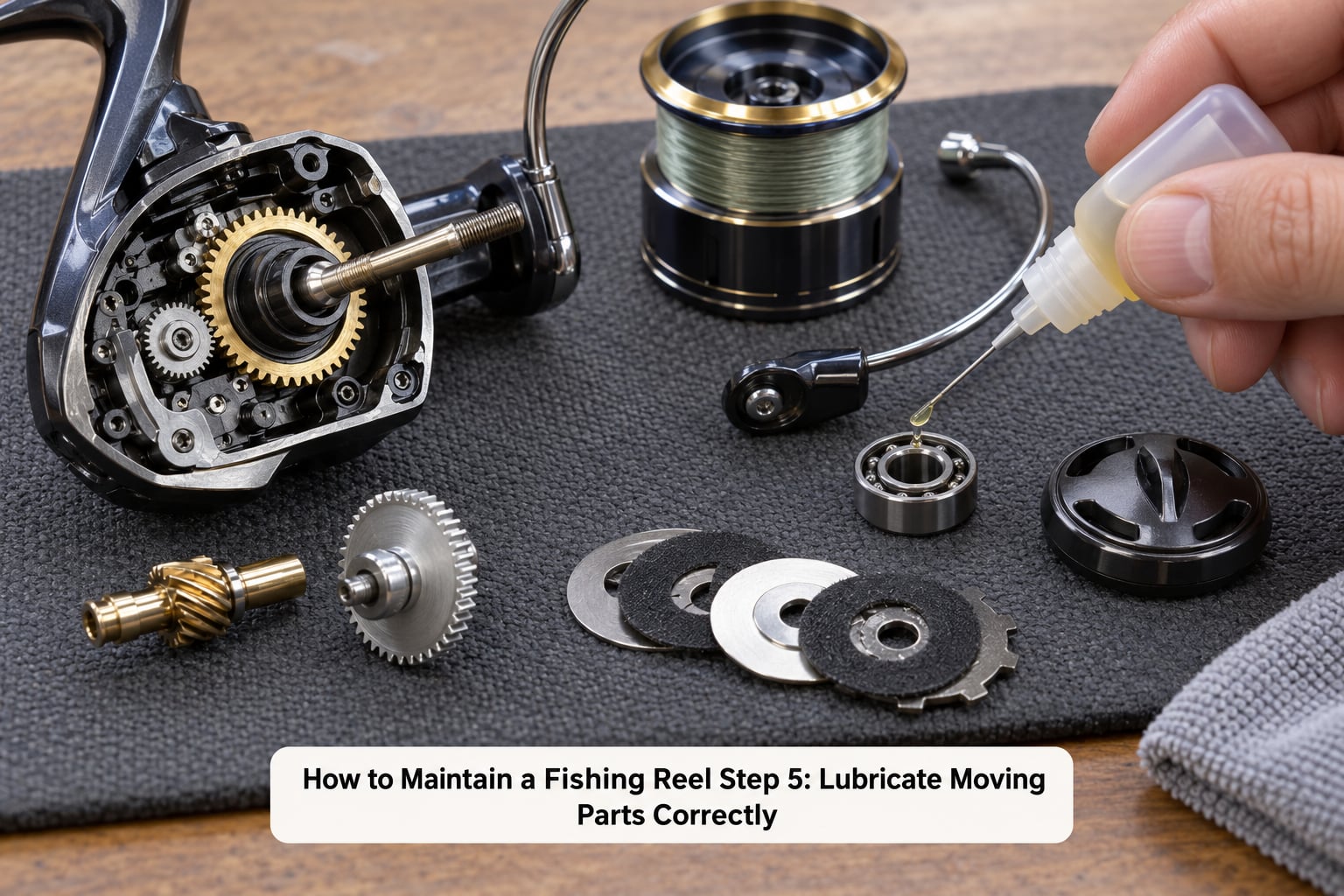
Apply oil sparingly, one small drop at a time, to the bail arm joint, the line roller bearing, the handle shaft and its bearings, the drive shaft on spinning reels, the spool shaft on conventional and baitcasting reels, and the level wind guide on conventional reels. One drop per point is enough, and a tiny drop is better than a generous one.
Use synthetic grease on the teeth of the main gear and pinion gear, and on threads where parts screw together. That gear grease job is the single highest-value DIY step on a reel and most owners skip it.
Never put oil or grease on the drag washers, inside the drag cap, on the spool lip where line sits, on a baitcaster level wind, or on the drag star. Oil on the drag makes it greasy and unpredictable, and excess oil runs down onto the clicker and onto your line. If you oiled a spool shaft with the wrong product on a conventional reel, free-spooling goes stiff and stays that way.
Blot every surface with a clean cloth before reassembling. If oil beads on the metal, you used too much.
How to Maintain a Fishing Reel Step 6: Reassemble and Set the Drag
Put the housing back together in reverse order, tightening screws evenly by hand until snug, then a quarter turn more. Over-tightening cracks side plates and strips heads in aluminum bodies, and a stripped screw costs far more than the service you were avoiding.
Route the line through the line guide and level wind as the manual shows, and set the drag from fully loose upward until line pulls with steady resistance rather than slipping in surges. A drag you can turn with your fingers is too loose; one that gives up halfway through a pull is too tight.
How to Maintain a Fishing Reel Step 7: Test the Reel Under Light Load
Reel a few turns of line back onto the spool so the level wind lays it evenly and no filler twist builds under the drag. Thread the rod, close the bail and check that the bail closes fully with the line seated in the roller groove.
Turn the handle through its full travel. It should spin freely, wind evenly, and make no rubbing or skipping sound. Hang a light line under modest tension and pull. Smooth drag, no line movement across the spool lip and no noise mean you are done.
How to Maintain a Fishing Reel Step 8: Store It Properly After Fishing
Air-dry the reel out of direct sun rather than sealing it damp into a bag. Squeeze excess water from the cloth, leave the drag loosened, and give the housing a light coat of corrosion inhibitor on a cloth so the protectant never sits wet on the internals.
For winter or any storage beyond a few weeks, remove the line, loosen the drag fully, keep the reel in a breathable container in a dry room away from heat, and skip the protectant if you plan to use it within the season. Sunlight and stagnant moisture together do more damage than a full season of fishing.
Common Mistakes
Using WD-40 as a lubricant. WD-40 is a degreaser and a water displacer. It is fine for a light cleaning step followed by an alcohol flush, and wrong as the oil you leave on bearings. Use dedicated reel oil instead.
Soaking the reel. Standing the whole reel in a bucket forces water past seals and into the drag. A quick low-pressure rinse and a wipe is all most reels need.
Oiling the drag. The most damaging beginner mistake there is. Oil contaminates the washers, drag feel goes inconsistent and the fix is a full drag service.
Over-tightening screws. Snug by hand plus a quarter turn. Cracked side plates and stripped screw heads are the price of force.
Forcing the housing. If a side plate or spool nut will not move, stop. You are meeting a cross-thread, a stripped screw or corrosion, and pressure only makes it worse.
Cutting back to old line. Brittle monofilament abrades guides and line rollers. Replacing line every six months or after heavy use is maintenance, not an upgrade.
Storing a damp reel. Trapped moisture plus a tightened drag causes rust bloom at the bail wire and pitted drag washers. Dry first, loosen second.
Skipping the gear grease. Oil on gear teeth wears in weeks. A thin film of synthetic grease on the main and pinion gears lasts a season.
One more worth naming: never blast a reel with a pressure washer or leave protectant sitting on line or in sunlight. Both are irreversible.
Frequently Asked Questions
How often should I maintain a fishing reel?
Rinse and towel-dry your reel after every trip, especially after saltwater or sand. Oil the handle, bail arm and line roller once or twice a season, or monthly if you fish hard every week. Give the internals a full strip, degrease and re-grease about once a year. Saltwater anglers should shorten every one of those intervals by half.
What type of oil or grease should I use on a fishing reel?
Use a thin penetrating reel oil on bearings, shafts and the line roller, and a synthetic reel grease on gear teeth and on threaded parts such as the spool nut and drag cap. Your manual names the right product for your model, and that answer beats any general advice. Stay away from general-purpose household oils and thick greases in cold weather.
Can I use WD-40 to maintain a fishing reel?
As a lubricant, no. WD-40 dissolves grease, leaves a residue that collects grit and is not designed to stay on a bearing, so it speeds wear instead of preventing it. As a degreaser it has a narrow legitimate use: a light spray on old grease, wiped off, then flushed with isopropyl alcohol before fresh oil goes on.
How do I know when a fishing reel needs new bearings?
By feel and sound. A bearing that needs replacing makes a gritty rattle that no amount of oil removes, makes cranking noticeably harder, and leaves the spool spinning with a wobble instead of a smooth glide. If cleaning and oiling have already been done and the noise persists, replacing bearings or sending the reel for service is the only fix.
Should I remove all fishing line before cleaning a reel?
For the exterior after-trip clean, no, simply leave the spool empty or with a little line and rinse the whole rig. For the annual deep clean, yes, strip the line completely so you can reach the spool, level wind and drag, and so old line cannot hide dirt. Remove any line that has been sitting unused for months even without a clean.
How do I stop a fishing reel from rusting?
Salt is the main culprit, so remove it the same day with a fresh-water rinse and a towel dry. Loosen the drag fully before rinsing so trapped water can escape the washers instead of sitting against them, and let the reel dry completely before storage. Wipe on a corrosion inhibitor from a cloth, never a direct spray, and keep reels shaded and out of stagnant damp.
Conclusion
Start today with the reel in your hand: turn the handle and listen for grit, check the bail wire for a bend, and look at every guide for a nick. That inspection takes two minutes and tells you whether you need a clean, an oil, or a service shop.
Then remove the line, loosen the drag, brush off the salt and grit, and rinse with a gentle stream of fresh water. Dry it properly, add one drop of reel oil to the handle and bail arm, and a light film of grease on the gear teeth when you do the seasonal job.
Keep to the cadence. A quick rinse after every trip, lubrication once or twice a season, and a full internal service about once a year is what keeps a reel casting as smoothly in year five as it did in the first month. Nobody will ever hand your reel back if you put it away wet and tight.