How to size a youth baseball bat comes down to four numbers: the player’s height, the player’s weight, the bat’s length in inches, and the bat’s drop weight. Age gets you into the right neighborhood, but it is the weakest of the four signals. Buy the length the player can control, pick the drop that matches their strength, and check the certification stamp against your league before you spend anything.
That is the whole rule. Everything below just helps you apply it without a tape measure and a guess.
Here is what parents get wrong most often. Charts get treated like law when they are really just a starting point that covers about 80 percent of kids, and marketing pushes everyone toward a longer, heavier bat. In practice, most youth hitters do better with a bat they can swing fast and keep through contact. You will see coaches on r/BaseballCoaching say the same thing, that a longer bat gave his son trouble finding the barrel and cost him contact he used to get.
Table of Contents
- What You Need
- Step-by-Step
- Check the League’s Bat Rules First
- How to Size a Youth Baseball Bat by Height and Age
- Understand Bat Length
- Understand Drop Weight
- Check the Bat’s Balance and Grip
- Have the Player Test It
- Common Mistakes
- Frequently Asked Questions
- Is a 28 bat too big for a 7 year old?
- Is a 30 bat too big for a 10 year old?
- What size bat should a 10U use?
- Is a drop 8 or drop 10 better?
- Is drop 5 too heavy for a 12 year old?
- What are the bat size rules for Little League baseball?
- Conclusion
What You Need
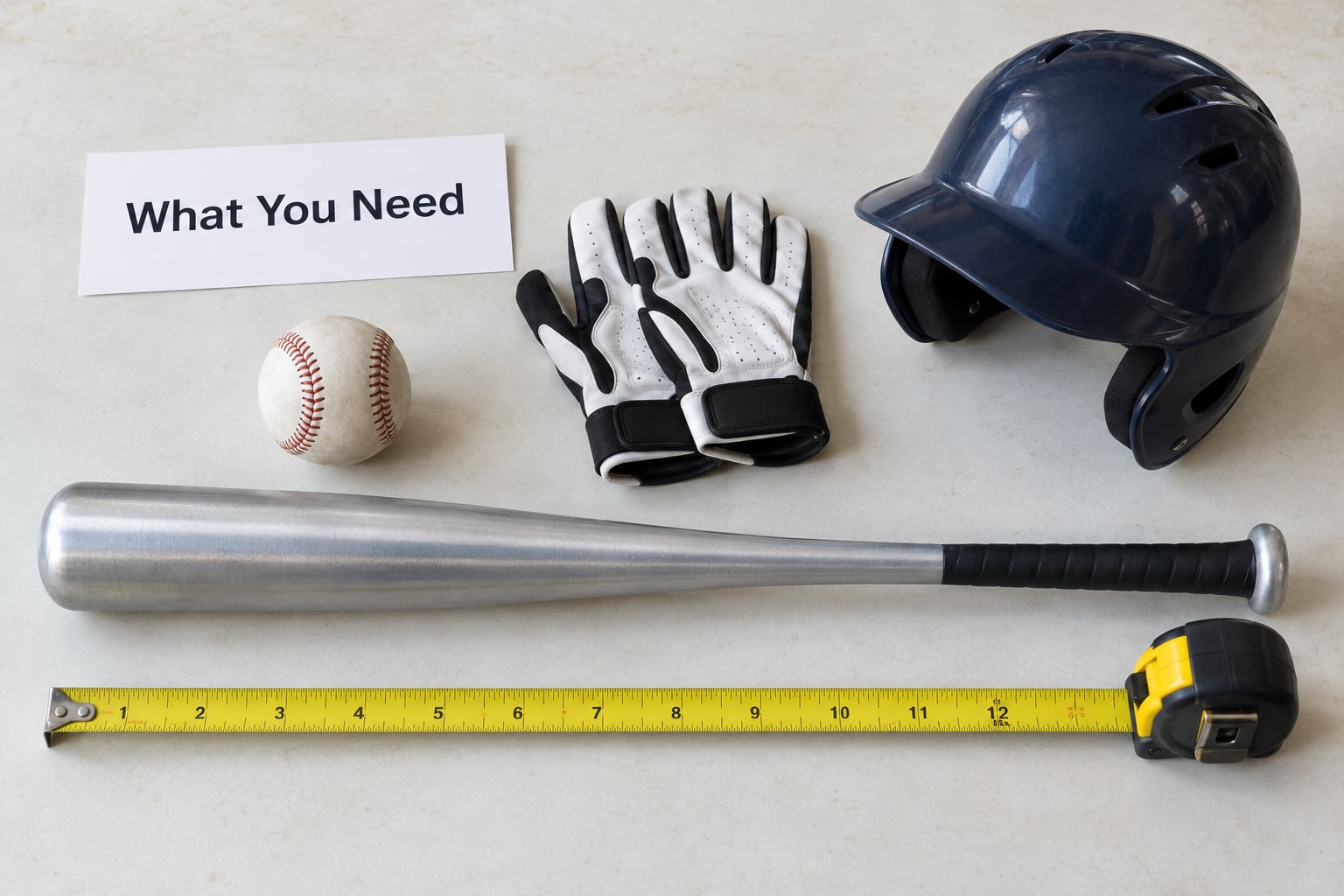
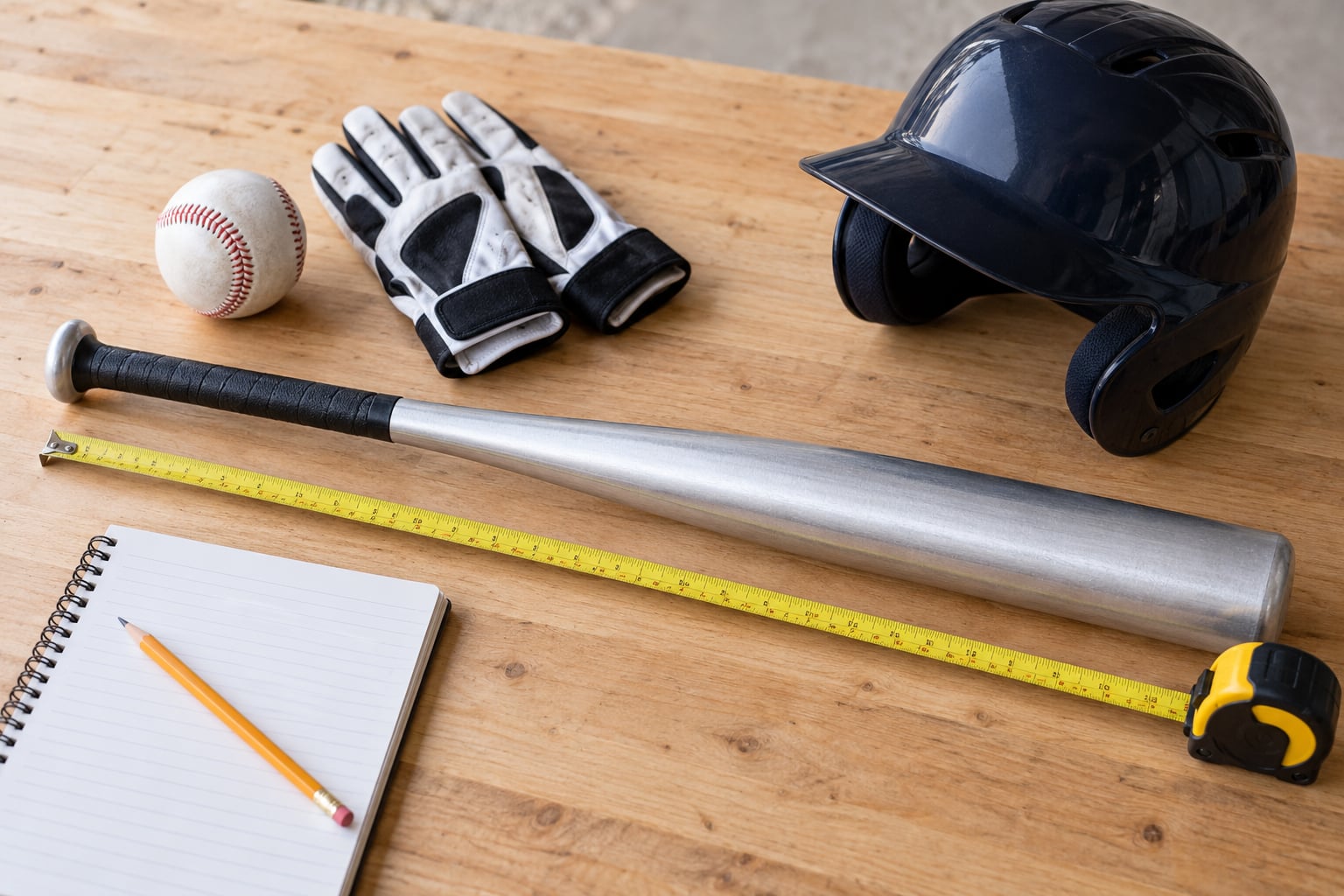
You need four things, and three of them you probably already know. First, the player’s height and weight, measured on a real scale, not estimated. Second, the rules your league plays under, which you get from your coach or league administrator, not from a bat company’s website. Third, a tape measure or a ruler long enough to measure a bat. Fourth, the bat’s length in inches and its drop weight, printed on the bat or the box.
One warning before you start shopping. Store staff at big-box retailers are widely reported to have no working knowledge of drop weight, and a lot of them will hand you whatever is on the shelf. Know your own numbers before you walk in.
Step-by-Step
Check the League’s Bat Rules First
League rules come first because they are the only part of this you cannot argue with. Divisions set a maximum length, a maximum barrel diameter, and often a minimum drop, meaning the bat cannot be too light. Tournament and travel ball play is usually stricter than local league play, and some tournaments restrict barrel diameter even when your league does not. Confirm the current rules with your coach or the league administrator before buying, every season, because they change.
Certification marks are the part parents get wrong most often, and the mistake is expensive. A USSSA bat is not legal in Little League play.
| Stamp | Max barrel | Where it is accepted |
|---|---|---|
| USA Baseball (USABat) | 2 5/8 inch for ages 9 and up; 2 1/4 inch for tee ball | Little League, USABA-sanctioned leagues, many rec leagues |
| USSSA 1.15 BPF | 2 5/8 inch | USSSA travel and tournament play; not Little League |
| BBCOR .50 | 2 5/8 or 2 3/4 inch (wood) | High school, and 13U in many tournaments |
Division length and drop limits also exist, and they cap what a chart can recommend. One published set of league regulations puts 7-9 year olds at 26 to 29 inches and -10 drop or lighter, 9-10 year olds at 28 to 31 inches and -10 or lighter, and 11-12 year olds at 29 to 32 inches and -9 or lighter. Your league may differ, so treat those numbers as an example of the format, not the standard.
How to Size a Youth Baseball Bat by Height and Age
Height is a better starting point than age. Two players can be the same age and differ by five inches, and a chart built on age alone will hand them the same bat. Height sets how far the bat has to travel for the player to control the barrel. Weight sets whether they can move it.
| Age | Typical height | Typical weight | Length | Drop | Barrel | Stamp to look for |
|---|---|---|---|---|---|---|
| 4-5 | 3 ft 4 in to 3 ft 6 in | 35-45 lb | 24 in | -12 to -13 | 2 1/4 in | USABat |
| 6-7 | 3 ft 6 in to 3 ft 9 in | 45-60 lb | 25-26 in | -11 to -12 | 2 1/4 in | USABat |
| 8-9 | 3 ft 9 in to 4 ft 0 in | 55-70 lb | 27-28 in | -10 to -12 | 2 5/8 in or 2 1/4 in | USABat or USSSA |
| 10-11 | 4 ft 0 in to 4 ft 4 in | 70-90 lb | 29-30 in | -9 to -10 | 2 5/8 in | USABat or USSSA |
| 12-13 | 4 ft 4 in to 4 ft 8 in | 90-110 lb | 30-31 in | -8 to -9 | 2 5/8 in | USSSA or BBCOR |
| 14 and up (high school) | 4 ft 8 in and taller | 110 lb and up | 31-33 in | -3 | 2 5/8 in or wood | BBCOR |
Two cautions about that chart. It is a starting point, not a verdict, and it will oversize some kids. Parents on r/Softball have raised the case directly, describing an 8-year-old daughter at 80 pounds and 58 inches tall whom the standard chart sends to a 30-inch bat when a 28-inch is likely to serve her better. Smaller-framed players, including plenty of girls, tend to get pushed onto bats sized for a heavier kid of the same height.
Second, the age rows lag real growth. A kid who is a full year ahead in height can usually move up a length early, and one who is behind usually should not. Height and weight tell you more than the number on the birth certificate.
Understand Bat Length
Length is the distance from the knob to the end of the barrel, measured in inches along the bat. It matters more than most parents expect. A coach on community.hsbaseballweb.com put it plainly: a longer bat slows down the swing, and the correct length is at least as important as the weight.
A longer bat gives more reach, which is why coaches who want power for a fast player will sometimes push for it. It also takes longer to get around and harder to keep through contact. Most youth hitters gain more from bat speed and barrel control than they lose from a shorter reach, which is why sizing down when in doubt is the standard advice among coaches. The risk of sizing down is a bat that feels too small and cannot produce enough exit velocity, or a composite bat that cracks under the load.
Most kids move up roughly one length step per age division, not per season. One coach on r/BaseballCoaching posted his son’s full path: 24-inch -12 at tee ball, 25-inch -11, then 26-inch -11 at 7U, 28-inch -13 at 8U, 28-inch -11 and -10 at 9U, 29-inch -10 through 10U, and 29-inch -10 in USSSA at 11U. Same child, same player, stepping up once per division and rarely faster.
Understand Drop Weight
Drop weight is the length of the bat in inches minus its weight in ounces. A 28-inch, 18-ounce bat has a drop of 10. That single number is how bat companies describe how heavy a bat feels for its length, and it is what you should read first when comparing two bats of different sizes.
| Length | Weight | Drop | Typical user |
|---|---|---|---|
| 24 in | 12 oz | -12 | Tee ball, ages 4-6 |
| 25 in | 14 oz | -11 | Tee ball and first coach pitch |
| 27 in | 17 oz | -10 | Ages 8-10 |
| 28 in | 18 oz | -10 | Ages 9-11 |
| 29 in | 21 oz | -8 | Ages 11-13 |
| 30 in | 25 oz | -5 | Tweener, ages 12-14 |
| 32 in | 29 oz | -3 | BBCOR, high school |
You do not need to do arithmetic in the store. Every bat is printed or boxed with a length, a weight in ounces, and usually the drop, and you can always subtract the two numbers yourself. What you should not do is confuse a drop number with total weight. The confusion is so common that parents on r/Homeplate ask about it repeatedly, reading “28 inch” and having no idea whether that bat weighs 18 ounces or 21.
A bigger drop number means a lighter bat for that length, which generally means faster swing speed and easier control. That is why the default for ages 8 to 12 is -10 or -11, why tee ball runs -12 and -13, and why players moving toward 13U and middle school step up to -8 or -9. A -5 is a tweener bat that bridges the youth and BBCOR worlds, and it is heavy enough that some 12-year-olds cannot move it well.
Check the Bat’s Balance and Grip
Numbers only get you into the right range. The fit comes from balance, grip, and barrel, and you need a hand on the bat to judge those.
Balance means the weight distribution along the bat. A balanced bat feels the same all the way through the swing and rewards bat speed. An end-loaded bat concentrates weight in the barrel, helps you feel the ball on contact, and usually slows the swing down. Younger and smaller players usually do better with something close to balanced.
Barrel diameter is the width of the barrel measured in inches. A 2 1/4 inch barrel is the classic tee ball and coach pitch size and is lighter on the hands. A 2 5/8 inch barrel is the standard youth and high school aluminum size. A 2 3/4 inch barrel is a wood bat size used at the high school level. Bigger barrels give a larger sweet spot, but the extra weight can take a swing away from a small hitter, which is why “most pop” is not the same as “best bat.” A bat that is too small can dent alloy bats and crack composite bats, and an undersized composite bat is the classic warranty-exception case.
Grip is the part parents skip. Have the player wrap all fingers around the handle without the pinky hanging off. Then look at construction and material briefly. One-piece bats are stiffer and transfer energy well for players who have one swing. Two-piece bats use a thinner handle and more flex, which helps contact. Alloy bats are durable and easy to hit, composites are lighter with more pop but need a break-in of roughly 150 to 200 swings, and hybrids split the difference.
Have the Player Test It
Three tests, about thirty seconds total, will tell you more than any chart. Each one has a clear pass condition.
| Test | How to do it | Pass condition |
|---|---|---|
| Hip check | Player stands beside the bat with the knob on the ground | Knob reaches roughly to the hip, not past it |
| Arm extension (knob test) | Hold the bat by the knob with one arm extended out to the side | Knob lands near the center of the palm when the arm is straight; if it reaches past the palm, the bat is too long |
| 30-second hold | Extend one arm straight out and hold the bat at the knob | The barrel stays level for 15 to 30 seconds without dropping |
The arm extension test circulates widely in parent groups as a rule of thumb, and it is the fastest one to run. There is also the chest-to-fingertip measurement several buying guides describe: stand the bat upright beside the player, mark the center of the chest, and see whether the barrel reaches the tip of the index finger. Use it as a second opinion, not a verdict.
Then have the player take real swings. A bat that passes all three tests can still fail if the swing falls apart: a long loopy arc, the barrel dragging behind the hands, shoulders dropping early, or contact that got worse two weeks after the bat change. When a coach or a qualified hitting instructor is worth the time, it is right after a bat change or right before a move up a division, because that is when a swing has to be rebuilt around the new length.
Common Mistakes
Buying by age alone. Correction: measure height and weight first, then use age only to check that the numbers are plausible.
Buying the longest bat the league allows. Correction: run the hip and arm extension tests, then pick the longest length that passes both. Coaches on baseball-fever.com judge it the same way, watching whether the swing stays connected rather than counting inches.
Ignoring the certification stamp. Correction: read the stamp before you buy, and match it to the league. A USSSA bat bought for Little League is the single most common expensive mistake.
Choosing a bat that is too heavy. Correction: a heavier bat produces more momentum but slower bat speed. For most youth players, the lighter drop they can swing fast wins.
Never handling the bat before buying. Correction: pick it up in the store, check the grip, take three or four slow swings in the aisle if you can, and buy the one the player can control.
Two more practical tips. If you are buying used, inspect the barrel closely for dents and cracks, look for the stamp, and expect no warranty from a private seller. And supervise practice, especially when a bat gets longer, because a longer bat means a longer swing arc with more space for someone to be standing in it.
Frequently Asked Questions
Is a 28 bat too big for a 7 year old?
For most 7 year olds, yes. A 28-inch bat usually belongs to a child closer to 4 feet tall and around 70 pounds. A 25 or 26 inch bat in the -11 to -12 drop range is the safer starting point for a typical 7 year old, and it passes the arm extension test more often. Height and weight beat age here, so measure both and confirm your league’s length limit before buying.
Is a 30 bat too big for a 10 year old?
For many 10 year olds it is too big, though not for all of them. A 30-inch bat needs roughly a -7 to -10 drop to stay inside most league rules, and only a child with real strength can move that weight at speed. Most 10 year olds do better with a 29-inch bat around a -9 or -10 drop. If the barrel drags after a month of practice, size down one inch.
What size bat should a 10U use?
A 29-inch bat in a -9 or -10 drop is the most common 10U starting point, with 28 inches a good choice for a smaller or newer player and 30 inches reserved for a strong, taller kid whose league allows it. Drop weight matters more than length at this age. Bring the bat to practice, run the hip check and arm extension test, and pick the longest length the player can control.
Is a drop 8 or drop 10 better?
For ages 8 to 12, the drop 10 is the safer default because it is lighter and easier to swing fast. The drop 8 fits a stronger or taller player who is ready for more mass through contact, and many players move to -8 around 11U or 12U. Judge it with the 30-second hold test rather than the label. If the barrel drops during the hold, take the lighter bat.
Is drop 5 too heavy for a 12 year old?
Often, yes. A drop 5 bat such as a 30-inch, 25-ounce model is a tweener bat meant to bridge youth and BBCOR play, and most 12 year olds cannot move it at a speed that helps them. A 30 or 31 inch bat around a -8 or -9 gives the same reach with less weight. Check with a coach, since a few strong 12 year olds handle a -5 fine and some leagues restrict the drop anyway.
What are the bat size rules for Little League baseball?
Little League requires a bat with a USA Baseball stamp, and a USSSA 1.15 BPF bat is not legal in Little League play. Divisions cap length and set a minimum drop, with common published limits of 26 to 29 inches and -10 or lighter for ages 7 to 9, 28 to 31 inches and -10 or lighter for 9 to 10, and 29 to 32 inches and -9 or lighter for 11 to 12. Verify the current rules with your league administrator, since they change.
Conclusion
Start with the league, not the bat. Confirm the certification stamp and the division’s length and drop limits, then measure the player and compare length against drop weight using the chart as a starting point rather than a rule. Finish with the three at-home tests, and buy the longest bat the player can hold out at arm’s length and swing with a connected, level barrel. Revisit it once per age division, not every season.