Only a physical barrier reliably keeps deer out of a garden. Cornell Cooperative Extension’s guidance is blunt: a fence needs to be eight feet tall, because deer can jump roughly eight feet from a standing start, and anything shorter works only when you also block the view over the top. Repellents, sprinklers and noisemakers help, but on their own they lose their effect in a few weeks.
So if you have been searching for how to keep deer out of a garden and every spray, bar of soap and shiny tin foil has let you down, nothing went wrong with your technique. You were asking a scent to do a fence’s job.
The good news is that most gardens can be protected in a weekend. What follows covers the materials, the install order, and the two failure modes that trip people up: an open top on a low fence, and deer getting used to whatever is scaring them.
Table of Contents
- What You Need
- Step-by-Step: How to Keep Deer Out of a Garden
- Identify where deer enter
- Install a physical barrier
- Add motion or scent deterrents
- Change the garden environment
- Test and maintain the setup
- Common Mistakes
- Frequently Asked Questions
- What is the best way to keep deer out of a garden?
- How tall does a deer fence need to be?
- Does deer netting work around vegetable gardens?
- What plants do deer avoid?
- Are deer repellents safe for pets and children?
- Conclusion
What You Need
The list is shorter than most people expect, and you can mix and match by garden size. A single raised bed needs a hoop and a roll of netting. A half-acre vegetable plot needs posts, netting and a gate.
- Posts. 8-foot cedar or metal posts for a full perimeter. 5-foot posts are enough if you are building the open-top design with a netting ceiling.
- Deer netting or wire mesh. Black or white garden netting with a small mesh, or 1/2-inch welded wire. The mesh has to be tight enough that a deer cannot push its nose through and walk on it the way it would push through chicken wire.
- Zip ties, clips or staples for fastening netting to posts, plus a few extra for repairs after storms.
- A post driver and a hammer, or a mallet, depending on whether your posts go in the ground or get driven.
- Scissors or wire snips for cutting netting without fraying the edges.
- Gloves for handling wire and staples, and for anyone with sensitive hands.
- A gate. Any gate you add has to close on its own, or you will have found a very tidy hole straight into the salad bar.
- Repellents and motion devices, optional but useful: a motion-activated sprinkler, a radio, a solar red-beam light, or a commercial deer spray containing putrescent egg solids or capsaicin.
- Plant cages or hoops for individual tomatoes, young perennials and fruit trees, which are the first things deer go for.
Step-by-Step: How to Keep Deer Out of a Garden
Identify where deer enter
Walk the perimeter at dusk or first light with a flashlight and find the breach before you buy anything. Deer rarely invent new routes once you have blocked the old one.
Look for a gap of 18 inches or more along the bottom of an existing fence, since that is all a browsing deer needs to slip under. Check the corners where two fence runs meet, every gate, and the gap between a fence and a hedge, shed or tree line.
On the ground, the evidence is easy to read: split hooves in soft soil, flattened grass, nipped stems and a trail of missing buds running along a line. Those lines usually connect your garden to nearby woods, and that corridor is where you want your barrier and your first deterrent.
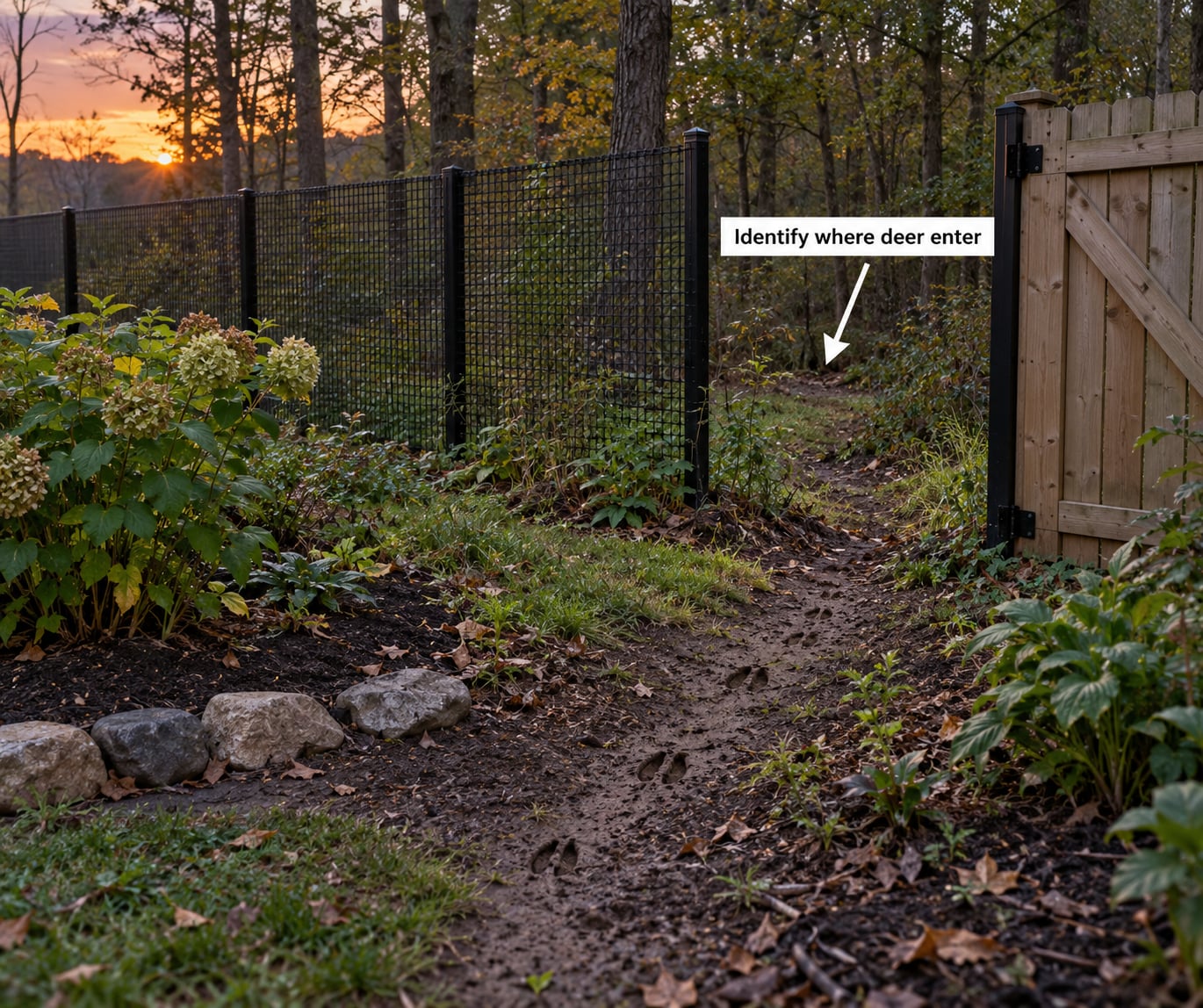
Check the top of any existing fence too. An enclosed-looking fence with an open top is a common false sense of security, and a ring of netting laid over the top at a slight outward droop closes it quickly.
Install a physical barrier
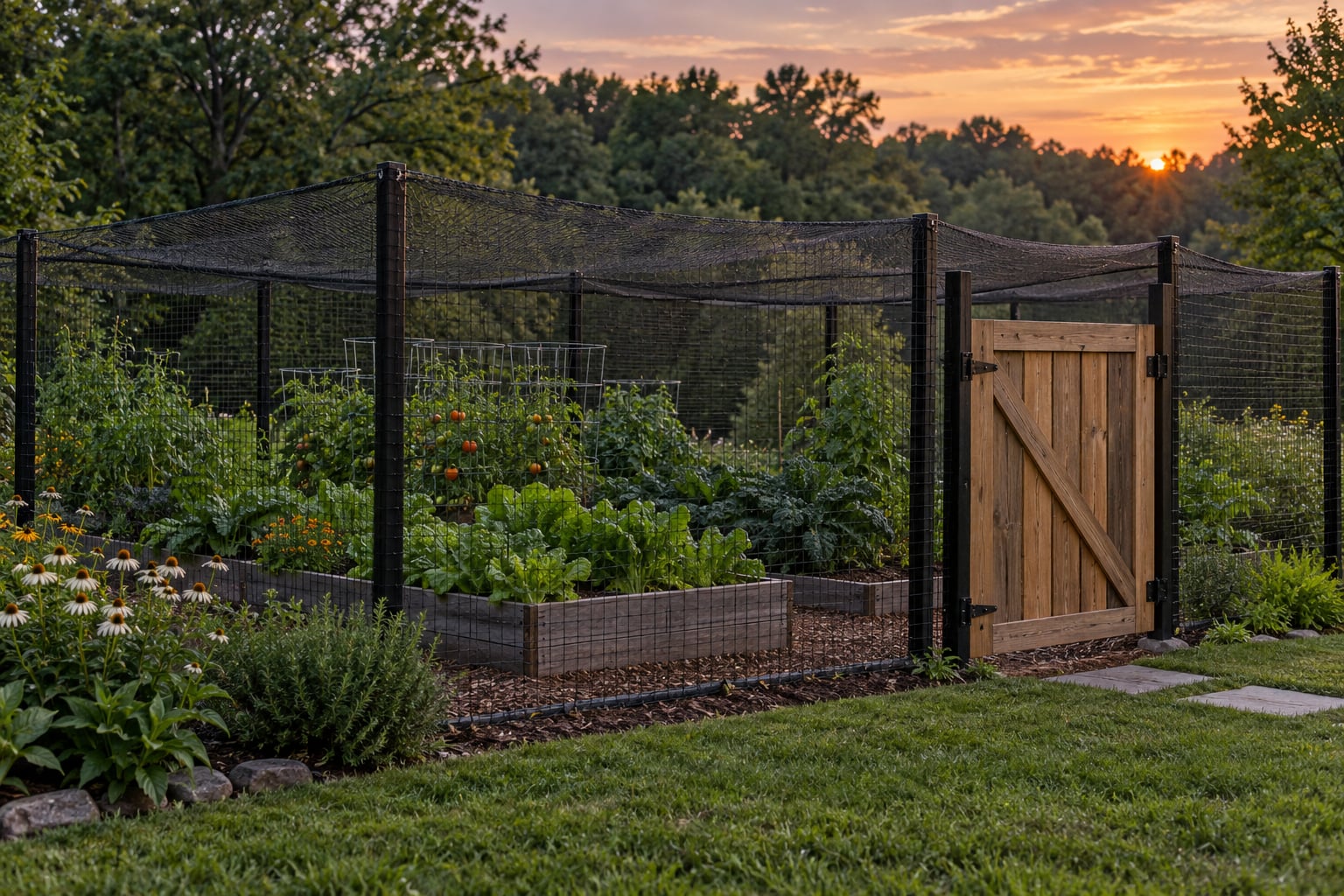
Pick the height and layout that match the pressure. Suburban gardens with a feeder hanging nearby usually hold up fine with a 5-foot fence plus a netting ceiling. Rural acreage and open tree lines usually call for the full 8 feet.
| Barrier | Height | Jump-over risk | Best fit |
|---|---|---|---|
| Netting fence, solid view | 8 ft | Very low | Acreage, wooded edges |
| 5 ft fence with netting ceiling | 5 ft plus droop | Low, since the landing is unseen | Most suburban gardens |
| Open-top 5 ft fence | 5 ft | High, deer simply step into the bed | Gardens without a top closure |
| Electric polytape strands | 4 to 5 strands, 6 to 42 in | Low while the shock stays memorable | Large perimeters, low visual impact |
| Two fences 5 ft apart | 5 ft plus 5 ft | Very low, no running start | Yards with deer pressure from one direction |
Set posts every 8 to 10 feet, drive them at least a foot into the ground, and stretch the netting tight. Tension matters more than material: a slack net sags into a ramp a deer can step over. Fasten the top and the bottom, then pin the bottom edge to the soil with staples or a buried trench so nothing can work underneath it.
The netting ceiling is the cheapest fix for a short fence. Stretch net across the top of a 5-foot run and let it droop 18 to 24 inches toward the inside, angled down rather than straight across. Gardeners report that deer will not jump into something they cannot see the bottom of, which is also why visible mesh outperforms the floppy chicken-wire look most people try first.
For electric fencing, string four to five strands of polytape on fiberglass or steel posts at roughly 6, 18, 30 and 42 inches, run the wire to a solar or mains energizer, and bait it by smearing peanut butter onto strips of aluminum foil hung on the wire. The first nose-to-wire contact teaches the lesson; the strand spacing is what makes it work on a nose and chest rather than a leg. Keep it powered year-round, because deer that get a quiet period will test it again.
Close the gate story before you start planting. A self-closing gate or one you prop open on the way out is the difference between a sealed garden and a suggestion.
Add motion or scent deterrents
Deterrents work by startling or confusing deer, and they only work while the deer still expect them. A motion-activated sprinkler is the strongest single device most gardeners buy: the spray, the light and the sound of the valve all fire at once.
Position these on the trail lines you found at dusk, not only at the fence. A sprinkler in the middle of an open lawn teaches a deer nothing about the barrier you just built.
Rotate everything that makes noise or light. Moving a sprinkler, a radio or a red-beam light to a new spot every six to eight days keeps deer from learning a pattern, and this single habit explains why most deterrent setups fail within a month. A box fan rigged to an inflatable bag, triggered by a motion-sensing light and wired to a radio is a cheap version of the same idea that works across a large yard.
Scent and spray deterrents are a supplement, not a replacement. Ones built on putrescent egg solids or capsaicin do knock deer back off a treated line for a while, and they need reapplication every few days and after every rain. Follow the label on any edible crop, and keep people and pets out of a treated bed until it has dried.
Change the garden environment
Deer are not looking for your tomatoes specifically. They are following food and cover, and the single most effective change you can make is removing the reason they showed up.
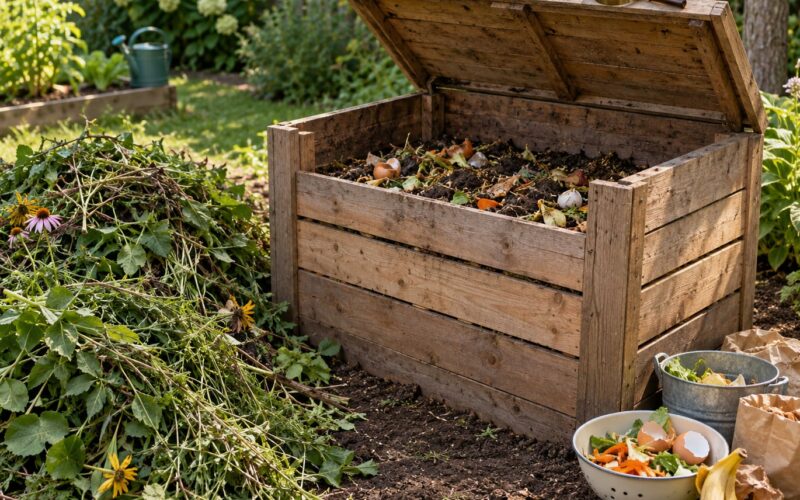
Take down or relocate bird feeders, especially in the open season, and store livestock feed and compost in sealed containers. Rake up fallen apples and other dropped fruit, and fence or net a fruit tree close to the house. In deer country, damage often starts the year a feeder went up, not the year the garden was planted.
Choose plants deer pass over. Strongly scented or aromatic plants, toxic natives and fuzzy or leathery leaves get browsed less often:
- Vegetables deer tend to avoid: onions, garlic, leeks, rhubarb, squash, cucumbers, pumpkins, tomatoes in some plantings, and most strongly aromatic herbs.
- Perennials and flowers they pass by: black-eyed Susan, foxglove, cardinal flower, bergamot, coneflowers, yarrow, and ornamental grasses.
- Fruits they still try: apples, pears, peaches, berries, sweet corn, beans, peas and most brassicas, which is why these get cages rather than optimism.
Cover individual crops where the perimeter is still thin. A wire cage around each tomato plant, a hoop tunnel with row cover over a brassica row, and a 3-foot welded wire cylinder around each newly planted perennial will save the crop while the rest of the garden buffer grows in. Deer browse new growth hardest in the first two years, so young fruit trees are the priority.
Keep the boundary visible and clean. Mown grass along the fence line, no weed-choked gaps, no stack of bags the deer can use as a step.
Test and maintain the setup
Check for fresh tracks every week or two, right after dawn. A clean week means the barrier is doing its job; tracks that stop at one corner tell you exactly where to go next.
Inspect the netting after every wind event. Storm damage shows up as a sagging panel or a popped staple, and a small repair on day two costs an afternoon instead of a full re-tie on day ten.
Keep a simple list of what you did and when: which sprays went on, which day the sprinkler moved, where the last repair was. When a method stops working, the fix is almost always to change something, not to add more of the same scent.
Common Mistakes
Almost every failed deer setup comes down to one of these.
- A gap under the fence. A low, sagging bottom edge is an open door. Staple or bury the netting along its entire length.
- Relying on repellents alone. Scent and noise fade in two to three weeks. They work as the second layer, never the first.
- Leaving the top open. A neat 5-foot fence that deer step over is the most common build mistake. Add the netting ceiling or go to 8 feet.
- Forgetting the gate. One unlatched gate undoes the whole run, especially if it swings toward the garden.
- Cheap, wide-mesh netting. Deer push through floppy netting and walk on it. Tight mesh, well tensioned, beats heavy mesh at half the effort.
- Putting every deterrent in one place. Sprinklers, lights and repellents clustered together teach deer exactly where the safe corridor is. Spread them out and move them around.
- Expecting one solution everywhere. Suburban yards with feeders and rural lots with tree-line access need different barriers. A deer biologist is a good second opinion if damage keeps recurring.
- Attributing every bite to deer. Rabbits and woodchucks leave different damage, and the fence that stops deer will not stop them. Check before you buy more netting.
Frequently Asked Questions
What is the best way to keep deer out of a garden?
A physical barrier, full stop. For most suburban gardens, a 5-foot fence with a netting ceiling that droops inward blocks deer effectively at a fraction of the cost of an 8-foot fence. Rural lots and yards backing onto woods usually need the full 8 feet. Add motion-activated sprinklers and scent deterrents on top, rotate their position every week or so, and remove bird feeders and fallen fruit that are pulling deer into the yard.
How tall does a deer fence need to be?
Eight feet if you want a visible solid barrier, because deer can jump about eight feet from a standing start. Below that, height alone fails. Either block the view over the top with a netting ceiling on a 5-foot fence, or space two 5-foot fences about 5 feet apart so deer cannot build a running start. Open-top fences shorter than 8 feet invite deer to step into the garden rather than jump it.
Does deer netting work around vegetable gardens?
Yes, and it is often the best value for a small plot. Small-mesh garden netting, firmly tensioned and stapled to the ground along the bottom, reads as a spider web to deer, and they will not push through a strong one. Many gardeners also run netting across the top of a 5-foot frame so nothing can drop in from above. Inspect it after storms and repair sagging panels quickly.
What plants do deer avoid?
Onions, garlic, leeks, rhubarb, squash, cucumbers, pumpkins and strongly aromatic herbs are browsed less often, as are perennials such as black-eyed Susan, foxglove, cardinal flower, bergamot, coneflowers and yarrow. Deer-resistant is not deer-proof, and a hungry deer will try anything inside a garden with nothing else available. Keep cages on tomatoes, berries, brassicas and young fruit trees.
Are deer repellents safe for pets and children?
It depends on the product. Follow the label exactly, spray plants and soil rather than produce, and keep pets and small children off treated areas until everything has dried. Putrescent egg solids and capsaicin sprays are unpleasant rather than poisonous to people, but concentrated capsaicin products can irritate eyes and airways. Keep any repellent container closed and out of reach, and never apply a product not labeled for the crop you are treating.
Conclusion
Start by finding out where the deer are getting in, then close that route with a continuous physical barrier: 8 feet of tensioned netting on open ground, or a 5-foot fence with a netting ceiling in a suburban yard. Everything else, repellents, sprinklers, lights and plant choices, is a second layer that keeps working only when you rotate it and maintain it.
Check the tracks weekly, repair netting fast, and pull the bird feeder down before 2026. That combination is what a protected garden looks like the following spring.