Bare patches repair fast when you fix the cause first, loosen the soil, sow matching grass seed, and keep it evenly moist. Most lawns show bare spots from compacted soil, pet urine, shade, or drought stress. About 30 to 60 minutes of prep work plus two to three weeks of watering fills in a patch the size of a dinner plate.
The part people skip is diagnosis. Seed thrown onto hard, weedy, urine-soaked ground fails every time, and the patch comes back wider the following season. Work out what killed the grass before you open the seed bag.
Table of Contents
- What You Need
- Step-by-Step: How to Fix Bare Spots in a Lawn
- 1. Identify Why the Grass Is Missing
- 2. Remove Dead Turf and Loosen the Soil
- 3. Add a Thin Layer of Soil or Compost
- 4. Choose the Right Grass Seed: How to Fix Bare Spots in a Lawn Correctly
- 5. Cover, Water, and Keep the Patch Protected
- 6. Support New Growth and Repair the Edges
- Common Lawn Repair Mistakes
- Frequently Asked Questions
- Will bare spots in a lawn grow back?
- Can I just throw grass seed on bare spots?
- Can I put topsoil over existing grass in my lawn?
- How can I fix large bare patches in my lawn?
- How long does it take for bare spots to fill in?
- How do I repair a lawn damaged by dog urine?
- Conclusion: Start With the Cause, Then Reseed
What You Need
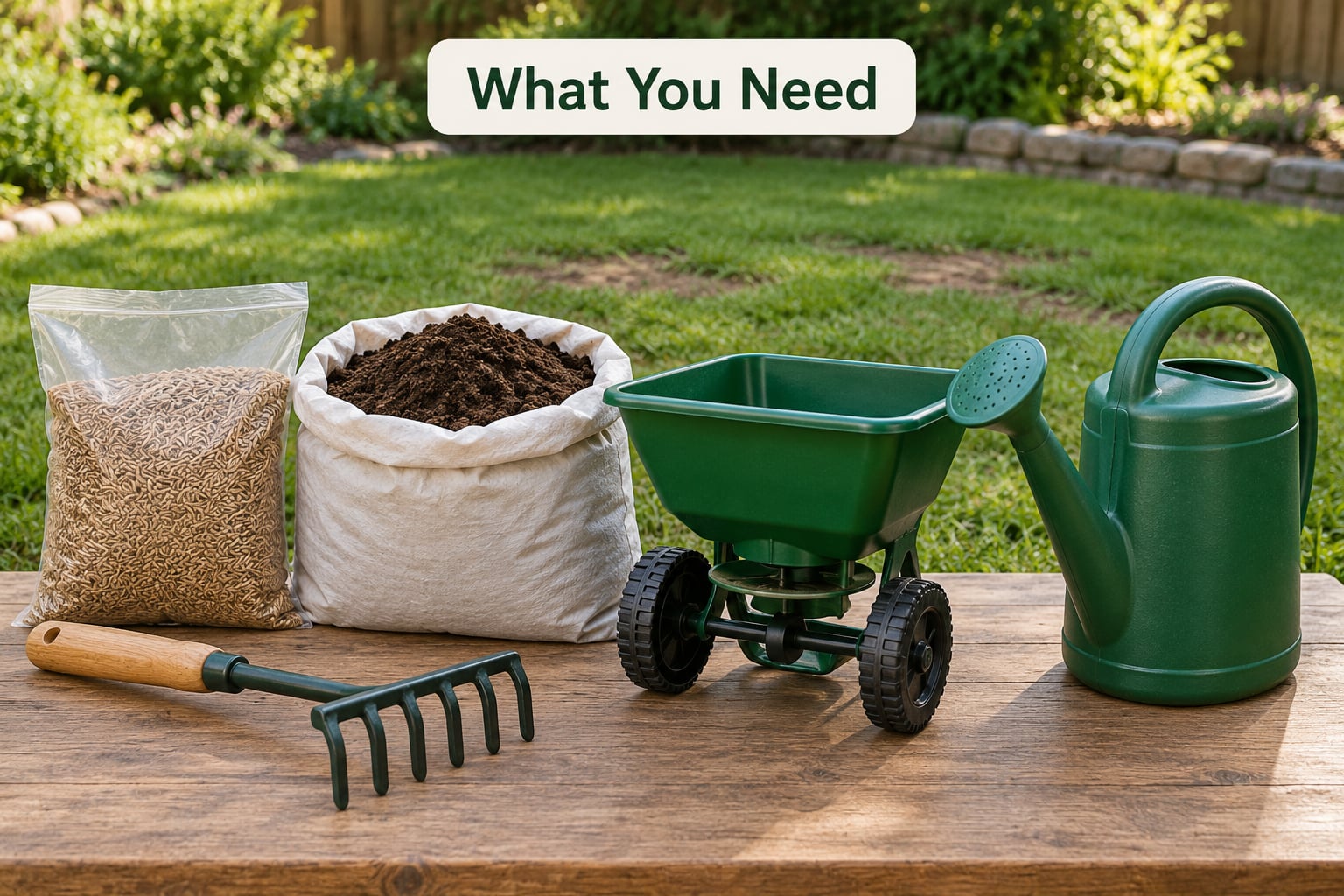
Most of this list costs less than one bag of sod and probably lives in a garage already. The one thing worth buying properly is seed that matches the grass already growing around the patch.
- Grass seed matched to your lawn. Check the seed bag label, your original sod invoice, or ask a local garden centre for a small sample of what is growing in your neighbour’s turf.
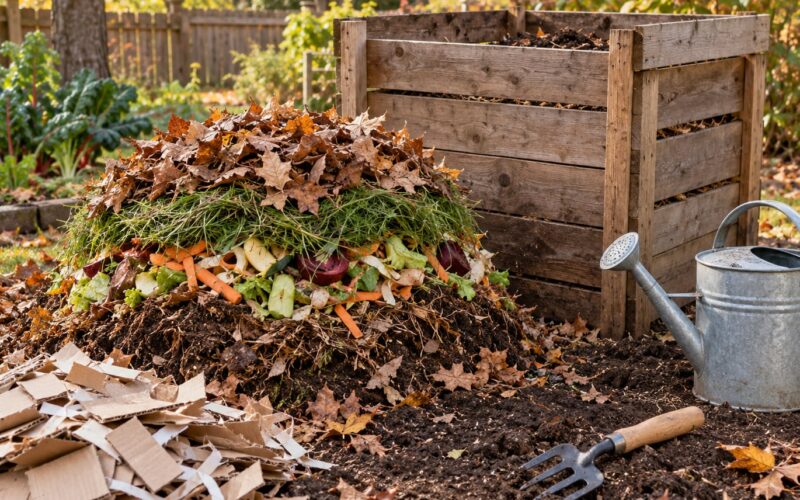
- Screened topsoil or compost. Compost is better for feeding the soil; screened topsoil is better for levelling. Many gardeners use a 50/50 blend.
- A hand rake or garden rake for clearing dead material and breaking up the soil surface.
- A garden fork or hand trowel for loosening compacted ground without turning the whole patch upside down.
- A hand spreader for small patches, so seed lands evenly instead of in one heavy lump.
- A hose with a spray nozzle or a small sprinkler, plus a watering can for the first few days.
- Optional: a soil pH test kit, a leaf blower or tarp for catching blown seed, and straw or a seed blanket for slopes and rain-prone spots.
Step-by-Step: How to Fix Bare Spots in a Lawn
1. Identify Why the Grass Is Missing
Look at the shape and edges of the patch before you touch anything. A bare circle with a dark dead centre and a ring of deep green grass is almost always pet urine, where concentrated nitrogen killed the middle while the edges stayed fed. Thin, straw-coloured areas that follow a path are compaction from foot traffic. Bleached patches in open sun are drought or mower damage. Areas that stay bare under a tree or along a north wall are shade.
Scratch the soil with a fingernail before and after watering. If it beads on the surface and stays hard when dry, you have compaction to fix. If the patch has a sticky, web-like film of black fungal strands, you are looking at a disease problem that seed will not solve.
| Cause | How to identify it | Fix before seeding |
|---|---|---|
| Compaction | Hard soil, water runs off, weeds and moss grow | Poke holes with a garden fork, then top-dress with compost |
| Pet urine | Dead centre, dark green rim, straw-coloured in between | Flush the area with water and hold off nitrogen fertiliser |
| Shade | Bare under trees or close to a wall all season | Trim canopy, use a shade-tolerant seed mix |
| Drought or scalping | Patches after a hot spell or after a very low mow | Water deeply, wait for cooler weather, raise the mower |
| Grubs or chinch bugs | Turf lifts in sheets, birds scratching, or spreading in warm dry weather | Confirm with a spade test, then treat before seeding |
| Animal digging | Loose churned soil, holes, digging trails | Remove tunnels, compact the soil, add wire mesh under a thin soil layer |
| Chemical or pet food spill | Sharp-edged dead patch near a path or feed bowl | Replace contaminated soil to 3 or 4 inches deep |
Whatever the cause, the fork goes into the ground before the seed does. That is the single step most repairs skip, and it is the one that decides whether the patch holds through the following season.
2. Remove Dead Turf and Loosen the Soil
Rake the patch with a hand rake and pull out dead thatch, matted roots, weeds, and stones. Anything you can lift with your fingers comes out. Leaving dead mat behind blocks seed-to-soil contact, which is the number one reason seed never germinates.
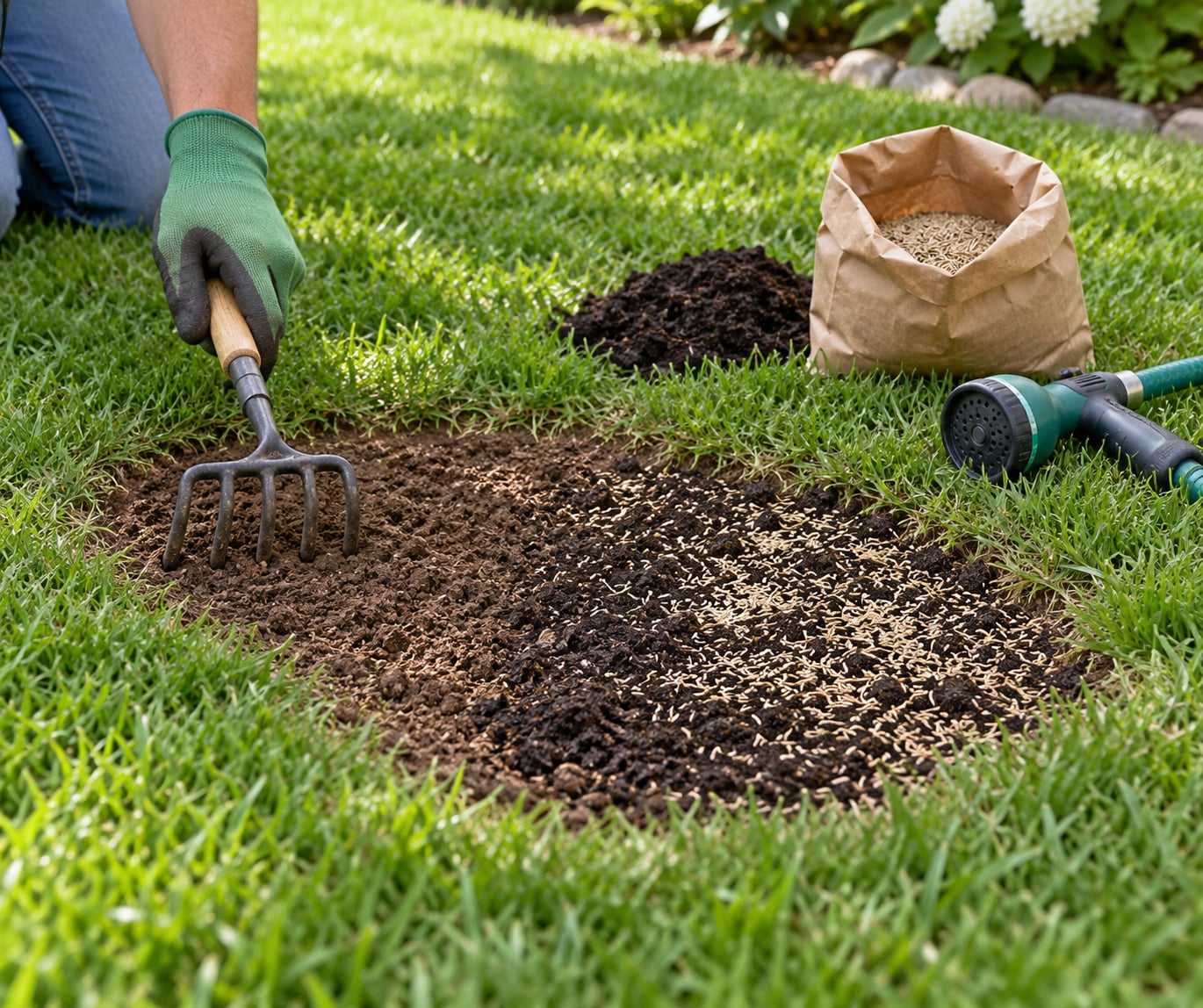
Work a garden fork into the ground every 4 to 6 inches and rock it back and forth. Go about 4 inches deep and stop at the first resistance. You want holes, not a wholesale soil flip. Slice the bottom of each hole sideways to break up the compacted wall, then rake the surface lightly to level it.
That loosening step is the whole trick for compacted spots. Soil that lets water and air into it keeps seedlings alive through the first dry week, and hard soil does the opposite.
3. Add a Thin Layer of Soil or Compost
Spread a 1/4 to 1/2 inch layer of screened compost, topsoil, or a blend over the bare area. Half an inch of compost with deep watering is what experienced gardeners report working far better than seed on bare ground alone. It gives seed something to hold onto and something to feed on.
Blend the edges into the surrounding turf so you do not build a raised rim, then tamp the patch down with the back of a rake or a watering can base. A light shower settles the loose material and shows you where low spots still hold water. Keep the top inch moist but not soggy, because saturated soil loses oxygen and the seed rots.
A light dusting of starter fertiliser at this stage helps root development, especially on clay. Skip it if you are dealing with a pet urine spot, since extra nitrogen there just repeats the problem.
4. Choose the Right Grass Seed: How to Fix Bare Spots in a Lawn Correctly
Seed that does not match the surrounding turf shows up as a lighter or darker rectangle for the rest of the season, so this matters more than brand. Cool-season lawns are usually tall fescue, Kentucky bluegrass, or a ryegrass and fescue blend. Warm-season lawns in the south are usually Bermuda, Zoysia, centipede, or St. Augustine.
St. Augustine is the exception worth knowing about. It spreads by stolons and does not germinate reliably from seed, so repair those patches with plugs or sod instead of sowing. Bermuda and Zoysia also fill gaps faster by spreading than by seed, though seed works if the soil is warm and the watering is right.
For shading areas under trees, use a mix labelled for shade. It will be thinner and finer than your sunny lawn, but it will live where a sun-loving mix would fail.
Apply seed at the rate printed on the bag, which for most patches works out to roughly a quarter ounce per square yard. Spread it in two light passes, north to south then east to west, so there are no bare stripes or doubled areas. Rake it in so it sits about 1/8 to 1/4 inch deep, no deeper, then firm the surface with a roller or the back of a rake. Seed buried more than a quarter inch rarely comes up.
5. Cover, Water, and Keep the Patch Protected
On flat ground with normal rain, the seed usually needs no covering at all. On slopes, sandy soil, or anywhere runoff is a problem, lay a light blanket of straw about half an inch deep and pin it down, or use a seed blanket that holds moisture and later breaks down. Heavy straw blankets are the reason many patches never sprout; you should still see soil and scattered seed underneath.
| Week after seeding | How to water | What you are looking for |
|---|---|---|
| Week 1 | Twice a day, light, about a quarter inch total per day | Soil stays dark and damp to the touch |
| Weeks 2 to 3 | Once a day, about half inch | Fine green haze of seedlings |
| Week 4 and beyond | Deep but infrequent, 1 inch, as needed | Blades lengthening and thickening |
Keep everyone and every pet off the patch until the seedlings are roughly 2 inches tall. Walking on a seeded area too soon is the classic way to pull a repair out by the roots. If birds strip the seed before it takes, cover it immediately with light netting or a straw blanket.
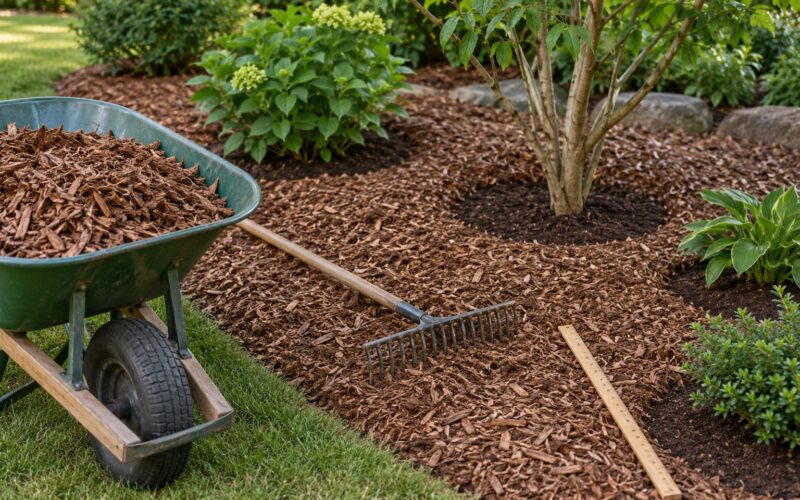
Water with a nozzle set to a shower, never a hard jet, or you will wash the seed into a corner and leave a bald strip on the other side. Mulching leaves about an inch or less over the patch also helps hold moisture, though it has to be removed before the new grass is tall enough to be smothered by it.
6. Support New Growth and Repair the Edges
Do not mow the repaired area until the new grass reaches about 3 inches. Then set the mower to the tallest setting for the first cut, and never mow wet turf, because the blades are still shallow and lift out of the ground easily.
Wait about three weeks before judging the result. Germination runs roughly 7 to 21 days depending on temperature and grass type, so a patch that looks bare at day ten can still fill in. Once the seed has grown past the base stage, hold off on any nitrogen fertiliser until it has fully established, since forcing soft growth early makes it vulnerable to disease and traffic damage.
Thin, ragged edges are normal after the first attempt. Fill them the same way after a few weeks, once you know which areas germinated well. If a section shows no growth at all, the cause is usually still in the soil, so go back to step 1 rather than pouring on more seed.
For anything bigger than a few square feet, seeding is no longer the fast answer. Sod gives you green ground the same day, plugs spread in a season, and seed is cheap but takes weeks.
| Method | Time to green | Best for |
|---|---|---|
| Sod | Immediately, roots in 2 to 3 weeks | Large patches, high-traffic areas, repairs that must look finished now |
| Plugs or runners | Spreading over 4 to 8 weeks | St. Augustine, Zoysia, Bermuda, and other spreading warm-season lawns |
| Seed | 1 to 3 weeks to sprout, 4 to 8 weeks to blend | Small patches, thin areas, overseeding a tired lawn |
Common Lawn Repair Mistakes
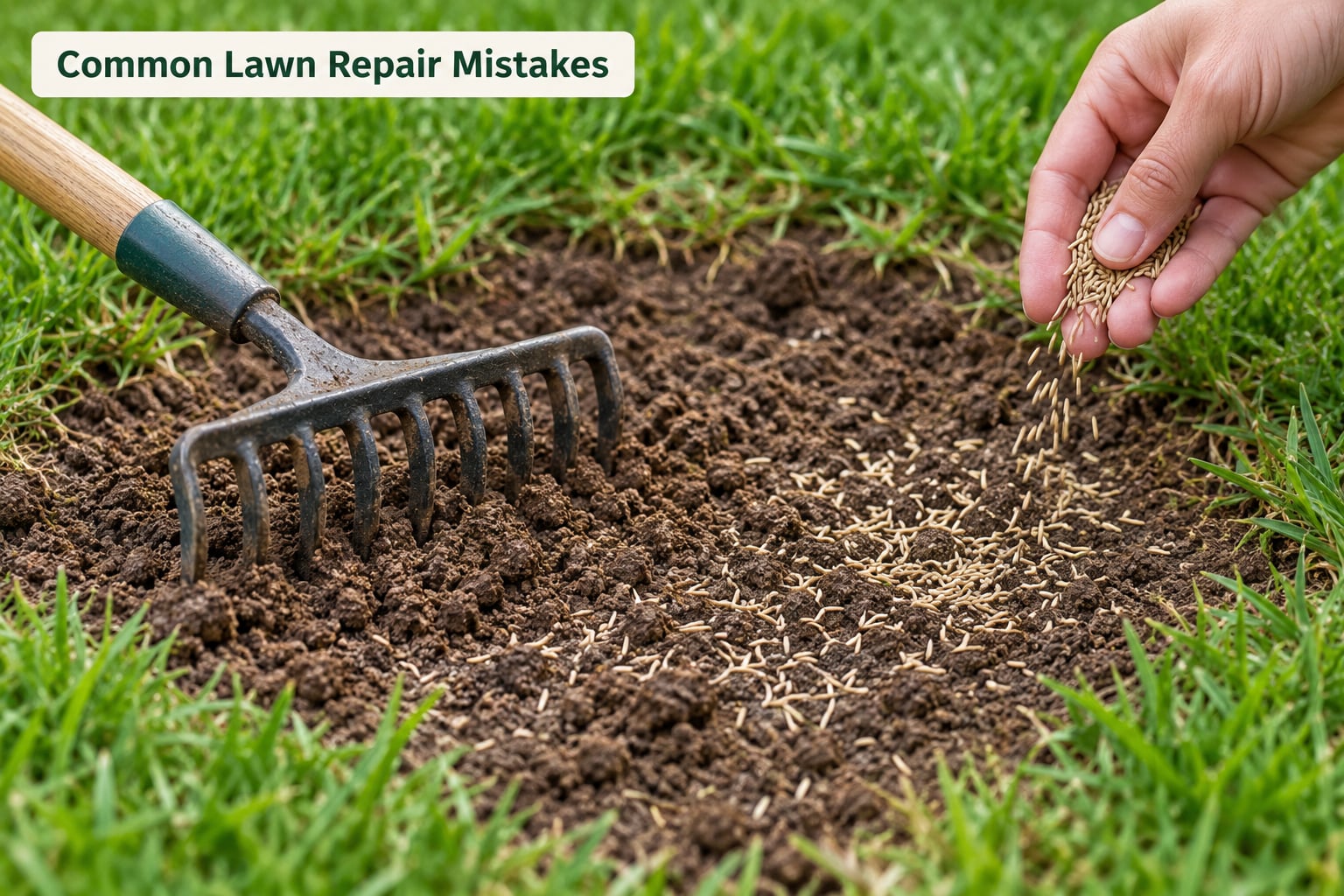
Nearly every failed patch comes down to one of these. Most of them are cheap to avoid.
- Seeding on hard soil. If you skip the fork and rake, the seed sits on a surface that water runs straight off. This is the most common reason a patch stays bare after two or three attempts.
- Watering too heavily. One soak per day drowns seedlings and pushes seed into puddles. Light and frequent keeps the surface damp instead of flooded.
- Using the wrong grass. A sun-loving mix sown under a tree, or any seed sown onto St. Augustine, produces weak results no matter how well you water.
- Burying the seed. Anything more than a quarter inch deep will not come up, and a thick straw or mulch layer does the same damage from above.
- Allowing foot traffic. Shoes and paws on a new patch ruin it faster than any other mistake. Lock the area off until the grass is a couple of inches tall.
- Reseeding too soon. Each failed attempt needs the underlying problem fixed. Stacking more seed on the same compacted soil is the reason some patches give up entirely and end up as new sod or new lawn.
- Fixing nothing at the source. If the patch is where the dog always goes, or where the mower catches every pass, change the habit or the route, or the same patch returns.
Timing matters too. Seed into cool-season lawns from late summer into early autumn, when the soil is warm and the seedlings face their first winter after a season of growth. In the south, seed warm-season lawns once nights are reliably warm, and avoid seeding in midsummer heat or in late autumn when seedlings will sit in cold wet soil and rot.
Frequently Asked Questions
Will bare spots in a lawn grow back?
Sometimes. Spreading grasses such as Bermuda, Zoysia, and St. Augustine will often creep into a small bare patch on their own within a few weeks if the soil is not compacted and moisture is steady. Cool-season lawns will not. If the spot is still there after three or four weeks, treat it as a repair job rather than waiting, and start by finding out why the grass died there in the first place.
Can I just throw grass seed on bare spots?
You can scatter seed, but on unprepared soil it usually fails. Loosen the soil 4 inches deep with a garden fork, clear dead thatch, add a quarter inch to half inch of compost or screened topsoil, then sow at the rate on the bag and keep it evenly moist for two to three weeks. Seed thrown straight onto compacted ground is the single most common reason a repaired patch comes back.
Can I put topsoil over existing grass in my lawn?
Yes, as a top-dressing, as long as you keep it thin. A quarter inch to half inch is fine and will often speed up recovery by adding organic matter to thin soil. Anything deeper than about half inch smothers the existing blades. On a bare patch you have already loosened, the soil layer is simply the base you sow into, so level it into the surrounding grass rather than piling it on top.
How can I fix large bare patches in my lawn?
For patches larger than roughly twenty square feet, sod is usually the answer. Cut a rectangle that fits the damaged area, prepare the soil underneath, lay the sod and stagger the seams, then water it deeply twice a day for a week. Plugging spreading warm-season grass is cheaper but takes a season to knit together. Seeding works for large areas too, but expect a full two months before the repair blends in.
How long does it take for bare spots to fill in?
Seed usually sprouts in 7 to 21 days and needs four to eight weeks to blend with the surrounding lawn. Sod is green the day you lay it and roots within two to three weeks. Plugs spread over one to two months. The biggest variable is not the method but the cause: a patch with compaction, shade, or pet damage still in place will take longer or fail outright, no matter which option you choose.
How do I repair a lawn damaged by dog urine?
Flush the spot with plenty of water to wash out the concentrated salts and nitrogen, then loosen the soil with a garden fork and add a thin layer of compost. Skip nitrogen fertiliser there, since that is what made it worse. Reseed after the area has dried, and consider a grass mix that tolerates heavier traffic, with pH kept slightly above neutral. Moving the water bowl or feeding spot stops the next round of damage.
Conclusion: Start With the Cause, Then Reseed
To fix bare spots in a lawn, the first move is diagnosis: work out whether the grass died from compaction, pet urine, shade, drought, pests, or a spill, because the repair only holds if that problem goes away. Then clear the dead material, loosen the soil with a garden fork, add a quarter inch to half inch of compost or topsoil, and sow seed that matches the grass around it.
Keep the patch moist with light, frequent watering for two to three weeks, keep feet and paws off it, and wait for the new grass to reach 2 inches before mowing. Give it until the three-week mark before you judge the result, and reseed the thin edges afterwards. Large patches are faster and cleaner as sod or plugs than as seed.