To clean a washing machine drum without taking it apart, unplug the machine, empty it, wipe out the door gasket and detergent drawer by hand, then run an empty cycle on the hottest setting with white vinegar, baking soda, or the manufacturer’s tub clean cycle. Most of the work happens in the rubber seal, not the stainless steel itself.
A drum that needs cleaning usually tells you first. Laundry comes out smelling musty or sour, feels stiff and dingy even after a fresh wash, or you find dark spotting around the door seal. Any of those mean residue is sitting in the machine and re-soiling every load.
The whole job takes about an hour, including drying time. No tools beyond household basics, and no need to pull the machine out from the wall.
Table of Contents
- What You Need
- Step-by-Step: How to Clean a Washing Machine Drum
- Step 1: Prepare and Inspect the Washing Machine
- Step 2: Remove Residue and Clean the Drum
- Step 3: Rinse, Reassemble, and Run a Fresh-Water Cycle
- Common Mistakes That Leave the Drum Dirty
- Skipping the rubber gasket
- Using too much detergent
- Pouring harsh chemicals into the drum
- Cleaning only the visible surface
- Forgetting the drain pump filter
- Running a cycle too cool to work
- Over-cleaning with harsh chemicals
- Frequently Asked Questions
- Can I use vinegar to clean a washing machine drum?
- How do I remove mold from a washing machine drum safely?
- Do front-loading and top-loading washing machines need different cleaning steps?
- How often should I clean a washing machine drum?
- What should I do if my washing machine will not drain before cleaning?
- Conclusion
What You Need
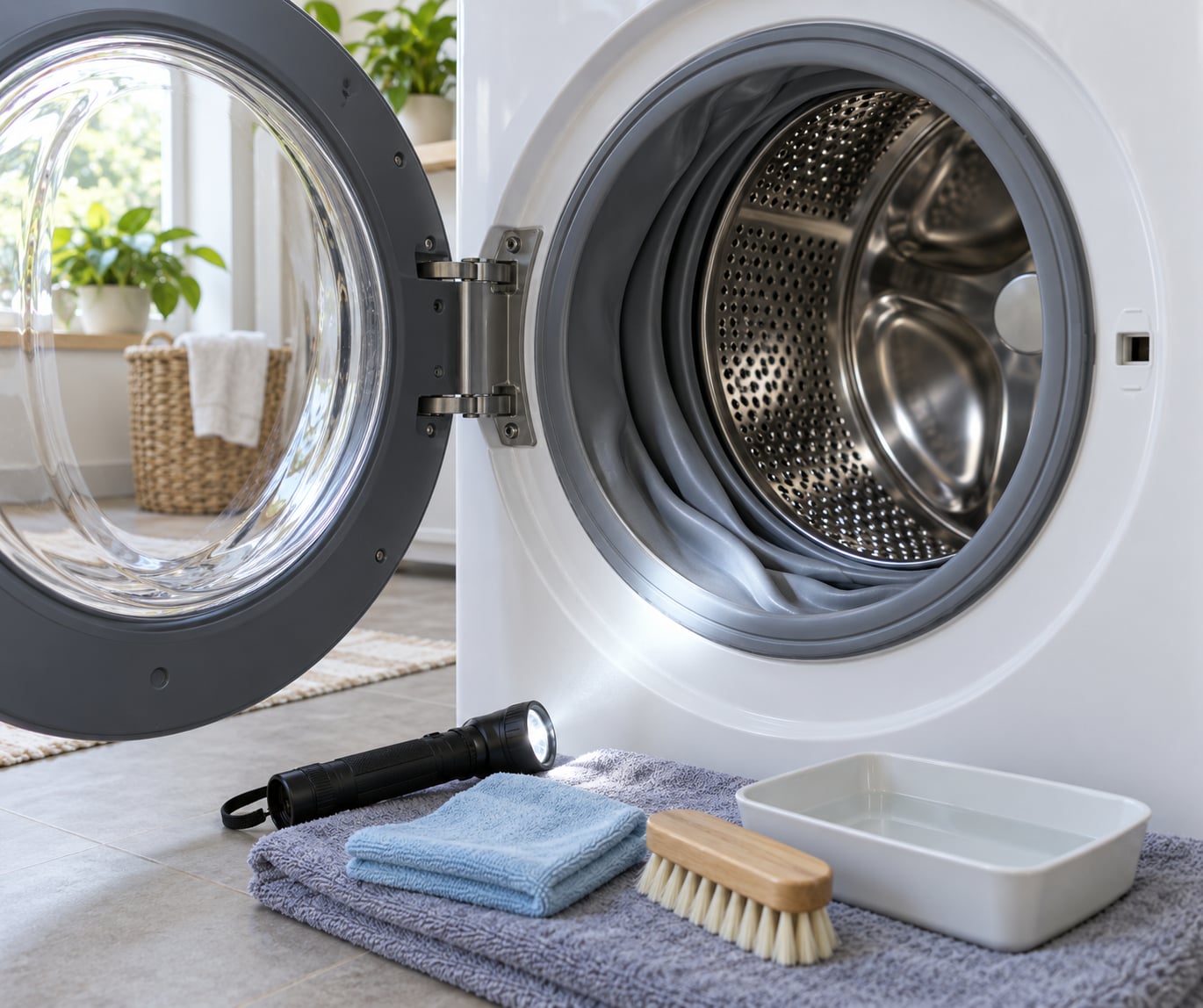
Gather everything before you start, because you will want your hands free and a flashlight nearby. Most people are missing the flashlight, and that is exactly the tool that shows you the buildup in the gasket folds.
- Rubber or nitrile gloves
- Soft-bristled brush, an old toothbrush, or a microfiber cloth
- Mild dish soap or laundry detergent
- Baking soda, or a washing machine cleaner tablet
- White vinegar for soap scum and odour
- Citric acid powder if you are in a hard water area
- A flashlight
- A shallow tray or tub to catch drips and hold removed parts
- Clean towels for drying the gasket
A top loader and a front loader need almost the same kit. The difference is access: a front loader has a rubber boot seal you can pull back with your fingers, while a top loader has a removable agitator or an impeller and a lid gasket.
Two things do depend on your manual. The drain pump filter location changes between brands, and on most front loaders it sits behind a small flap at the bottom front corner. Top loaders may have a lint filter on the lint screen or in the tub. If you cannot find either one, check the manual before prying anything open.
Step-by-Step: How to Clean a Washing Machine Drum
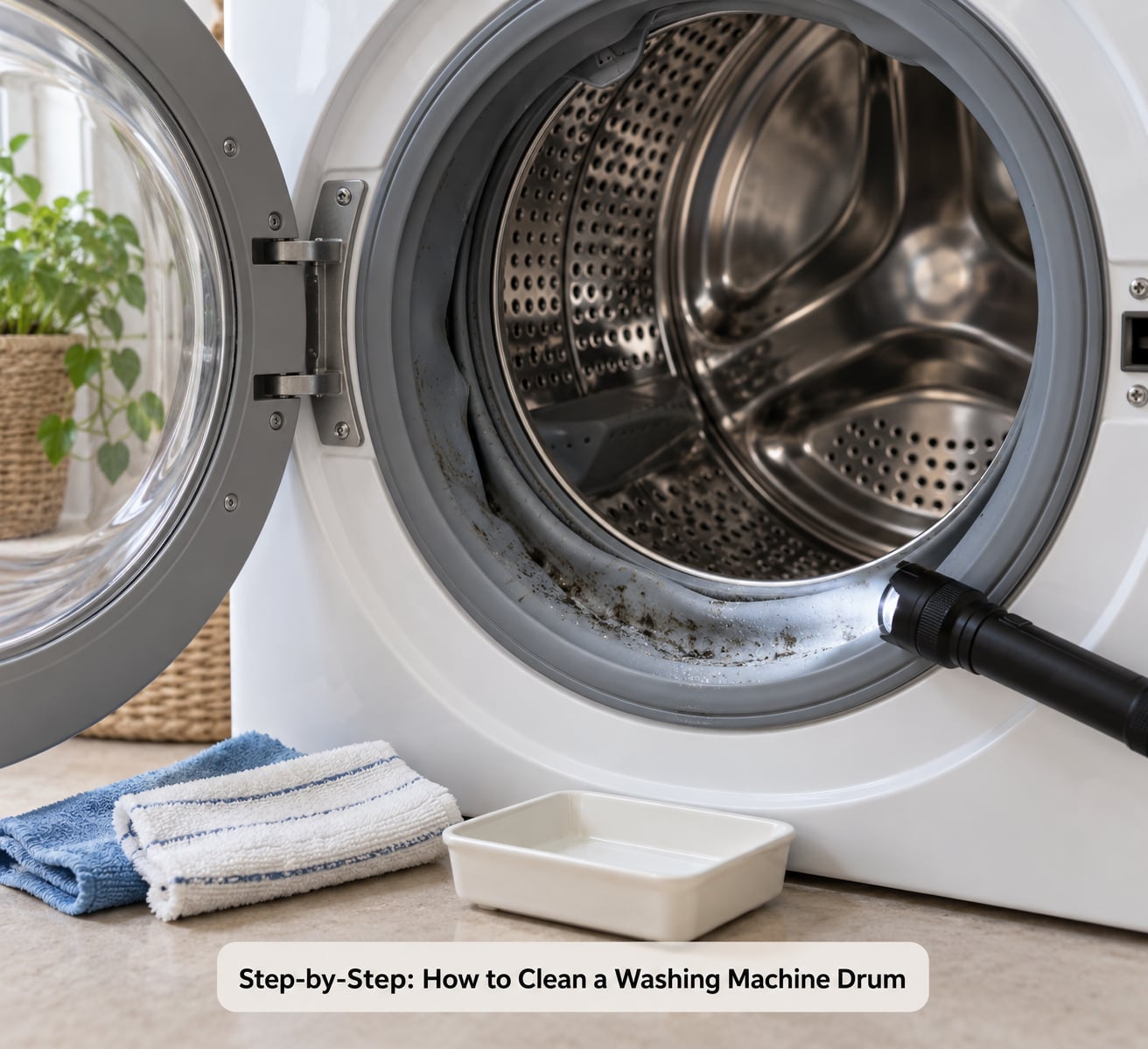
Step 1: Prepare and Inspect the Washing Machine
Unplug the washer and, if your manual says to, shut off the water supply valve behind it. Empty the drum completely and pull out anything that ended up in the bottom: socks, hair ties, a single sock soaked in detergent.
Now identify which machine you have. A front loader has a round door and a rubber gasket around it. A top loader with an agitator has a plastic column in the middle of the tub. A top loader with an impeller has a low, ribbed disc instead. That single fact changes which parts you clean by hand.
Before you start scrubbing, look for four warning signs that mean the problem is mechanical rather than cosmetic:
- A musty smell that appears days after a clean cycle
- Visible grey, orange, or black film on the gasket folds
- Slow drainage or a puddle that stays in the door
- Standing water in the drum after a finished cycle
If water is sitting in an empty drum, stop and fix the drain before cleaning. Cleaning a machine that cannot drain will not work, and the standing water is usually feeding whatever is causing the smell.
Step 2: Remove Residue and Clean the Drum
Start at the seal, because that is where the buildup lives. Pull the rubber gasket folds apart one at a time, wipe out the grey slime with a microfiber cloth dipped in warm soapy water, and scrub the creases with a soft toothbrush. Shine your flashlight in from the side so you can see the inside of each fold.
Mix two parts baking soda with one part water to make a thick paste. Apply it to stubborn spots on the gasket and drum walls, let it sit for ten minutes, then scrub. That paste loosens dried residue without scratching the rubber or the drum glass. It is the part of how to clean a washing machine drum that most guides skip, and it is where the heaviest buildup usually is.
For the drum itself, wipe the stainless steel interior with a soapy cloth, following the direction of the grain. Then work your way around the drum lifters or paddles, where grit and hair collect.
Clean the detergent drawer next. Pull it out, rinse the compartments under warm running water, and scrape out any hardened paste with a plastic card. Wipe the drawer housing and the slot it slides into, since detergent sprayed past the drawer leaves a film there.
Wipe the door glass and the inside of the door frame too. On a front loader, the door seal traps water when you shut it, so the last load leaves a ring of dirty water behind.
For a top loader, take the agitator off if your manual allows it, soak it in warm soapy water for an hour, and scrub the base hole underneath. If you have an impeller instead, wipe it down and clean under its ribs, where lint packs tight.
Use your chosen cleaner next. Pour two cups of white vinegar into the detergent drawer for soap scum and odour, or half a cup of baking soda directly into an empty drum. For hard water limescale, use citric acid powder according to the package directions, since acid is what dissolves mineral scale.
If the machine has a built-in tub clean cycle, run that instead of adding anything yourself. Samsung calls it Drum Clean or Self Clean on some models and Eco Tub Clean on others, and those cycles are designed to run on an empty drum with no detergent and no bleach at all.
Whatever you use, follow three rules. Never mix vinegar with chlorine bleach or any other chlorine product, because the combination releases toxic gas. Never use steel wool or abrasive pads on the drum, glass, or seals. And never flood the machine with cleaner by hand, since anything poured past the gasket ends up in the drain pump.
On a top loader you can skip the chemical stage entirely and clean by hand. Lift the agitator, wipe the tub floor and the baffles, and run a rinse and spin. That is genuinely enough for a machine used once a week.
Step 3: Rinse, Reassemble, and Run a Fresh-Water Cycle
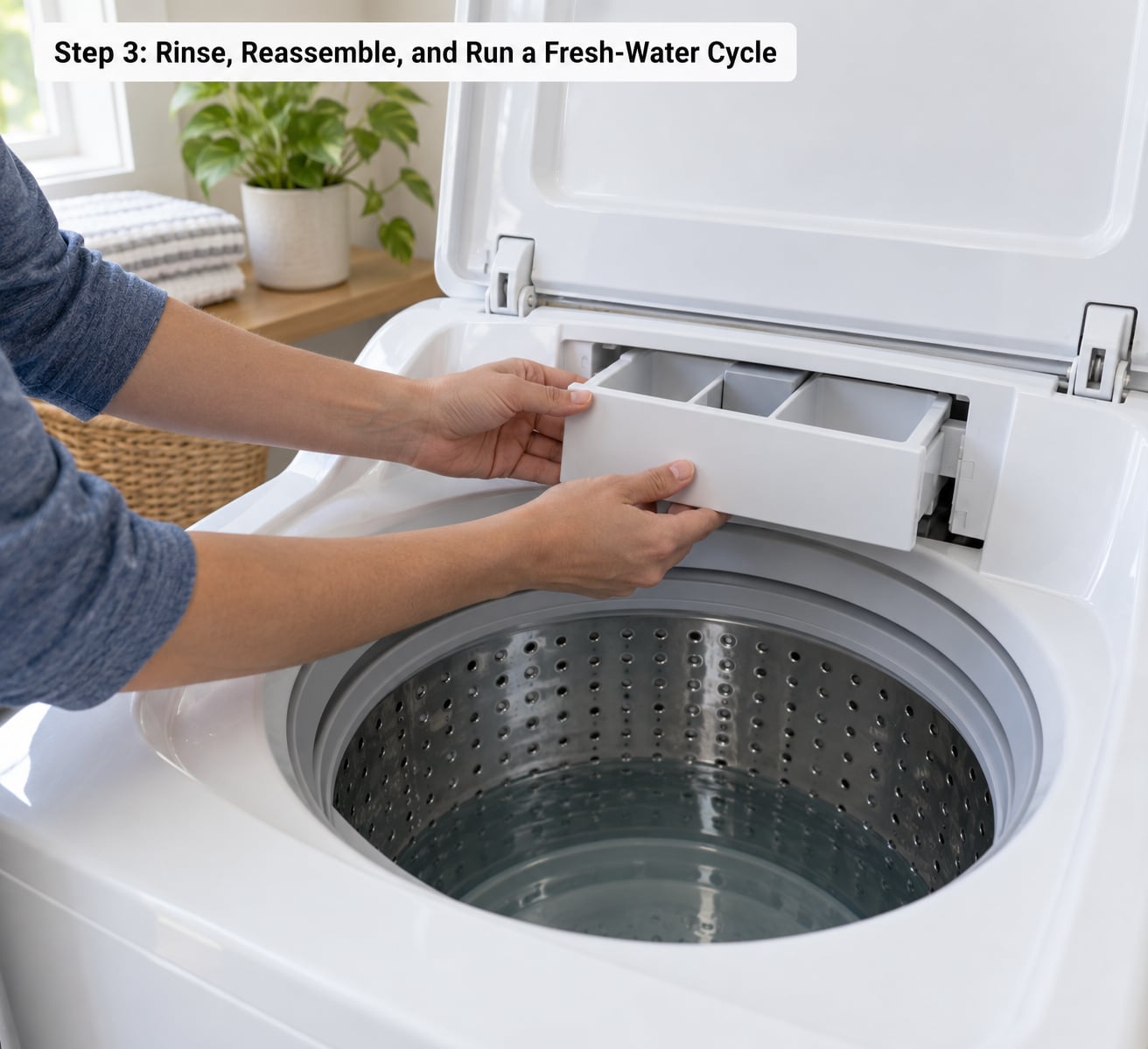
Rinse the gasket folds and the drawer with a clean damp cloth until no soap film remains. Reinstall the detergent drawer, the agitator, and any filter or access flap you removed. Make sure no cloth, brush, or tool is still sitting in the drum.
Restore the water supply and plug the machine back in. Run the tub clean cycle if you have one. Otherwise run the hottest, longest cycle available on an empty drum, or a rinse and spin after a hot cycle on a top loader to clear out any leftover cleaner.
Two things confirm the cycle worked. Water should drain completely, with nothing pooling in the door or the tub bottom. And when the drum is dry, there should be no visible film on the stainless steel and no smell when you put your face near the opening.
Finish by leaving the door or lid open and the drawer ajar until everything is completely dry. Moisture trapped against rubber is what restarts mould growth, and this step does more than the cleaning itself.
Common Mistakes That Leave the Drum Dirty
Most machines that still smell after a clean were not cleaned badly. They were cleaned the same wrong way twice. Here are the errors I see most often, and the fix for each.
Skipping the rubber gasket
Cleaning the drum and ignoring the seal is the biggest gap. Pull every fold back, scrub inside each one, and rinse. You will usually find more residue in the folds than anywhere else in the machine.
Using too much detergent
Overdosing leaves a film that reattaches to clothes and traps everything else. Measure with the cap the manufacturer provided, and if a load comes out stiff or dingy, cut the dose before you reach for a stronger cleaner.
Pouring harsh chemicals into the drum
Industrial degreasers, oven cleaners, and household ammonia dry out rubber and can cause the leaks that create the problem in the first place. Stick with vinegar, baking soda, citric acid, or a purpose-made washer cleaner.
Cleaning only the visible surface
The drum wall is the easy part. The residue hides in the gasket folds, the drawer housing, the seam where the door meets the glass, and under the drum lifters. Plan on working each of those by hand.
Forgetting the drain pump filter
A clogged filter holds water and debris that smell seeps back into the drum. Empty the filter into a shallow tray, rinse it, and check it every few months. If water does not drain properly once the filter is clear, call a technician.
Running a cycle too cool to work
Warm water barely moves hardened residue. Use the hottest setting your machine allows, or the dedicated self-clean programme, which is designed to run hotter and longer than a normal cycle.
Over-cleaning with harsh chemicals
Repeated bleaching and scrubbing leaves rubber seals stiff, cracked, and shiny. A worn seal leaks, and a leaking seal is a leading cause of the black spotting you were trying to remove. Clean thoroughly, then leave it alone for a while.
Between deep cleans, three habits do most of the work. Take laundry out right away instead of letting it sit, use the right detergent dose, and leave the door open whenever the machine is empty. Wipe the gasket weekly with a dry cloth and run the drum clean cycle every 30 to 40 washes, or monthly if your machine reminds you.
Frequently Asked Questions
Can I use vinegar to clean a washing machine drum?
Yes. White vinegar is the safest and most effective DIY option for soap scum and odour. Pour two cups into the detergent drawer, run the hottest cycle on an empty drum, then wipe the gasket with a vinegar-damp cloth. Vinegar cannot lift hard water limescale, so use citric acid for that. Never combine vinegar with bleach or any other chlorine product.
How do I remove mold from a washing machine drum safely?
Run a hot cycle with white vinegar or citric acid on an empty drum to loosen the growth, then scrub what remains. Pull back the rubber seal folds with gloved hands and work a soft toothbrush through each crease. Open the door and drawer and dry everything completely. Avoid chlorine bleach, which can kill surface growth while releasing spores, and never mix it with vinegar.
Do front-loading and top-loading washing machines need different cleaning steps?
The order is the same, but access differs. Front loaders need extra attention on the rubber boot seal and the door glass, with the pump filter usually behind a flap at the bottom front corner. Top loaders with an agitator need the agitator removed and soaked, while agitatorless machines need the impeller and the tub baffles wiped down. Check your manual for the right filter location.
How often should I clean a washing machine drum?
Every 30 to 40 washes, or once a month, whichever comes first. Many machines count washes and display a drum clean notification when the interval is reached. A quick gasket wipe every week and an empty hot cycle every month keeps most machines fresh. Clean immediately rather than waiting if you notice a musty smell, visible spotting, or laundry that smells sour after washing.
What should I do if my washing machine will not drain before cleaning?
Empty the drum manually and clean the drain pump filter, which catches coins, lint, and detergent pods. If water still will not drain, stop cleaning and call a qualified technician. Cleaning a machine that cannot drain will not remove the smell, and repeated cleaning cycles on a faulty pump add suds and residue to the blockage. Never open the pump housing yourself without consulting the manual.
Conclusion
Start by unplugging the washer, pulling out the laundry, and checking whether water drains properly. Then clean the parts you can reach by hand, because that is where nearly all the residue lives: the gasket folds, the door glass, the detergent drawer, and the drain filter.
Run an empty hot cycle afterwards with vinegar for soap scum, citric acid for hard water scale, or your machine’s own tub clean cycle if it has one. Leave the door open until everything is bone dry, and expect to repeat that routine every 30 to 40 washes.
If you remember one thing about how to clean a washing machine drum, make it the seal rather than the stainless steel. The drum wall wipes clean in minutes, while the gasket folds, the drawer housing, and the drain filter are where smells actually start.
If the smell returns within days, the cause is mechanical rather than cosmetic. Standing water, a blocked pump, or a deteriorating seal needs a qualified technician, and no amount of scrubbing will fix it. This guide was last checked in 2026, and your machine’s manual always wins over any general advice.