The fastest way to get dog smell out of carpet is to remove the source, blot the area dry, work baking soda or an enzymatic pet cleaner into the fibers, and let it sit for hours or overnight before vacuuming. If the odor is body oils and dander rather than urine, a vacuum plus baking soda under the pet bed handles most of it.
That answer only works if you know which smell you are dealing with, and most guides skip that part. Dog odor on carpet splits into three problems that need three different fixes: general body oils and dander, fresh urine, and dried urine that has turned into uric acid crystals inside the padding. A reader with a dander problem will work through an entire urine tutorial before realizing none of it applies.
So take thirty seconds to triage before you mix anything. Smell strongest near the dog’s bed, couch, or a wall where the dog rubs? That is body oils and dander, and grooming and a thorough vacuum matter more than chemistry. Smell sharp and recent, with a damp spot you can feel? That is fresh urine, and blotting speed decides the outcome. Smell sharp but the carpet is bone dry, sometimes worse on a humid day? That is dried residue in the backing, and only an enzyme cleaner or a professional extraction will clear it.
Table of Contents
- What You Need
- Step-by-Step: How to Get Dog Smell Out of Carpet
- 1. How to find and remove the source of the smell
- 2. How to blot and dry the carpet
- 3. How to vacuum the carpet thoroughly
- 4. How to treat the carpet with baking soda or an enzymatic cleaner
- 5. How to repeat or deep-clean stubborn odor
- Common Mistakes
- Frequently Asked Questions
- Will sprinkling baking soda on carpet remove odor?
- How long to let baking soda sit on carpet for dog urine?
- How long should I let vinegar and baking soda sit on carpet?
- Is baking soda safe to use on carpets for pets?
- Will dog pee smell ever go away?
- When should I call a professional carpet cleaner for dog smell?
- Conclusion
What You Need
Gather everything before you start, because the temptation to skip ahead is what leaves you with a wet carpet and a smell that comes back. The whole process takes an afternoon plus drying time.
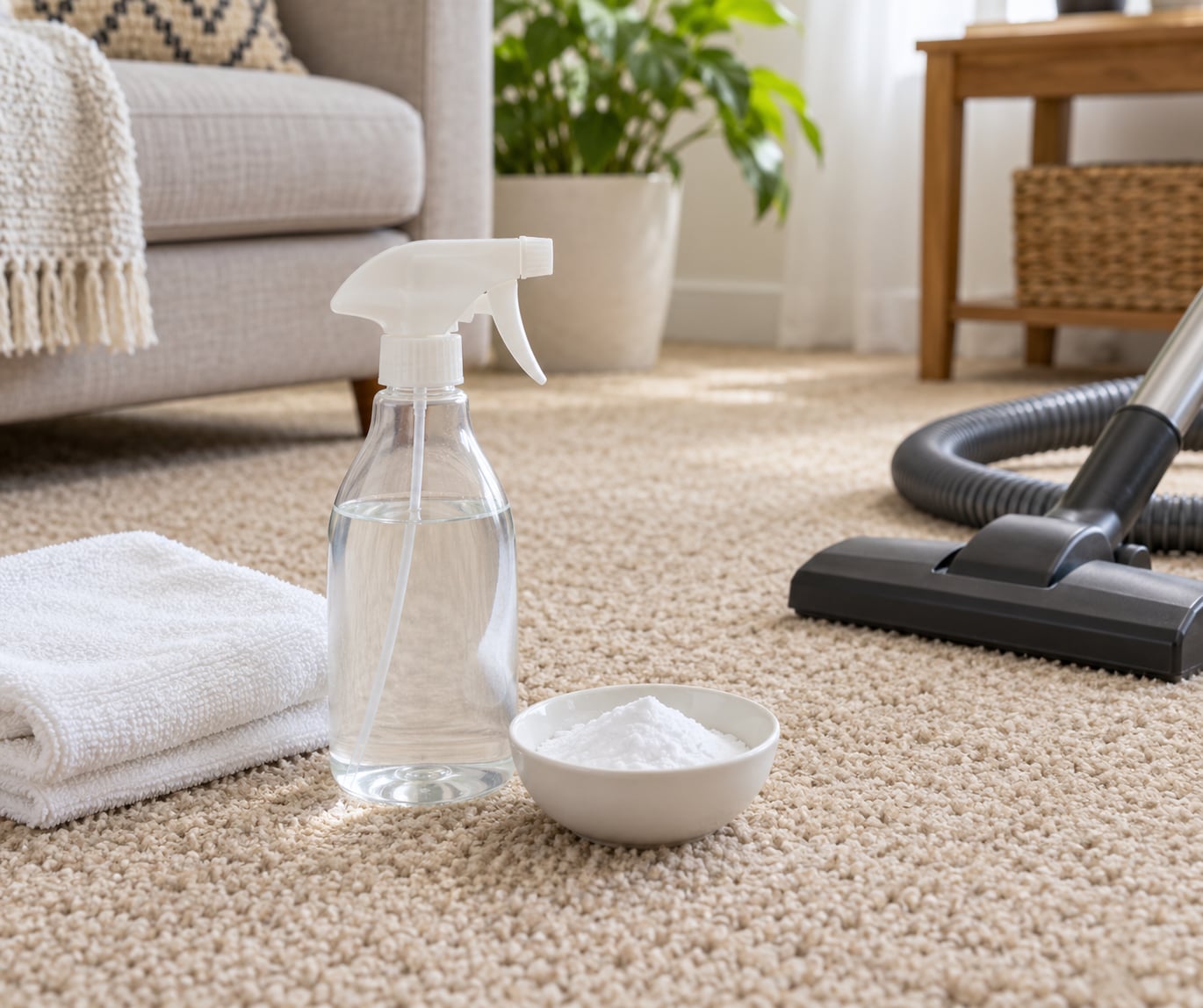
- Gloves — the ones for pee cleanup, not the thin dish gloves you use for dishes.
- Clean white paper towels or plain white towels — printed towels bleed dye into wet carpet.
- A stiff-bristled brush — a stiff nail brush or a carpet brush loosens dried residue before treatment.
- A vacuum with an upholstery attachment or crevice tool — a handheld is fine for a small room, a shop vac for corners.
- Baking soda — plain, not flavored or deodored varieties.
- An enzymatic pet odor cleaner — the label matters, so check that it says enzymatic and that it is safe for pets when dry.
- Clean water — for blotting and for rinsing any soap you use.
- Optional: a rented carpet extractor, a steam cleaner attachment, a blacklight for finding old stains, a box fan or dehumidifier for drying.
Before cleaning anything, check the carpet for the source. Look for urine, feces, or vomit, and check whether a spot is damp underfoot. If the pad underneath is soaked through, surface cleaning will not be enough, and you may need to pull the carpet back at the tack strip and treat or replace the underlay.
Keep your dog in another room the whole time. Odor molecules still in the air will draw the dog straight back to the same spot, which is how a cleaned carpet becomes a repeat accident.
Step-by-Step: How to Get Dog Smell Out of Carpet
Work from the cleanest area toward the smelly one, the same rule you would use to wash a window, so you do not carry odor across the carpet you already cleaned. Check the result after each stage, because a smell that survives drying means the previous step was incomplete.
1. How to find and remove the source of the smell
Start at the origin. Dogs usually urinate in predictable places — a bedpost, a rug corner, a spot beside a door — and a blacklight makes old residue visible in a dark room as pale yellow-green patches. If you have no blacklight, walk the room with your nose at carpet level.
For fresh feces or vomit, pick up solids with a bag or paper towel, then blot the residue. Blot vomiting with cold water first; hot water sets the protein into the fibers, which is the one place the usual hot-water instinct is wrong.
For urine, pull back the carpet at the tack strip along the wall and look at the padding. Dark, swampy, or ammonia-sharp padding means saturation, and liquid pulled up from under the carpet brings the smell with it.
One caution worth stating plainly: if your previously reliable dog starts having indoor accidents, the smell may not be a cleaning problem at all. A urinary infection, a bladder stone, diabetes, or pain from arthritis can all cause it, and a vet should look at any sudden change in elimination habits before you spend another afternoon on the carpet.
2. How to blot and dry the carpet
Lay white paper towels or towels over the wet area and press down firmly. Do not rub, and do not scrub, because both drive urine deeper into the backing where the padding holds it.
Then stand on the towels. Weight is what pushes liquid up out of the fibers, and it is the step most people skip. Swap the towels as they darken, add fresh ones underneath, and keep pressing until new towels come up nearly dry.
With the surface moisture gone, deal with the deeper dampness. Run a fan across the area, close the windows and doors to the rest of the house, and add a dehumidifier if the air is humid. The area is dry when it feels dry to the back of your hand pressed into the pile, not just on top.
Full drying matters more than it seems. Trapped moisture holds odor and grows mold, and a carpet dried around the edges but wet in the middle will smell again within days.
3. How to vacuum the carpet thoroughly
Vacuum the entire carpet, not just the smelly patch, and use the upholstery attachment or crevice tool. Pay attention to the edges where carpet meets baseboard, the seams under furniture, and the pile around the spot you are treating, since residue settles there.
Work in slow passes so the suction has time to pull material up. Break up any crusted residue with the stiff brush first, then vacuum a second time to lift what the first pass loosened. Empty the vacuum outside or into a sealed bag afterward, because the filter and the canister are now carrying concentrated odor.
4. How to treat the carpet with baking soda or an enzymatic cleaner
You have two good options here, and for urine odor the second one does more work.
Baking soda. Make sure the carpet is dry, then sprinkle it generously over the area and a foot or two beyond the smell, since odor spreads wider than the visible stain. Work it into the pile with your fingers or the stiff brush, leave it for at least 15 minutes, and vacuum it out. For dried urine or a general dog smell, leave it overnight instead, then vacuum twice. A thin dusting does nothing; a proper layer hides the fibers.
Enzymatic cleaner. Apply it according to the label and let it dwell. Fifteen minutes is the floor, and overnight is better for old stains. To keep the moisture in, lay a damp towel over the treated area and cover it with plastic wrap or a plastic bag, then remove both once the carpet dries.
Enzymes break down the organic proteins and uric acid residue that cause the smell, so the odor goes away at the source instead of being covered over. They are not an instant mask, and a strong perfume added afterward will not make them work faster. Never mix an enzyme cleaner with bleach, ammonia, vinegar, or another product, because the chemistry stops doing its job.
5. How to repeat or deep-clean stubborn odor
After drying, check the area from about a foot away and then with your nose close to the pile. A faint scent that is not there when the carpet is dry is often normal carpet and pad. A sharp smell means the residue is still in there, and one more round of blotting, re-wetting, and extended dwell usually beats a third coat of baking soda.
When a few rounds of enzyme treatment have not done it, rent a carpet extractor from a hardware store. It sprays a cleaning solution into the carpet and then pulls the dirty water back out, which is a real upgrade over a wet/dry vacuum, since wet/dry pickup is built for hard floors. Follow the machine’s instructions, pre-vacuum first, and keep moving, because a parked extractor leaves clean water sitting in one spot.
Spot test any wet or peroxide treatment in a hidden corner for 24 hours first, since dye bleed and bleach damage do not reverse. Avoid over-wetting, because saturated padding takes days to dry and can grow mold. Plan on several hours of drying, or overnight, with fans running, before anyone walks on the carpet or the dog goes back to the room.
Common Mistakes
Most failed attempts are one of seven mistakes, and each has a straightforward fix.
- Rubbing the spot. It feels like cleaning and it drives urine into the padding. Press and blot instead, then stand on the towels.
- Using ammonia. Ammonia is harsh for dogs and can make repeat accidents more likely because the residue encourages re-marking. Use an enzyme cleaner.
- Using bleach or a human disinfectant. Bleach plus ammonia produces a toxic gas, and bleach on carpet can bleach the dye. Neither removes the source.
- Cleaning only the visible surface. Check the padding and underlay; if it is soaked, treat it or replace it.
- Skipping the drying step. Fans, open windows, and time. Damp carpet keeps the odor alive.
- Masking with fragrance. Heavy perfume covers the smell for a day and leaves the room worse afterward. A pet odor neutralizer binds leftover molecules, which is different from masking, but it does not replace enzyme treatment for urine.
- Over-wetting the carpet. Use less water than you think, and never leave a soaked patch unattended overnight without airflow.
Preventing a repeat is easier than removing the smell again. Vacuum at least weekly, more often with a shedding dog, and wash pet beds and couch covers on a hot cycle since fabric holds more odor than carpet does. A washable mat where the dog sleeps catches a surprising amount. Baking soda under the pet bed, replaced every week or so, helps with dander specifically. And if the dog returns to a treated spot, that is a scent marker drawing it back, which is a training problem to fix alongside the cleaning.
Frequently Asked Questions
Will sprinkling baking soda on carpet remove odor?
Baking soda is good at absorbing surface odor and it works well on general dog body smell, dander, and light fresh accidents. It will not clear dried urine that has bonded to the carpet backing as uric acid residue, because soda absorbs the smell rather than breaking it down. For that, use an enzymatic cleaner and give it hours or overnight to work. Most people under-apply the soda, so use a layer thick enough to hide the fibers.
How long to let baking soda sit on carpet for dog urine?
At least 15 minutes for a light fresh spot, and overnight for dried urine or a strong general odor. Work the soda into the pile rather than sprinkling it on the surface, then vacuum it out twice. Many people pull it up too early, which is why the smell seems to come back within a few days. Vacuum thoroughly after the dwell time, including the edges, seams, and under furniture.
How long should I let vinegar and baking soda sit on carpet?
Do not apply them at the same time. Vinegar neutralizes fresh urine acids when used alone as a one-to-one mix of white vinegar and water, misted rather than soaked, and it should air dry. Applying vinegar and then baking soda causes them to neutralize each other into a watery paste you then have to vacuum out, which wastes both. Use one or the other, not a vinegar wash followed by a soda layer.
Is baking soda safe to use on carpets for pets?
Plain baking soda is safe on carpet, including for dogs and cats, and it is non-toxic if a pet walks over a treated area. The risk is not the soda but the over-wetting that often comes with it, which can soak the padding and encourage mold. Keep the dog off the carpet until it is fully dry and vacuumed, and skip flavored or deodored varieties, which may contain added fragrance that irritates pets when licked.
Will dog pee smell ever go away?
Usually yes, but the odor you smell a week later is often not the original accident. As urine dries it leaves uric acid crystals that reactivate whenever the carpet and pad get damp, which is why a clean carpet smells again on a humid day. A persistent smell usually means the padding never dried, the spot was only treated at the surface, or the dog is still marking the same place. Enzyme treatment with full drying between rounds resolves most of these.
When should I call a professional carpet cleaner for dog smell?
Call one when the odor has been there for months, when several rounds of enzyme cleaner have not worked, or when the pad under the carpet is soaked and cannot be treated from above. Professionals use hot water extraction with the right dwell time, which reaches and flushes the padding, and many will pre-treat with an enzymatic product first. Ask specifically whether the treatment includes an enzyme pre-treatment, since extraction alone leaves the residue behind and the smell returns within days.
Conclusion
To get dog smell out of carpet, start with three things: find the source, blot out every bit of moisture, and treat the carpet with a product suited to the smell you found. Baking soda and a good vacuum handle body oils and dander. Enzymatic cleaner with real dwell time handles urine, and it is the only option that removes the residue instead of covering it.
Then dry the area completely, keep your dog away from it in the meantime, and use nothing harsh around a pet. If the smell returns after professional cleaning, ask whether an enzyme pre-treatment was part of the job. And if the accidents started suddenly, talk to your vet first, because no amount of scrubbing fixes a urinary infection.