Kneeling on a hard floor with a toothbrush for an hour, only to find the grout still looks gray, is the most common complaint I hear about this job. The problem usually isn’t your arm strength. It’s dwell time.
To clean grout without scrubbing for hours, mix 1/2 cup baking soda, 1/4 cup 3% hydrogen peroxide and 1 teaspoon of dish soap into a thick paste. Spread it over the grout lines, let it sit 10 to 15 minutes, then wipe with a damp microfiber cloth. The wait does the work.
Hands-on time for that method is roughly ten minutes per bathroom. The rest is you getting off the floor. Grime sits inside the pores of cement grout rather than on top of it, which is why a paste that sits and bubbles loosens it while a brush just scuffs the surface. This guide covers the supplies, a four-step routine, dwell times for each method, and the handful of habits that ruin cement grout. Updated for 2026.
One caveat up front. If your grout is black because of years of soap scum and mold, a single 15-minute paste won’t fix it. That’s a different job, and it needs an overnight treatment or a grout pen.
Table of Contents
- What You Need
- Step-by-Step
- Step 1: Identify your grout and test a hidden spot
- Step 2: Mix the paste and give it a 10 to 15 minute dwell
- Step 3: Lift the residue and dry the lines
- Step 4: Treat stubborn marks one spot at a time
- Common Mistakes
- Frequently Asked Questions
- How long should grout cleaner sit before wiping?
- Is baking soda safe to clean grout with?
- How do I clean shower grout without scrubbing?
- Why does my grout stay dirty no matter what I use?
- When is it worth calling a professional instead?
- Conclusion
What You Need
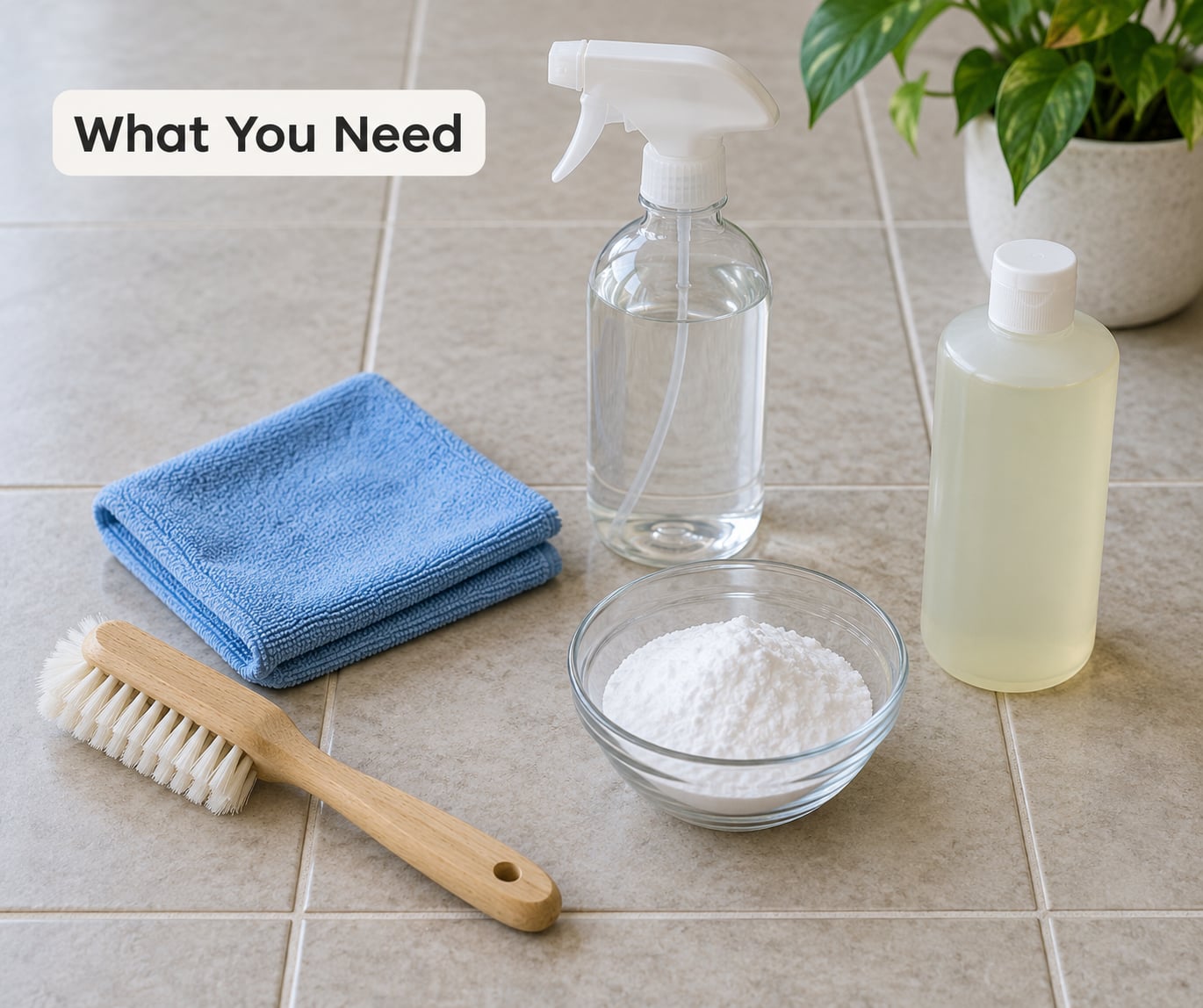
Everything here is already in a kitchen or laundry closet. Nothing on this list is specialized, and none of it needs to be replaced when you move to the next job.
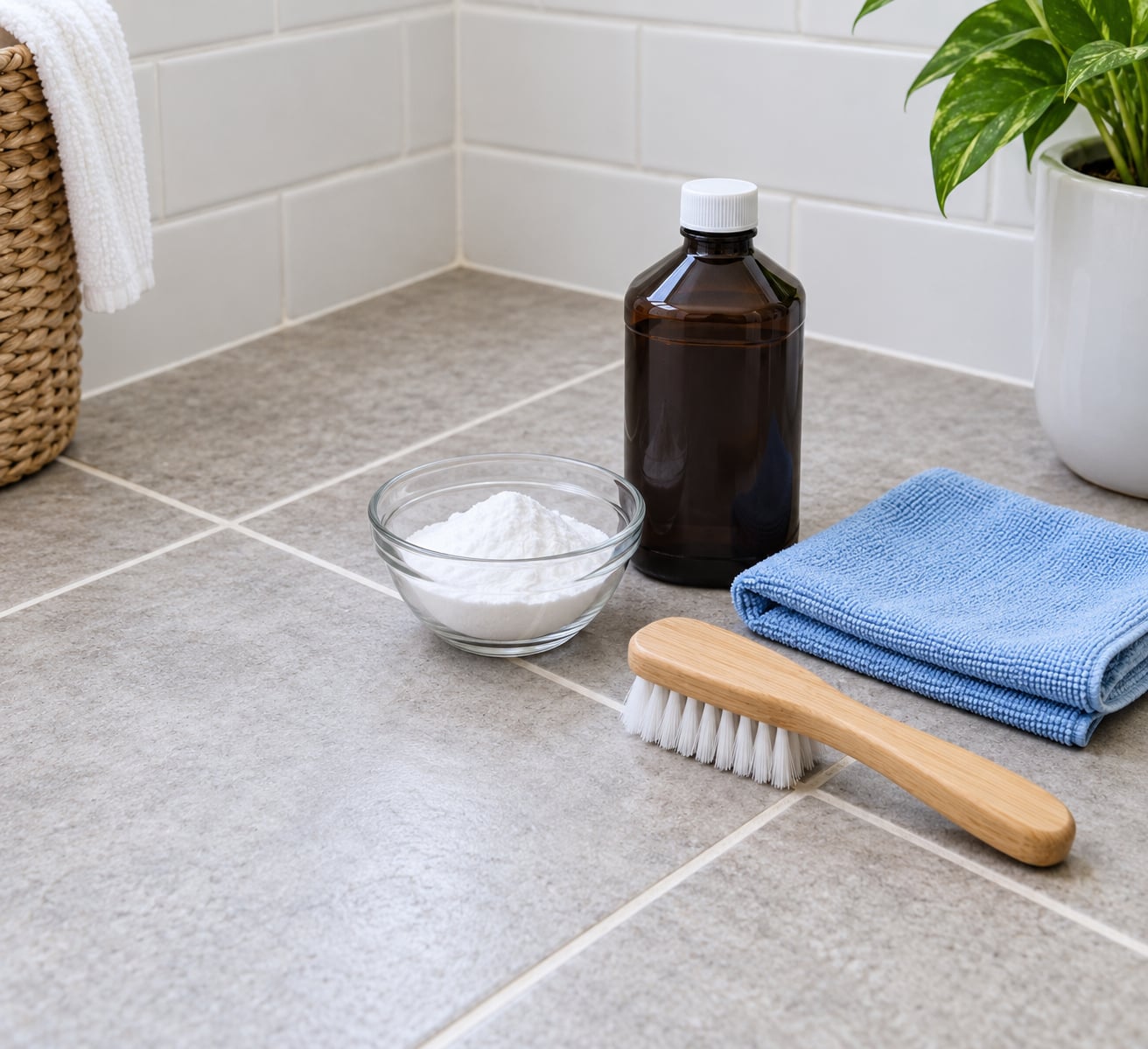
- Baking soda. The mild abrasive and the base of the paste. It loosens soap scum without stripping color.
- 3% hydrogen peroxide. The oxidizer that breaks down the organic stain. Buy the brown bottle, not the 12% version, which is far too harsh for grout.
- Dish soap. One teaspoon is enough. It holds the paste together and keeps it clinging to the line instead of sliding off.
- Microfiber cloths. Wring one out for application and keep a second clean one for the final wipe.
- A spray bottle and warm water. For pre-wetting the grout and for the rinse.
- A plastic sheet or paper towels. Only for the overnight poultice method, where the wrap holds moisture against the line.
What you skip matters as much as what you buy. Wire brushes, metal wool, and abrasive powders like Comet scratch cement grout and dull any colored grout permanently. Grout is softer than the tile around it, and it wears out first.
Step-by-Step
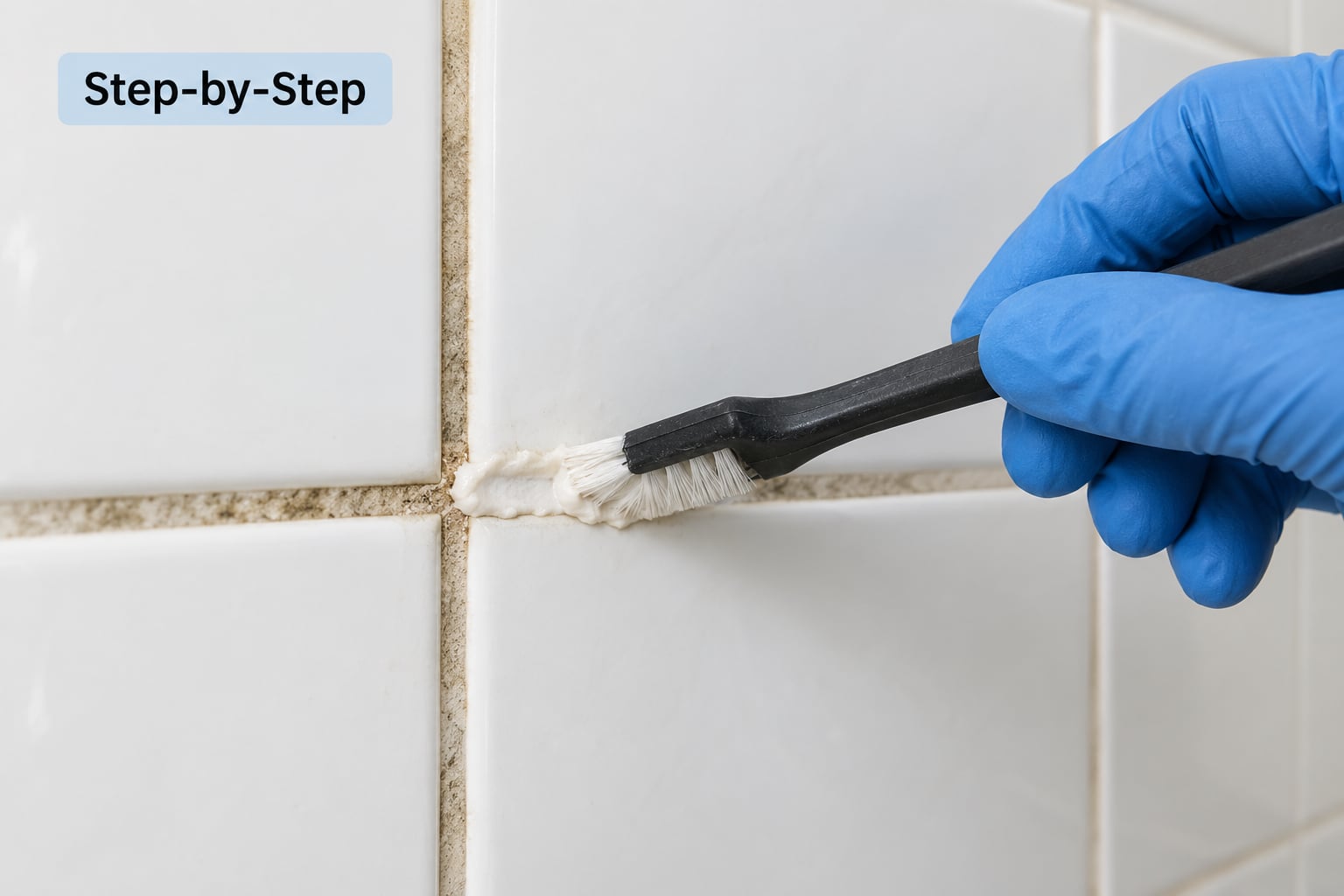
Four steps, and only the first and last ones need your attention. Work in sections no bigger than one shower wall or a quarter of a floor at a time.
Step 1: Identify your grout and test a hidden spot
Look at a loose crumb of grout or run a fingernail across a line. Cement-based grout is powdery, sandy, and dull. Epoxy grout is smooth, hard, and usually a uniform color. Acrylic or premixed grout sits somewhere in between and is more fragile than cement.
This matters because epoxy is non-porous and already stain-resistant. If your grout is epoxy, most of the methods below are unnecessary, and a pH-neutral cleaner plus a wipe will do. Scrubbing epoxy is how you wear a groove into it.
Then test. Put a dab of your chosen cleaner on a line in a corner, wait the full dwell time, and wipe it. If the color fades, lightens, or goes blotchy, stop and pick a gentler method. Cement grout takes a pH-neutral cleaner; marble, travertine, slate, limestone, and concrete tile do not take acids at all.
You should see a visible difference on the test patch. If not, move to a stronger option before you spread anything over the room.
Step 2: Mix the paste and give it a 10 to 15 minute dwell
This is the core of how to clean grout without scrubbing, and the ratios matter. Combine 1/2 cup baking soda, 1/4 cup 3% hydrogen peroxide, and 1 teaspoon of dish soap. Stir until it holds the shape of a thick paste, not a runny one.
If you have more than about 20 square feet to cover, mix in small batches. The peroxide starts breaking down as soon it meets the soda, so a bowl left sitting for 30 minutes is weaker than a fresh one. Making two bowls beats making one and rushing.
Pre-wet the grout with warm water and a light mist, then spread the paste with your finger or a soft brush. Push it into the line and away from the tile face. Keep it off the tile if you can, since residue on the tile takes extra wiping later.
Leave it 10 to 15 minutes. You’ll see bubbling in the first minute or two, which is the peroxide reacting with the organic matter in the grout. When the bubbling slows, the work is done. Don’t scrub during the wait. Scrubbing now is the habit that wears out grout without speeding anything up.
Step 3: Lift the residue and dry the lines
Wipe with a microfiber cloth dampened with warm water, not dripping. The grime should lift as a pale slurry. Fold the cloth rather than scrubbing back and forth; one direction, one pass per section.
Follow with a second pass using a cloth dampened with plain water, and a third with a dry cloth. If you used a peroxide paste, rinse once more because the white film that appears as it dries is dried peroxide, and it wipes off easily while still slightly damp.
Run your fingernail along the line as you finish each section. If it feels powdery and even, that section is done. If it feels gummy, the paste was left too long in a hot spot or you wiped before it fully loosened, so a second application beats picking at it.
Drying matters. Let the floor dry fully before walking on it or putting furniture back, and keep water off the line for a few hours. Trapped moisture keeps the cement soft and can leave a haze once it cures.
Step 4: Treat stubborn marks one spot at a time
For lines that didn’t budge, mix baking soda with just enough water to make a dry paste and press it into the problem spots. Add a drop of dish soap. Let it sit 30 minutes, then wipe with a damp cloth.
For heavy buildup, extend the wait instead of adding pressure. Spread the paste thickly, lay paper towels or plastic wrap over it, and press it down. The wrap stops the paste drying out and holds the chemistry against the grout for several hours or overnight. This is the single most useful trick for the “for hours” version of this job, and it turns active work into waiting.
Then escalate once, carefully. An oxygen bleach soak, roughly one scoop per gallon of hot water per the label, handles blackened lines better than any DIY paste. Apply it to damp grout, leave it 15 to 30 minutes, and rinse well. Check it on the hidden patch first.
Two rules that are not negotiable. Never mix hydrogen peroxide with vinegar, and never mix peroxide with a bleach-family product. Both combinations release gas and heat with no cleaning benefit. And skip vinegar entirely on marble, travertine, limestone, and slate, where acid etches the stone permanently.
If a line is still dark after all of that, cleaning has reached its limit. Mold that has grown behind the tile, or grout that is cracked, powdering, or missing, needs a grout pen or regrouting. No cleaner fixes a gap.
Here is how the methods compare on time:
| Method | Hands-on time | Total wait | Natural stone | Best for |
|---|---|---|---|---|
| Baking soda and peroxide paste | About 10 minutes per bathroom | 10 to 15 minutes | Safe | Light to medium grime |
| Oxygen bleach soak | About 15 minutes per room | 15 to 30 minutes | Safe on sealed stone | Darkened shower grout |
| Baking soda paste under plastic wrap | About 5 minutes to apply | Several hours or overnight | Safe | Old stains, large areas |
| Vinegar and dish soap | About 10 minutes | 5 to 10 minutes | Never on marble or travertine | Light soap scum on ceramic |
| Steam mop or handheld steam cleaner | Most of the 20 to 30 minutes | None | Use sparingly | Weekly maintenance, not deep stains |
Common Mistakes
Most disappointing results come from one of five habits. Each has a simple correction.
- Scrubbing harder instead of waiting longer. A stiff brush on cement grout polishes the surface, dulls colored grout, and strips the sealant that is keeping water out. Give the paste its full dwell time first, then use a soft nylon brush only on spots the paste left behind.
- Using bleach or an acid product out of habit. Chlorine bleach fades grout color over time and its fumes are hard on kids and pets. Oxygen bleach does the same job with no chlorine. On the acid side, vinegar works well on ceramic and porcelain and ruins marble and travertine.
- Cleaning the whole floor in one pass. The first sections dry before you reach the last ones, and you end up re-wiping everything. Work in sections about six feet wide, so the paste stays wet where you are standing.
- Skipping the grout-type check. Epoxy grout does not need this treatment and dislikes it. Cement grout does need it. Five seconds of identification saves a bad afternoon.
- Skipping the spot test. Every method on this page is safe on most surfaces and wrong on some. That one corner patch takes a minute and tells you what the whole room will do.
Two more worth naming. Never pour boiling water on grout, since the heat opens cracks, and never assume a stain will lift because a product smells strong. Strong smell usually means a harsher chemistry than the job needs.
Frequently Asked Questions
How long should grout cleaner sit before wiping?
Leave a baking soda and peroxide paste on grout for 10 to 15 minutes, which is enough time for the bubbling to slow and the grime to loosen. Oxygen bleach needs 15 to 30 minutes. Wiping too early is the most common reason people decide the method does not work. If the paste has dried to a hard white crust, mist the line with warm water and wait five more minutes before wiping.
Is baking soda safe to clean grout with?
Yes. Baking soda is mild enough for regular use on cement grout and it will not fade colored grout, which is why it is the base of most no-scrub recipes. It is also the safer half of the method on natural stone, since it is not an acid. It is not strong enough to remove deep black mold on its own, though, so heavy buildup needs oxygen bleach or an overnight treatment.
How do I clean shower grout without scrubbing?
Mix 1/2 cup baking soda, 1/4 cup 3% hydrogen peroxide and 1 teaspoon of dish soap, spread it along the lines with your finger, and leave it 10 to 15 minutes. Wipe with a damp microfiber cloth and a second pass with plain water. For shower floors and splash zones that stay damp, an oxygen bleach soak left 15 to 30 minutes handles soap scum better. Dry the grout afterward, since standing moisture keeps cement soft.
Why does my grout stay dirty no matter what I use?
Four reasons usually explain it. The grout is epoxy rather than cement, so it resists cleaners but is not dirty. The stain is mold growing behind the tile or in the wall cavity, which no surface cleaner reaches. The grout is cracked or powdering, so dirt sits in gaps instead of on the surface. Or the sealer has worn away and the cement is absorbing everything. Crumbly or gapped grout needs a grout pen or regrouting, not more cleaner.
When is it worth calling a professional instead?
Hire a pro when the grout is physically failing, when mold keeps returning within weeks of cleaning, or when the area is large enough that your time costs more than the job. Deep black staining across an entire old shower floor is also a pro job. One caution: before anyone else starts, ask whether they plan a sealer afterwards, since cleaning without resealing leaves the cement ready to absorb the next year of grime.
Conclusion
Start with the corner of the room. Test a dab of the baking soda and peroxide paste, wait the full 15 minutes, and check whether the color held. If it did, work in six-foot sections with the same paste and keep the brush out of it until a spot has already failed the paste.
For lines that stay dark, seal the paste under plastic wrap overnight rather than scrubbing harder. And once the grout is clean, reseal it and wipe the shower walls down after a few uses each week. Sealed grout that gets wiped regularly rarely needs a deep clean again, which is the whole point of doing this the low-effort way.