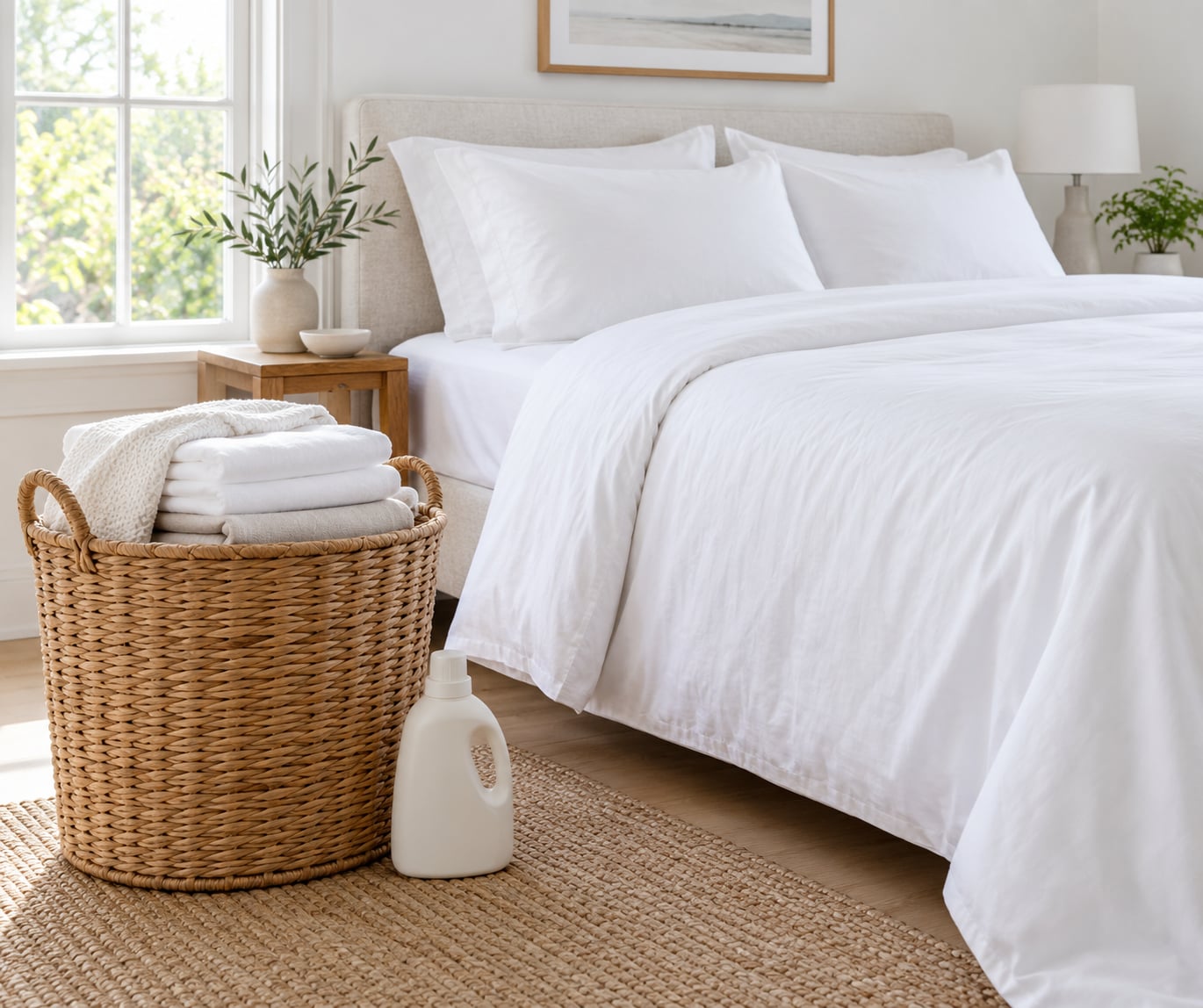
You should wash your bed sheets every one to two weeks, and once a week is the sensible default for most beds. Push that down to every three or four days when someone sweats heavily, a pet sleeps in the bed, or allergies are in play. The care label on your specific sheets overrides any generic schedule, including this one.
Most people guess their way through this. Sheets look fine for a long while, and the smell usually arrives before the visible soil does. That is why the answer is a range with conditions attached rather than a single number.
This guide covers how often should you wash bed sheets based on fabric, season, health and bedroom conditions, then explains how to wash them so the effort actually counts. Last reviewed for accuracy in 2026.
Table of Contents
- How Often Should You Wash Bed Sheets?
- How Often Should You Wash Bed Sheets by Material?
- Cotton
- Linen
- Bamboo and rayon
- Polyester and cotton-poly blends
- Flannel
- Silk and satin
- What Makes Sheets Need Washing More Often?
- How to Wash Bed Sheets Properly
- Should You Wash Bed Sheets in Hot or Cold Water?
- How Often Should You Wash Bed Sheets for Allergies?
- How Often Should You Replace Bed Sheets?
- Frequently Asked Questions
- Is it safe to wash bed sheets less often?
- Is every two weeks okay for washing bed sheets?
- Can you wash bed sheets with towels?
- How do you get yellow stains out of bed sheets?
- Do mattress pads and pillowcases need the same wash schedule?
- What do I do when sheets smell musty after washing?
- Conclusion
How Often Should You Wash Bed Sheets?
Every one to two weeks, with weekly being the safe middle. The reason is what accumulates on fabric overnight: sweat, body oils, dead skin cells, dust, hair and outdoor allergens. Cleveland Clinic notes that people shed roughly 1.5 grams of dead skin a day, and much of it ends up in bedding, where it becomes food for dust mites.
Two weeks is a ceiling rather than a target. Push much past that and you are laundering grime, skin and moisture that have had time to set into the fibre and start breaking down into odour. Most sheets also hold more water than we expect, which slows drying and makes a laundry day a two-drying-cycle day.
These are the real-life intervals most households land on:
| Your situation | Recommended interval |
|---|---|
| Hot sleeper, night sweats, or you sleep naked | Every 3 to 4 days |
| Pet sleeps in the bed | Every 4 to 7 days |
| Asthma, dust mite allergy or eczema | Every 5 to 7 days |
| Recovering from illness, a spill or bodily fluids | Wash immediately, then resume the normal schedule |
| Hot or humid climate, or an unheated summer bedroom | Every 5 to 7 days |
| Two adults, regular use, ordinary bedroom | Every 7 to 10 days |
| One person, cool room, showers before bed | Every 10 to 14 days |
| Guest room or rarely used bed | Every 4 to 6 weeks, plus after every guest |
Season matters more than most guides admit. People who wash on a rhythm describe roughly twice a week in summer, weekly in spring and autumn, and every two weeks in winter. Sweat load does not drop because the calendar says it should.
For comparison, here is what people report actually doing: roughly 24 days between washes on average, 25 days for pillowcases, and single men in one survey stretching to four months. About 5 percent wash once or twice a year. The gap between the recommendation and the habit is the main reason many households smell their own sheets and call it normal.
How Often Should You Wash Bed Sheets by Material?
Fabric changes how fast a sheet gets dirty and how it responds to washing, so the interval shifts a little. Check the care label every time; what follows is a sensible starting point, not a rule that beats the manufacturer.
Cotton
Absorbent and breathable, and it holds moisture longer than most fabrics. Weekly suits cotton well, and cotton tolerates warm or hot water, so it is the easiest material to wash on a short cycle. Expect yellowing over time, which is usually a build-up problem rather than dirt.
Linen
Linen dries faster and resists mildew better than cotton, so it can stretch a little further, toward ten to fourteen days in a dry room. Wrinkling is normal. Wash it less dry than cotton and let it finish drying on the line.
Bamboo and rayon
Both are soft and quick-drying, and both have a reputation for odour that returns quickly if the fabric stays damp. Every seven to ten days, warmer water, and a thorough dry. Viscose and rayon shrink and weaken with high heat, so keep the dryer cool.
Polyester and cotton-poly blends
These dry fast, resist wrinkles and rarely need anything above warm water. Every ten to fourteen days is workable, but oil-based body stains build up on synthetic fibres, so check for marks rather than trusting the smell test. A little oxygen bleach works better than chlorine on these.
Flannel
Brushed cotton holds onto fibre and lint, which traps moisture in the nap. Flannel gets odorous faster than flat weave, so weekly is a good number. A lint cycle or a tumble with dryer sheets keeps the nap from matting.
Silk and satin
Follow the label closely. Silk usually wants cool water, a gentle cycle and no tumble heat. Wash it every two weeks at most, and skip fabric softener, which coats the fibre and dulls the surface.
What Makes Sheets Need Washing More Often?
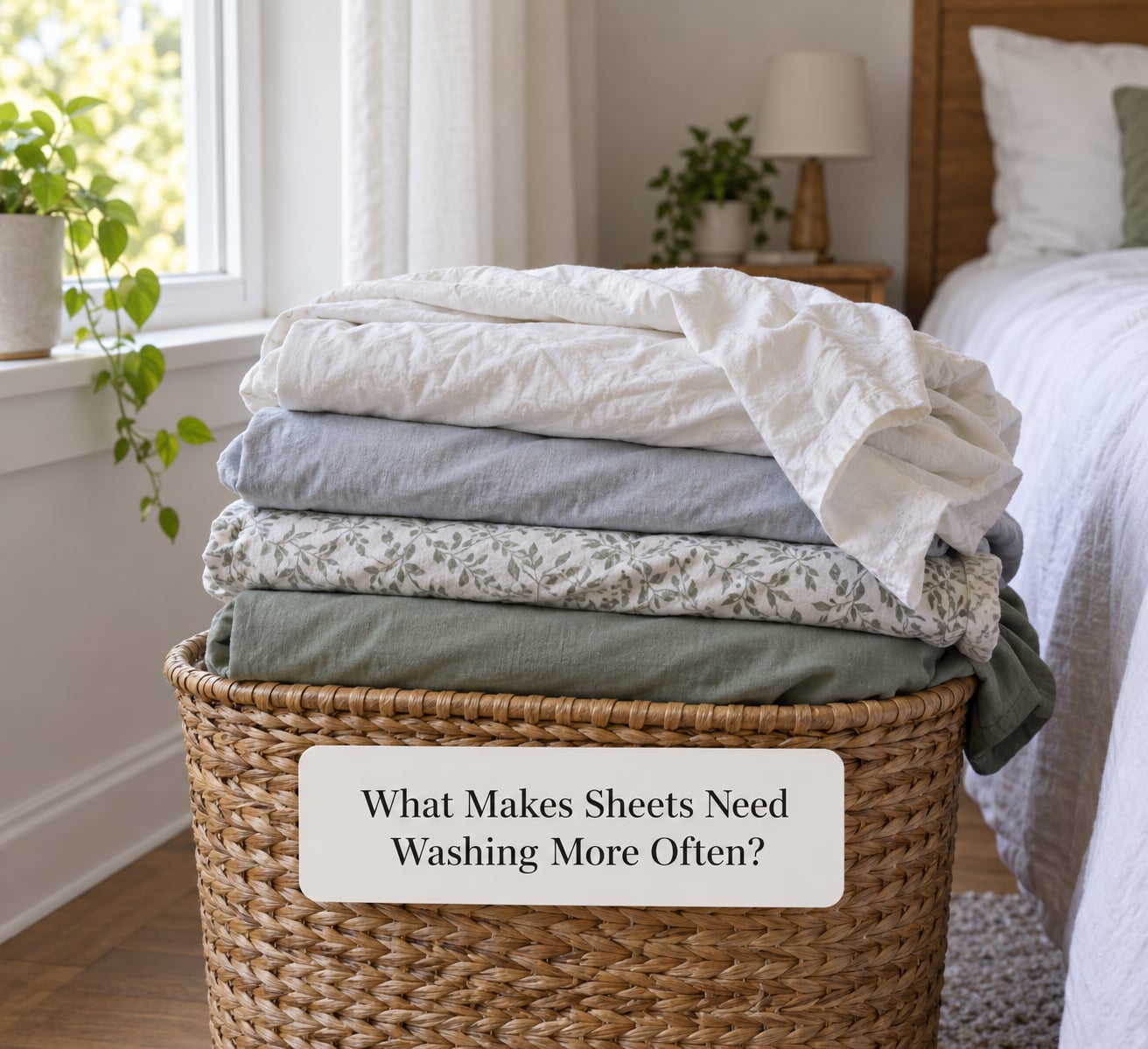
Shorten the interval when the person in the bed sweats, when something else shares the bed, or when the room stays warm. The common thread is moisture and extra allergen load, and both compound quickly.
Night sweats leave salt behind once the water dries, and salt stiffens fabric and dulls colour. A warm room speeds up everything: mites multiply faster, oils oxidise faster, and damp folds stay damp. Households on r/polls who follow a seasonal rhythm notice this first, describing heavy summer sweat that makes a weekly wash feel like a week too long.
Allergies are the strongest reason to add days to the schedule. A Journal of Allergy and Clinical Immunology survey of thousands of US homes found more than 90 percent had at least three detectable allergens present, and a week is enough for that to build. Roughly 20 million Americans have dust mite allergies, and the mites feed on exactly the dead skin your sheets are holding. People managing asthma, eczema or psoriasis report tighter routines. One r/AskReddit user with psoriasis described washing daily and rotating three or four sets, which is the health-driven end of the range and entirely reasonable for them.
Pets add dander and hair. A dog in the bed every night turns a weekly wash into a four-to-seven-day job, and it also means a vacuum pass on the mattress in between. On r/CleaningTips the common point was that even people who shower right before bed still sweat and shed skin overnight, which is the piece of scepticism most washing advice ignores.
The honest list of signs that a sheet needs washing now:
- A sticky, slimy or greasy feel when you run your hand over the fabric
- Any smell, or a smell that returns a day after a wash
- Visible sweat marks, yellow patches or oil spots
- Pilling, roughness or a fabric that no longer feels soft
- Crumbs, hair or dust carried in from a guest
- Small insects near the seams or headboard
Odour is the earliest warning. Bacteria feed on the sweat and skin residue, and their by-products smell long before anything looks dirty. A sheet that passes an arm test but fails a nose test is overdue.
How to Wash Bed Sheets Properly
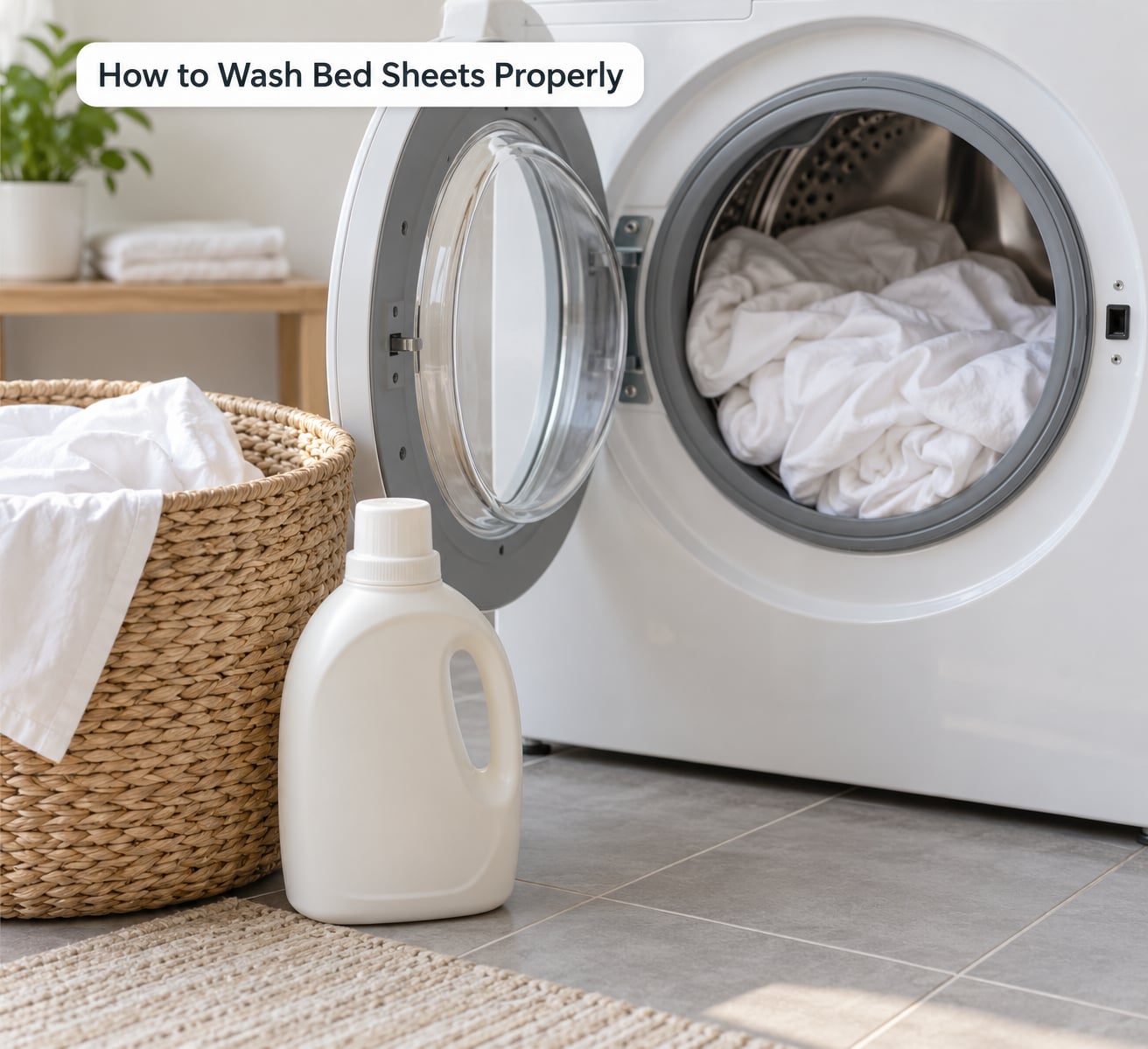
Washing sheets well takes about fifteen minutes of attention. The routine below covers most situations, including the awkward ones like musty sheets and stubborn stains.
1. Read the care label first. It settles temperature, cycle and dryer heat, and it is the only instruction that outranks the advice in this article.
2. Shake the sheet out over the bin and strip the mattress. Hair and grit in the folds are the main reason grime survives a wash.
3. Pretreat marks before the machine runs. Work a little liquid stain remover into sweat marks and yellow patches, and let it sit for ten minutes.
4. Load loosely. A king fitted sheet crammed into a small drum cannot move, which is exactly when detergent and lift get trapped in the fabric rather than rinsing out. Wash it alone if it is a tight fit. This comes up constantly on automaticwasher.org, where the practical consensus is a decent detergent and warm-to-hot water for whites.
5. Measure the detergent by the dose on the label, not by the cap. Extra detergent does not clean better and leaves a film that holds odour.
6. Dry fully, and dry them again if you can. Damp folds turn into a mildew problem fast, and a second short tumble in the dryer usually does it. Outdoor drying on a line in dry weather works well and costs nothing but a bit of effort.
7. Make the bed later in the day, not first thing. Cleveland Clinic suggests giving the bed a couple of hours to dry out, which reduces both the smell and the moisture the mites like.
For very sweaty or musty sheets, an extra rinse cycle and a splash of white vinegar in the final rinse go a long way. On r/CleaningTips, rotating two or three sets was the answer that made weekly washing realistic for most people, and it is the single habit that fixes the most complaints. Once a week stops being a chore when a clean set is already on the bed.
Should You Wash Bed Sheets in Hot or Cold Water?
Warm water, around 40 to 60 C (104 to 140 F), suits most cotton and linen sheets. It removes body oils and sweat without the shrinking and fading that make people wash cold and then worry it did nothing. Cold water is the right choice for silk, rayon, bamboo and anything with colour that must stay deep. Warm water plus a hot dryer pass is a fair compromise.
Hotter is not automatically better. Above 60 C (140 F) most care labels stop recommending it, and the energy cost is real. Reserve genuinely hot water for allergy households and for times when someone has been unwell, and treat the label as the final word.
How Often Should You Wash Bed Sheets for Allergies?
Every five to seven days, and pair that with heat and encasement rather than relying on frequency alone. Dust mites die above 60 C (140 F), and 130 F (54 C) is the widely used target for a hot cycle, with a high-heat dryer cycle afterwards since heat and dryness together do the work. People focused on mite allergies on r/lifehacks and the inspire.com asthma community consistently prioritise allergen-impermeable encasements on the mattress and pillow, hot washes, dryer heat and regular mattress vacuuming over washing more often.
Showering does not solve this. Washing off sweat and skin cells from your body helps, but the sheets and the mattress still hold what was shed overnight. For a child with eczema, a known allergy or a respiratory condition, ask your doctor or pharmacist for an individual plan rather than adjusting a generic schedule.
How Often Should You Replace Bed Sheets?
Washing frequency and replacement timing are different questions. Good cotton or linen sheets that get washed properly at a sensible temperature can last several years. They get replaced when the fabric stops performing, not on a calendar.
Signs a set has reached the end: elastic gone slack and flat in the fitted sheet, fabric thinning or going translucent in the middle, stains that survive two washes, an odour that returns within days no matter how you wash, or a hand-feel that has gone scratchy. Comfort changes too. If a fitted sheet has stopped staying put and you wake up tangled, it has served its time.
Storing clean sheets matters too. Fold them only when bone dry, and never put warm or damp bedding into a linen cupboard, because trapped moisture in a closed cupboard is how you get a musty closet and a mildew problem that survives the next wash.
The rest of the bed has its own rhythm:
| Bedding item | How often to wash |
|---|---|
| Pillowcases | Every 7 days |
| Duvet cover | Every 7 days |
| Flat and fitted sheets | Every 7 to 14 days |
| Comforter or duvet insert | Every 3 to 6 months, following the label |
| Mattress protector | Every 1 to 2 months, or per the label |
| Pillows | Every 3 to 6 months, low heat |
| Mattress | Vacuum monthly; clean by label guidance |
| Blankets and quilts | Every 1 to 3 months, seasonally |
Patch test any cleaner on a hidden square first, and follow the label for bulky items. A comforter that needs an oversized machine is better cleaned twice a year than never.
Frequently Asked Questions
Is it safe to wash bed sheets less often?
A monthly wash is workable for a single person in a cool, dry room who showers before bed, but it is not a good general rule. Two weeks is the practical ceiling because sweat, skin cells and dust mites build up regardless of whether the sheet looks dirty. If you are stretched for time, extend to two weeks rather than a month, and put a pillowcase in the wash early to keep the face area fresh.
Is every two weeks okay for washing bed sheets?
Every two weeks is the upper end of the sensible range, and it suits one person in a climate-controlled bedroom with no pets and no allergy conditions. Shorten it to weekly, or every three to four days, if you run hot, share the bed with an animal, or have asthma, eczema or a dust mite allergy. Anything past two weeks is worth skipping in favour of a shorter cycle you actually stick to.
Can you wash bed sheets with towels?
You can, but separate them if you can. Towels carry more body oil and detergent residue than sheets, and mixing them means the sheets may not get a proper rinse, which is how odour starts. Bathroom towels also need a hotter, longer cycle than most sheets want. A shared load on a warm cycle with normal detergent is fine for a small load, but avoid it when either item has a special care label.
How do you get yellow stains out of bed sheets?
Yellowing is usually a build-up of skin oils, sweat and detergent residue rather than a stain you can scrub off. Soak the sheet in warm water with oxygen-based bleach or a laundry detergent booster for an hour or two, then wash it as normal with an extra rinse cycle. A cup of white vinegar in the rinse helps too. Bleach on coloured or delicate fabric can make the yellow worse, so check the label first.
Do mattress pads and pillowcases need the same wash schedule?
Pillowcases do, because they sit against your face all night and collect sweat and skin, so wash them weekly. Mattress pads are less demanding but worth cleaning every one to two months, or sooner if you sweat heavily, and always after a spill. The mattress itself cannot be washed; vacuum it monthly, check the care label for spot-cleaning guidance, and use a protector to keep stains out of it.
What do I do when sheets smell musty after washing?
Musty smell means the fabric is still damp somewhere, usually in the fitted sheet hem or where the duvet sat, or the load was too full to rinse properly. Wash again with warm water and an extra rinse, then dry with some dryer sheets for a short cycle to loosen the fibres. Air dry sheets outdoors in dry weather. Storing or folding fabric before it is completely dry is the most common cause, and the smell returns until you do.
Conclusion
Start by reading the care label, then treat every one to two weeks as your baseline and adjust from there. Weekly for an ordinary bed, every three or four days for a hot sleeper or a shared bed with pets, and never past two weeks without a reason.
One concrete step: pick a laundry day this week and put the sheets in. Do it before they smell, because once a sheet has taken on a persistent odour, it takes two washes to shift it instead of one. Most households that rotate two or three sets find the weekly rhythm stops feeling like extra work within a month.
If you have eczema, asthma, a diagnosed allergy or a condition that affects how you sweat, ask your doctor for advice specific to you rather than working from a general schedule.