Removing pet hair from laundry takes three passes: lift it while the fabric is dry, shake out what is left with a 10-15 minute no-heat tumble, then wash with white vinegar in the rinse and dry with a dryer sheet or ball so static does not pull the fur back on. Prep is most of the work, and the whole routine adds about 20 minutes.
That order matters more than any product you can buy. Pet hair grips clothing because rubbing builds static electricity that bonds fur to the fibers, and moisture makes loose hair clump into the weave instead of floating away. A wash loosens hair. It rarely carries it off.
I keep the same order in a two-dog house, and the difference shows most on dark jeans. The goal is clean laundry without a third wash.
Table of Contents
- What You Need
- How to Remove Pet Hair from Laundry Step by Step
- How to Remove Pet Hair from Laundry Before Washing
- How to Remove Pet Hair from Laundry After Washing and Drying
- Common Mistakes
- Frequently Asked Questions
- Do dryer sheets remove pet hair from laundry?
- How do you remove pet hair that is stuck in clothes?
- What is the best way to remove pet hair from a couch?
- Can baking soda remove pet hair from laundry?
- How often should I clean my dryer lint filter when washing pet hair?
- Will a lint roller remove pet hair from bedding?
What You Need
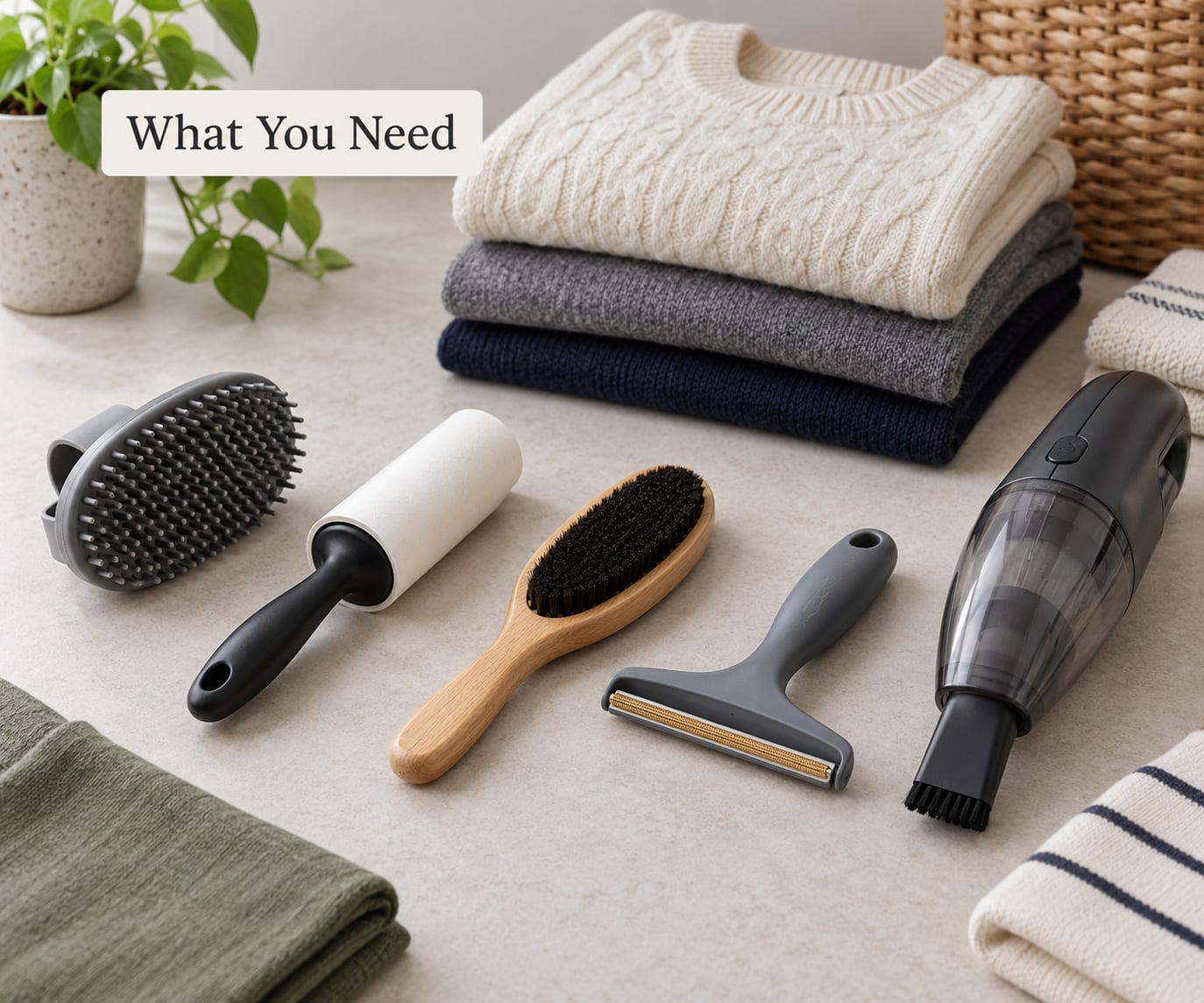
None of this is specialty equipment, and most of it costs nothing beyond the first purchase. Here is what each item actually does, and when you can skip it.
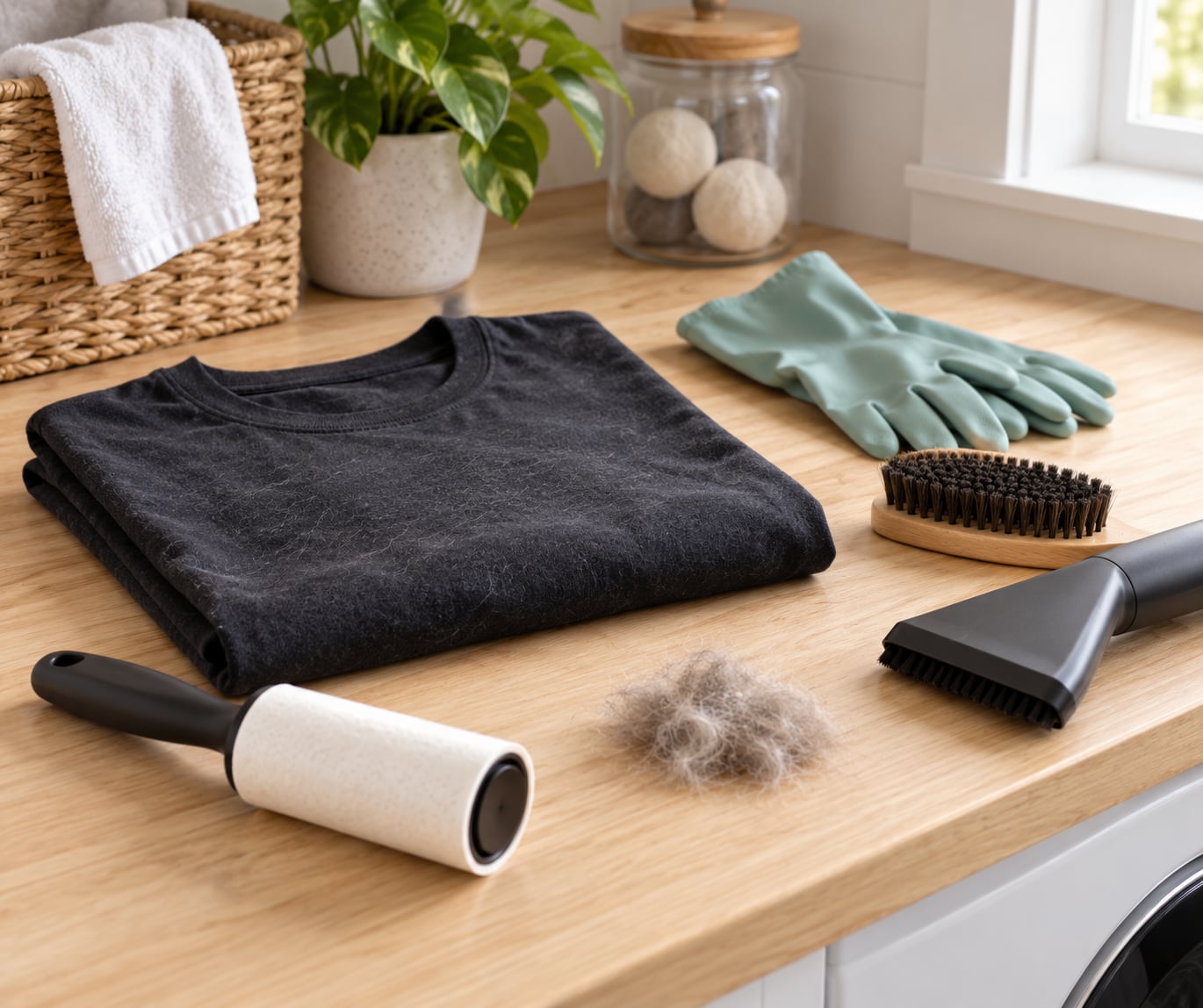
- Lint roller. The fastest tool for hair sitting on top of the fabric. A reusable roller costs more up front but lasts for years and needs no sticky sheets.
- Garment or fabric brush. A clothes brush lifts hair that has started to sink into knit fibers, which a roller can only skim across. Use it on sweaters, fleece and wool coats.
- Rubber dish gloves. Running a dry or damp glove over a garment in circles balls hair into clumps you can peel off. This is the highest-voted tip on r/laundry for a reason.
- Damp microfiber cloth. The other workhorse method in those threads. Dampen it, wring it out well, and rub in circles.
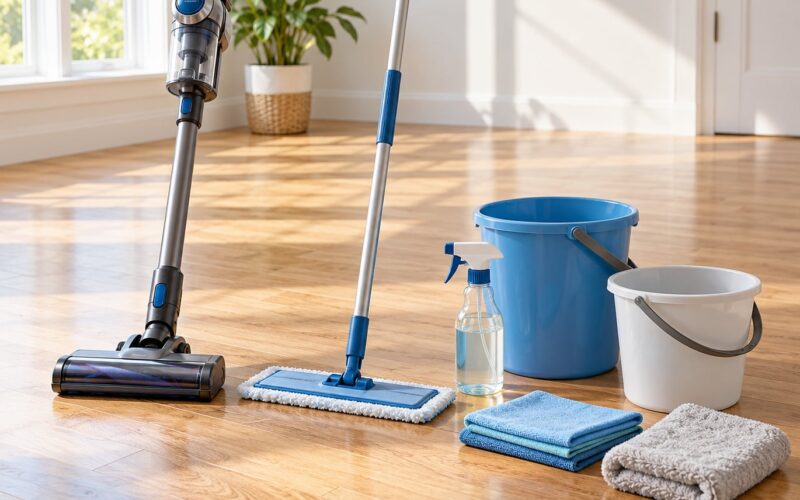
- Vacuum with an upholstery or crevice attachment. Non-negotiable for couches and car seats, and useful on bulky throws. Without it you are only lifting the hair sitting on top.
- Washing bag or a spare pillowcase. Put heavy shedders inside so loose fur stays contained rather than migrating to other items.
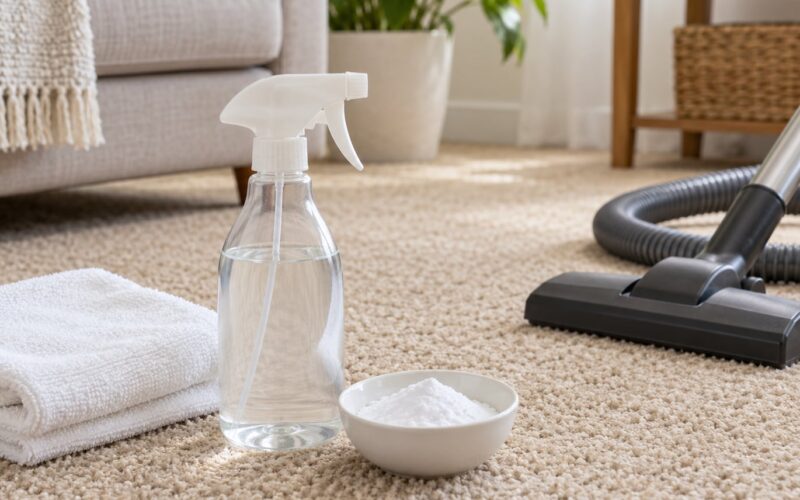
- White vinegar and baking soda. Vinegar loosens hair in the rinse; baking soda helps with odor and mild residue.
- Dryer sheets or wool dryer balls. Either cuts static. Sheets do it slightly better on pet hair; balls last longer and add tumble time.
- Masking tape. Optional, but a strip of tape pressed onto a sofa cushion picks up hair the vacuum attachment can no longer reach.
Skip the brush on anything marked dry-clean-only, on silk, and on upholstery with an S or W cleaning code. Those need a professional or a gentler pass with a damp cloth.
How to Remove Pet Hair from Laundry Step by Step
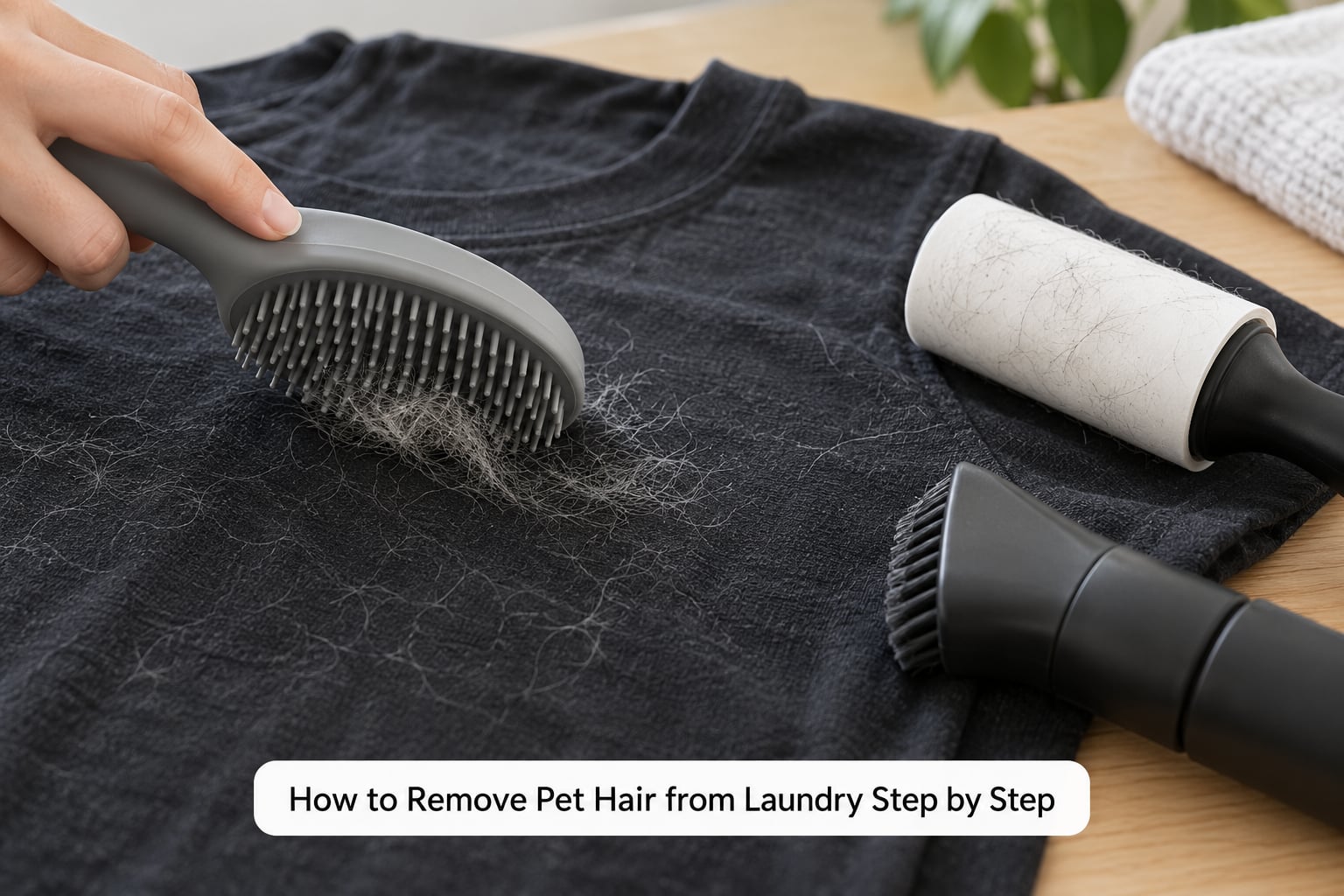
Five stages, in this order. Skipping ahead is what leaves hair on clean clothes.
How to Remove Pet Hair from Laundry Before Washing
Work on dry fabric. Water changes loose hair into a stuck clump, so anything you can lift now saves you work later.
- Read the care label first. Pull anything dry-clean-only out of the load so it never tumbles with the rest.
- Shake each item outdoors or over the bin, both sides. This alone removes the bulk of loose shed hair.
- Ball the stuck hair up. Wear rubber gloves and rub the fabric in circles, dry or lightly damp, until hair gathers into clumps, then peel it off. A damp microfiber cloth does the same job.
- Brush or vacuum with the nap. Always work in the direction of the fibers, not against them, or you will lift fuzz along with the hair.
- Tumble 10-15 minutes with no heat on air-fluff or a pet-care cycle. The turning motion shakes more hair loose and sends it straight to the lint screen. Clean that screen right after.
- Bag the worst offenders. Pet beds, fleece blankets and thick throws go in a washable bag or a pillowcase so they cannot dump fur across the load.
Front-load and top-load washers behave differently here. A top-loader with a center agitator physically rolls hair off fabric, while many front-loaders rely on tumbling alone, which lifts less. That is the whole argument r/laundry people have about appliance brands, and it is why the pre-tumble matters more in a front-loader house.
How to Remove Pet Hair from Laundry After Washing and Drying
The wash loosens. The dryer decides where the hair ends up.
- Add half a cup of white vinegar to the fabric softener dispenser or pour it into the final rinse. The acetic acid loosens hair that has matted into fibers. Skip it on wool, silk and anything labeled for vinegar-free care.
- Use an enzymatic detergent on pet bedding and blankets. The enzymes break down the protein residue that holds hair and odor in, which is what a normal detergent leaves behind.
- Pick a cycle with room to move. Wash in warm water with a longer agitation time, and never pack the drum full. Hair needs space to suspend and drain away.
- Use one dryer sheet or three wool dryer balls for the full dry, plus your dryer’s reduce-static setting if it has one. Members on r/laundry report that half a sheet handles even Lab and Great Pyrenees levels of shedding. Heat helps the sheet do its job, so reserve high heat for items the care label allows.
- Inspect while the load is still slightly damp. Damp fabric holds hair loosely and a damp cloth lifts it, whereas dry hair is already bonded in.
- Roll once more before folding. One pass with a lint roller now saves finding the hair again in the clean-laundry pile.
Bedding and pet beds go in on their own, not with daily clothes. The hair volume is far higher and it will re-deposit onto everything it shares a load with. Upholstery does not go in the machine at all: vacuum, then rub with a damp microfiber cloth, then treat the fabric per its cleaning code.
Common Mistakes
Washing hair-covered clothes without shaking or brushing. Agitation and water roll loose hair into the weave. Fix: always do the dry pass first, even a quick shake over the bin.
Expecting a lint roller to pull embedded hair. Rollers work on hair sitting on the surface. Once hair is worked into a knit, use the rubber glove or damp cloth technique, then brush. Fix: change your tool based on how deep the hair sits.
Overloading the drum. Clothes packed tight cannot move, so hair stays put and re-deposits at the end of the rinse. Fix: wash pet bedding alone and leave about a third of the drum empty.
Skipping the pre-tumble. It is the single step most guides treat as optional and the one that changes results most. Fix: 10-15 minutes, no heat, lint screen cleaned afterward.
Using a fabric brush on delicate upholstery. A stiff brush on silk, viscose or anything with an S or W code can abrade the pile permanently. Fix: check the code under the cushion first, then use a damp cloth instead.
Ignoring the machine itself. Hair caught in the door lip, the lint screen and the pump filter trap redeposits onto your next load. Fix: wipe the rubber door seal, clean the lint screen after every load, and open the pump filter trap every month or two. An empty hot rinse with vinegar washes residue out of the drum; a washing machine cleaner tablet handles the rest.
Treating a stain as hair. Yellow patches around a pet’s favorite spot are a protein or urine problem, not fur, and brushing will only spread it. Fix: enzymatic cleaner, cold water first, then wash as usual.
Prevention is simpler than most people expect. Weekly brushing removes more shed hair than any laundry product, and forum owners with double-coated dogs and long-haired cats say it outranks technique. A covered wardrobe, a hamper you actually use, and a separate basket for pet bedding keep clean clothes from meeting fur in the first place.
If allergies or asthma run in the house, note that dander in clothing is a common trigger. Washing hot and drying fully matters more for sensitive people than any hair-removal trick.
Frequently Asked Questions
Do dryer sheets remove pet hair from laundry?
Partly. A dryer sheet reduces static, and static is what glues fur back onto fabric while the load tumbles. Members on r/laundry say half a sheet plus the dryer’s reduce-static setting makes shedding a non-issue. Sheets do not lift hair on their own, so finish with one lint roll before folding.
How do you remove pet hair that is stuck in clothes?
Rub the dry garment with a rubber glove in small circles until the hair balls into clumps, then peel them off. A damp microfiber cloth does the same thing and works better on knits. Follow with a garment brush moving in the direction of the fibers, and a lint roller for what still sits on the surface.
What is the best way to remove pet hair from a couch?
Vacuum first with an upholstery attachment, working into seams and along the base where hair collects. Then rub a damp microfiber cloth in circles and use a rubber glove for hair that has worked into the weave. For what is left, press masking tape onto the cushion. Wash slipcovers and throws separately.
Can baking soda remove pet hair from laundry?
Baking soda is a helper, not a remover. Added to the wash it helps neutralize odor and lifts a little residue, but it does not loosen fur the way vinegar does in the rinse. For hair, pair it with half a cup of white vinegar in the softener dispenser and an enzymatic detergent.
How often should I clean my dryer lint filter when washing pet hair?
After every load during shedding season, and at minimum weekly otherwise. Consumer safety guidance and appliance manuals both call for checking the screen each time, because a loaded screen restricts airflow and is a fire risk. The collected hair is also the hair you have successfully kept off your clothes.
Will a lint roller remove pet hair from bedding?
Only the hair on the surface, and bedding holds a lot of hair below the surface. Vacuum or brush the bed first, tumble it 10-15 minutes with no heat to shed more, then wash it separately. Expect the wash and a final lint roll to do most of the work rather than the roller alone.
Start with the dry pass, before anything goes in the machine. Take the load out, shake it outdoors, rub the stubborn spots with a rubber glove, then tumble it 10-15 minutes with no heat and clean the lint screen. Everything after that, the vinegar rinse and the dryer sheet, is easier once the hair is already off the fabric.