How to clean a tent after camping comes down to four moves: let it dry, shake out the grit, wash it by hand with cool water and mild soap, then air-dry it completely before you store it. Most tents that get ruined are ruined by one thing — packed away damp. Give the routine 30 minutes on a warm afternoon and the shelter you put away will come out of its bag ready for the next trip.
I have cleaned the same three tents for years now, and the pattern is always the same. The tent that gets pitched straight out of the stuff sack and left to air overnight needs almost nothing. The one that came home in a downpour and got folded into a bag in the dark needs a full wash and two days of drying.
That is why the drying comes first in this guide, before the soap and the sponge. Cleaning a soaking-wet tent just moves the dirt around in water and drives it deeper into the seams.
Table of Contents
- What You Need Before You Start
- How to Clean a Tent After Camping Step by Step
- 1. Shake Out Loose Dirt and Debris
- 2. Check the Care Label and Choose a Cleaning Method
- 3. Wash the Tent With Cool Water
- 4. Spot-Clean Stains and Problem Areas
- 5. Rinse Away Soap and Dirt
- 6. Dry the Tent Completely
- 7. Inspect and Store the Tent Properly
- Common Mistakes
- How Long Should You Let a Tent Dry After Washing?
- Can You Put a Tent in the Washing Machine?
- Frequently Asked Questions
- Can I use Dawn dish soap to wash my tent?
- Can I spray Lysol on my tent to kill mold?
- What kills mold on a camping tent?
- Can I use bleach on a tent?
- Can you hose down a tent to clean it?
- How long should I air-dry a tent before storing it?
- Final Check Before You Store Your Tent
What You Need Before You Start
You do not need much. A bucket, a soft sponge, a bottle of mild soap and a hose-end sprayer cover almost every tent that comes out of a weekend in the woods.
Start by finding the care label before anything else. It sits on the floor panel seam, on a tag inside a pocket, or printed along the tent body seam, and it tells you the fabric, the coating type and the manufacturer’s own temperature limit. If the label says machine washable, you have more options than if it does not.
- A large tub, a bathtub, a utility sink, or even a big mixing bin
- Cool to lukewarm water
- A mild, unscented soap or a purpose-made technical wash for outdoor gear
- A non-abrasive sponge or a soft cloth
- A soft-bristled toothbrush for zippers, mesh and seams
- A spray bottle for spot treatment
- A microfiber towel
- A fan, and somewhere with shade and moving air for drying
Here is the short version of what not to put on a tent. Bleach strips polyurethane coatings and seam tape, which is how a fly ends up peeling and leaking. Aerosol disinfectants leave a chemical film on fabric you sleep inside for hours. Perfumed dish soaps and laundry detergent leave a fragrance that pulls insects and rodents toward the shelter instead of keeping them out. Fabric softener does nothing useful and coats the fibres.
A small amount of mild unscented dish soap for spot cleaning is genuinely fine. Full-strength perfumed Dawn on a whole tent is not what the tent people mean when they recommend it, and it is not what a gear wash is for.
How to Clean a Tent After Camping Step by Step
1. Shake Out Loose Dirt and Debris
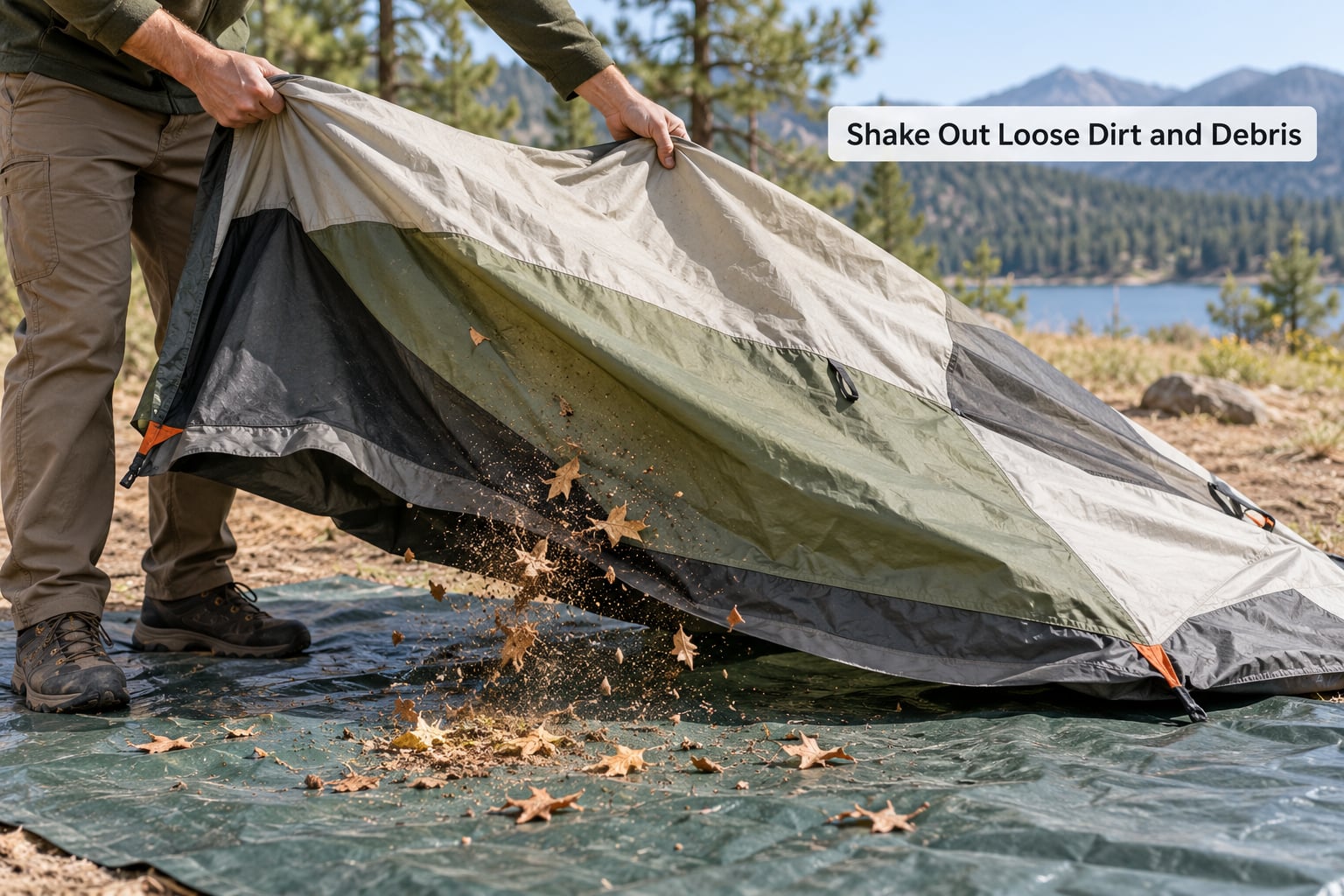
Take the tent out of its bag and give it a hard shake over a tarp or in the shower, before anything is wet. Sand is the main enemy here, because grit that stays in the floor fabric acts like fine sandpaper against the seams every time you fold the tent.
Most of the loose soil leaves at this stage. I shake each piece — body, fly, footprint, poles bag — separately, then walk the tarp over to the trash and sweep it into a pile.
2. Check the Care Label and Choose a Cleaning Method
Now that the tent is empty, find that care label and read it. Technical tent fabric is nylon or polyester with a water-resistant coating, and coatings are the part that does not survive the wrong treatment.
Silicone-coated fabric is more forgiving of a gentle wash than polyurethane-coated fabric, which goes tacky and peels when it gets hot, harsh or agitated. If the label is gone, assume the gentler method: spot-clean first and only hand-wash if the tent genuinely needs it.
3. Wash the Tent With Cool Water
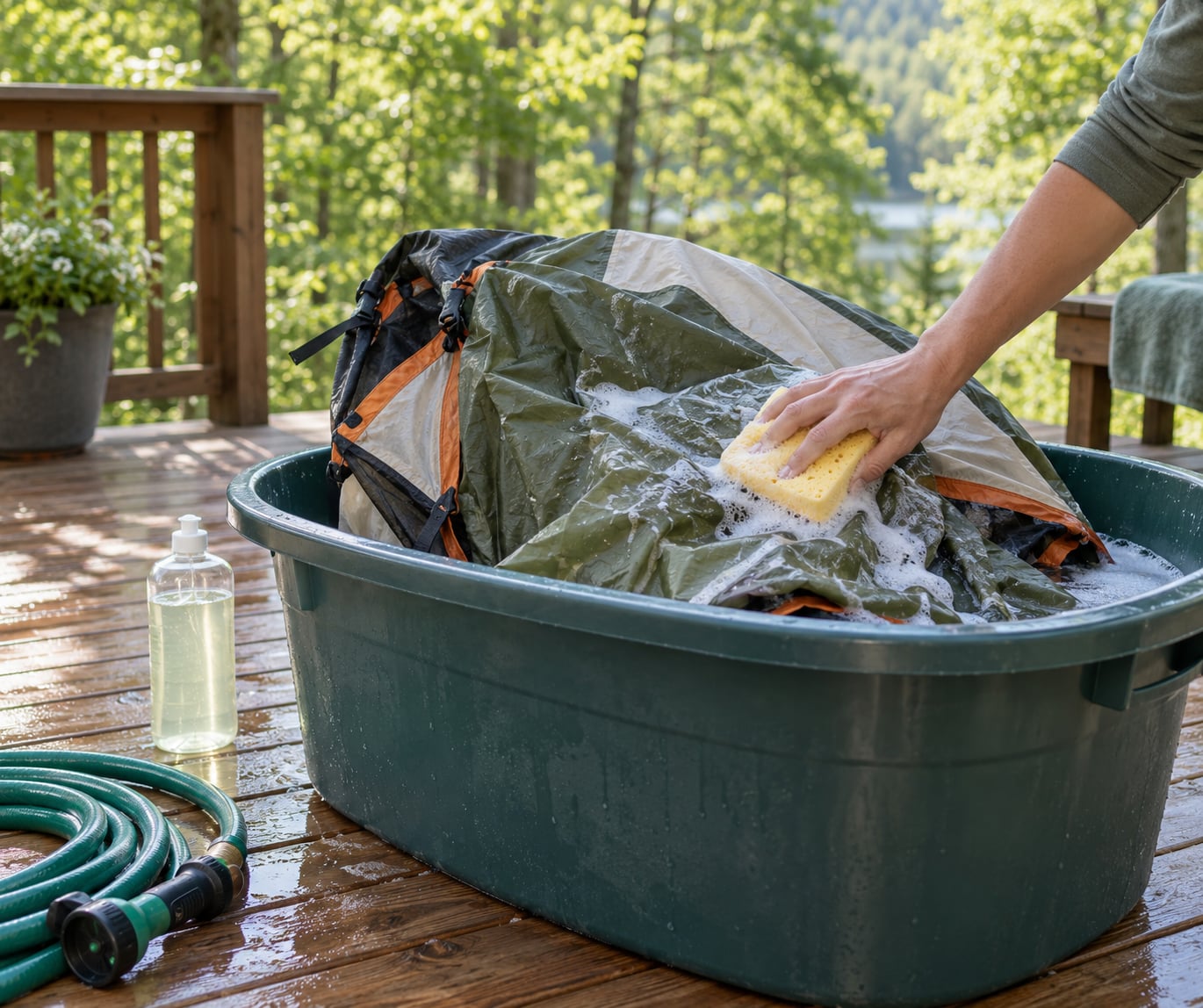
Fill the tub with cool to lukewarm water and a small squeeze of mild soap or technical wash, then work the solution through the fabric with your hands. Turn the tent inside out so you are cleaning the coated inner face, and let the body and the rainfly soak together for 10 to 15 minutes.
Pay attention to the parts that hold dirt rather than scrubbing everything. The hem around the floor, the inside of the vestibule, the seam tape lines, and the bottom corners where mud dries into the weave are where the work actually matters.
Keep the temperature down. Hot water is the fastest way to soften a coating and to set a protein stain permanently, and you gain very little cleaning power from it.
4. Spot-Clean Stains and Problem Areas
For marks that did not come out in the soak, mix a cleaner in a spray bottle and work it in with a cloth rather than soaking the whole panel. A soft brush is fine on the fabric, never on the seam tape.
- Mud and ground-in dirt. Cool water, mild soap and a soft sponge. Let it dry first so it flakes off; scrubbing wet mud just spreads it.
- Tree sap. Isopropyl alcohol on a cloth, dabbed from the outside in so it does not spread. Follow with a rinse.
- Mold or mildew on the surface. White vinegar mixed 1:1 with water, 10 to 15 minutes of contact, worked in with a soft brush. Vinegar is weak against established growth — see the note below.
- Musty smell. An enzyme cleaner, applied and left in during drying. Do not rinse it out; it works while the fabric dries.
- Grimy zipper. A toothbrush and warm soapy water, followed once dry with a silicone zipper lubricant.
- Stuck zipper slider. Back the slider, wiggle it side to side, add lubricant. Never force it; a split slider ruins the zip.
- Protein stains such as food or blood. Cold water and mild soap only. Warm water sets protein into the fibre.
- Bird droppings. Pre-soak, then mild soap and a cloth. Dry droppings can etch the coating, so remove them promptly.
- Peeling or worn waterproofing. A water-repellent treatment reapplied while the fabric is still damp. Test with water first.
One honest note on mold. Forum advice about vinegar is split, and the skeptical half is right: plenty of campers report that vinegar barely touches established mold. Air and sunlight are still the strongest tools for light growth, and for anything dark and spreading an enzyme cleaner combined with a genuinely complete dry-out beats vinegar on its own.
If the coating inside is flaky, tacky and smells off, that is past cleaning. No cleaner brings delamination back.
5. Rinse Away Soap and Dirt
Rinse with clean, cool water until it runs clear and there is no longer any suds or grey water coming out. A gentle spray or a low-pressure hose is right; hold the nozzle away from seams and zippers.
Leftover detergent is not harmless. It stays in the fabric, keeps it slightly tacky, attracts dirt on the next trip and can draw bugs.
6. Dry the Tent Completely
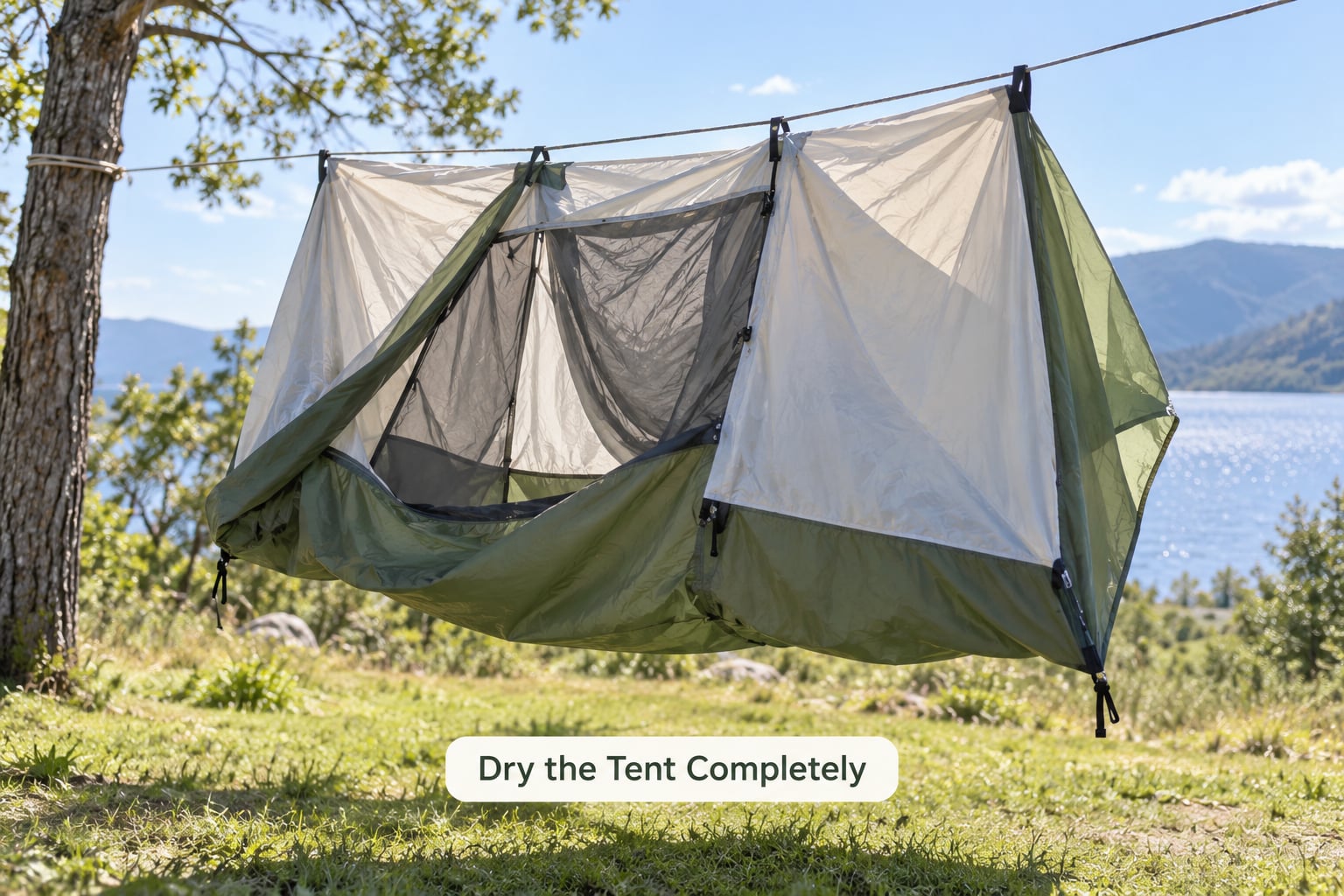
Spread the tent out, drape it over a line or a branch, or pitch it in the shade with the door and vestibule open. Airflow across the wet panels is what actually moves the water out, and a fan pointed at a hanging fly shortens the job.
Turn the tent over partway through so the inner face dries too. Pay attention to the floor panel and the seam tape lines, since those stay damp longest and never get any direct air when the tent is folded.
7. Inspect and Store the Tent Properly
Before the tent goes into a bag, run your hand along the floor, the seams and the inside of the fly. If any part feels cool or damp, it needs more time.
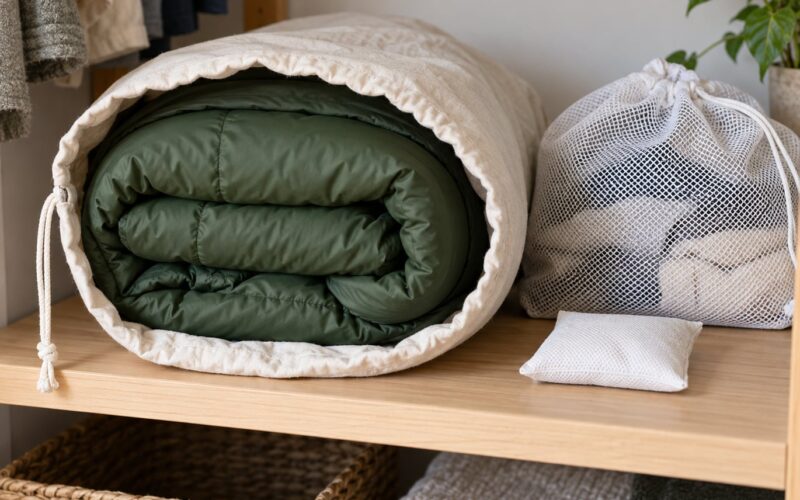
Patch small tears while the tent is still spread out and the fabric is flat. Then fold it loosely and store it in a breathable mesh bag, an old pillowcase, or just lofted on a shelf.
Skip the stuff sack for long-term storage. A compressed, airless bundle is how mildew starts, and an attic, a damp basement or a car trunk is worse than a closet.
Common Mistakes
- Cleaning a soaking-wet tent. Dry it first. Washing wet spreads dirt and drives grit into the seams.
- Machine washing a coated tent. Agitation and detergent strip DWR and can delaminate coatings. Hand wash unless the label allows otherwise.
- Machine drying. Heat is what ruins tent fabric. There is no cycle for this.
- Hot water. It softens coatings and sets protein stains. Use cool to lukewarm.
- Bleach or aerosol disinfectant on synthetic fabric. Both attack polyurethane coatings. Vinegar or an enzyme cleaner does the same job without the damage.
- Perfumed dish soap or laundry detergent. The fragrance lingers and attracts insects and rodents to the tent.
- Packing a damp tent. This is the big one. Mildew can start within days.
- Forgetting the floor and the seams. Those are the wettest, most hidden parts, and the ones that fail first.
- Storing in a stuff sack for months. Fold loose, store breathable, keep it cool and dry.
How Long Should You Let a Tent Dry After Washing?
Plan on 24 to 48 hours. A soaked tent in humid or still air can take the full two days, while a fly that has only been rinsed takes much less.
Warm, dry, breezy weather is the best case. High humidity, no wind, and a tent draped in a single layer all slow it down, and folding it while the inner panels are still cool to the touch puts you right back at the start.
The useful test is not the clock. Touch the floor panel, the inside of the fly and each seam. When every part feels room-temperature and dry rather than cool, you are done. If you cannot hang a full tent up at home, a fan and a bathroom doorway work surprisingly well, though it takes longer.
Can You Put a Tent in the Washing Machine?
Only if the manufacturer says so. Some small, uncoated tent bodies and most tent floors are machine washable, while anything with a waterproof coating, taped seams or a bathtub floor is a hand-wash job.
If the label allows it, a front-loading washer on a cold, gentle, no-spin cycle is the only version worth considering. A top-loader with a central agitator can tangle and stretch the fabric and pull the seam tape loose. Remove every pole, stake, pole sleeve and groundsheet, unzip the tent fully, put it in a large laundry bag, use a small amount of liquid gear wash, and run an extra rinse at the end.
When the label is missing or the tent is expensive, hand washing costs you an hour and removes all the risk. That is the trade I would take every time.
Frequently Asked Questions
Can I use Dawn dish soap to wash my tent?
A small amount of mild, unscented dish soap is fine for spot-cleaning a tent fly. For a full wash, use a purpose-made technical wash instead, because detergent and perfumed soaps leave a fragrance residue that attracts insects and rodents to the tent, and they can strip the water-repellent coating faster than you would like. Skip perfumed Dawn on the whole shelter.
Can I spray Lysol on my tent to kill mold?
No. Aerosol disinfectants leave a chemical film on fabric you sleep inside for hours at a time and can degrade the waterproof coating. Use a 1:1 white vinegar and water solution with 10 to 15 minutes of contact time for surface growth, or an enzyme cleaner for musty smell, and let the tent dry fully in air and sunlight afterward.
What kills mold on a camping tent?
For light surface growth, complete drying in sun and moving air is often enough, and that is the advice most experienced campers give. For anything established, use white vinegar diluted 1:1 with water, leave it 10 to 15 minutes, scrub gently with a soft brush, and repeat up to three times. An enzyme cleaner left in during drying works better than vinegar when mold keeps coming back.
Can I use bleach on a tent?
Not on synthetic tent fabric. Bleach strips polyurethane coatings and seam tape and is a common cause of peeling and delamination a season later. On bare canvas only, and only for stubborn odor, a heavily diluted solution is sometimes used and must be rinsed thoroughly. If you are not certain what your tent is made of, leave bleach alone.
Can you hose down a tent to clean it?
Yes, with low-pressure water only. A gentle hose or spray is fine for rinsing a tent body or rainfly, and a pressure washer is not. A strong jet forces water through seams and zippers, can strip coatings, and can push grit into the fabric where it abrades the seams every time the tent is folded.
How long should I air-dry a tent before storing it?
Allow 24 to 48 hours after washing, and keep going until the floor panel, the seams and the inside of the fly all feel dry rather than cool to the touch. Warm dry weather with a breeze speeds it up; humidity, still air and a tent folded into a single thick layer all slow it down. Storing a tent that is even slightly damp is the fastest route to mildew.
Final Check Before You Store Your Tent
Run this before the tent goes into its bag, every trip. Touch the floor panel, the seam lines and the inside of the fly; if any part feels cool, give it another few hours. Check the seams and zippers for tears or grit while the tent is still spread out and easy to see. Hang the whole thing where air can move through it, and let the musty smell out rather than sealing it in. Re-waterproof if water no longer beads on the fly, patch any holes you noticed, and then store it loose in a breathable bag somewhere cool and dry.
The whole job really does come back to one habit. The tents that need the least cleaning next trip are the ones that got aired out properly on this one.