Most people don’t lose sleep at camp because of a bad night. They lose it because of a bad system: the wrong ground insulation, a bag rated for a warmer night than the one that arrived, and a windbreak that wasn’t quite enough. The good news is that how to sleep better while camping is mostly a checklist you can apply on your next trip, and almost every fix costs nothing more than a different site pitch or one extra layer of clothing.
Below is a ten-step system, ordered the way the night actually unfolds: shelter first, then the ground under you, then warmth, then moisture, then the routine that tells your body it’s time to stop. Each step tells you what to do and how to tell it worked, so you can tell the difference between a fix and a guess.
Table of Contents
- What You Need to Sleep Better While Camping
- Step-by-Step
- 1. Choose a Shelter That Protects You From Wind and Rain
- 2. Build a Comfortable Sleeping Base
- 3. Pick a Sleeping Bag for the Expected Low
- 4. Stay Warm Before the Temperature Drops
- 5. Keep Moisture and Drafts Away From Your Sleep System
- 6. Create a Dry, Predictable Bedtime Routine
- 7. Block Light, Noise, and Unexpected Sounds
- 8. Use Light Carefully and Avoid a Late-Night Surge
- 9. Keep Snacks, Water, and Toiletries Within Reach
- 10. Adjust the System After Your First Night
- Common Mistakes
- Frequently Asked Questions
- What is the best way to stay warm in a camping tent?
- Can I sleep comfortably in a tent during hot weather?
- Should I use a sleeping pad in addition to a sleeping bag?
- How can I sleep better in a tent during rain?
- Is it possible to sleep well while backpacking?
- What should I do if I still cannot sleep after camping?
- Conclusion
What You Need to Sleep Better While Camping
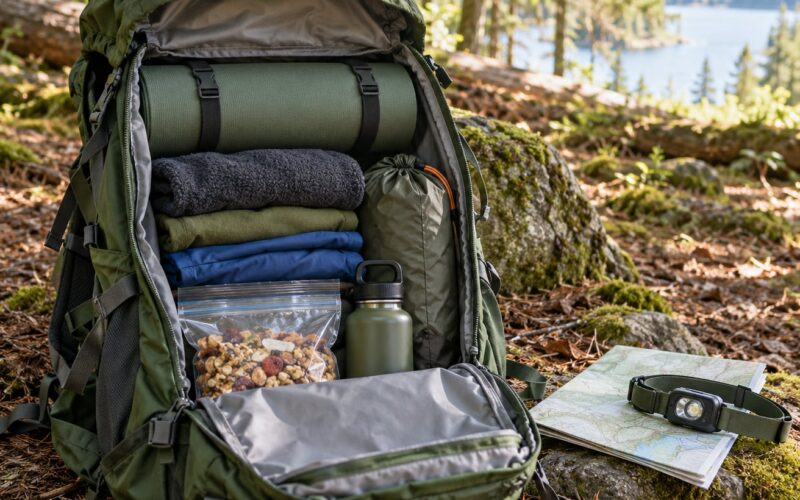
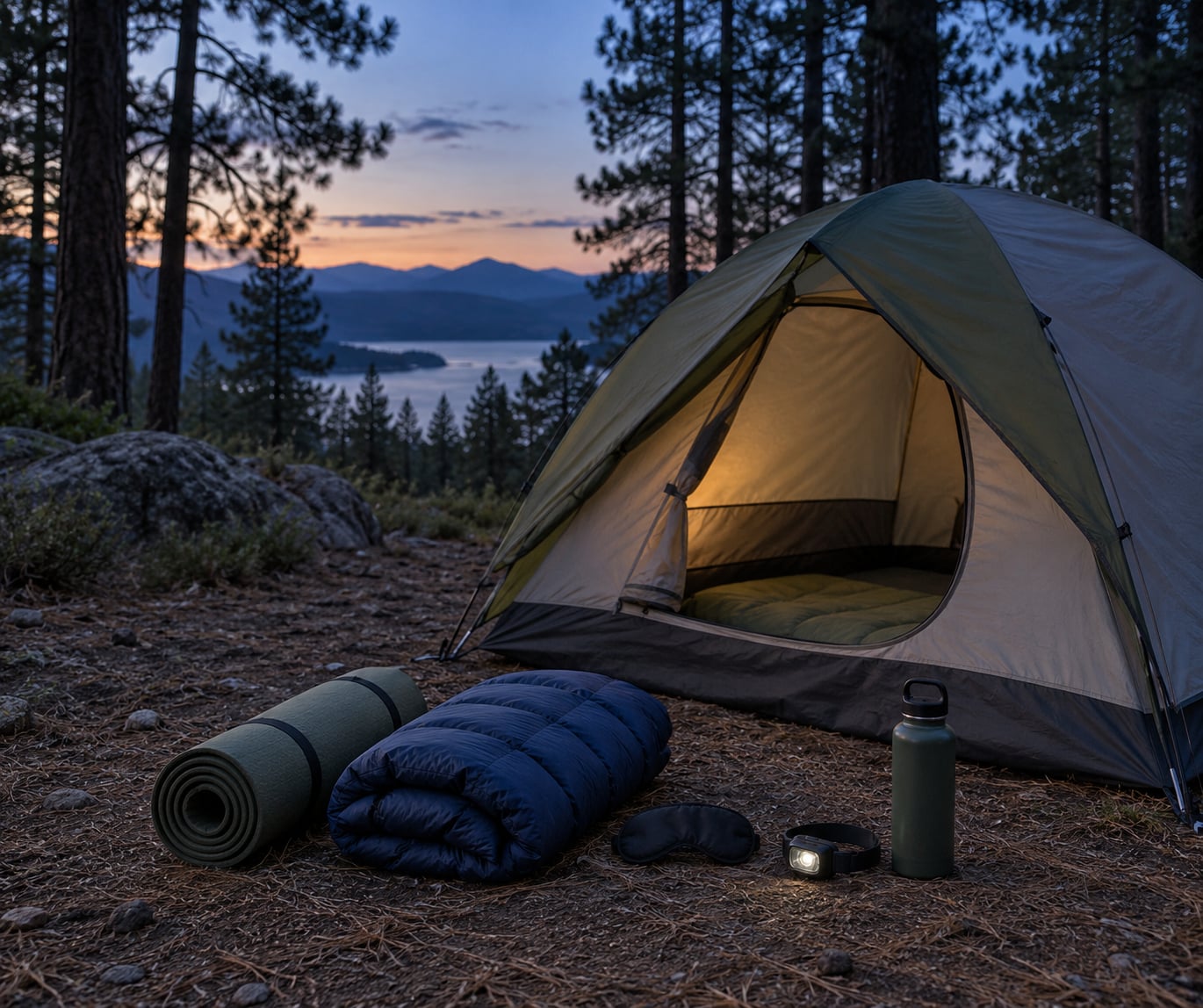
Only four categories of gear really decide how well you sleep, and everything else is optional. Bring these first, and you can get decent nights with a very small kit.
- Shelter: a tent or tarp that keeps rain, wind, and dripping condensation off you. Ventilation matters as much as waterproofing, because a tent that traps vapour leaves you damp by morning.
- Ground insulation: a sleeping pad with enough thermal resistance for the forecast low. This is the single most-skipped piece of kit, and the ground is where most of your heat goes.
- Body insulation: a sleeping bag rated for the temperature you expect, plus a dry base layer and a sleep cap or socks you can change into.
- Light and water: a headlamp with a dim or red mode, and a filled water bottle kept where you can find it without thinking.
Optional comfort items earn their pack weight once the basics are handled: a camp pillow, an eye mask, earplugs, and a closed-cell foam pad you can sit on during the day.
Whatever you carry, read the instructions for your specific tent, pad, and bag. Manufacturers set these products to work in a particular way, and most of the frustrating failures we see are people fighting a design instead of using it as intended.
Step-by-Step
1. Choose a Shelter That Protects You From Wind and Rain
Pick your site before you unpack anything, and judge it on three things: is the ground flat and free of roots or rocks, is there natural wind shelter, and will water run away from you rather than toward you.
Avoid low spots even when they look inviting. Overnight temperature rises faster in a hollow, and dew collects there. Look for a slightly raised, level bench with something solid behind the tent — a rock wall, a bank, a stand of trees — to break the wind.
When you pitch, point the door away from the prevailing wind and angle it a little downhill so water runs off. It works if you wake up dry and the wind noise never reached you.
2. Build a Comfortable Sleeping Base
The ground steals heat faster than the air does, which is why campers can be warm in a good bag on a cold night and still shiver. A sleeping pad is the barrier that stops that transfer, and the number that matters is its R-value: a measure of thermal resistance, where higher numbers mean more insulation.
As a rough guide, around 2 suits warm summer ground, roughly 3 to 4 covers most three-season trips, and 4 or above is for freezing nights. Below about 40°F/4°C, a closed-cell foam pad underneath adds meaningful insulation as well as comfort, because it stops air circulating under your inflatable pad.
Set the pad out at the same time you pick the site and lie on it fully clothed, exactly as you will be at night. Most back pain and shoulder pain at camp is a pad that was never really tested. If you’re a side sleeper, extra thickness matters more than weight, so look for a pad with a wide, flat surface and a higher centre rather than the lightest option available.
3. Pick a Sleeping Bag for the Expected Low
Match the bag to the lowest temperature you are likely to see, not to the daytime high and not to the season label on the box. Two bags marked for the same season can behave very differently.
Modern ratings use three numbers: comfort, which is the temperature a cold sleeper is comfortable at, limit, which is where most people start to struggle, and extreme, a survival figure rather than a comfortable one. Check the full ISO comfort rating, not just the headline number.
Leave a margin. A wet bag loses a lot of its ability to loft, and you will be colder than the forecast promised if the wind picks up. It works if you can zip up comfortably and still have room to move your arms.
4. Stay Warm Before the Temperature Drops
Everything you do between dinner and lights-out counts toward your temperature, and the cheapest wins come first. Eat a real dinner with carbohydrates, and drink something warm rather than cold water right before bed.
Put on a dry base layer and dry socks before you get into the bag, not after you feel cold. A knit hat makes a measurable difference because you lose a lot of heat from your head, and a hot water bottle filled with hot water and laid across your hips or thighs warms your core fastest. Read the safety guidance for any heat source you use, and never run a stove, heater, or flame inside a tent or vestibule — carbon monoxide does not care how cold you are.
Move for a few minutes before you settle. A short walk or some easy stretching raises your core temperature so that your body can release it steadily once you stop. It works if you are warm at the shoulders and hips rather than shivering anywhere.
Shivering that will not stop, slurred speech, clumsiness, or confusion are emergency signs. Get out of the cold, get dry, and seek qualified medical help rather than trying to push through.
5. Keep Moisture and Drafts Away From Your Sleep System
Getting warm is half of staying warm. Staying dry is the other half, because damp insulation conducts heat away from you far faster than dry insulation of the same thickness.
Before you get in, run your hands under the pad, around the edges of the bag, and along the floor of the tent. Anything damp there becomes a problem at 4 a.m. Store dry items well away from the walls, tuck the bag’s draft collar snug around your neck, keep the opening to a narrow gap, and zip the draft tube along your side if the bag has one.
Loose clothing inside the bag also fills the air space that would otherwise circulate around you, which is how some campers gain real warmth without a warmer bag. Keep it in a separate bag, not the sleeping bag, and never store anything damp in either. It works if you never feel the pad, the tent floor, or a cold air seam touching bare skin.
6. Create a Dry, Predictable Bedtime Routine
A fixed sequence of small steps signals bedtime more reliably than any single trick, because your body responds to repetition more than to effort. Keep it short enough to actually do at 9 p.m. after a day of hiking.
A workable one: brush teeth, put on dry sleep clothes, refill the water bottle, do a five-minute check of gear and the forecast, read a few pages of something familiar, and lights out at the same time each night. Finish eating a few hours before bed, and skip caffeine after the middle of the day — it lingers far longer than most people expect.
The goal is not a spa ritual. It is a repeatability that lets you fall asleep faster on night two and night three than on night one, which is the normal pattern once a body stops treating the tent as an emergency.
7. Block Light, Noise, and Unexpected Sounds
Camp wakes you in ways a bedroom never does. A reflective surface at 5 a.m., a neighbour’s generator, wind in the trees, or an animal moving through camp can each end a night that was otherwise fine.
An eye mask and foam earplugs are small, cheap, and fix the majority of it. If you prefer not to block sound entirely, a fan or a white-noise app on a phone in a battery-saver mode covers irregular sounds better than a loud one. Position matters too, and a quiet site, set back from the main path and away from a bathroom or generator, beats any device.
Keep your hearing partly clear. You should still be able to hear a person calling your name, an approaching vehicle, or anything that sounds unusual. It works if you stay asleep through a normal night of wind and wildlife without being startled by a sound you simply had not heard before.
8. Use Light Carefully and Avoid a Late-Night Surge
Light is the strongest signal your body uses to set its clock, and a headlamp pointed straight down at a full tent still delivers a lot of it. Most headlamps have a low or red mode, and that is the one to use after dark. Keep the beam pointed at whatever you need, off the tent walls and fabric, and as short as the task allows.
Put the phone away rather than dimming it. Screens are the most common reason campers lie awake at 11 p.m. feeling oddly awake, and scrolling in a dark tent keeps your eyes open and engaged for longer than most people plan on. If you want audio, keep it playing as you lie down rather than starting something new.
One more thing worth avoiding is doing your whole morning routine the moment you wake. Staying in your bag for a few quiet minutes makes it easier to fall back asleep if you wake early, and on a trip with early starts that habit is worth more than it sounds.
9. Keep Snacks, Water, and Toiletries Within Reach
Most midnight wake-ups are logistical, not physiological. A headlamp by the door, shoes and socks that do not require thinking, water inside the tent, and a toothbrush in the same bag all remove a reason to leave a warm sleeping bag in the cold.
For a bathroom trip in the dark, the setup that works is simple: sandals, a mat or towel at the tent door to avoid tracking mud in, and a soft light that other campers will not notice. Have a plan for the container option if your site does not have a restroom. Going before you get in, twice, usually buys hours.
Keep all food and anything scented sealed and stored according to local wildlife guidance, in a bear canister or approved locker where required. It is both a safety rule and the thing that will let you stop listening for the rest of the night.
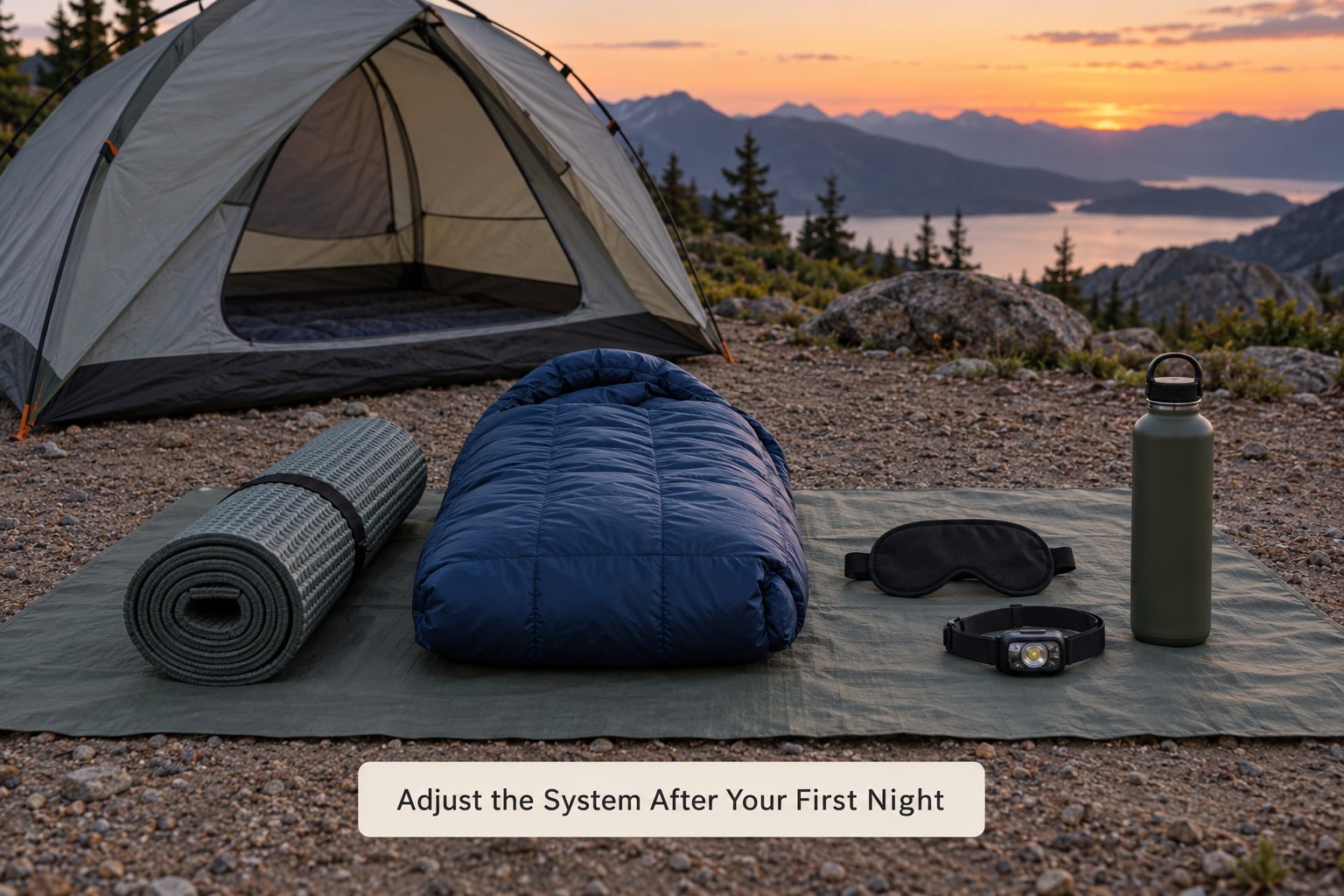
10. Adjust the System After Your First Night
Change one thing at a time, based on what actually happened, and note it in the morning while it is still fresh.
If you were cold in the hips and shoulders, you need a warmer pad or a foam pad underneath. If you were cold in the feet and chest, the bag needs a warmer rating or more insulation around your torso. If you woke up damp, it is condensation management, so vent the tent more and use a drier base layer. If you woke up sore on one side, the pad is too thin for your position. If you slept fine and simply could not settle, that is usually night one, and the fix is another identical night rather than new gear.
It works when each trip out removes exactly one variable. This is how to sleep better while camping as a habit rather than a lucky night: a written note from each morning builds a system that fits your body, your gear, and the weather you actually get.
Common Mistakes
Most disappointing nights come down to one of a handful of recurring errors. Each has a straightforward fix.
- Choosing a bag by season label instead of rating. A “three-season” bag means different things to different makers. Check the ISO comfort rating and pick for the lowest temperature you expect, with margin.
- Pitching on wet or soft ground. A tarp or groundsheet under the footprint, and choosing a site that drains, keeps water from soaking upward into your gear while you sleep.
- Wearing cotton. Cotton holds water and dries slowly, which is the opposite of what you want at night. Synthetic or merino base layers wick moisture and dry fast.
- Overheating with too many layers, then shivering later. Bundling up too much makes you sweat, and sweat chills you later. Sleep in light synthetic layers and keep a warmer layer for the bag itself.
- Using an unsafe heat source. No stoves, lanterns, or heaters inside a tent, and keep any flame well clear of the shelter and the dry vegetation around it. Carbon monoxide and fire do not belong in a sleeping space.
- Changing five things after one bad night. You will have no idea which change worked. Adjust one variable, note it, and evaluate the next trip.
Two smaller habits help more than most people expect: take the first night of the trip as an adjustment night, and stop adjusting once a setup works. Repeated nights in the same system are what let your sleep timing settle.
Frequently Asked Questions
What is the best way to stay warm in a camping tent?
The best way to stay warm in a camping tent is to insulate the ground first, then trap air around your core. Sleep on a pad with an R-value matched to the forecast low, add a closed-cell foam pad underneath in cold conditions, and choose a sleeping bag by its ISO comfort rating rather than its season label. Wear a dry synthetic base layer, zip the bag to a narrow opening, fill any damp spots, and change into dry socks before you climb in rather than after you start shivering.
Can I sleep comfortably in a tent during hot weather?
Yes, but you have to manage moisture instead of heat. Open rainfly vents and the tent door to keep air moving, pitch in shade where possible, and sleep on top of the pad rather than under an insulating layer. A cotton or linen sheet over a sleeping bag helps more than piling on blankets, which trap heat. A refillable water bottle kept cool, a damp cloth on your neck, and breathable clothing do more for comfort than any single camping mattress.
Should I use a sleeping pad in addition to a sleeping bag?
Always, and in every season. A sleeping bag warms the air around you, while a sleeping pad stops heat moving into the cold ground beneath you, which is where most of it goes. The two work as a system and neither substitutes for the other. Add a closed-cell foam pad under your inflatable one in cold or damp conditions, since it adds both insulation and stability when the inflatable pad is doing its job on top.
How can I sleep better in a tent during rain?
Rain problems are usually condensation and site problems, not tent problems. Pitch on ground that drains and put a groundsheet under the footprint so mud does not soak upward. Venting the rainfly on both sides keeps humidity down, and a dry base layer and dry socks matter more than any extra layer. If your clothes get wet, change into something dry before bed, put the wet gear where it can drip outside the tent, and change again as soon as you are up.
Is it possible to sleep well while backpacking?
It is very possible, because the pack weight limit is forcing good decisions for you. Choose a sleep system rated for the coldest night ahead rather than the average, and test it before a long trip. Set the pad out at lunchtime and check it for punctures, pack a repair kit, and keep one dry layer sealed for sleeping only. Most backpacking sleep problems come from an untested setup, not from the weight.
What should I do if I still cannot sleep after camping?
If you cannot sleep after a camping trip, start with light and timing rather than gear. Get bright outdoor light early each morning and keep a consistent wake time, and screens and bright overhead light late at night work against you. Caffeine after midday and late heavy meals both affect the night. If poor sleep continues at home, lasts more than a few weeks, comes with loud snoring or daytime sleepiness, or is affecting mood and safety at work, speak to a doctor or sleep specialist.
Conclusion
If you only do two things, do these: choose a dry, level, wind-sheltered site, and test your pad and bag together at home on a cold night before you rely on them in the backcountry. Everything else in this guide is refinement on top of those two.
Keep a short note after each night about what was cold, what was damp, and what kept waking you, then change one thing at a time. Learning how to sleep better while camping is not about finding perfect gear once. It is about running a predictable system so the third night of the trip is the easiest one, and the morning after it feels like the trip was worth it.