To prevent arm injuries in youth pitchers, control how much throwing happens across the whole week, raise it slowly, warm up before every session, and treat pain as a stop signal rather than something to work through. Most arm problems in young throwers come from too many hard throws in too short a window, not from one bad game.
That matters because a growing elbow and shoulder are still partly cartilage. Tissue that is stressed faster than it adapts does not get stronger on its own schedule, and the repair can leave a lasting joint that never quite feels the same. Most of the work of prevention is boring and repeatable: a written plan, a calendar with real rest days, and an adult who takes the first complaint seriously.
Nothing here replaces a doctor. If a young pitcher has persistent pain, swelling, weakness, or a change in control, stop throwing and get an evaluation from a qualified clinician.
Table of Contents
- What You Need
- Step-by-Step: How to Prevent Arm Injuries in Youth Pitchers
- Start With a Medical Baseline and Clear Communication
- Build a Progressive Warmup Before Throwing
- Use Age-Appropriate, Pain-Free Throwing Mechanics
- Limit Pitch Volume and Hard-Throw Intensity
- Schedule Rest and Recovery
- Stop and Seek Evaluation When Pain Appears
- Common Mistakes
- Quick Tips for Coaches and Parents
- Frequently Asked Questions
- How do pitchers’ arms not hurt?
- What is the most common forearm injury for pitchers?
- Do J-bands really improve arm strength?
- What causes elbow pain when throwing a baseball?
- How many months off does a youth pitcher need each year?
- When should a youth pitcher see a doctor for arm pain?
- Conclusion
What You Need

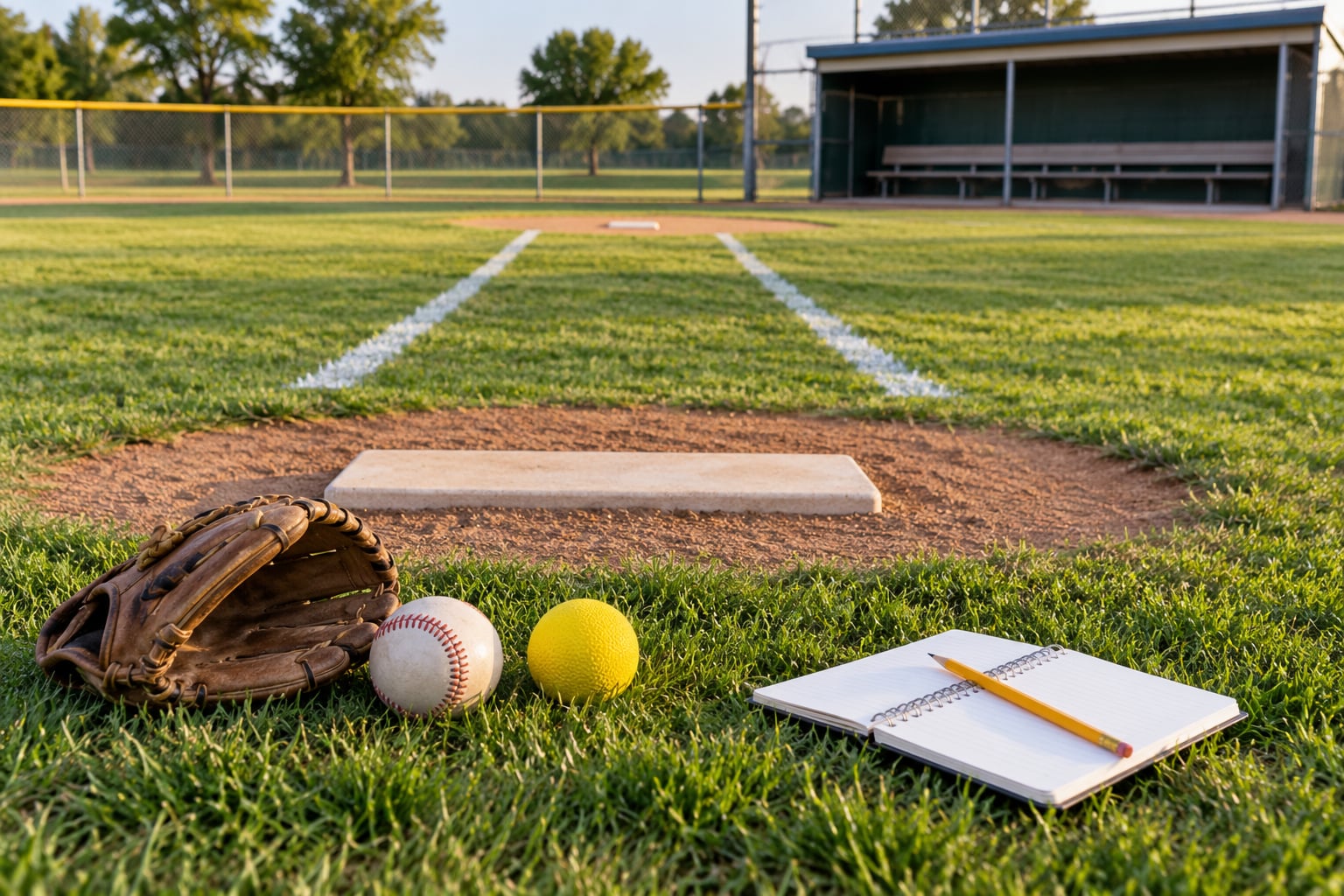
Prevention needs less gear than most families expect. What it takes is a plan and someone willing to follow it.
- A qualified coach or medical guidance. For a pitcher with a prior injury, a recent growth spurt, or any ongoing complaint, a sports medicine clinician should set the throwing limits before the season starts.
- An age-appropriate ball and glove. A ball that feels heavy for a seven-year-old changes how hard the arm works. Match the ball to the player’s size, not to the team’s habit.
- A written throwing plan. Days, sessions, and expected volume, written down where everyone can see it. If it lives only in a coach’s head, it cannot be checked.
- A pitch log. A notebook, a shared note, or a simple app. Count every competitive pitch plus warmup and bullpen throws, and add any pitching on another team.
- A daily pain check-in. Five seconds. Ask before practice, not after, when nobody wants to hear it.
- Rest days in the calendar. Block them at the start of the season like games, so nobody has to negotiate for them later.
A water bottle and a place to sit are worth listing separately. Recovery work is unglamorous, and it fails the same way every time.
Step-by-Step: How to Prevent Arm Injuries in Youth Pitchers
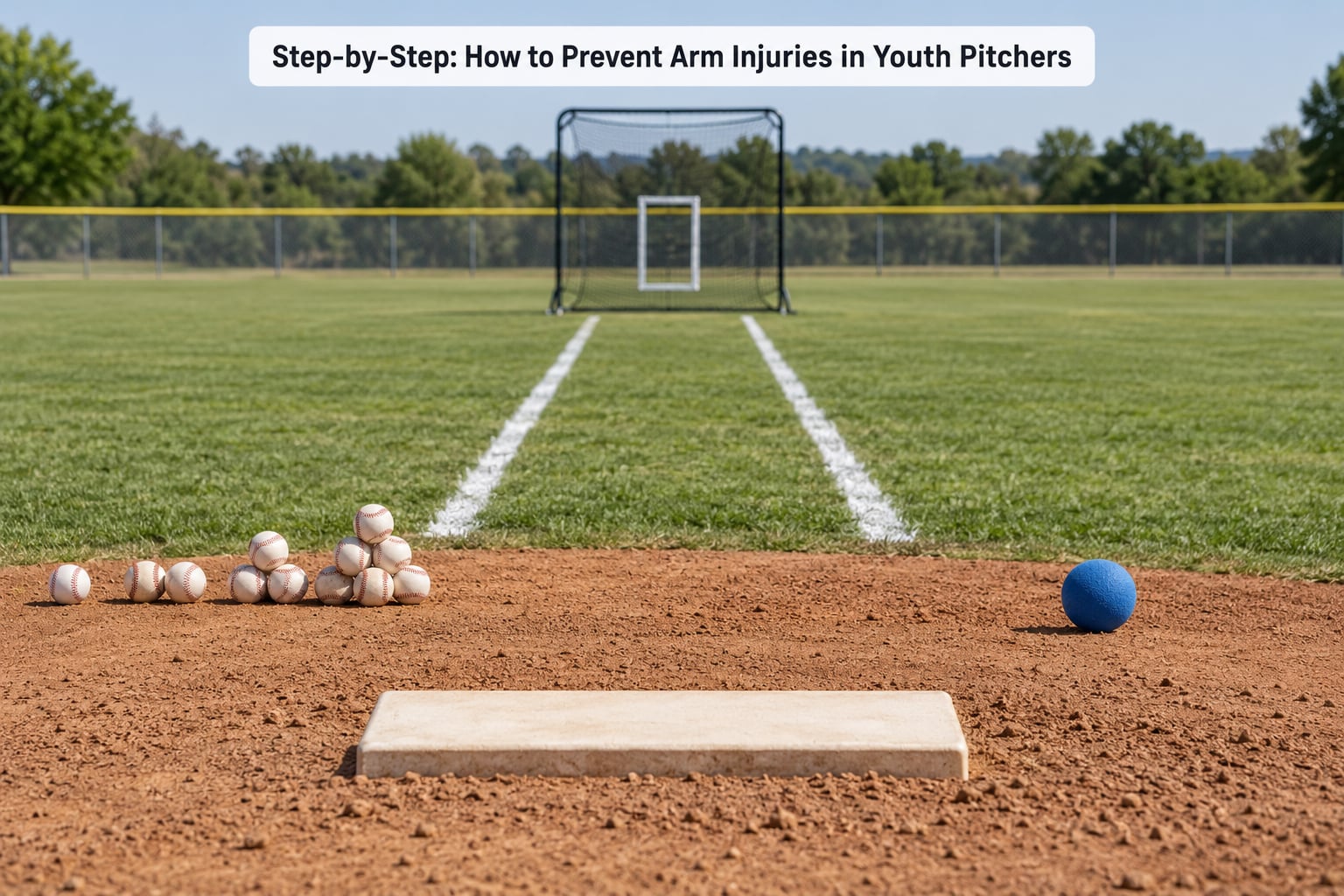
Run these steps in order each season, not each pitch. The order matters less than the fact that none of them get skipped when the schedule tightens.
Start With a Medical Baseline and Clear Communication
Before the first competitive outing, note any previous injury, any pain that shows up later in a week, and any restriction already in place. Growth spurts change a young pitcher’s stride length, strength and joint stress, sometimes within a few months, and those are the months problems tend to appear.
Adults should watch and listen, not diagnose. The line is simple: describing what you saw is useful, guessing at the injury is not. If a pitcher has had an elbow or shoulder problem before, ask a qualified healthcare professional what to watch for and when to come back in.
The other half of this step is social. A pitcher who once said something hurt and then sat for three weeks learns to stay quiet. Tell your player, out loud, that reporting pain early is the thing that keeps them on the mound, not the thing that ends their season.
Build a Progressive Warmup Before Throwing
Warm the whole body before the arm gets used hard. Marching, leg swings, hip openers, arm circles, scapular squeezes, then easy throws that build in distance and speed. Ten to fifteen minutes is enough for most practices.
Progress from easy to hard in visible steps: catch close and easy, move back, move further, then throw harder. The point is that the shoulder, elbow, forearm and trunk all get a graded introduction to the work.
Skip the long, hard throwing session that starts cold. It feels productive and it is the fastest route to sore arms and inconsistent mechanics. Finish with pain-free movement only. If something pulls or aches mid-routine, go back an easier step rather than pushing through it.
Use Age-Appropriate, Pain-Free Throwing Mechanics
Good mechanics reduce stress at the elbow and shoulder without making the pitcher stronger by magic. Keep the body stacked and balanced over the back leg, land the stride under control rather than falling toward the plate, bring the throwing hand through the same path every time, and finish with the body behind the throw rather than across it.
Consistency beats perfection. A repeatable release that a coach can see from the dugout is worth more than a technically perfect motion that breaks down when the count gets long. Recording a short clip from behind and from the side, at a few points in the season, makes changes easier to talk about than a vague feeling.
No single cue prevents every injury. Some soreness and tightness comes from anatomy and fatigue no matter how the motion looks. Get mechanics instruction from a qualified coach, then focus the conversation on staying pain-free while the body is still developing.
Limit Pitch Volume and Hard-Throw Intensity
This is where prevention lives or dies. Count every hard throw: games, practices, bullpens, warmup, and anything at a showcase or a second league. A pitcher can sit out the Saturday game and still throw forty hard pitches on Sunday at the field.
Stay inside published age-based guidance for pitch counts, innings and required rest, and check the current version each season since these recommendations get updated. When a league’s tournament format allows more throwing than the safety guidance suggests, follow the safety guidance and plan for it in advance.
Intensity counts as much as quantity. Fifty percent max-effort throws are not the same as fifty percent easy throws, so track them separately. The most dangerous throwing in youth baseball often happens after the pitcher already looks tired, when the outing feels decided and an adult starts leaning on the best arm available.
Schedule Rest and Recovery
Recovery is when the arm actually adapts, so protect it like part of the practice plan. Follow the rest periods that come with age-based pitch limits, and add recovery days between sessions rather than stacking throwing on throwing.
On rest days, keep the arm quiet. Catching, throwing in the outfield, and playground baseball all add up, and nobody counts them because they feel like practice. Multi-sport athletes need the same accounting, since basketball and other overhead sports load the shoulder too.
Give growing pitchers two to three months away from organized baseball each year. Sleep, regular meals and hydration matter more than any supplement. Families also report that multi-sport kids tend to have fewer arm problems than single-sport specialists, which fits the idea that varied movement builds a body that tolerates throwing better.
Stop and Seek Evaluation When Pain Appears
Watch for pain that lingers into the next day, pain that changes how the pitcher throws, a drop in control or velocity, weakness, swelling, or a reluctance to warm up. Those are the early warning signs that deserve attention rather than a tough-guy speech.
When one of those shows up, stop throwing and rest. If symptoms persist or look concerning, have a qualified clinician evaluate the arm. Early evaluation is the single most useful step in this whole guide, and coaches who build it into their culture spend less time guessing.
Common Mistakes
Almost every youth arm problem I have seen traces back to one of a handful of habits. Each has a straightforward fix.
Pitching through pain. The correction is a written rule made before the season: report it, we pull them, nothing bad happens to the player. Coaches who break that rule once will not hear about pain again.
Skipping the warmup to save time. Cut something else instead. Teams routinely drop bullpen sessions or pre-game time and keep the rushed warmup, which is the wrong item to lose.
Adding volume too fast. A new player, a new team, a new league, and a full spring all at once is a jump. Increase weekly volume gradually and hold steady when the schedule gets strange.
Leaning on one hard throw to feel ready. A max-effort warmup pitch sends the wrong signal to the arm. Gradual progression gets a pitcher ready with less risk.
Throwing when fatigued. Late innings are when mechanics break down and volume sneaks up. Set innings and pitch limits before the game, when decisions are still calm.
Changing nothing between seasons. Last year’s routine is not this year’s plan. Re-check balls, equipment, league rules, and any lingering soreness before the first week of practice.
Quick Tips for Coaches and Parents
- Keep written records. Pitch counts, sessions and any pain reports, shared with the other adults involved.
- Reward honest reporting more than performance. Kids copy what the dugout reacts to.
- Set realistic goals. Most youth arm damage happens in service of a goal adults set, like a showcase slot or a championship run.
- Plan for tournament weekends before they start, so nobody is negotiating pitch counts in the parking lot.
- Treat a single game as less important than multi-season availability. A healthy fourteen-year-old who pitches for four more years beats a fourteen-year-old who wins one tournament and hurts.
- Ask what happens when a player says no, and make sure the answer is good.
Frequently Asked Questions
How do pitchers’ arms not hurt?
Bodies that stay healthy while throwing usually have three things going for them: gradual increases in volume, real rest between sessions, and honest reporting of pain early. Warm up before every throw, count pitches across every team and practice, and stop for two to three months each year. Pain-free repetition over years builds tolerance that no single workout creates.
What is the most common forearm injury for pitchers?
In young pitchers, forearm and elbow complaints are usually related to the growing parts of the arm rather than torn muscles, particularly at the inner elbow where the growth plate is still open. Heavy throwing volume and fatigue drive most of these. Only a qualified clinician can tell you what a specific pain is, so get an evaluation rather than guessing.
Do J-bands really improve arm strength?
Light resistance band work is widely used as part of a broader arm care routine, and parents report steady gains in control and confidence when it is done consistently. It is a warm-up and supplement, not a substitute for pitch limits, rest or instruction. Stop any exercise that causes sharp pain and discuss persistent discomfort with a qualified clinician.
What causes elbow pain when throwing a baseball?
Usually repeated high volume, especially when the arm is tired and mechanics break down, plus throwing through existing soreness. Fatigue matters more than any single pitch because the body stops absorbing load well late in a game. Pain that lingers into the next day, changes your mechanics, or comes with swelling or weakness deserves an evaluation by a qualified clinician.
How many months off does a youth pitcher need each year?
Most youth sports medicine guidance points to roughly two to three months away from organized baseball every year, taken at a point in the calendar when school and family life allow it. Rest days between sessions matter just as much as the offseason block. A pitcher who plays one sport all year straight through accumulates load without the breaks that let tissue adapt.
When should a youth pitcher see a doctor for arm pain?
See a qualified clinician when pain persists for more than a few days, keeps returning, or changes how the pitcher throws. Swelling, weakness, numbness, or a noticeable drop in control or velocity are reasons to stop throwing and get checked sooner. Do not wait for a scheduled appointment to stop throwing. Early evaluation is what keeps a small complaint small.
Conclusion
Start with four habits this week: build a real progressive warmup, start a pitch log that counts every hard throw, protect rest days in the calendar, and ask your pitcher about the arm before practice rather than after.
None of that guarantees an injury-free season, and anyone who promises a single fix is overselling. It does put the odds on the right side, and it makes the hard conversations in August much easier. When pain, swelling or a change in control shows up, stop throwing and have a qualified healthcare professional take a look. Early is the whole point.