Ten minutes is enough, and it comes in a fixed order: two minutes of easy movement to raise your body temperature, four or five minutes of dynamic mobility for the joints and muscles you are about to load, then two or three ramp-up sets that climb toward your first working weight. Do it in that order and your heaviest sets never happen on cold, stiff tissue. Beginners can do the whole thing with bodyweight only.
For years my own warm-up was habit rather than thought: two jumping jacks and straight to the bar. What changed it was not adding time, it was rearranging the order, general movement first, then movement-specific drills, then load. That ordering is what the rest of this guide walks through, because knowing how to warm up before lifting weights properly comes down to knowing which part of those ten minutes matters most when you are short on time. Updated for 2026, and written for anyone who has ever stood at a rack wondering whether their first set was really that heavy.
This is general fitness information, not medical advice. If a movement causes sharp pain, stop and speak to a doctor or physical therapist about it.
Table of Contents
- What You Need
- Step-by-Step: How to Warm Up Before Lifting Weights
- 1. Start With Easy Movement and Breathing
- 2. Mobilize the Joints and Major Movement Patterns
- 3. Add Dynamic, Weight-Specific Movements
- Why Warming Up Changes the Set You Care About Most
- 4. Finish With a Gradual Loading Set
- How Long Should You Warm Up Before Lifting Weights?
- How Many Warm-Up Sets Do Squats, Bench Presses and Deadlifts Need?
- How to Warm Up with Dumbbells or at Home
- Do You Actually Need to Warm Up Before Lifting?
- How to Know You Are Warm Enough to Lift
- Warming Up After a Layoff or When You Are Sore
- When You Can Skip Warm-Up Sets
- Common Mistakes
- Frequently Asked Questions
- How long should I warm up before lifting weights?
- Should I stretch before lifting weights?
- Is jumping or cardio necessary before a weight workout?
- What if I do not have time for a long warm-up?
- Should I warm up differently for squats, deadlifts, and shoulder presses?
- What signs mean I should stop warming up and rest?
What You Need
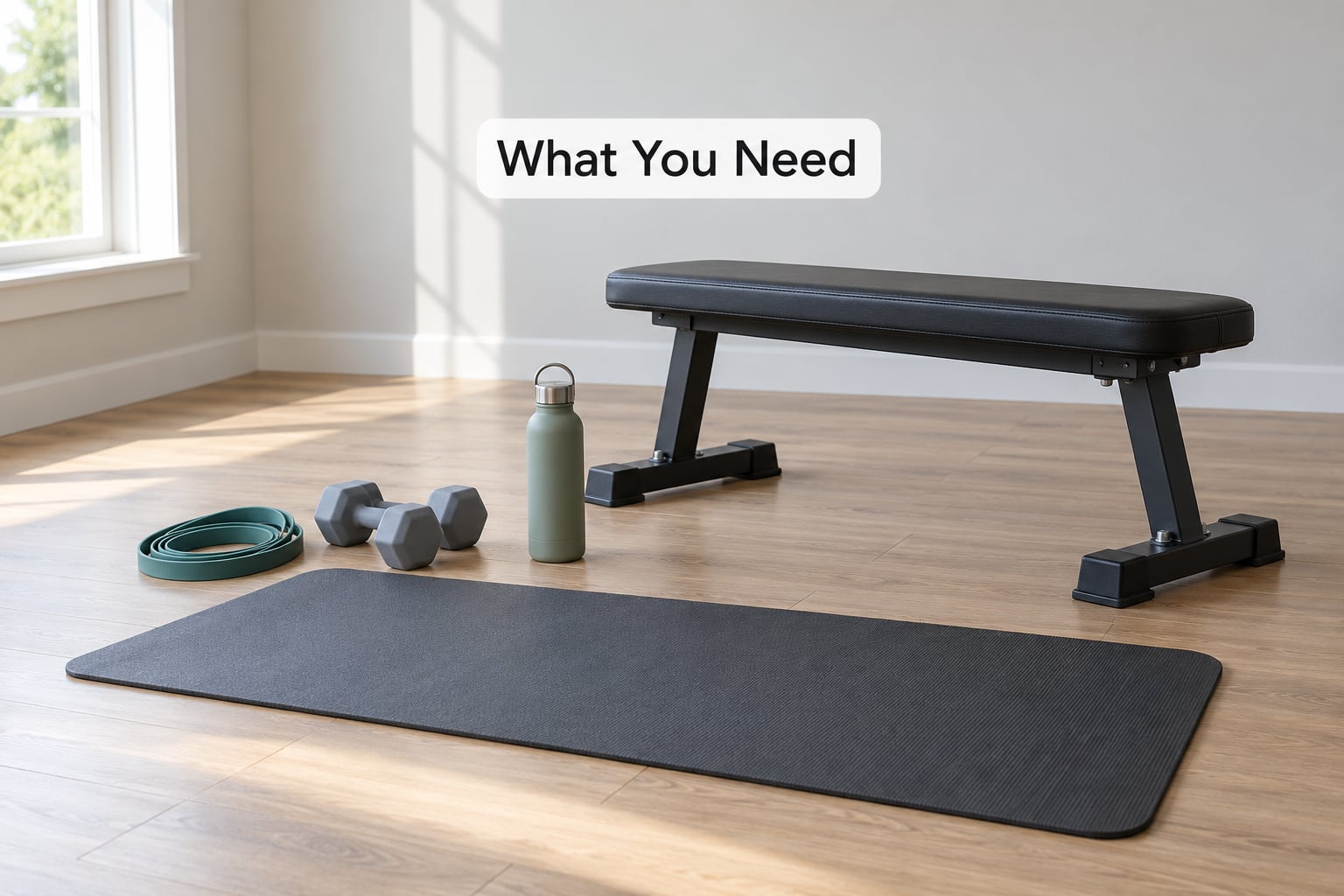
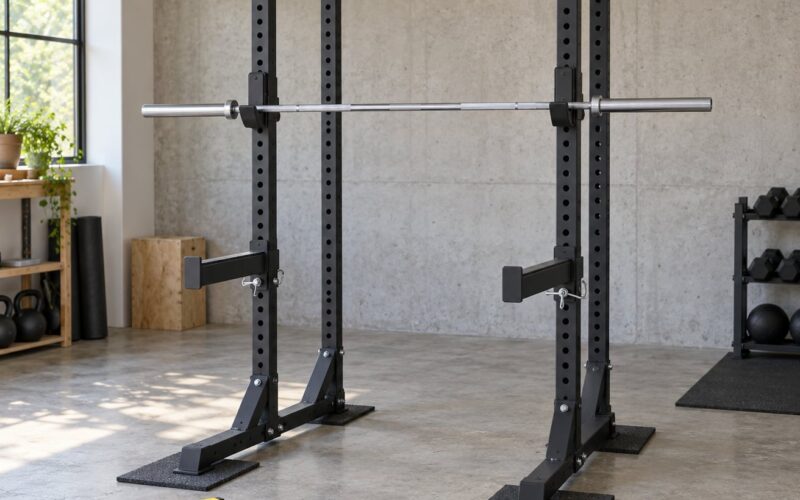
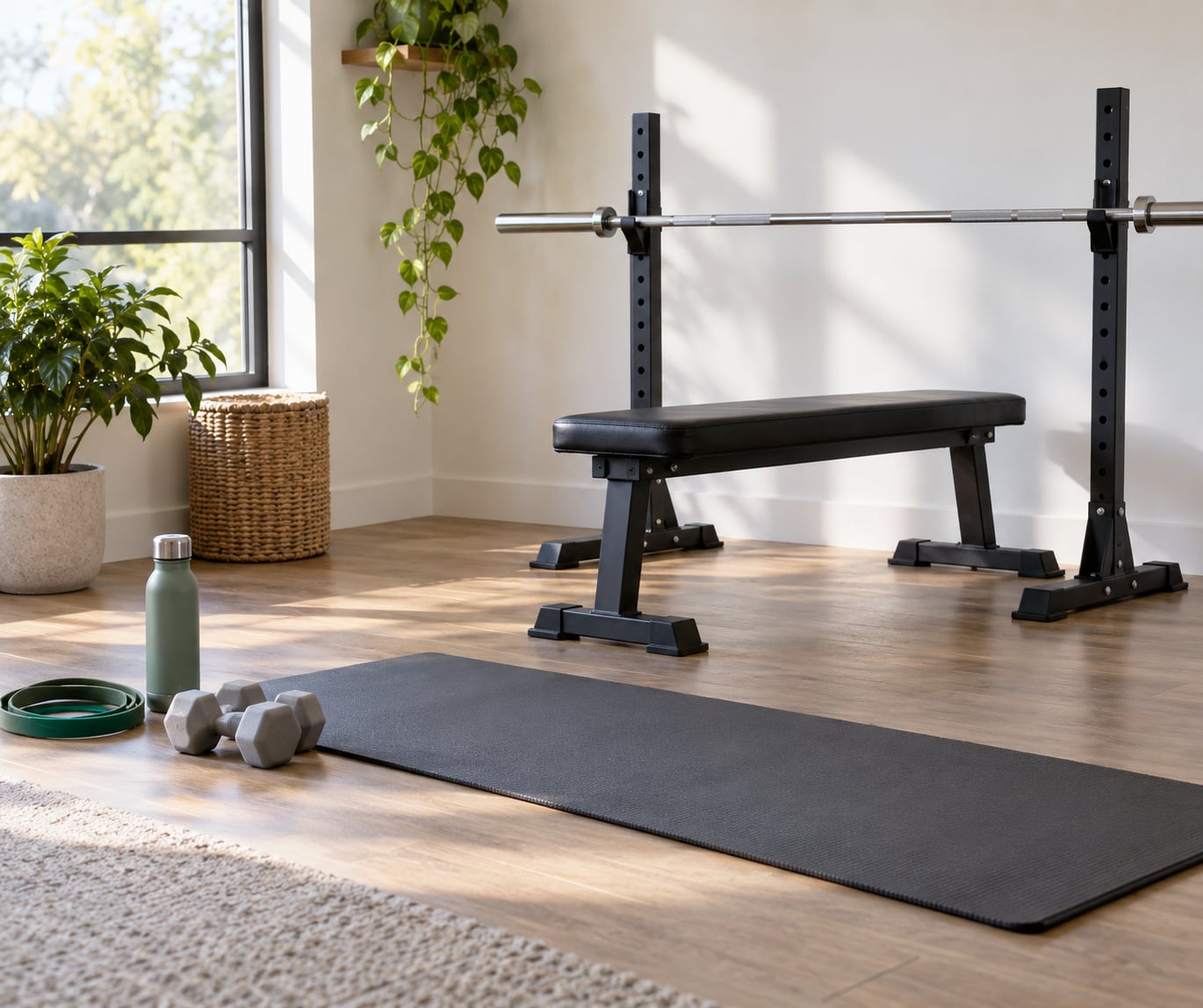
The short version: a clear patch of floor and about ten minutes. You do not need a rack, a barbell, or any membership to do this properly.
- Clear floor space roughly the length of a yoga mat, plus stepping room in front. Pick a spot you will not have to squeeze into.
- Clothing you can move in. Lifting clothes work fine. Skip the thick hoodie, even in a cold garage. It feels warm but it does nothing for tissue temperature, and you will overheat two minutes in.
- Water, because the first part of a warm-up is mildly aerobic and beginners often arrive already dehydrated.
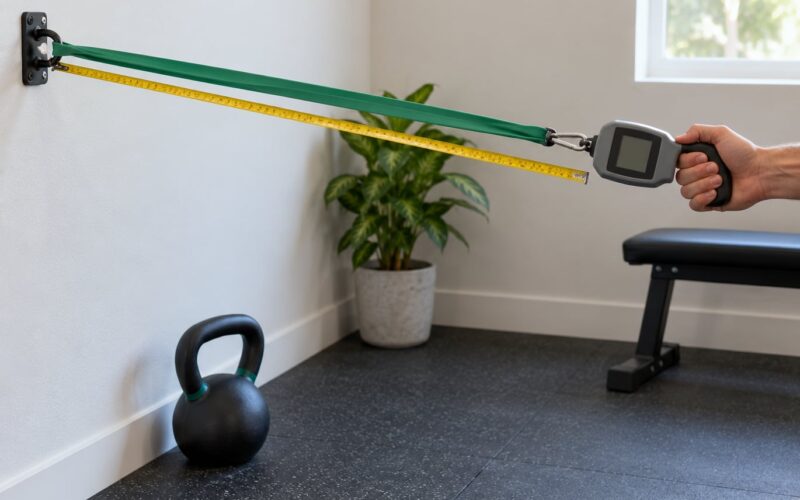
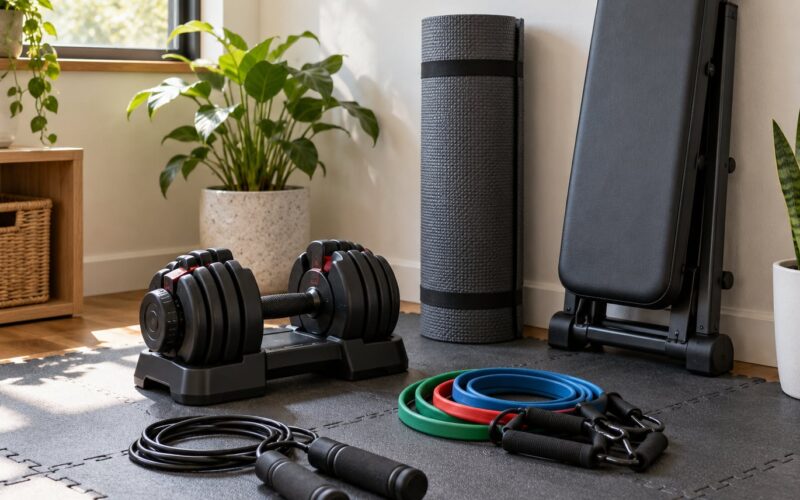
- Optional: one resistance band, light enough that pulling it feels almost too easy.
- Optional: a pair of light dumbbells, roughly the weight you could hold overhead and press ten times without strain.
A warm-up is not a workout. You should finish it slightly warm and breathing a little harder than at rest, never tired. If you are breathing through your mouth and counting reps down from ten, you have done too much and the sets after it will feel worse, not better.
One more preparation note, because it changes everything for beginners: only use movements you can control. Skip anything that needs a training partner, anything that is unfamiliar, and anything that feels unstable. The goal of the first ten minutes is to make the next forty better, not to test yourself.
Step-by-Step: How to Warm Up Before Lifting Weights
1. Start With Easy Movement and Breathing
Spend the first one to two minutes raising your heart rate without raising your effort much. Marching in place, step-ups on a stair, or easy skipping all work. Add big arm swings, front to back and side to side, because arms are usually the stiffest thing after a desk day.
Breathe through your nose if you can manage it, and let your exhale run longer than your inhale. That single change slows your heart rate slightly and stops you from bracing before you have moved at all.
Intensity test: you could still hold a conversation, but you would not choose to keep talking. A light jog is the wrong intensity here. Two minutes of hard cardio before lifting leaves some people flat by the time they reach the rack, and the ramp-up sets become the recovery.
How you know this step worked: you stop noticing you are cold. That is the whole job of this stage, and it is boring on purpose.
2. Mobilize the Joints and Major Movement Patterns
Now move the joints through the range you are about to use, gently and without forcing anything. This is the step beginners skip because it does not feel like exercise, and it is where you decide how much range of motion you will have later.
- Ankles: 10 slow circles each direction, then 10 ankle rocks, heel down and heel lifted.
- Hips: 10 front-to-back leg swings per leg holding a wall, then 10 lateral swings per leg.
- Thoracic spine: 8 book openers per side. Lie on your side with knees bent, top arm opening toward the floor as you breathe out.
- Shoulders: 10 to 15 band pull-aparts, and 8 to 10 shoulder dislocates if you have a light band.
- Hips and ankles again at the end of this stage, one round of 5 each, because the first round usually improves the second.
Keep discomfort mild. You are looking for a stretchy feeling that fades within seconds, not a sharp pull at the end of the range. Forcing a shoulder or hip past its comfortable end does nothing useful before a session and can leave you guarding through the rest of the workout.
One form cue applies across all of it: neutral neck, engaged core, and no locked knees or elbows. That shape is standard guidance for warming up before bodyweight work, and it applies just as well with a bar in your hands.
3. Add Dynamic, Weight-Specific Movements
This is where the warm-up stops being general and becomes specific to your session. Dynamic work means moving through a range with momentum or under light load, not holding a position. Pick the movements that look like the first exercise of your day.
Lower body day, roughly three minutes:
- Bodyweight squats, 10 to 15 reps. Feet shoulder width, sit back as if reaching for a chair, knees tracking over toes.
- Hip hinges or good mornings, 10 to 12 reps. Soft knees, hips push back, bar path or hands travel close to your legs.
- Reverse or split-stance lunges, 8 per leg. Step back, lower the back knee, push through the front heel.
- Glute bridges, 12 to 15 reps. Weight through the heels, ribs down, squeeze at the top.
Upper body day, roughly three minutes:
- Scapular push-ups, 10 to 12 reps. Elbows locked, chest lowers as one unit, shoulder blades spread as you press.
- Band rows or pull-aparts, 15 reps. Elbows close toward your back pockets.
- Overhead press pattern with no weight or one light dumbbell, 10 reps. Ribs stay down, forearms finish vertical.
- Large arm circles, 10 each direction.
Full-body day, pick three movements from both lists. Push day leans toward the press pattern and presses, pull day toward rows and the scapular work, leg day toward hinges and squats.
Choosing a light resistance is simple. Pick one that feels easy and smooth, where you control the whole range and the last rep looks exactly like the first. If the band fights you or a dumbbell starts drifting, it is too heavy. A warm-up set at the wrong weight teaches you the wrong thing.
If you have an injury you are working around, or a joint that grumbles in a specific direction, this is also where you test it. Do two or three reps of the movement at a weight you would never consider a working set, and notice what the joint says. Mild stiffness that resolves is fine. Sharpness, catching, or a sensation that changes your movement pattern is information to carry to a physical therapist, not something to grind through.
Why Warming Up Changes the Set You Care About Most
Worth understanding, because it tells you which parts of the warm-up to protect when time is short. Four things happen in that ten minutes, and none of them are magic.
Blood flow goes up. Muscles at rest carry a small share of your blood supply. Two minutes of easy movement raises delivery of oxygen and nutrients to the tissue you are about to load, and speeds the clearing of waste products. This is the main reason a cold first set feels heavy and vaguely achy.
Muscle temperature rises. Warmer muscle is more elastic and produces more force before it fatigues. Heat also changes how quickly a muscle can relax after each contraction, which is part of why the same weight can feel noticeably lighter on set five than on set one.
Synovial fluid circulates. That is the lubricating fluid inside a joint capsule. Gentle movement moves it around, and a joint that is better lubricated travels through a fuller range with less resistance. This is the physiological basis for why mobility work matters more before a deep squat than before a bicep curl.
Your nervous system primes. This is the piece people underestimate. The first time you perform a movement in a session, your nervous system is still negotiating with your muscles about how to do it, and the early reps are inefficient by default. Ramp-up sets remove that negotiation, so by the time you load the bar the pattern is already familiar. Lifters on r/xxfitness describe the same pattern in plain terms: a few light sets of the first exercise, then straight into working weight.
The practical read on this: general movement handles temperature, mobility handles range of motion, and ramp-up sets handle nervous system efficiency. Cut one and you lose a piece, but the ramp-up sets carry the most weight for load-bearing work.
4. Finish With a Gradual Loading Set
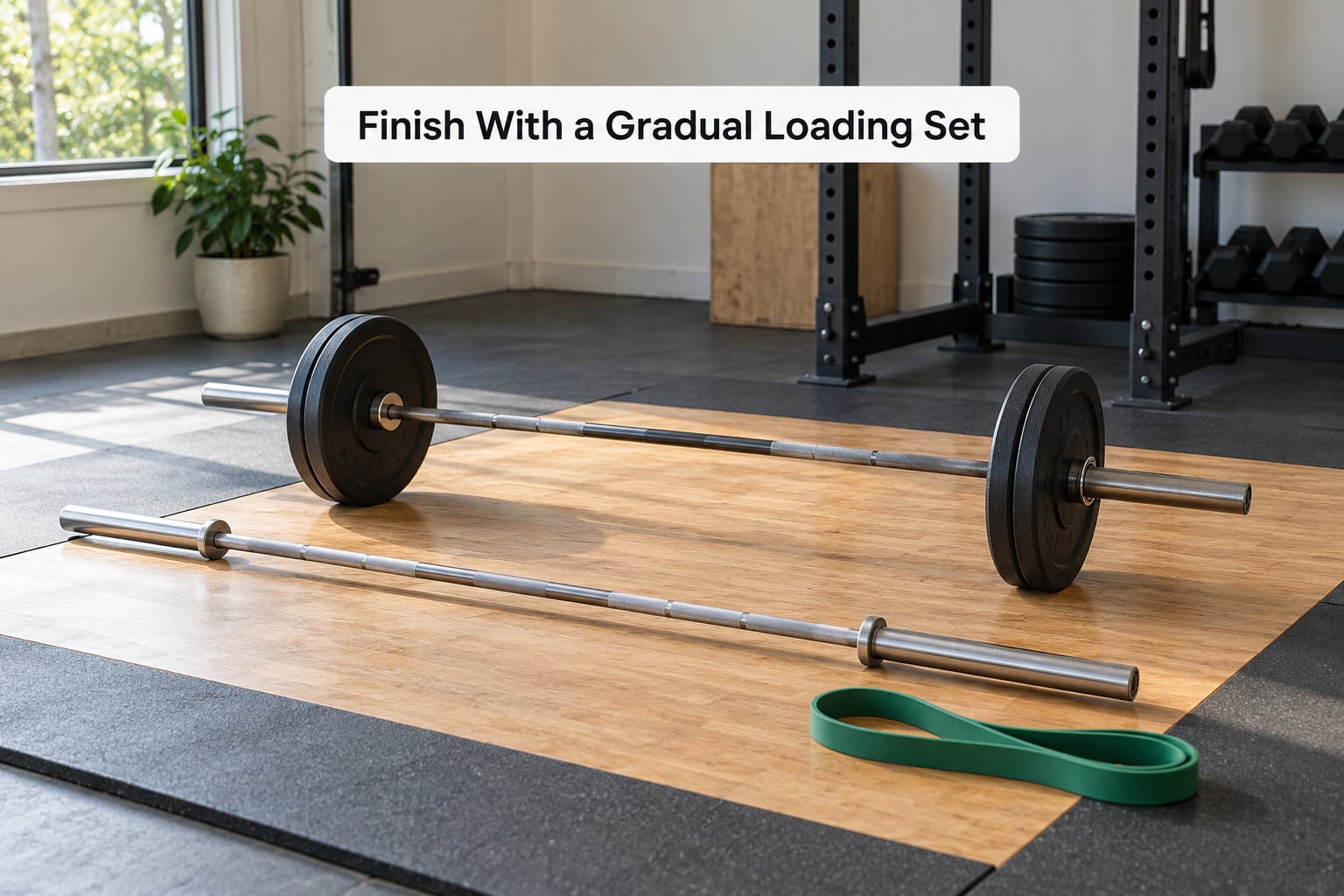
This is the part most beginners never do, and the part that matters most on a heavy day. Before your first working set, climb up to it in steps: empty bar for 10 to 15 reps, roughly half your working weight for 5 to 6, then 70 to 80 percent for 2 to 3. Then take your working weight.
Stop climbing while the movement still looks like your working sets: same bar path, same tempo, same depth. If the set before your working weight already feels like a grind, you added too much too fast. Sit at the weight just below working weight until the reps feel smooth, then add load.
Rest 60 to 90 seconds between ramp-up sets. This is not wasted time, it is what lets your nervous system actually settle into the movement before it gets asked for something hard.
You only need ramp-up sets for the first heavy compound exercise of the session. After your first squat or press, you are warm for everything that follows.
How Long Should You Warm Up Before Lifting Weights?
For most sessions, 5 to 10 minutes. Add the ramp-up sets and you land around 12 to 15 minutes total. On a day built around heavy squats, deadlifts or bench press, spend 15 to 20 minutes and do not rush the loading steps.
| Session type | Warm-up length | What it should include |
|---|---|---|
| Light dumbbell or machine session | 5 minutes | Easy movement plus 3 to 4 dynamic drills |
| Normal full-body strength session | 8 to 10 minutes | Easy movement, mobility, ramp-up sets for the first lift |
| Heavy squat, bench or deadlift day | 15 to 20 minutes | Full routine plus three to four graded ramp-up sets |
| First session back after a layoff, or training while sore | 15 minutes or more | Extra mobility rounds and one extra ramp-up set |
| Only two minutes available | 2 minutes | Express routine below, then jump straight to ramp-up sets |
Treadmill time counts, but only if it stays easy. Ten easy minutes of walking or a light incline is fine. Long or hard cardio is not, because it dulls output on the heavy sets that follow.
How Many Warm-Up Sets Do Squats, Bench Presses and Deadlifts Need?
Three graded sets is the standard starting point for the first big lift of the day. Below that, move up in bigger jumps; above half your working weight, move up in small ones.
| Lift | Set 1 | Set 2 | Set 3 | Working set |
|---|---|---|---|---|
| Squat, example 225 lb x 5 | Empty bar, 10 to 15 reps | 95 to 115 lb, 8 reps | 135 to 165 lb, 5 reps | 225 lb, 5 reps |
| Bench press, example 185 lb x 5 | Empty bar, 10 to 15 reps | 95 lb, 8 reps | 135 lb, 5 reps | 185 lb, 5 reps |
| Deadlift, example 315 lb x 3 | Empty bar, 8 to 10 reps | 135 lb, 5 reps | 225 lb, 3 reps | 315 lb, 3 reps |
In percentages, that is about 40 percent of your working weight, then 60 percent, then 75 to 80 percent. Deadlifts deserve more care than squats because the load is usually higher and the mistake more expensive, so take the empty bar set even when you feel ready to skip it.
For dumbbell presses or goblet squats the same idea holds with lower numbers: one light set for 12 to 15 reps, one moderate set for 6 to 8, then your working pair. Nothing here depends on a specific plate size, so use the nearest load your gym has.
Two adjustments worth making. First, if your gym has no rack or no one to spot, skip the empty bar and start at your lightest workable pair, or with an unloaded bar held in an awkward position that nobody will want to copy. Second, if you are training heavy low-bar or sumo rather than a standard squat, spend an extra thirty seconds on hip and adductor mobility, because the stance is doing more than the load.
One question beginners ask constantly: do warm-up sets count toward your weekly volume? They do not. Warm-up sets are a graded ladder up to the first working set, and treating them as working volume means your program quietly grows by a few sets per session. Log them separately if you log anything at all.
How to Warm Up with Dumbbells or at Home
No barbell, no rack, no band. You can still do the full three-stage routine, because a barbell is a tool and the pattern is the point. Substitute a single light dumbbell held at your chest for a goblet squat, and use that same dumbbell as a counterbalance for a hip hinge.
- 1 minute of marching or step-ups, arms swinging
- 10 ankle rocks, 10 leg swings per leg, 8 book openers per side
- 12 bodyweight squats, 10 hip hinges, 10 glute bridges
- 8 floor press-pattern presses and 8 rows, or the same counts standing with a light dumbbell
- One ramp-up set of the first exercise at roughly half your working weight
No equipment at all? Do the express version: 30 seconds of marching, 30 seconds of arm circles and leg swings, 30 seconds of squats and glute bridges, then start your first exercise with an empty hand and build from there.
Home lifters on Reddit raise this question more than almost any other group, and the honest answer is that the ramp-up set is the part you cannot skip. With dumbbells, an empty-hand rehearsal followed by one light set gets you most of the way there.
Do You Actually Need to Warm Up Before Lifting?
Fair question, and the honest answer has two halves. Researchers who study evidence-based strength training make a legitimate point: for controlled resistance training, a separate general warm-up is not strictly required, because the graded loading inside your first set already recruits muscle fibres progressively from easier to harder.
That argument holds best when you are training with good form, at a moderate load, and your tissues are already warm. It holds less well in the situations most people are actually in: a cold garage, a stiff morning after sitting, a technique-heavy squat, or a session where you will push close to a limit.
The reconciliation is simpler than it sounds. General movement is about temperature and readiness. Specific ramp-up sets are about rehearsing a load near the one you are about to use, and that is the part with the strongest case behind it. If you do nothing else, do the ramp-up sets. If you feel genuinely warm and your light sets already move well, you have nothing left to prove.
This is also why the advice splits by session rather than being absolute. A cold garage on a heavy deadlift day is a different problem from a warm room and a moderate dumbbell session, and a blanket rule for both is a rule that gets ignored or over-applied.
How to Know You Are Warm Enough to Lift
Five cues, checked in order. A light sweat. Breathing that is noticeably deeper than at rest but still controlled. Your first ramp-up set moves as smoothly as you would expect your best sets to move. No tight, achy feeling in the joints you are about to load. A quiet head, no hesitation about the weight on the bar.
If the first ramp-up set feels heavy or awkward, that is your answer. Add another set at the same load, add a round of the movement-specific drills, or both. That set is feedback, not a failure.
Warming Up After a Layoff or When You Are Sore
Coming back after time off changes the priority. Tissue tolerance is not the limit on day one, technique under load is, and the honest mistake people make is loading back up at their old numbers within a few sessions. Warm-up sets do the most work here because they let you check the movement at a load you can correct.
Two changes help. Add a fourth ramp-up set at a light weight for a few more reps, which gives your nervous system more practice at the pattern without asking for much force. And plan your percentages rather than your weight: 40 percent, 60 percent, 75 percent, then your working set. If the 75 percent set looks wrong, the working set is the wrong number today, and that is a useful thing to learn in the warm-up instead of in the middle of a set.
Sore muscles are a different situation and generally a gentler one. Soreness is not the same as damaged tissue, and a session on sore legs is usually fine. Warm up the sore area a little more deliberately and expect the first set of each movement to feel heavier than it should. Reduce the load by a set’s worth rather than dropping the movement, and let the ramp-up sets tell you which it is today.
What to avoid either way: stretching a hard sore muscle aggressively before loading it, and pushing through sharp pain. Aches fade with movement. Sharpness does not.
When You Can Skip Warm-Up Sets
Ten minutes before every session is not a rule, and treating it as one is how people end up skipping the warm-up entirely for months. There are sessions where ramp-up sets are genuinely not needed.
- Light isolation work, such as dumbbell lateral raises, curls or triceps pushdowns under moderate load. One light set at most.
- Bodyweight-only sessions at an easy-to-moderate effort, where the movement is already in your warm-up as part of the routine itself.
- Cardio-only days. Warm up for the specific session you are doing, not the one you skipped.
- Group classes or circuit training with a built-in warm-up. Do not redo it for fifteen minutes before class starts.
- Any movement you are moving to for the first time in weeks, and any first heavy set after switching exercise or equipment.
The test is simple: will this set be hard, and is the pattern familiar? If yes, ramp up. If the set is light and you have done the movement yesterday, start at or near your working weight. The mistake lifters actually make is not skipping warm-up sets, it is doing four ramp-up sets on leg extensions while skipping them on squats.
Common Mistakes
Treating static stretching as the whole warm-up. This is the most common mistake and the one with real evidence against it. Holding a muscle in a stretched position before loading it can reduce force production for several hours afterwards, and it does not raise body temperature. Five minutes of couch stretching is not a warm-up, and the wide discussion on r/Fitness lands on the same conclusion: static stretching belongs after the session, dynamic stretching before it. A minute or two of light mobility work beforehand is harmless, just do not confuse it for preparation.
Sauna, cold plunge and hot tub: warm water right before lifting is fine as a comfort measure. Very hot followed immediately by heavy lifting is not, because heat raises core temperature and dilates blood vessels, and the combination with a heavy set is a poor trade for most people. Cold immersion before lifting blunts the adaptation you came for, since a hard session is partly the signal that training happened. Neither has to be a part of your warm-up to be worth doing.
Overloading the mobility work. Twenty minutes of stretching is not a warm-up, it is a second session. If your first set feels worse than it would have without the stretching, you did too much.
Jumping straight to heavy weights. The classic miss. You are asking a cold nervous system and cold tissue to produce a coordinate lift at full load.
Counting your first working set as a warm-up set. Warm-up sets are preparation, not volume. They do not count toward your weekly tonnage, and if your program counts them, you are doing more work than intended.
Skipping ramp-up sets on the second heavy exercise. You do not need them for every exercise. You do need them when you switch to a movement you have not rehearsed in a while.
Warming up through pain. Warm-up discomfort should fade. Sharp pain, pinching, or something that changes how you move is a stop signal. Skip the movement and get it assessed rather than pushing through it.
Ending a foam rolling session with load. Aggressive rolling right before a heavy set leaves the tissue without much to push against. If you roll, do it lightly, before the easy movement, and give it a few minutes.
Frequently Asked Questions
How long should I warm up before lifting weights?
Most sessions need 5 to 10 minutes of general movement and dynamic mobility, plus two or three ramp-up sets on the first heavy exercise. That lands you around 12 to 15 minutes total. Spend 15 to 20 minutes on heavy squat, bench or deadlift days, and longer still when you are returning after time off or training while sore. Five minutes beats nothing, so start there if time is short.
Should I stretch before lifting weights?
Skip long static holds before you lift. Hold-to-stretch stretches can reduce force production for several hours afterwards, which is the last thing you want going into heavy sets. Do dynamic work instead: leg swings, arm circles, band pull-aparts, book openers, and slow controlled squats. If stretching helps you feel better, save it for after the session when it has no performance cost.
Is jumping or cardio necessary before a weight workout?
It is helpful but not required. Five minutes of easy marching, step-ups or light skipping raises your heart rate and body temperature and makes the first set feel better. Long or hard cardio is counterproductive, because it leaves you fatigued before the heavy work starts. If your session is mostly heavy lifting, the graded ramp-up sets do more for you than any amount of treadmill time.
What if I do not have time for a long warm-up?
Do a two-minute express version: 30 seconds of marching, 30 seconds of arm circles and leg swings, 30 seconds of squats and glute bridges, then go straight into ramp-up sets for your first exercise. Lifters with almost no time still report that their first set feels better afterward. The ramp-up sets are the part worth protecting if you have to cut something.
Should I warm up differently for squats, deadlifts, and shoulder presses?
The order stays the same, but the rehearsal changes. Squats and deadlifts need hip hinge practice, ankle rocks, glute bridges and split-stance lunges, and the deadlift deserves the most gradual ramp because the load is usually highest. Pressing days need shoulder circles, band pull-aparts, scapular push-ups and an overhead press pattern. Match the drills to the first exercise you will actually perform.
What signs mean I should stop warming up and rest?
Sharp pain, pinching, or a movement that feels worse as you warm up all mean stop, not push through. So does light-headedness, and any drill where you lose control of the range. Stop, sit, breathe and drink water. If the pain returns on the next set, skip the movement and speak to a doctor or physical therapist rather than trying to warm through it.
On your next session, do just three things: two minutes of easy marching to get warm, four minutes of mobility matching the day, and two graded ramp-up sets before your first heavy exercise. That is the whole method, and it takes ten minutes out of a session that was going to feel stale anyway.
Keep a note of what your first ramp-up set feels like at each percentage. After a few weeks you will know your own numbers well enough to skip straight to the right weight, and that version of how to warm up before lifting weights takes three minutes instead of ten.