Hunting license requirements explained for beginners come down to three things: an approved hunter safety course, a license from your state’s wildlife agency, and the right species tag for what you plan to hunt. In nearly every US state you cannot buy a license until the course is done, and most states run their license year from April 1 to March 31, not January to December.
That last detail catches more first-timers than anything else. Buy in late March and you may have paid for a license that expires in three weeks. Rules genuinely differ from state to state, so treat anything you read here as a map and confirm the specifics with your state fish and wildlife agency before you head out.
Table of Contents
- What Hunting License Requirements Mean for Beginners
- Why hunting license requirements differ so much between states
- Hunting License Requirements Explained: State and Federal Rules
- Which Hunting License Do You Need?
- Federal Requirements That Apply Across State Lines
- Hunter Education and Safety Requirements
- How to Check Your State’s Official Requirements
- Documents, Identification, and Application Details
- Fees, Renewals, and Refunds
- Common Mistakes Beginners Should Avoid
- A Beginner’s License and Hunt Checklist
- Frequently Asked Questions
- How does a beginner get into hunting?
- Do I have to take a hunter safety course before I can buy a hunting license?
- Do I need a hunting license to hunt on my own private land?
- Can a 12 year old hunt deer in NY?
- How much does a hunting license cost in Arizona?
- What is the hardest hunting tag to get?
- What to Do First
What Hunting License Requirements Mean for Beginners
A hunting license is a state-issued legal permit that lets you take specific species inside that state’s borders during set seasons. It is not one document. It is usually a base license plus separate tags for the species you want.
The base license, sometimes called a state hunting license or a small game license, gets you into the general system. It may cover small game and some upland birds on its own. The species-specific tag is the extra permission for deer, turkey, bear, waterfowl, or antlerless big game. Many states charge by the tag.
The agency is usually the state fish and wildlife department, though the name changes. Texas Parks and Wildlife, Michigan’s Department of Natural Resources, Wisconsin’s Department of Natural Resources, the Pennsylvania Game Commission, Missouri’s Department of Conservation, Ohio’s Department of Natural Resources, Kentucky Fish and Wildlife Resources, Maryland’s Department of Natural Resources, Arizona Game and Fish, Mississippi’s Department of Wildlife, Fisheries and Conservation, New York’s Department of Environmental Conservation, Oregon’s Department of Fish and Wildlife, Florida’s Fish and Wildlife Commission, Georgia’s Department of Natural Resources, and Wyoming’s Game and Fish Department all run their own systems.
Why hunting license requirements differ so much between states
Each state sets its own seasons, bag limits, tag structures, and license years, so there is no national standard to copy. What is close to universal is the safety-course prerequisite and the resident versus non-resident split.
Resident means you meet the state’s own residency test, which usually involves living in the state for a set period and having a mailing address there. Non-resident means you are hunting from out of state, and that license almost always costs several times more. Buying the wrong one is the single most common fee mistake beginners make.
Hunting License Requirements Explained: State and Federal Rules
Here are the requirement categories you will meet, roughly in the order you meet them.
Minimum age. Most states set a floor around 10 to 12 for hunting unsupervised, and several allow younger children to hunt only while a licensed adult supervises. A handful require a certificate before any license is issued at any age.
Hunter education. An approved course is the prerequisite nearly everywhere. It produces a certificate number that the licensing system checks automatically.
The state license itself. Bought from the agency, online or at a counter, plus a fee and often a Federal Duck Stamp line item at checkout.
Species tags. Big game, waterfowl, and antlerless tags are separate, and some are limited by a drawing or point-based preference system.
Land access. National Forest, Bureau of Land Management, and state wildlife management areas may need an extra access permit or vehicle registration on top of your license.
The license year. Most states run April 1 through March 31. A few align to the calendar year, so check your agency’s dates rather than assuming.
Which Hunting License Do You Need?
Start with where you live, how long you plan to hunt, and what species you actually want. That answers nearly everything.
| License type | What it covers | Who it suits |
|---|---|---|
| Base or state license | Small game and general hunting privilege, varies by state | Every new hunter starting out |
| Species-specific tag | Deer, turkey, bear, waterfowl or antlerless harvest | Anyone targeting a specific animal |
| Resident license | Full privileges at the resident rate | Anyone who meets the residency test |
| Non-resident license | Same privileges at a higher rate | Out-of-state and visiting hunters |
| Youth or reduced-rate license | Same privileges at a discounted rate | Hunters under the state’s youth age band |
| Apprentice or mentored license | Hunting alongside a licensed mentor, some without season limits | Newcomers still finishing the course |
| Combination license | Fishing plus hunting in one document | Households that fish and hunt |
| Multi-year or lifetime license | Several years or permanent coverage | Committed hunters buying once |
A table of license types is a starting point, not a verdict. Before you buy, read the current fee page for your state. Agencies change tier names between years, and a license that existed last season may have been folded into a bundle.
Non-resident hunters should check reciprocity too. Some states honor another state’s resident license, and some accept a hunter education certificate from another state, which can save a repeat course.
Federal Requirements That Apply Across State Lines
Federal law handles a short list of things. It does not issue you a general hunting license, and no federal permit lets you ignore state rules. Any competitor claiming a federal permit covers all fifty states is wrong.
The items beginners actually run into:
- Federal Duck Stamp. Required for waterfowl hunting, bought at most state license checkouts and at federal wildlife offices, valid across state lines for the license year.
- Migratory bird framework. Federal frameworks set hunting methods, season dates, and bag limits for migratory birds, and states fill in the specifics.
- Eagle permits. A federal permit is required to take a Bald or Golden Eagle, with its own application timeline.
- Federal land access. National Forests and BLM land can require an access pass or vehicle registration, and some areas close to hunting during specific seasons.
- National park rules. Hunting is generally prohibited in national parks, and the rules there override everything else on this list.
Most of the paperwork you will actually handle sits with your state. Treat the federal items as add-ons triggered by species and location rather than a separate layer of licensing.
Hunter Education and Safety Requirements
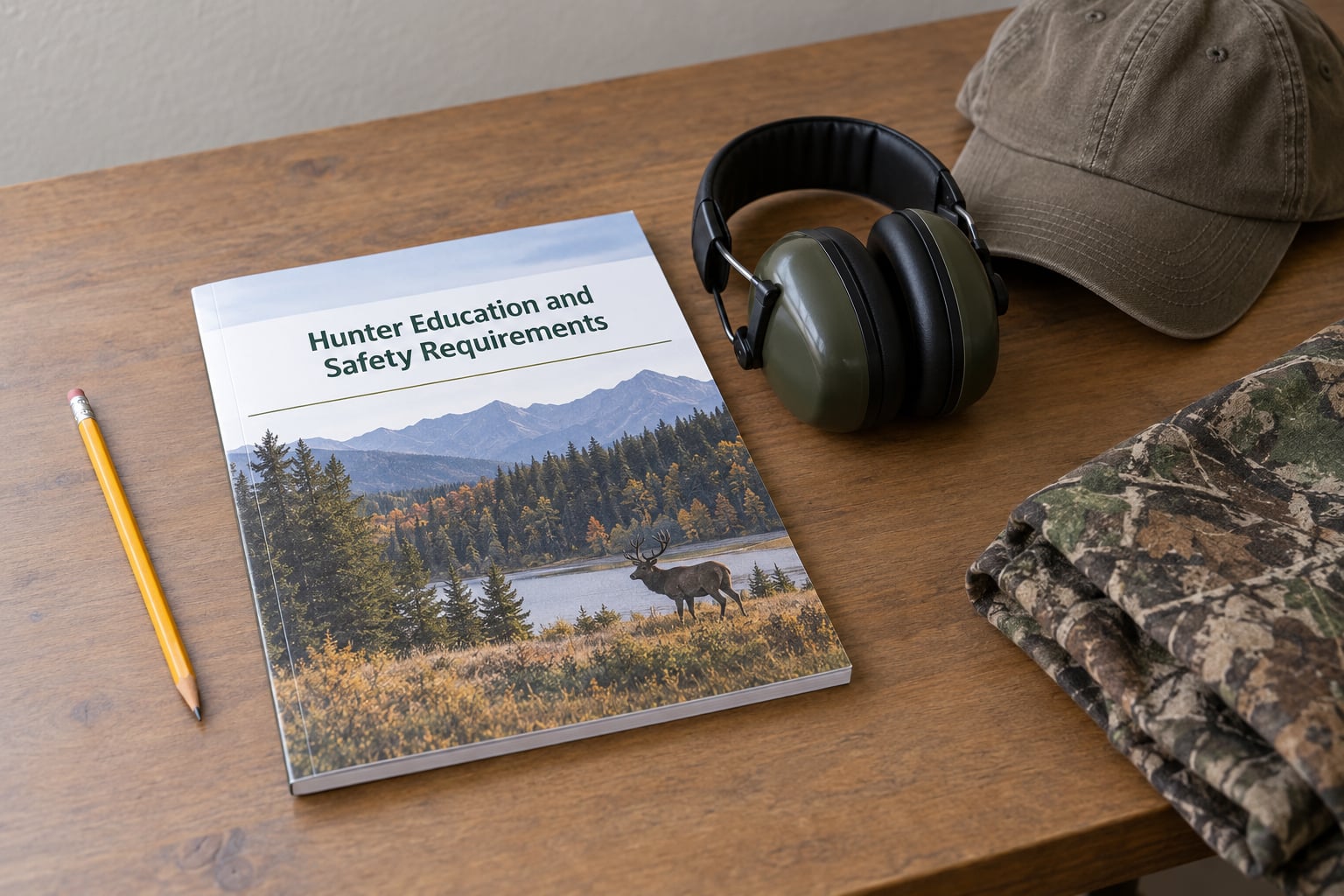
Hunter education is usually two parts, and that is the part that surprises people. You do an online classroom module, then attend an in-person field day where you practice handling a firearm, learn to identify game, and pass a skills check. Only then does the system issue your certificate number.
The terminology confuses beginners, so here is the plain version. The certificate is the record of course completion and, in most states, it never expires. The certification number is that record’s identifier, entered into the licensing system to unlock the license. A temporary card is a printable proof you can carry until the state mails the permanent one.
Texas is a clean example. Texas Parks and Wildlife requires an approved course for anyone born on or after September 2, 1971, and the process is online study, the official test, then either a printed temporary card or a field day qualification voucher for younger hunters. The certificate stays valid for life.
Course access is where beginners get surprised again. Several states limit online hunter education courses to residents, with carve-outs for non-residents and active-duty military. Check your agency’s eligibility page before you pay for a course you may not be allowed to take.
Costs vary by state and by approved provider, and free routes exist. Some states run their own free courses, and organizations such as the NRA and the National Wild Turkey Federation offer reduced or free online instruction in many states. Look at what your agency lists first.
How to Check Your State’s Official Requirements
Five steps, and the first one does most of the work.
- Find the official agency site. Type the state name plus fish, wildlife, natural resources, or game and fish into your search engine. Resellers and outfitter blogs sit above the official page constantly. Read the URL before you read the fee.
- Open the hunter education page. Check the course format, who is eligible, the minimum age, and how long the certificate lasts.
- Open the licensing page. Note the license types, the license year start and end dates, and whether the purchase is online, by phone, or in person.
- Read the regulations section. Season dates, legal shooting times, blaze orange rules, and bag limits live here.
- Check the tag and draw page. If you want deer, turkey, or waterfowl, find out whether the tag is over the counter or drawing-based, and when applications open.
Write the date you checked. Agencies update fee pages without announcement, and a page you trust today can change in a month.
Documents, Identification, and Application Details
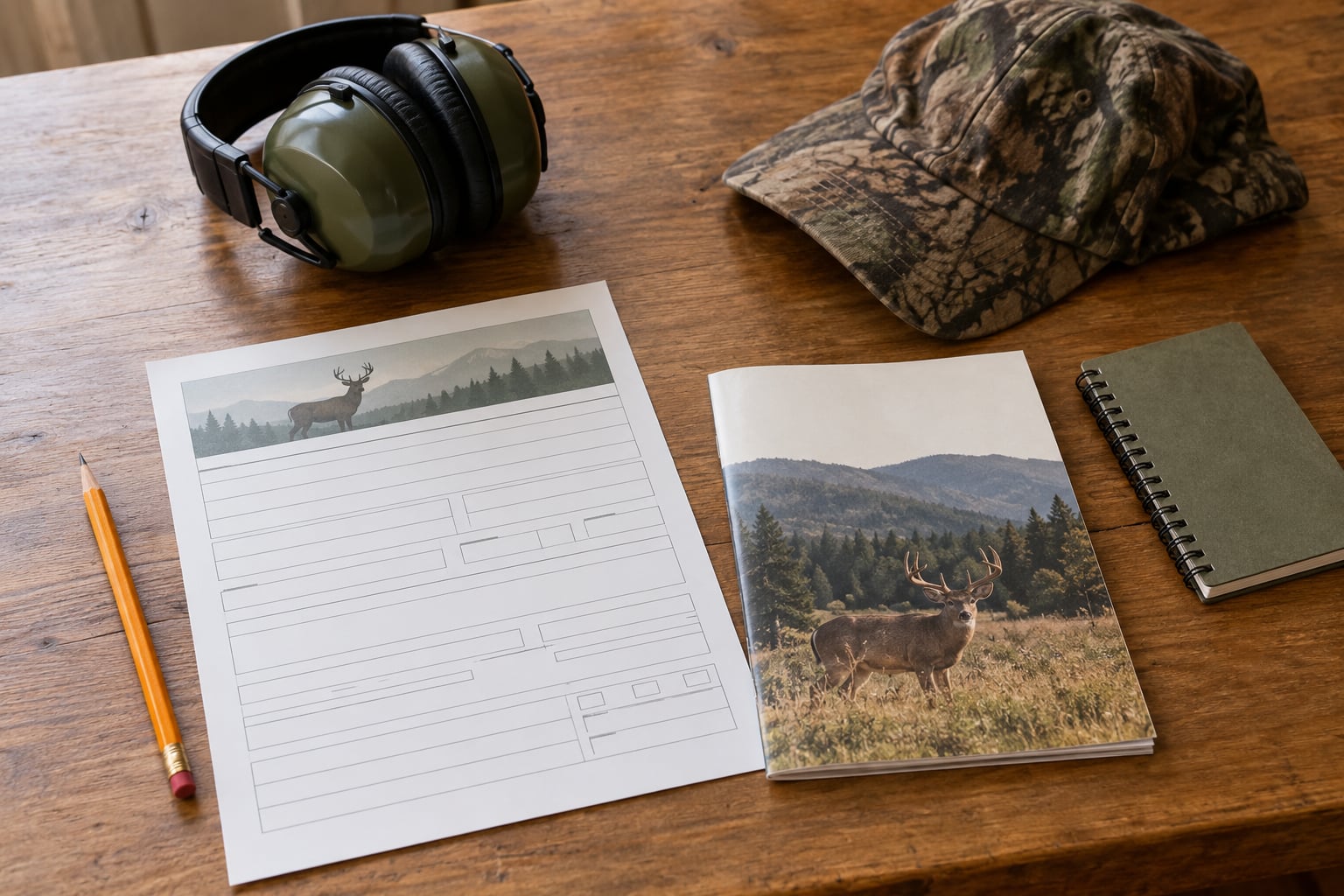
Most online applications want identity details, a date of birth, residency proof, and your hunter education certification number. Physical counters add a government photo ID.
Residency is where documentation gets specific. States that tie the resident rate to a driver’s licence, voter registration, or a homestead filing will ask you to show one. If you recently moved, you may sit in a partial-season tier where the residency test is not yet satisfied, so read the tier definitions before choosing resident.
Age entry decides which category the system offers you. Enter it correctly or you will buy a license that does not match your tier.
One practical warning: use only the official licensing system. Third-party sites that look like license portals can sell you a printed sheet that no game warden will accept.
Fees, Renewals, and Refunds
License costs vary by state, by resident status, and by how many species tags you add. Resident annual licenses are the cheapest tier, non-resident licenses commonly cost several times more, and youth licenses are discounted or free in many states.
Fees sit in more than one place. The base license, each species tag, the federal duck stamp, and any federal land access pass are separate lines. Federal duck stamp money goes to habitat conservation, not the state agency.
Renewal timing follows the license year rather than your purchase anniversary. A license bought in August usually expires the following March 31, not the following August. Some states offer a short grace period after expiry; many do not, and a lapsed license sitting in your truck is a plain citable offense.
Refunds are the stingiest part. Most agencies will not refund a license once the season starts or once the license has been used. A license bought by mistake in the wrong tier is usually your loss. Read the refund policy on the checkout page before you confirm.
If you want a realistic first-season budget, add course, license, tags, stamps, and gear together rather than looking at the license line alone. Gear is often the larger half of a first hunt.
Common Mistakes Beginners Should Avoid
Buying non-resident when you qualify as a resident. This is the most expensive avoidable error, and it usually happens because someone guessed at the residency test instead of reading it.
Buying a base license and assuming it covers deer. In many states the deer or turkey tag is separate and required. Check the species list on the license page.
Trying to use someone else’s tag. Tags are non-transferable. Hunting on a hunting partner’s tag is a violation in the states that print the hunter name on the tag, which is most of them.
Buying in late March. If your state runs April 1 to March 31, a license bought in late March may expire before the season you wanted opens.
Using an outdated course record. A screenshot of a course page is not a certificate. Enter your certification number in the licensing system and confirm it validates before you buy.
Assuming rules transfer between states. Your state course may not satisfy another state’s requirement, and a private-land exemption in one state may not exist in the next.
Hunting without carrying the license. Most states want the license on you or in the vehicle, and many accept a digital version but not all of them. Carry the printable or the card.
Hunting without a valid license is citable in every state. Penalties typically stack: fines, loss of hunting privileges for a period of years, and in some cases seizure of the equipment used.
A Beginner’s License and Hunt Checklist
- Confirmed your state wildlife agency is the official source.
- Checked your state’s minimum age and supervision rules.
- Completed the approved hunter education course and field day.
- Have your certification number validated in the licensing system.
- Picked the correct license tier: resident, non-resident, youth, or apprentice.
- Checked the license year start and end dates.
- Added tags for every species you intend to hunt.
- Added the federal duck stamp if waterfowl is on the list.
- Checked federal land access permits for the ground you plan to hunt.
- Confirmed blaze orange requirements and legal shooting times.
- Confirmed you can legally hunt your chosen private land.
- Printed or saved the license and carry photo ID with it.
- Reviewed bag limits and season dates for your species.
Two habits worth keeping. Tell someone where you are going and when you expect to return, and go with someone who has done it before. A local rod and gun or sportsmen’s club is usually the fastest way to find a mentor, and mentors show you things no guide page covers.
Frequently Asked Questions
How does a beginner get into hunting?
Start with your state wildlife agency site, because everything else depends on where you live. Confirm the minimum age and whether hunter education is required before a license. Complete the approved course, which usually means online study plus a field day, and save your certification number. Then buy the correct license tier, add tags for the species you want, and check the season dates and bag limits. Find a mentor through a local sportsmen’s club before your first trip.
Do I have to take a hunter safety course before I can buy a hunting license?
In nearly every state, yes. The state licensing system checks your hunter education certification number before it will sell you a license. The course usually has two parts: an online classroom module and an in-person field day with a skills check. The certificate generally stays valid for life, so you take the course once. Some states limit online courses to residents, so check eligibility before paying for a provider.
Do I need a hunting license to hunt on my own private land?
It depends entirely on the state, and this is the question beginners get the most wrong answers about. Several states still require a license on your own property, and some apply different rules for small game on private ground. A few states exempt landowners hunting on their own land. There is no general answer, so check your agency’s private land page or call the office directly before you set out.
Can a 12 year old hunt deer in NY?
New York sets its own minimum age and supervision rules, and a 12 year old is old enough to hunt in many deer seasons with a valid youth license and completed hunter education. Some hunters under a set age must hunt with a licensed adult, and firearm type restrictions can apply at younger ages. The New York State Department of Environmental Conservation publishes the current deer season dates and youth rules, so confirm the specifics there.
How much does a hunting license cost in Arizona?
Fees in Arizona vary by license type, resident status, and which species tags you add, so check the current fee schedule published by the Arizona Game and Fish Department rather than an old blog post. Resident annual licenses are the lowest tier, youth licenses are reduced or free for qualifying young hunters, and non-resident licenses cost considerably more. Tags for deer, elk, and antelope are sold separately from the base license.
What is the hardest hunting tag to get?
The hardest tags are usually limited-entry ones for big game in heavily hunted units, and in several states they are allocated through a draw or a point-based preference system rather than sold over the counter. Popular Western elk, mule deer, and some turkey units fall into this group. Preference points accumulate over years, so an unsuccessful first attempt is normal. States without a draw system simply sell the tag at the counter.
What to Do First
Three things, in this order. Open your state wildlife agency site and confirm the minimum age, the course format, and your license year dates. Finish the hunter education course and confirm your certification number validates in the system. Then buy the license tier that matches your residency status, add tags only for species you will actually pursue, and go with a mentor on the first trip.
Hunting license requirements explained for beginners look complicated until you realize every rule resolves to one question: what does my state agency require of me this season. Keep that page bookmarked, check it before every trip, and you will stay legal.