Most bug bites in the backcountry are an itchy welt that fades in a day or two, and handling one well comes down to four moves: get away from the insects, wash the site, control itching and swelling with cold and an antihistamine you already packed, and remove a stinger or tick carefully if one is there. The part people regret is skipping the fourth step or ignoring what a spreading reaction looks like. This guide walks through the field treatment in order, what to carry before you need it, the mistakes that turn a small bite into a bad day, and the signs that mean you should stop treating and start moving toward help.
Worth saying up front: this is general wilderness first aid information, following the same approach the CDC, the Wilderness Medical Society and the American Red Cross describe. It is not a diagnosis and not a treatment plan for any person. For advice about your own reactions, a specific medication, or a bite that is not improving, talk to a doctor or pharmacist, and call emergency services for anything involving breathing or swelling of the face or throat.
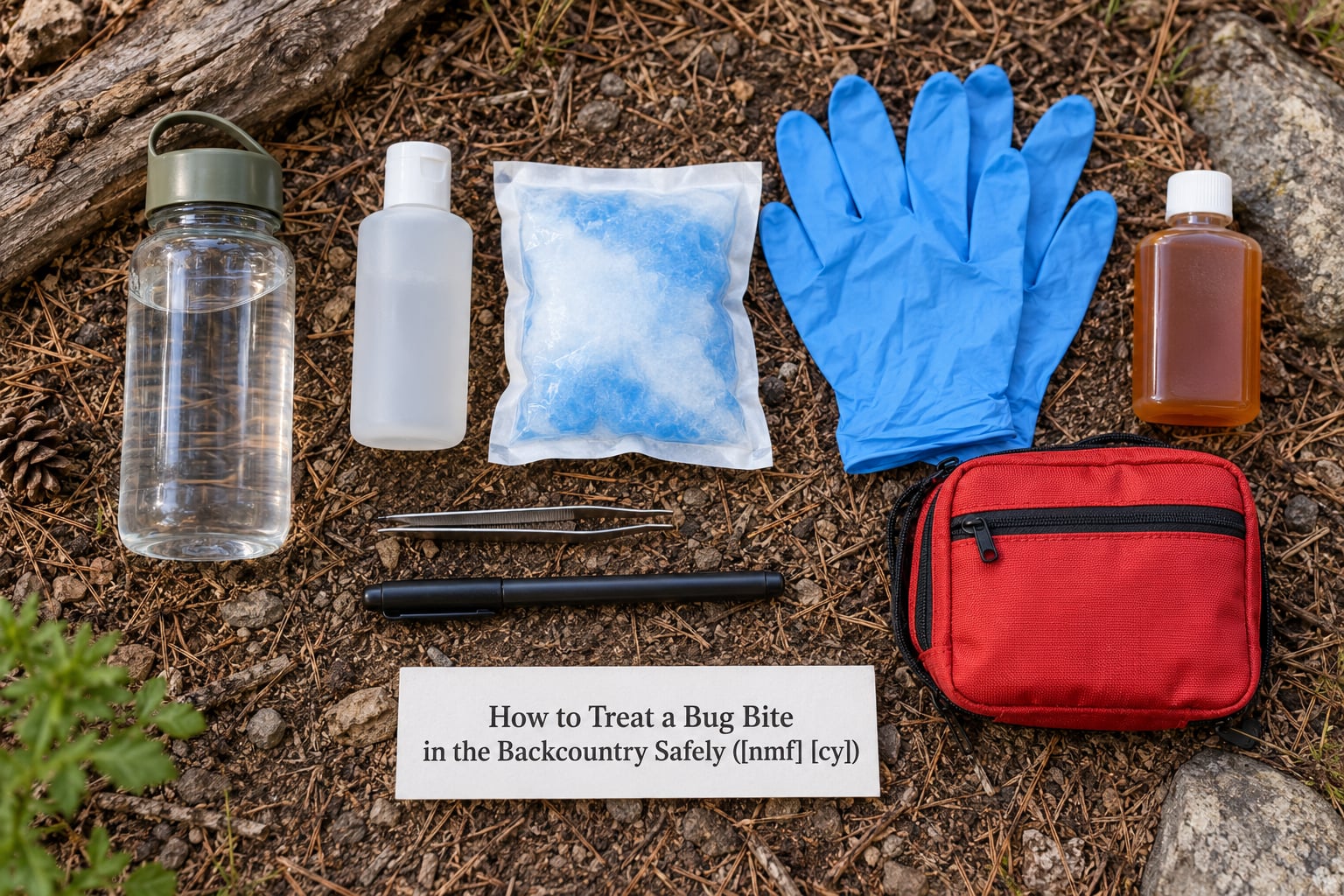
Table of Contents
- What You Need in Your Backcountry First Aid Kit
- How to Treat a Bug Bite in the Backcountry, Step by Step
- Step 1: Move Away From Insects and Assess the Bite
- Step 2: Clean the Bite and Figure Out What Caused It
- Step 3: Remove a Stinger or Attached Tick Carefully
- Step 4: Use Conservative Comfort Measures
- Step 5: Watch the Person and Write Down What Happened
- Step 6: Evacuate When a Bug Bite in the Backcountry Turns Serious
- Common Mistakes That Make Bites Worse
- Frequently Asked Questions
- What should I do about bug bites while hiking?
- What neutralizes a bug bite?
- How do I identify what bug bite I have?
- Why isn’t hydrocortisone cream working on mosquito bites?
- Do insect bite relief devices work?
- When should I worry about a bug bite on a trail?
What You Need in Your Backcountry First Aid Kit
The treatment itself takes five minutes with what is already in most kits. The reason to build the list in advance is that the two things you most want under pressure — clean water and cold — are the two hardest to find on a ridgeline.
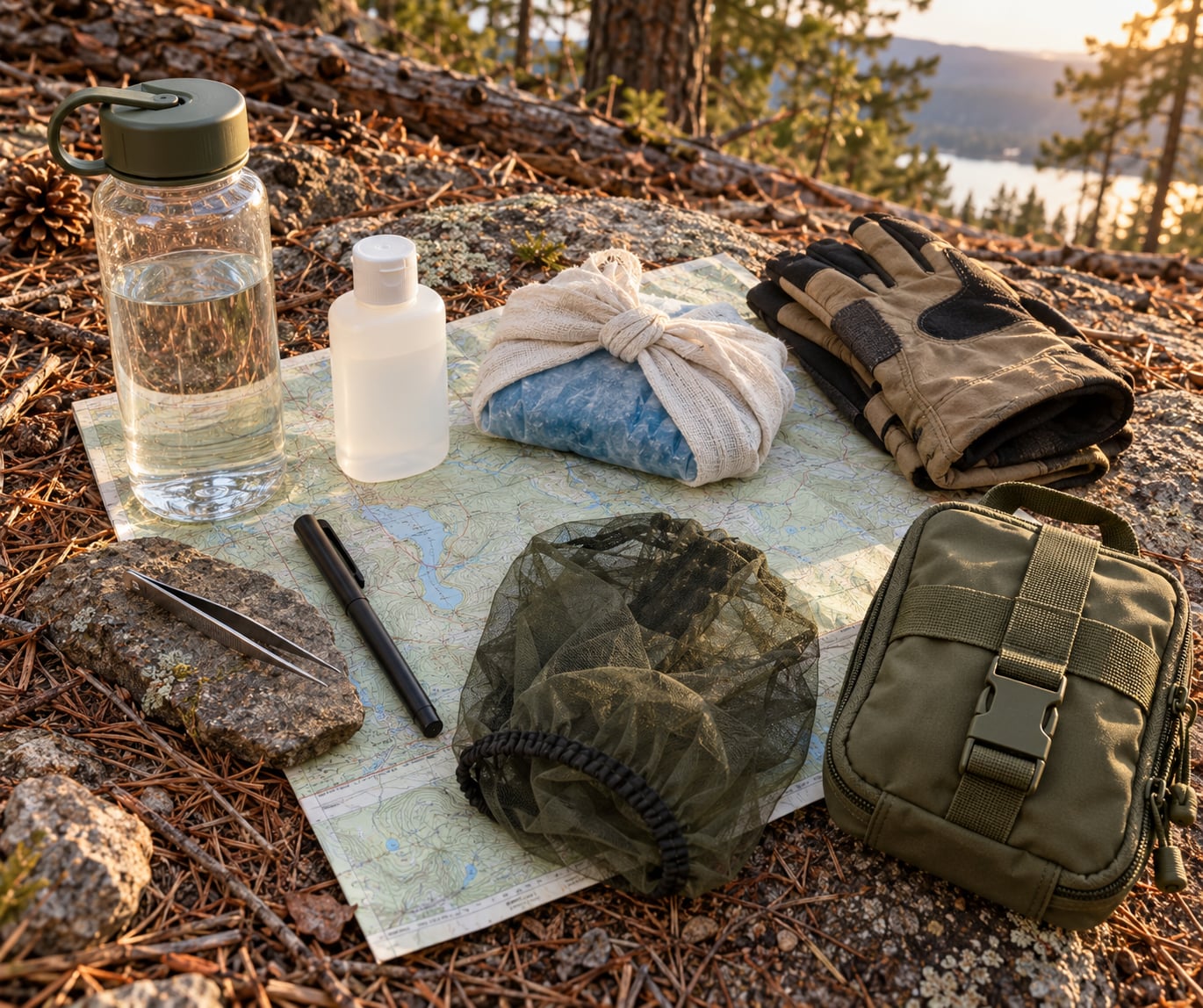
- Clean water plus mild soap or an unscented cleanser. Soap and water is the standard first step for any bite. Rinse, then wash the area gently.
- An antiseptic skin cleanser for when the site has dirt or plant debris in it, or when you have no soap left.
- A cold pack, or a wet bandana and a stream. Wrapped in cloth and applied in short stretches, cold is the most reliable thing for swelling and itch.
- An oral antihistamine you have already used safely before. Backpackers on r/camping frequently call a 24-hour option such as levocetirizine a lifesaver because it takes the edge off itching enough to actually sleep. Diphenhydramine works too, but it makes a lot of people drowsy, which is a real problem on a technical trail or a river crossing at dusk.
- A topical anti-itch or 1% hydrocortisone product if you already use it and know it agrees with your skin.
- Fine-tip tweezers for ticks, and a second pair of clean gloves.
- A mirror or your phone camera for checking the back of your neck, behind your ears, your waistband and anywhere else you cannot see.
- A marker pen to circle the edge of swelling with a time written next to it.
- Communication gear that works where you are. A satellite messenger or a PLB is worth far more than any topical. Someone with no way to call for help has to decide to walk out earlier than someone who can.
If you carry one item from that list for biting insects specifically, make it the tweezers and the antihistamine. Those two cover the two scenarios you cannot improvise — an attached tick and itch that keeps you awake in a tent.
Now the unglamorous part. Plenty of trips run out of clean water, so plan the fallback: use what you have already filtered or treated, or collect clean water and boil it before you need it. If there is genuinely nothing, do not rub dirt or mud on the bite. Rinse with whatever uncontaminated water you can find, or clean the area with an antiseptic skin cleanser and a damp cloth, and wash properly as soon as you are back to a source.
And treat moving away from the insects as treatment. Cleaning a bite while a cloud of mosquitoes is still around you does nothing useful, because another bite lands in five minutes.
How to Treat a Bug Bite in the Backcountry, Step by Step
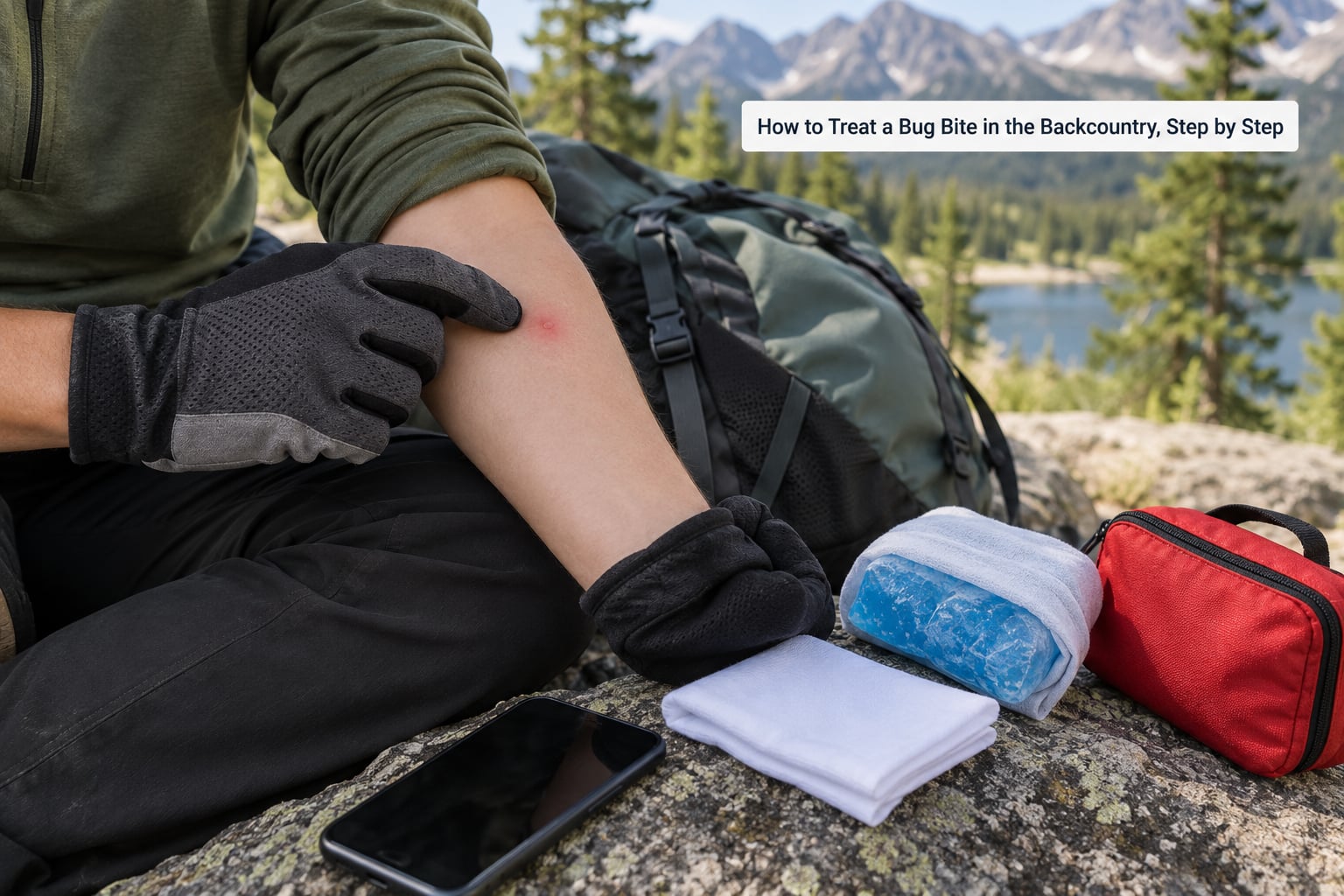
Step 1: Move Away From Insects and Assess the Bite
Put distance between yourself and whatever bit you before you look closely at anything. For mosquitoes and biting flies, that means leaving the meadow, the still water, the brush line. For bees and wasps, walk away calmly and steadily, and keep your arms from flailing around your head.
Do not swat at a bee or wasp near your face, and do not run if you are stung repeatedly. Fast, panicked movement is what triggers more stings. Calm movement away from the nest or the animal is the reliable response.
Once you are clear, shake out your clothing, check your exposed skin and your gear, and see how many bites you actually have. People find clusters they did not notice while distracted. Then look at the bite itself: is there a raised welt, a small puncture, a visible stinger, something attached, drainage, or hives spreading away from the site?
Step 2: Clean the Bite and Figure Out What Caused It
Rinse the area with clean water, then wash it gently with mild soap. You are removing residual irritant and any dirt or plant material that could end up scratched further into the skin.
Once it is clean, look again and try to answer three questions: is there a stinger still in the skin, is something attached like a tick, and is the swelling local to the bite or spreading across a larger area?
Skip the scrubbing, the scratching and the pile of substances people apply on a guess. Alcohol, bleach, hydrogen peroxide, toothpaste, mud and undiluted plant extracts all irritate skin and can turn a simple welt into a chemical burn that you now have to manage in the backcountry. Plain soap, water, cold and patience do most of the work.
Identify the insect if you safely can, because it changes what you watch for. A mosquito welt is a small raised bump that itches hard, often in a cluster of three or more near the ankles or face. A tick is a small gray or brown body attached and firmly latched. Chiggers cluster around tight clothing, ankles and the waistband, and bite hours later. Biting flies leave a painful welt that can bruise.
A black widow bite tends to show two puncture marks with sharp muscle cramping, and a brown recluse bite often starts as a mild bump that turns painful, dark and necrotic over days. Neither is something you diagnose or manage in a tent. Both are reasons to plan an exit.
Step 3: Remove a Stinger or Attached Tick Carefully
For a honey bee stinger, the stinger keeps pumping after the bee leaves, so removing it quickly matters. Scrape it out with a fingernail, a credit card or a flat tool so you do not squeeze venom back into the skin. Wasp and hornet stingers are left behind and are not scraped, which is a difference people mix up constantly. Clean tweezers are the other option for a bee stinger; grasp close to the skin and pull.
For a tick, this is the part worth doing slowly. Do not smother it with petroleum jelly, do not heat it with a match or lighter, and do not twist it. Those methods are widely repeated and they are exactly what wilderness first aid guidance tells you to avoid. A tick that is irritated or ruptured can release pathogens into the bite site.
Instead, use fine-tip tweezers. Grab the tick as close to the skin as you can, at the mouthparts, and pull straight up with steady, even pressure. Do not squeeze or twist the body, and do not yank. A tiny bit of tension in the mouthparts often stays in the skin, which is normal and far better than a mangled tick.
Pull straight, steadily, without a twist. If it resists, pause and re-grasp closer to the head rather than increasing the force. Once it comes free, put the tick in a sealed bag or a small container so it can be identified later if your symptoms develop, because knowing which tick bit you genuinely helps whoever treats you.
Then wash the site and clean the tweezers. Note the date and time.
Some people cannot safely remove a tick on the trail, and that includes anyone who is pregnant, very young, immunocompromised or medically fragile. Get the removal done by a clinician as soon as practical rather than improvising. Same rule if the tick is embedded deep, in the ear, or if removal takes more than a few patient attempts.
One more thing about ticks: an attached tick is not an emergency. Hours to a couple of days of attachment is the normal window in which prompt, clean removal is appropriate, so take a breath and do it well rather than in a panic.
Step 4: Use Conservative Comfort Measures
Wrap a cold pack in cloth and apply it to the bite for short stretches, roughly 10 to 20 minutes at a time, with a break in between. Cold constricts the blood vessels around the area, which takes down both the swelling and the itch signal. Direct ice on bare skin burns the tissue, so the cloth layer is not optional.
Keep the area clean and dry, and let it breathe. If clothing rubs the bite, cover it loosely with a dry dressing rather than a sticky one.
On the antihistamine question hikers argue about most: if you have used it safely before and know how it affects you, an oral antihistamine is the single most useful thing in the kit for itch. Just pick the one you can function on. The non-drowsy 24-hour options let you keep hiking, whereas diphenhydramine puts a lot of people in a haze that makes a stream crossing or a cold night genuinely dangerous. One r/Ultralight user described diphenhydramine controlling the itch well enough to sleep and then ending up in an emergency room, which is the whole argument in one story: it works on the itch and can also mask a reaction that was getting serious.
Topical anti-itch products, including 1% hydrocortisone, are reasonable if you have used them before. Some people get nothing from them on mosquito bites, and that is normal rather than a sign something is going wrong.
Two habits matter more than any product. Do not scratch — scratching breaks the skin, and that broken skin is how a simple bite becomes an infection. And do not take NSAIDs like ibuprofen or naproxen for a sting or an unknown bite, because the response advice for those situations differs and nobody on the trail can assess your risk.
Do not apply anything that promises to neutralize a bite or prevent disease. Nothing you can buy prevents Lyme disease, Rocky Mountain spotted fever or an infection. Topical products manage itch; they do not protect you from a pathogen.
Step 5: Watch the Person and Write Down What Happened
Mark the edge of the swelling with a marker pen and write the time next to it. Re-check every 30 minutes for the first couple of hours, then every few hours. If the mark ends up near or outside the circle, the swelling is spreading and you have information that changes the decision.
Write down the location you were at, the date and time, the suspected insect, what the bite looked like at the start, and everything you did about it. Photos help enormously, because by the time you reach a clinic the welt may have faded or changed completely. This is one of those cheap habits that pays off exactly when it is inconvenient to start.
While you watch, look for the difference between a local reaction and a systemic one. Local means redness, itch and swelling that stay around the bite and change slowly. Systemic means symptoms away from the bite: widespread hives, a rash on the face or arms, throat tightness, wheezing, trouble breathing, lightheadedness, faintness, confusion, a racing pulse or sudden weakness.
If you are solo, tell someone your plan and your check-in time. If you are in a group, agree now who does what in a reaction, because that is the moment nobody wants to be improvising. If an antihistamine seems to settle things, that is not proof the situation is resolved. Watch until the trend is clearly better, not merely quiet.
Keep checking exposed skin periodically for new bites, especially at the ankle line, waistband, neck and hairline. If you are in tick country, run your hands over those same areas at least twice a day while showering, and check your gear before it goes into the tent.
Step 6: Evacuate When a Bug Bite in the Backcountry Turns Serious
Some symptoms can wait. A single itchy welt, a handful of mosquito bumps, mild swelling at a sting site, itch that responds to cold and an antihistamine. Keep treating and keep moving on your route.
Some symptoms cannot. Trouble breathing, wheezing, swelling of the throat, tongue, lips or face, widespread hives, fainting, severe dizziness, confusion or sudden weakness are anaphylaxis until proven otherwise. That is an emergency. If the person carries an epinephrine auto-injector, use it immediately and call for help at once, because epinephrine is the only treatment that reverses anaphylaxis and antihistamines do not substitute for it.
Other signs mean you need medical care even though it is not a collapse: redness spreading rapidly away from the bite, red streaks running from it, pus, warmth and increasing pain, fever, a bite that keeps worsening over more than a day or two of treatment, numbness, bleeding that will not stop, or a bite from a spider or scorpion that came with systemic symptoms.
Watch for delayed illness too, because ticks and some insect bites cause problems days or weeks later. An expanding bullseye or oval rash, fever with aches, headache, stiff neck, fatigue or joint swelling in the weeks after a tick bite in tick country all deserve a call to a doctor. Note that many people never get a rash, and that absence of a rash does not clear anything.
If you have no cell coverage and no satellite device, seek help earlier than you think you need to, not later. The decision is rarely about today, it is about whether you can still walk out at this time tomorrow. Starting early with a manageable problem beats waiting for a worsening one.
In the US, Poison Control is 1-800-222-1222 and takes bite and envenomation questions from anyone, and it can often be reached from any phone, including one with no signal. Medical advice from a doctor or pharmacist about the specific bite and the specific person is always worth the call when you have questions you cannot answer yourself.
Common Mistakes That Make Bites Worse
Most bad outcomes come from one of a handful of habits, and every one of them is easy to stop.
Scratching because it is the only thing that feels good. It is also the thing that turns a bite into an infection, because nails push skin bacteria into a break you just made. Cold compress first, antihistamine second.
Applying bleach, alcohol, toothpaste, mud or an undiluted plant remedy to the bite. Most of these irritate intact skin. A chemical burn on top of a bite is a second problem, and now you are managing it away from help.
Removing a tick with heat, petroleum jelly, burning or twisting. Guidance from the Wilderness Medical Society and Red Cross wilderness first aid courses is consistent here: grab it close to the mouthparts with fine-tip tweezers and pull straight up with steady pressure.
Assuming every red lump is a bug bite. A local reaction, an infection and something else entirely can look similar early on. Track it, and if it changes over a day or two of reasonable care, get it looked at.
Continuing to hike after symptoms go systemic. If breathing, swallowing or alertness has changed, activity makes it worse. Stop, treat, and start the exit.
Trusting a “no scratch” or suction device. On r/camping, users describe these as working somewhat at best, and hikers who carry one usually describe it as a nice-to-have, not a solution. In r/lightweight and r/canoecamping the most common bite kit is the boring one: tweezers, an antihistamine, a hydrocortisone or anti-itch stick, and baking soda.
Waiting for a symptom that may never come. Many people wait for a bullseye rash after a tick bite. Not everyone gets one, so the absence of a rash is not reassurance.
Prevention still beats all of this. On treated clothing and gear, permethrin is the measure hikers credit most often, with r/Ultralight users reporting whole trips with no bites after treating gear. On skin, picaridin is widely favored in the backpacking crowd for mosquitoes, and DEET remains the most broadly endorsed option for reliable protection. Long sleeves, light-colored clothing, gaiters and a bug net in heavy mosquito country beat any single spray. Shake out boots and tents before getting in, and run a tick check twice a day.
Frequently Asked Questions
What should I do about bug bites while hiking?
Move away from the insects first, then rinse the bite with clean water and wash it gently with mild soap. Apply a wrapped cold pack for 10 to 20 minutes at a time, take an antihistamine you have used safely before, and do not scratch. Remove an attached tick with fine-tip tweezers, pulling straight up close to the skin. Keep the area clean, mark the edge of any swelling with a pen, and re-check it every few hours.
What neutralizes a bug bite?
Nothing neutralizes it, exactly. The itch comes from a histamine release triggered by insect saliva or venom, and washing plus cold plus an antihistamine manage the response rather than cancelling it. Clean soap and water removes leftover irritant, a wrapped cold pack shrinks swelling and dulls the itch, and an oral antihistamine blocks the histamine driving both. Scratching is the one thing that reliably makes it worse, by opening the skin to infection.
How do I identify what bug bite I have?
Mosquito bites show up as small raised itchy welts, often clustered in threes near the face or ankles. Chiggers bite later, hours after exposure, usually where clothing is tight. Biting flies leave a painful welt that can bruise. A tick is a small attached body, firmly latched. Bee stings leave a stinger; wasps do not. Spider bites often show two punctures or start mild and worsen over days. When you cannot tell, treat generically and watch for change.
Why isn’t hydrocortisone cream working on mosquito bites?
It often is not much. Hydrocortisone reduces mild inflammation, but mosquito itch is mostly histamine-driven, so many people get little relief from a topical steroid alone. Cold and an oral antihistamine tend to work much better for the itch itself. If you are not improving after a day of clean water, soap, cold and an antihistamine you tolerate well, stop treating it as a simple bite and consider having a doctor or pharmacist look at it.
Do insect bite relief devices work?
Partly, and it varies. Small suction or heat devices that claim to draw out venom have weak evidence behind them and cost you minutes you may want for cleaning and cold. On camping forums, hikers describe them as working somewhat at best, and the ones who carry one usually also carry an antihistamine. If you have room for one in a relaxed day-hike kit, fine. For a trip where itch ruins sleep, spend the weight on antihistamine and permethrin instead.
When should I worry about a bug bite on a trail?
Worry immediately about trouble breathing, throat or face swelling, widespread hives, fainting, severe dizziness or confusion, and use an epinephrine auto-injector if the person carries one. Get medical care for redness spreading fast, red streaks, pus, fever, worsening pain, a bite that is not improving after a day or two, or spider and scorpion bites with systemic symptoms. In the US, Poison Control answers bite questions at 1-800-222-1222.
Start here if you are reading this with a bite on you right now: get away from the insects, wash the site with clean water and soap, put a wrapped cold pack on it for 10 to 20 minutes, take an antihistamine you already know you tolerate, and do not scratch. Then check for a stinger or a tick, mark the edge of the swelling with the time, and watch it for the next few hours. If breathing or swallowing changes, or swelling reaches the face or throat, that is the moment to use epinephrine if you have it and start getting help.