Figuring out how to build a campfire that lasts all night comes down to three things: dry hardwood, a fire lay that lets air move through it, and a bedtime routine of banking the coals. Get those right and a stack of split logs will hold steady heat from dusk until the coffee water starts to hum. Get them wrong and you will be out of the tent at midnight shaking ash back into life.
This guide covers the whole process, start to finish, for beginners. Most people who complain about short-lived fires are making the same two errors: they load a green log on top too early and smother the flame, or they build the fire so loose that cold air slips straight through the middle. Both fix themselves once you understand how a fire actually breathes.
Table of Contents
- What You Need to Build a Campfire That Lasts All Night
- Step-by-Step: Build the Fire in Layers
- Step 1: Choose a Safe Fire Location
- Step 2: Prepare the Fire Ring and Airflow
- Step 3: Build a Layered Fire, Small to Large
- Step 4: Light the Tinder and Kindling
- Step 5: Add Larger Fuel Gradually
- Step 6: Maintain a Campfire That Burns All Night
- Step 7: Put the Fire Out Completely
- Common Mistakes: Why Campfires Die Early
- Frequently Asked Questions
- How long should a campfire burn overnight?
- What is the best firewood for a campfire that lasts all night?
- Should I cover a campfire while it is burning?
- How much wood do I need to keep a campfire burning overnight?
- Can I build a campfire in the rain or strong wind?
- How do I know when my campfire is completely out?
- Conclusion
What You Need to Build a Campfire That Lasts All Night
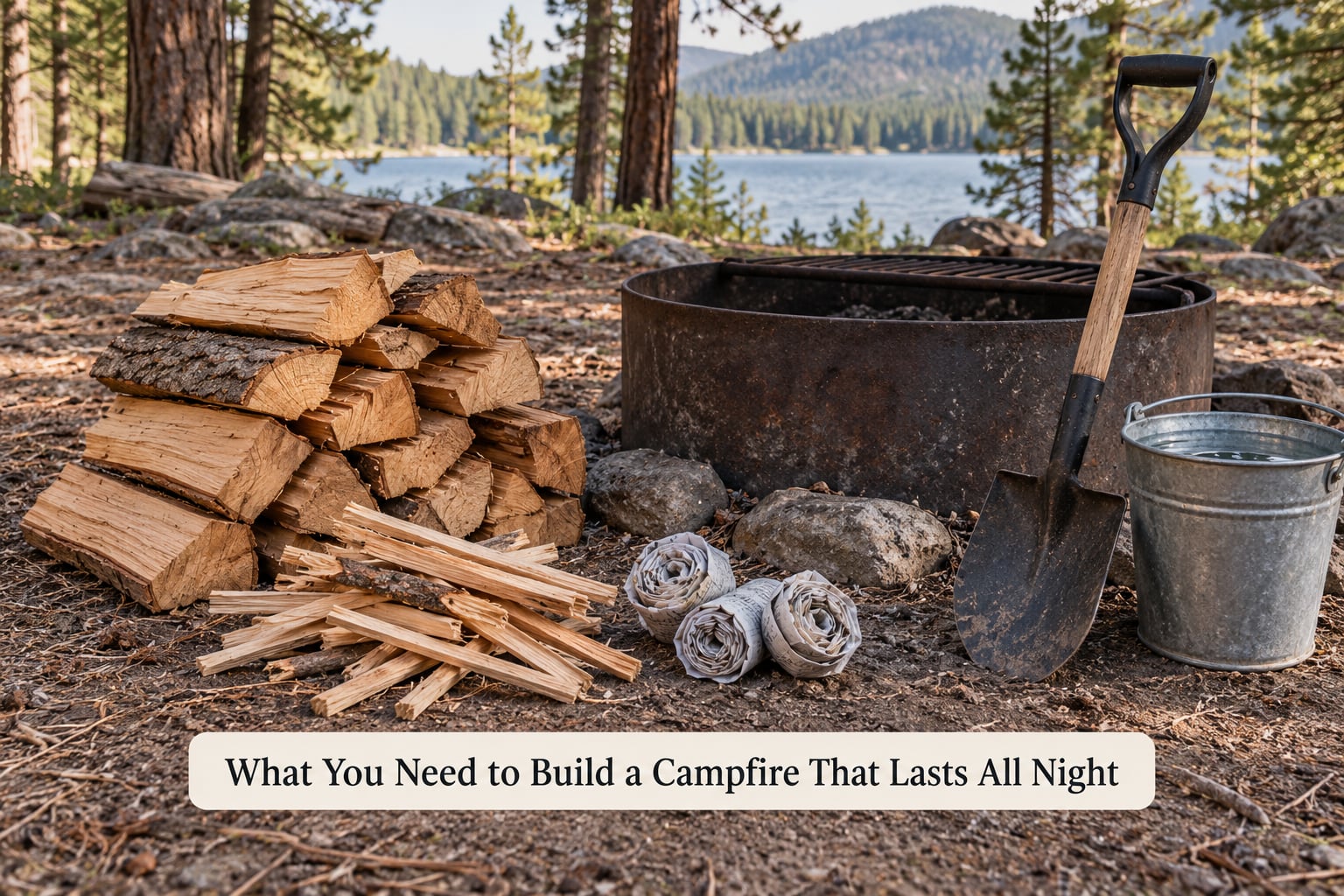
Fuel is the part people underestimate. A fire that runs eight hours in the backcountry burns real mass, roughly a full armload of split wood per person for the night, and that wood has to be dry.
Firewood. Aim for hardwood that splits easily and burns slow: oak, hickory, ash, maple or beech. Pine and other softwoods are fine for the first hour because they light fast, but they snap and spit and burn out fast, so use them only as starter fuel. Split wood beats whole rounds. A round log has too much surface area for the flame to hold on to and mostly smoulders.
Kindling. Collect a double handful more than you think you need, from pencil-thin twigs up to sticks about the thickness of your finger. Break them against your knee: if they snap with a clean crack, they are dry. If they bend or feel spongy, keep looking.
Tinder. Something that catches from a spark. Dry grass, pine needles, birch bark curls, wood shavings or dryer lint all work. Dryer lint surprises people, and it burns for a good two minutes once lit.
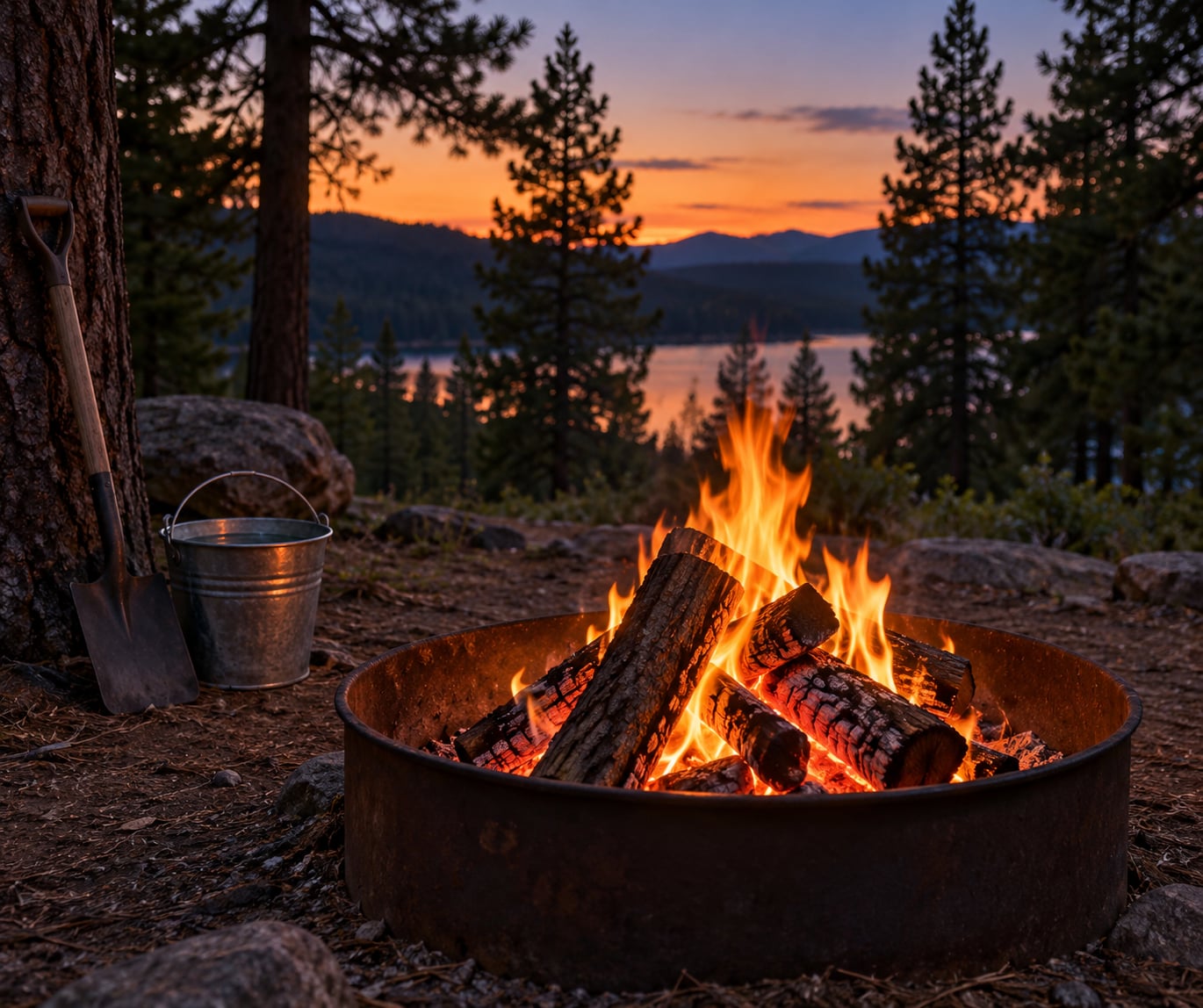
Tools and safety gear. A shovel or camp trowel, a bucket of water you can actually lift, matches or a lighter in a pocket you can reach in gloves, and gloves. Check your local fire restrictions before you gather anything. If there is a fire ban, none of the advice in this guide applies.
Step-by-Step: Build the Fire in Layers
Step 1: Choose a Safe Fire Location
Use an existing fire ring where one exists. If there is none, look for an open area with nothing overhead, at least 10 feet from tents, vehicles, dry grass, low branches and water. Avoid shaded ground, where damp wood and duff hide and hold heat long after you leave.
Before you strike a match, confirm the site is legal. Campground rules, state park pages and national forest notices all change with the season and the drought index.
Step 2: Prepare the Fire Ring and Airflow
Scrape out old ash, leaves and twigs until you hit bare dirt or sand. That old layer is full of buried embers, which is exactly how fires spread days later.
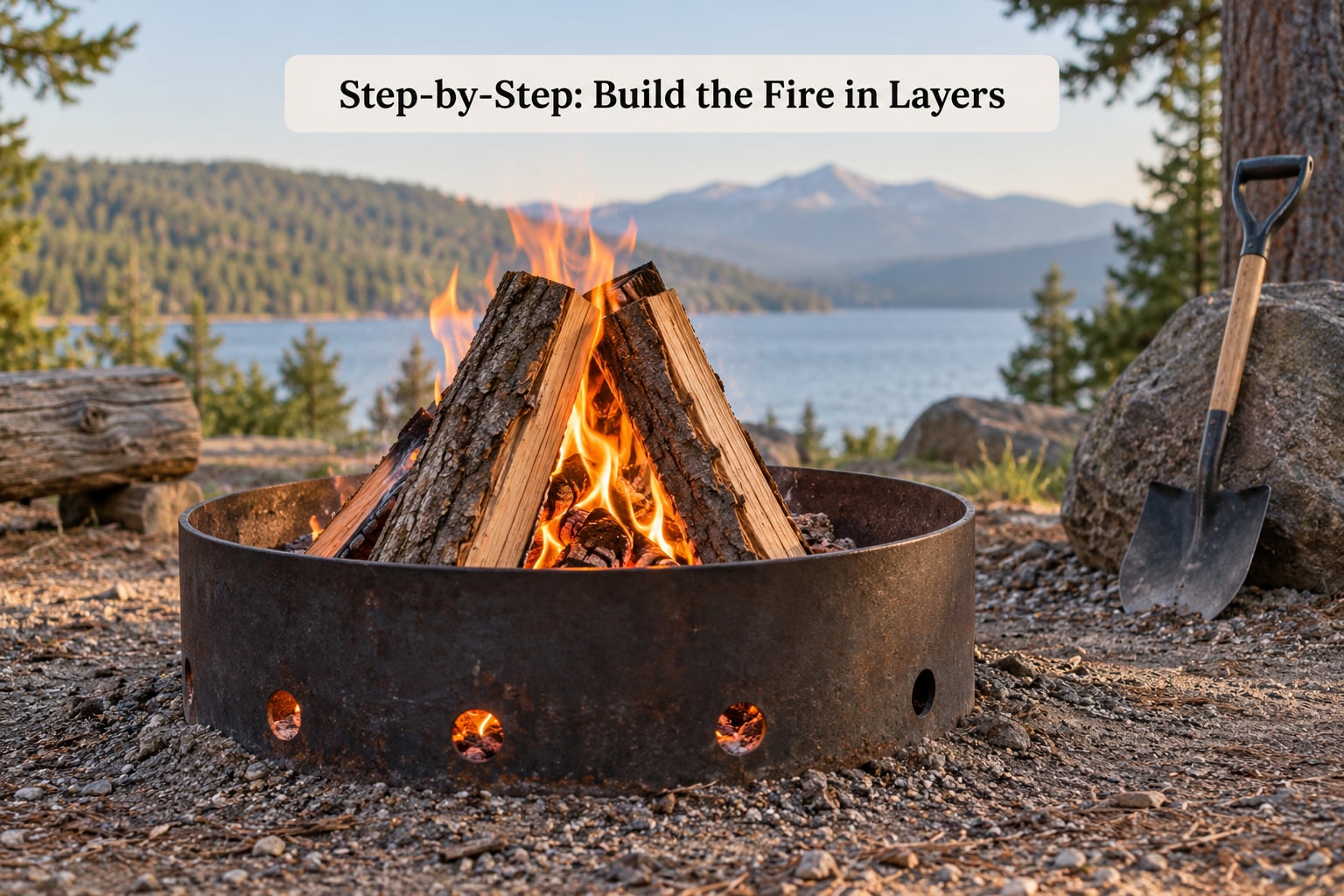
Leave a gap in the ground or between two small logs beneath the fire so air can reach the base from underneath. A fire needs oxygen at the bottom as much as the top, and a fire raised a couple of inches off the ground burns far longer than one sitting flat.
Step 3: Build a Layered Fire, Small to Large
Work in four layers, and never skip ahead.
- Tinder: a loose mound about the size of two fists in the centre.
- Fine kindling: pencil-thin twigs standing upright in the tinder, touching at the base.
- Finger-size kindling: a loose teepee over the finer stuff, leaning inward, with the top just off vertical so it leans into the flame.
- Larger fuel: two or three split logs resting on the outside of the teepee, not stacked over the top.
You know the structure is right when you can see daylight through it in three or four spots. A tight fire burns fast and dies. A loose one breathes.
Step 4: Light the Tinder and Kindling
Light from the side the wind is coming from, low to the ground, so the flame travels into the fuel rather than away from it. Touch the tinder first, then count slowly to twenty before you add anything at all.
Let the tinder build a small flame, let that flame catch the fine kindling, and let the fine kindling ignite the finger-size layer. You are watching for a full, dancing flame with no visible tinder left in it. Only then is it time for real fuel. Adding logs to a fire that has not fully caught is the single most common reason a campfire dies in ten minutes.
Step 5: Add Larger Fuel Gradually
Place split logs on the side of the fire, resting them against burning wood rather than dropping them across the top. That keeps the flame’s path clear and pushes hot gases through the wood instead of smothering them.
Feed the fire the way you would feed a charcoal grill: a log or two at a time, every 20 to 30 minutes early on. Resist the urge to build up a tall pyre. Heat you cannot reach radiates away into the night sky, and it takes your wood with it.
Step 6: Maintain a Campfire That Burns All Night
A well-built overnight fire needs far less attention than most people give it. The fire itself should do the work once you stop feeding it aggressively.
Around 30 to 45 minutes before bed, bank the coals. Let the flames burn down to the point that only glowing embers remain, rake the whole bed into one mound in the centre of the ring, then cover it loosely with the fine ash you scraped out earlier. Ash is insulation: it slows oxygen down so the coals hold heat instead of burning through it. Leave the mound open enough that a flat log laid on it will hold a flame in the morning.
Add a reflector behind the fire if you want more heat without more wood. A stack of stones or two upright logs on the back side bounces radiant heat toward your tent. Leave a gap at the bottom so it does not smother the coals.
Watch for signs the fire needs help. Flames leaning hard to one side mean wind; turn the logs so the burning side faces into it, or add a windbreak upwind. Heavy white smoke means too much unburned wood or too little air, so thin the pile or let it breathe. Yellow, lazy flames mean a starved fire, so feed it a single split log rather than a small pile.
Step 7: Put the Fire Out Completely
Banking is not extinguishing. A banked fire you leave behind is the cause behind most campfire-related injuries and nearly every campground burn of the surrounding brush.
Use the drown, stir, drown method. Pour water over the coals until everything hisses and steams. Stir the ashes so buried embers surface. Pour again until the hissing stops. Then test it: hold the back of your bare hand a few inches above the ashes without touching. If you feel anything warmer than the air around it, add more water and repeat. Finally, stir the ashes with your shoe and check that the whole ring is cold to the touch. Do it again after five minutes. Walking away from a cold ring is the only acceptable way to leave a campfire.
Common Mistakes: Why Campfires Die Early
Stacking fuel on top. A log laid across the fire cuts off oxygen and the flame dies underneath it. Lay fuel on the side instead.
Building too tight. If you cannot see through the structure, the fire cannot breathe. Loosen it up before you light.
Adding logs too early. If the flame is small and you have clear daylight to the ground beneath it, the fire is not ready. More fuel at that stage just smothers it.
Using round wood. Whole logs smoulder and produce heat you cannot feel. Split them, or you will burn twice the wood for the same warmth.
Using wet or green wood. It smokes, spits and hisses as water boils off, and it gives off very little heat. Seasoned wood snaps in your hand. If everything you have is damp, burn it anyway, then bank the fire and expect less heat.
Feeding too fast. Dumping several logs on at once chokes the flame, and loose ends throw sparks. One log at a time, upwind of you.
Ignition in high wind. Shelter the base of the fire with a windbreak or a split log set on edge, then light it low on the windward side. If wind is strong enough to make flames run sideways, wait.
Leaving a dead fire unbanked. If you expect to wake to no fire, spread the coals out and cover them well with ash rather than leaving a thin bed exposed. Keep the ring in sight or check on it before you turn in.
No water on hand. A shovel moves ash but does not put out embers. Keep water filled and within arm’s reach of the fire, not in the tent.
Frequently Asked Questions
How long should a campfire burn overnight?
Most well-built campfires hold steady heat for six to eight hours after you stop feeding them, which covers a normal night. The deciding factors are dryness and size of the wood, how loose the structure is, and whether you banked the coals before bed. Wood that still snaps cleanly burns far longer than anything green or damp, and a fire with air gaps underneath keeps itself going without attention. Bank it at bedtime and it should be ready for a morning restart.
What is the best firewood for a campfire that lasts all night?
Dense hardwood that splits cleanly and burns slow: oak, hickory, ash, maple and beech all work well. Split wood beats whole rounds because more surface area means a steadier flame. Softwoods like pine light fast and are good for the first hour, but they run out sooner and throw more sparks, so use them to start and hardwood to last. Whatever you choose should be dry enough to snap in your hand.
Should I cover a campfire while it is burning?
Do not cover a burning fire with anything, and never leave a lid or tarp on a hot ring. Banking is different: once the flames have burned down to embers, you rake the coals into one mound and cover them loosely with fine ash from the same ring. Ash limits the oxygen reaching the coals, which keeps them hot for hours and leaves you an easy restart in the morning. Covering live flames smothers them and can trap dangerous heat.
How much wood do I need to keep a campfire burning overnight?
Plan on roughly an armload of split firewood per person for a night of moderate warmth, plus an extra handful or two in case the fire burns hotter than expected. Gather more than you think you need rather than less, because walking out to find a woodpile in the dark at midnight ruins the night. Sort it before you build: the driest and smallest pieces at the bottom of the stack, the thickest hardwoods for last.
Can I build a campfire in the rain or strong wind?
Rain is manageable if your tinder and kindling stay dry. Keep them in a bag or under a tarp until the moment you light, and shelter the fire with an angled split log so the rain bounces off. Strong wind is a different matter: it will strip heat and throw sparks, so build a windbreak on the upwind side and light the fire low and sheltered. If gusts are strong enough to blow flame sideways, wait for calmer conditions.
How do I know when my campfire is completely out?
Use the hand test. Hold the back of your bare hand a few inches above the ashes and coals without touching them. If you feel no heat at all, the fire is out. Stir the ashes with a stick or your shoe to surface buried embers, check again, and be prepared to add water and repeat. Cold to the hand and cold to the touch with no smoke means it is safe to leave. When in doubt, douse it again.
Conclusion
Start with the site, not the wood. Clear the ring down to dirt, leave air underneath, and check that fires are legal where you are. Then build from tinder to pencil twigs to finger sticks to split logs, lighting each layer only after the one below it has fully caught.
Once it is burning, feed it slowly, add a reflector behind it for warmth, and bank the coals under ash thirty minutes before you turn in. In the morning, restart from the banked bed and enjoy having coffee without rebuilding anything.
And when the last log is gone, drown it, stir it, drown it again, and check for heat with your hand. That last habit is the one that keeps you, and the next campground, safe.