How to store food while camping in bear country comes down to one rule: keep all food, trash, and scented items in certified bear-resistant containers or metal storage lockers, placed at least 100 feet away from your sleeping area. That single rule solves most bear problems, and it takes about fifteen minutes to set up properly once you know which storage method your campsite allows.
Bears find camps by smell, not sight, and a bear that learns your site pays in calories becomes a problem bear that usually has to be euthanized. In 2026, Yosemite still records roughly a hundred bear incidents in a typical year, and most of them trace back to food a visitor left accessible.
This guide covers car campers, overlanders, paddlers, and backpackers. If you have never stored food in bear habitat, start with the rules for your specific site, because a technique that is fine in one canyon can be a ticket in the next.
Table of Contents
- What You Need
- How to Store Food While Camping in Bear Country: Step-by-Step
- How to store food while camping in bear country
- How to Keep Bears Away From Your Campsite
- Common Mistakes
- Frequently Asked Questions
- What is the 200 rule for camping?
- Where should I place a bear canister at camp?
- Are bear canisters better than bear bags?
- Can I store food in my car in bear country?
- Do I need a bear canister for freeze-dried food?
- What do I do if my campsite has no bear box or canister?
- Conclusion
What You Need
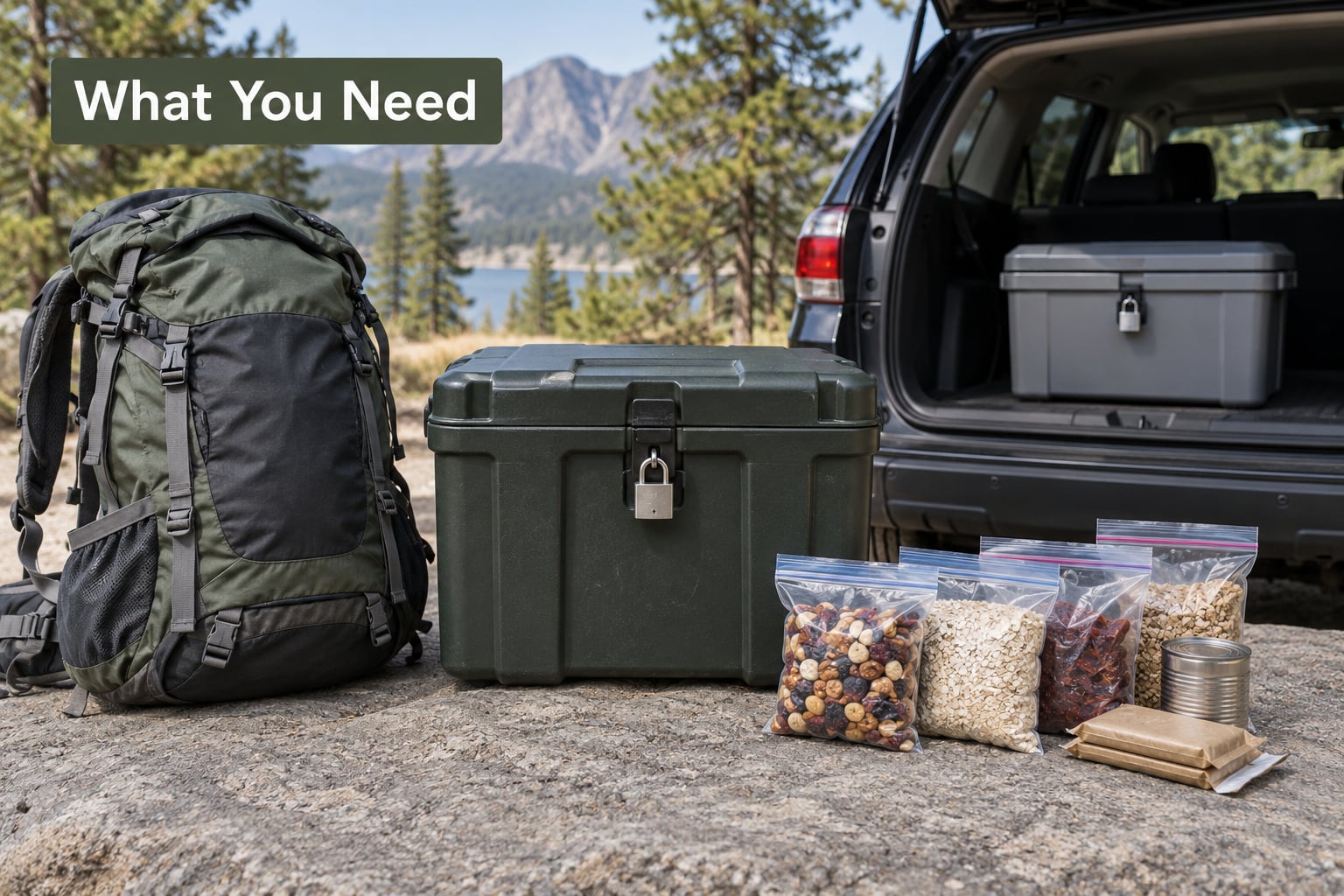
Before you load the car, confirm what the land manager requires. Storage rules are set per park, forest and wilderness area, and they often change with the season. The Adirondack High Peaks, for example, require certified storage from April 1 through November 30, and the dates are different everywhere else.
Read the specific regulation for every stop on your route, not just the main destination. A trip through three states can cross three different agencies with three different storage rules.
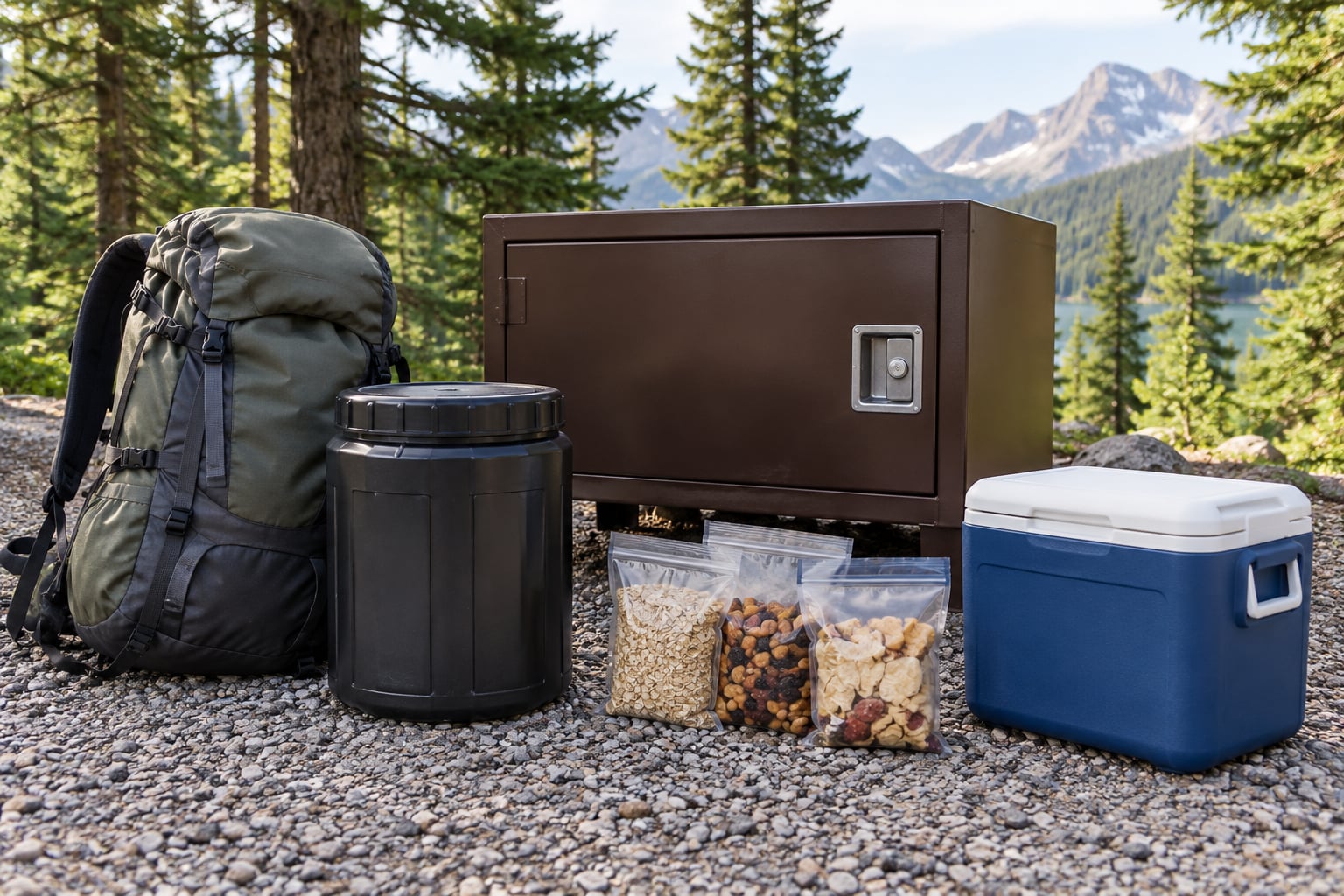
- An approved storage device. A certified bear-resistant canister, a metal bear locker at the site, or a bear pole and cable. Certification comes from the Interagency Grizzly Bear Committee, which tests containers against years of field data from real bears.
- A vehicle solution, where rules allow it. A hard-sided truck or SUV with windows up and doors locked works in many frontcountry settings. Soft-sided tents, pop-ups, and rooftop tents do not.
- A food-hanging kit if hanging is legal where you are going: 50 feet or more of cord, two stuff sacks, and a tree worth inspecting first.
- Opaque bags or bins for double-bagging food and scented items before they go into any container.
- Bagged trash and a pack-it-out plan. Nothing scented stays at camp, including the coffee grounds and the fish cleanup water.
- Cleaning supplies and a bucket, plus a latching cooler if you need cold food for more than a day.
- Bear spray on your belt, not in the pack. Storage rules exist so you never have to use it.
How to Store Food While Camping in Bear Country: Step-by-Step
Work through this in order. Planning first, storage second, cooking third, cleanup last, because the order is what makes the routine hold up on day four when you are tired.
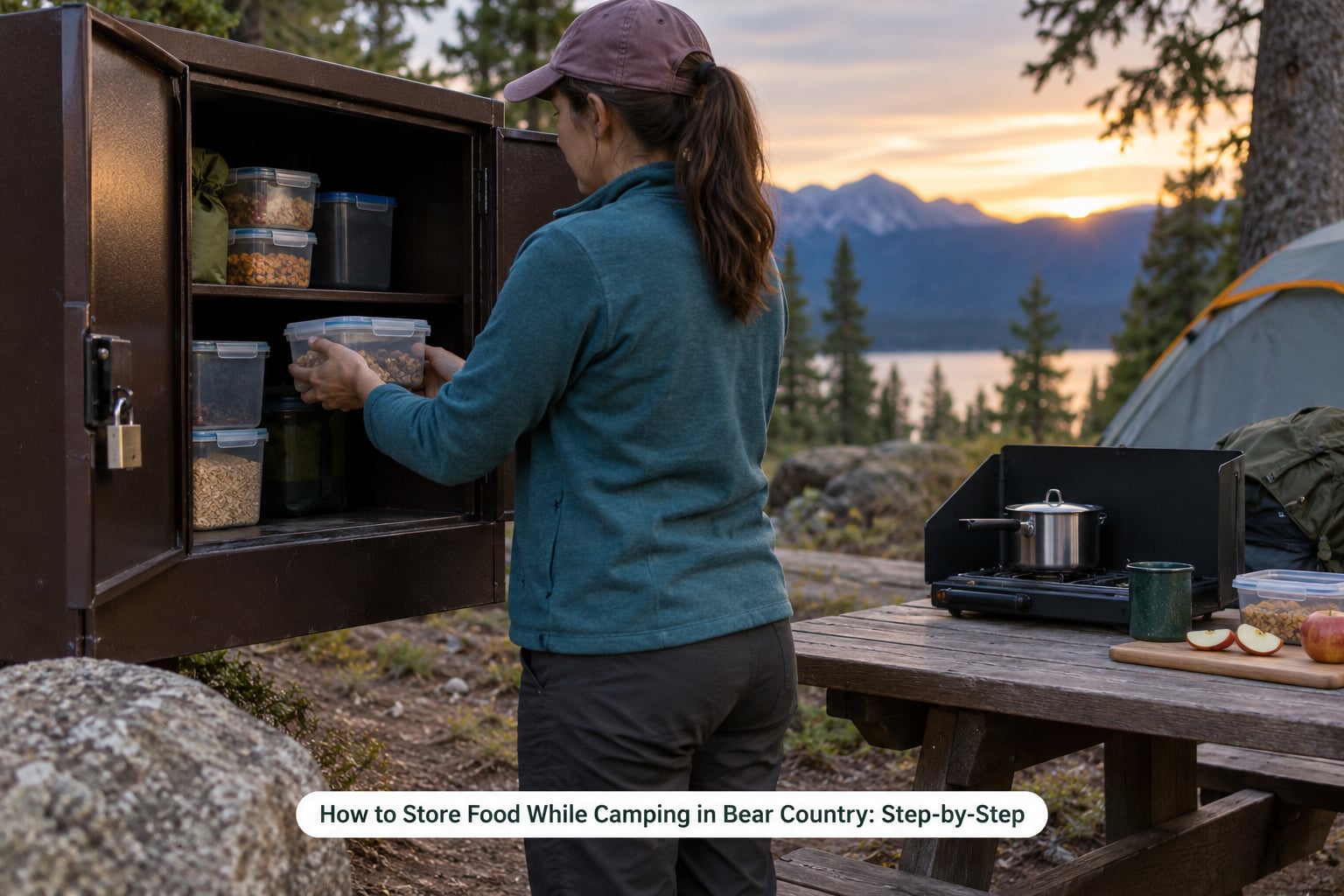
How to store food while camping in bear country
Pick the method your site requires, then confirm it works for the whole trip rather than just the first night.
- Check the current rule for each area. Read the park or forest page for the season you are traveling. If a site provides a metal locker, use it, even if you own a canister.
- Choose one storage method per night. Do not split food between a canister and a hanging bag. Every extra access point is another chance to leave something out.
- Place the store at the correct distance. Set canisters, lockers, and hanging sites at least 100 feet from where you sleep. Some agencies use a 200-foot rule that covers both your cooking area and your storage. Check which one applies to you.
- Store everything that carries a scent, not just dinner. Coolers, trash bags, toiletries, pet food and bowls, cookware, and the clothes you cooked in all go in with the food.
- Freeze-dried food counts. It carries enough scent to be worth investigating, and agencies treat it the same as any other food. So do condiments, candy, and dried fruit.
- Latch it and test it. Twist until the canister locks, then pull the lid. A bear does not need to defeat a latch; it needs to find a gap you left open.
How to Keep Bears Away From Your Campsite
Storage alone is not enough. The rest of your camp has to stop advertising as well, and that comes down to a few habits most campers can follow in an afternoon.
Build the campsite triangle. Keep sleeping, cooking, and storage in three separate zones, as far apart as the terrain allows. Ideally the cooking area sits downwind of your tent and closer to the road than the sleeping area is.
Cook fast and clean fast. A camp stove leaves less scent behind than a fire, and clearing the table the same night you use it removes the evidence. Scrub cookware with cold water and a little soap away from camp, then pack the wash water out with your trash.
Do everything before dark. Bears move most easily at dusk and overnight. Cooking at dusk because it feels cozy is the single most common mistake I see, and agencies increasingly prohibit it outright.
Never store scented items in the tent, even sealed. A tent is not a storage device. Bears open tents without hesitation, and a zipper is not a lock.
Handle the day-hike case. If you leave camp for a hike, everything goes back in the locker or canister, including your pack snacks. Coming back to a torn pack is a common car-camping story.
Keep the cold chain inside the secure store. A cooler at 40°F or below keeps food safe, and a sealed cooler inside the store adds a second barrier. Pre-chill it, use block ice, and open it as briefly as possible. For cooking safety, poultry reaches 165°F, ground meat 160°F, and whole cuts and fish 145°F.
Have a response plan anyway. If a bear does approach, do not run and do not climb a tree. Make yourself known calmly, back away slowly, and use bear spray if the bear closes the distance. Deploy it at about 30 to 60 feet with a short burst aimed slightly downward to create a cloud between you and the bear.
Common Mistakes
Most bear incidents trace to a handful of repeating errors. Each has a straightforward fix.
Treating a hanging bag as automatic protection. Hanging is only legal and only effective when done right: two bags, a proper counterbalance, and at least 10 feet up and 10 feet out from the trunk. Bears have learned to climb thin limbs and cut cord, and many trail and backcountry areas now ban hanging outright.
Leaving food in the tent. People do this to stay close to it at night. Store it 100 feet away instead and accept the extra walk.
Assuming a soft-sided vehicle is a safe store. Tents, pop-ups, and rooftop tents are destroyed in minutes once a bear finds a scent. Hard-sided vehicles with the windows up are the only vehicle option most rules accept.
Leaving scented toiletries and pet food out. Toothpaste, soap, deodorant, and pet bowls all attract bears and belong in the store with everything else.
Cooking after dusk. The smell carries, the light carries, and the bears are most active. Finish cooking early and keep the fire ring cold.
Not inspecting the storage device. Check the latch, the seal, and the door before you settle in for the night. BearVault-style lids can freeze shut in cold weather, so learn how yours opens in a freeze.
Assuming bear-resistant means critter-proof. A certified canister stops bears. It does not stop mice, and it rarely stops a determined raccoon. In practice raccoons are the nightly thief at more campgrounds than bears ever are.
Believing bear bells work. There is no good evidence that bells reduce encounters. Bears habituate to noise quickly, and many land managers no longer recommend them.
Frequently Asked Questions
What is the 200 rule for camping?
The 200 rule means keeping your cooking area and your food storage at least 200 feet from where you sleep, rather than the 100 feet used in many other places. Some parks and wilderness areas use the 200-foot figure for the whole camp setup, so read the regulation for your specific site rather than assuming one number fits everywhere.
Where should I place a bear canister at camp?
Place it at least 100 feet from your tent, ideally downwind and out of sight, and keep it in the same spot all trip so it never becomes something you forget about. Some agencies require 200 feet for both cooking and storage. Do not leave it beside the vehicle or on a rock you cannot see in the dark.
Are bear canisters better than bear bags?
For trips where both are legal, yes. A certified canister needs no trees, no good hanging spot, and no nightly re-hang, and it works in wind and rain where a hung bag is a gamble. A bear bag and cord weigh almost nothing and cost far less, but hanging is now banned in many backcountry areas and depends on finding a solid tree.
Can I store food in my car in bear country?
Only a hard-sided vehicle, with windows up and doors locked, and only where the rules permit it. Many high-activity areas prohibit vehicle storage entirely and require a locker or canister. Soft-sided tents, pop-ups, and rooftop tents are never acceptable, and a cooler left visible through a window is an advertisement.
Do I need a bear canister for freeze-dried food?
Yes, agencies treat freeze-dried meals like any other food, and the scent is enough to draw a bear. The same goes for condiments, trail mix, candy, and dried fruit. If a canister will not hold the whole load, plan meals around its usable volume before you leave rather than overfilling it and leaving food behind.
What do I do if my campsite has no bear box or canister?
Check with the camp host or ranger first, because many sites lend canisters or have a locker you did not notice. If nothing is available, store all food and scented items in a locked hard-sided vehicle, or hang them at least 10 feet up and 10 feet out where that is legal. Avoid a fabric bag on a weak limb, and never keep food in the tent overnight.
Conclusion
Start by checking the current food-storage rule for every area on your route, because that single answer decides your method. Then use one approved bear-resistant container or metal locker for all food, trash, and scented items, keep it at least 100 feet from your sleeping area, and treat the rest of the camp as part of the same system: cook early, clean the same night, and pack out everything you brought in.