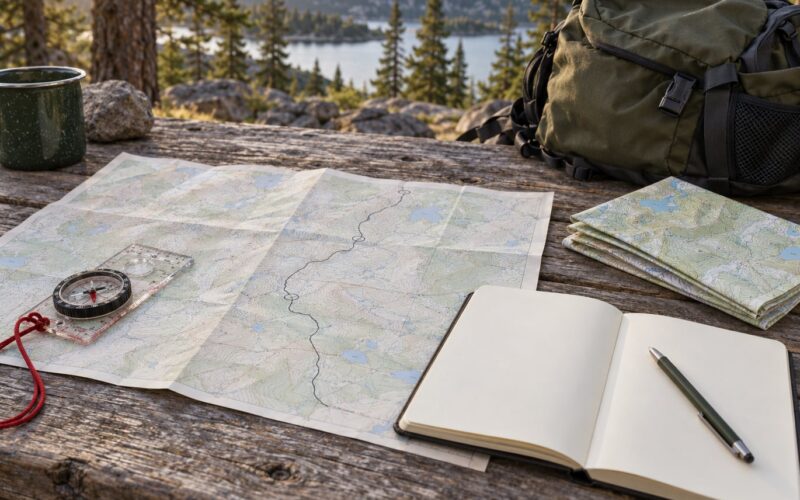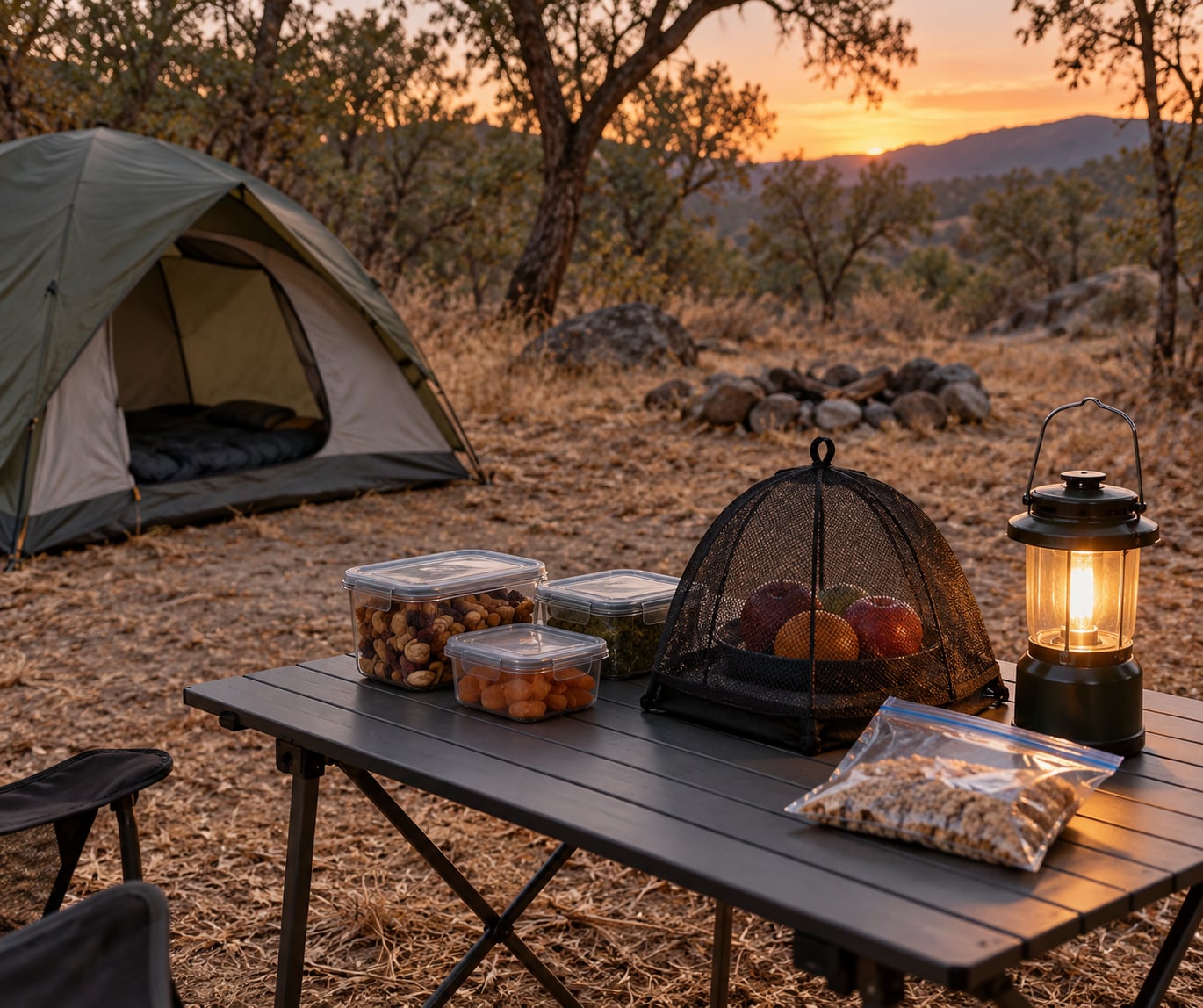
Learning how to keep bugs away while camping comes down to four layers working together: pick a dry site away from standing water, seal food and scented items, close your shelter against entry, and protect your skin with a repellent used exactly as its label directs. No single trick handles every pest, so the layered approach is what actually works. It takes about 30 minutes of setup to get a site right, and the rest is habits that repeat all trip.
The part most campers miss is that insect problems rarely come from one bad decision. A tent near a seep, a forgotten sandwich wrapper, and an open zipper add up to a night of misery even when each one alone would have been survivable.
Here is the sequence I use, in the order that matters.
Table of Contents
- What You Need
- How to Keep Bugs Away While Camping, Step by Step
- Step 1: Choose a well-drained campsite away from insect-friendly areas
- Step 2: Create a physical barrier around your shelter and sleeping area
- Step 3: Store food, trash, and scented items securely
- Step 4: Use repellents and protective clothing as directed
- Step 5: Use light and personal checks to reduce unwanted encounters
- Step 6: Clean the site and prevent problems on the next day
- Common Mistakes
- Leaving food or trash accessible
- Using insect repellent or permethrin incorrectly
- Relying on lanterns to solve a bug problem
- Ignoring the local environment
- Frequently Asked Questions
- What smell do mosquitoes hate the most?
- What is the 200 rule for camping?
- Can I sleep outside without a tent?
- How to keep flies away from a campsite?
- Do natural remedies like citronella candles actually work?
- How often should I do a tick check while camping?
- Conclusion
What You Need
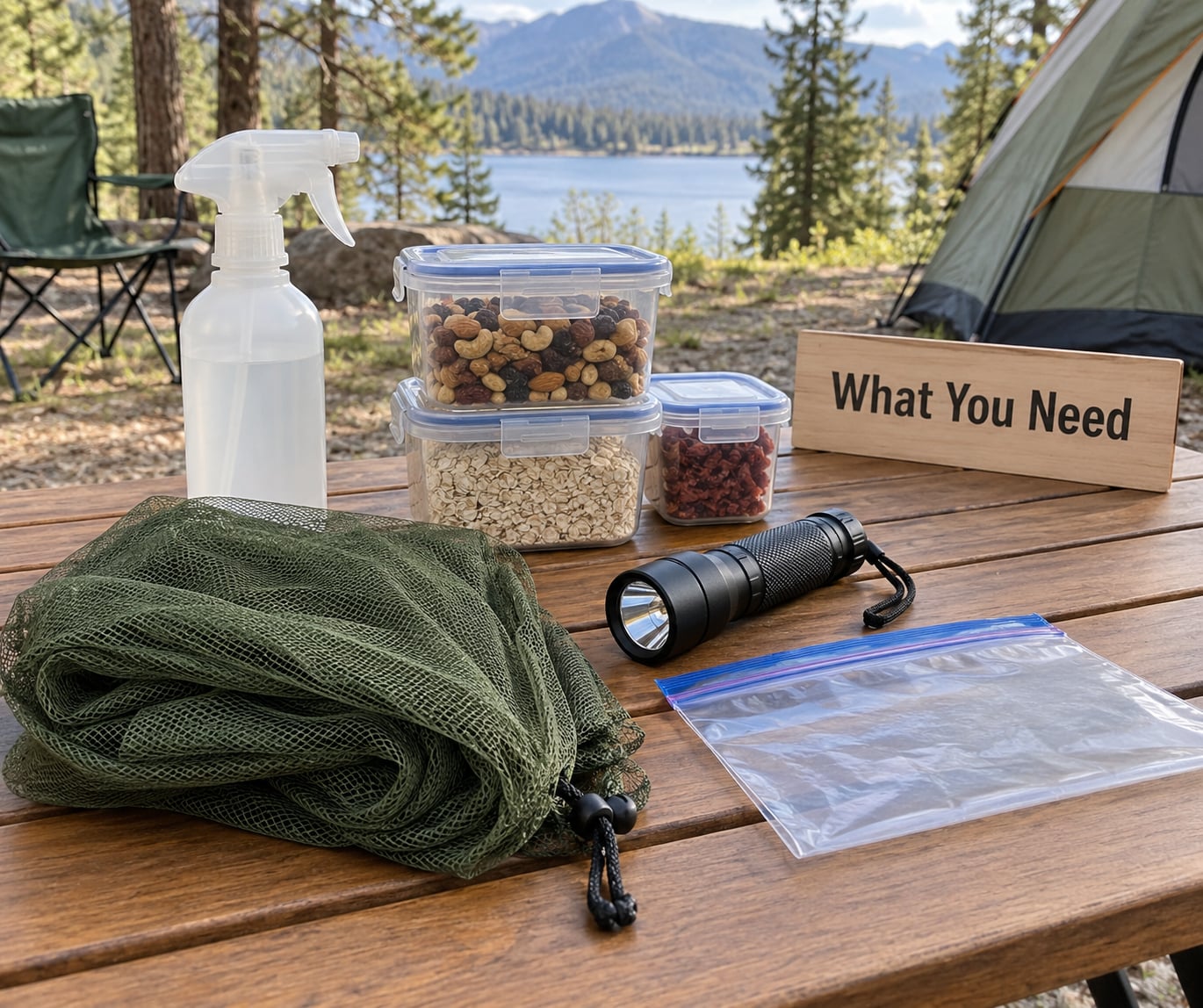
You do not need a long shopping list. You need one item from each of these categories, and the category matters more than the brand.
- Repellent labeled for the exposure. Pick an EPA-registered product whose label covers the insects you expect, and read the concentration and reapplication instructions before the trip.
- Permethrin-treated clothing and gear, where appropriate. This goes on fabric, never on skin, and it is a contact treatment rather than something you spray on yourself.
- A fine-mesh shelter or separate bug netting. For no-see-ums and gnats, fine mesh matters more than tent brand.
- Food containers that close properly. Hard-sided containers with working lids beat soft bags every time.
- A flashlight or lantern with a warm or red mode. Useful for campsite checks without flooding the area with white light.
- A zip-top trash bag. For carrying rubbish out rather than leaving it near camp.
- Basic first-aid supplies. Tweezers with fine tips, antihistamine, and any medication you normally carry.
Add a head net if you sleep in a hammock or an open shelter, and a small fan if bugs are heavy where you cook.
How to Keep Bugs Away While Camping, Step by Step
The six steps below run in order because each one makes the next one easier. Preventing insect access beats trying to remove insects after they have already found you.
Step 1: Choose a well-drained campsite away from insect-friendly areas
Walk the site before you unload anything. Look for standing water, seeps, rotting vegetation, animal trails, nearby nests, and dense low growth, then move to level, dry ground with moving air.
Still water is the big one. Mosquitoes breed in remarkably small amounts of stagnant water, while black flies prefer moving water such as streams and creeks, so a site can be dry and still sit in bad black fly country.
Set up before dusk. Arriving in daylight gives you time to notice the ground is damp, that a tree drips onto the tent, or that the site sits right under a light pole that pulls more insects than the campfire does.
Check campground rules and current wildlife advisories before you commit to a spot. Some areas have specific storage or fire requirements, and those take priority over any generic tip in this guide.
Step 2: Create a physical barrier around your shelter and sleeping area
Keep tent doors and zippers closed. If you want a screen door open, only do it when the mesh is complete and intact, because a screen with a torn panel is an open door with extra steps.
Inspect mesh, seams, and zippers at home rather than in the dark at camp. A flashlight held behind the fabric in daylight makes pinholes obvious.
Sleeping without a tent needs the same principle, applied differently. A head net or a small canopy net over a hammock does most of the work, paired with a treated sleeping bag and a ground sheet you already treated before departure.
Netting does not work if it has tears or gaps, so patch anything you find and re-check after a windy night.
Step 3: Store food, trash, and scented items securely
Use hard containers with lids that actually shut, and keep them closed whether or not insects are around. Wipe surfaces, wash dishes promptly, and take scraps to a proper disposal point rather than scattering them around camp.
Damp towels and scented personal products pull the same crowd as food does. Hang laundry to dry away from the sleeping area, and store toiletries according to their labels.
This is worth separating clearly from wildlife rules. Food storage that protects you from insects and food storage that protects you from bears are different requirements, and campground instructions tell you which one applies where you are camping.
Step 4: Use repellents and protective clothing as directed
Follow the label on the product you bought. That means checking the active ingredient, the concentration, where it may be applied, how often it may be reapplied, and the age restrictions on the packaging.
Read labels for the sunscreen order too. When a label calls for it, put sunscreen on first and repellent on top, so the repellent is not blocked or diluted.
Wash exposed skin with soap and water when you stop using repellent, and wash repellent-treated clothing separately, since the residue can damage fabrics that were not treated.
Permethrin belongs on clothing, gear, and shelter fabric according to its own instructions, and never on skin or on food-contact surfaces. Treat gear before the trip, let it dry as the label directs, and pack a spare treated shirt.
Step 5: Use light and personal checks to reduce unwanted encounters
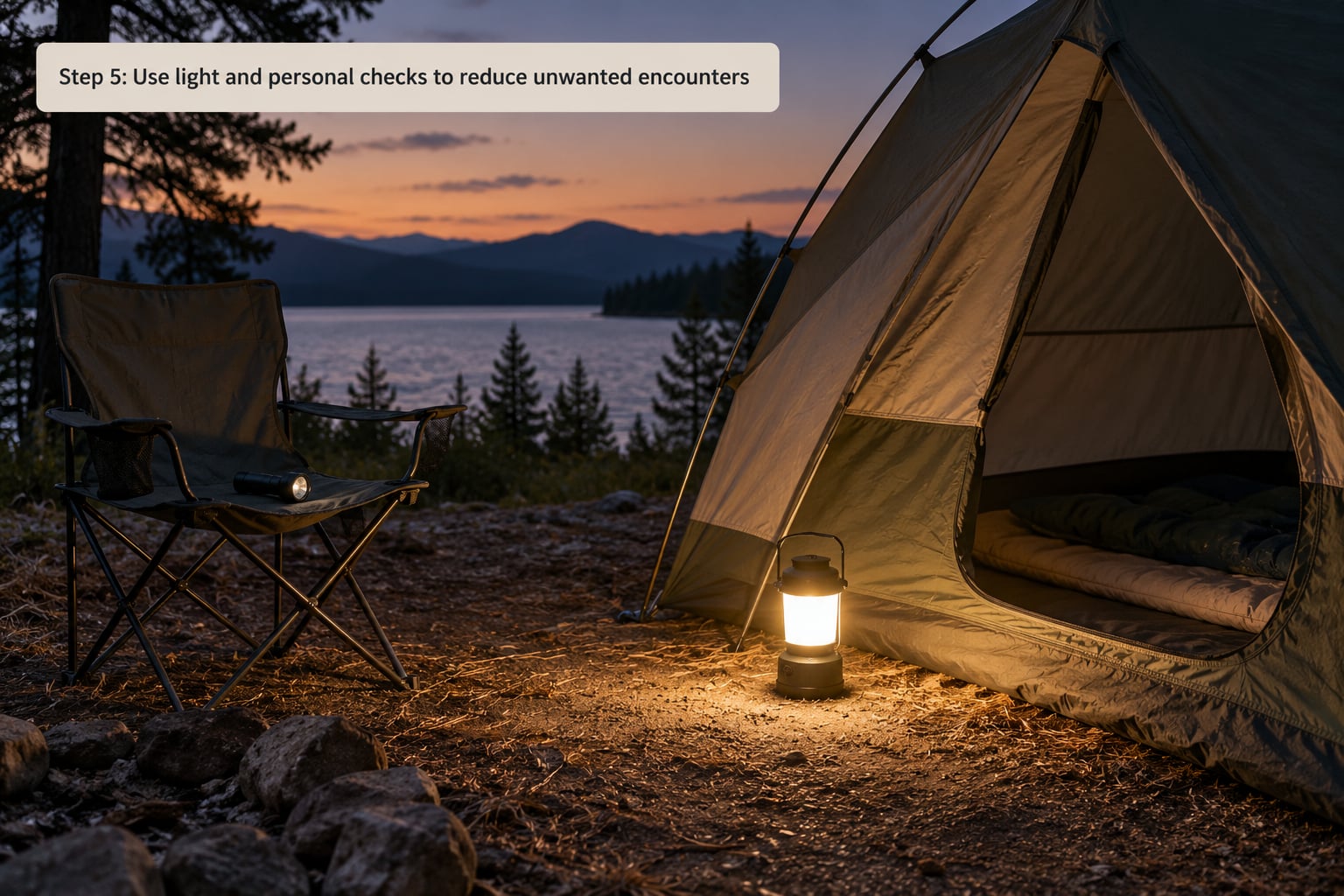
A bright light does not solve a bug problem, but it changes how you inspect the site. Point a warm-colored or red light toward the ground when you check around camp, and keep it steady instead of waving it around, because moving light attracts more attention than still light.
Brush insects off your clothing before you step into the tent, and check your pants cuffs, socks, and collar every time you get up. That one habit prevents most of the interior invasions I have seen.
Do the same with bedding before you get into the bag, and run your hands over sleeping bags and dry gear before packing them away at night.
Stay calm during an encounter. Swatting hard, crushing, or trying to move or handle an unfamiliar insect usually makes things worse and can leave you stung or bitten in the process.
Step 6: Clean the site and prevent problems on the next day
Collect rubbish, rinse or scrub the cooking area as the site rules allow, inspect bags and boots for hitchhikers, and dry damp gear out of direct sun. Rinsing cooking surfaces matters because the residue smell is what draws wasps and flies back to the same table.
After rain, repeat the shelter and food storage checks. Wind gusts open zippers, and damp ground pushes insects toward higher, drier surfaces, including your dry gear in a pile.
Breaking camp down completely is part of the plan. If the site is clean and packed out, next year’s campers inherit a better spot and you avoid the reputation of a campground that turns into a trash heap by July.
Common Mistakes
Leaving food or trash accessible
Open packages, pet food, scented toiletries, and damp towels are the usual attractants at a campsite. Fix it with secure containers, prompt cleanup, and disposal that follows the site rules rather than a pile beside the fire ring.
A single unattended can of tuna at dusk can reorganize your entire evening, and wasps are the reason most campers meet the problem halfway.
Using insect repellent or permethrin incorrectly
Every product must be used exactly as its label directs, which is not a formality. Skin repellents, clothing treatments, space sprays, and contact insecticides are different categories with different rules about where they go and how often you apply them.
Treating a sleeping bag or a tent and then assuming it works in the rain is the most common permethrin error, because the treatment is generally not waterproof and can need reapplying after soaking or heavy sweat.
Relying on lanterns to solve a bug problem
Lights may shift where insects gather, but they do not keep all of them away and they can pull more insects toward your table. Treat light management as one part of a broader plan that also includes physical barriers, food storage, clothing, and labeled repellents.
A fan pointed across the cooking and eating area is often more useful than a brighter lantern, since a lot of flying insects are poor fliers.
Ignoring the local environment
Campground rules, wildlife advisories, and seasonal conditions decide how you should store food, where you can build a fire, and which approaches are restricted. In some areas certain products are discouraged outright.
Regional pressure changes the plan too. Tick-heavy and Lyme-endemic areas call for daily tick checks, coastal and northern areas with heavy mosquito pressure call for a head net and area repellers, and desert camps trade mosquito problems for scorpions and ants.
Frequently Asked Questions
What smell do mosquitoes hate the most?
Among repellent ingredients, oil of lemon eucalyptus, which contains PMD, has the strongest public health guidance behind it. Citronella, lavender, peppermint, and tea tree oils are widely used, but evidence for them is thinner and their protection is usually shorter. Smells like smoke or burning sage disrupt how insects orient, which is different from repelling them outright.
What is the 200 rule for camping?
The 200 rule is about food and scented-item storage in bear country, not an insect rule. It means storing those items at least 100 feet from your tent and from where you camp, in a bear-resistant container or on a pole. For insects, the distance that matters is from standing water, not from your tent.
Can I sleep outside without a tent?
Yes, but you lose the mesh barrier, so compensate in layers: 1) treat the sleeping bag, ground sheet, and pad before the trip; 2) add a head net or small canopy net; 3) apply skin repellent before lying down; 4) pick a breezy spot away from water; 5) run an area repeller nearby; 6) do a tick check before you close the bag.
How to keep flies away from a campsite?
Cover and seal all food, wash dishes immediately, store trash away from camp, and dispose of rubbish far from the site per local rules. Wasps and yellowjackets follow food scent, so traps work when placed well away from where people eat. Biting flies target you rather than your food, so they need repellent and light-colored long sleeves instead.
Do natural remedies like citronella candles actually work?
Partly, and they are easy to oversell. Candles and lanterns create a small scent bubble, so they help most when you are seated close to one and not much at all when you are walking a trail. Most natural methods also fade quickly, which is why people report they seem unreliable after the first evening.
How often should I do a tick check while camping?
Check yourself and your partner at least twice a day, including after every hike and before bed, focusing on ankles, waistband, behind the knees, groin, armpits, scalp, and behind the ears. Use fine-tipped tweezers to grasp the tick close to the skin and pull steadily upward, then clean the area. Save the tick for identification and contact a clinician if you develop symptoms.
Conclusion
The order of priority is short: choose a dry, breezy site away from standing water, keep food and scented items sealed, keep the shelter closed, use repellent and gear treatment exactly as labeled, check yourself and your clothing before settling in, and leave nothing behind when you pack out.
If you only do three things before leaving home, treat your clothing and gear ahead of time and let it dry fully, bring a repellent you have already used once so you know how it behaves, and pack enough containers to keep every scrap off the ground. Those three cover most of what a bad bug night is made of, and understanding how to keep bugs away while camping becomes mostly a matter of sticking to the routine.