How to hike safely in hot weather comes down to four things: start early, carry more water than you think, cover your skin, and turn around the moment something feels off. Most heat emergencies on trail are not dramatic collapses. They start as a headache someone decides to ignore at mile four.
The physics behind it is simple. Your body sheds heat by sweating and letting that sweat evaporate, and in high heat or humidity that system gets overwhelmed. Core temperature climbs, and if it climbs far enough, organs start to suffer.
Most hikers underestimate water needs more than anything else. This guide walks through the gear, the timing, the pacing and the warning signs, in the order you would actually use them.
Table of Contents
- What You Need to Hike Safely in Hot Weather
- Water and a way to carry it
- Electrolyte source
- Sun protection
- Navigation you can see without a phone
- Emergency kit and a way to call for help
- Weather information before you leave
- Something for cooling yourself down
- Food and a backup plan
- Step-by-Step: How to Hike Safely in Hot Weather
- 1. Check the forecast and choose a cooler time to start
- 2. Tell someone your route and expected return time
- 3. Plan your water and know exactly where you can refill
- 4. Dress for heat and protect your skin
- 5. Start slowly and use a sustainable pace
- 6. Know the warning signs and change the plan when needed
- Common Mistakes That Increase Heat Risk
- Hiking at midday in July
- Underestimating water
- Drinking only plain water
- Wearing cotton or going shirtless
- Treating caffeine as hydration
- Ignoring early symptoms
- Forgetting that altitude compounds heat
- Leaving pets out of the plan
- Depending on a phone with no backup
- Assuming the forecast is what you will get
- Frequently Asked Questions
- What temperature is too hot to hike?
- Is it safe to hike in 90 degree heat?
- How much water should I drink per hour when hiking in the heat?
- What are the first warning signs of heat stroke?
- What clothing is best for a hot-weather hike?
- Why do hikers eat gummy bears on hot hikes?
- Conclusion
What You Need to Hike Safely in Hot Weather
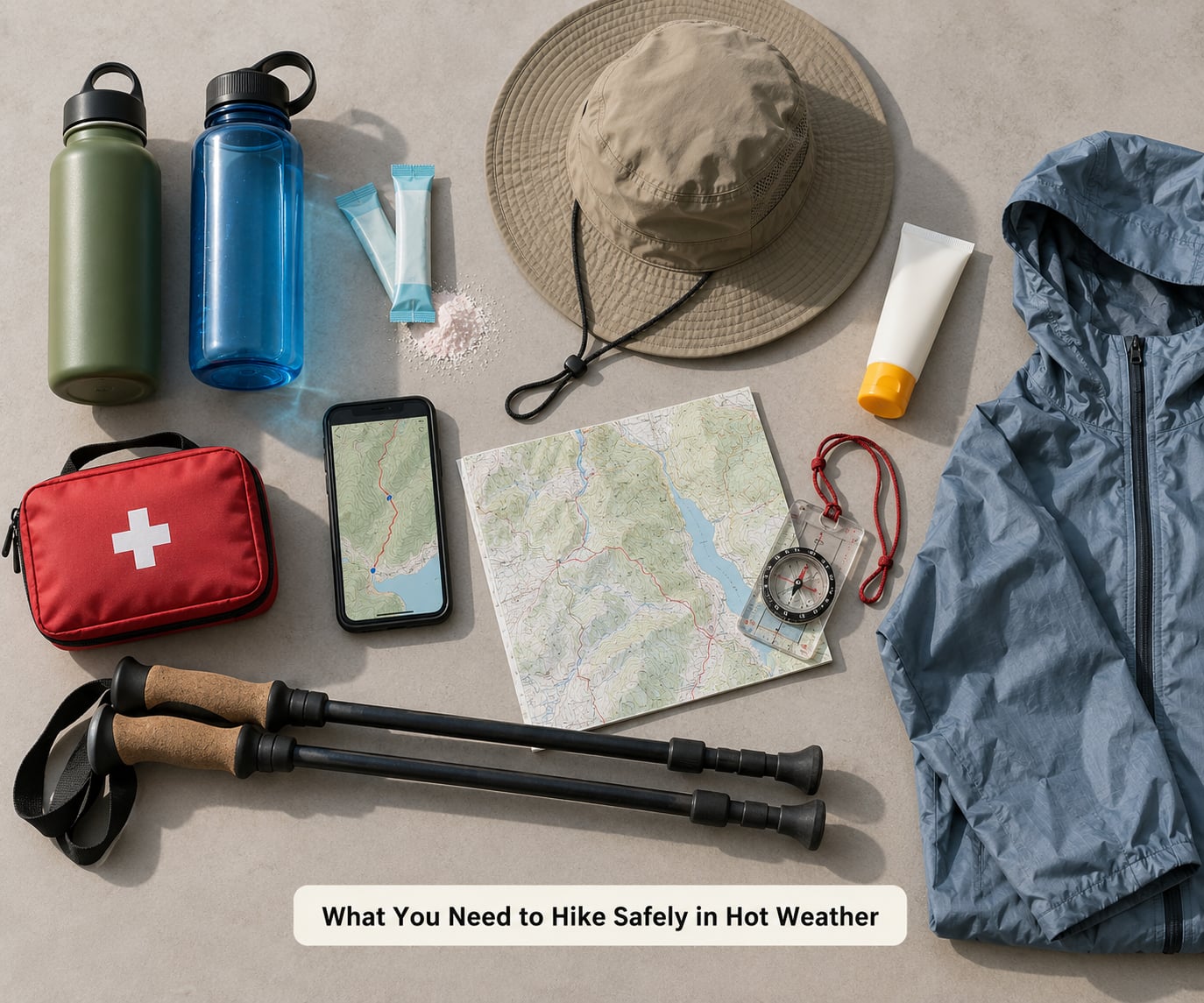
You can learn how to hike safely in hot weather with what is already in your closet, but a few things make the difference between a good day out and a rescue.
Water and a way to carry it
Start with enough capacity that you would have to work to run out. A single 32-ounce bottle feels generous at the trailhead and disappears by the second climb. Most guides suggest carrying two to three liters for an ordinary summer day hike, more if there is no reliable refill and more still for desert terrain.
A hydration bladder keeps weight on your back instead of in your hand, which matters more than people expect. Rigid insulated bottles keep water cooler through the afternoon.
Electrolyte source
Water alone is not enough when you are sweating for hours. Salt tablets, electrolyte powder packets, sports drinks, or salty snacks all cover it. Many hikers carry chewy electrolyte options because they are easy to eat mid-stride without stopping.
Sun protection
You want a wide-brimmed hat with a neck flap, sunglasses rated for full sun, and a long-sleeve top. A shirt with a UPF 30 rating blocks a surprising amount of ultraviolet light while staying cooler than exposed skin, and loose UPF clothing is often the difference between a hike that feels fine and one that ends early.
Navigation you can see without a phone
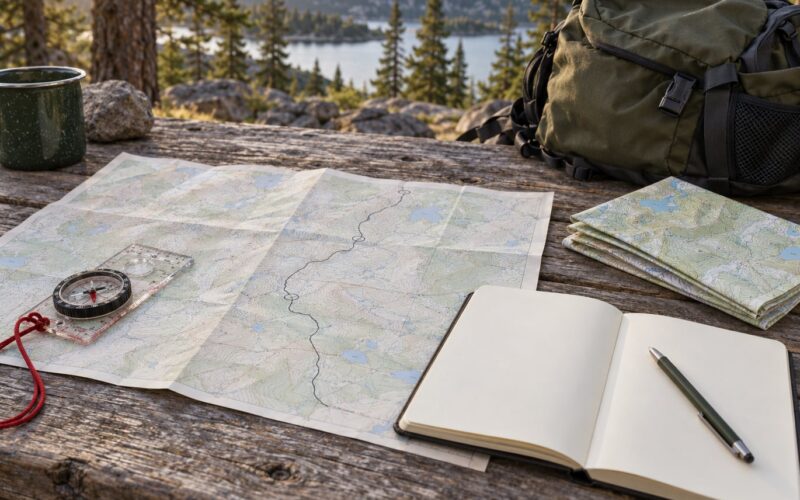
Your phone will help if the battery holds. It will also die from cold, water and screen use at exactly the wrong moment. Carry a paper map, a compass if the route is off-trail, and a small battery pack or a case with a solar panel. Ten seconds of searching for a trail while the sun beats down costs you more energy than the hike did.
Emergency kit and a way to call for help
A small first-aid kit, a whistle, a headlamp, extra sun protection and a copy of your medical information go in the pack every time. If the route has no cell coverage, a satellite messenger or a personal locator beacon is the difference between a long wait and an overnight stay for rescuers.
Weather information before you leave
Check the heat index rather than the raw air temperature, since humidity changes how dangerous the day feels. Look for heat advisories, wildfire smoke alerts, afternoon thunderstorm chances and flash flood warnings. All of it takes two minutes and it is the cheapest safety gear you will ever use.
If you spend a lot of your summer in hot places, acclimatization is the closest thing to free protection there is. Your body adapts to heat with increased sweating, a lower core temperature at rest and a smaller rise in heart rate at the same pace, and most of that adaptation happens over the first week or two of repeated exposure. A useful approach is to build up over roughly two weeks, starting with easy walks close to home before you attempt anything long, exposed or unfamiliar.
Something for cooling yourself down
A lightweight sun tarp or a reflective umbrella gives you shade on treeless terrain, and shade on an open desert trail is worth more than most hikers expect. A cooling towel or a bandana that you soak in a stream costs nothing beyond pack space. On treeless routes, where there is nowhere to hide from the sun, portable shade stops being a luxury.
Food and a backup plan
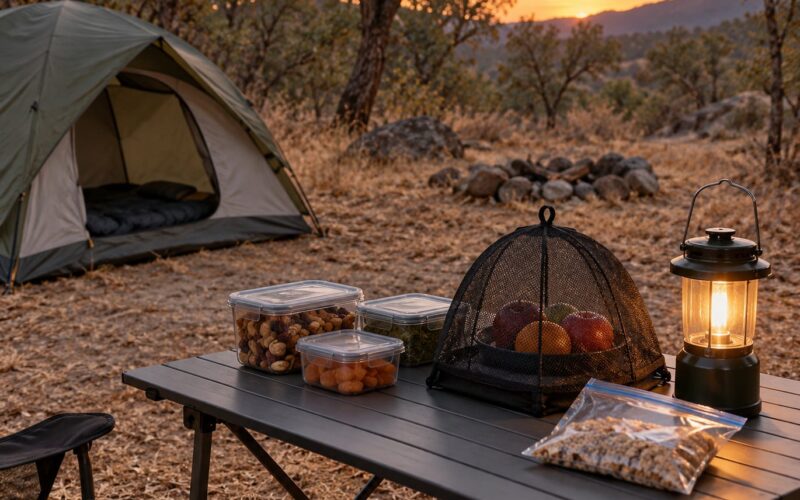
Bring more food than you think you will eat, and choose options that are easy to eat while walking. Salted snacks do double duty as electrolyte replacement. If the route crosses a canyon or a dry wash in summer, check the afternoon thunderstorm outlook and know the turnaround time you would use if the sky stacks up.
Step-by-Step: How to Hike Safely in Hot Weather
1. Check the forecast and choose a cooler time to start
Check the forecast, then check it again against the specific stretch of trail you are walking. A shaded forest route and an exposed ridge ten miles away can be living in different weather.
Look at the heat index, the timing of sunrise, and the cloud cover. Desert and canyon routes often need a start around 4 or 5 a.m. with a finish before midmorning, which is why so many experienced desert hikers treat a summer hike as an overnight trip done in daylight hours. In cooler forest terrain, an early start is still nicer but the margin for error is much wider.
If the forecast shows a hot afternoon with thunderstorms, you have three honest options: move the hike to a shaded or higher route, cut it to a shorter loop, or postpone. When conditions look unfavorable, decide before the trailhead, not at mile two with sweat running down your arms.
2. Tell someone your route and expected return time
A trip plan takes two minutes and is the single most requested item by search and rescue teams. Leave it with someone who will actually notice if you do not call.
Tell them the trailhead name and where the vehicle is parked, the route or a link to the map, how many people are going, who is in the group, when you expect to be out, and what number to call if you are late. Add a check-in time for longer days. Set the phone to ring loudly, not just vibrate, because a missed check-in over a loud trail sounds nothing like a missed check-in over a quiet one.
3. Plan your water and know exactly where you can refill
A common rule of thumb is about half a liter to a liter of water per hour of hiking, and experienced desert hikers in Phoenix talk about one liter per hour as a floor in summer when the route is fully exposed. Treat these as starting points to adjust for your own sweat rate, the temperature and how much sun is hitting you.
More useful than a rule is a measurement. Note how much water you drink on a normal warm hike, then add more if the day is hotter. A cheap trick is to weigh yourself before and after a hike with no bathroom stop, then subtract food and gear. The number of pounds lost is roughly the number of liters you owe yourself the next time.
Know your refill points before you leave, and treat them as a plan rather than a guarantee. Streams dry up, taps get shut off, and a spring that is reliable in April can be a puddle in August. Where sources are uncertain, carry a filter or purifier so you can drink rather than haul.
Overhydration is its own danger. Drinking huge volumes of plain water without replacing sodium can leave a hiker confused, nauseated and weak, which is easy to misread as heat exhaustion. Drinking to thirst, and taking electrolytes with food once you are working for more than an hour or two, keeps both problems in check.
4. Dress for heat and protect your skin
Cover up. Lightweight, loose, long sleeves with a UPF rating keep sun off your shoulders and neck while trapping far less heat than exposed skin feels like it should. A sun hoodie works well for this and dries quickly after a splash through a stream.
Skip cotton when you can. Wet cotton stays wet, holds heat against you and chafes. Merino wool and synthetic fabrics wick moisture and dry fast, and a wet shirt in a crosswind feels far colder than the air temperature suggests.
Dark colors absorb radiant heat, so pale clothing makes a real difference in full sun. Add a wide-brimmed hat, sunglasses, and sunscreen on every exposed patch. Reapply it, because sweat and fabric both remove it faster than you expect.
5. Start slowly and use a sustainable pace
The hardest heat mistake is starting too hard and paying for it an hour later. In hot weather your cardiovascular system is already working to move blood to the skin and dump heat, so climbing at your usual trail pace on day one often catches up with you at mile three.
Shorten your stride, pick a line through shade, and accept a slower number. Hiking fast is not the goal. A sustainable pace wins every time. Planned breaks in shade on a regular schedule beat waiting until you feel bad, and sitting still for ten minutes every hour does more good than pushing on for another hour.
If you are wearing a heart rate monitor, remember that the same pace produces a higher reading in heat. Hikers report roughly 10 to 15 beats per minute higher at the same effort when the air is near 90°F than when it is near 70°F. So judge your effort by how the climb feels, not only by a number that has moved.
Wet your hat, wet your neck, pour water over your wrists, or soak a bandana and put it around your neck. There is no rule against pouring drinking water on yourself, and cooling the skin at the neck helps more than most people expect.
6. Know the warning signs and change the plan when needed
Heat illness climbs a ladder, and it does not always climb politely. Most people stop one or two rungs short of the top before something serious develops.
- Heat cramps. Painful muscle spasms in the legs, arms or abdomen during or after exertion. Stop, get into shade, drink with electrolytes and rest. Do not push through.
- Heavy sweating, cool clammy skin, headache, dizziness, nausea, unusual fatigue, or a racing pulse. These are the early signals of heat exhaustion. Stop hiking, cool the body, sip fluids with salt, and if symptoms do not improve, descend and get help.
- Confusion, slurred speech, stumbling, aggression, or loss of coordination. This is heat stroke. It can kill in a very short time, and it needs emergency services now. Call 911 or your local emergency number, get the person into shade, cool them aggressively with water and ice, and keep cooling them until help arrives or they are clearly responding.
A headache by itself is not nothing. Treat it as information: stop, drink, cool down, and reassess in fifteen minutes. If it comes back after you have rested, that is your cue to shorten the route or turn around.
The three stages are worth learning by name, because the difference between them is the difference between a rest stop and a phone call.
| Stage | What you will notice | What to do |
|---|---|---|
| Heat cramps | Painful spasms during or after exertion, often in legs or abdomen | Stop, move to shade, drink water with electrolytes, rest until the cramping stops |
| Heat exhaustion | Heavy sweating, cool clammy skin, headache, dizziness, nausea, weak or unsteady feeling, fast pulse | Stop hiking, cool the body, sip fluids with salt, and descend or call for help if it does not improve within about 30 minutes |
| Heat stroke | Confusion, slurred speech, stumbling, loss of coordination, unusual aggression, collapse | Emergency services now. Move to shade, remove excess clothing, cool with water and ice, keep cooling until help arrives or the person clearly responds |
Heat stroke is the only one of these that can kill a healthy person in minutes, which is why the response is never to wait and see. If a member of your group is stumbling or making no sense, call for help and start cooling immediately, then keep cooling while you wait.
Common Mistakes That Increase Heat Risk
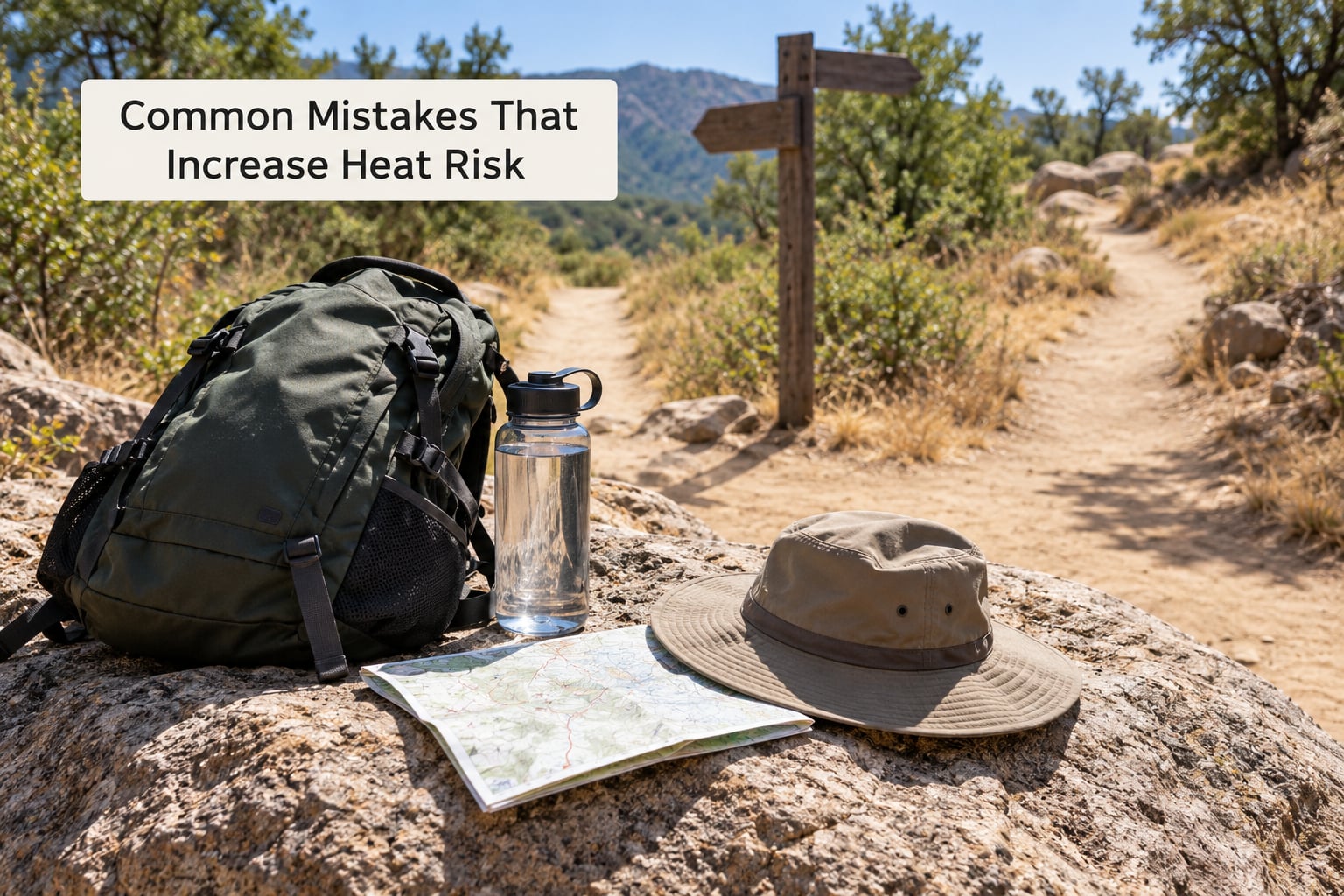
Almost every serious heat incident I have read about traces back to one of these.
Hiking at midday in July
Fix: start at or before sunrise in exposed terrain, and be finished with the sun-beaten section before early afternoon. If a full day is not possible, pick a route that spends its middle hours in shade.
Underestimating water
Fix: carry the amount that would seem silly to haul, and add a margin. Hikers on Reddit in Phoenix describe one liter per hour as a summer minimum on exposed routes. Run out of water on a hot trail and every remaining step becomes expensive.
Drinking only plain water
Fix: carry an electrolyte source and take it with food every hour or so. Salty snacks, electrolyte chews or a diluted sports drink all work. Drink to thirst rather than forcing liters down.
Wearing cotton or going shirtless
Fix: choose loose, pale, quick-drying clothing with a UPF rating. Exposed skin sunburns, and sunburned skin regulates temperature worse than covered skin.
Treating caffeine as hydration
Fix: keep coffee and energy drinks to a small part of the day and count the water separately. A large caffeinated drink contributes to fluid loss over the following hours.
Ignoring early symptoms
Fix: build a hard rule for yourself that a headache, nausea or dizziness ends the hike, even if the destination is ninety minutes away. Fatigue, headache and nausea are the symptoms people most often report having pushed through before they got worse.
Forgetting that altitude compounds heat
Fix: at elevation you are working harder, breathing harder and taking more sun exposure per step than you are used to. Shorten the day and add water.
Leaving pets out of the plan
Fix: state agencies advise keeping pets home during extreme heat, because pavement and rock surfaces can burn their paws and dogs heat up faster than people. If a dog does come, walk at dawn, carry water for both of you, and turn back at the first heavy panting.
Depending on a phone with no backup
Fix: carry a satellite messenger or a personal locator beacon on routes without cell service, and know how to use it before you need it. A paper map costs nothing and never runs out of power.
Assuming the forecast is what you will get
Fix: check for afternoon thunderstorm and flash flood risk in canyons and desert washes, even on a clear morning. Those storms arrive faster than a person can walk out.
Frequently Asked Questions
What temperature is too hot to hike?
There is no single cutoff, because humidity, wind, sun exposure and your fitness matter as much as the number. A useful rule of thumb: around 90F in open sun, modify the hike or move it to a shaded route. Near 100F, most experienced hikers in desert terrain treat it as a reason to postpone, start around 4 or 5 a.m., and be off the exposed trail before midmorning. Check the heat index rather than the air temperature, since humidity changes how dangerous the day feels.
Is it safe to hike in 90 degree heat?
It can be, with the right plan. In open sun at that temperature, hike early, shorten the distance, carry more water than feels reasonable, wear a wide-brimmed hat and UPF clothing, and build rest breaks into the schedule. In shaded forest terrain with a breeze, 90F is a normal summer day. The variables that push it from fine to dangerous are direct sun, humidity, length of exposure and whether water is available.
How much water should I drink per hour when hiking in the heat?
Most guides suggest about half a liter to a liter per hour of moderate hiking, and experienced desert hikers treat one liter per hour as a minimum on fully exposed summer routes. Your real number depends on your sweat rate, which you can estimate by weighing yourself before and after a hike. Drink to thirst, and add electrolytes once you are out for more than an hour or two.
What are the first warning signs of heat stroke?
Confusion, slurred speech, stumbling, unusual aggression and loss of coordination are the signs that separate heat stroke from heat exhaustion. Skin may be hot and dry or wet, so dryness is not required. Heat stroke can become fatal within minutes, so call emergency services immediately, move the person into shade, cool them with water and ice, and keep cooling until help arrives or they clearly improve.
What clothing is best for a hot-weather hike?
Loose, light-colored, quick-drying clothing that covers your skin works best. Long sleeves with a UPF 30 rating block strong sun while trapping less heat than bare skin, and a wide-brimmed hat with a neck flap protects your face and neck. Skip cotton, which stays wet and holds heat against you. Merino wool and synthetic fabrics wick moisture and dry fastest.
Why do hikers eat gummy bears on hot hikes?
Gummy bears are a quick source of sugar and sodium, and they are easy to eat while moving without stopping. On a hot hike you lose sodium and potassium through sweat, and plain water does not replace them, which can contribute to cramps and fatigue. Any salty snack works: electrolyte chews, sports drink, salted nuts or pretzels.
Conclusion
Before you set out, check the heat index and any advisories, and shorten the route or move it to shade if the day is working against you. Start at dawn on exposed terrain, carry more water than your short walk to the car would suggest, add electrolytes and salty food, and wear a hat and UPF clothing. Leave your route and return time with someone at home.
On the trail, slow down, drink to thirst, rest in the shade on a schedule, and treat a headache as a signal rather than an inconvenience. If confusion or stumbling appear in anyone in your group, cool them and call for help right away. That is how to hike safely in hot weather on any trail, in any weather.