You never need dry weather to start a fire in wet conditions, you need dry fuel. The trick is splitting or shaving away the wet outer layer until you expose dry wood inside, protecting that material from rain, and building a small flame you feed slowly. Five methods work reliably, and this guide walks through each one in order.
Rain gets into your tinder bag, soaks the ground, and turns every stick you pick up into a bad fuel source. It is still doable. Scout leaders in places like the Pacific Northwest report that most of their permitted fires begin in damp conditions, so this is normal practice rather than an edge case.
Realistic expectation first: allow 20 to 40 minutes from the moment you drop your pack to a usable flame if the wood is genuinely soaked. Beginners expect a two-minute light-up and get frustrated. The time goes into finding dry wood and splitting it, not into striking a match.
Table of Contents
- What You Need
- Step-by-Step
- Step 1: Prepare a Safe Fire Area
- Step 2: Find or Make Dry Tinder
- Step 3: Build a Small Fire Structure
- Step 4: Light the Tinder and Add Fuel Gradually
- Step 5: Keep the Fire Controlled
- Starting a Fire With No Matches or Lighter
- Common Mistakes
- Frequently Asked Questions
- Can you start a fire when all the wood is wet?
- Can two rocks make a spark?
- How can I start a fire in wet conditions without matches?
- Is firewood ruined if it gets rained on?
- Why does my fire smoke so much when the wood is wet?
- How long should I leave a campfire burning before going to sleep?
- Conclusion
What You Need
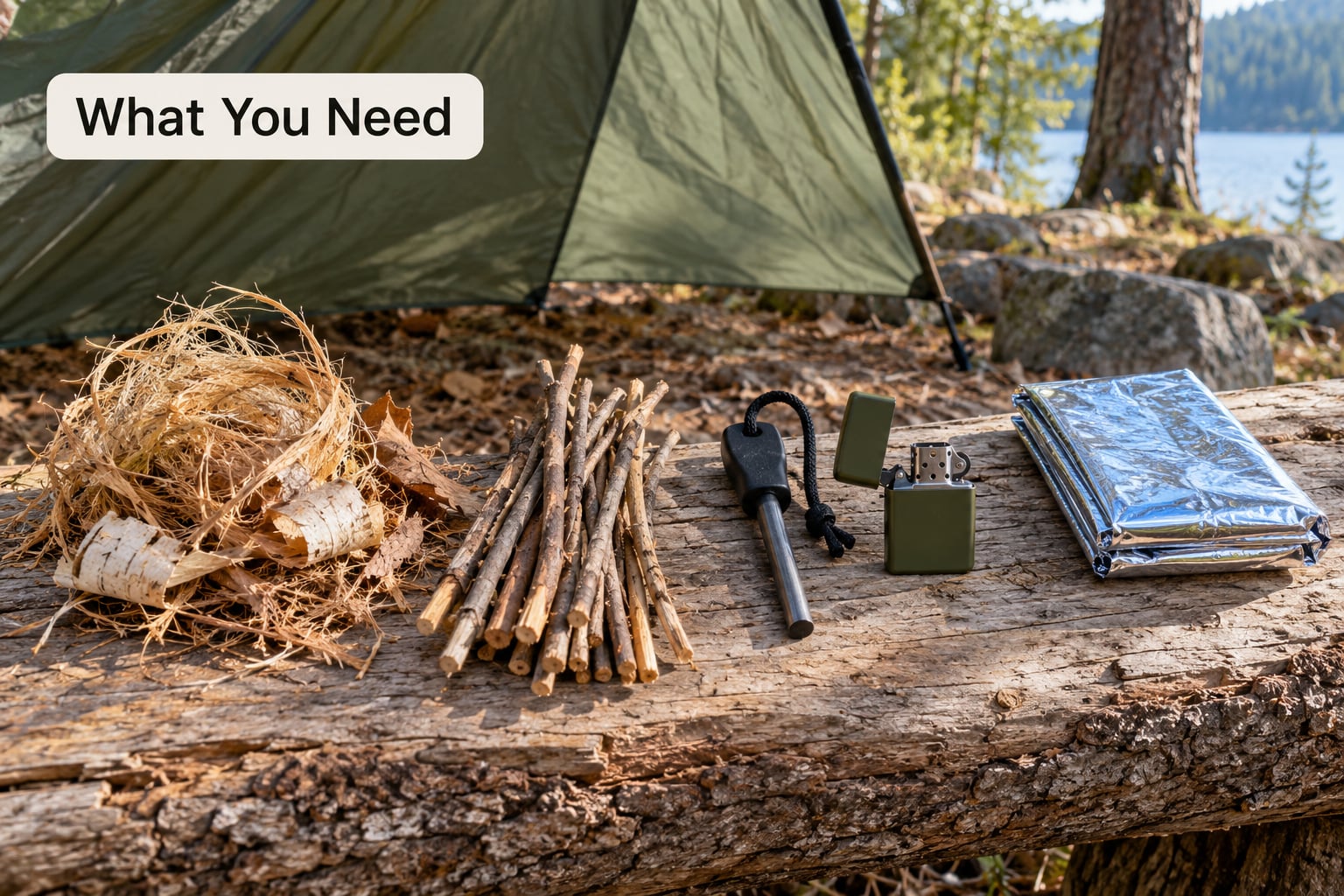
Wet-weather fire starting is about layers, and each layer has a size. Get the sizes wrong and the flame smothers no matter how good your ignition source is.
- Tinder. A loose handful that catches from a spark: dryer lint, cotton balls coated in petroleum jelly, wood shavings, or shavings carved from a feather stick. This is your fuel for the first 60 seconds.
- Kindling. Finger-thick sticks, roughly one-eighth to one-quarter inch, that light within a minute of the tinder. Collect twice what you think you need.
- Fuel wood. Quarter-split sticks with the bark knocked off. Anything thicker holds too much water in the center.
- Two ways to make a spark. Carry a ferrocerium rod or fire steel and a windproof lighter. A rod works in rain; a lighter gets you a fast flame. Never carry only one.
- Stormproof matches in a sealed container, plus a pocket bellows or a breath to feed the flame.
- A fixed-blade knife. Batoning, which is driving the spine of the blade into a log to peel off kindling, needs a thick spine. Folding knives can snap or close on your fingers mid-stroke.
- A tarp or poncho to work under. Working in the open is how people get soaked while gathering fuel.
- A stove as your backup plan. When the wind is ripping or everything is saturated, a small backpacking stove beats a stubborn hour of failure.
Avoid loose newspaper pages for tinder. They drink moisture instead of resisting it. Wax-dipped cardboard strips or fatwood from a resinous conifer are far better.
Step-by-Step
Step 1: Prepare a Safe Fire Area
Use an existing fire ring, a stove, or a bare patch of mineral soil. Ground that is wet and organic will insulate itself and never heat up, which is why a raised platform comes later.
Clear loose leaves, grass and buried debris away from where the flame will sit, and give yourself at least 5 feet of clearance under any overhead branches. Check the wind: a sheltered hollow, the lee side of a rock face or a stand of open trees beats an exposed ridge.
Before you build anything, check whether your area is under a local fire ban. Fire restrictions are posted by state and county agencies and change with the season. Burning during a ban carries real fines, and in dry conditions it is how people lose land they have held for decades.
Step 2: Find or Make Dry Tinder
Look up, not down. Everything touching the ground is saturated, so check the crotches of standing dead trees, the underside of large fallen limbs where bark has peeled away, and branches still attached a few feet off the ground. Snow-covered dead branches are often drier than the wet ones.
Carve a feather stick and use it. Take a pencil-thick green stick, shave a long spiral of wafer-thin curls with your knife, and gather the shavings in a cupped palm. Carve down toward the core so the shavings curl outward and expose fresh, damp-free wood.
Split open anything questionable. Bark holds rain and the center of a fallen log can stay dry for months under the outer layer. Once you have tinder in hand, keep it in your jacket pocket or under your tarp. Wet tinder collected on the trail is wet tinder at camp too.
Step 3: Build a Small Fire Structure
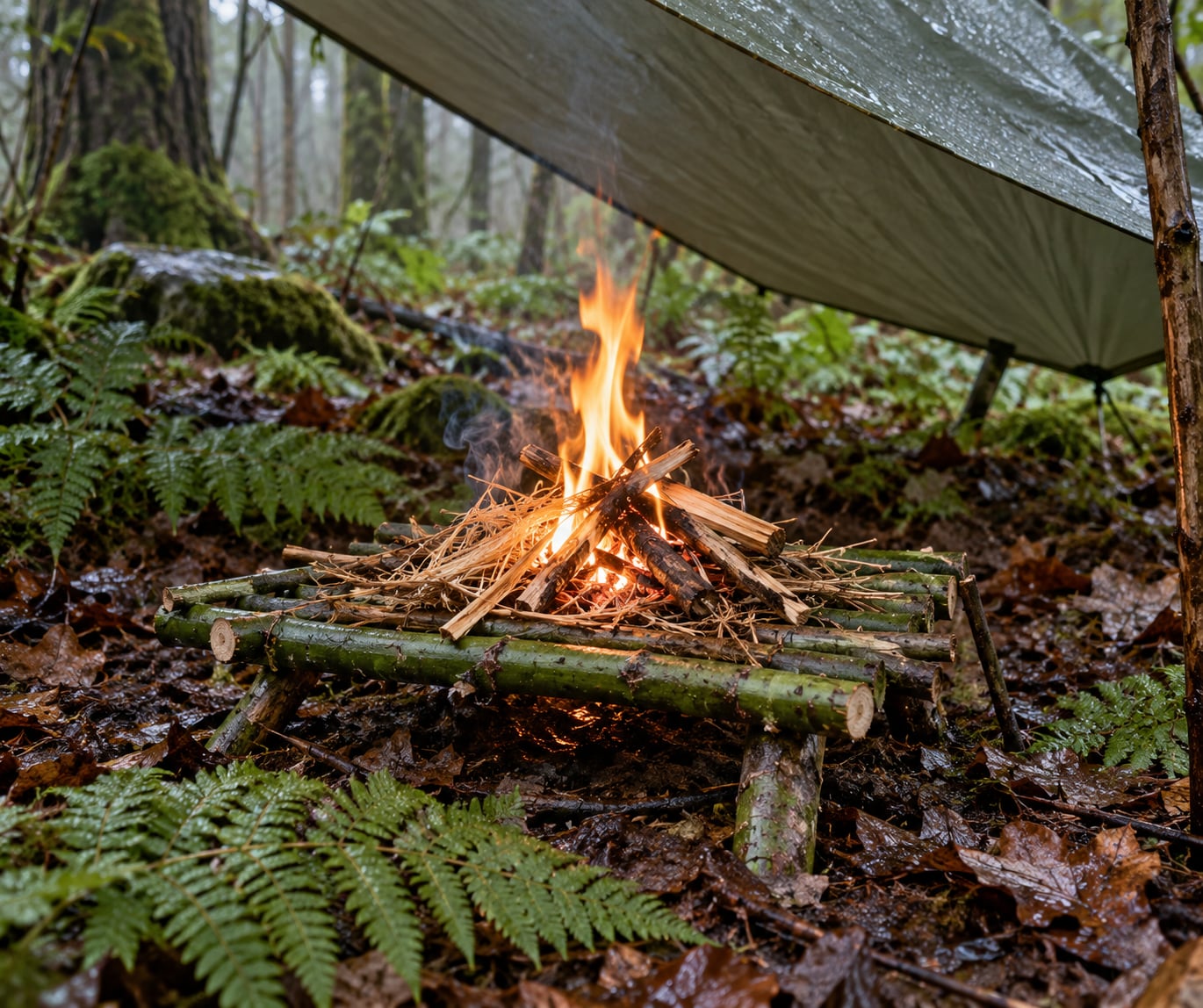
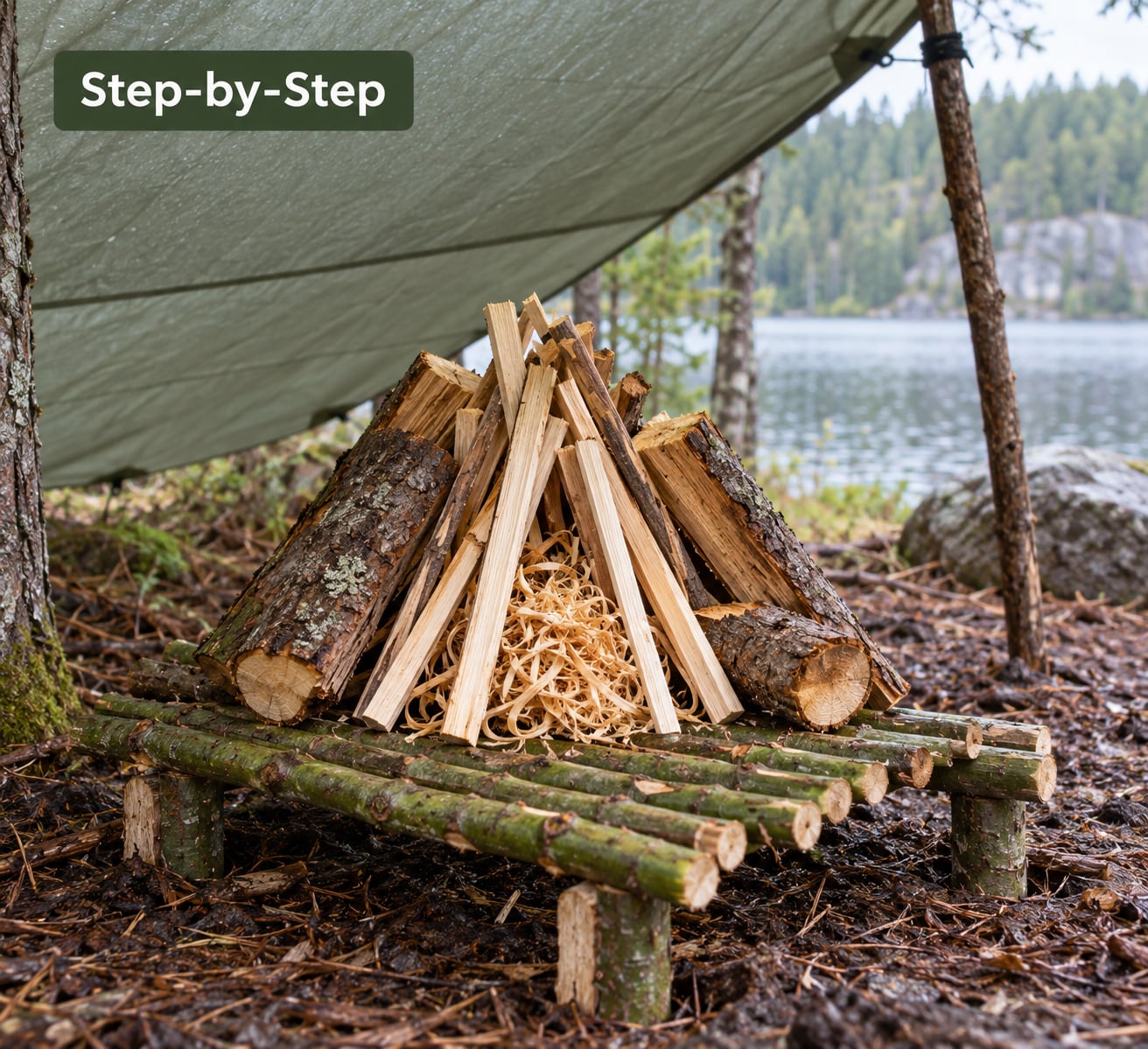
Get the wood off the wet ground. Lay green sticks across the base in a square, add a second layer crossing at right angles, and stack a third so the platform holds a few inches above the soil. Burning on a platform stops the ground from wicking heat away.
On that platform, build a simple teepee or pyramid. Start with a loose pile of tinder you could cup in both hands, then lean finger-thick kindling around it like a teepee with a gap on one side for airflow. Add a second, looser ring of slightly larger sticks around that.
How it worked tells you what happened. If the tinder catches, glows and holds flame for 30 seconds, your structure is right. If it blackens and dies, your layers were too tight or too heavy.
Step 4: Light the Tinder and Add Fuel Gradually
Light the driest material you have first, ideally the center of the tinder pile, and feed oxygen in at the gap you left in the teepee. Blow gently across the base of the flame rather than down into it. Blowing into a small fire puts out the small fire.
Then wait. Add kindling only once the tinder has produced a flame and a glowing coal bed, usually after 20 to 30 seconds. Hold each stick in the flame for a few seconds before letting go, so it catches heat before it touches the pile. Then, and only then, move to larger fuel.
Adding fuel to a fire that has not caught yet is the single most common beginner mistake. A heavy log laid on a struggling flame kills it in seconds.
Step 5: Keep the Fire Controlled
Keep the fire no taller than mid-shin. A small fire lets you get close enough to feed it and keeps you able to reach it fast when wind shifts. Leave an air gap on the windward side rather than smothering the whole pile.
Damp fuel has a simple trick: lay wet sticks beside the flame, not on it, spaced a finger-width apart. The radiant heat dries them over 10 to 15 minutes, and you pick them up when they are ready. That one habit replaces most of the frustration of wet firewood.
Once you are done, drown the fire, stir the ash, drown it again and confirm no heat with the back of your hand held a few inches above. A fire that looks dead can hold embers for hours. Move your fuel supply away from anything that can carry flame to a tent or a tree.
Starting a Fire With No Matches or Lighter
Two rocks can make a spark. Flint striking steel throws hot iron sparks at temperatures high enough to ignite tinder, but it needs a proper striker and a firm blow, and it is a poor method in wind or rain. The far more reliable no-gear option is a bow drill, which makes its own ember.
- Pick dry, sound wood for the spindle and a dry fireboard, and gather a bundle of dry tinder before you start.
- Saw a notch into the fireboard, then carve a socket into the spindle with the knife tip.
- Build a small teepee of dry tinder and set the fireboard aside on dry ground.
- Spin the spindle in the socket with steady pressure until you see dark dust gathering in the notch, then let the board feed the ember into the tinder.
- Fan the ember gently with your breath until it glows, then feed shavings and kindling in slowly.
This takes practice. Work on it at home in dry weather before the day you need it, and your hands will know the rhythm.
Common Mistakes
Starting with wet or bulky tinder is the first failure. If your tinder does not ignite from a spark, nothing above it will either. Shave finer.
Starting with too much wood is the second. Beginners lay in a full load of fuel and then wonder why nothing happens. Build a fist-sized flame first, and feed up from there.
Poor air movement starves the fire. A tightly packed teepee with no gap gives the flame nothing to breathe. Leave that opening, and never ring the fire with wet stones or sod.
Building in the wrong spot is dangerous and ineffective. Avoid a base of green growth, and never under low dead branches. Rain itself is manageable; a falling burning bough is not.
Leaving weather protection too late ruins your fuel. If you have a tarp, put it up before you start gathering. Sorting wet sticks is miserable work that nobody enjoys twice.
Failing to extinguish the fire ends the trip badly. Cold, sooty and sometimes fatal wildfires start from coals that looked dead. Treat a fire you cannot confidently declare out as still burning.
One clarification worth keeping: damp wood produces steam, not smoke. Real smoke and choking fumes come from rotten wood, treated lumber, or plastics. If your fire is producing thick grey smoke, the problem is dry material burning badly or something unsuitable in the pile, not simply rain.
For speed, here is a quick reference on telling dry wood from wet wood:
| Test | Dry wood | Wet wood |
|---|---|---|
| Bend test | Snaps cleanly with a loud crack | Bends like rubber and springs back |
| Break test | Breaks with a sharp, clear snap | Fibers tear and string instead |
| Cheek test | Cool and dry against the cheek | Cool and damp against the cheek |
| Smell test | Faint wood scent, sometimes resinous | Strong musty or sour odor |
| Weight | Light for its size | Noticeably heavy |
| Location | Standing dead wood, branch crotches, undersides of fallen logs | Anything on the ground, bark still attached after rain |
Frequently Asked Questions
Can you start a fire when all the wood is wet?
Yes, because most wet wood has a dry interior. Split a fallen log with a hatchet used as a wedge, knock the bark off, or carve feather sticks from a standing dead branch. The shavings and the exposed heartwood will catch even when every surface around you is soaked. Look up rather than down for your fuel.
Can two rocks make a spark?
Two rocks can make a spark if one is flint or quartz and the other is a hard steel striker, though the hit needs to be firm and precise. In rain or wind, sparks die before they land. A ferrocerium rod works in any weather and is the better backup. Many beginners do better with a windproof lighter.
How can I start a fire in wet conditions without matches?
You need friction or spark. A bow drill is the most reliable no-gear method: spin a dry spindle into a dry fireboard until dust forms, let the notch drop an ember into a teepee of tinder, then fan it. A ferrocerium rod works even soaked, and a fatwood bough or birch bark peeled by hand burns without any tool at all.
Is firewood ruined if it gets rained on?
Not ruined, just slower. Wet wood burns with more steam and less heat, and it can smoke heavily if it smothers the flame. Stack it off the ground, cover the top but leave the sides open for airflow, and split it before storing. It will season for a few days once it is dry again.
Why does my fire smoke so much when the wood is wet?
Wet wood gives off steam, and poor airflow creates thick grey smoke. The fix is more air, not more fuel. Open a gap on the windward side, stand dry sticks beside the flame to warm and dry them first, and never smother the fire with wet stones or sod. Thick dark smoke usually means rotting wood is in the pile.
How long should I leave a campfire burning before going to sleep?
Put it out first, then go to sleep. Drown it, stir the ash, drown it again, and hold the back of your hand a few inches above the coals to check for heat. A fire left burning overnight in wind or dry grass is a leading cause of human-caused wildfire. Never leave any fire unattended.
Conclusion
The first action to take happens before you ever strike anything: keep your tinder and kindling dry. Carry it in a sealed bag or your inner pocket, put a tarp up before the weather turns, and split your fuel where it stays sheltered.
Then build small. Tinder at the center, kindling leaning around it, fuel added only after a real coal bed exists. When the air is too cold or the wood is too saturated to make that happen safely, light the stove and stop fighting the conditions.
Getting a reliable fire in rain is a practiced skill, not a lucky one. Build it at home in wet weather a few times, and the trip that matters most will not be the one where you are still learning.