To put out a campfire properly, drown the fire with water, stir the ashes and embers, drown it again, then confirm the whole area is cold to the touch. That four-part method is the one Smokey Bear and the U.S. Forest Service teach, and it takes about ten minutes of real work once the flames are down. Skipping the last two steps is how a fire that looked out walks away from camp and starts a wildfire hours later.
The reason people get this wrong is simple: a fire with no visible flame is not a fire that is out. Ash looks like the end of things, but it works as an insulator, holding buried coals hot enough to ignite dry grass many hours later. Reports from wilderness groups put the danger window at up to 24 hours, which is why the standard is bare-hand cold, not warm, not cool.
Table of Contents
- What You Need
- How to Put Out a Campfire Properly: Step-by-Step
- Stop Adding Fuel
- Spread the Coals
- Soak Everything Thoroughly
- Stir and Saturate the Ash
- Smother Any Remaining Heat
- Verify That the Fire Is Cold
- Common Mistakes
- When You Cannot Extinguish a Fire
- Frequently Asked Questions
- Can I put out a campfire with dirt instead of water?
- How long does it take to put out a campfire properly?
- Is cold water or warm water better for extinguishing a campfire?
- How do you know a campfire is completely out?
- What should I do if embers start glowing after I leave?
- Conclusion
What You Need
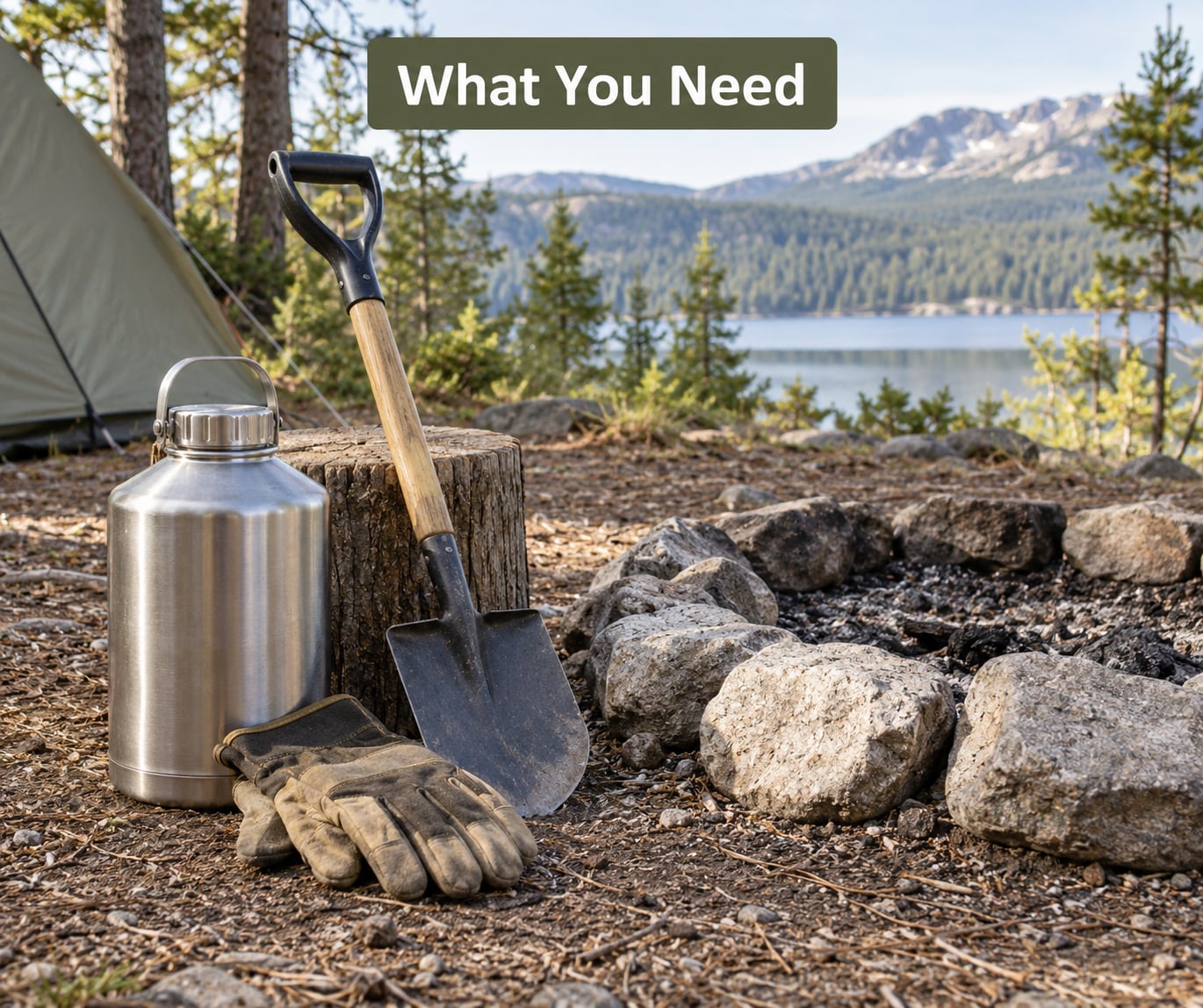
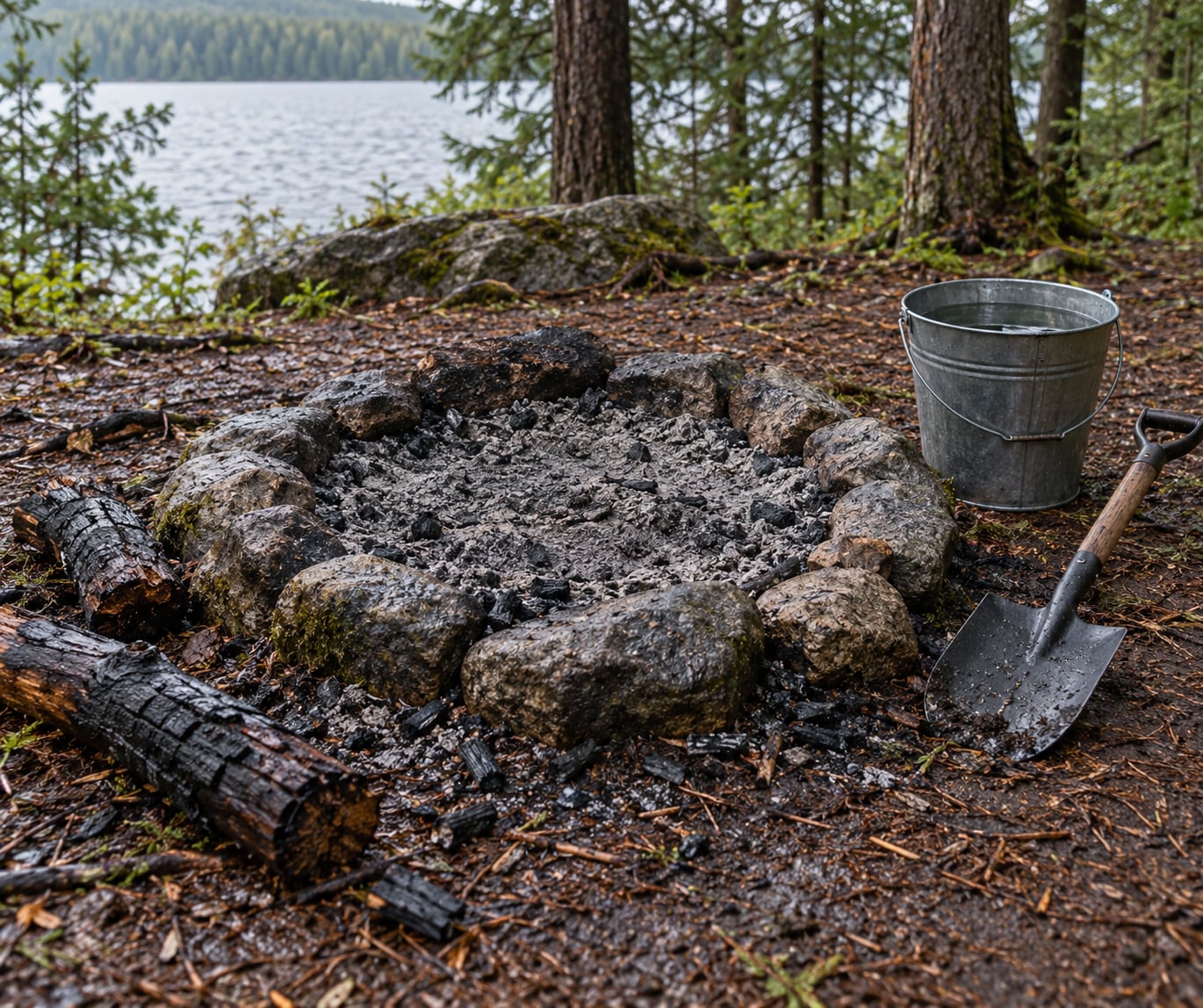
Water is the primary tool here, and more of it beats a better technique. Many campgrounds require you to carry at least 8 litres, about 5 gallons, and it is not an arbitrary number. A bucket refilled from a lake or spigot works, but only if you know before the fire is lit that a source exists.
A shovel or a sturdy trowel lets you spread coals and turn ash without putting your hands near heat. A long stick works in a pinch for stirring. Wear gloves and be ready for steam, which comes off a soaked fire pit hotter than the flames ever were.
Read the campground instructions before you light anything. Fire bans, seasonal restrictions and pit closures change week to week, and plenty of sites require you to bring your own shovel as proof you plan to clean up. A pit that is open on a mild Sunday can be closed on a dry, windy Monday.
One more thing worth knowing: dirt is a backup plan, not a substitute. Dirt smothers what water cannot reach, but throwing soil over embers buries them instead of cooling them, and buried embers can smolder for hours in an insulated pocket. If you have no water, use dirt as the last option and know you are accepting a longer, less certain process.
How to Put Out a Campfire Properly: Step-by-Step
Stop Adding Fuel
Do not throw branches, leaves or extra wood onto the coals to help the fire burn out. That does the opposite of what looks like it does, feeding the fire you are trying to kill. Clear loose combustible material away from the ring first, including anything you used as a windscreen or a seat.
You know this step worked when nothing around the ring is closer than a few feet and no flames are reaching above the stones.
Spread the Coals
Use the shovel to break apart logs and push the coals and charcoal out into a shallow, flat layer inside the ring. A mound of coals hides hot spots in its core and keeps water running off the sides before it soaks anything.
You know this step worked when every piece is visible and the fire bed is low and spread, not stacked.
Soak Everything Thoroughly
Pour water over all the coals and wood, not just where you see flames. Include grey ash and the inside edges of the fire ring, where embers hide in the seam between stone and dirt. Pour slowly and steadily; a sudden surge sends hot ash and steam outward, and steam burns are the most common injury in this whole process.
You know this step worked when the water hisses loudly as it hits hot material and the hissing gradually fades. No hissing means the heat has finally dropped.
Stir and Saturate the Ash
Turn the wet ashes over with the shovel and scrape the bottom of the ring so any clinker hiding underneath gets soaked too. Add more water and stir again. Keep going until the whole mix is dark and saturated, with no hissing, no glowing orange and no dry ash left anywhere in the pile.
You know this step worked when stirring turns up uniformly wet, cold material every time.
Smother Any Remaining Heat
Some heat sits where water will not reach: deep ash, the stone ring, the ground under the ring. Mix in clean dirt or sand scooped from well outside the fire area, and stir it through the wet ash rather than laying it on top as a blanket.
You know this step worked when nothing warms up again after you wait several minutes with your hand held over the surface.
Verify That the Fire Is Cold
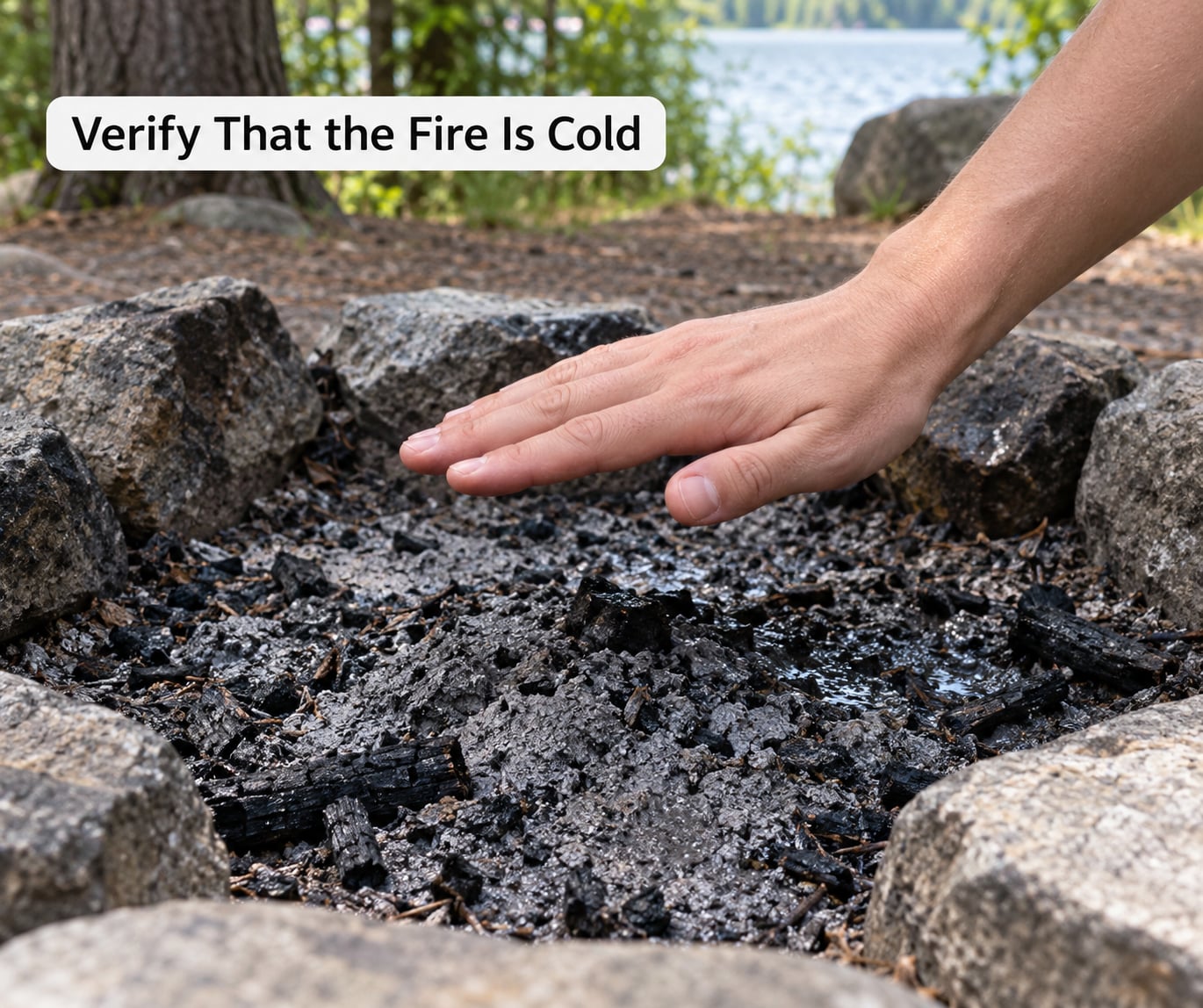
This is the step people cut short, and it is the one that matters. Hold the back of your bare hand several inches above every part of the ring: the ash, the stones, any sticks, and the ground around the edge. Cold means cold. If it is too hot to touch, it is too hot to leave.
Then wait several minutes and check again. Heat moves, and a spot that felt cool earlier can still have a live ember under it. A good rule from wilderness groups is stricter than most people expect: you should be able to touch everything with bare hands, including the sticks, the ash, and the ground around the fire.
Walk the perimeter too. Sparks and small pieces of burning wood travel further than most campers think, so circle the site and look for smoke, glowing grass or warm spots beyond the ring. Put those out the same way, individually.
Common Mistakes
Leaving as soon as the flames die. The flame is the loudest part of a fire and the least dangerous part once the heat has soaked into the coals. Waiting a few minutes and doing the stir-and-drown cycle twice costs almost nothing compared to a wildfire.
Using a token splash of water. A cup of water across a bed of coals cools the top and leaves the middle untouched. Keep pouring until the hissing stops completely, then stir and pour again.
Burying embers under dirt. This is the most common failure in backcountry camps. Soil insulates the coals and hides them from your only useful check. If water is not available, divide, cool and bury is an accepted fallback, and it only works because you stir thoroughly first and keep checking for heat long afterward.
Extinguishing the wrong fire. The pit you put out may not be the fire that is still going. Walk the whole site, check the grass around the ring, and look for a separate fire someone lit nearby, or the one you lit an hour ago that got out of sight.
Scattering hot ash. Kicking ash or flipping a shovel-load of coals spreads burning material across dry ground. Stir inside the ring and keep every tool inside it too.
Trusting one cool spot. Touch-test the ashes, the ring stones, the sticks, the surrounding soil and the ground on the windward side, then wait and repeat. One pass proves very little.
Using snow or accelerants. Snow melts too slowly and leaves water ice underneath the coals, and accelerants such as gasoline or lighter fluid create a flash fire risk instead of solving anything. If you need something to pour and have no water, dry dirt mixed into wet ash beats both.
Believing it can burn overnight. A fire left to burn itself out is not out. Embers under an ash blanket stay hot long after the last visible flame, and unattended fires are a leading cause of human-started wildfires.
When You Cannot Extinguish a Fire
Sometimes the fire wins the first round, and knowing when to stop matters more than technique. Leave immediately and call for help if the fire is spreading into grass or brush beyond the ring, if embers are blowing away in the wind, if wind has picked up enough to fan the flames back, or if your water supply is clearly not going to finish the job.
If a wildfire has started nearby, do not try to be a hero with a shovel. Move away from the fire and upwind, keep your vehicle and your escape route clear, and contact emergency services or campground staff as soon as you are out of immediate danger. Report the location, what is burning, and how fast it is moving.
A fire extinguisher rated for ordinary combustibles is a reasonable last resort for a small fire that water cannot reach, but it buys you seconds, not minutes. The correct order is still the same: get clear, then call. Nobody wins an argument with a wind-driven grass fire.
Frequently Asked Questions
Can I put out a campfire with dirt instead of water?
Dirt works as a fallback, but it is not a substitute for water. Scooping soil on top of embers insulates them and hides the heat you need to check. If water is unavailable, spread the coals into a shallow layer, stir to expose every ember, mix clean dirt through the ash rather than over it, then keep checking for warmth for a long time afterward. Water cools; dirt only smothers.
How long does it take to put out a campfire properly?
Ten minutes of active work is typical, and longer for a large ring or a bed of charcoal. Most of that time goes into the repeat cycle: pour until the hissing stops, stir, pour again, then wait several minutes and check for heat. If it is still warm on the back of your hand after the second round, keep cycling. Rushing is what turns a ten-minute job into a report.
Is cold water or warm water better for extinguishing a campfire?
Either works. Water is effective because it absorbs heat and cuts off oxygen, not because of its temperature. What matters far more is volume and coverage: pour slowly enough to avoid throwing hot ash, get water into the ash layer and under the coals, and keep going until the hissing completely stops. If you only have a small amount, pour it in several passes with stirring between them.
How do you know a campfire is completely out?
Four checks. No hissing anywhere in the ash. No smoke, steam or glowing orange remaining. Cold to the touch with the back of your bare hand over the ashes, the stones, the sticks and the ground around the ring. And a walk of the surrounding area showing no escaped sparks. Then wait several minutes and repeat all four, because heat migrates and a spot that felt cool can still hold an ember.
What should I do if embers start glowing after I leave?
Do not leave for good and assume someone else will handle it. Turn around, get water back to the ring, spread the coals again, soak until the hissing stops, stir, and soak once more. If you cannot return quickly, contact campground staff or the nearest fire service right away and describe the exact location. A single re-ignited ember spreading into dry grass is a genuine emergency.
Conclusion
To put out a campfire properly, the first moves are simple: stop feeding it, spread the coals into a shallow layer so hidden hot spots show themselves, and soak everything until the hissing stops. Then stir, soak again, and add dirt only for heat the water could not reach.
The part that actually protects the forest is the last one. Wait, touch-test ashes, stones, sticks and the surrounding ground with the back of your bare hand, walk the perimeter for escaped sparks, and repeat the check. If it is too hot to touch, it is too hot to leave.