To choose a compound bow draw weight, start at the lowest weight your bow will hold and step up in 5 lb increments as your form improves. Beginners are usually comfortable somewhere between 20 and 50 lb depending on body type and shooting experience, and going heavier only helps if you can still anchor cleanly and let go of the string.
The mistake almost everyone makes is picking a number that sounds impressive rather than one that supports repeatable shots. Pull the wrong weight and your form quietly falls apart in the last third of a practice session, which is where accuracy is actually won or lost.
This guide walks through what draw weight really measures, how to test it, and when it is time to move up. Nothing here requires a bow press, a gym membership, or a trip to a club range before you start.
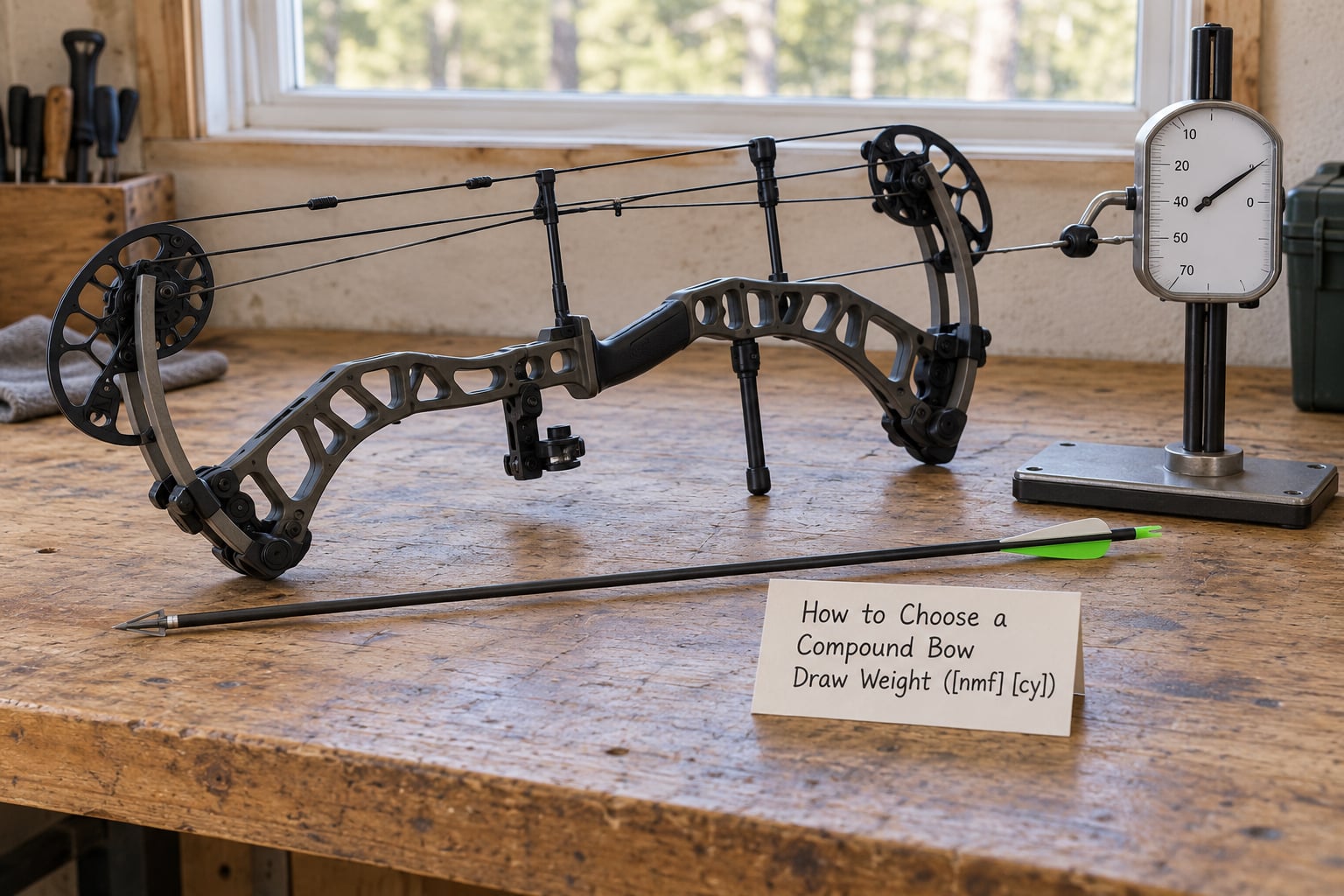
Table of Contents
- What Is Compound Bow Draw Weight?
- How to Choose a Compound Bow Draw Weight
- Set draw length before you touch draw weight
- Buy the adjustment range, not the headline number
- Run a five-minute test draw before you commit
- Draw Weight Recommendations by Experience Level
- How to Test Draw Weight Without Guessing
- Read the symptom, then fix it
- Draw Weight, Holding Weight, and Arrow Speed
- Choosing a Compound Bow for Your Intended Use
- Common Draw Weight Mistakes to Avoid
- Frequently Asked Questions
- What is a good draw weight for a beginner compound bow?
- Is a 70 lb compound bow hard to pull?
- Is 60 lb draw weight enough for a deer?
- What does draw weight mean in archery?
- What tool can I use to measure my compound bow draw weight?
- What poundage is a 500 or 600 spine arrow good for?
- Conclusion
What Is Compound Bow Draw Weight?
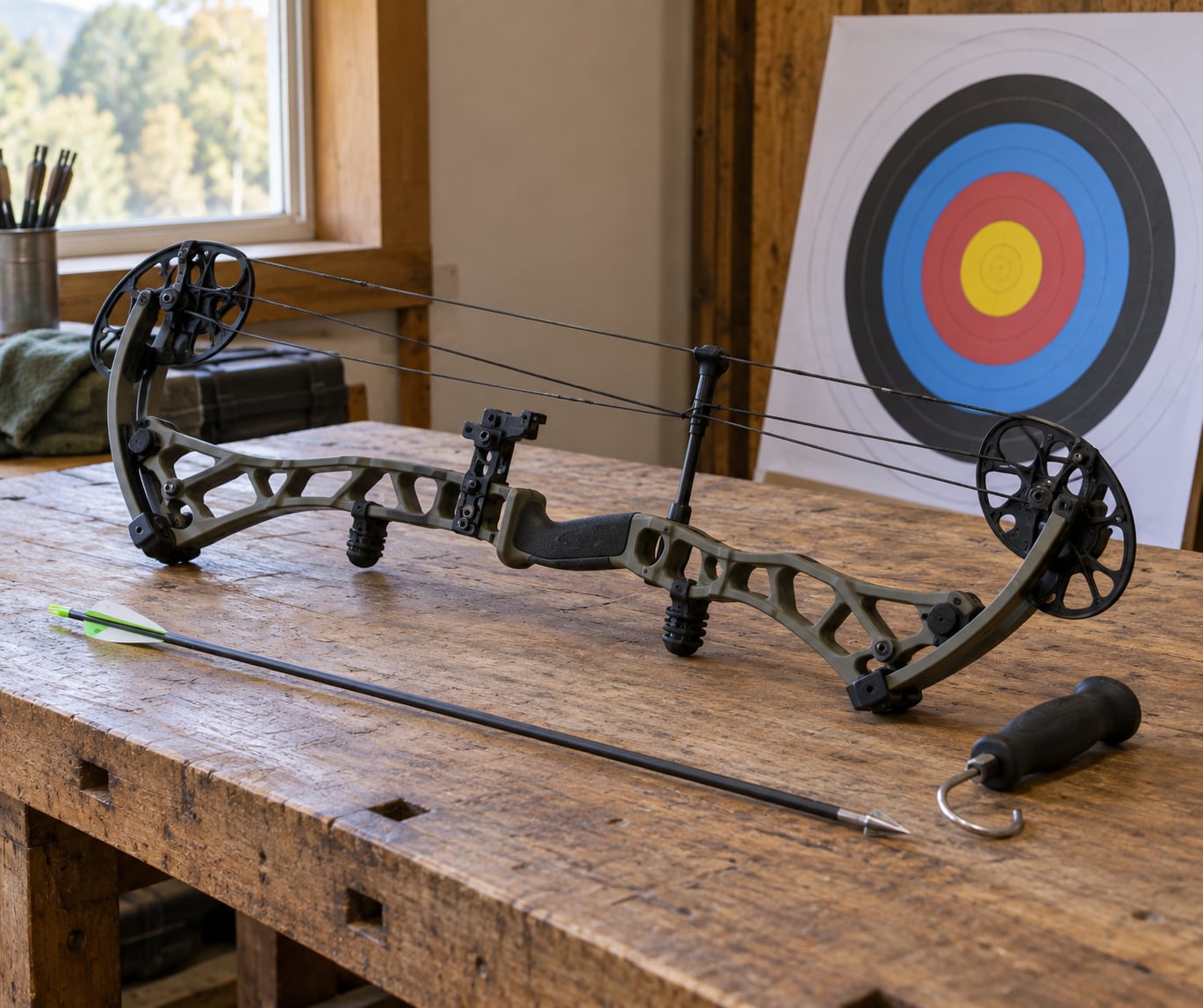
Draw weight is the force, in pounds, required to pull the string back to full draw. It is the highest weight you exert during the draw cycle, reached just before the cams turn over and drop the load.
That last part is the whole reason compounds feel easy. A recurve of the same poundage stays heavy from the string touching your face until you release, but a compound unloads the instant it reaches the let-off point. You go from peak weight to something closer to 10 or 12 lb of hold weight in the space of a few inches.
Draw weight is a measure of force on your end, not on the target. It predicts arrow speed and energy, but it does not describe accuracy, and two bows with identical peak weights can shoot completely differently depending on draw length, let-off percentage, cam design and how well the bow fits you.
How to Choose a Compound Bow Draw Weight
The decision comes down to six things in a specific order: draw length first, then current shooting ability, then what you intend to shoot, then how much adjustment range the bow offers, then how the bow fits, and finally a physical test draw.
Set draw length before you touch draw weight
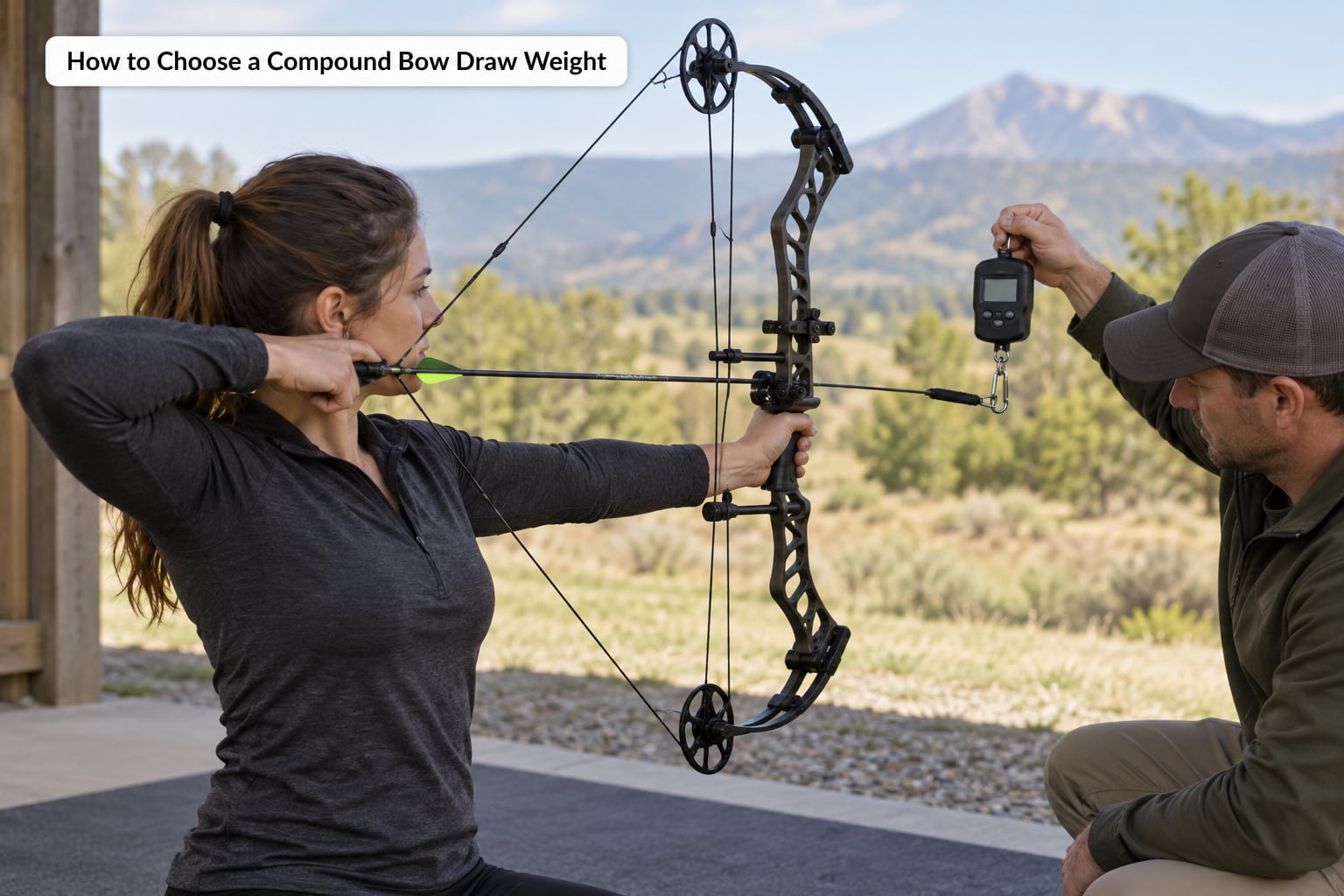
Draw length is the distance from the string to the throat of the grip plus roughly 1.75 in, and the usual starting point is your wingspan divided by 2.5. Set it too short and the bow feels heavy, cramped and hard to let go of cleanly, which sends beginners chasing a weight problem that is really a length problem.
Longer draw length also makes the bow physically heavier. Bow tuners see it constantly: a bow that draws 50 lb at 28 in gains roughly 2 lb of peak weight for every extra inch of length, and roughly the same loss for every inch removed.
Buy the adjustment range, not the headline number
The most useful advice from archery forums is unglamorous. A bow with a wide adjustable draw weight range lets you start low and climb as you get stronger, so a single purchase covers the next few years of your archery instead of becoming a seasonal upgrade.
A single-cam bow typically offers 10 to 15 lb of adjustment. Dual-cam models with binary cams usually give you 20 lb or more, which matters most if you are moving up from a lighter sport bow or if you plan to hunt.
Run a five-minute test draw before you commit
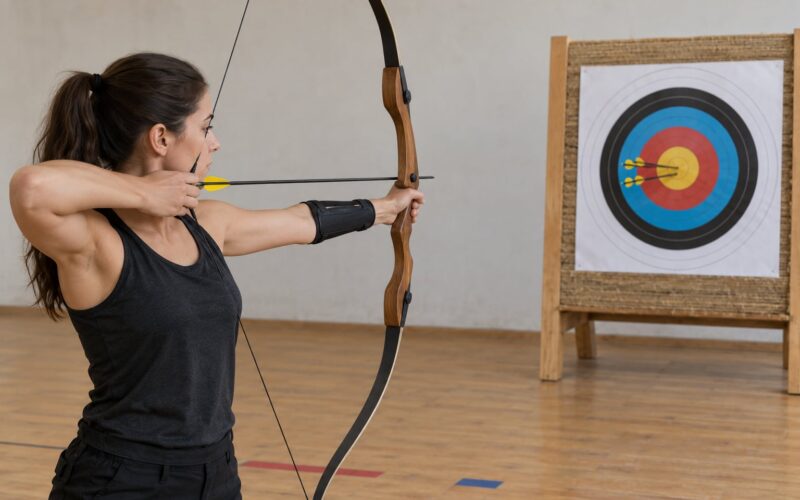
Hand the bow to a shop tech if you can, or draw it yourself in a controlled way. Anchor on a string reference like a hanging shirt or a floor marker, hold for five seconds, and let down slowly.
If your shoulder comes up toward your ear, if the string will not come back to the same anchor point twice in a row, or if your form changes when someone is watching you, the weight is too high right now.
Draw Weight Recommendations by Experience Level
These are starting points, not targets. Use them to place yourself on the map, then test.
| Shooter | Starting draw weight | Notes |
|---|---|---|
| Youth and smaller-framed archers | 15-25 lb | Step up as the child grows; many adult bows reach only 40 lb |
| Adult women new to compounds | 20-30 lb | Technique matters more than raw poundage early on |
| Adult men new to compounds | 40-50 lb | A common rule of thumb is 50-60% of maximum strength |
| Returning recurve shooters | About 20 lb below your recurve poundage | A recurve has no let-off, so the compounds feel heavier by comparison |
| Experienced recreational and 3D archers | 50-70 lb | Hold weight and release aid are what make this workable |
| Deer and turkey hunting setups | 50-70 lb | Energy comes from arrow choice as much as poundage |
Progress in steps of 5 to 10 lb rather than jumps. Shoot a full session or two at each new weight before moving again, and re-test roughly every eight to ten weeks, because archery-specific strength builds faster than people expect.
Ask a qualified shop tech to confirm the setting. Manufacturers publish a range, and your bow will land somewhere inside it, not on the number stamped on the label.
How to Test Draw Weight Without Guessing
Three checks catch almost everything: the number, the form, and the fatigue.
A handheld bow scale gives you the most trustworthy reading. You pull the scale to full draw and it shows the force at the string. Cheaper approach: mark the top limb and bottom cam at full draw and measure with calipers, then look up that position on the manufacturer’s chart. Limb bolt markings themselves are rough, so a bow marked 50 lb can scale anywhere from about 47 to 53 lb.
Then run a 10-draw test. Draw ten times with a release aid or consistently without one, note where your anchor lands each time, and watch for changes in the last few reps. Fatigue is the honest signal here: a weight you can manage for three shots may fall apart at shot eight.
Stop and drop back a setting if the draw is painful rather than merely hard, if your shoulder creeps toward your ear, if your bow arm shakes at full draw, or if you start muscling the shot back instead of relaxing and letting the string go.
Read the symptom, then fix it
| What you notice | Likely cause | Fix |
|---|---|---|
| Shoulder rises toward your ear at anchor | Weight above your current ability | Drop one or two cam settings and rebuild the anchor |
| Groups scatter lower and left | Release off the face or string roll from fatigue | Drop weight, work on a consistent string picture |
| Fine early, falls apart late in the session | Weight too high for endurance, not for a few shots | Drop 5 lb and rebuild |
| Misses increase on cold mornings in a tree stand | Cold hands and a heavy peak | Lower the weight for hunting, or drop 5-10 lb |
| Arrow flexes oddly or wobbles at impact | Arrows too stiff for the new energy | Re-match arrow spine to the higher draw weight |
Draw Weight, Holding Weight, and Arrow Speed
Peak weight, hold weight and arrow speed are three different numbers, and confusing them is how people end up at a shop asking for a bow they saw advertised as easy to pull.
Peak weight is the force at the very start of the let-off. Hold weight, also called let-off weight, is what you carry while aiming, and on most hunting and target bows it lands somewhere around 8 to 12 lb. A higher let-off percentage means a lighter hold and a longer time holding, which many archers like and some find wobbly.
The power stroke is the short burst of effort between the string touching your face and the let-off point, usually the last inch or two before the cams turn over. Arrow speed follows from draw weight, draw length, arrow weight and efficiency together. Raising draw weight by 10 lb gets you more speed, but it is the arrow mass that matters most for how hard an arrow hits.
This is why low-poundage hunting setups work. Shooters under 50 lb often compensate with heavier arrows, around 175-grain broadheads, so a lighter bow still sends something with real energy downrange.
Choosing a Compound Bow for Your Intended Use
For indoor target work, a lower draw weight and a fast, consistent draw cycle matter most. Aim for something in the 30 to 50 lb range with an easy let-off, since you are judging precision, not punch.
For 3D and outdoor target, most archers settle between 50 and 70 lb. The extra weight flattens arrow trajectory and the bow feels more stable at full draw, and a release aid takes over the string so holding is not the limiting factor.
For deer and turkey hunting, most states set a legal minimum that varies by state and by whether you use a broadhead or a point. Check your state regulations before you buy, then pick an energy setup rather than a poundage setup. A heavier arrow at 55 lb can outperform a light arrow at 70 lb.
For elk, bear or any long-range shot, assume you will be climbing to the top of your bow’s range, so start with adjustment headroom. For cold-weather tree stand hunting, many archers drop 5 to 10 lb in the field and switch to lighter, insulated layers.
Bow fit matters at every level. Axle-to-axle length, brace height and grip size all change how the weight feels, and a bow that is a half inch too short can make 60 lb feel like 70.
Common Draw Weight Mistakes to Avoid
Buying the heaviest advertised model. Shops love selling the top of the range. Wide adjustability is what experienced archers actually recommend, and it is the one criterion that pays off over a few years.
Confusing peak weight with hold weight. A bow listed at 70 lb peak may hold at 10 lb. Comparing two bows by their hold weight alone tells you nothing.
Changing draw weight on your own. Many compound bows are designed to be shot only in the range the manufacturer set, and some require a bow press to reach the upper settings or to change let-off. Shooting an over-set bow is unsafe. If you are not certain, ask the shop.
Progressing too quickly. Jumping 15 lb in a week is how shoulder problems start. Move 5 lb at a time and shoot a session before the next increase.
Forgetting arrow spine. As draw weight rises, the energy rises with it, and stiffer arrows may start flexing or deflecting off the rest. Re-match your spine to the new weight rather than blaming your release.
Chasing group size with power. Accuracy comes from a repeatable anchor and a clean release. Extra poundage you cannot hold consistently makes both worse.
Frequently Asked Questions
What is a good draw weight for a beginner compound bow?
Most beginners land between 20 and 30 lb if they are new to archery, and 40 to 50 lb if they already have some strength from other sports. The safest approach is to start at the lowest setting your bow offers and add 5 lb at a time. If you can anchor cleanly for ten draws and your form stays the same, the weight is right.
Is a 70 lb compound bow hard to pull?
Yes, for most people it is. Peak weight of 70 lb happens in the last moments of the draw cycle, so the effort is brief but real, and fatigue sets in fast. Experienced archers handle it because their technique is solid and the bow drops to a light hold weight at anchor. If you are new, start far lower and climb gradually.
Is 60 lb draw weight enough for a deer?
For most deer hunting situations, 60 lb paired with a properly matched arrow is plenty. Energy depends on arrow weight and design as much as on poundage, so a heavy broadhead setup at 55 lb can hit harder than a light arrow at 70 lb. Confirm the legal minimum in your state, and check whether broadhead rules apply where you hunt.
What does draw weight mean in archery?
Draw weight is the force in pounds needed to pull the string back to full draw, measured at the peak of the draw cycle before the cams turn over. It is not the weight you hold at anchor, which is usually around 8 to 12 lb, and it is not arrow speed. It describes effort, not accuracy or impact.
What tool can I use to measure my compound bow draw weight?
A handheld bow scale is the most accurate option you can buy, and it is inexpensive. You pull the scale to full draw and read the force directly. A limb position gauge is a free alternative: measure the string and limb tip at full draw with calipers, then check that position against the manufacturer’s chart. Limb bolt markings alone are approximate.
What poundage is a 500 or 600 spine arrow good for?
Spine is one factor in a range rather than a single number, and the same shaft can sit at different poundages depending on draw length, shaft weight and arrow length. As a rough anchor, mid-500 spine shafts are commonly matched to mid-40s through 50 lb of draw weight, with stiffer spine for heavier bows. Match spine when you step up in weight.
Conclusion
Start lower than you think you need. Set your draw length first, put the bow at its lowest marking, verify the real reading with a bow scale, and shoot ten clean draws before you decide anything.
Move up 5 lb at a time, and only when your anchor and release stay consistent through a whole session. Have a qualified shop tech confirm the setting, check your state’s hunting rules if you plan to hunt, and re-match arrow spine each time the weight changes.