Drop weight is the difference between a bat’s length in inches and its weight in ounces, written as a negative number. A 30-inch bat that weighs 20 ounces is a drop -10. The bigger the drop number, the lighter the bat feels for that length.
That is the whole formula. The rest of this guide explains what the number means in your hands, why two bats with the same drop can feel nothing alike, and how to check that a bat fits before anyone at the table notices.
Table of Contents
- Drop Weight Explained for Youth Bats: Quick Guide
- What Does Drop Weight Mean on a Baseball Bat?
- How Is Bat Drop Weight Calculated?
- Drop Weight Explained: Where the Number Is Stamped on a Youth Bat
- What Is a Good Drop Weight for a Youth Bat?
- How Do Youth Bat Length and Drop Weight Affect Each Other?
- Should a Young Player Use a Lighter Drop Weight?
- Drop Weight vs. Bat Weight: Which Number Matters More?
- How to Choose the Right Youth Bat for a Young Player
- How Can Parents Test a Bat for Comfort and Control?
- Frequently Asked Questions
- Is a lower drop weight always better for a youth baseball bat?
- What drop weight is usually recommended for a young baseball player?
- Does bat drop weight tell me how fast a player can swing?
- Can two youth bats have the same drop weight but feel different?
- What should parents check before buying a youth bat?
- Conclusion
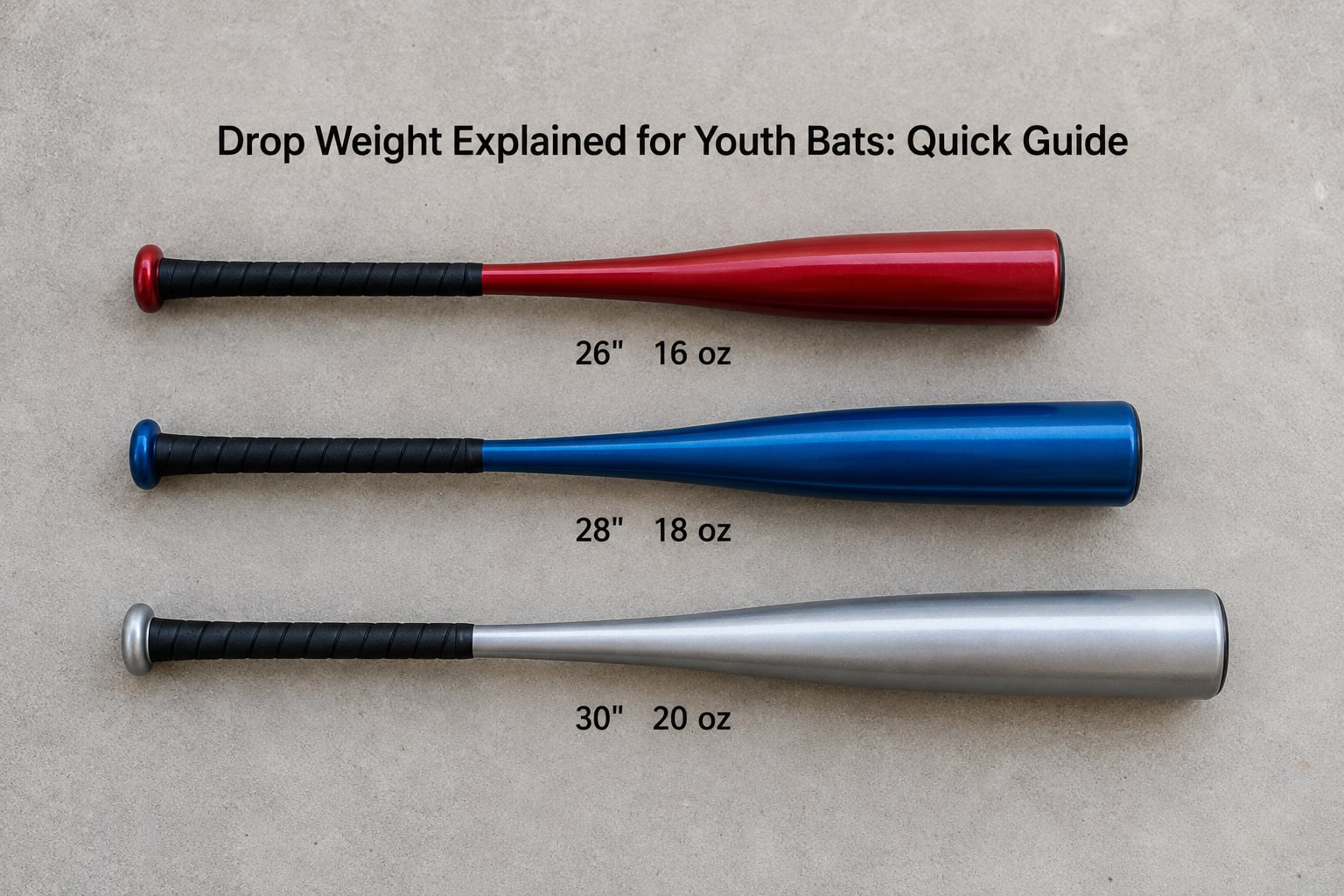
Drop Weight Explained for Youth Bats: Quick Guide
Drop weight is not a quality rating. It is a measurement that tells you how a bat’s length and weight relate to each other, nothing more and nothing less.
| Category | Common drops | How it feels | What should decide it |
|---|---|---|---|
| Tee-ball and first swings | -13 to -10 | Very light, easy to move | Age, ability to control the barrel |
| Little League and rec ball | -12 to -8 | Light to moderate, quick through the zone | League certification, comfort at the plate |
| Travel and tournament | -10 to -5 | Firmer, more solid at contact | Player strength, coach guidance |
| High school BBCOR | -3 | Noticeably heavy for younger hitters | League age limits, training readiness |
A -10 and a -8 bat of the same length are two different bats. The -10 is two ounces lighter. Neither is correct on its own.
What Does Drop Weight Mean on a Baseball Bat?
Drop weight is the difference between the bat’s length in inches and its weight in ounces. Subtract the ounces from the inches and you get the drop weight, always written as a negative number because the weight is always less than the length.
Take a 30-inch youth bat. If it weighs 20 ounces, that is 30 minus 20, or a -10 drop. If the same 30-inch length weighs 22 ounces, it is a -8 drop. Same length, two ounces more mass, a heavier bat.
Bat weight is the number you read off the scale. Drop weight is the relationship between that weight and the length. Shoppers who only look at one of them end up comparing two bats that have nothing to do with each other.
This is where drop weight explained for youth bats gets confusing for adults. A bat heavier than another can still be easier to swing if it is longer. The drop number is what makes those two bats comparable.
How Is Bat Drop Weight Calculated?
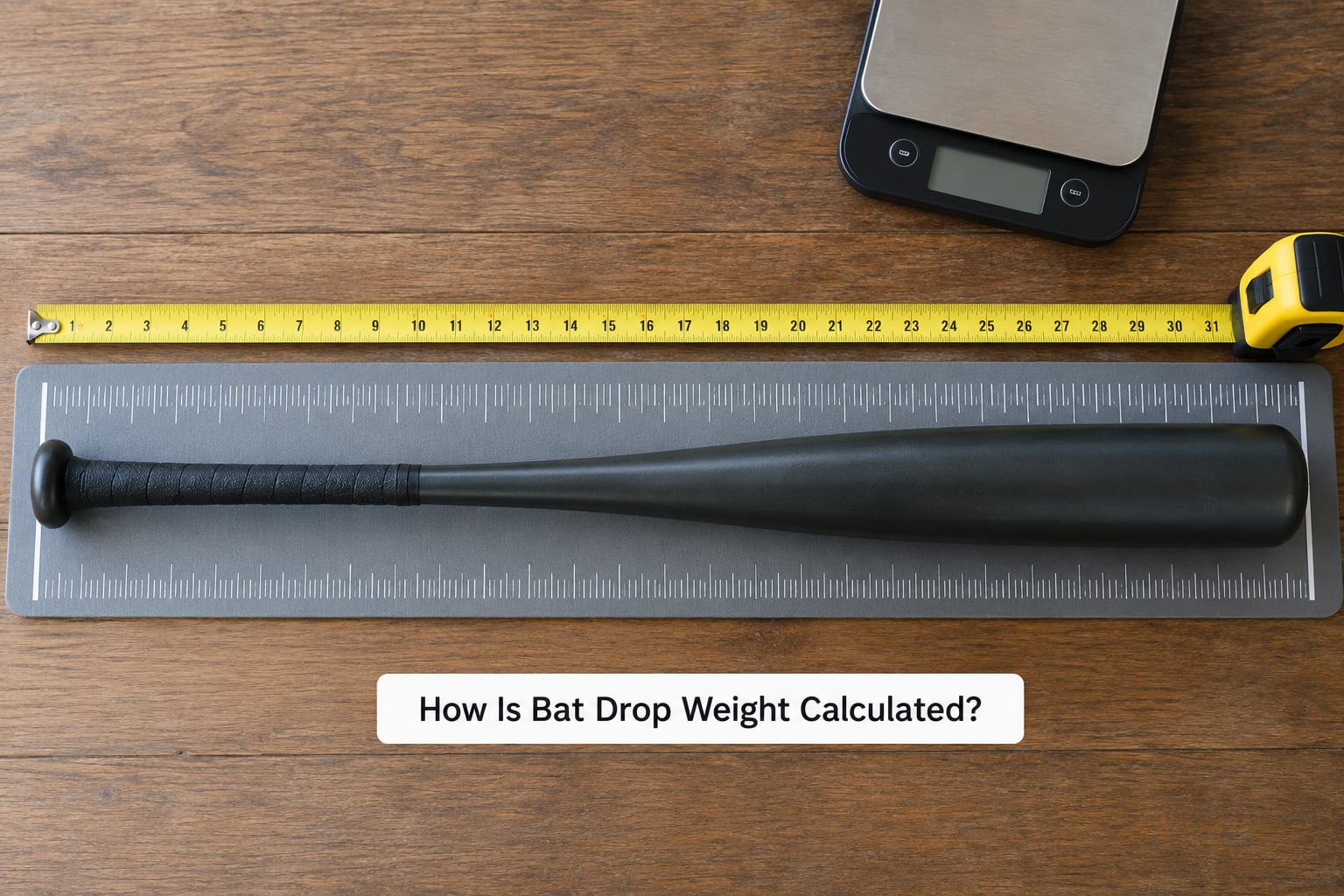
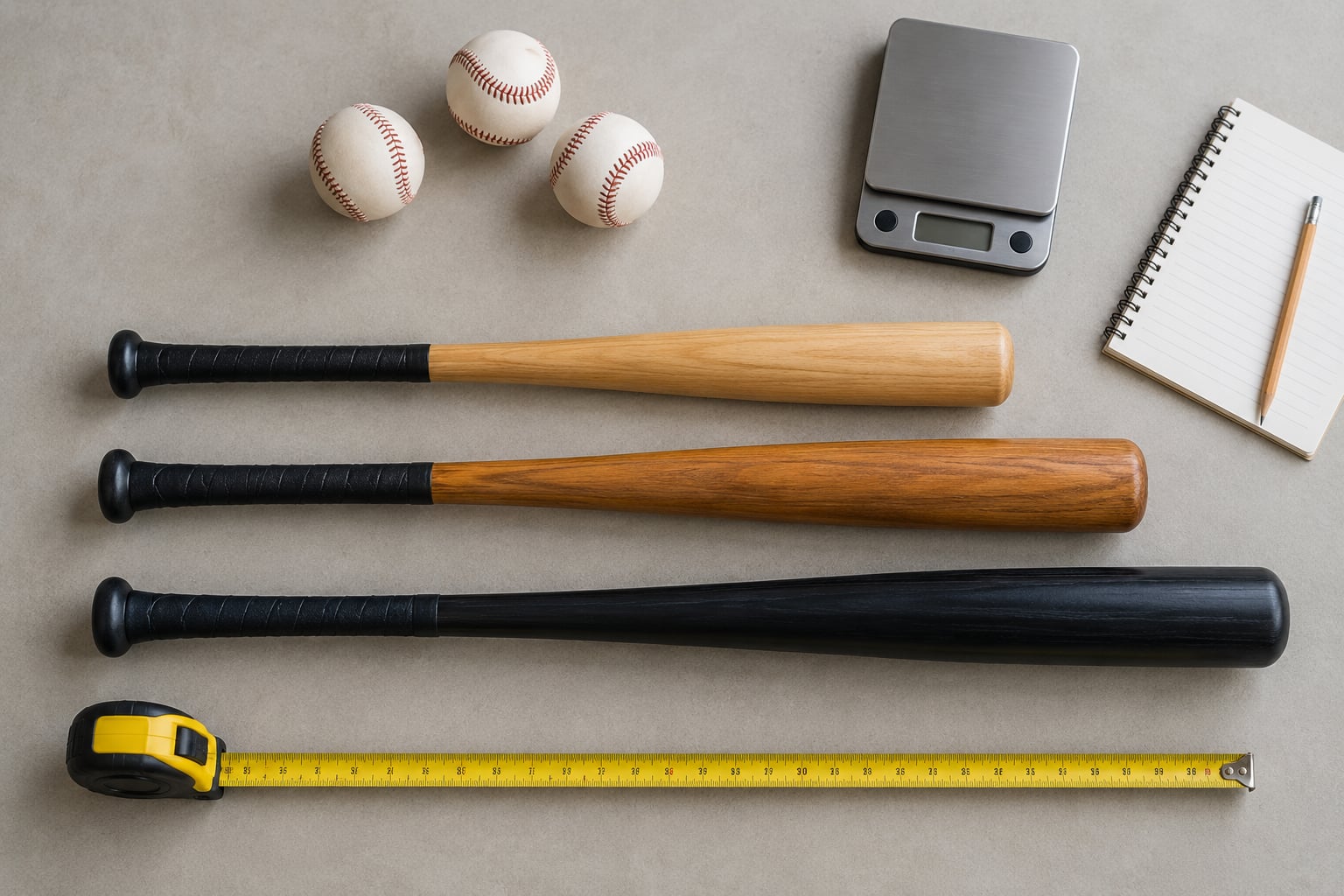
You calculate drop weight by measuring the bat from the end of the knob to the end of the cap in inches, weighing it in ounces, and subtracting the weight from the length.
Manufacturers round the result to the nearest tenth of an ounce. Youth bats are built in tenths, so a bat listed at 20.1 ounces shows as a -9.9 rather than being rounded up to -10.
Here are two worked examples. A 24-inch tee-ball bat weighing 13 ounces gives 24 minus 13, which is a -11 drop. A 31-inch bat weighing 21 ounces gives 31 minus 21, which is a -10 drop. Same drop, very different bat.
| Length (inches) | -13 | -12 | -11 | -10 | -9 | -8 | -7 | -6 | -5 | -3 |
|---|---|---|---|---|---|---|---|---|---|---|
| 24 | 11 oz | 12 oz | 13 oz | 14 oz | 15 oz | 16 oz | 17 oz | 18 oz | 19 oz | 21 oz |
| 25 | 12 oz | 13 oz | 14 oz | 15 oz | 16 oz | 17 oz | 18 oz | 19 oz | 20 oz | 22 oz |
| 26 | 13 oz | 14 oz | 15 oz | 16 oz | 17 oz | 18 oz | 19 oz | 20 oz | 21 oz | 23 oz |
| 27 | 14 oz | 15 oz | 16 oz | 17 oz | 18 oz | 19 oz | 20 oz | 21 oz | 22 oz | 24 oz |
| 28 | 15 oz | 16 oz | 17 oz | 18 oz | 19 oz | 20 oz | 21 oz | 22 oz | 23 oz | 25 oz |
| 29 | 16 oz | 17 oz | 18 oz | 19 oz | 20 oz | 21 oz | 22 oz | 23 oz | 24 oz | 26 oz |
| 30 | 17 oz | 18 oz | 19 oz | 20 oz | 21 oz | 22 oz | 23 oz | 24 oz | 25 oz | 27 oz |
| 31 | 18 oz | 19 oz | 20 oz | 21 oz | 22 oz | 23 oz | 24 oz | 25 oz | 26 oz | 28 oz |
| 32 | 19 oz | 20 oz | 21 oz | 22 oz | 23 oz | 24 oz | 25 oz | 26 oz | 27 oz | 29 oz |
Each cell is the weight in ounces for that length and drop. Find your length, move across to your drop, and you have the weight you should expect on the scale.
Drop Weight Explained: Where the Number Is Stamped on a Youth Bat
The drop is stamped on the bat itself, usually on the barrel near the handle or on the lower handle next to the model name. It appears as a negative number, sometimes abbreviated, such as -10 or a 10 drop.
If the stamp is worn away, measure and weigh at home. Two minutes with a tape measure and a bathroom scale gives you the same number the factory printed.
What Is a Good Drop Weight for a Youth Bat?
There is no single drop weight that is right for every child. A good drop is the one that lets the player swing the bat on purpose, repeatably, at the age they are playing now.
Several things narrow it down. League limits come first, since many leagues cap the maximum drop a player may use. Bat length matters next, because a longer bat carries more weight at the same drop. Player strength and swing speed follow, and control of the barrel decides whether contact stays on top of the ball.
Age alone is a weak guide. Plenty of ten-year-olds handle a -8 comfortably, and some fourteen-year-olds struggle with a -10. Watch the player instead of the birthday on the form.
Talk with the coach before switching drops. A coach sees your child hit fifty times a week and can tell you whether the bat is fighting them.
How Do Youth Bat Length and Drop Weight Affect Each Other?
Two bats can share the same drop weight and still be very different bats. A 24-inch -10 weighs 14 ounces. A 30-inch -10 weighs 20 ounces. Six ounces apart, and both stamped -10.
A longer bat feels heavier because it is heavier in absolute terms. Even if its swing weight is balanced the same way, the extra mass sits further from the hands at the end of the barrel.
Here is the part that confuses most parents. A 30-inch -8 is not a heavier version of a 30-inch -10. It is a different physical object, built to a different weight, and it will behave differently in the hands.
Pick length for the player’s reach and control first. Choose the drop within that length based on strength and league rules, not the other way around.
Should a Young Player Use a Lighter Drop Weight?
A lighter drop weight can be a sensible option for a developing player. More bat speed through the zone and less strain on the hands during a long practice both point the same direction for younger hitters.
The trade is control. A bat that is too light for a strong, physical swing tends to get pushed past the ball, and contact moves toward the handle where the barrel gives up most of its value.
Move up in drop weight gradually rather than jumping. Going from -10 to -8, then -8 to -5, gives a hitter time to adjust before carrying BBCOR weight.
Any coach or league guidance outranks a general rule. Standards such as the USSSA 1.15 BPF, USA Baseball, and BBCOR .50 differ by league, and rulebooks are reissued each 2026 season, so check yours before buying.
Drop Weight vs. Bat Weight: Which Number Matters More?
Neither number matters more on its own. They answer different questions, and a shopper who looks at only one of them is guessing.
| Specification | What it tells you | What it misses |
|---|---|---|
| Drop weight | How heavy the bat is relative to its length | The actual ounces your child lifts |
| Total bat weight | The ounces in the player’s hands | How that weight relates to length |
| Bat length | Reach and leverage from the plate | Nothing about swing feel on its own |
| Swing weight | Whether the bat is balanced or end-loaded | Nothing about legality or sizing |
| Certification stamp | Whether the league will allow it | Whether the player can control it |
Read the full spec sheet, not the big number on the box. A -10 that is end-loaded at 30 inches feels nothing like a -10 that is balanced at 26 inches, even though the stamped number matches.
How to Choose the Right Youth Bat for a Young Player
Work through these steps in order and the decision gets much easier.
- Check league requirements first. Age limits, certification stamps, barrel diameter, and maximum drop come from your league, not a brand.
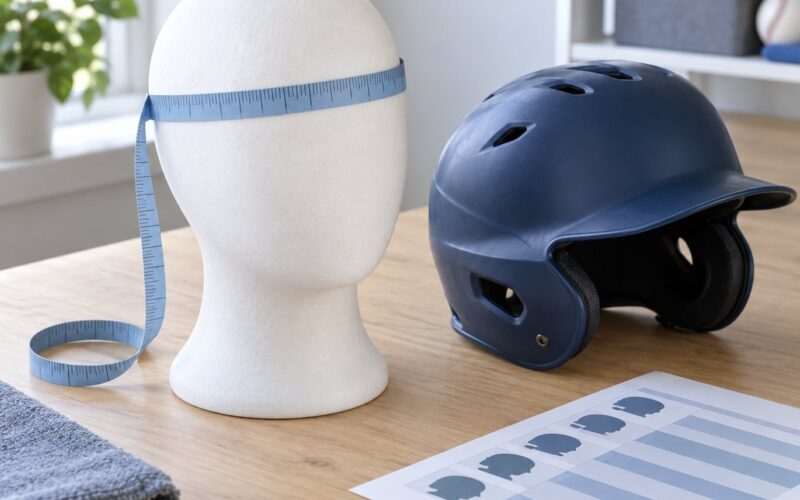
- Measure the player. Stand the bat knob on the floor and see whether the player can reach the end of the barrel while standing on their back foot.
- Confirm the length is comfortable. If the player has to reach or shift their stance to square up, it is the wrong length.
- Judge the weight. The player should be able to take about 20 controlled swings without shaking or losing control of the barrel.
- Check the grip. A handle that is too thick cramps small hands and shows up as a weak, choked-up grip.
- Decide on construction with the coach in mind. Alloy is durable and low maintenance. Composite is lighter with more give and needs a break-in period.
- Set a budget you can repeat. Many families buy one bat per season of play rather than a rotation.
- Test before committing. Take the bat to practice or a cage under adult supervision before it becomes the only bat in the bag.
How Can Parents Test a Bat for Comfort and Control?
Have the player hold the bat horizontally out in front with one hand for about 20 seconds. If the arm starts to shake badly or the barrel dips hard, the bat is probably too heavy right now.
Then run a short practice routine: a few tee repetitions, a handful of coach-pitch swings, and one or two live tosses. Watch the finish. If the barrel rolls over the hands or the player is opening up early to get around the bat, the weight is wrong.
Stop if there is pain in the hands, wrist, or shoulder. Bat sizing is general information, and persistent discomfort should be raised with the child’s coach and, if it continues, a doctor.
Frequently Asked Questions
Is a lower drop weight always better for a youth baseball bat?
No. A lower drop means a lighter bat for that length, and lighter is not automatically better. A bat that is too light for a strong swing gets pushed past the ball, and contact lands lower on the barrel. Match the drop to the player’s size, strength, and league limits instead.
What drop weight is usually recommended for a young baseball player?
Most youth hitters start somewhere between -12 and -10, then move toward -8 and -5 as they grow stronger. Ages vary far more than the numbers suggest, so treat the ladder as a starting range. Confirm the allowed range with your league, since several organizations cap the drop by age.
Does bat drop weight tell me how fast a player can swing?
Not on its own. A lighter bat for the same length usually moves faster, but swing speed also depends on bat length, swing weight, grip, and technique. Two bats stamped with the same drop can feel very different because one is longer or end-loaded. Test the bat rather than guessing from the number.
Can two youth bats have the same drop weight but feel different?
Yes, and this is one of the most common points of confusion. A 24-inch -10 weighs 14 ounces while a 30-inch -10 weighs 20 ounces, so the same stamped number can hide a six-ounce difference. Barrel diameter and swing weight add more variation on top of the length difference.
What should parents check before buying a youth bat?
Start with your league’s rules, including the certification stamp, barrel limit, and any drop cap by age. Then check that the player can reach the end of the bat in their stance and swing it repeatedly without shaking. Finally, confirm the certification mark is the one your league actually requires.
Conclusion
Here is the first move: check your league’s rules and confirm the certification stamp and any drop limits by age. Then measure the player, pick a length they can control in their stance, and test the weight with about 20 swings under coach or adult supervision.
Drop weight is arithmetic, not opinion. Once you can read the stamped number and check it with a tape measure and a scale, the buying conversation gets a lot shorter.