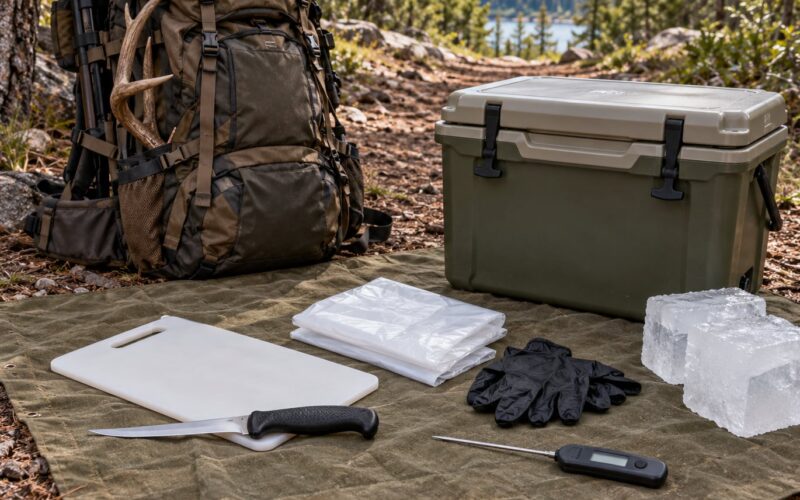
To read a track, you make four reads in order: freshness, direction, size, and gait. Freshness tells you how recently the deer passed, the pointed toe tells you which way it went, hoof length and side-to-side stagger give you a size range, and the spacing of the prints tells you whether it was walking or running. Most beginners get stuck because they try to read everything from one print, which is the one thing a single print cannot do reliably.
This guide is written for new hunters, trail-camera crews, landowners trying to understand what is moving through their property, and anyone who wants to get better at animal track identification. You do not need experience, and you do not need special gear beyond a tape measure. You do need patience and a willingness to accept that some reads stay uncertain.
Table of Contents
- Quick Answer: Freshness, Direction and Buck vs. Doe
- What You Need
- Step-by-Step: How to Read Deer Tracks
- Identify the Track Shape
- Measure Size and Estimate Age
- Read the Stride and Direction
- Check the Surrounding Signs
- Confirm the Track and Continue the Trail
- Common Mistakes
- Measuring the wrong part of the print
- Treating a big track as a mature buck
- Confusing size with age
- Ignoring rain and wind
- Reading a whole story from one print
- Walking straight down the trail
- Treating every pointed impression as a deer
- Forgetting that trails end for a reason
- Frequently Asked Questions
- How can I identify deer tracks?
- Can you tell a buck from a doe track?
- How to tell which direction deer tracks are going
- How old are deer tracks and how do I tell if they are fresh?
- What is the 7 day deer rule?
- Can you legally track a deer on private property?
- Conclusion
Quick Answer: Freshness, Direction and Buck vs. Doe
If you want the short version before getting into the field method, here it is.
- Determining freshness and age: a fresh print has sharp, defined edges, moist dirt inside it, and a clean pointed tip. An older print has rounded, fuzzy edges and dry dirt that has taken on the color of the surrounding soil.
- Figuring out direction: deer tracks point where the animal is going. The narrow point of each cloven hoof leads forward, so the toe of the print faces the direction of travel.
- Telling bucks from does: adult prints run about 2.5 to 4 inches long. A mature buck shows a wider, blockier print and a stagger of roughly 6 to 8 inches between opposing tracks, while does usually walk in a narrower line.
- Reading gait: a walking deer leaves prints in a fairly straight line with regular spacing. A running deer groups its prints into clusters with long gaps between the groups.
Everything below explains how to make those reads in the field, and where each one breaks down.
What You Need
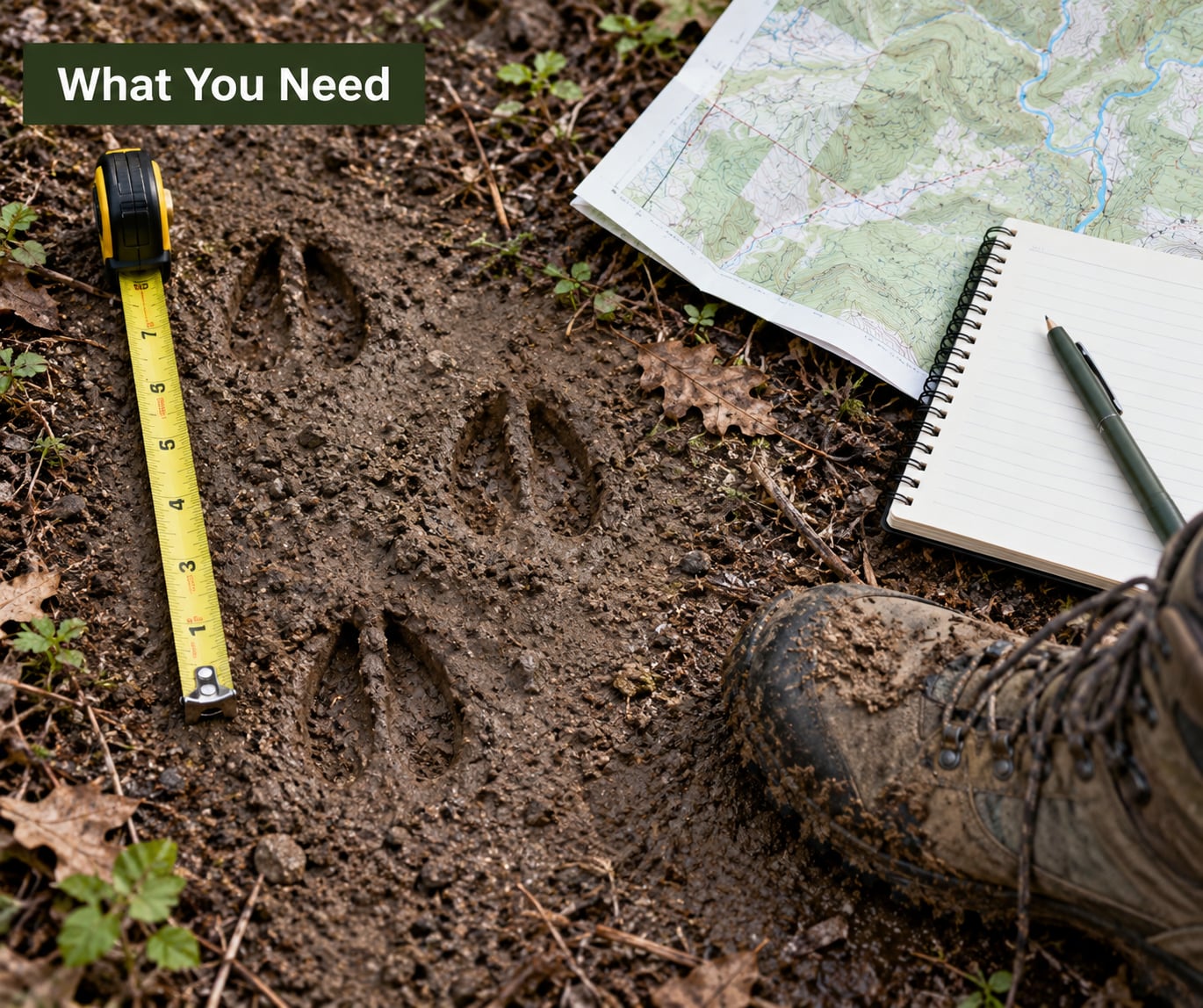
The tools are cheap. The knowledge you bring with them is what actually does the work.
- A measuring tool. A 25-foot tape measure or a small folding rule. You want to measure hoof length, hoof width, stagger and stride, and a tape in your pocket beats guessing every time.
- A notebook or your phone. Write down the measurements and the time of day. Track reading gets much better once you have a record you can compare against later visits.
- A camera. Photograph the whole trail from above before you disturb anything. A single photo of a track sequence is often more useful than any measurement you can take by hand.
- A compass or a mapping app. Direction is part of the read, and it is easier to note than to reconstruct.
- Footwear you do not mind ruining. Knee-high waterproof boots let you cross soft mud and wet ground to inspect a trail properly, without stepping in the prints you are trying to read.
- Patience and a mental checklist. The sequence below is the checklist. Skipping steps is the single most common way people arrive at a confident wrong answer.
Context matters as much as equipment. Track size, stride, droppings, vegetation, rubs, and bedding areas all carry information, and none of them cost anything to observe.
Step-by-Step: How to Read Deer Tracks
Identify the Track Shape
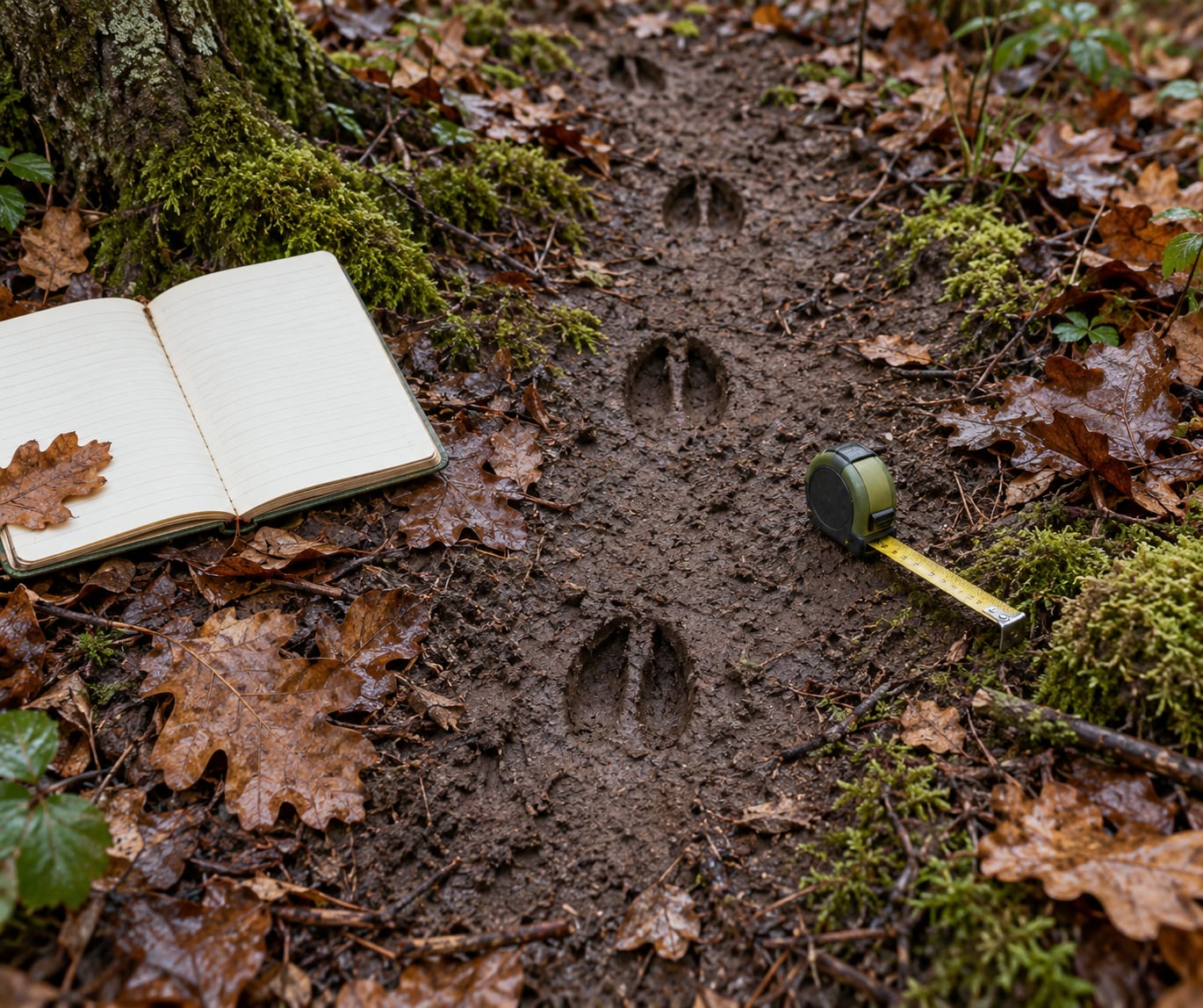
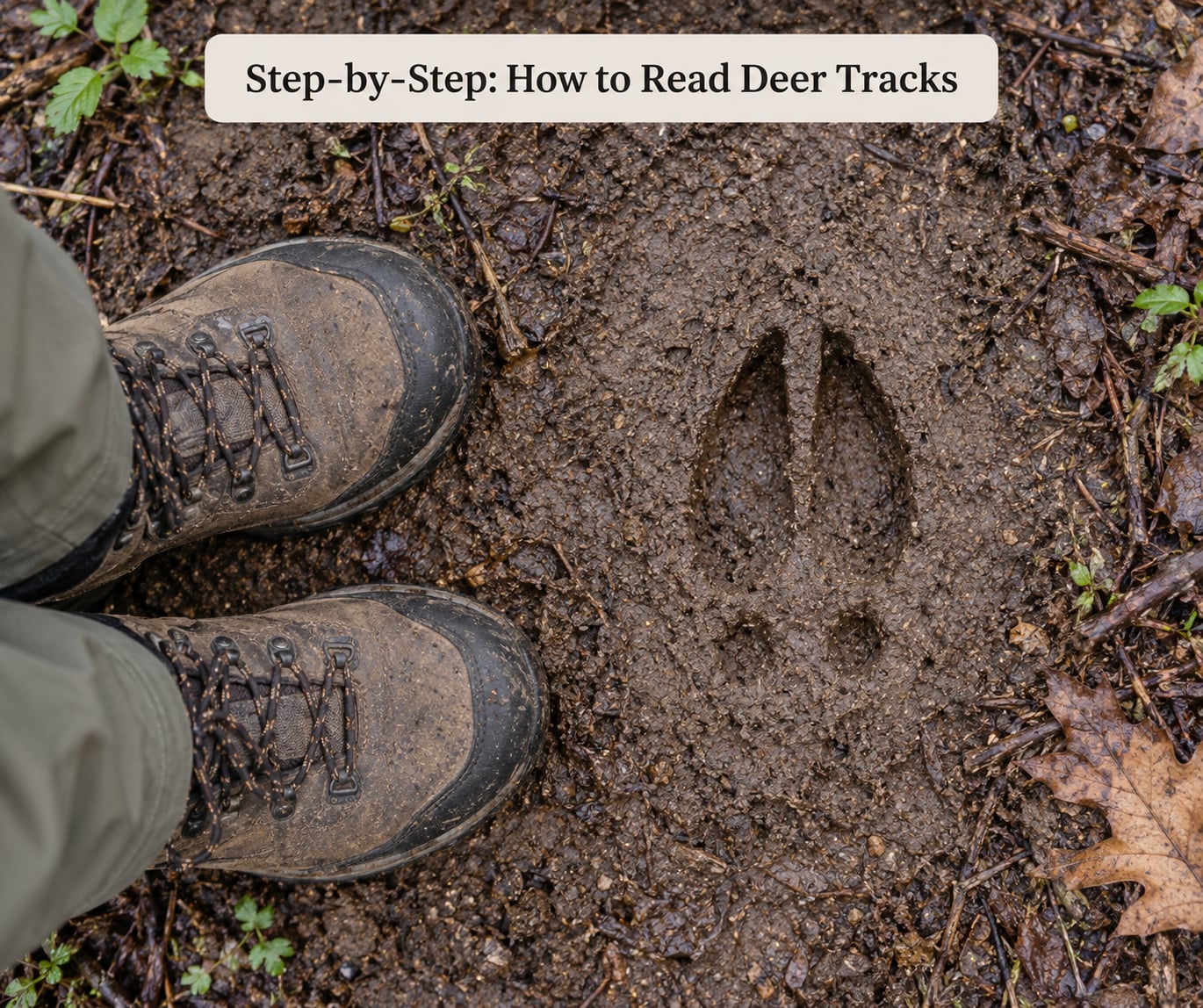
A deer track starts with the anatomy of a cloven hoof. Each hoof is split into two pointed lobes, and when the foot lands, the two lobes press into the ground side by side and form a heart or teardrop shape with the narrow point at one end.
That point is the toe, and it is the most reliable single feature you have. The heel end is blunt and rounded. On a deer walking on soft ground, the two rear dewclaws may also register as two small dots behind the main print, though they only show reliably when the animal is heavier or moving faster.
Front and rear hooves are not identical. Front prints are longer and more rounded, rear prints are narrower and more pointed, and front prints are usually a bit larger. Alternating tracks in a trail will show this clearly: the larger prints are the front feet, the smaller ones the rear.
Check the shape before you check anything else, but do not conclude from one impression. Partial prints are common, especially where leaves, grass, or snow crust cover part of the impression. When that happens, look for a second print in the trail before you commit to a read.
Measure Size and Estimate Age
Measure from the tip of the toe to the back of the heel, straight down the long axis of the print. Do not measure across the widest point and call it length, and do not measure to the dewclaws. Both mistakes inflate the number, and an inflated number sends you looking for a bigger animal than the one that actually passed.
Measure the width at the widest point of the two lobes, then measure the stagger, which is the side-to-side distance between the left and right prints of the same animal. Stagger is the number experienced trackers trust most, and it is the number most beginners skip.
The table below is a working field reference. Numbers overlap on purpose, because the ranges overlap in real life too.
| Track | Hoof length | Hoof width | Stagger | Stride |
|---|---|---|---|---|
| Fawn | under 2 inches | under 1.5 inches | under 3 inches | under 18 inches |
| Yearling | 1.75 to 2.5 inches | 1.25 to 1.75 inches | 2.5 to 4 inches | 18 to 30 inches |
| Adult doe | 2.5 to 3.25 inches | 1.5 to 2 inches | 3.5 to 5.5 inches | 25 to 40 inches |
| Adult buck | 3.25 to 4 inches | 2 to 2.75 inches | 5 to 7 inches | 30 to 45 inches |
| Mature buck | 3.75 to 4.5 inches | 2.5 to 3 inches | 6 to 8 inches | 35 to 50 inches |
Read the size as a range, not a verdict. A 3-inch print belongs to a doe or a young buck, and nothing in that number tells you which. Experienced trackers on hunting forums say this constantly, and they are right: size alone misreads more people than any other part of the process.
Now estimate age. In soft mud, press a finger into the impression. If the dirt inside is moist and the walls hold a crisp edge, the print is recent, usually within the last few hours. If the interior has dried to the color of the surrounding ground and the edges have rounded off, it is old, and in heavy rain or wind it can lose that crispness within a single day.
Freshness depends heavily on what you are standing on. In sandy soil, prints collapse quickly because the walls cannot hold, so a track that looks sharp in the morning can look vague by afternoon. In leaf litter, look for crushed leaves and a scuffed patch of ground rather than a clean impression. In snow, the useful signals are depth, edge crispness, and whether moisture has refrozen inside the print. In frost or frozen ground, expect a poor read and move on.
If you walked through soft mud two hours ago and it rained hard overnight, you have no reliable freshness signal. Tracking after heavy rain is often wasted effort, and knowing when to abandon a trail is a skill in itself.
Read the Stride and Direction
Stand back and look along the trail rather than down at the print. The spacing between impressions is the stride, and the way prints group together is the gait.
A walking deer leaves a fairly straight line with fairly even spacing. Front and rear prints alternate left and right, so the trail looks like a series of slightly offset pairs. A trotting deer groups prints into clusters of two to four with clear gaps between groups. A running deer groups prints into tight clusters, and the clusters themselves sit far apart, sometimes with only a few visible prints in an entire field. Splayed toes, where the two lobes spread apart instead of sitting together, appear when the animal is moving fast or when the ground is very soft.
For direction, the pointed toe is the answer. Deer tracks point the way the animal is going. Look at where the two lobes converge to a narrow tip, and follow that line.
Two details worth knowing. A tapering mark ahead of the toe in snow comes from the toe pushing upward and out of the snow as the foot lifts, not from a deer dragging its foot while it walks. Deer stab their feet down rather than dragging them. And dewclaws showing behind a print usually mean the animal is heavier or moving faster, not that it is a buck. Do not read dewclaws as a sex signal on their own.
Track patterns tell you about behavior, too. Where one trail walks into an older line of its own prints, that animal looped back and probably paused nearby. Where two trails cross cleanly, two different animals passed. Where prints overlap in one dense line, more than one animal is using the same path.
Check the Surrounding Signs
A single print tells you an animal passed. The ground around it tells you whether it still is nearby.
Droppings are one of the best freshness checks you have. Fresh deer droppings are dark and moist, older ones are pale and dry. Hair caught in brush or on a rub tells you something moved through recently. Rubs on trees or brush, where a buck has rubbed his antlers and velvet, are most reliably found in the same fall window as fresh big-buck tracks, and an open scrape on the ground means a buck has been working the area.
Browse marks, where stems are clipped or bark stripped, point to feeding. Bedding areas, which look like a flattened, worn patch under thick cover, suggest a deer has been holding in that spot rather than passing through. Watch which direction tracks leave a bedding area and which direction they return from, because the pattern between the two is where deer movement gets predictable.
Vegetation tells you about timing too. A trail through heavy browse that has been cut back hard suggests the deer are working through an area regularly, and a trail that runs along an edge between cover and feed is usually a travel trail worth checking rather than a feeding site.
Confirm the Track and Continue the Trail
Run the read back through all five checks before you act on it: shape, measurements, the track sequence, freshness, and habitat. If those five agree with each other, you have a solid read. If they conflict, trust the trail pattern and the surrounding sign over the size of one print.
Then keep walking. The next step is not to find the deer, it is to answer a smaller question: where does this trail go, and where does it come back from. Follow the line until it reaches a crossing point, a funnel, a water source, or the edge of cover, then stop and pick up the pattern on the other side.
Work your way toward where deer feed and where deer bed. If tracks leave a bedding area and head toward a food source, set up on that route. If the trail runs parallel to a ridge or a timber edge, treat it as a travel route and look for where it crosses.
Walk beside the trail rather than in it. Stepping on the prints destroys the sequence, and if you break the line you will lose the ability to read stride and grouping for the rest of the trail.
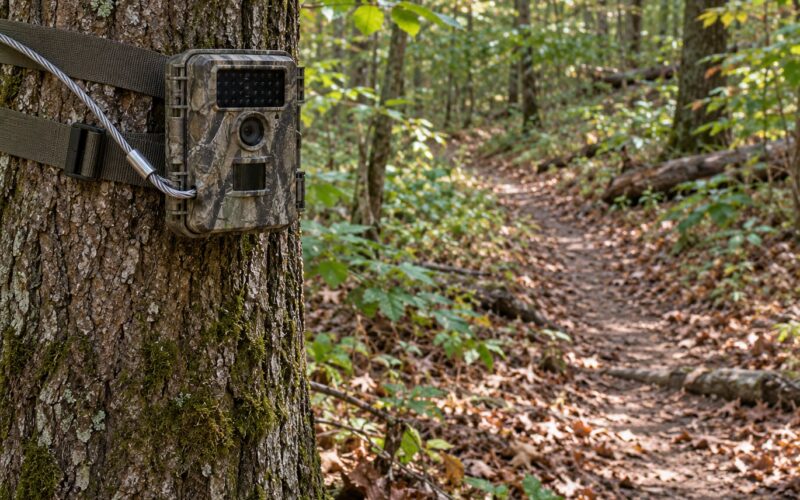
A trail camera on the crossing point settles most of the remaining doubt for you. Mount it facing the trail, not across it, and you can confirm which animal passed and whether it came back the same way.
One last note on access. Reading tracks on your own land is straightforward. Reading them on someone else’s requires permission, and tracking or pursuing a deer across private property without it can create a legal problem well before any hunting season starts. Rules vary by state, so check with your state wildlife agency before you follow a trail off your own ground.
Common Mistakes
Measuring the wrong part of the print
Measuring across the lobes, or running the tape to the dewclaws, makes a normal print look large. Measure toe to heel, straight along the print.
Treating a big track as a mature buck
Size overlaps. A yearling buck and an adult doe can produce nearly identical prints, which is why stagger and stride matter. Read size as a range.
Confusing size with age
A wide, worn-looking print is not an old large deer. Age shows up in edge sharpness, moisture, and the condition of the dirt inside, not in the overall shape.
Ignoring rain and wind
A trail that was crisp at dawn can be unreadable by afternoon after wind and sun dry the edges out. Check the weather before you commit to a long follow, and check it again if the trail stops making sense.
Reading a whole story from one print
This is the big one. A single print gives you size and direction at best. Sex, age, and whether the deer is still in the area all require the track sequence and the surrounding sign.
Walking straight down the trail
Your boots erase the prints you need for stride and grouping. Stay off the line, step around the prints, and leave the trail intact for the person who comes after you.
Treating every pointed impression as a deer
Turkey tracks have three forward toes and a spur mark, not two lobes. Coyote and dog prints have four toes and claw marks, with a narrower heel pad. Sheep and goat prints are small, pointed, and often split. Elk and moose overlap in size with deer in western ranges, and their prints are proportionally larger and rounder with a broader hoof. When the shape does not fit, do not force the read.
Forgetting that trails end for a reason
Tracks vanish on hardpack, rock, or leaf litter all the time. That does not mean the deer turned around. It usually means the animal crossed fast enough or lightly enough that the ground would not record it, so pick the trail up on the other side rather than assuming it ended.
Frequently Asked Questions
How can I identify deer tracks?
Look for two pointed lobes pressed side by side, forming a heart or teardrop shape with the narrow point leading. That point shows travel direction, and the blunt end is the heel. On soft ground you may also see two small dewclaw dots behind the print. Front prints are longer and more rounded than rear prints, and a single print tells you very little, so check the trail before deciding.
Can you tell a buck from a doe track?
Sometimes, and only with limits. Adult deer prints run roughly 2.5 to 4 inches long, and does usually walk in a narrower, straighter line, while a mature buck shows wider, blockier prints and a stagger of about 6 to 8 inches between the left and right hooves. Ranges overlap heavily, so a single print cannot separate a big doe from a small buck. Use stagger, stride, and nearby rubs together.
How to tell which direction deer tracks are going
Deer tracks point the way the animal is traveling. Each cloven hoof lands as two pointed lobes that converge to a narrow tip, and that tip is the toe leading forward. The blunt, rounded end is the heel, which is where the animal came from. Standing back and sighting down the line of prints is usually faster and clearer than studying a single impression.
How old are deer tracks and how do I tell if they are fresh?
In soft mud, press a finger into the print. Moist dirt inside with sharp, defined edges and a clean pointed tip means the deer passed within the last few hours. Rounded, fuzzy edges and dry dirt that matches the surrounding soil mean older. Substrate changes everything: sandy prints collapse fast, leaf litter gives you only crushed leaves and scuffed ground, and heavy rain can erase the freshness signal overnight.
What is the 7 day deer rule?
It is not a track-reading technique. The phrase refers to a state hunting regulation, most often a window for reporting, registering, or retrieving a harvested deer, measured in a set number of days. The exact requirement and timeframe differ by state, and some states have no such rule at all. Check your state wildlife agency regulations before you rely on any specific number.
Can you legally track a deer on private property?
On your own land, yes. On land you do not own, you need the landowner’s permission, and following a wounded deer across private property without it can lead to civil trouble or trespassing charges regardless of hunting season. Rules vary by state, so get permission first and check with your state wildlife agency. Staying on posted public land avoids the issue entirely.
Conclusion
Start with one track and do it properly: photograph the whole trail, clear nothing until it is photographed, measure toe to heel, read the pointed toe for direction, then walk the sequence for stagger, stride, and gait. Finish the read with droppings, browse, rubs, and bedding areas, because those are what turn a print into a decision. If the four reads of freshness, direction, size, and gait disagree with each other, trust the trail and come back later rather than guessing.