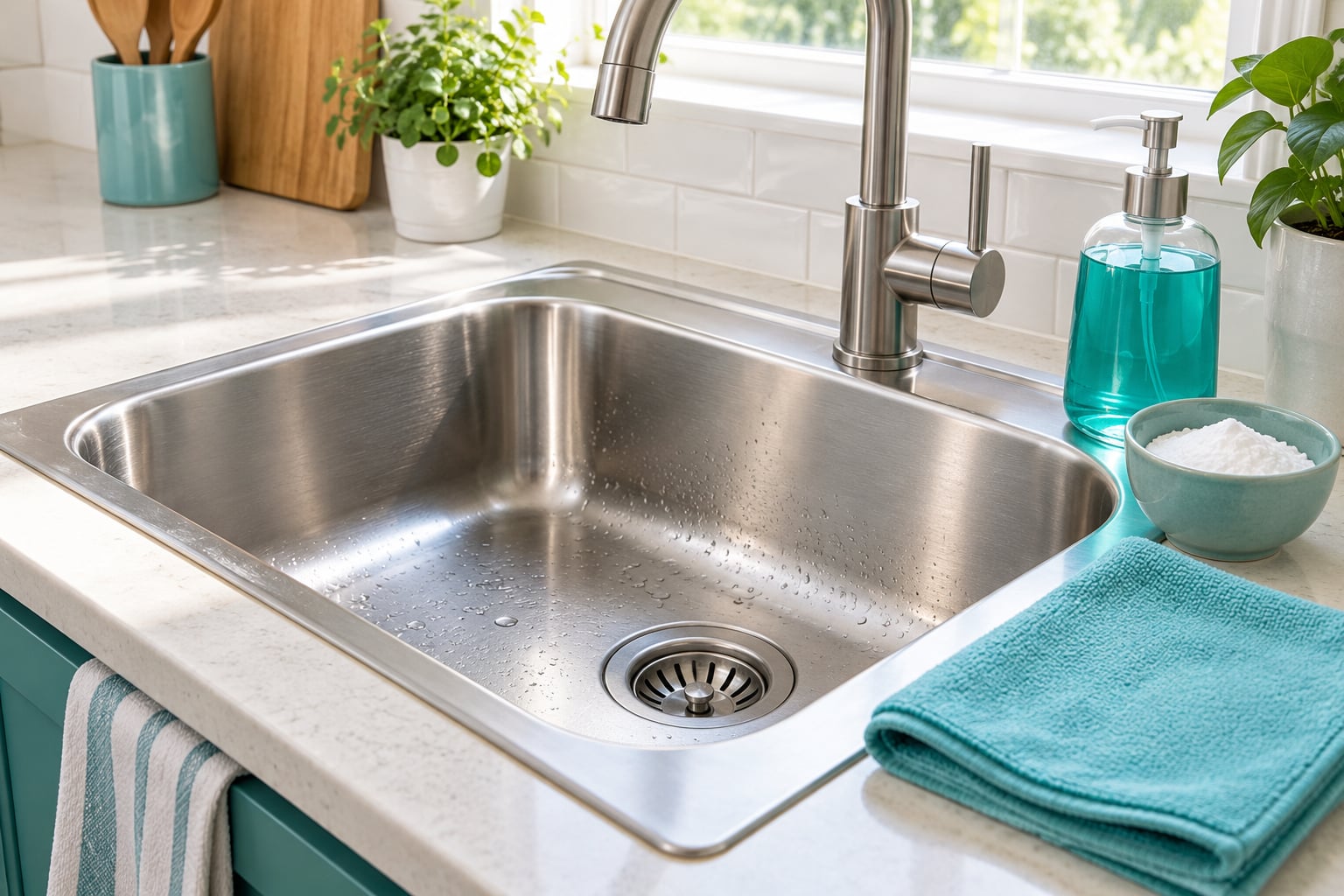
The fastest way to clean a stainless steel sink without scratching it is warm water and a small amount of mild dish soap, scrubbed with a non-abrasive pad along the direction of the steel’s grain, then rinsed and dried right away. That routine takes about five minutes and handles nearly everything a kitchen sink picks up in a week.
Most of the dull, smudged, and speckled look people blame on a bad sink comes from three things: dried water deposits, grease worked into the grain, and scratches made by something abrasive. Each has its own fix, and none of them need a special product.
What follows is the routine I use on my own sink, followed by the mistakes that cause most of the damage people complain about later. Updated for 2026.
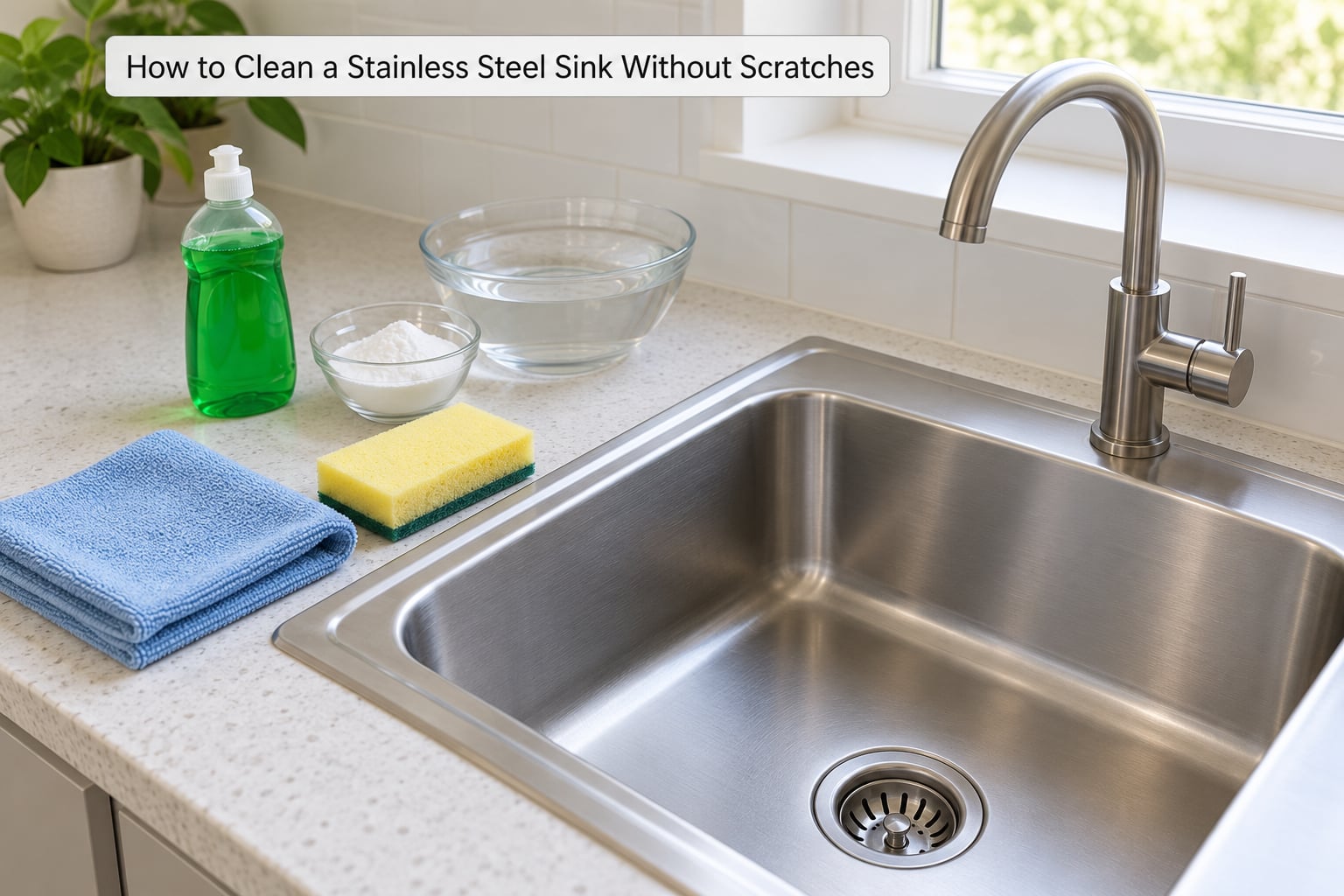
Table of Contents
- What You Need
- How to Clean a Stainless Steel Sink Step by Step
- 1. Prepare the sink and protect the surface
- 2. Wipe away loose dirt with warm soapy water
- 3. Treat spots, grime, and stuck-on residue
- 4. Clean the drain, faucet base, and seams
- 5. Rinse and dry thoroughly
- 6. Maintain the stainless steel finish
- Common Mistakes
- Frequently Asked Questions
- What is the best thing to clean stainless steel sinks with?
- What should you not use on a stainless steel sink?
- How can I make my stainless steel sink look new again?
- Can I use Bar Keepers Friend on a stainless steel sink?
- How do I remove hard water stains from a stainless steel sink?
- How often should you clean a stainless steel sink?
- Conclusion
What You Need
Mild liquid dishwashing detergent is the backbone of the whole job. It lifts grease without stripping anything, and both Franke and Elkay list plain dish soap as the routine cleaner for stainless steel.
For the physical side of the job, keep a non-abrasive sponge or a soft nylon brush, and a microfiber cloth for drying. A bottle of white vinegar handles limescale, and baking soda works as a gentle abrasive paste when mixed with a little soap.
Bar Keepers Friend is the one product worth having on hand for stubborn marks. It is a mild powder cleanser that is safe on stainless when you keep it wet and work it along the grain. Hydrogen peroxide or rubbing alcohol covers disinfection without the risk that comes with bleach.
Keep a soft toothbrush or a small detailing brush for the seams and the faucet base. Those are the places where soap scum hides, and they are the reason a sink looks dirty even after the bowl is clean.
What you want to stay away from is short. No steel wool, no wire brushes, no dry cleaning powders, no bleach or chloride-based products, and no abrasive powder cleanser used dry. Each of those either cuts into the steel or attacks the protective layer that keeps it from staining.
How to Clean a Stainless Steel Sink Step by Step
1. Prepare the sink and protect the surface
Clear the basin first. Move dishes, a sink grid, cutting boards, and any rubber mat out of the way, and scrape food residue into the trash or disposal rather than pushing it around the bowl.
Look along the basin and note the direction the grain runs. Brushed stainless has fine parallel lines from the original brushing, and scrubbing with those lines polishes the surface while scrubbing across them dulls it. You can see the grain best when the light catches the bowl at a low angle.
How to tell this step worked: the basin is empty, dry, and free of anything that could scratch while you scrub.
2. Wipe away loose dirt with warm soapy water
Fill the basin with warm water, add a small squeeze of dish soap, and let it sit for a minute or two. That dwell time loosens dried grease before you put a sponge anywhere near it.
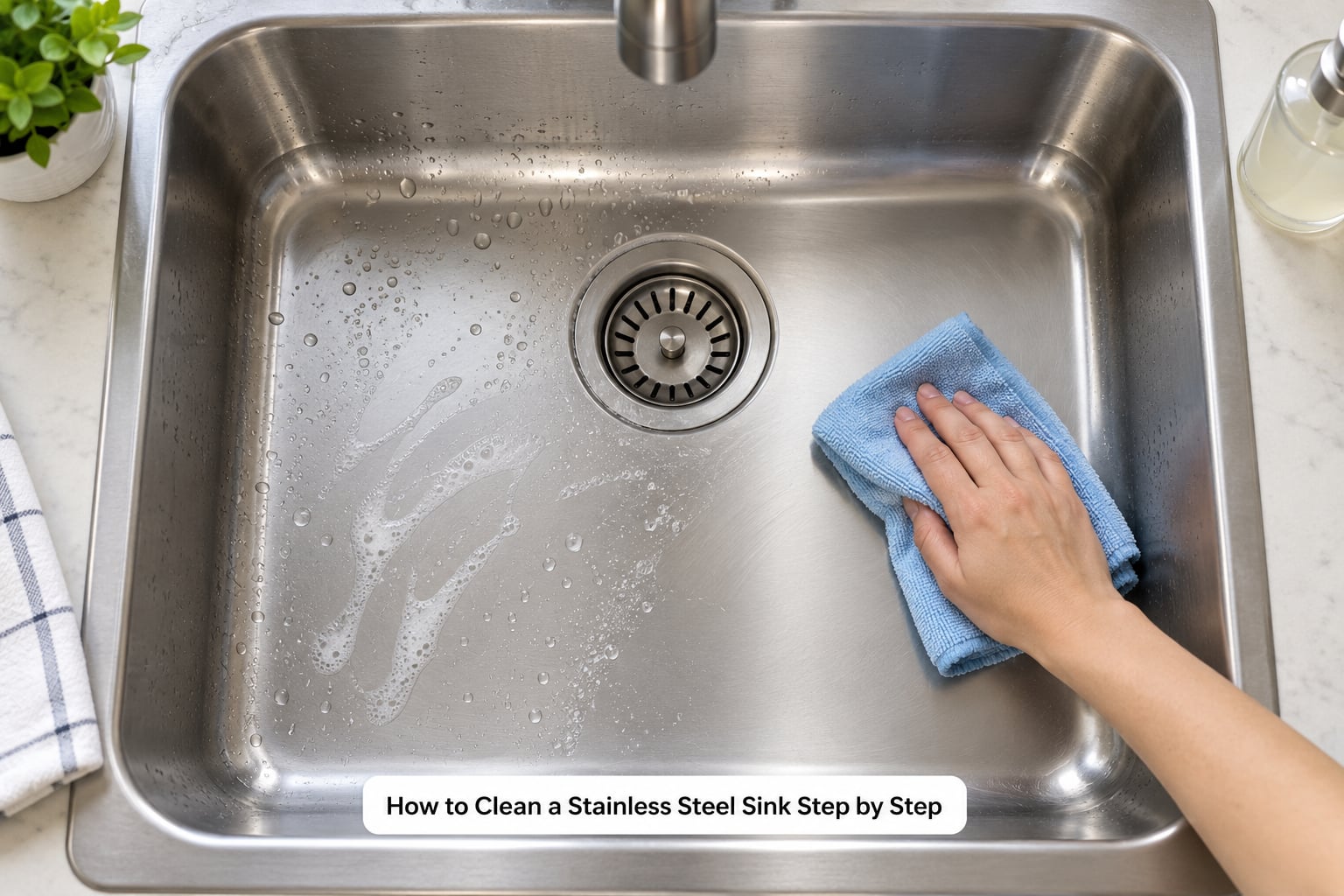
Dip a non-abrasive sponge into the water and wipe the walls, floor, and corners in long strokes that follow the grain. Then empty the basin, refill it with clean warm water, and rinse. Repeat the wipe-and-rinse once more if the water still looks filmy.
How to tell it worked: the rinse water runs clear and the bowl no longer feels greasy to your bare hand.
3. Treat spots, grime, and stuck-on residue
Anything still sitting after soapy water gets a stronger treatment. For ordinary water spots and light grime, mix baking soda with a few drops of dish soap into a loose paste, spread it over the mark, and scrub gently with the grain for about a minute.
For limescale, soak the area with white vinegar and leave it a few minutes before scrubbing. Do not let vinegar or lemon juice sit for hours, because prolonged acid contact can discolor and etch the finish.
For brown staining, wet the surface and work Bar Keepers Friend over it, then scrub with a non-metallic pad. Reddit cleaning threads keep the same order: wet sink, powder on, short scrub, rinse with a sprayer. Users there also describe a dish brush with baking soda every few days as a gentler daily alternative.
How to tell it worked: the mark fades or lifts under the pad instead of spreading into a new haze around it.
4. Clean the drain, faucet base, and seams
The bowl is rarely where the smell comes from. Lift the drain strainer, scrub the flange and the ring around it with the detailing brush, and rinse. If you have a garbage disposal, pull the splash guard out and clean the underside, which holds a surprising amount of residue.
Scrub the seam where a top-mount sink meets the counter, and the gap around an undermount rim where a damp cloth cannot reach. The base of the faucet and the handles collect the mineral film that makes stainless appliances look smudged.
For a slow-smelling drain, sprinkle baking soda down the drain, wait ten minutes, then follow with a hot water flush. A short vinegar pour afterward makes the reaction visible, though the heat and the soda do most of the work.
5. Rinse and dry thoroughly
Rinse everything with clean water, including the inside of the drain holes and the underside of the faucet base where cleaner collects. Then dry with a clean microfiber cloth, working around the bowl until no droplets are left.
Mineral deposits form when water evaporates and leaves its minerals behind, so the rinse and dry matter more than people expect. Water that is left to air dry is exactly how a clean sink ends up covered in spots the next morning.
6. Maintain the stainless steel finish
Stainless steel is not stain-proof. It is built to resist rust, but hard water, iron particles, and standing water will still mark it. Once the bowl is clean, a few habits keep it there.
Wipe and dry the basin after each use, and use a sink grid or a basin rack so pots do not sit directly on the surface. Avoid leaving a sponge caddy or rubber mat in the bowl overnight, since trapped moisture leaves deposits underneath. If the sink looks tired rather than dirty, a stainless polish or a light mineral oil buff restores reflectivity and hides hairline marks.
For disinfection after raw meat, wipe the basin with hydrogen peroxide or rubbing alcohol, leave it for the time listed on the product, then rinse. This is what the cleaning community reaches for instead of bleach, and it kills bacteria without pushing the steel toward pitting.
Common Mistakes
Using steel wool or wire brushes. They cut the surface and leave metal particles behind, and those particles can rust and stain the bowl on their own. Use a non-metal pad instead, even for heavy jobs.
Leaving bleach or other chloride products on the surface. Chlorides are the classic cause of pitting in stainless steel, the small craters that never buff out. Wipe bleach off promptly, and skip it for routine cleaning.
Scrubbing in circles or across the grain. Cross-grain strokes cut instead of polish, and that is what creates the hazy, clouded finish everyone calls scratched. Long straight strokes along the grain, lifting the pad at the end of each pass so you do not sweep a mark across the bowl.
Using dry cleaning powders or abrasive cleanser. Powder only works with water to carry it. Used dry, it becomes sand against the steel. A nonabrasive stainless cleaner or a baking soda paste is the right substitute.
Letting water sit in the basin. Standing water is how water spots form and how a sponge caddy leaves a dirty ring. Empty and dry the sink after every use.
Leaving acids on too long. Vinegar and lemon are useful in a short dose. Left to sit for a long stretch, they etch and discolor a polished finish, which is the one stain no amount of scrubbing fully removes.
Cleaning only the bowl. The drain flange, faucet base, and the undermount seam stay filthy no matter how long the basin gets scrubbed. Give them a detailing brush once a week.
Frequently Asked Questions
What is the best thing to clean stainless steel sinks with?
Mild liquid dish soap and warm water are the best everyday cleaner for a stainless steel sink, and both Elkay and Franke recommend it as the standard routine. For marks that soap leaves behind, use baking soda with a little dish soap as a gentle paste, or a mild powder cleanser such as Bar Keepers Friend kept wet and scrubbed along the grain. Avoid anything with bleach or abrasives.
What should you not use on a stainless steel sink?
Skip steel wool, wire brushes, and dry cleaning powders, because they cut the surface and leave metal particles that can rust and stain it. Also avoid bleach, chloride-based cleaners, and silver polish, since chlorides are the main cause of pitting. Wipe acidic products like vinegar off rather than letting them sit, and never scrub across the grain.
How can I make my stainless steel sink look new again?
Start by removing every trace of water deposit with a wet, mild powder cleanser scrubbed along the grain, then rinse and dry fully. Follow with a stainless steel polish or a thin buff of mineral oil to bring back reflectivity and soften the look of hairline scratches. A sink grid stops new marks, and a sink that has been scratched for years will never look truly new, only well maintained.
Can I use Bar Keepers Friend on a stainless steel sink?
Yes, used correctly. Wet the surface first, sprinkle the powder on, let it sit briefly, and scrub with a non-abrasive pad along the grain before rinsing. It is one of the most recommended products on cleaning forums for brown staining and dull spots. Keep it wet, keep the pressure light, and rinse it off fully so no powder residue is left to dry on the steel.
How do I remove hard water stains from a stainless steel sink?
White vinegar is the quickest answer. Pour it over the spots, let it sit a few minutes, then scrub gently along the grain and rinse. For thicker limescale, use a mild powder cleanser instead. The real fix is prevention, because spots form when water evaporates and leaves minerals behind, so dry the basin after every use and empty any standing water.
How often should you clean a stainless steel sink?
Wipe the basin and drain it after every use, which takes under a minute. Give the bowl, faucet base, and drain flange a full soapy water clean once a week. Treat water spots as soon as they appear rather than letting them harden, and check the rim seam and undermount edge monthly, since those areas collect residue that a quick wipe never reaches.
Conclusion
To clean a stainless steel sink without scratching it, start simple: clear the basin, wash it with warm water and a small amount of dish soap, scrub along the grain with a non-abrasive pad, rinse, and dry. That routine takes five minutes and prevents most of the water spots, haze, and odors people try to fix later with something stronger.
Only reach past that when a mark stays. Baking soda for grime, a short vinegar soak for limescale, a wet mild powder cleanser for brown staining, and a polish when the finish looks tired. What you skip matters just as much: steel wool, bleach, dry powders, and standing water are the four things that turn a clean sink into a permanently marked one.