To store a compound bow safely, keep it in a cool, dry, climate-controlled indoor space and support it correctly: either flat inside a bow case that fits while the bow is strung, or hung by the riser or grip on padded hooks. The whole job is controlling heat, humidity, sunlight and physical knocks. Get those right and the bow shoots the same next season as it did the last one.
Most damage I hear about comes from the same three places: a hot vehicle, an uninsulated garage or attic, and a bow hung by something it was never meant to carry load. None of those are expensive mistakes to fix, and all of them are avoidable before you even put the bow down.
Table of Contents
- What You Need
- Step-by-Step: How to Store a Compound Bow
- Inspect the Bow Before Storage
- Follow the Manufacturer’s Instructions
- How to Store a Compound Bow While Keeping It Strung
- Do the Limb Bolts Need Loosening?
- Use a Protective Case or Secure Rack
- Keep the Storage Area Dry and Stable
- Check the Bow Before the Next Session
- Common Mistakes
- Frequently Asked Questions
- How long can a compound bow sit unused?
- Is it okay to hang a bow by its string?
- Should I store my compound bow strung or unstrung?
- Do I need to loosen the limb bolts when storing my bow?
- Can you store a compound bow in a garage?
- Do bow strings go bad if not used?
- Conclusion
What You Need
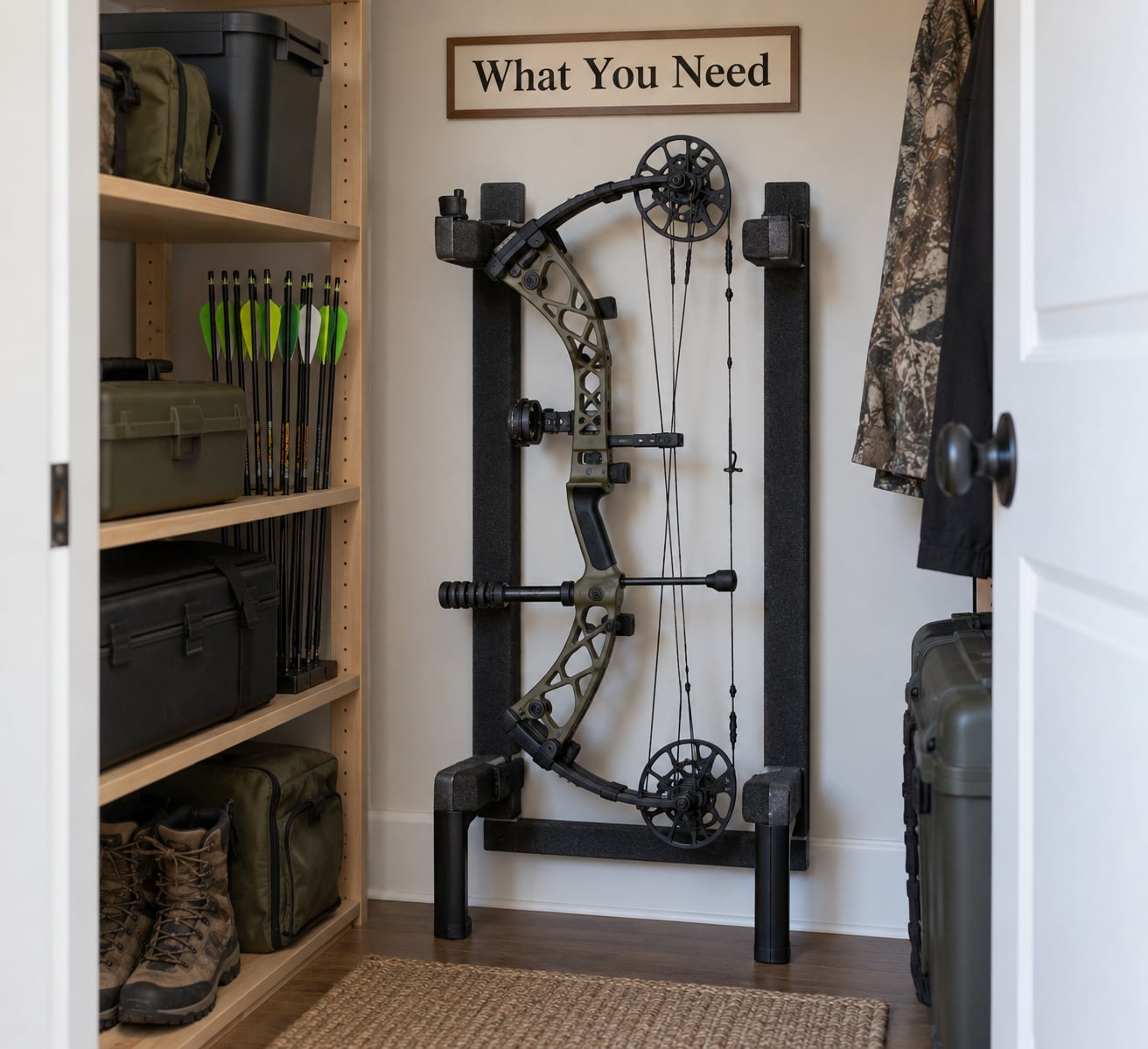
You do not need a dedicated archery room. A closet, a corner of the bedroom, or a shelf in a climate-controlled hallway will do, as long as the spot passes four tests: dry, stable in temperature, out of direct sunlight, and out of reach of curious hands and paws.
- Support hardware. Padded or rubber-coated hooks, a wall-mounted bow rack, or a shelving unit rated for the weight of a strung bow. Bows weigh more than people expect, strung.
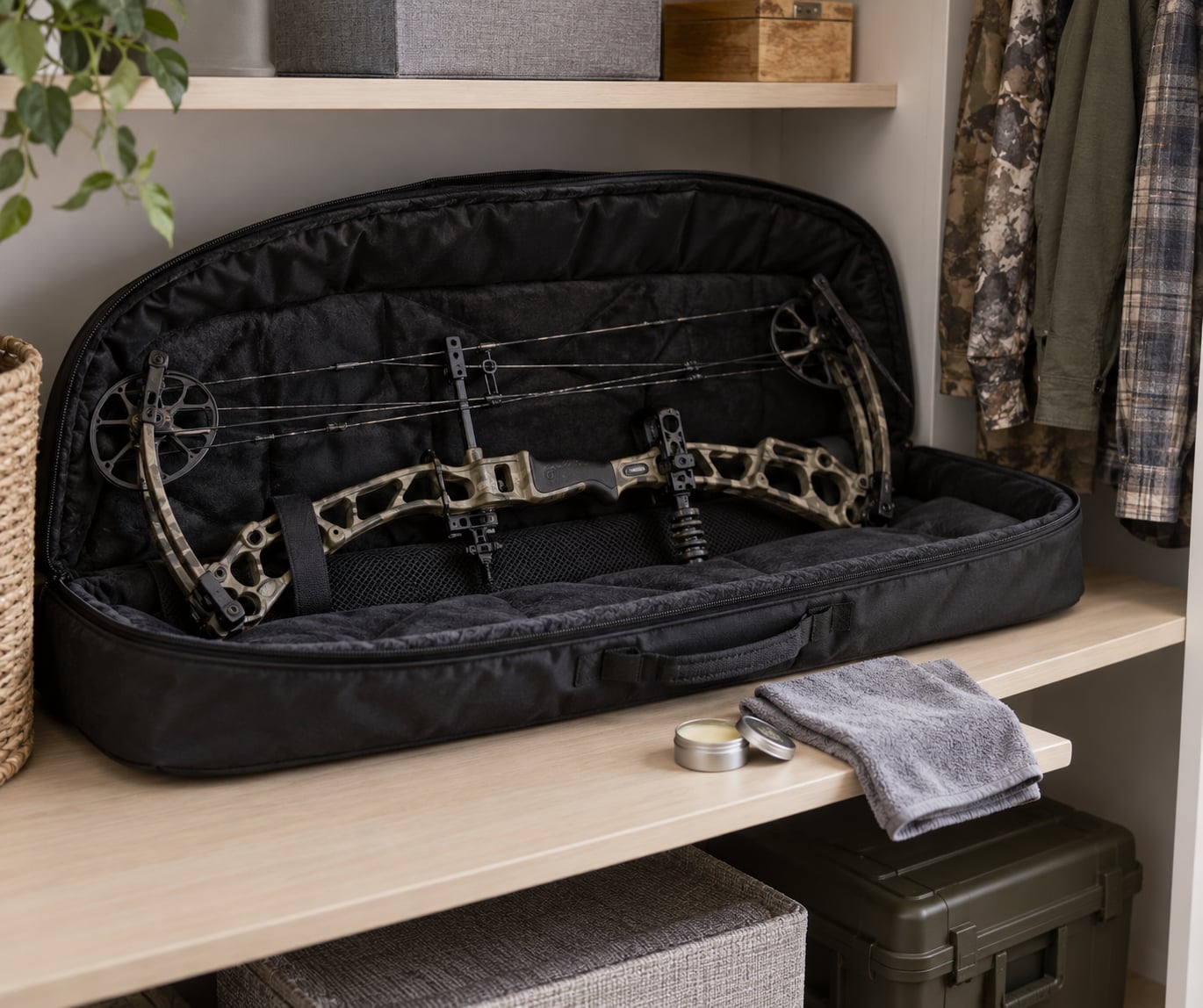
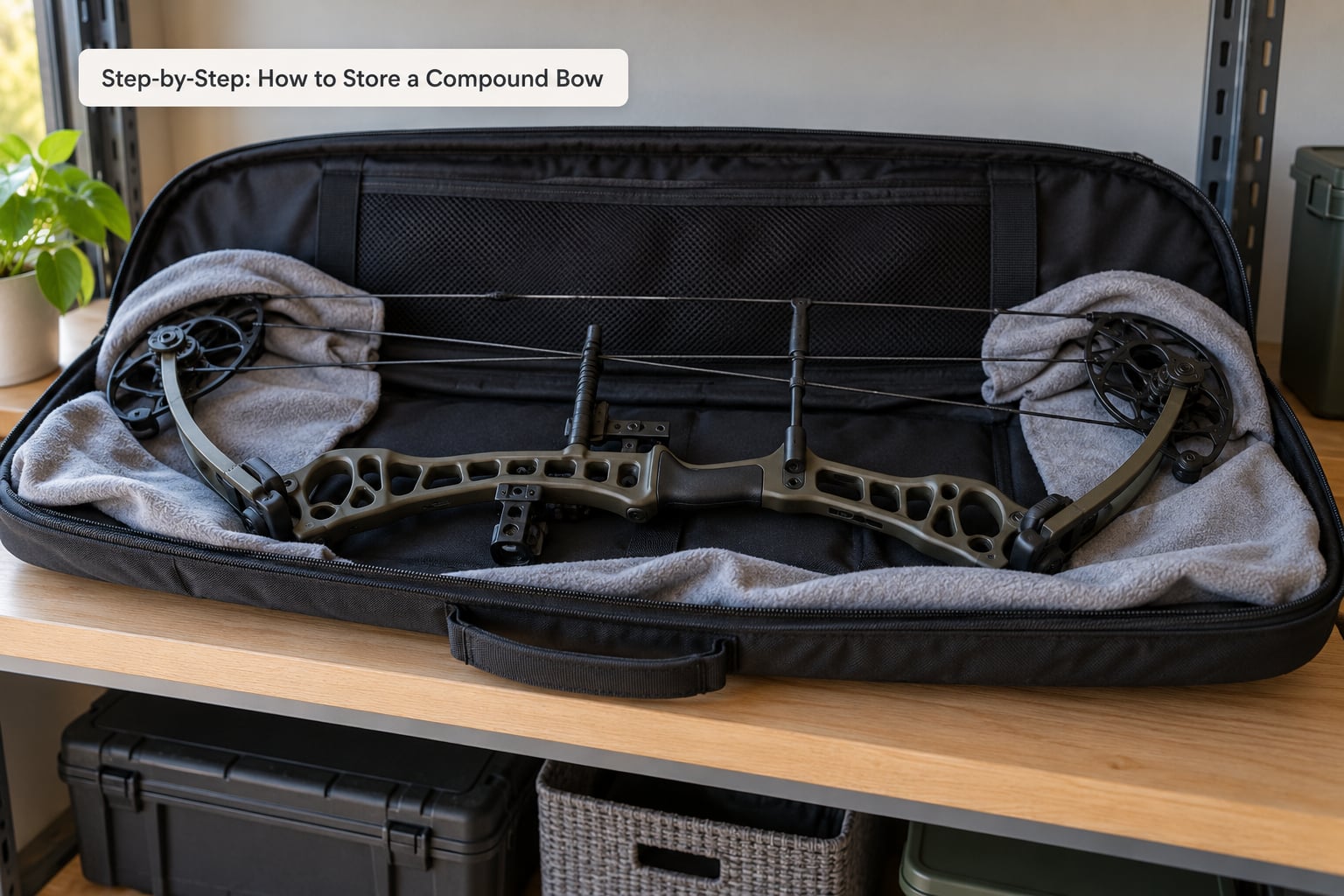
- A bow case that fits while strung. Many cases are cut for an unstrung bow and press on the limbs when the bow goes in strung. Try it before you trust it.
- Bowstring wax and a clean cloth. For the strings and cables, and for wiping dust and grime off the cams and riser.
- Humidity control if you live somewhere damp. A vacuum storage bag and desiccant packs are what an Archery Talk regular recommended for high-humidity areas, and it is sound advice.
- A dry, dark spot you control. Interior closet or cabinet, away from exterior walls, pipes and appliances that cycle heat.
If you shoot a quiver of arrows too, give those the same dry, dark treatment. Arrows stored damp will have fuzzy, poor fletching and weakened shafts, and you will discover it at the worst moment.
Step-by-Step: How to Store a Compound Bow
Inspect the Bow Before Storage
Look at the bow before you hide it, because a problem found now takes minutes and a problem found after six months takes a trip to a shop. Run your fingers along the full length of the bowstring and both cables looking for fuzzy spots, flat spots or stray fibres.
Then check the limb bolts for tightness, the cams for anything that looks bent, and the riser and limbs for cracks or scuffs. Any corrosion or green fuzz around the hardware means the bow was somewhere damp, and that is worth mentioning to whoever services it.
Do not store a bow with a known damage and plan to deal with it later. If a string is visibly frayed or a limb is cracked, get that serviced or replaced before the bow sits.
Follow the Manufacturer’s Instructions
Every bow’s owner’s manual wins over anything on the internet, including this article. Manuals differ on which areas of the riser are rated to carry weight, whether a let-down procedure is required for long storage, and whether the bow should sit at full draw tension or backed off.
The reason manuals disagree is that compound designs changed. Bows built in the 1980s used lighter, more fragile components than modern cams and limbs, and some manufacturers do ask for a relaxed setting during extended storage. Read the storage section of your manual, then follow it.
How to Store a Compound Bow While Keeping It Strung
Yes, a compound bow is designed to stay strung. This is the single biggest source of confusion on archery forums, and it usually comes from borrowing a habit from another kind of bow.
A recurve or longbow stores its energy in the limbs and must be unstrung, or the limbs relax over time and the bow loses its brace height. A compound stores its energy in the cables and the drawn string, so nothing relaxes while it hangs. Archers on r/Archery still argue this one out in both directions, with some unstringing defensively out of habit.
If your manual asks you to let the bow down, use the bow’s let-down or draw cycle to bring it to the setting it specifies, rather than unstringing it. Unstringing a compound and letting the limbs go is how bows get dropped and limbs get cracked.
Do the Limb Bolts Need Loosening?
For most modern compound bows, leave the limb bolts alone. The bow was engineered to sit at full draw weight, and backing the bolts off adds a small risk of the limbs shifting or settling out of alignment during long storage without buying you meaningful protection.
Two situations change that answer. If your manual says to back them off, do it and write down the exact number of turns you took off each side, because getting them back even matters. If you are moving the bow repeatedly or storing it somewhere with big swings in temperature, a couple of turns off on each side is a reasonable precaution.
An older generation of bowhunters loosened limb bolts before every off-season, and you will still meet people who insist on it. That practice came from an era of lighter limbs. For most bows built in the last couple of decades, full draw weight is fine.
Use a Protective Case or Secure Rack
If you hang the bow, hang it by the riser. The grip and the flat machined surfaces of the riser are the only parts designed to carry the bow’s weight, and mounting through a hole in the riser with a screw and a rubber washer spreads that load properly. Padded hooks from the bicycle aisle work fine for a bow that gets moved every week.
Never hang a compound by its string, by a cable, by one cam, or by a single limb. All four put twisting or point loads into components that cannot take them, and archer after archer on forums describes the same result: a warped limb or a creak that never goes away.
For a bow that lives in its case, check the fit with the bow inside, strung, before you trust the case to protect anything. Put foam around the cams if the bow moves inside, and keep heavy gear off the lid. A stack of arrow boxes on top of a bow case is a slow-motion problem.
Wall mounting needs attention too. Screw into studs or a solid header, not drywall alone, and give each bow enough clearance that swinging it down does not bang it into its neighbour or the door frame.
Keep the Storage Area Dry and Stable
Heat and humidity are what actually shorten a compound bow’s life. Aim for a room that holds roughly 50 to 80 degrees Fahrenheit through the year, and treat anything consistently above 90 degrees as a place to get the bow out of.
Persistent heat weakens limbs and stretches synthetic string material. Humidity brings rust on the hardware and cam screws, and it is especially hard on wooden risers and grips, which absorb moisture readily. An r/Bowyer comment on hickory grips put it simply: seal them well or they will take on whatever the air is giving them.
Avoid basements that smell musty, uninsulated attics, uninsulated garages and sheds, exterior walls, and anywhere a leak has happened before. Direct sunlight through a window will fade finishes and heat the riser unevenly, which is exactly the kind of uneven heat that warps things.
If humidity is genuinely unavoidable, a vacuum bag with the air pulled out and a desiccant pack inside buys you real protection. Leave a desiccant pack visible near the bow so you notice when it has turned, and refresh or replace it on a schedule rather than assuming it still works.
Check the Bow Before the Next Session
Pull it out and give it two minutes. Check the string again for fuzzing, look at the limb bolts, and turn the cams by hand to see whether they turn smoothly and quietly.
Listen for the sounds that are not normal. Grinding, clicking or a cam that feels gritty means stop and have a qualified archery technician look at it, not a quick oil and a hopeful range session. Re-wax the string if it has been a while, and shoot a few arrows at close range first.
Common Mistakes
Hanging the bow by the string. It looks like a natural place to hook it, and it is the worst load point on the entire bow. Hang by the riser or the grip.
Hanging by one limb or one cam. A limb tip is a fiberglass or composite part with no load rating at the tip. Point loads there twist the limb and can crack it.
Leaving the bow in a hot vehicle. Trunks and truck beds reach temperatures that exceed what the bow can tolerate, and a car parked in sun can go from cool to dangerously hot in an afternoon. If the bow has to live in the vehicle for more than a few minutes, put it in the case and take it inside at the destination.
Using the garage or shed as the permanent home. Uninsulated means unheated in winter and uncooled in summer, so the bow sees the full seasonal swing. If that is genuinely your only option, put the bow in a sealed case or bag, off the floor, away from wall condensation, with a desiccant pack inside.
Storing it damp. Basements, sheds after rain, and anywhere with a history of leaks. Moisture gets into the wood and the hardware and does not leave on its own.
Putting something heavy on top of the case. Crushed foam and a bulging lid do not protect the bow inside. Store heavy gear on a separate shelf.
Forgetting the dry-fire risk. A strung compound bow within reach of a child or a dog is a loaded weapon. If the string gets nudged past the wall, the draw cycle can release with real force and no arrow to absorb it. That combination is how bows get destroyed and how people get hurt. Store it high, or lockable, or both.
Frequently Asked Questions
How long can a compound bow sit unused?
Indefinitely, if the conditions are right. A compound bow has no consumable parts that expire with time, so a bow stored dry, dark and temperature-stable can sit for years and return to service. The real limits are the string and the conditions: synthetic string material dries out and becomes brittle over time, and any stretch of humidity or heat degrades the riser, grips and hardware faster than time alone.
Is it okay to hang a bow by its string?
No. The string is the most expensive and least forgiving part of a compound bow, and hanging the bow from it twists the limbs and cams in a direction they were never built to take. Archer consensus across forums treats this as a deal breaker rather than a style choice. Hang the bow by the grip or the riser, ideally through a mounting hole in the riser with a screw and a rubber washer.
Should I store my compound bow strung or unstrung?
Strung. A compound stores its energy in the cables and the drawn string, so it holds full draw weight indefinitely without relaxing, unlike a recurve or longbow where the limbs lose tension. Most manufacturers leave bows at draw weight for storage and some offer a let-down setting for long-term storage. If your manual calls for a let-down, use the bow’s own procedure rather than unstringing it.
Do I need to loosen the limb bolts when storing my bow?
Usually not. Modern bows are built to sit at full draw weight, so leave the limb bolts alone unless your owner’s manual says otherwise. If you do back them off, take the same number of turns off each side and write it down, because the bolts have to go back evenly. Older bows with lighter limbs may have manufacturer guidance to relax, so the manual decides.
Can you store a compound bow in a garage?
Only as a last resort, and never long-term without protection. An uninsulated garage or shed swings from freezing to well above 90 degrees across the year, which is what stresses limbs and stretches strings. If it is your only space, keep the bow inside a sealed case or vacuum bag, off the concrete floor, away from the wall where condensation forms, with a desiccant pack that you check on a regular schedule.
Do bow strings go bad if not used?
Yes, and faster than most people expect. Synthetic string material, including the serving and the outer jacket, dries out and turns brittle in warm dry air, and the first frayed fibres are the warning you get before it fails. Waxing the string and cables before storage slows this down considerably. Do the same before the next session if the bow sat for months, and replace the string if you see fuzz rather than a smooth surface.
Conclusion
The safest first step is the simplest one: look at the bow, read the storage section of its manual, and then put it somewhere dry, secure and padded, away from children, pets, direct sunlight and temperature swings.
Everything after that is small attention. Wax the strings, keep the case or the hooks doing their job, and give the bow two minutes of inspection before the first shot of the season. That habit catches a gritty cam or a fuzzy string in the closet instead of at the range.