Field dressing a deer means removing the internal organs in the field so the carcass cools fast and gut bacteria stay out of the meat. To do it step by step: confirm the deer is dead and tagged, lay it on its back with the head downhill, cut a careful incision from the pelvic area to the sternum with your fingers shielding the intestines, open through the diaphragm and rib cage, pull out the guts, sever the anus and windpipe, then prop the carcass open to cool. Most hunters do it in 15 to 30 minutes with a sharp knife and a pair of gloves.
It sounds worse than it is. Most of the work is one long shallow cut and then hauling on a tube of intestine, and the muscle memory comes back fast the second year. The part people get wrong is speed: warm guts sitting against warm meat is what makes venison taste gamey, and nothing you do at the stove fixes it.
What follows is the order a hunter should work in, from gear to cooling. Where I have added a judgement call, it is because the alternative is a spoiled shoulder or a trip back to the truck. Cooling matters more than cosmetics, and a clean cavity matters more than a pretty one.
Table of Contents
- What You Need
- Step-by-Step
- 1. Confirm the deer is down and safe to approach
- 2. Position the deer for field dressing
- 3. Make the initial belly incision
- 4. Open the chest cavity and remove the organs
- 5. Remove the throat, windpipe and excess tissue
- 6. Check the carcass and secure it for transport
- When You Have to Gut: Air Temperature and Time
- Common Mistakes
- Rushing the first cut
- Forgetting to prop the carcass open
- Leaving the guts in the woods without thinking
- Riding with the carcass in a warm vehicle
- Trusting a gut shot the same as a clean one
- Hanging a warm deer overnight
- Frequently Asked Questions
- How quickly should you field dress a deer?
- Do you bleed a deer before field dressing it?
- How long can a deer go without being field dressed?
- What is the gutless method for field dressing a deer?
- How do I know if I got all the organs out?
- What happens if I puncture the intestines while field dressing?
- Field Dress with Care and Keep the Meat Cold
What You Need
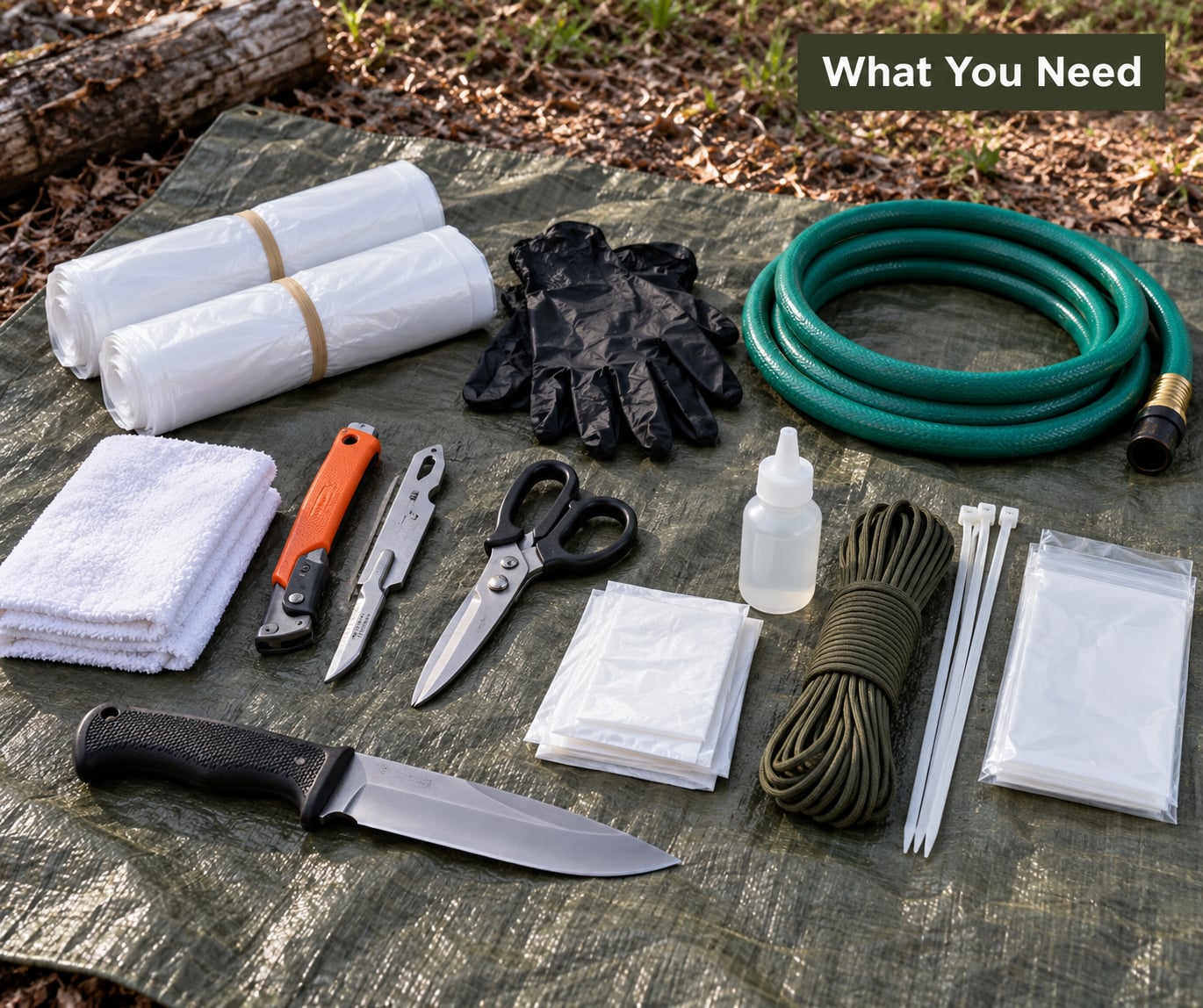
A sharp fixed-blade knife is the only tool you cannot work around. A 4 to 5 inch gutting blade handles the belly incision and the connective tissue around the sternum; a smaller skinning knife is useful for trimming but not required in the field.
Beyond the knife, this is the working kit:
- Rubber or nitrile gloves to keep your hands off the gut contents and out of the blood.
- A tarp or ground cloth so you are not putting meat on bare soil.
- Game bags and a permanent marker for the tag information and the field record.
- Paracord or heavy twine to prop the carcass open after the belly is cut.
- A block of ice or a bag of ice if you are not within a short drive of a cooler.
- A bottle of clean water and a rag for hands, tools and the outside of the carcass.
- A bone saw only if you intend to split the pelvis or the sternum.
A gut hook makes the work faster once the incision is open, but plenty of beginners finish with a knife alone. Forums are full of first-timers asking what they missed, and the honest answer is usually that a sharp knife, gloves and something to lie the deer on are the whole list. A knife with deep crevices in the handle, though, is a nuisance to clean afterwards, so pick a simple one.
Before you cut anything, check the legal side. Most states require the antlered or un-antlered deer to be tagged before it is dressed, and CWD rules vary sharply by state, so confirm yours with the agency before you make the first cut. Two more things settle the setup question: pick a place with shade if it is warm, and a gentle slope if you can find one. A slope with the head at the low end lets gravity do half the work and gives the blood somewhere to go that is not your lap.
Step-by-Step
1. Confirm the deer is down and safe to approach
Watch the animal, not your expectations of it. A deer lying still with an eye partly open is not always dead; check for breathing and for a heartbeat at the chest before you take your knife out, and never approach from the front where it could swing a hind leg. Once you are certain, tag it immediately in the method your state requires, while it is still in front of you and while the details are fresh.
Bleeding matters less than most people think. If the deer died from a chest or neck shot, the major vessels are already severed and there is nothing left to drain. If it died from a gut or leg shot, blood will still be draining, and that is normal. Never open the abdomen of a deer you are not sure is dead.
2. Position the deer for field dressing
Roll the deer onto its back, rump toward the high end of the slope so the head is downhill, and let the front legs point slightly downhill to keep the chest open toward you. Straighten the legs so the body lies flat; a deer lying on its side fights you for the whole job.
No slope? Hunters have worked out their own fix. One common approach is to dress the animal where it fell and roll it halfway through the job so gravity pulls the guts toward the opening, then swap back. It is messier and slower, but it beats dragging a 150 pound deer uphill on your own.
3. Make the initial belly incision
Start at the pelvic area, between the rear legs where you can still see daylight through the hide gap between the pelvic bones, and cut straight down the center line of the belly toward the sternum. Make the cut shallow at the start. Your fingers go under the skin and ahead of the blade, fingertips pointed upward and blade held flat, so you are protecting the intestines with your hand rather than guessing.
The cut should be just deep enough to open the skin and the belly muscle. Every extra quarter inch is a chance to nick a paunch or a bladder, and a punctured intestine means fecal contamination on tender meat. If you do break into gut, keep going, finish the dressing, then cut away every piece of tissue the spill touched. Do not rinse it and call it done.
At the sternum, the ribs block the blade. Cut through the bone on either side of the midline with short, controlled sawing motions, or skip the sternum entirely by cutting the throat from the outside, which is what most experienced hunters do on a warm day.
4. Open the chest cavity and remove the organs
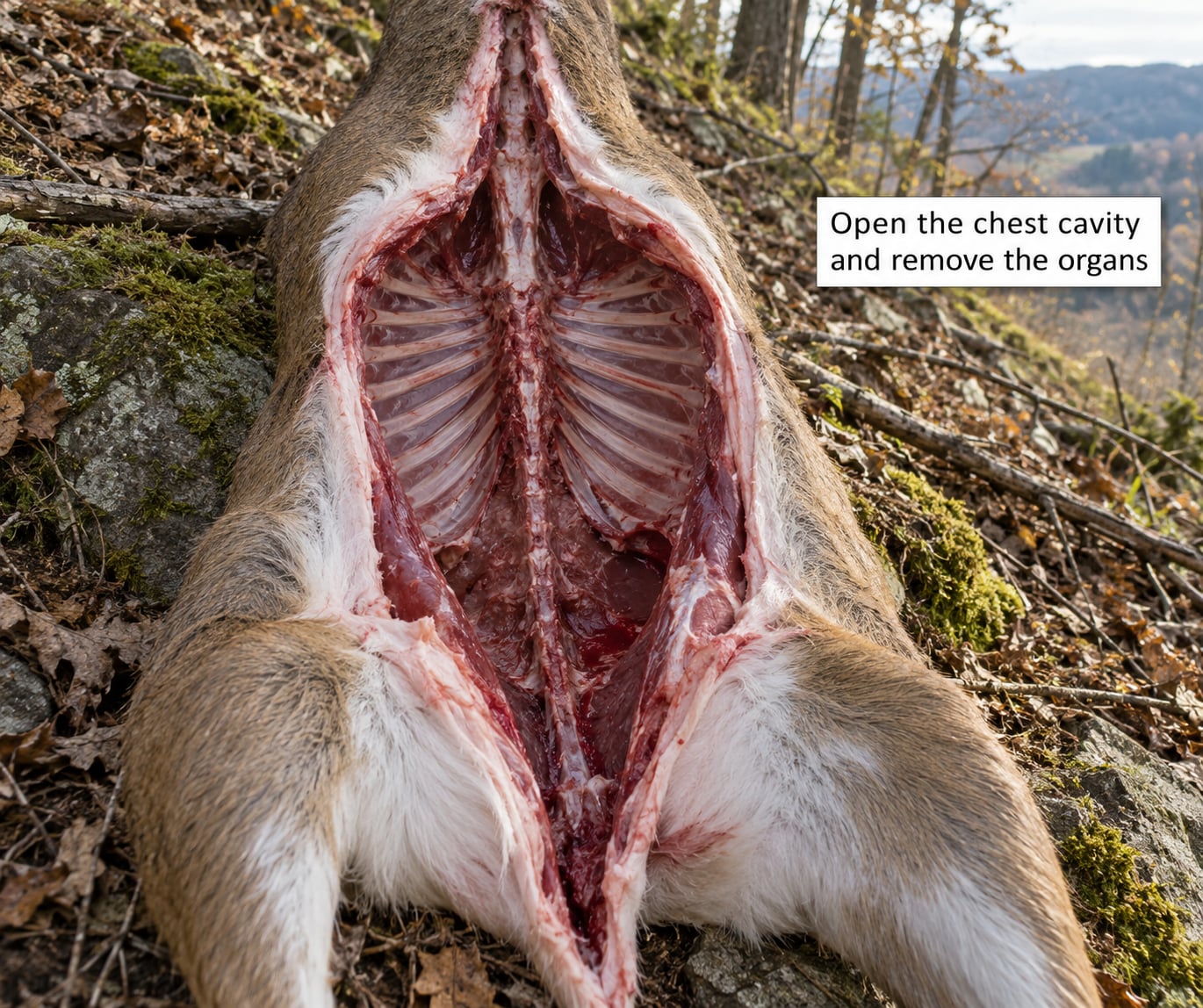
The diaphragm is the sheet of muscle separating chest from belly. Cut through it as it spans from spine to sternum, then reach into the chest and sever the esophagus and windpipe as high as you can reach, close to the vertebrae. Take the trachea down through the throat and out with the other organs so you are not trying to cut it loose blind down in the body.
Now pull. Loosen the organs at the front, attach a gut hook or simply take a fistful of the windpipe, and pull the entire mass toward the rear and out of the body. The intestines come with it. When it clears, the cavity should be open and empty.
Two organs need specific attention. The kidneys sit tight against the spine in front of the pelvis and are easy to leave behind; take them out. The liver holds bile and tastes bitter if it stays attached to the shoulder meat, so separate it carefully at the top and check both sides of the shoulders for a piece of liver that rode along.
5. Remove the throat, windpipe and excess tissue
If you did not already take the throat from the outside, cut across it now at the base of the neck and pull the windpipe and esophagus out with it. This also gives you an inside look at the chest, which is the easiest way to confirm no lung tissue is left stuck along the ribs.
Trim any loose tissue hanging in the cavity. Anything dangling is a place for flies and for dirt to land, and it is also what a processor will cut off for you later. Keep the meat you can not see clean as you go, not just the meat you can see.
6. Check the carcass and secure it for transport
Before you bag it, look inside the cavity once more from the rear. You should see bare ribs on both sides, a clean diaphragm opening and no organ mass. Run a finger along the inside of the ribs and around the pelvis; anything slimy goes. Then pull the legs together or stake them so the carcass stays open rather than folding shut and trapping heat in the middle.
Bag the organs out of the woods and check your state rules before you leave them; many states require them buried, and leaving a gut pile attracts predators that pressure local herds. Bag the carcass, get it into shade, and start cooling. Venison should reach refrigerator temperature as fast as the weather allows, and whole cuts are safe at a minimum internal temperature of 145 F, while anything you grind needs 160 F.
If you are more than about two hours from a cooler, you need ice on the carcass or the meat will lose more than a week of aging in a warm bed of organs. Hunters regularly estimate that a 100 pound live deer yields roughly 55 to 65 pounds of usable meat once hide, bone and organs are off, which is a useful number when you are deciding how much ice to buy.
When You Have to Gut: Air Temperature and Time
Heat and time are the same problem wearing two hats. Bacteria multiply quickly above about 40 F, and the number of hours you can comfortably wait shrinks as the temperature climbs. Use this as a working guide, not a rule you can argue with.
| Air temperature | How long a dressed carcass can sit before cooling | What to do |
|---|---|---|
| Below 32 F | Several hours | You have room to finish the hunt or walk the deer out. Still get it cold the same day. |
| 32 to 50 F | About 2 to 4 hours | Dress on the spot and cool it fast. Ice is worthwhile now. |
| 50 to 70 F | About 1 to 2 hours | Dress immediately. Shade and ice, no detours. |
| Above 70 F | Well under an hour | Someone stays with the deer while someone else drives for ice. If that is not possible, get the meat off and into a cooler immediately. |
Where the animal died changes this a lot. A deer with a clean chest or neck shot has less blood in the body to cool, and a lung-shot deer usually has less contamination risk. A gut-shot deer means intestinal contents spilled into the abdominal cavity, so that carcass needs cold much faster and every cut of meat near the belly needs extra scrutiny, sometimes extra trimming.
The alternative you will hear about is the gutless field dressing method, sometimes called the gutless or skinning-out method. The hunter removes the hide and the abdominal wall together, cuts the carcass into primal sections in the field, and takes only the edible meat home, leaving the guts and unusable parts where the animal fell. It is attractive on a long pack-out or when you are several hours from a truck, and it cuts the weight you carry by roughly half.
The case against it is contamination. The incision goes through muscle rather than into an empty cavity, so the meat is exposed on the outside as well as the inside, and CWD concerns push more states toward requiring the head and antlers to be submitted for testing. Many processors will also charge more for a carcass that arrives in sections. For most hunters a proper field dress, done quickly and cooled promptly, is the better trade.
One more number you will hear: the 7 day rule. Some states allow an archery hunter to shoot a deer seven days before the season end and take the animal after the season closes. It has nothing to do with gutting and everything to do with season dates, so check your own state’s regulations rather than a forum answer.
Common Mistakes
Rushing the first cut
The instinct to hurry is right about timing and wrong about the blade. A slow, shallow first incision costs you thirty seconds and saves you a gut-contaminated shoulder. Cut with the knife flat and your other hand under the skin.
Forgetting to prop the carcass open
A closed carcass cools unevenly, and the deepest part of the body stays warm longest. Stake the legs, tie the legs with paracord, or bag it open. This is the single most commonly skipped step and the cheapest one to fix.
Leaving the guts in the woods without thinking
Many states have rules about it, and regardless of the rule the smell draws bears, coyotes and rodents into an area you may hunt again next season. Pack the guts out and bury them where your state directs.
Riding with the carcass in a warm vehicle
A pickup cab in the sun is an oven. Start with the quarters and backstraps in a cooler and save the hindquarters for last, get the meat home, and do not assume the trip is short because it usually is.
Trusting a gut shot the same as a clean one
If the animal was hit in the belly, plan on more trimming, faster cooling and a closer look at everything near the abdominal cavity. Do not skip the inspection because the meat looks fine on the outside.
Hanging a warm deer overnight
Hanging is for aging, not for cooling. Hang a carcass only after it is cold, and treat venison like any other game: get it under refrigeration within the timeframe above, then decide how long to age it.
A few habits cover most of the rest. Sharpen your knife the night before rather than the morning of the hunt. Download a field dressing video to your phone, because nearly every first-timer on the hunting forums says the same thing: the video is what made it click, not the written instructions. And if you are alone, give yourself permission to work slowly. Nobody has ever ruined a deer by taking ten extra minutes, but plenty have ruined one by rushing in the dark.
Frequently Asked Questions
How quickly should you field dress a deer?
Dress it as soon as you can confirm the kill and reach it. In cold weather below about 32 F you have a few hours of slack; between 50 and 70 F aim to have the guts out within an hour or two, and above 70 F it becomes an emergency. Heat is the enemy here, because warm guts against warm meat is what spoils venison fastest and drives off the fat that gives it flavor.
Do you bleed a deer before field dressing it?
Usually there is nothing left to bleed. A deer killed with a chest or neck shot has already had the major vessels opened, and a deer that is still bleeding simply needs a few quiet minutes. Only a deer with an artery or major vein miss keeps draining. The bigger priority is tagging the animal first, because in most states dressing before tagging is not legal.
How long can a deer go without being field dressed?
It depends on the temperature, not the animal. Below freezing, several hours is workable. In typical fall weather around 45 to 60 F, two hours is the practical limit, and above 70 F you have less than an hour before cooling becomes the deciding factor. If you cannot gut the deer where it fell, drag it to shade or to your camp first rather than leaving it in the sun.
What is the gutless method for field dressing a deer?
The gutless method removes the hide together with the abdominal wall, then cuts the carcass into primal sections in the field, so you carry home only the edible meat and leave the guts where the animal fell. It roughly halves the weight on a long pack-out, which is the reason people learn it. The trade-off is that the meat is exposed from the outside, so contamination control is harder and CWD sampling rules can affect whether you can use it in your area.
How do I know if I got all the organs out?
Look from the rear before you bag it. You should see bare ribs on both sides, an open diaphragm and no organ mass left in the abdomen. The organs most often missed are the kidneys, which sit tight against the spine in front of the pelvis, and a piece of liver riding up against the shoulder. Trim anything loose or slimy rather than leaving it for someone else to cut off later.
What happens if I puncture the intestines while field dressing?
Keep going and finish the job, then remove every piece of meat the spill touched. Do not rinse and call it clean. Flush the cavity with clean water if you have it, trim generously around the affected area, and treat the carcass with extra caution for cooling. A gut-contaminated shoulder can taint the whole roast on the rack, which is usually a bigger loss than the trim itself.
Field Dress with Care and Keep the Meat Cold
Start with the tag, then the knife. Confirm the deer is dead, tag it your way, and get to the belly before the weather does anything about it. Everything after that is technique, and technique is learnable in a single season.
Recap the safety side: sharp blade away from your off hand, fingers under the skin ahead of the blade, a straight shallow cut down the center line, and gloves for anything past the skin. Look inside the cavity twice before you close the bag, and remember that the liver and kidneys are the two organs most often left behind.
Then cool it. Get the carcass bagged and shaded immediately, add ice if the trip home is more than a short drive, and take the quarters and backstraps into the cooler before anything else. Once refrigerated, age it two or three days if the weather allowed, and cook venison to 145 F for whole cuts or 160 F if you grind it.
If you learned to field dress a deer step by step from this guide, the honest advice is to do the first one slowly and on a calm day, then do the next one faster. Almost every hunter who dislikes the task dislikes it because they rushed it once.